
Burst Pipe Water Damage Restoration in Detroit, MI
A pipe just burst. Water is spreading across your floor right now. The first thing you need to do is get to your main water shut-off valve and turn it off. In most Detroit homes, that valve is in the basement near the front foundation wall, close to where the water line enters from the street. Turn it clockwise until it stops.
Once the water flow stops, do not touch any electrical outlets, switches, or appliances in the affected area. If water is near your electrical panel or has soaked the floor near any outlets, cut power to those circuits from your breaker box before you do anything else.
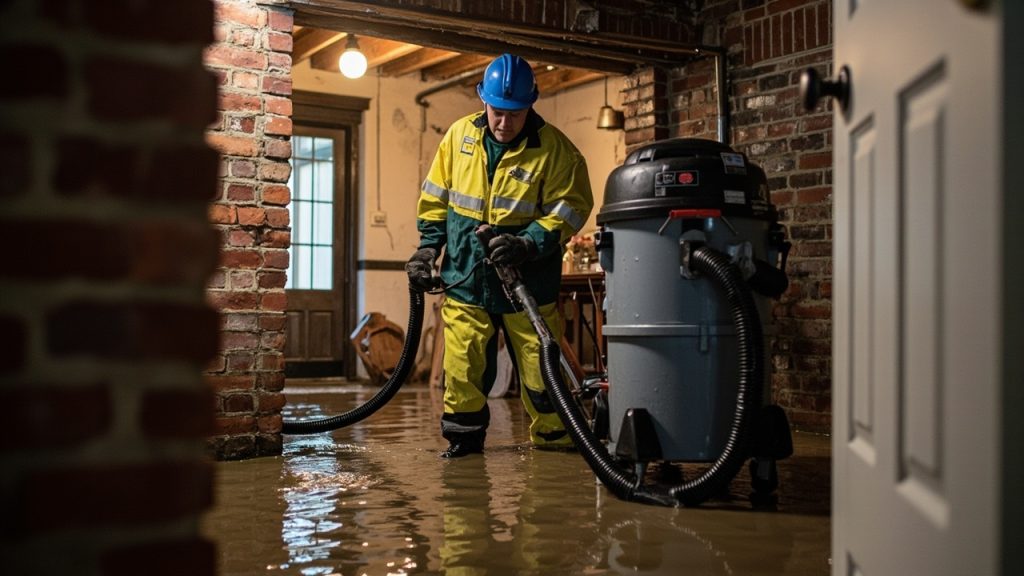
Now call a professional. 24/7 emergency water removal is the fastest way to stop the damage from spreading. Every hour water sits in a structure increases the cost and complexity of the repair.
Why Detroit Pipes Burst More Often Than Most Cities Realize
Detroit sits in a climate zone that punishes plumbing. The Detroit River and the broader Great Lakes system push arctic air into Wayne County in ways that southern Michigan communities rarely experience. Temperatures regularly drop below 0°F during January and February, and the freeze-thaw cycling that happens between storms puts enormous stress on pipe joints.
The bigger issue in Detroit is the housing stock. A large percentage of homes in neighborhoods like Corktown, Indian Village, East English Village, and Boston-Edison were built between 1910 and 1950. Those homes often have uninsulated crawl spaces, galvanized steel pipes that have corroded from the inside, and original plaster walls that hide plumbing runs in exterior wall cavities where cold air infiltrates freely.
When temperatures plummet, water inside those exterior pipes freezes. Ice expands at roughly 9 percent greater volume than liquid water. That expansion has nowhere to go. The pipe splits. When the ice thaws, you get the flood.
The most vulnerable locations in a Detroit home are pipes in unheated crawl spaces, pipes that run along the rim joist where the house meets the foundation, pipes beneath kitchen or bathroom cabinets on exterior walls, and any section of plumbing in an attached but unheated garage. Understanding where these risks live is the first step in prevention. If your home has already flooded, understanding the source helps our technicians trace the full extent of the moisture migration.
The Full Scope of What Burst Pipe Water Damage Does to a Home
Most homeowners see the obvious puddle. What they miss is the water that has already traveled. Water follows gravity and the path of least resistance, which means it moves through wall cavities, under subflooring, through insulation, and into ceiling assemblies below the break point. A pipe that bursts on the second floor of a Midtown two-flat can saturate an entire first-floor ceiling before anyone notices a drip.
The categories of water damage matter here. A clean supply line break is Category 1 water, meaning it started as potable water with low contamination risk. But once that water contacts building materials, sits for more than 24 hours, or picks up sewage residue from a drain overflow, the classification changes. Understanding water damage categories determines the safety protocols your restoration crew uses and affects what your insurance carrier will approve for replacement versus cleaning.
Here is what water saturation does to the most common building materials found in Detroit homes over time.
| Material | Time to Damage Onset | Common Result if Untreated | Salvageable? |
|---|---|---|---|
| Drywall | 1 to 2 hours | Swelling, crumbling, mold substrate | Rarely, depends on saturation depth |
| Hardwood floors | 2 to 6 hours | Cupping, buckling, warping | Often, with rapid drying intervention |
| Plaster walls (original Detroit homes) | 6 to 12 hours | Delamination, structural weakening | Sometimes, with controlled drying |
| Fiberglass batt insulation | Immediate | Loss of R-value, mold growth | No, must be removed |
| OSB subfloor | 4 to 8 hours | Swelling, delamination | Sometimes, with aggressive drying |
| Carpet and padding | 24 to 48 hours | Mold, permanent odor | Padding almost never, carpet sometimes |
If you are seeing swollen baseboards and trim or hardwood floor water damage, the moisture has already moved into the structure. That is not a mop-up situation. That requires professional drying equipment and moisture monitoring.
The Restoration Process Step by Step
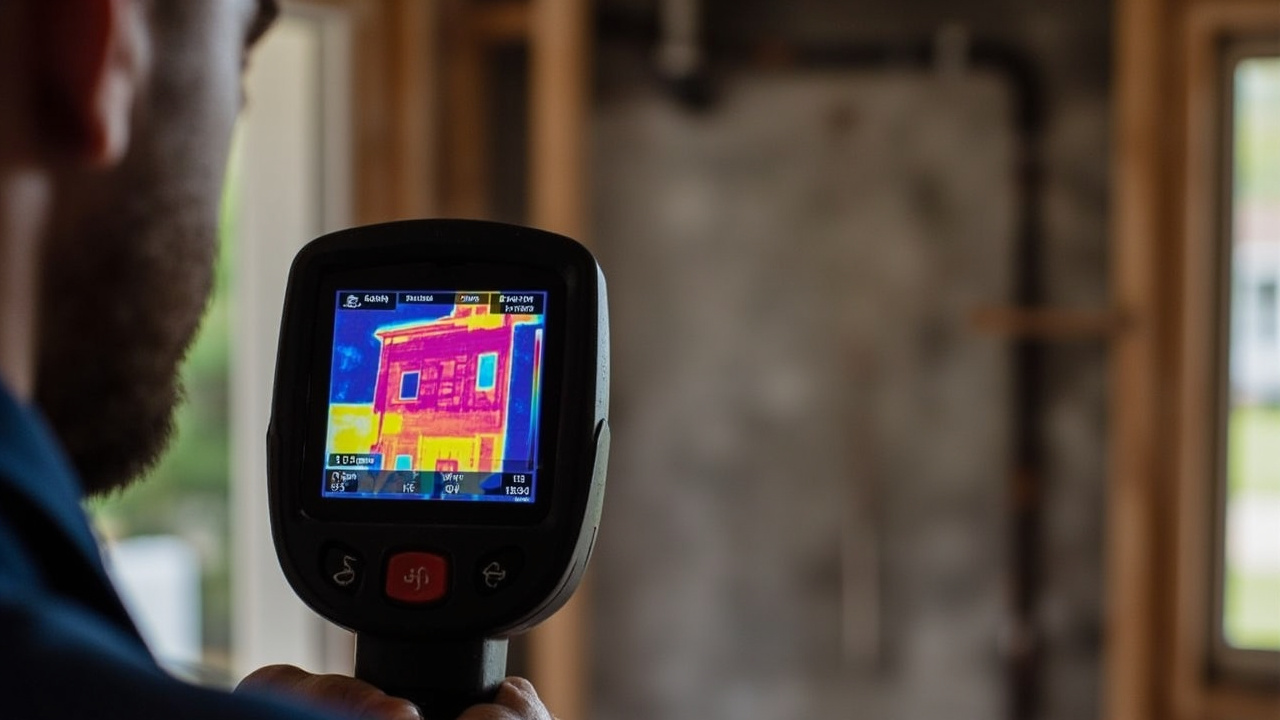
When our crew arrives at your Detroit home, the first tool that comes out is a thermal imaging camera combined with calibrated moisture meters. Thermal imaging reveals cold spots inside walls and ceilings where evaporative cooling is happening, which pinpoints hidden moisture pockets that are invisible to the naked eye. This is not optional. Skipping hidden moisture detection is the single most common reason water damage jobs fail and mold appears two weeks later.
Step 1: Emergency Water Extraction
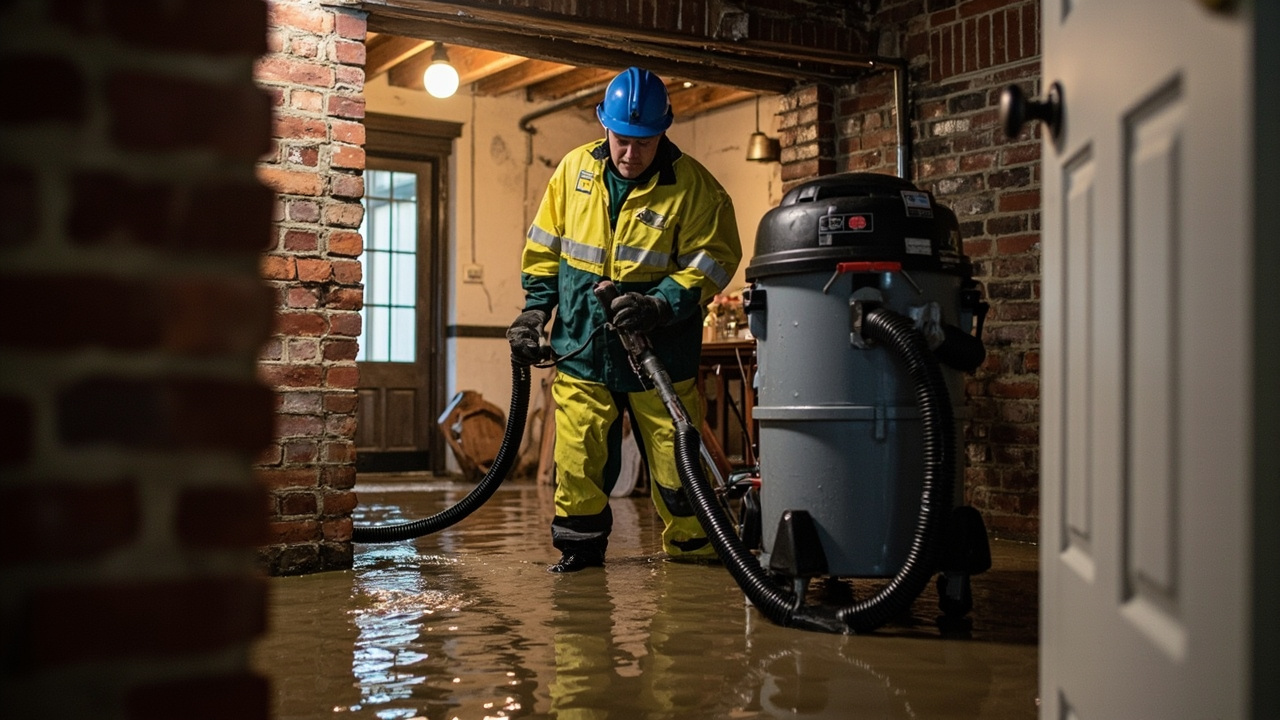
Truck-mounted extraction units pull standing water from floors, carpet, and cavities far faster than shop vacs or consumer equipment. For larger losses, we deploy large-scale water extraction equipment that handles thousands of gallons per hour. Getting bulk water out in the first few hours is what separates a manageable restoration from a full gut job.
Step 2: Structural Drying and Dehumidification
Extraction removes liquid water. It does not remove the moisture that has absorbed into building materials. That requires a combination of high-velocity industrial air movers and commercial-grade refrigerant or desiccant dehumidifiers working together over three to five days in most cases. Structural drying services in Detroit require adjustments for the outdoor dew point, which affects how efficiently the equipment can pull moisture from the structure.
The science behind this is psychrometrics, the study of air and its moisture-holding properties. A trained IICRC-certified technician reads psychrometric data daily during the dry-out to know whether the equipment placement is working, whether the drying chamber is performing, and when to adjust. Skipping this step or pulling equipment too early causes secondary damage. To understand typical timelines, see our guide on how long drying takes.

Step 3: Controlled Demolition (If Required)
Not every job requires tear-out, but many do. Detroit homes with original plaster construction present a specific challenge. Plaster over wood lath holds moisture for much longer than modern drywall and can hide saturation that extends deep into the wall cavity. When moisture readings do not come down after 48 hours of active drying, controlled demolition removes the wet material so drying can reach the structural members behind it.
Step 4: Cleaning and Antimicrobial Treatment
Once materials are dry, all affected surfaces get cleaned with EPA-registered antimicrobial solutions. This is particularly important for supply line breaks that escalated to Category 2 contamination. If mold has already begun, we move into mold remediation protocol under IICRC S520 standards. You can learn more about what mold remediation and removal involves and what signs indicate active mold growth in our related resources including visible mold growth on walls.
Step 5: Restoration and Rebuilding
The final phase brings the home back to pre-loss condition. Drywall replacement, painting, flooring reinstallation, trim work, and plumbing repairs happen in a coordinated sequence. If contents were removed for protection during the dry-out, our content cleaning and pack-out service handles documentation, cleaning, and return of personal property.
What the Drying Equipment Actually Does (And Why Renting Is Not the Same)
We get calls from homeowners in areas like Jefferson Chalmers and Grandmont who tried to dry out a burst pipe with box fans and a residential dehumidifier from the hardware store. Three weeks later they have mold behind the walls. Here is why that approach falls short.
| Equipment Type | Typical Capacity | Best Use | Restoration Grade? |
|---|---|---|---|
| Box fan (consumer) | Low CFM, no moisture removal | Ventilation only | No |
| Consumer dehumidifier | 30 to 70 pints per day | Normal humidity control | No |
| Industrial air mover (LGR) | 1,500 to 3,000 CFM | Creating airflow across wet materials | Yes |
| Commercial LGR dehumidifier | 100 to 180 pints per day at AHAM | Pulling moisture from the air during drying | Yes |
| Desiccant dehumidifier | High performance in cold conditions | Cold Detroit winter dry-outs below 55°F | Yes |
Detroit winters create a specific problem for dehumidification. Standard refrigerant dehumidifiers lose efficiency when ambient temperatures drop below 55°F. In an unheated basement or crawl space where a frozen pipe typically bursts, that is exactly the condition you are dealing with. Desiccant dehumidifiers work in sub-freezing conditions, which is why professional crews carry both types. If you need equipment fast before a crew arrives, emergency dehumidifier rental options are available.
Working with Your Homeowners Insurance in Michigan
Burst pipe damage from a sudden plumbing failure is typically covered under standard Michigan homeowners insurance policies under the dwelling and personal property provisions. The key word is sudden. A slow leak that has been dripping for months and caused gradual damage is frequently denied because carriers treat that as a maintenance failure rather than a sudden accidental discharge.
According to the Michigan Department of Insurance and Financial Services, Michigan homeowners have the right to request a detailed written explanation of any claim denial, and you can file a complaint if you believe a denial is improper. Document everything before cleanup begins. Photographs and video of standing water, affected materials, and the burst pipe location are your strongest assets.
Our team provides direct insurance billing to all major carriers operating in Michigan and assists with the moisture documentation that adjusters require. We generate drying logs, moisture mapping reports, and scope of damage summaries that align with Xactimate estimating formats, which is what most carriers use for pricing. For a more detailed walkthrough, see our guide on how to handle insurance claims after water damage.
One thing to know about Michigan-specific insurance. Sewer backup coverage is not automatic on most Michigan homeowners policies. It is an endorsement you add. If your burst pipe triggered a sump pump failure or a combined water and sewage backup, the coverage question gets more complicated. Review your declarations page carefully and call your agent before assuming what is and is not covered.
Mold Is the Silent Second Disaster
Mold colonization in Detroit homes after a burst pipe is a real and documented risk. Aspergillus, Penicillium, and Stachybotrys (black mold) can begin establishing colonies within 24 to 48 hours on wet drywall, wood framing, and insulation at typical indoor temperatures.
The Great Lakes climate adds a layer of complexity. Detroit’s outdoor humidity levels during winter thaws push moisture into the building envelope from the outside while the interior has active water damage from the inside. That bidirectional moisture load means materials stay wet longer and mold has more opportunity to establish.
If you notice a musty smell days after a burst pipe, that is a warning sign. Read our resource on musty smells and odor removal and do not wait. You can also check our article on signs of hidden mold if you suspect growth behind walls or under flooring.
Immediate Actions to Take Before the Crew Arrives
- Shut off the main water supply valve immediately.
- Cut power to any circuits serving the flooded area from the breaker panel.
- Do not use a standard vacuum to pick up water near electrical outlets.
- Move furniture and personal items out of the water if it is safe to do so.
- Photograph and video everything before any cleanup begins for insurance documentation.
- Open cabinet doors under affected sinks to allow air movement to wet pipes and walls.
- Do not use fans to blow air into wall cavities or heating vents, as this spreads contaminated air.
- Call your insurance company to open a claim and then call your restoration contractor.
Service Areas Across Detroit and Wayne County
We respond to burst pipe emergencies throughout Detroit and the surrounding Wayne County metro area. That includes neighborhoods within the city such as Corktown, Midtown, New Center, Indian Village, East English Village, Grandmont-Rosedale, and Jefferson Chalmers. We also serve communities immediately surrounding Detroit including Dearborn, Dearborn Heights, Westland, and Taylor.
For residents outside Wayne County, our crews also cover Warren, Sterling Heights, Troy, Royal Oak, St. Clair Shores, Livonia, and Farmington Hills. Response time is our priority. We target on-site arrival within 60 minutes for Detroit and close-in communities.
The IICRC (Institute of Inspection Cleaning and Restoration Certification) sets the technical standards our crews follow on every job, from extraction through final moisture clearance. Those standards exist because water damage restoration done incorrectly creates more problems than it solves. Certification means our technicians are trained in psychrometrics, contamination categories, and structural drying science, not just how to run equipment.
What Happens If You Wait Too Long
The cost and complexity of a burst pipe restoration is directly tied to response time. A job that starts within four hours of the break often stays manageable. A job that starts 48 hours later frequently involves mold remediation, full drywall replacement, and subfloor tear-out on top of the standard drying work.
In older Detroit homes with original hardwood floors, early intervention can often save the floor entirely. Cupping and buckling wood floors are reversible with rapid drying in many cases. Wait two days and the wood has distorted past the point of recovery, which means replacement at significantly higher cost and insurance claim complexity.
For a full look at what restoration typically costs and the factors that affect pricing, see our resource on water damage restoration cost in 2026. And if you want to understand the risks of attempting a DIY cleanup on a burst pipe loss, our article on risks of DIY water cleanup covers the most common mistakes we see in the field.
If you are dealing with a burst pipe right now in Detroit or anywhere across the Wayne County metro, call us at (313) 999-0000. Our team is on call around the clock and we can have a certified crew at your door fast. Get the water stopped, get the structure dry, and get your home back.
{
“@context”: “https://schema.org”,
“@type”: “BlogPosting”,
“headline”: “Fixing the Mess After a Frozen Pipe Bursts in Your Detroit Home”,
“description”: “Burst pipe in Detroit? Get step-by-step cleanup guidance, insurance tips, and local restoration help available 24/7 across Wayne County.”,
“wordCount”: 2299,
“datePublished”: “2026-02-11T15:22:00.000Z”,
“dateModified”: “2026-02-11T15:22:00.000Z”,
“inLanguage”: “en-US”,
“mainEntityOfPage”: {
“@type”: “WebPage”,
“@id”: “https://ironwoodwaterdamagerestorationdetroit.com”
},
“publisher”: {
“@type”: “LocalBusiness”,
“name”: “Ironwood Water Damage Restoration Detroit”,
“url”: “https://ironwoodwaterdamagerestorationdetroit.com”
},
“author”: {
“@type”: “Organization”,
“name”: “Ironwood Water Damage Restoration Detroit”,
“url”: “https://ironwoodwaterdamagerestorationdetroit.com”
},
“image”: {
“@type”: “ImageObject”,
“url”: “https://ironwoodwaterdamagerestorationdetroit.com/wp-content/uploads/2026/03/fixing-the-mess-after-a-frozen-pipe-bursts-in-your-1.jpg”
}
}
{
“@context”: “https://schema.org”,
“@type”: “LocalBusiness”,
“name”: “Ironwood Water Damage Restoration Detroit”,
“url”: “https://ironwoodwaterdamagerestorationdetroit.com”,
“address”: {
“@type”: “PostalAddress”,
“addressLocality”: “Detroit”
},
“areaServed”: {
“@type”: “City”,
“name”: “Detroit”
}
}
{
“@context”: “https://schema.org”,
“@type”: “BreadcrumbList”,
“itemListElement”: [
{
“@type”: “ListItem”,
“position”: 1,
“name”: “Home”,
“item”: “https://ironwoodwaterdamagerestorationdetroit.com”
},
{
“@type”: “ListItem”,
“position”: 2,
“name”: “Blog”,
“item”: “https://ironwoodwaterdamagerestorationdetroit.com/blog”
},
{
“@type”: “ListItem”,
“position”: 3,
“name”: “Fixing the Mess After a Frozen Pipe Bursts in Your Detroit Home”
}
]
}
{
“@context”: “https://schema.org”,
“@type”: “Service”,
“serviceType”: “Water Damage Restoration”,
“provider”: {
“@type”: “LocalBusiness”,
“name”: “Ironwood Water Damage Restoration Detroit”,
“url”: “https://ironwoodwaterdamagerestorationdetroit.com”
},
“areaServed”: {
“@type”: “City”,
“name”: “Detroit”
},
“description”: “Burst pipe in Detroit? Get step-by-step cleanup guidance, insurance tips, and local restoration help available 24/7 across Wayne County.”
}