
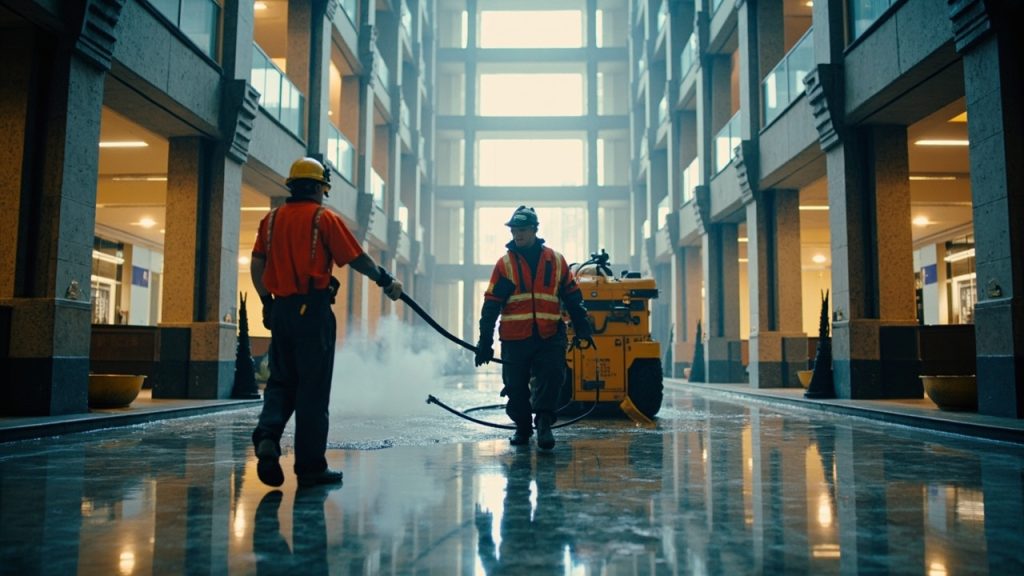
When a major water loss hits a commercial property in Midtown Detroit, every hour of downtime translates directly into lost revenue, disrupted tenants, and potential liability exposure. This is not a residential basement flood. The square footage is larger, the structural systems are more complex, and the business continuity stakes are exponentially higher.
Whether the source is a ruptured fire suppression line in a Cass Corridor office tower, a catastrophic sewer backup beneath a New Center retail strip, or frozen pipe failures in one of Midtown’s converted industrial lofts, the response protocol must be immediate, systematic, and built specifically for commercial-scale losses.
Why Commercial Water Damage in Midtown Requires a Different Response
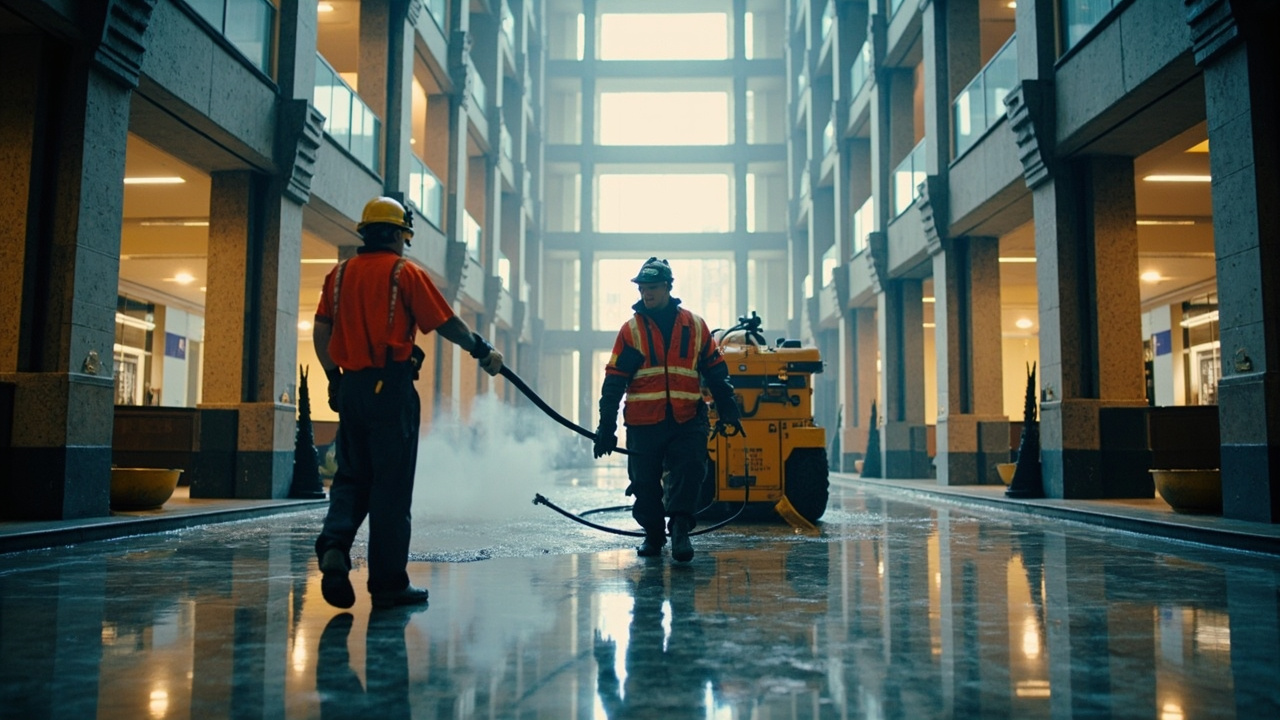
Midtown Detroit is one of the densest mixed-use corridors in the entire metro area. You have high-rise residential and office buildings along Woodward Avenue, ground-floor retail beneath multi-story apartments, healthcare-adjacent facilities near the Detroit Medical Center complex, and a significant stock of century-old brick-and-timber construction that absorbs water differently than modern steel-frame buildings.
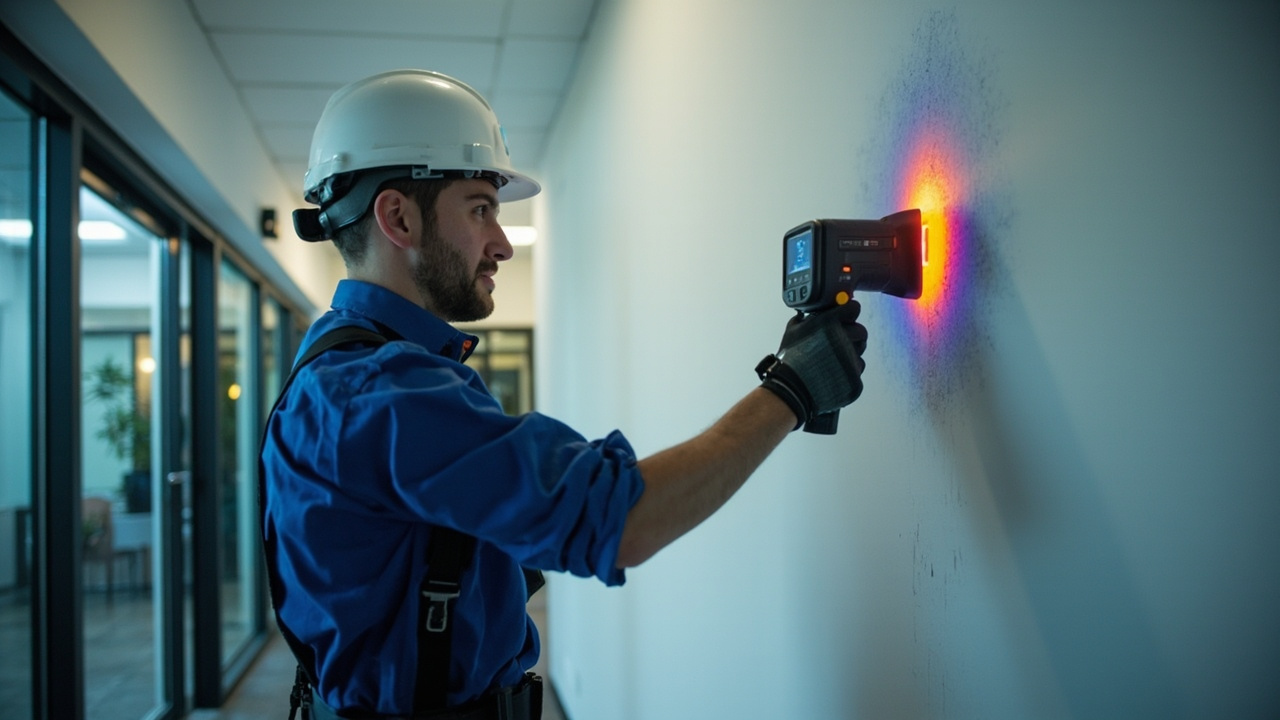
That older masonry construction is particularly problematic. Brick wicks moisture deep into its core. When you have a major water intrusion event in a pre-war commercial building near Wayne State University or along Second Avenue, you are dealing with saturation that extends far beyond what a standard moisture meter reading will show at the surface. Hidden moisture detection using thermal imaging (IR inspection) and penetrating moisture meters is not optional on these jobs. It is the difference between a complete dry-out and a mold remediation call six weeks later.
Detroit’s climate compounds this. The freeze-thaw cycles that hit Wayne County between late fall and early spring are relentless. Pipes that survived decades can fail during a single hard freeze. When they let go inside a commercial building, the water volume released in minutes can be measured in thousands of gallons. The IICRC S500 Standard for Professional Water Damage Restoration, published by the Institute of Inspection Cleaning and Restoration Certification, sets the baseline for how these losses must be assessed and dried. Certified crews follow that standard on every job, regardless of size.
The First Four Hours After a Commercial Water Loss
The first four hours after water intrusion determines the trajectory of the entire restoration project. Water migrates. It travels through subfloor assemblies, into wall cavities, and down through elevator shafts and mechanical chases. A loss that stays contained to one floor during the first hour can affect three floors by hour four if no extraction is underway.
The immediate priority sequence for any large commercial loss looks like this.
- Source control: confirm the water supply is shut off or the intrusion point is isolated
- Safety assessment: check for electrical hazards, structural compromise, and slip-fall liability on open areas
- Category classification: establish whether the water is clean (Category 1), gray (Category 2), or black (Category 3) per IICRC standards, which drives PPE requirements and disposal protocols. You can review the full breakdown of water categories here
- Scope documentation: photograph and moisture-map every affected area before any material is moved
- Extraction deployment: truck-mounted extractors begin pulling standing water while portable units address areas inaccessible to the main hose
For commercial properties with active business operations, the scope assessment must also identify which areas can remain operational and which require isolation with negative air pressure containment barriers. This keeps your employees and customers away from the affected zone without shutting down the entire property.
Commercial Sectors We Restore Across the Detroit Metro Area
The equipment deployed and the drying strategy used depend heavily on the building type. A multi-tenant office building in New Center has different structural assemblies than a manufacturing facility in the industrial corridor near Eastern Market. Below is how the approach shifts by sector.
| Property Type | Common Loss Sources | Primary Concern | Specialized Equipment Used |
|---|---|---|---|
| High-Rise Office Towers | Fire suppression line failure, HVAC condensate overflow | Multi-floor spread, elevator shaft saturation | Desiccant dehumidifiers, structural cavity drying systems |
| Retail Centers | Roof drain backup, sprinkler discharge, supply line failure | Inventory loss, floor finish damage, public liability | Truck-mounted extractors, low-grain refrigerant dehumidifiers |
| Healthcare Facilities | Toilet overflow, plumbing failure, roof intrusion | Infection control, regulatory compliance, patient safety | HEPA air scrubbers, antimicrobial fogging, containment barriers |
| Warehouses and Manufacturing | Roof collapse, sprinkler malfunction, flooding | Equipment damage, concrete saturation, mold risk | Industrial desiccant units, high-capacity axial fans |
| Mixed-Use Residential/Commercial | Unit-to-unit plumbing failures, rooftop drainage failure | Tenant displacement, multiple insurance carriers | Floor drying mats, wall cavity drying injectidry systems |
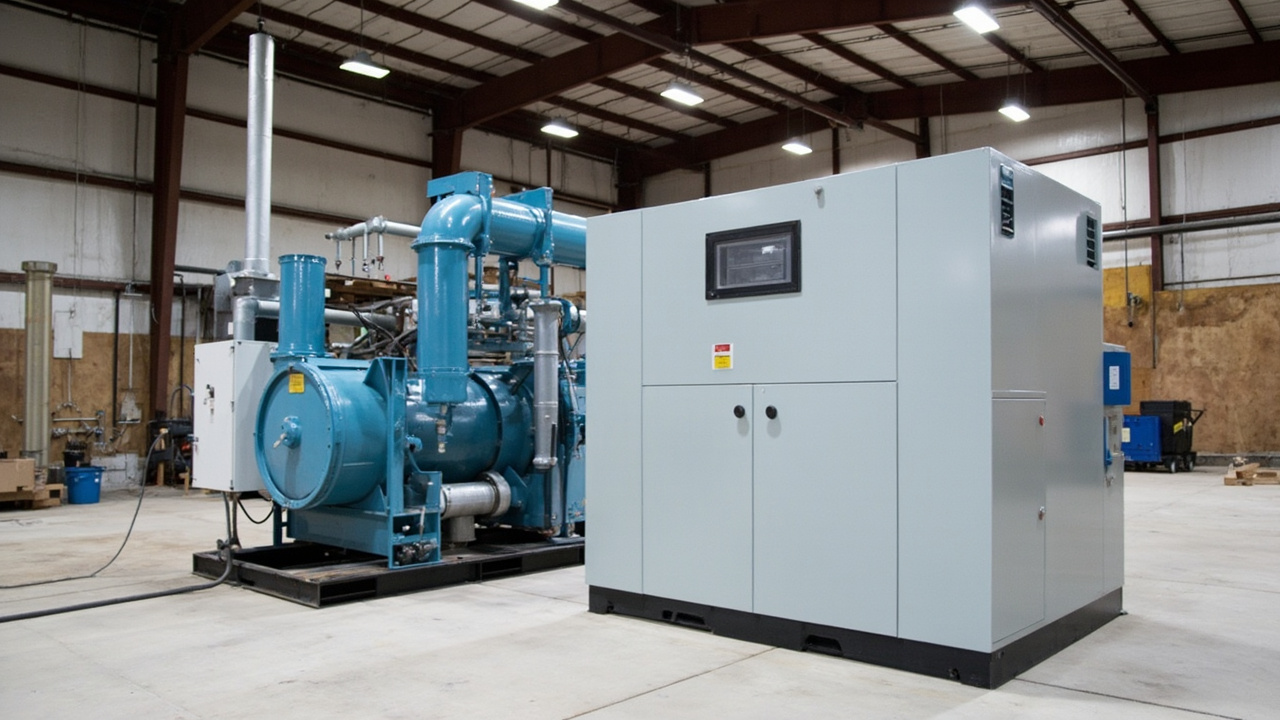
For warehouse-scale losses, our team deploys large-scale water extraction equipment that residential firms simply do not carry. Desiccant dehumidifiers capable of processing thousands of cubic feet of air per minute are standard on large-loss commercial jobs. These are not portable residential units from a hardware store.
The Technical Drying Process for Large Commercial Buildings
Drying a commercial building is an engineering process, not a cleanup task. Every decision is driven by psychrometric data: temperature, relative humidity, dew point, and specific humidity readings taken at multiple points throughout the structure.
Inspection and Moisture Mapping
Before any equipment is placed, a full moisture map of the building is created. This uses thermal imaging cameras to identify temperature differentials that indicate wet versus dry building assemblies, penetrating pin meters for hard surfaces like concrete and masonry, and non-penetrating meters for flooring and wallboard. Every reading is logged and photographed. This documentation is also the foundation of your insurance claim file.
Structural Drying with Industrial Equipment
Structural drying goes beyond surface drying. In a Midtown commercial building, you may be dealing with wet concrete slab under ceramic tile, saturated gypsum wallboard inside metal stud framing, wet fiberglass batt insulation inside exterior walls, and moisture trapped in ceiling plenum spaces above drop tile systems. Each assembly requires a specific drying approach. Our structural drying services address each layer systematically, with daily moisture readings used to verify progress and adjust equipment placement.
Industrial Dehumidification
Commercial losses require equipment that pulls the evaporated moisture out of the air faster than it can re-absorb into building materials. Low-grain refrigerant (LGR) dehumidifiers handle ambient conditions well in most seasons. In Detroit’s colder months, desiccant dehumidifiers are superior because they operate effectively at low temperatures where refrigerant units lose efficiency. The right unit selection matters for both drying speed and energy cost, which factors directly into your claim documentation.
You can also review our industrial drying services page for a full breakdown of equipment capacities used on commercial jobs across Wayne, Oakland, and Macomb counties.
Deodorization and Sanitization
After structural drying is complete, affected areas require sanitization and deodorization. This is especially critical in healthcare facilities, food service environments, and any space where a Category 2 or Category 3 water source was involved. Hydroxyl generators and thermal fogging are used to neutralize odors at the molecular level. Antimicrobial treatment is applied to all affected surfaces per OSHA safety standards and EPA registered product requirements. See our full sanitization and odor removal process for more detail.
Timeline Expectations for Commercial Water Restoration
Property managers and business owners need realistic timelines to plan business continuity. The table below provides general benchmarks based on the scope of loss. Every job varies based on material types, building construction, and initial saturation levels.
| Loss Scope | Affected Area | Estimated Drying Time | Full Restoration Timeline |
|---|---|---|---|
| Minor commercial loss | Under 1,000 sq ft, single floor | 3 to 5 days | 1 to 2 weeks |
| Moderate commercial loss | 1,000 to 5,000 sq ft, one or two floors | 5 to 7 days | 2 to 4 weeks |
| Large commercial loss | 5,000 to 20,000 sq ft, multiple floors | 7 to 14 days | 4 to 8 weeks |
| Large-loss / catastrophic | Over 20,000 sq ft or full building | 14 to 30 days | 8 to 24 weeks or more |
If you need more detail on drying timelines for specific material types, our page How Long Does Drying Take covers the variables in depth.
Business Interruption and Insurance Coordination
Commercial water losses involve two separate insurance tracks that must run simultaneously: the property damage claim and the business interruption (BI) claim. Most property managers underutilize their BI coverage because the documentation requirements are not met during the restoration phase.
Proper documentation for a BI claim requires a daily log of affected square footage, a record of which business operations were disrupted and for how long, photos and moisture logs that establish the timeline of the loss, and contractor invoices and equipment logs that align with the scope and timeline.
We document every commercial job to the standard that commercial insurance carriers require. This means your adjuster gets a clean, organized file rather than a pile of receipts. Our insurance claims guide outlines exactly what documentation is needed and when to submit it during the restoration process.
For properties dealing with a sewage-related loss, the claim classification matters significantly. A commercial sewage cleanup event is treated differently under most commercial property policies, and the mitigation scope is broader due to OSHA biohazard requirements. Getting the initial scope report right determines whether your claim is processed correctly from the start.
Mold Risk in Midtown’s Older Commercial Stock
Midtown Detroit has a high concentration of buildings constructed before modern moisture barriers and vapor retarders were standard practice. The ornate brickwork you see along Cass and Second Avenues is beautiful architecture, but it holds water. When a water loss event occurs in one of these structures and drying is incomplete or delayed, mold growth can begin within 24 to 72 hours under the right temperature and humidity conditions.
Post-drying mold inspection is standard practice on any commercial job in older Detroit buildings. If mold is identified, commercial mold remediation must follow IICRC S520 protocols, including containment, negative air pressure, HEPA vacuuming, and post-remediation verification sampling. This is not a process that can be shortcut without creating liability exposure for the property owner.
Specialized Commercial Restoration Services in the Detroit Metro Area
Beyond standard water mitigation, our commercial restoration capabilities extend to specific facility types that have unique requirements.
For office buildings that house data infrastructure, server room water damage response requires a parallel track to the structural drying process. Electronic equipment triage and climate control of the affected server room must begin within hours to prevent total data infrastructure loss.
For hotels and hospitality properties in the greater Detroit area, a water loss that forces room closures creates direct revenue loss that compounds daily. Our hotel and hospitality flood cleanup process prioritizes phased reopening, restoring usable rooms while the remainder of the affected area is being dried.
For educational facilities near Wayne State or the Detroit Medical Center campus, our school and university restoration team understands the schedule sensitivities and occupancy requirements that govern academic buildings.
Property managers overseeing multi-building commercial portfolios across the Detroit metro area, from Troy to Dearborn to Sterling Heights, need a single vendor who can mobilize across county lines without a delay in response. Our dispatch covers Wayne, Oakland, and Macomb counties with the same equipment capacity and crew size regardless of which municipality the property sits in.
Disaster Recovery Planning for Midtown Commercial Properties
The property managers who navigate large water losses most effectively are the ones who had a response plan in place before the loss occurred. This means knowing the location of every water shut-off in the building, having the restoration company’s emergency number pre-saved, and knowing which floors or systems present the highest risk for water intrusion during a Detroit freeze event.
We work with commercial property managers and building owners to develop a disaster recovery plan specific to their building. This includes a pre-loss inspection to identify vulnerabilities, a documented emergency response protocol, and priority response agreements that put your property at the front of the queue when a large weather event hits multiple buildings simultaneously.
Given Midtown’s density, multiple properties in the same corridor can sustain losses during the same storm event. Priority agreements ensure your property gets equipment on-site within two hours, not six.
What to Do Right Now If Your Commercial Property Has Active Water Damage
If water is actively intruding or you are dealing with the aftermath of a major loss in your Midtown or greater Detroit commercial property, the steps below apply immediately.
Shut off the water source if you can do so safely. Do not enter areas with standing water if there is any electrical equipment in the space. Call your restoration company before you call your insurance carrier so documentation begins before any materials are disturbed. Do not remove wet materials without professional guidance, because improper demolition before documentation can complicate your claim.
For a full breakdown of immediate steps, see our Steps to Take After a Flood guide. For business owners who need to understand the financial mitigation side, our business interruption mitigation page covers how to document and protect your BI claim from day one.
Commercial water losses in Midtown Detroit are manageable when the response is fast, the equipment is scaled to the job, and the documentation is built for the insurance process. Call our 24/7 commercial dispatch line or use the contact form below to request a rapid-response assessment for non-emergency situations. The sooner the assessment begins, the shorter the drying timeline and the lower the total loss.
Reach our commercial restoration team directly at our contact page or visit our main commercial water damage restoration page for full service details and dispatch information.
{
“@context”: “https://schema.org”,
“@type”: “BlogPosting”,
“headline”: “Restoring Commercial Properties in Midtown After Major Water Damage”,
“description”: “24/7 commercial water restoration in Detroit’s Midtown. IICRC-certified crews, industrial drying, and full insurance coordination for large-loss commercial properties.”,
“wordCount”: 2220,
“datePublished”: “2026-02-12T09:00:00.000Z”,
“dateModified”: “2026-02-12T09:00:00.000Z”,
“inLanguage”: “en-US”,
“mainEntityOfPage”: {
“@type”: “WebPage”,
“@id”: “https://ironwoodwaterdamagerestorationdetroit.com”
},
“publisher”: {
“@type”: “LocalBusiness”,
“name”: “Ironwood Water Damage Restoration Detroit”,
“url”: “https://ironwoodwaterdamagerestorationdetroit.com”
},
“author”: {
“@type”: “Organization”,
“name”: “Ironwood Water Damage Restoration Detroit”,
“url”: “https://ironwoodwaterdamagerestorationdetroit.com”
},
“image”: {
“@type”: “ImageObject”,
“url”: “https://ironwoodwaterdamagerestorationdetroit.com/wp-content/uploads/2026/03/restoring-commercial-properties-in-midtown-after-m-1.jpg”
}
}
{
“@context”: “https://schema.org”,
“@type”: “LocalBusiness”,
“name”: “Ironwood Water Damage Restoration Detroit”,
“url”: “https://ironwoodwaterdamagerestorationdetroit.com”,
“address”: {
“@type”: “PostalAddress”,
“addressLocality”: “Detroit”
},
“areaServed”: {
“@type”: “City”,
“name”: “Detroit”
}
}
{
“@context”: “https://schema.org”,
“@type”: “BreadcrumbList”,
“itemListElement”: [
{
“@type”: “ListItem”,
“position”: 1,
“name”: “Home”,
“item”: “https://ironwoodwaterdamagerestorationdetroit.com”
},
{
“@type”: “ListItem”,
“position”: 2,
“name”: “Blog”,
“item”: “https://ironwoodwaterdamagerestorationdetroit.com/blog”
},
{
“@type”: “ListItem”,
“position”: 3,
“name”: “Restoring Commercial Properties in Midtown After Major Water Damage”
}
]
}
{
“@context”: “https://schema.org”,
“@type”: “Service”,
“serviceType”: “Water Damage Restoration”,
“provider”: {
“@type”: “LocalBusiness”,
“name”: “Ironwood Water Damage Restoration Detroit”,
“url”: “https://ironwoodwaterdamagerestorationdetroit.com”
},
“areaServed”: {
“@type”: “City”,
“name”: “Detroit”
},
“description”: “24/7 commercial water restoration in Detroit’s Midtown. IICRC-certified crews, industrial drying, and full insurance coordination for large-loss commercial properties.”
}