
Historic Home Water Damage Restoration in Detroit’s Indian Village
Your Indian Village home survived over a century of Michigan winters, Detroit’s industrial boom, and decades of freeze-thaw cycles. Water damage should not be the thing that strips away its original character. When you call a generic restoration crew, you risk losing lath and plaster ceilings, old-growth hardwood floors, and masonry details that cannot be replicated at any price. Specialized restoration for historic properties is a different discipline entirely, and it matters enormously in a neighborhood listed on the National Register of Historic Places.
We work exclusively in Detroit’s historic districts. Indian Village, Boston-Edison, Corktown, Palmer Woods, and Brush Park are not just service areas to us. They are neighborhoods we know block by block, with homes that share specific construction eras, common failure points, and regulatory requirements that generic restoration companies do not understand.
What Makes Historic Home Water Damage Different
A home built between 1895 and 1940, which describes most of Indian Village, was constructed with materials and techniques that respond to water in ways modern construction does not. A standard IICRC S500 drying protocol was written for gypsum drywall, dimensional lumber, and vapor barriers. Almost none of that applies to your home.
Lath and plaster walls hold moisture for weeks after the surface feels dry to the touch. Old-growth Douglas fir and white oak floors have a cellular density that modern flooring does not match, meaning they respond differently to drying pressure and airflow. Limestone foundations absorb water through capillary action, and the wrong dehumidification setup can cause spalling that destroys irreplaceable stone. These are not hypothetical risks. They are things we see in this neighborhood every season.
The Hidden Hazards in Pre-1940 Detroit Homes
Before any drying equipment goes into your home, a certified inspector needs to identify what is behind the walls. Indian Village homes regularly contain knob and tube wiring, which becomes a serious fire hazard when wet. They also frequently contain asbestos floor tile, particularly in basements and kitchens, and lead paint on virtually every surface, given that most of these homes predate the 1978 federal ban.
EPA Lead-Safe RRP (Renovation, Repair, and Painting) certification is not optional in these situations. Any contractor disturbing painted surfaces during water damage repair must hold this certification. Proper containment, HEPA vacuuming, and disposal procedures are required. Ask for documentation before any work begins.
Asbestos-containing materials require an additional assessment step. If remediation will disturb floor tile, pipe insulation, or ceiling materials, a licensed asbestos abatement professional must be involved before drying and repair work proceeds. This is not a scare tactic. It is the law in Michigan, and it protects your family.
Challenges Unique to Detroit Historic Properties
Detroit’s climate creates water intrusion problems that are specific to this region. The city sits near the convergence of Lake St. Clair and the Detroit River, and the surrounding Wayne County geography means freeze-thaw cycles hit hard from late November through March. Water infiltrates through masonry mortar joints, flashing failures at turret bases and dormer valleys, and the clay soil that surrounds most foundations in this part of the East Side.
Lath and Plaster Drying Without Destruction
The standard approach to wet walls is to cut them open, remove insulation, and install air movers. That approach works fine in a 2015 ranch house with fiberglass batt insulation and drywall. It is wrong for a 1915 Tudor Revival with three-coat plaster over wood lath.
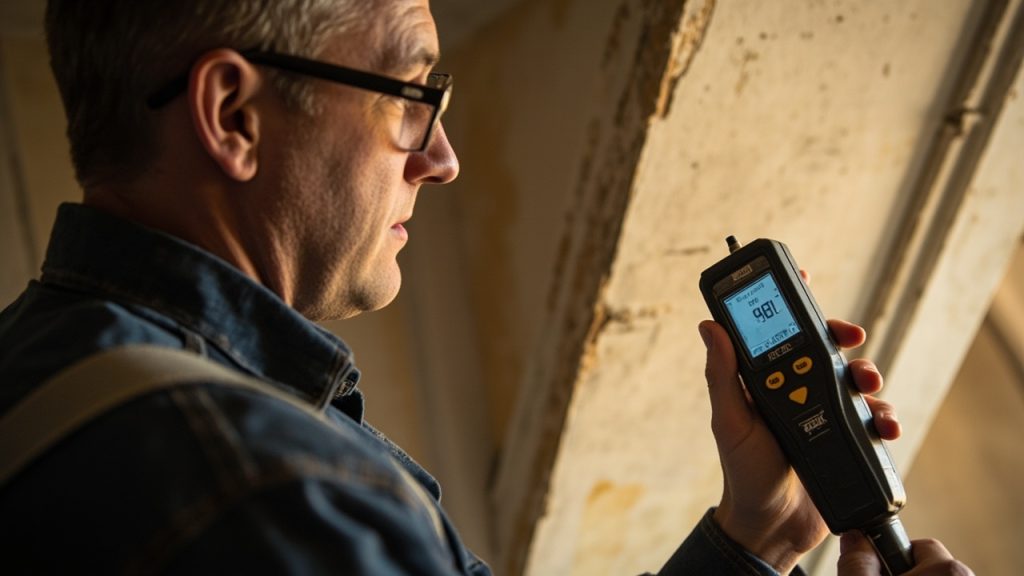
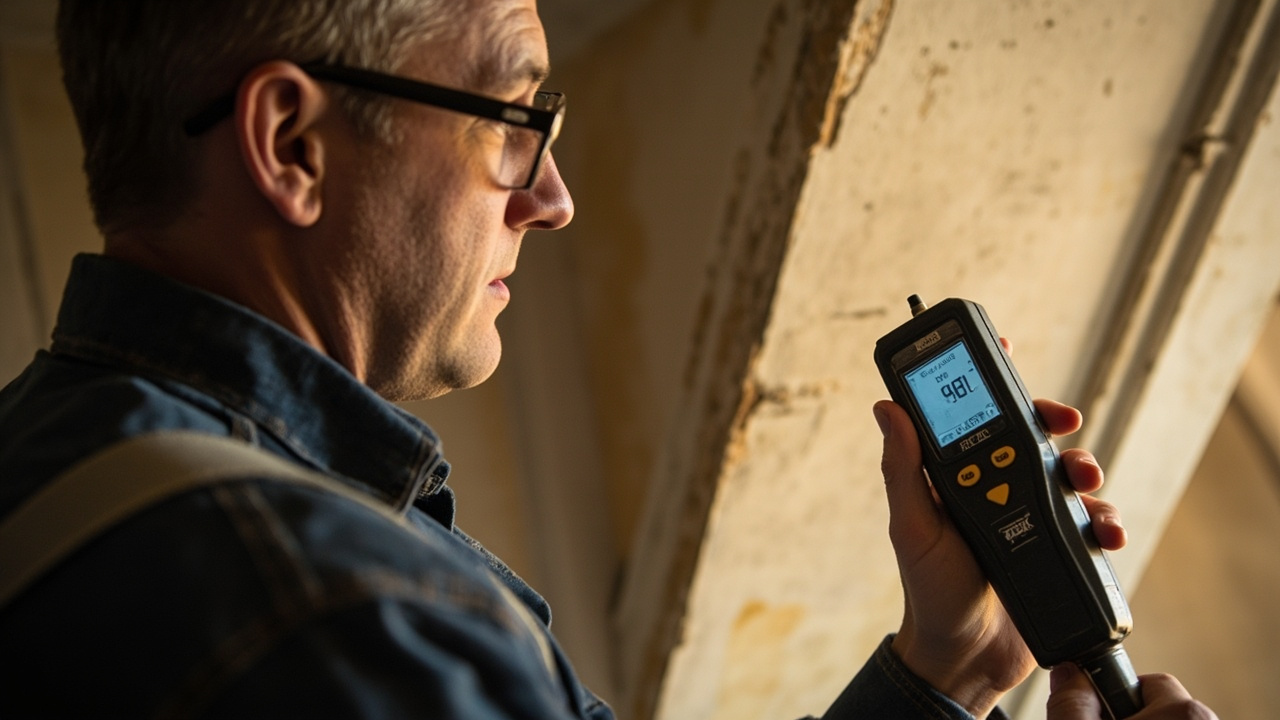
We use low-pressure drying systems and extended drying times with calibrated desiccant dehumidifiers to dry plaster assemblies from the inside out. Thermal imaging and pin-type moisture meters allow us to track moisture content through the plaster without opening the wall cavity unless there is no alternative. When opening is necessary, we document the lath pattern, key dimensions, and original materials so restoration can match the original work.
Old-Growth Hardwood Floor Response to Water
The hardwood floor water damage seen in Indian Village homes is a specific problem. Quarter-sawn white oak and old-growth Douglas fir were milled from dense, slow-growth timber. When saturated, these floors cup and buckle differently than modern flooring products. The good news is that they are far more forgiving during controlled drying because of that same density.
We use floor mat drying systems that apply negative pressure beneath the floor surface. This pulls moisture up through the wood in a controlled direction, reducing the peak moisture content faster and minimizing permanent cupping. For more on this process, see our detailed guide on cupping and buckling wood floors.
Limestone and Fieldstone Foundation Seepage
Many Indian Village homes have limestone block or fieldstone foundations dating to original construction. Water seepage through these foundations is typically a Category 1 clean water issue, but the materials require specific handling. Aggressive air movement against a wet limestone wall causes surface spalling. Efflorescence, the white mineral deposit left by water migration through masonry, is a visible indicator of ongoing moisture issues that need to be addressed at the source. Our guide on efflorescence on concrete and masonry explains what these deposits tell you about your foundation’s condition.
Our Historic Restoration Process Step by Step
We do not use a one-size-fits-all protocol for historic properties. The following is how a typical Indian Village water damage job moves from emergency call to completed restoration.
- Emergency Response and Stabilization. We arrive on-site within 60 minutes of your call, any time of day or night. The first priority is stopping active water intrusion and protecting original materials from secondary damage. Furniture, rugs, and loose items get moved and documented immediately.
- Hazard Assessment. Before any equipment is placed, we check for knob and tube wiring proximity, test for lead paint disturbance risk, and review whether asbestos-containing materials are present in the affected area. This step protects your family and our crew.
- Moisture Mapping with Non-Invasive Tools. Infrared thermal imaging cameras and non-penetrating capacitance meters map the full extent of moisture in walls, ceilings, and floors without a single hole. This is critical in plaster assemblies. You cannot manage what you have not measured accurately.
- Water Extraction. Truck-mounted extraction units remove standing water. For basement flooding common in these older homes, we use submersible pumps followed by wet/dry extraction to remove water from stone floor joints and drain tiles.
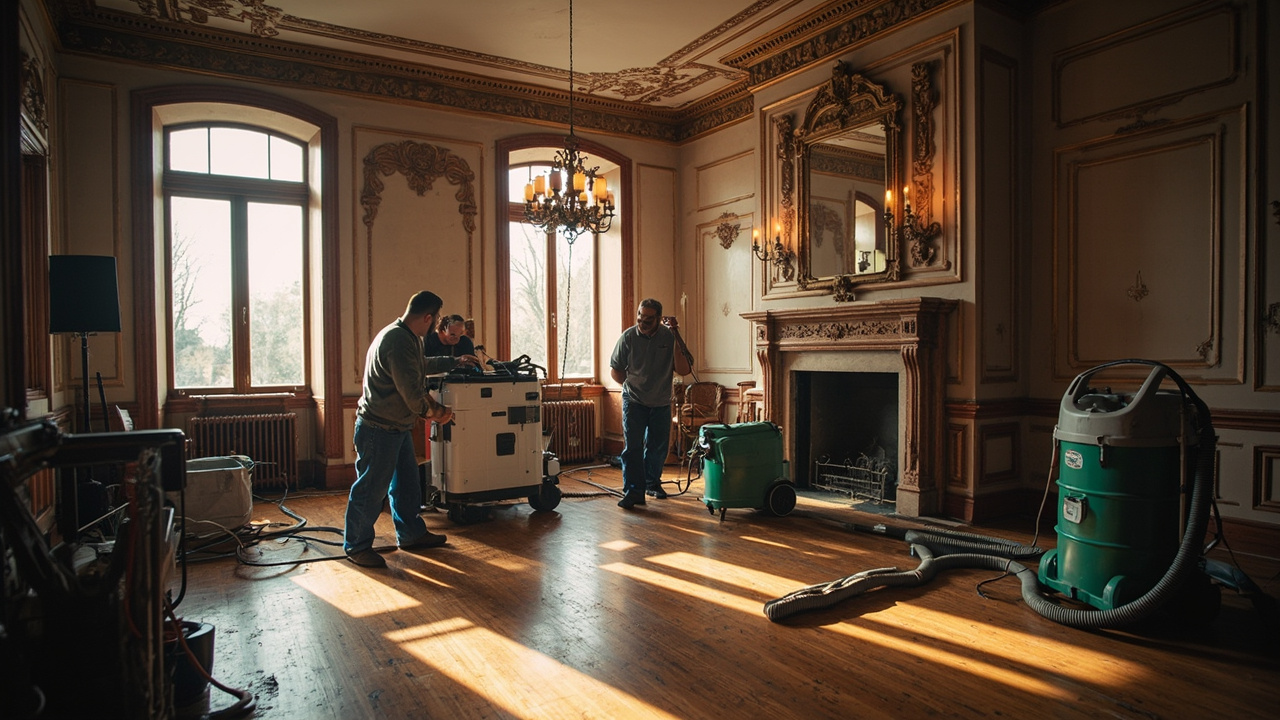
- Structural Drying with Preservation-Focused Equipment. We deploy desiccant dehumidifiers, LGR (low grain refrigerant) dehumidifiers, and directed air movement at settings calibrated for historic assemblies. Equipment is monitored daily and adjusted based on psychrometric readings. Drying timelines for plaster walls typically run 7 to 14 days, compared to 3 to 5 days for modern drywall.
- Controlled Demolition Only Where Necessary. If wall cavities must be opened, we use the minimum footprint. We document original materials and match lime-based plaster mixes for repairs. We do not replace original plaster with gypsum board unless the homeowner specifically requests it after being informed of the difference.
- Sanitization and Mold Prevention. Moisture in old homes means mold risk. We apply antimicrobial treatments appropriate for historic wood and masonry. If mold is already present, see our mold remediation and removal process for details on containment and clearance testing.
Navigating Detroit Historic District Commission Requirements
The Detroit Historic District Commission (HDC) has jurisdiction over exterior alterations to contributing structures in designated historic districts. Indian Village is one of Detroit’s most protected neighborhoods under this framework. If water damage requires any exterior repair, including masonry repointing, window replacement, or roof work, you may need HDC approval before permanent repairs are completed.
Emergency stabilization work, such as emergency roof tarping and water extraction, typically falls outside HDC permit requirements. But permanent repairs that alter exterior materials or appearance require review. We help owners navigate this process and document our work in a way that supports HDC submissions when needed.
The Michigan State Historic Preservation Office (SHPO) also provides guidance on appropriate repair methods for properties on the National Register. Their standards align with Secretary of the Interior’s Standards for Rehabilitation, which prioritize repair over replacement and in-kind materials where replacement is unavoidable. We follow these standards on every historic project.
If your home sustains significant structural damage, contact your insurer and document everything before permanent repairs begin. Our guide on handling insurance claims after water damage walks through what adjusters need and how to protect your settlement.
Restoration vs Replacement in Historic Homes
This is the decision that defines the long-term outcome for your home’s value and authenticity. Original materials in an Indian Village home carry historic significance and cannot be matched by modern substitutes.
| Material | Restore First? | Why It Matters | Replacement Risk |
|---|---|---|---|
| Three-coat lath and plaster | Yes | Original texture, acoustic quality, thermal mass | Gypsum board does not match profile or appearance |
| Old-growth hardwood floors | Yes | Grain density, dimension, and finish depth unavailable today | New flooring lowers appraisal and historic designation status |
| Limestone or fieldstone foundation | Yes | Original structural integrity, neighborhood character | Poured concrete changes drainage behavior |
| Original millwork and trim | Yes | Milled profiles no longer in production | Modern trim visually inconsistent and reduces value |
| Single-pane wood-sash windows | Repair when possible | HDC may restrict replacement; original glass is irreplaceable | Replacement windows require HDC approval in Indian Village |
Common Water Damage Scenarios in Indian Village and Nearby Historic Districts
After working in this neighborhood and in adjacent historic districts like Boston-Edison and Palmer Woods, patterns emerge. The same problems show up repeatedly, and knowing them in advance means faster, more accurate response.
| Water Damage Source | Frequency in Historic Homes | Primary Material at Risk | Average Drying Time |
|---|---|---|---|
| Frozen pipe burst (basement or crawl space) | Very High (Nov through March) | Stone foundation, subfloor joists | 5 to 10 days |
| Roof flashing failure at dormers or turrets | High | Attic plaster, roof deck, timber framing | 7 to 14 days |
| Foundation seepage after spring thaw | High | Limestone walls, basement hardwood or tile floors | 10 to 21 days |
| Sump pump failure during heavy rain | Moderate | Finished basement, stored contents | 3 to 7 days |
| Supply line failure (bathroom or kitchen) | Moderate | Plaster walls, original tile, hardwood floors | 5 to 10 days |
| Chimney water intrusion | Moderate | Plaster around firebox, attic framing | 7 to 14 days |
Frozen pipe bursts are the most common call we receive from Indian Village homeowners during winter months. If your home has cast iron supply lines or galvanized steel pipes, which are common in pre-1940 construction, the burst risk during an extended cold snap is significant. Our frozen pipe burst cleanup process is calibrated for exactly this type of property.
Protecting Your Home’s Contents During Restoration
Historic homes contain irreplaceable items beyond the structure itself. Original artwork, antique furniture, architectural salvage stored in attics, and family documents all need protection during a water damage event. We offer content cleaning and pack-out services that inventory, photograph, clean, and store your belongings offsite while structural drying is completed.
Document drying is a separate specialty. Water-damaged paper records, photographs, and architectural drawings can often be recovered if treated within 48 hours. After 72 hours, mold colonization on paper becomes difficult to reverse. Speed matters as much for your contents as it does for your structure.
Understanding the Water Damage Categories in Your Historic Home
Not all water is the same, and the category of water involved determines both the health risk and the appropriate response protocol. Learn more about water damage categories and what each one means for your home’s restoration path. Foundation seepage is typically Category 1 clean water. A sewer backup is Category 3 black water, and in an older home with cast iron drain lines that may have cracked, the contamination risk can extend further than it would in a modern plumbed home.
Serving Detroit’s Historic Neighborhoods
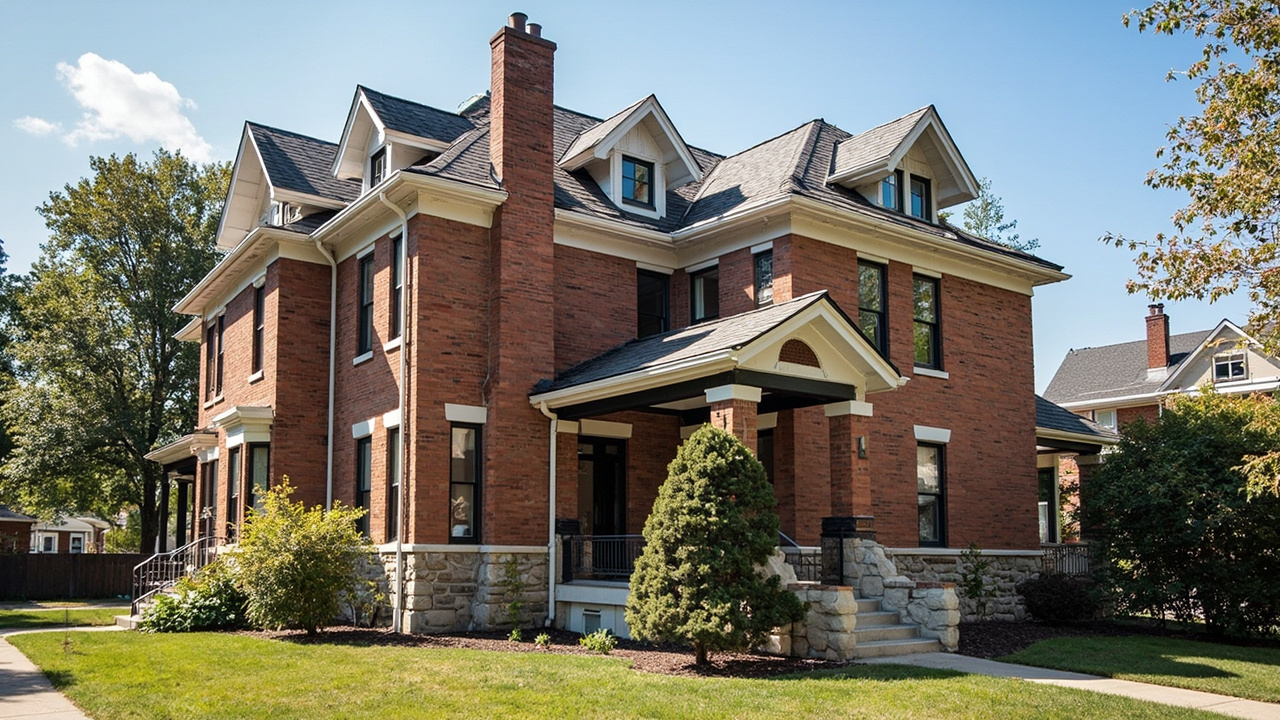
Our water damage restoration services cover Detroit’s full range of historic districts. Indian Village, bounded by East Jefferson, Mack, Burns, and Seminole, is our most frequently served historic neighborhood. We also work extensively in Boston-Edison, where the late-Victorian and early-twentieth-century homes share many of the same construction characteristics. Corktown’s mixed residential and commercial historic structures present their own set of challenges, particularly with party wall water intrusion. Palmer Woods and Sherwood Forest in northwest Detroit round out our primary historic district coverage.
Beyond Detroit proper, our crews serve Wayne County broadly, including Dearborn and Dearborn Heights, as well as communities in Oakland and Macomb counties. See our Royal Oak and Troy service pages for coverage details in those areas.
Questions Indian Village Homeowners Ask Us Most
Can you dry plaster walls without opening them?
In many cases, yes. With thermal imaging and a properly sized desiccant dehumidifier system, we can dry plaster assemblies without cutting. The key variable is whether the insulation in the wall cavity has absorbed water. If horsehair or cellulose fill is saturated, it must be removed to prevent mold growth. We make that determination with moisture readings, not assumptions.
Will my insurance cover historic restoration versus standard replacement?
Most standard homeowner policies pay for restoration to pre-loss condition. On a historic home, that means matching original materials. Document everything before work begins and specifically request that your adjuster note the historic property designation in your claim file. Our insurance claims guide covers this in detail.
How quickly can mold grow in a plaster home after water damage?
Mold colonization can begin within 24 to 48 hours in the right conditions. Plaster holds moisture for longer than drywall, which extends the risk window. Attic spaces and wall cavities with no airflow are highest risk. If you see discoloration or smell mustiness more than a few days after water intrusion, get a moisture assessment done immediately. Learn more about signs of hidden mold in older homes.
Reach Out Before Damage Gets Worse
Water damage in a historic home moves fast and gets expensive when it is not handled correctly from the start. A crew that rips out original plaster or replaces old-growth floors with modern products may solve the immediate moisture problem, but the irreplaceable character of your home goes with it.
We are available around the clock, every day of the year. If you have active water intrusion in your Indian Village home or you are seeing signs of moisture behind walls and under floors, call us now. We will be on site within 60 minutes, and we will bring the expertise your home actually requires. Visit our contact page or call directly for immediate dispatch.
{
“@context”: “https://schema.org”,
“@type”: “BlogPosting”,
“headline”: “Specialized Water Damage Repair for Historic Homes in Indian Village”,
“description”: “Historic home water damage restoration in Detroit’s Indian Village. We protect lath & plaster, old-growth hardwoods, and limestone foundations. Call 24/7.”,
“wordCount”: 2388,
“datePublished”: “2026-02-13T12:49:00.000Z”,
“dateModified”: “2026-02-13T12:49:00.000Z”,
“inLanguage”: “en-US”,
“mainEntityOfPage”: {
“@type”: “WebPage”,
“@id”: “https://ironwoodwaterdamagerestorationdetroit.com”
},
“publisher”: {
“@type”: “LocalBusiness”,
“name”: “Ironwood Water Damage Restoration Detroit”,
“url”: “https://ironwoodwaterdamagerestorationdetroit.com”
},
“author”: {
“@type”: “Organization”,
“name”: “Ironwood Water Damage Restoration Detroit”,
“url”: “https://ironwoodwaterdamagerestorationdetroit.com”
},
“image”: {
“@type”: “ImageObject”,
“url”: “https://ironwoodwaterdamagerestorationdetroit.com/wp-content/uploads/2026/03/specialized-water-damage-repair-for-historic-homes-1.jpg”
}
}
{
“@context”: “https://schema.org”,
“@type”: “LocalBusiness”,
“name”: “Ironwood Water Damage Restoration Detroit”,
“url”: “https://ironwoodwaterdamagerestorationdetroit.com”,
“address”: {
“@type”: “PostalAddress”,
“addressLocality”: “Detroit”
},
“areaServed”: {
“@type”: “City”,
“name”: “Detroit”
}
}
{
“@context”: “https://schema.org”,
“@type”: “FAQPage”,
“mainEntity”: [
{
“@type”: “Question”,
“name”: “Can you dry plaster walls without opening them?”,
“acceptedAnswer”: {
“@type”: “Answer”,
“text”: “In many cases, yes. With thermal imaging and a properly sized desiccant dehumidifier system, we can dry plaster assemblies without cutting. The key variable is whether the insulation in the wall cavity has absorbed water. If horsehair or cellulose fill is saturated, it must be removed to prevent mold growth. We make that determination with moisture readings, not assumptions.”
}
},
{
“@type”: “Question”,
“name”: “Will my insurance cover historic restoration versus standard replacement?”,
“acceptedAnswer”: {
“@type”: “Answer”,
“text”: “Most standard homeowner policies pay for restoration to pre-loss condition. On a historic home, that means matching original materials. Document everything before work begins and specifically request that your adjuster note the historic property designation in your claim file. Our insurance claims guide covers this in detail.”
}
},
{
“@type”: “Question”,
“name”: “How quickly can mold grow in a plaster home after water damage?”,
“acceptedAnswer”: {
“@type”: “Answer”,
“text”: “Mold colonization can begin within 24 to 48 hours in the right conditions. Plaster holds moisture for longer than drywall, which extends the risk window. Attic spaces and wall cavities with no airflow are highest risk. If you see discoloration or smell mustiness more than a few days after water intrusion, get a moisture assessment done immediately. Learn more about signs of hidden mold in older homes.”
}
}
]
}
{
“@context”: “https://schema.org”,
“@type”: “BreadcrumbList”,
“itemListElement”: [
{
“@type”: “ListItem”,
“position”: 1,
“name”: “Home”,
“item”: “https://ironwoodwaterdamagerestorationdetroit.com”
},
{
“@type”: “ListItem”,
“position”: 2,
“name”: “Blog”,
“item”: “https://ironwoodwaterdamagerestorationdetroit.com/blog”
},
{
“@type”: “ListItem”,
“position”: 3,
“name”: “Specialized Water Damage Repair for Historic Homes in Indian Village”
}
]
}
{
“@context”: “https://schema.org”,
“@type”: “Service”,
“serviceType”: “Water Damage Restoration”,
“provider”: {
“@type”: “LocalBusiness”,
“name”: “Ironwood Water Damage Restoration Detroit”,
“url”: “https://ironwoodwaterdamagerestorationdetroit.com”
},
“areaServed”: {
“@type”: “City”,
“name”: “Detroit”
},
“description”: “Historic home water damage restoration in Detroit’s Indian Village. We protect lath & plaster, old-growth hardwoods, and limestone foundations. Call 24/7.”
}