
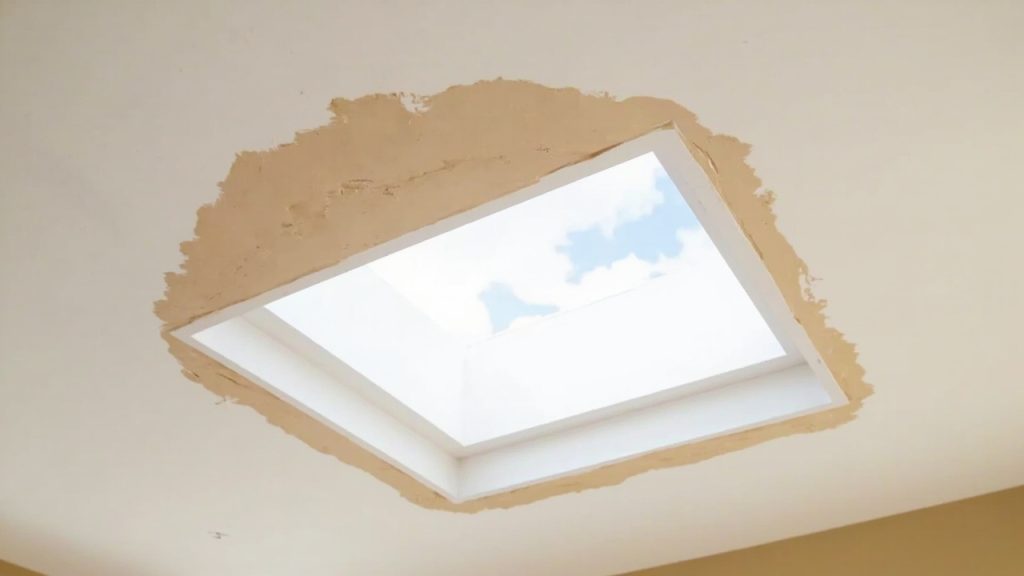
A skylight that leaks is not just a ceiling stain. It is a slow, hidden attack on the structural frame of your home. In West Bloomfield and the broader Metro Detroit area, where freeze-thaw cycles are brutal and ice dams are a regular winter threat, even a small gap in your skylight flashing can send water directly into the rough opening framing around the unit. That framing includes your interior headers. Once those headers saturate, you are looking at rot, mold, and potentially compromised structural support above your head.
This guide walks you through exactly what happens when a skylight leaks into the header zone, how to tell if it has already started in your home, and what a proper restoration looks like from an IICRC-certified crew that works in Michigan weather every day.
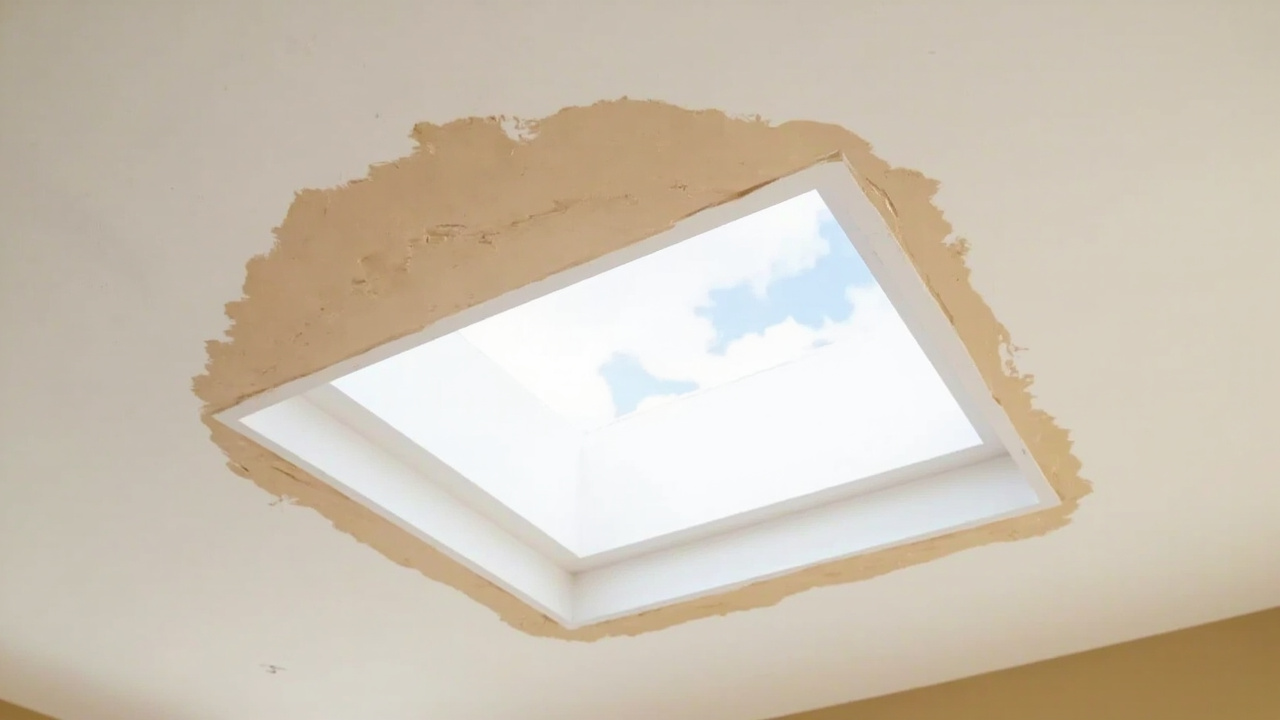
What Interior Headers Actually Do (And Why They Matter)
When a skylight is cut into a roof, the rafter framing has to be interrupted. To support the load that those cut rafters used to carry, a structural header is installed across the top and bottom of the rough opening. This is a doubled or tripled dimensional lumber member, often 2×10 or 2×12 material depending on the span, and it carries the roof load around the opening.
In older West Bloomfield homes built in the 1970s through 1990s, when skylights were a popular upgrade, this framing is often standard Douglas fir or hem-fir. These species absorb water readily. Once moisture content in the wood climbs above 19 percent, fungal decay begins. You do not see it immediately. It happens inside the ceiling cavity, behind your drywall, while the skylight above keeps feeding it water every time it rains or snow melts.
By the time you see a brown ring on your ceiling, the header may already be compromised.
Is It a Leak or Just Condensation?
This is the first question we ask on every skylight call in Wayne County and Oakland County. Michigan homes deal with significant indoor humidity from October through April, and skylights are cold surfaces. Condensation forms when warm interior air hits the cold glazing. This looks like weeping at the frame edges and is often mistaken for a leak.
Here is how to tell them apart.
- Condensation shows up during cold spells and disappears when temperatures moderate. The moisture is on or just inside the glazing surface. The surrounding ceiling stays dry.
- A flashing or sealant leak produces staining on the ceiling drywall beyond the skylight frame itself. It gets worse after rain events or during freeze-thaw cycles. You may notice the ceiling feels soft or bubbled when you press it.
- A curb seal failure on a curb-mounted unit creates water intrusion that runs down the inside of the shaft and pools at the ceiling drywall. This is common in West Bloomfield homes with tube skylights installed over finished rooms.
- Ice dam backup is a Michigan-specific problem. When snow on your roof melts and refreezes at the eave, water backs up under the shingles. Near a skylight, this can force water through the step flashing or under the saddle flashing behind the unit, sending it directly to the header framing.
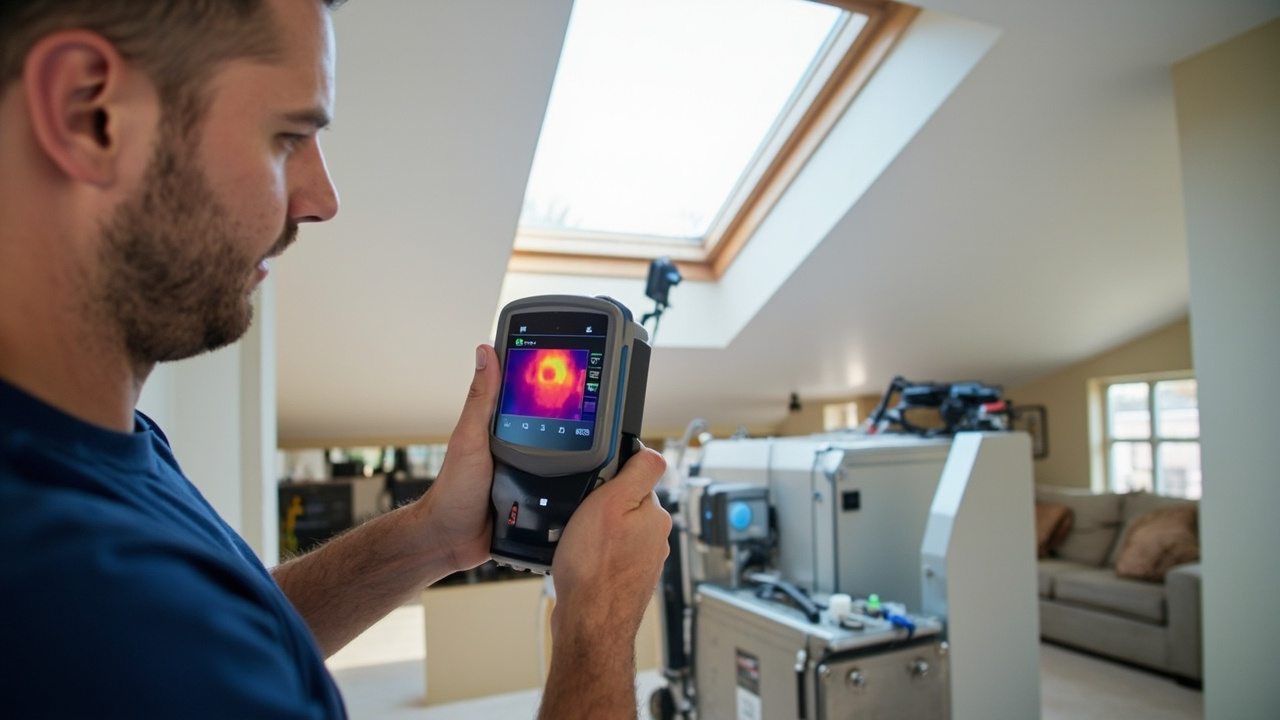
A moisture meter reading on the surrounding drywall and a thermal imaging camera scan will tell you definitively which problem you have. We use both on every skylight assessment.
How Water Travels from the Skylight to the Header
Water does not fall straight down through your ceiling. It travels along framing members, insulation batts, and the skylight shaft lining before it finds the path of least resistance. In a typical West Bloomfield ranch or two-story colonial, here is the typical path.
Water enters at the flashing, step flashing, or saddle behind the skylight. It follows the rafter to the trimmer stud. The header sits between the two trimmer studs at the top of the rough opening. Water pools at this connection point because the trimmer-to-header joint creates a horizontal surface where water collects. The header soaks it up like a sponge.
The insulation in the skylight shaft absorbs the overflow and holds moisture against the drywall. Within weeks, you have saturated framing, wet insulation, and a perfect environment for Stachybotrys or Penicillium mold growth. Both are common in Metro Detroit water damage cases and both require professional remediation, not a bleach spray.
What Skylight Leak Damage Looks Like at Different Stages
| Stage | What You See | What Is Happening Inside | Urgency Level |
|---|---|---|---|
| Early (weeks 1 to 3) | Faint yellow or tan ring on ceiling drywall | Moisture content in header rising above safe threshold | High. Stop moisture entry now. |
| Moderate (weeks 4 to 8) | Bubbling paint, soft ceiling texture, visible drip | Drywall paper saturated, mold spores activating in insulation | Very High. Drying and remediation needed. |
| Advanced (2 or more months) | Dark staining, sagging drywall, musty odor | Active mold colony, wood decay beginning in header and trimmer studs | Emergency. Structural assessment required. |
| Severe (long-term neglect) | Ceiling collapse risk, visible black staining, structural flex | Header load capacity reduced, rot may extend to top plate | Do not occupy room below until assessed. |
Common Causes in West Bloomfield and Metro Detroit Specifically
West Bloomfield sits in Oakland County at roughly the same latitude as the thumb region of Michigan. Winter temperatures swing from the low single digits to the mid-40s within the same week. That freeze-thaw cycle destroys roofing sealant faster than almost anything else.
Specifically, here are the causes we see most on skylight leak calls in this area.
Degraded Butyl or Silicone Sealant at the Curb
Most residential skylights in West Bloomfield neighborhoods like Maple-Walnut Lake Road or the subdivisions off Orchard Lake Road use a curb-mounted design. The sealant at the curb-to-skylight frame joint has a finite lifespan, often 10 to 15 years in Michigan conditions. After that, it cracks, gaps, and lets water in every time it rains.
Step Flashing Failure from Ice Dam Pressure
Ice dams build at the lower edge of a skylight the same way they build at the eaves. Water pools behind the dam and drives up under the step flashing. The U.S. Department of Energy notes that ice dams are one of the leading causes of residential roof water intrusion in cold climates, and Metro Detroit homeowners see this every winter.
Saddle or Cricket Failure
A cricket is the small peaked structure built behind a skylight on the uphill side to divert water around the unit. On older West Bloomfield homes, crickets were sometimes skipped or built with inadequate flashing. Without a proper cricket, debris and water pool behind the skylight and eventually find their way through.
Glazing Seal Failure on Older Units
Velux, Andersen, and other brands that were installed 20 or more years ago used glazing seals that have simply run out of life. The thermal cycling of Michigan summers and winters accelerates this. A failed glazing seal allows water into the skylight frame itself, bypassing the exterior flashing entirely.
The Restoration Process After Skylight Header Damage
Fixing the roof is the roofer’s job. Restoring what water damaged inside your home is ours. These are two separate scopes and both need to happen for the repair to last. Here is what the interior restoration process looks like.
Step 1 — Emergency Tarping and Moisture Mapping
If the leak is active, the first priority is stopping additional water from entering. We coordinate with roofing contractors on emergency tarping while we begin interior moisture mapping. Thermal imaging cameras identify the full boundary of wet framing and insulation that is not visible to the eye.
Step 2 — Controlled Demolition of Affected Drywall
Wet drywall cannot be dried in place effectively. We remove the saturated sections of the skylight shaft and ceiling to expose the framing. This is not optional. Leaving wet drywall in place traps moisture against the wood and promotes mold growth even if you run desiccants for a week.
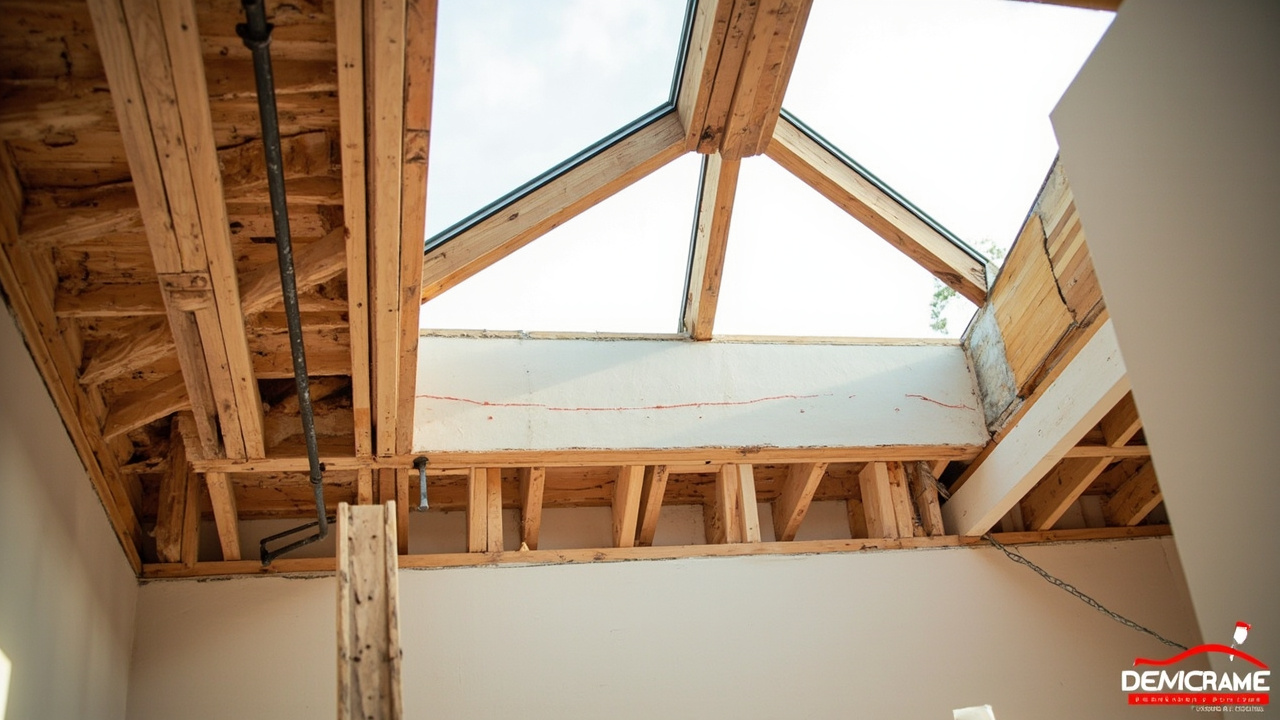
Step 3 — Structural Assessment of the Header
Once the framing is exposed, we assess the header. A moisture meter reading above 19 percent means active decay risk. A structural probe tells us whether the wood fiber has degraded. If the header shows decay, a licensed structural carpenter must sister or replace it before any drying or finishing work continues. We document all of this with photographs for your insurance carrier.
Step 4 — Drying with Commercial Equipment
Industrial desiccant dehumidifiers and axial air movers are positioned to create a drying chamber around the exposed cavity. In a Metro Detroit winter, ambient outdoor humidity is low, which actually helps drying times. We typically achieve target moisture content in structural lumber within 3 to 5 days for moderate damage cases, longer if the insulation was thick and held significant water.
The IICRC (Institute of Inspection Cleaning and Restoration Certification) sets the industry standard for drying goals in structural assemblies. We follow S500 Standard protocols on every project, which means we do not close up a wall or ceiling until daily moisture readings confirm the wood is at equilibrium with the local ambient conditions.
Step 5 — Mold Remediation If Indicated
If mold colonies are present, remediation follows IICRC S520 protocol. This means contained removal of affected materials, HEPA vacuuming, and antimicrobial treatment of the framing before the cavity is closed. For more detail on why surface treatments like bleach are not enough in situations like this, read why bleach won’t fix structural mold and when to call a pro.
Step 6 — Rebuild
New insulation, new drywall, tape, mud, texture, and paint. The goal is returning the skylight shaft and ceiling to pre-loss condition. For homes with hardwood in the room below that absorbed drip water, there may be floor restoration involved as well. Our team has written on exactly this situation in how to save hardwood floors after a significant water leak, which applies equally to West Bloomfield homes with engineered or solid hardwood flooring.
Restoration Timeframes for Skylight Header Damage
| Damage Scope | Drying Phase | Remediation (If Needed) | Rebuild Phase | Total Typical Timeline |
|---|---|---|---|---|
| Minor (ceiling stain only, no structural penetration) | 2 to 3 days | Not typically required | 1 to 2 days | 4 to 6 days |
| Moderate (saturated shaft, insulation replacement needed) | 4 to 5 days | 1 day if surface mold only | 2 to 4 days | 7 to 10 days |
| Advanced (header damage, mold colony, structural carpentry needed) | 5 to 7 days | 2 to 3 days with containment | 4 to 7 days | 12 to 18 days |
| Severe (long-term neglect, multiple framing members affected) | 7 or more days | 3 to 5 days | 7 to 14 days | 3 to 5 weeks |
Filing a Homeowners Insurance Claim for Skylight Water Damage
Whether your carrier covers skylight leak damage depends heavily on the cause. Sudden and accidental damage, like a storm-cracked skylight glazing unit, is typically covered. Long-term seepage from a neglected seal is typically excluded as a maintenance issue. This is why the cause documentation we create during the assessment matters so much.
We photograph the flashing condition, the sealant, the ice dam evidence if present, and the path water traveled. This gives your adjuster a clear record of what failed and why. For a full breakdown of how to work with your carrier on a water damage claim in Michigan, read our guide on how to get your Detroit home insurance to actually pay for water restoration. If you have already had a prior water claim in the area, the process covered in filing a successful water damage insurance claim walks through the documentation steps that increase approval rates.
One note specific to Oakland County claims: carriers operating in Michigan are regulated under the Michigan Department of Insurance and Financial Services, and they are required to respond to claims within specific timeframes. A restoration contractor with documented scope of loss helps push that process forward and reduces back-and-forth with adjusters.
How Long Can You Wait Before the Damage Gets Worse?
In our experience across thousands of water damage jobs in Metro Detroit, the answer is not long. Mold growth begins within 24 to 72 hours on wet cellulose materials like drywall paper and wood framing. Once mold is established in a confined ceiling cavity, remediation costs rise significantly compared to catching it early.
If you see a stain around your skylight, even a small one, do not wait for the next rainstorm to confirm it is getting worse. By then, you may have moved from a drying-only job to a structural carpentry and mold remediation job. The difference in scope is significant.
Call for an assessment. Moisture mapping is non-destructive and takes less than an hour. You will know exactly what you are dealing with before any work begins.
What to Do Right Now If Your Skylight Is Actively Leaking
If water is coming through your skylight today, here are the immediate steps to take before a restoration crew arrives.
- Place a bucket or absorbent towels under the drip point to prevent water from spreading across the floor.
- Do not poke or press on a sagging ceiling. Saturated drywall can hold a significant amount of water and releasing it suddenly can cause a larger collapse and a bigger mess.
- Move furniture, rugs, and electronics away from the area below the skylight.
- If you have access to the attic, place plastic sheeting over the insulation around the skylight to limit how far the water spreads laterally.
- Take photos before you do anything else. Date-stamped photos from your phone are your first piece of insurance documentation.
- Call a restoration company with 24-hour emergency response. This is not a wait-until-Monday situation.
We respond to skylight leak emergencies across Metro Detroit and Oakland County within 60 minutes of your call. Whether you are in West Bloomfield Township, Orchard Lake, Keego Harbor, or Sylvan Lake, the response time is the same. The sooner drying equipment is running, the smaller your final restoration scope.
If a wet carpet situation has also developed in the room below, check out our breakdown on deciding whether wet carpet can be saved or needs to go, which covers the same decision criteria we use in the field.
A leaking skylight is a fixable problem. A rotted header that has been feeding mold for three months is a much larger project. The difference between those two outcomes is usually just how fast you called.
{
“@context”: “https://schema.org”,
“@type”: “BlogPosting”,
“headline”: “What a Leaking Skylight Does to the Structural Headers in Your West Bloomfield Home”,
“description”: “A leaking skylight in West Bloomfield can silently rot interior headers and breed mold. Learn how to spot the damage and what restoration actually looks like.”,
“wordCount”: 2385,
“datePublished”: “2026-04-21T10:31:00.000Z”,
“dateModified”: “2026-04-21T10:31:00.000Z”,
“inLanguage”: “en-US”,
“mainEntityOfPage”: {
“@type”: “WebPage”,
“@id”: “https://ironwoodwaterdamagerestorationdetroit.com”
},
“publisher”: {
“@type”: “LocalBusiness”,
“name”: “Ironwood Water Damage Restoration Detroit”,
“url”: “https://ironwoodwaterdamagerestorationdetroit.com”
},
“author”: {
“@type”: “Organization”,
“name”: “Ironwood Water Damage Restoration Detroit”,
“url”: “https://ironwoodwaterdamagerestorationdetroit.com”
},
“image”: {
“@type”: “ImageObject”,
“url”: “https://ironwoodwaterdamagerestorationdetroit.com/wp-content/uploads/2026/03/how-a-leaking-skylight-in-your-west-bloomfield-hom-1.jpg”
}
}
{
“@context”: “https://schema.org”,
“@type”: “LocalBusiness”,
“name”: “Ironwood Water Damage Restoration Detroit”,
“url”: “https://ironwoodwaterdamagerestorationdetroit.com”,
“address”: {
“@type”: “PostalAddress”,
“addressLocality”: “Detroit”
},
“areaServed”: {
“@type”: “City”,
“name”: “Detroit”
}
}
{
“@context”: “https://schema.org”,
“@type”: “FAQPage”,
“mainEntity”: [
{
“@type”: “Question”,
“name”: “Is It a Leak or Just Condensation?”,
“acceptedAnswer”: {
“@type”: “Answer”,
“text”: “This is the first question we ask on every skylight call in Wayne County and Oakland County. Michigan homes deal with significant indoor humidity from October through April, and skylights are cold surfaces. Condensation forms when warm interior air hits the cold glazing. This looks like weeping at the frame edges and is often mistaken for a leak.”
}
},
{
“@type”: “Question”,
“name”: “How Long Can You Wait Before the Damage Gets Worse?”,
“acceptedAnswer”: {
“@type”: “Answer”,
“text”: “In our experience across thousands of water damage jobs in Metro Detroit, the answer is not long. Mold growth begins within 24 to 72 hours on wet cellulose materials like drywall paper and wood framing. Once mold is established in a confined ceiling cavity, remediation costs rise significantly compared to catching it early.”
}
}
]
}
{
“@context”: “https://schema.org”,
“@type”: “BreadcrumbList”,
“itemListElement”: [
{
“@type”: “ListItem”,
“position”: 1,
“name”: “Home”,
“item”: “https://ironwoodwaterdamagerestorationdetroit.com”
},
{
“@type”: “ListItem”,
“position”: 2,
“name”: “Blog”,
“item”: “https://ironwoodwaterdamagerestorationdetroit.com/blog”
},
{
“@type”: “ListItem”,
“position”: 3,
“name”: “What a Leaking Skylight Does to the Structural Headers in Your West Bloomfield Home”
}
]
}
{
“@context”: “https://schema.org”,
“@type”: “Service”,
“serviceType”: “Water Damage Restoration”,
“provider”: {
“@type”: “LocalBusiness”,
“name”: “Ironwood Water Damage Restoration Detroit”,
“url”: “https://ironwoodwaterdamagerestorationdetroit.com”
},
“areaServed”: {
“@type”: “City”,
“name”: “Detroit”
},
“description”: “A leaking skylight in West Bloomfield can silently rot interior headers and breed mold. Learn how to spot the damage and what restoration actually looks like.”
}