

Corktown’s Rental Stock Was Built Before Modern Plumbing Standards Existed
If you own a rental property in Corktown, you are managing a building that was likely constructed between the 1870s and 1940s. That means clay tile sewer laterals, original cast-iron supply lines, rubble-stone foundations, and basement floor drains that connect directly to a combined sewer system that the City of Detroit has been working to separate for decades. The charm is real. So is the risk.
A preventative water audit is not a sales tactic. It is a systematic inspection of every point where water enters, moves through, or exits your building. For a Worker’s Row House on Bagley Avenue or a converted industrial loft near Michigan Avenue, that inspection often turns up problems that a standard rental inspection from the Detroit Building Safety Engineering and Environmental Department (BSEED) will not catch until they become visible code violations.
Catching those problems first is the entire point.

The Specific Water Damage Risks Inside 48216
Not all water damage risks are equal. What threatens a 2010-built apartment complex in Midtown looks nothing like what threatens a Victorian-era two-flat in the Corktown Historic District. Understanding the difference shapes how you budget, how you inspect, and how fast you act when something goes wrong.
Aging Sewer Laterals and Basement Backups
The majority of residential sewer laterals in the 48216 zip code are clay tile pipe. Clay tile was the standard material for over 80 years, and it does its job well until the joints shift or tree roots infiltrate the line. When a lateral fails during a heavy rain event, sewage backs up through the lowest floor drain in the building. That is typically the basement of a rental unit. Sewage water is Category 3 contamination under IICRC S500 Standards, which means full contents removal, antimicrobial treatment, and structural drying before any restoration work can begin.
That process is expensive and it displaces tenants. Preventative camera inspection of your lateral costs a fraction of that remediation bill.
Original Cast-Iron and Lead Supply Lines
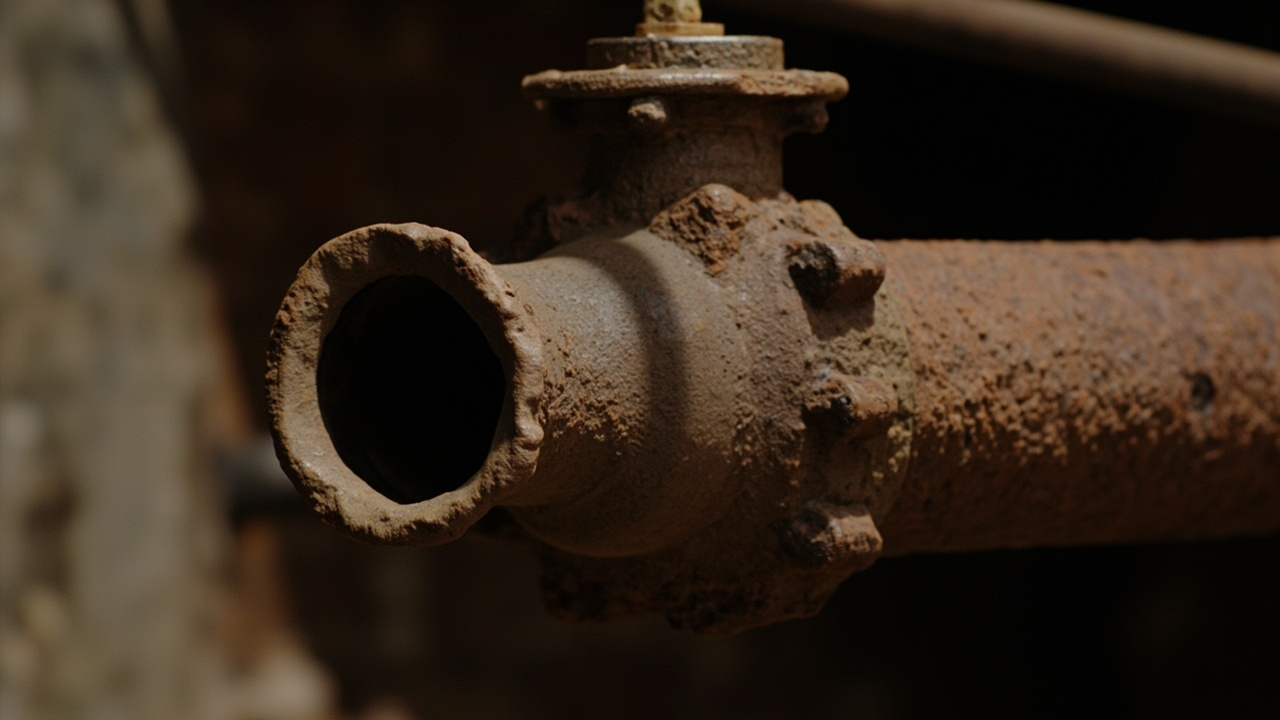
Many Corktown properties still have partial or full runs of original cast-iron drain lines and, in some cases, lead service lines connecting to the city main. Cast iron corrodes from the inside out. You will not see it failing until you see rust-colored water at a fixture or find a pinhole leak behind a wall. Lead service lines are a separate issue that Detroit has been actively replacing, but building-side plumbing remains the owner’s responsibility.
Rubble-Stone and Brick Foundations
The foundations under historic Corktown homes are not poured concrete. They are stacked stone or soft brick mortared with lime-based compounds that have been absorbing ground moisture since the 1880s. When that mortar erodes, water moves through the foundation wall as hydrostatic pressure pushes in from the surrounding soil. You will see efflorescence first, then active seepage, then cracking. Unaddressed foundation seepage contributes directly to chronic basement humidity, which creates the conditions for mold colonization inside the wall cavities of your finished rental units.
Flat Roofs and Parapet Walls
Corktown’s commercial buildings and many of its residential flats feature flat or low-slope roofs with parapet walls. The flashing at parapet-to-roof junctions is the single most common point of water intrusion on these structures. Detroit’s freeze-thaw cycles run hard through January and February, and every thaw cycle works on compromised flashing the same way water works on a crack in a dam. One failed flashing joint sends water into the top-floor unit and does not stop until someone traces the source.
| Water Damage Risk | Common Corktown Cause | Detection Method | Urgency Level |
|---|---|---|---|
| Sewer backup | Failed clay tile lateral or blockage | Camera inspection of lateral | High (Category 3 contamination) |
| Foundation seepage | Eroded lime mortar in rubble-stone walls | Visual inspection, moisture meter readings | Medium to High |
| Roof water intrusion | Failed parapet flashing, flat roof membrane failure | Interior ceiling staining, IR scan | High during winter |
| Supply line failure | Corroded cast-iron drain, aged supply fittings | Water meter test, visual pipe inspection | High (sudden failure risk) |
| HVAC condensate | Clogged condensate drain on aging systems | Pan inspection, drain flush test | Medium |
What a Professional Water Audit Actually Covers
A preventative water audit goes well beyond a tenant walkthrough or a standard BSEED rental inspection. A qualified water mitigation professional uses a combination of visual inspection, moisture mapping with a non-invasive meter, and in some cases thermal imaging to identify hidden moisture in wall assemblies before it becomes active mold growth.
Here is what a thorough audit covers on a Corktown rental property.
- Roof membrane and flashing condition at parapet walls, penetrations, and valleys
- Gutter and downspout discharge points, specifically whether water is directing away from the foundation
- Foundation wall moisture readings in the basement or crawl space using a calibrated pin-type and pinless meter
- Sump pump operation test and pit inspection for sediment accumulation
- Supply line age and material identification, with attention to braided supply hoses at fixtures
- Water heater inspection for corrosion at the base and T&P valve condition
- HVAC condensate drain verification and air handler pan inspection
- Bathroom tile and caulk integrity at tub and shower surrounds
- Dishwasher and washing machine supply line condition
- Exterior grading assessment to confirm positive slope away from the foundation
When moisture readings exceed normal baseline levels inside wall cavities, a deeper investigation is warranted. If you have a unit that has had a prior water event, even a small one, those walls need to be checked. Mold begins colonizing within 24 to 48 hours of a moisture event and can continue growing inside a wall cavity for months before a tenant notices a smell or sees discoloration. At that point, the remediation scope and cost grow significantly. You can read more about why surface treatments alone will not resolve mold issues in our article on why bleach won’t fix basement mold and when to call a pro.
BSEED Rental Compliance and Where Water Issues Show Up First
Detroit’s BSEED conducts rental property inspections as part of the Certificate of Compliance process. Inspectors flag visible moisture damage, peeling paint caused by moisture intrusion, and evidence of mold. What they do not do is probe inside walls or run moisture meters. That means a building can pass a BSEED inspection with active moisture in the wall assembly and fail the following inspection cycle after that moisture becomes visible damage or mold.
Proactive landlords use the BSEED inspection as a floor, not a ceiling. Meeting code minimums protects you from fines. Conducting a water audit before each inspection cycle protects you from emergency repair costs, tenant displacement claims, and potential habitability disputes.
If a water event does lead to a claim with your insurance carrier, having documented audit records and maintenance logs strengthens your position considerably. For guidance on working with insurers after a water event, see our detailed walkthrough on filing a successful water damage insurance claim for your Corktown home.
Quarterly Maintenance Tasks That Reduce Water Damage Risk
A water audit gives you a baseline. Quarterly maintenance keeps your risk low between audits. The following schedule applies specifically to the building types common in the Corktown Historic District and surrounding 48216 streets.
| Quarter | Priority Task | Why It Matters for Corktown Properties |
|---|---|---|
| Q1 (January through March) | Inspect roof flashing and check for ice damming at parapet walls | Freeze-thaw cycles expand existing cracks in flashing and membrane seams |
| Q1 | Test sump pump operation before spring thaw | Ground saturation peaks during March and April in low-lying Corktown streets |
| Q2 (April through June) | Clear gutters and extend downspout discharge points | Spring debris accumulation blocks drainage and pushes water toward foundations |
| Q2 | Inspect foundation wall and basement floor for new efflorescence or cracking | Post-thaw soil movement creates new stress on rubble-stone foundations |
| Q3 (July through September) | Check HVAC condensate lines and air handler pans | High summer humidity in Detroit increases condensate volume significantly |
| Q3 | Inspect bathroom caulk and tile grout in all units | Grout failure behind tile is one of the most common sources of hidden wall moisture |
| Q4 (October through December) | Insulate exposed pipes in unheated basements and crawl spaces | Pipe freeze and burst events spike during hard freezes common in November and December |
| Q4 | Schedule water heater inspection, flush sediment | Water heater failures during winter cause significant damage in tight Corktown floor plans |

What Happens When You Skip the Audit and Water Gets In
The question is not whether water will find a way into an older Corktown building. The question is whether you find out about it before or after it becomes a significant event. Properties near the Michigan Central Station corridor have seen significant investment in recent years, and that investment pressure has raised both property values and tenant expectations. A water damage event in a renovated rental unit is not just a repair cost. It is lost rent during remediation, potential tenant relocation expenses, and possible habitability claims.
When water does get in, the response window matters. Structural drying under IICRC S500 Standards requires specific drying targets for different material categories. Drywall assemblies, wood subfloor, and concrete all have different equilibrium moisture content targets and different drying timelines. Missing that window by even 24 hours can push a restorable structure into a replacement scenario. If a pipe bursts in a top-floor unit, the water migrates through the floor assembly into the unit below. By the time you see water staining on the ceiling of the lower unit, the subfloor above may already have swollen beyond what drying can recover.
If your property does experience a hardwood floor event from a water leak, our article on saving hardwood floors after a significant water leak covers the decision points your restoration contractor should be walking you through.
Out-of-State Owners Face the Highest Exposure
A significant share of Corktown investment property is now owned by investors based outside Michigan. Remote ownership is a viable strategy. It does require systems that compensate for the lack of direct oversight. A water audit conducted by a local professional, documented and delivered to the owner digitally, serves as both a risk management tool and a due diligence record.
Out-of-state owners also face the challenge of managing insurance claims from a distance. Understanding what your policy actually covers before a loss event is a separate conversation, but ensuring you have documented maintenance records is the foundation of any successful claim. You can also reference our breakdown of how to get your Detroit home insurance to actually pay for water restoration for specific guidance on policy language and documentation.
How to Use the Audit Results as a Management Tool
A water audit report gives you a prioritized list of conditions. Some items are immediate. A failed sump pump check valve needs to be addressed before the next significant rain event. Other items are monitored, meaning the moisture reading is elevated but not yet active, and you schedule a follow-up in 90 days.
Prioritizing repairs based on audit findings is how experienced landlords manage a portfolio of older buildings without overspending on things that can wait and underspending on things that cannot. The IICRC defines moisture damage categories and material response timelines in its published IICRC S500 Standard for Professional Water Damage Restoration, which your restoration contractor should be working from on any active loss event.
Scheduling Your First Audit Before the Next Freeze Season
The best time to conduct a water audit on a Corktown rental property is before a seasonal stress period, meaning before the first hard freeze or before spring thaw. If you own a multi-unit property on Michigan Avenue, a Worker’s Row House on Leverette Street, or a converted loft anywhere in the 48216 footprint, a one-time audit establishes your baseline. Annual follow-up audits track changes over time and flag deterioration before it crosses into active damage.
If you want to protect your investment, keep your tenants housed, and stay ahead of BSEED compliance cycles, reach out to schedule a preventative water audit walkthrough. We work with individual landlords and property management companies throughout Corktown and the broader Detroit area. Emergency 24/7 response is also available when an active water event does not wait for business hours.
{
“@context”: “https://schema.org”,
“@type”: “BlogPosting”,
“headline”: “Why Every Corktown Rental Property Owner Needs a Preventative Water Audit”,
“description”: “Corktown landlords face unique water damage risks in older buildings. Learn what a preventative water audit covers and why it matters for Detroit rental compliance.”,
“wordCount”: 2021,
“datePublished”: “2026-05-16T04:46:00.000Z”,
“dateModified”: “2026-05-16T04:46:00.000Z”,
“inLanguage”: “en-US”,
“mainEntityOfPage”: {
“@type”: “WebPage”,
“@id”: “https://ironwoodwaterdamagerestorationdetroit.com”
},
“publisher”: {
“@type”: “LocalBusiness”,
“name”: “Ironwood Water Damage Restoration Detroit”,
“url”: “https://ironwoodwaterdamagerestorationdetroit.com”
},
“author”: {
“@type”: “Organization”,
“name”: “Ironwood Water Damage Restoration Detroit”,
“url”: “https://ironwoodwaterdamagerestorationdetroit.com”
},
“image”: {
“@type”: “ImageObject”,
“url”: “https://ironwoodwaterdamagerestorationdetroit.com/wp-content/uploads/2026/03/why-your-corktown-rental-property-needs-a-preventa-1.jpg”
}
}
{
“@context”: “https://schema.org”,
“@type”: “LocalBusiness”,
“name”: “Ironwood Water Damage Restoration Detroit”,
“url”: “https://ironwoodwaterdamagerestorationdetroit.com”,
“address”: {
“@type”: “PostalAddress”,
“addressLocality”: “Detroit”
},
“areaServed”: {
“@type”: “City”,
“name”: “Detroit”
}
}
{
“@context”: “https://schema.org”,
“@type”: “BreadcrumbList”,
“itemListElement”: [
{
“@type”: “ListItem”,
“position”: 1,
“name”: “Home”,
“item”: “https://ironwoodwaterdamagerestorationdetroit.com”
},
{
“@type”: “ListItem”,
“position”: 2,
“name”: “Blog”,
“item”: “https://ironwoodwaterdamagerestorationdetroit.com/blog”
},
{
“@type”: “ListItem”,
“position”: 3,
“name”: “Why Every Corktown Rental Property Owner Needs a Preventative Water Audit”
}
]
}
{
“@context”: “https://schema.org”,
“@type”: “Service”,
“serviceType”: “Water Damage Restoration”,
“provider”: {
“@type”: “LocalBusiness”,
“name”: “Ironwood Water Damage Restoration Detroit”,
“url”: “https://ironwoodwaterdamagerestorationdetroit.com”
},
“areaServed”: {
“@type”: “City”,
“name”: “Detroit”
},
“description”: “Corktown landlords face unique water damage risks in older buildings. Learn what a preventative water audit covers and why it matters for Detroit rental compliance.”
}