
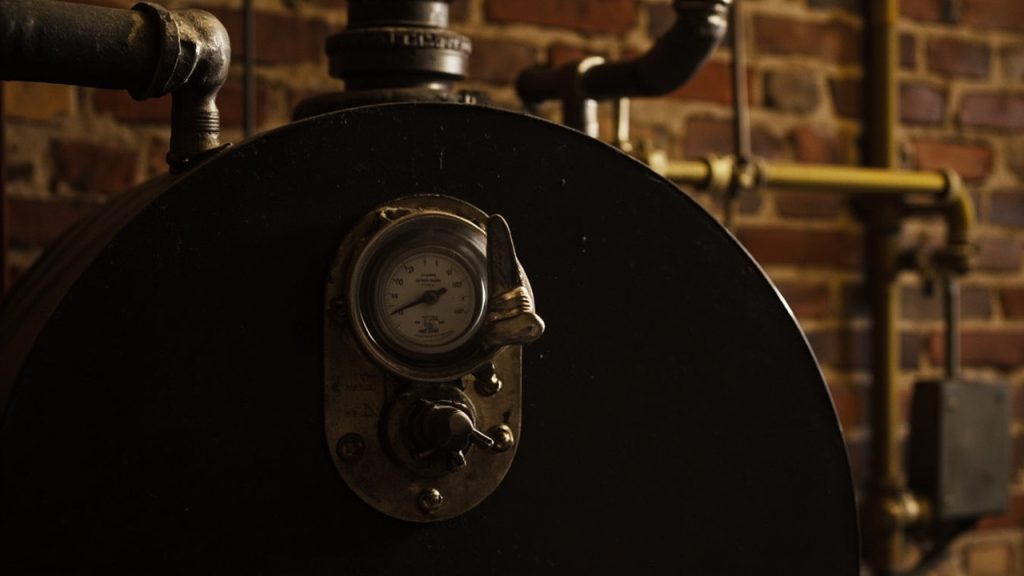
A leaking boiler in a Boston-Edison home is not the same as a leaking boiler in a new construction subdivision. The materials behind your walls, under your floors, and wrapped around your pipes change everything about how water damage spreads, how fast mold grows, and how the restoration process has to work. If you own a historic Detroit home and your boiler is dripping, pooling, or flooding, you need information that actually applies to your situation.
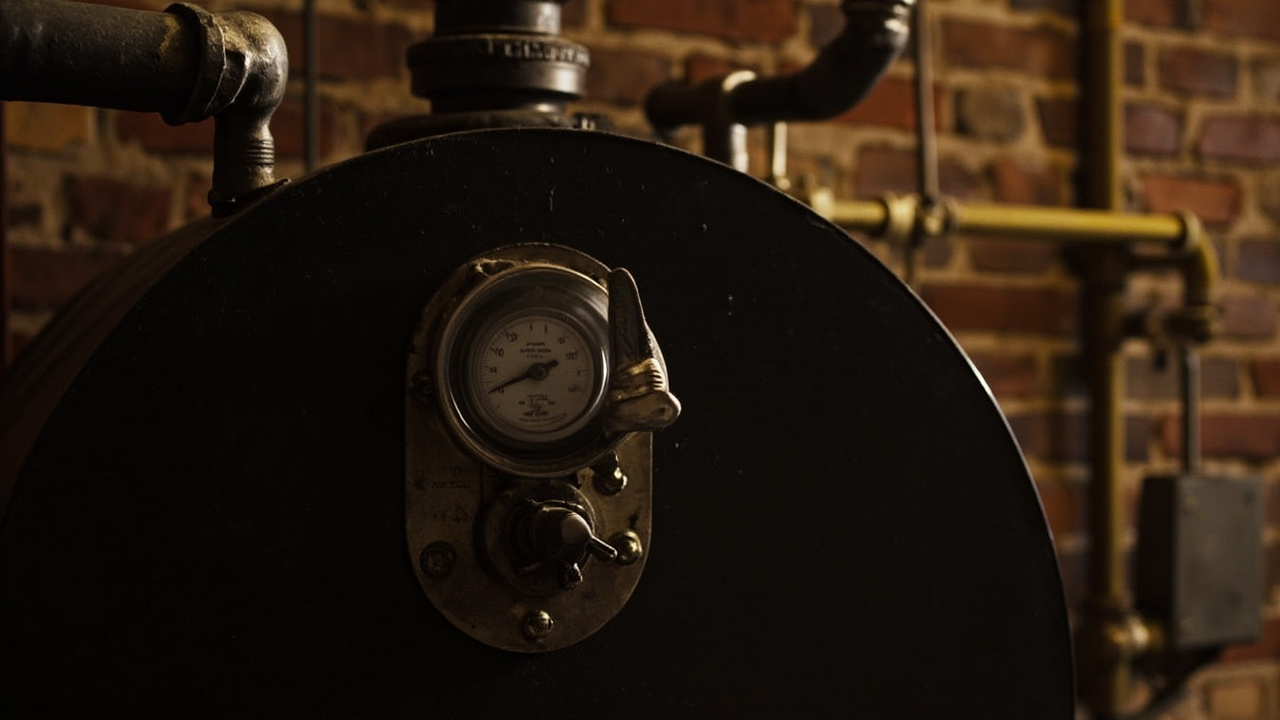
The First 15 Minutes After You Discover a Boiler Leak
Speed matters. Water from a pressurized hydronic heating system moves fast and soaks into building materials faster than most homeowners expect.
How to Shut Down a Leaking Boiler Safely
First, locate your boiler’s emergency shutoff switch. In most Boston-Edison homes, it is mounted near the top of the basement stairs, usually on a red switch plate. Flip it off. Do not go near the boiler itself if water is pooling on the floor around it, because electricity and standing water create a serious risk.
Next, shut off the cold water supply to the boiler. This is the isolation valve on the inlet pipe feeding the unit. Closing it stops the system from continuing to fill and discharge through whatever is failing.
If you smell gas, do not touch any switches. Leave the house and call DTE Energy’s emergency line from outside. A gas-fired boiler with a compromised heat exchanger can produce dangerous conditions even before visible water becomes the main problem.
What Not to Touch in a Historic Detroit Basement
Many homes in the Boston-Edison, Indian Village, and Palmer Woods districts were built between the early 1900s and the mid-20th century. That means the pipe insulation wrapping your distribution lines may contain asbestos. Gray, chalky, fibrous wrap on older cast-iron pipes is a red flag. Do not disturb it. Do not attempt to move or reposition insulated pipes. Water contact with asbestos-containing materials can release fibers, and cleanup requires a licensed abatement contractor.
Lead-based paint on basement walls and floor joists is equally common in this housing stock. When water saturates those surfaces, the paint can chip and flake into the standing water. This is a hazardous waste situation, not a shop-vac situation.
Why Boilers Fail in Older Detroit Homes
Most hydronic heating systems in Detroit’s historic districts have been running for decades. Cast-iron radiators are incredibly durable, but the supporting components have finite lifespans.
The Most Common Failure Points
- Pressure relief valve (PRV) failure. Residential boilers typically operate between 12 and 25 PSI. When pressure climbs above the PRV’s rating (usually 30 PSI), the valve opens and discharges water. A PRV that sticks open or weeps constantly is one of the most common sources of boiler-related water damage.
- Corroded expansion tank. The expansion tank absorbs pressure fluctuations in the system. When the internal bladder fails, the tank fills with water, system pressure spikes, and the PRV trips. Homeowners often blame the PRV when the real culprit is the waterlogged expansion tank.
- Failed circulator pump seals. The circulator pump moves hot water through the distribution loop. Worn shaft seals leak slowly at first, often for weeks, before the volume becomes noticeable.
- Corroded boiler sections. Cast-iron boiler sections develop pinhole leaks after extended exposure to oxygen-rich system water. This is especially common in systems that have been repeatedly drained and refilled over the years.
- Aging radiator connections. The threaded connections where supply and return pipes meet your radiators can corrode through after decades of thermal cycling. A tiny drip at a radiator fitting in an upstairs room can track down through the floor and saturate the ceiling below before anyone notices.
How Water Damage Spreads Differently in a Lath and Plaster Home
This is where the experience gap between a general contractor and a historic home restoration specialist becomes critical.
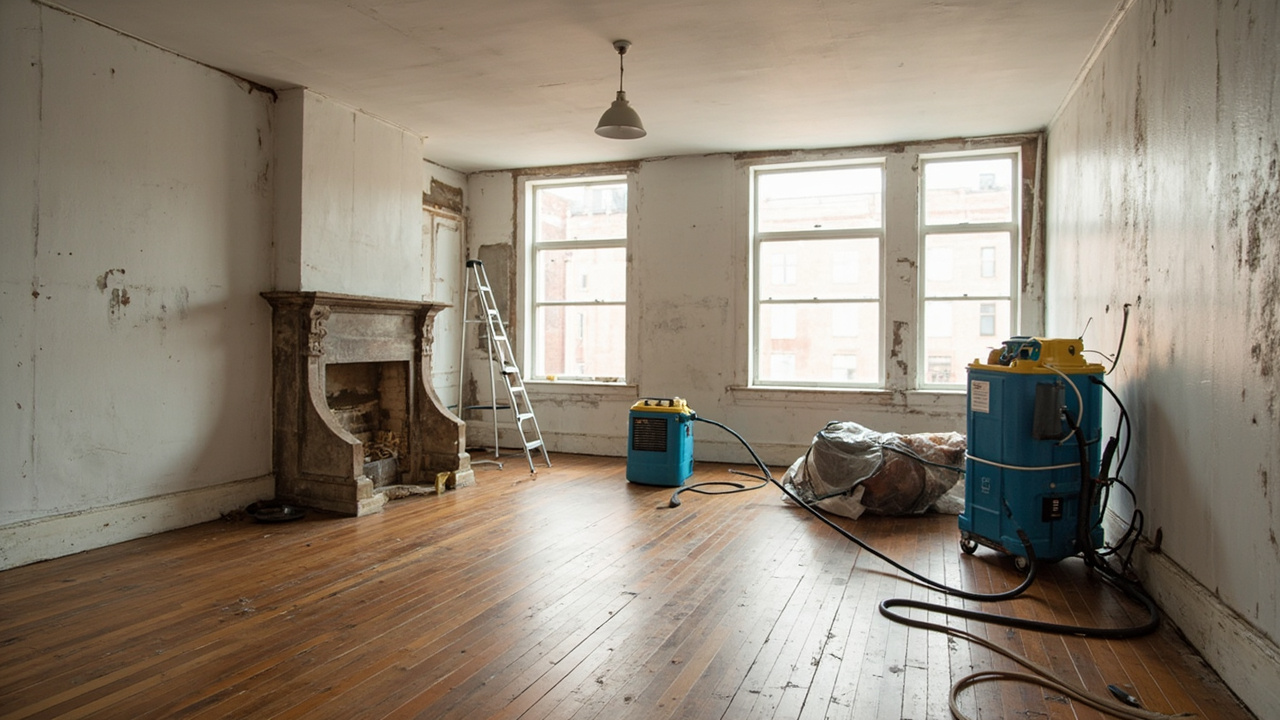
Modern drywall is porous and relatively predictable in how it absorbs and releases moisture. Lath and plaster, the wall system in virtually every home in the Boston-Edison and Corktown historic districts, behaves completely differently. The plaster itself is dense and slow to absorb water. The wood lath strips behind it, and the air space between them, create conditions where moisture can migrate horizontally across a wall for six to eight feet without showing any surface evidence.
By the time you see a bubble, stain, or soft spot on your plaster wall, the lath behind it has often been wet for days. The horsehair and lime-based plaster compound can hold significant moisture while looking completely normal from three feet away.
Hardwood Floors and the Boiler Leak Timing Problem
The original hardwood floors in Indian Village and Boston-Edison homes are irreplaceable. Quarter-sawn white oak, Douglas fir, and wide-plank maple floors installed a century ago simply cannot be replicated at any price point today. When a boiler leak saturates the subfloor below, the finish flooring begins to cup, buckle, and separate from the subfloor within 24 to 72 hours depending on ambient humidity.
The good news is that properly dried hardwood can often be saved. The bad news is that the window is short. If you want to understand the options for floor drying and when replacement becomes unavoidable, our guide on how to save your hardwood floors after a significant water leak covers the decision points in detail.
| Material | Standard Drying Time | Historic Home Drying Time | Key Challenge |
|---|---|---|---|
| Modern drywall | 3 to 5 days | Not applicable | Simple and predictable moisture release |
| Lath and plaster walls | Not applicable | 7 to 14 days | Dense plaster traps moisture behind the surface layer |
| 3/4-inch hardwood flooring | 5 to 7 days | 7 to 21 days | Old-growth wood is denser and dries more slowly |
| Structural wood framing | 7 to 10 days | 10 to 28 days | Dense timber framing holds moisture deep in the wood |
| Masonry basement walls | 14 to 30 days | 21 to 45 days | Historic brick and mortar are highly porous |
Environmental Hazards That Change the Restoration Approach
Michigan’s Department of Environment, Great Lakes, and Energy (EGLE) sets clear requirements for handling lead and asbestos during renovation and restoration work in pre-1978 housing. Detroit’s historic districts are almost entirely pre-1978 housing stock. This is not a technicality. It directly affects how a water damage crew can set up drying equipment, where they can cut inspection holes, and what protective measures they must take on the job site.
The EPA’s Renovation, Repair and Painting (RRP) Rule requires certified renovators to follow specific lead-safe work practices in pre-1978 homes. A water damage company working in a Boston-Edison home without RRP certification is creating potential liability for you as the homeowner, not just for themselves.
Asbestos pipe wrap is common on the distribution lines in older hydronic systems throughout Palmer Woods, Sherwood Forest, and Woodbridge. Before any cutting, drilling, or demo work begins near those pipes, an asbestos survey should be completed by a licensed inspector. This adds time to the restoration process, but skipping it can turn a water damage claim into an environmental remediation situation with far higher costs and regulatory consequences.
The Professional Restoration Process for a Historic Detroit Home
Moisture Mapping and Thermal Imaging
A restoration crew that walks in with a single pin-type moisture meter is not equipped for a historic home job. Proper moisture mapping in a lath and plaster structure requires thermal imaging cameras to identify hidden wet zones, non-invasive moisture meters to track moisture content through wall surfaces without drilling, and penetrating meters to verify readings at depth.
Thermal imaging is especially valuable in multi-story homes where a second-floor radiator connection has been dripping into the floor cavity. The wet path through the framing and into the first-floor ceiling shows up clearly as a temperature differential on a thermal camera, even when the plaster surface looks completely dry.
Psychrometric Drying Without Damaging Original Details
Psychrometric drying is the science of controlling temperature, humidity, and airflow to pull moisture out of building materials at a controlled rate. In a modern home, this often means running high-capacity air movers and dehumidifiers at full power. In a Boston-Edison home, that approach can cause as much damage as the original leak.
Forcing rapid moisture loss in old-growth hardwood or century-old plaster causes cracking, warping, and delamination. Experienced technicians calibrate drying equipment to achieve the IICRC S500 standard drying goals while keeping the rate of moisture reduction within a range the materials can handle. Daily psychrometric readings and moisture content logs document the process and prove to your insurance adjuster that the work was done correctly.
Mold in Plaster Walls and What It Actually Looks Like
Mold in a lath and plaster wall often does not look like the black mold photos you find online. In the air space between the lath strips, mold typically appears as white, gray, or pale green fuzzy growth on the wood lath itself. It is invisible from the room side until a section of plaster is removed for inspection.
Detroit’s humidity patterns make mold growth in wet building cavities fast. In a basement that has experienced a significant boiler leak, visible mold growth on framing members can begin within 48 to 72 hours under the right temperature conditions. If you have questions about when professional mold remediation is necessary versus what you can address yourself, our article on why bleach won’t fix basement mold explains the distinction clearly.

Detroit Historic District Permit Requirements and Your Restoration
If your home is located within a City of Detroit Historic District, the Detroit Historic District Commission (DHDC) has jurisdiction over exterior alterations and, in some cases, interior work that affects character-defining features. Water damage restoration work that requires replacing original windows, exterior trim, or masonry elements may need HDC review before work begins.
Wayne County building codes also apply to any structural repairs that result from the water damage. If a leaking boiler has compromised a floor joist or caused masonry deterioration in the foundation wall, permits are required for the structural repair work. A restoration contractor who tells you that permits are not necessary for structural repairs in a historic Detroit home is giving you bad advice.
| Failure Point | Typical Affected Area | Historic Home Complication | Restoration Category |
|---|---|---|---|
| Pressure relief valve | Basement floor and walls | Asbestos pipe wrap, porous masonry | Water mitigation, possible abatement |
| Expansion tank bladder | Boiler room, adjacent framing | Dense framing holds moisture longer | Structural drying, mold monitoring |
| Circulator pump seal | Equipment room, floor drain area | Chronic slow leaks promote long-term mold | Mold remediation, dehumidification |
| Radiator supply connection | Living areas, floor cavities | Hardwood floors, plaster ceilings below | Content protection, floor drying, plaster restoration |
| Corroded boiler section | Boiler room, distribution piping | Lead paint, asbestos concerns in older systems | Full mitigation, environmental testing |
Navigating Your Insurance Claim for a Historic Home Boiler Leak
Insurance adjusters who regularly handle claims in new construction subdivisions are often unfamiliar with the cost realities of restoring a historic Detroit home. Plaster repair, old-growth wood floor restoration, and lead-safe work practices all cost more than their modern equivalents, and a standard dwelling replacement cost calculation may not capture that difference.
Document everything before any cleanup begins. Photograph all affected areas, all visible materials, and any pipe insulation or paint that will require testing. If you have never filed a water damage claim in Detroit before, our resource on getting your Detroit home insurance to actually pay for water restoration walks through the adjuster process step by step.
One specific issue that comes up in historic home claims is the question of matching. If water damage destroys a section of your original quarter-sawn oak flooring, your policy’s matching provision determines whether the insurer must replace the entire floor or only the damaged section. In a historic home where the original flooring cannot be matched with new material, this provision can significantly affect your settlement. Our breakdown of filing a successful water damage insurance claim for a historic Detroit home covers matching provisions and documentation strategies in detail.
Choosing a Restoration Contractor Who Understands Historic Detroit Properties
The IICRC S500 Standard for Professional Water Damage Restoration sets the baseline for any legitimate water damage contractor. For a historic home in Boston-Edison, Indian Village, or Palmer Woods, you need to go further. Ask specifically whether the company has experience with lath and plaster drying, whether their technicians hold EPA RRP lead-safe renovator certification, and whether they have worked on properties within Detroit Historic District boundaries before.
A company that has only worked in Livonia or Sterling Heights may be technically competent at water mitigation but completely unprepared for the material-specific challenges and permit requirements that come with a 1920s Boston-Edison brick colonial. The materials, the regulations, and the preservation priorities are genuinely different, and that difference shows up in outcomes.
If your boiler is leaking right now, or if you have recently discovered water damage in a historic Detroit home and are not sure what your next steps should be, contact Ironwood Water Damage Restoration. We work in the historic districts across Detroit and understand what it takes to restore these homes correctly. Call us any time, day or night, and we will walk you through exactly what needs to happen.
{
“@context”: “https://schema.org”,
“@type”: “BlogPosting”,
“headline”: “What Happens When Your Boiler Starts Leaking in an Older Boston-Edison Home”,
“description”: “Boiler leak in a Detroit historic home? Learn the immediate steps, hidden risks, and restoration process for Boston-Edison and Indian Village properties.”,
“wordCount”: 2198,
“datePublished”: “2026-06-02T05:56:00.000Z”,
“dateModified”: “2026-06-02T05:56:00.000Z”,
“inLanguage”: “en-US”,
“mainEntityOfPage”: {
“@type”: “WebPage”,
“@id”: “https://ironwoodwaterdamagerestorationdetroit.com”
},
“publisher”: {
“@type”: “LocalBusiness”,
“name”: “Ironwood Water Damage Restoration Detroit”,
“url”: “https://ironwoodwaterdamagerestorationdetroit.com”
},
“author”: {
“@type”: “Organization”,
“name”: “Ironwood Water Damage Restoration Detroit”,
“url”: “https://ironwoodwaterdamagerestorationdetroit.com”
},
“image”: {
“@type”: “ImageObject”,
“url”: “https://ironwoodwaterdamagerestorationdetroit.com/wp-content/uploads/2026/03/what-happens-when-your-boiler-starts-leaking-in-an-1.jpg”
}
}
{
“@context”: “https://schema.org”,
“@type”: “LocalBusiness”,
“name”: “Ironwood Water Damage Restoration Detroit”,
“url”: “https://ironwoodwaterdamagerestorationdetroit.com”,
“address”: {
“@type”: “PostalAddress”,
“addressLocality”: “Detroit”
},
“areaServed”: {
“@type”: “City”,
“name”: “Detroit”
}
}
{
“@context”: “https://schema.org”,
“@type”: “BreadcrumbList”,
“itemListElement”: [
{
“@type”: “ListItem”,
“position”: 1,
“name”: “Home”,
“item”: “https://ironwoodwaterdamagerestorationdetroit.com”
},
{
“@type”: “ListItem”,
“position”: 2,
“name”: “Blog”,
“item”: “https://ironwoodwaterdamagerestorationdetroit.com/blog”
},
{
“@type”: “ListItem”,
“position”: 3,
“name”: “What Happens When Your Boiler Starts Leaking in an Older Boston-Edison Home”
}
]
}
{
“@context”: “https://schema.org”,
“@type”: “Service”,
“serviceType”: “Water Damage Restoration”,
“provider”: {
“@type”: “LocalBusiness”,
“name”: “Ironwood Water Damage Restoration Detroit”,
“url”: “https://ironwoodwaterdamagerestorationdetroit.com”
},
“areaServed”: {
“@type”: “City”,
“name”: “Detroit”
},
“description”: “Boiler leak in a Detroit historic home? Learn the immediate steps, hidden risks, and restoration process for Boston-Edison and Indian Village properties.”
}