
A Slow Leak You Cannot See Is the Most Dangerous Kind
Your reverse osmosis system filters quietly under the sink. It runs at low pressure, drips at a slow rate, and sits in a dark cabinet where nobody looks. That is exactly why RO leaks cause some of the worst structural damage we see in Canton and across Wayne County.
A standard under-sink RO system pushes water through a quarter-inch supply line. When a John Guest fitting loosens, a filter housing cracks, or a saddle valve fails, that line can release anywhere from half a gallon to two gallons per hour directly onto your cabinet floor. Over a weekend, that is enough water to saturate the subfloor, wick up your cabinetry face frames, and start mold growth that you will not smell for another week or two.
If you are reading this because you just found standing water under your kitchen sink in Canton, here is what to do right now.
Stop the Water First, Then Assess
Every RO system has two shut-off points. Find them before the panic sets in.
- The saddle valve on your cold water supply line is the small piercing valve clamped to the pipe under your sink. Turn it clockwise until it stops. This cuts the pressurized feed into the RO unit.
- The tank ball valve on the pressurized storage tank sits on a short tube coming off the tank itself. Close this valve to stop any residual flow from the stored water pushing through your system.
- Disconnect the drain line if water is still dripping. The drain saddle clamps to your sink drain and allows the reject water to exit. If that connection has failed, the drain itself may be feeding moisture back into the cabinet.
- Remove everything from the cabinet. Pull out the storage tank, the filter canisters, and any cleaning supplies. You need to see the actual floor of the cabinet and the wall panel at the back.
- Do not use a regular shop vacuum on saturated wood flooring or particle board. It removes surface water but does nothing for moisture trapped in the material itself.
Why RO Leaks Are a Different Problem Than a Burst Pipe
A burst pipe is obvious. You see it. You call someone. The damage window is short. An RO leak is the opposite. It is a slow drip that runs for days or weeks before a homeowner notices warping, a musty smell, or a soft spot in the floor.
In older Canton homes, particularly the ranch-style builds common near Ford Road and the neighborhoods east of I-275, kitchen subfloors are often plywood over floor joists. That plywood absorbs water like a sponge. Once moisture content in plywood climbs above 19 percent, fungal growth begins. You cannot fix that with a fan and a paper towel.
The EPA’s mold guidance is clear that mold can begin growing on wet building materials within 24 to 48 hours under the right temperature conditions. Canton kitchens in summer hit those conditions easily.
What the Damage Actually Looks Like at Each Stage
| Time Since Leak Started | Visible Signs | Structural Impact | Restoration Complexity |
|---|---|---|---|
| Under 24 hours | Wet cabinet floor, discoloration on wood | Surface saturation only | Low, drying equipment alone often sufficient |
| 24 to 72 hours | Swelling cabinet base, soft spot on floor, odor | Subfloor saturation begins, glue joints fail in particle board | Moderate, subfloor drying mats and dehumidification required |
| 4 to 7 days | Visible mold colonies, warped flooring, staining on cabinet sides | Subfloor likely compromised, joists may show moisture uptake | High, antimicrobial treatment and possible subfloor replacement |
| Over 7 days | Active mold growth, musty odor throughout kitchen, floor deflection | Structural joist damage possible, adjacent cabinetry affected | Severe, full mold remediation and structural drying protocol |
Common Reasons RO Systems Fail in Detroit-Area Homes
Canton and surrounding communities like Plymouth and Northville pull municipal water from Detroit Water and Sewerage Department infrastructure. That water can carry higher than average water pressure, particularly in neighborhoods close to transmission mains. Standard RO systems are rated for 40 to 80 PSI. Detroit metro line pressure can spike above 90 PSI during low-usage overnight hours.
High pressure stresses the quick-connect fittings throughout your system. John Guest and similar push-to-connect fittings are reliable at rated pressures. Above that range, they can pop free or develop slow seeps at the connection collar. A pressure-reducing valve on your supply line is a reasonable precaution for any Canton home with a whole-house water softener and RO system combination.
Other common failure points include
- Cracked filter housings from overtightening during filter changes
- Expired membrane housings that develop micro-fractures after years of pressure cycling
- Drain clamp saddles that were never properly seated during original installation
- Storage tank bladder failure that causes the tank to overfill and overflow
- DIY filter swaps that leave fittings slightly unseated

How We Find Hidden Moisture in Canton Kitchens
When we get a call about an RO leak in Canton or anywhere across the greater Detroit metro, we do not just look at the obvious wet spot. Water travels. It follows the path of least resistance through seams, under flooring, and along framing members.
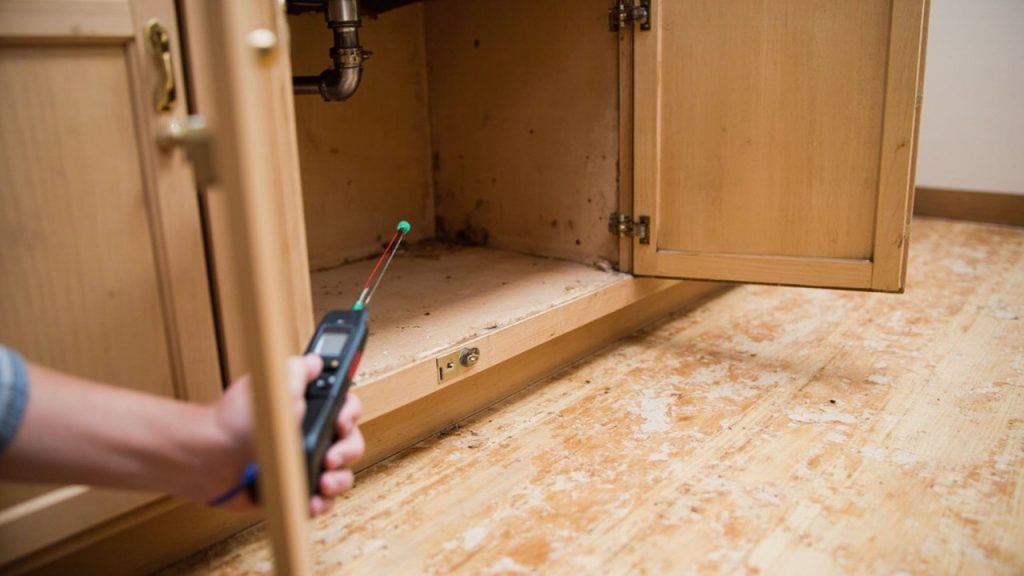
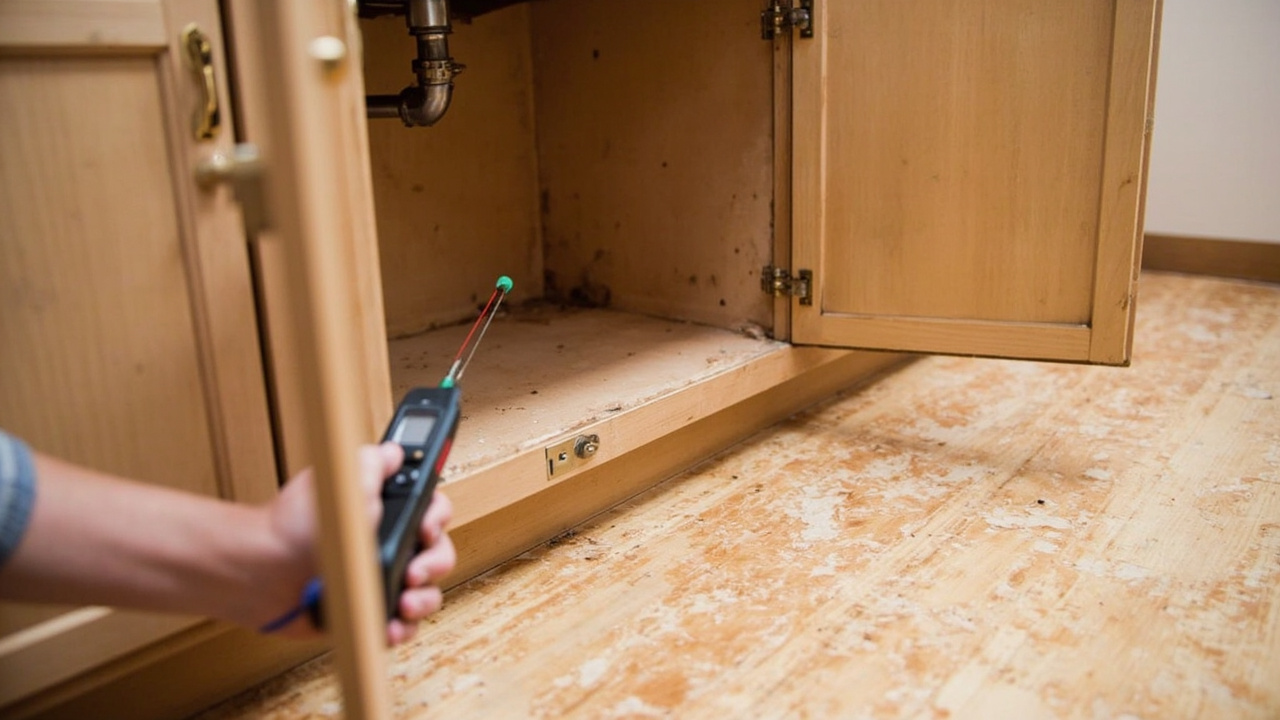
The first tool is a thermal imaging camera. A wet subfloor holds temperature differently than dry wood. On a thermal scan, saturated areas show up as cool zones against the warmer dry surrounding material. This is how we find moisture that has migrated two or three feet from the visible leak point, under the adjacent cabinet run or toward the kitchen island base.
We follow the thermal scan with pin and pinless moisture meters calibrated to wood. Pin meters give us precise readings at specific points. Pinless meters let us scan larger surface areas quickly without leaving probe marks in finished flooring.
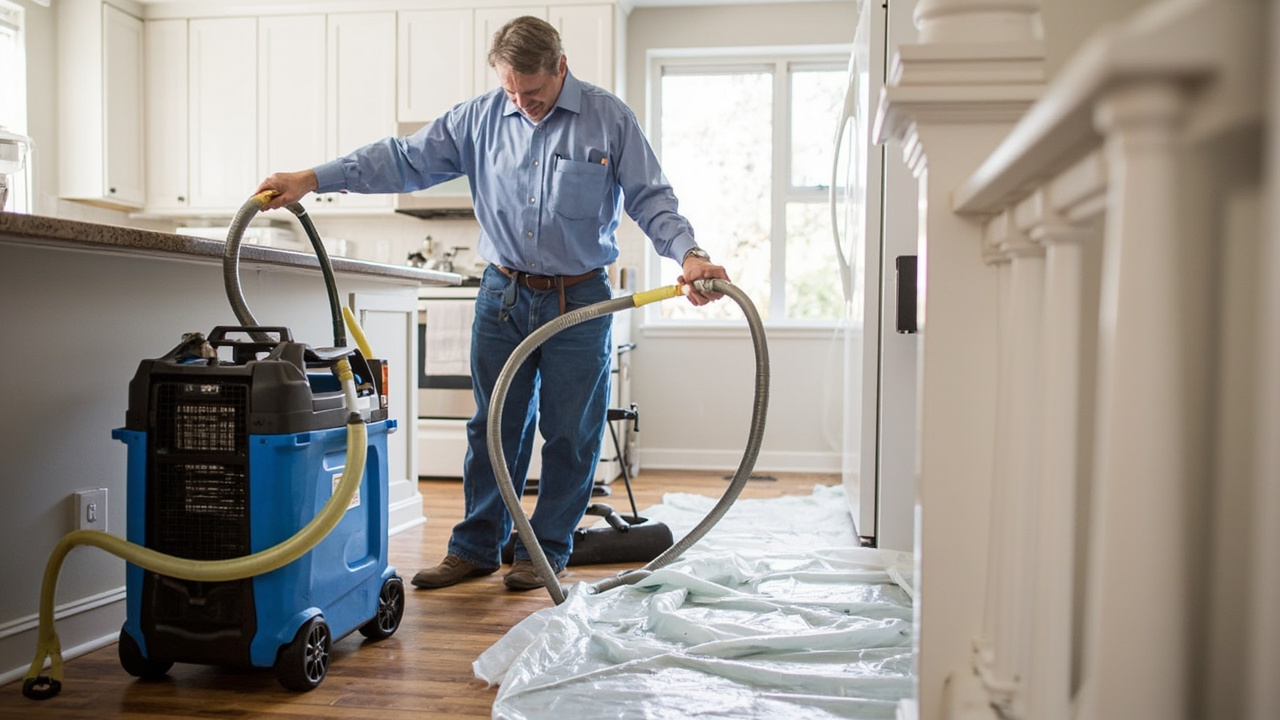
Once we have mapped the moisture, we set the drying equipment. Under-sink RO leaks typically require low-profile drying mats placed directly against the subfloor, combined with commercial dehumidifiers pulling moisture from the air. Drying time depends heavily on the flooring type above the subfloor.
Drying Timelines for Kitchen Flooring Types
| Flooring Type | Average Drying Time | Salvage Potential After RO Leak | Special Considerations |
|---|---|---|---|
| Solid hardwood | 5 to 10 days with active drying | High if caught within 48 hours | May require board spacing and floor mat systems, see our guide on saving hardwood floors after a water leak |
| Engineered hardwood | 3 to 7 days | Moderate, delamination risk increases after 72 hours | Core material absorbs moisture faster than solid wood face |
| Luxury vinyl plank (LVP) | 2 to 5 days (subfloor drying) | High for LVP itself, but subfloor underneath still needs full drying | LVP traps moisture against subfloor, requires removal for proper drying |
| Ceramic tile | 5 to 14 days (grout and substrate) | Tile survives, but cement board or Ditra substrate may need replacement | Grout is porous and holds moisture longer than it appears |
| Laminate | Typically non-salvageable | Low, core swells and delaminates rapidly | Replacement almost always required after saturation |
If you have laminate flooring and the leak ran for more than a day, do not wait on the drying process hoping it comes back. That material swells from the inside and does not recover. For carpet in adjacent rooms, check out our breakdown of when wet carpet can be saved versus replaced to understand the decision criteria.
Mold Is the Next Problem if You Wait
Canton sits in Wayne County, and Michigan’s humidity levels from late spring through early fall create ideal conditions for mold once moisture gets into building materials. The kitchen environment makes it worse. Cooking steam, dishwasher exhaust, and limited ventilation under cabinets keep humidity levels elevated even on dry days.
Mold remediation under kitchen cabinets is not a bleach-and-wipe job. If you see black or green growth on the cabinet floor or on the drywall at the back of the cabinet, you are looking at established colonies, not surface contamination. Our article on why bleach does not fix mold problems explains the chemistry behind this in detail.
IICRC-certified remediation means we contain the affected area, apply EPA-registered antimicrobials to the affected surfaces, and verify clearance with post-remediation testing before we close anything back up. That process protects your family and protects you legally if you sell the home later.
Working With Your Homeowners Insurance on a Canton RO Leak Claim
Michigan homeowners insurance policies generally cover sudden and accidental water damage. An RO leak that you discover and report promptly typically qualifies. What adjusters look for is evidence that the leak was not a long-term maintenance issue that was ignored.
Our technicians document everything with moisture readings, thermal images, and written scope before we begin work. That documentation is what makes or breaks a claim. Adjusters in the Detroit metro area see a lot of water damage claims. A well-documented loss with clear evidence of origin, affected materials, and required scope gets processed faster than a claim with vague descriptions and no supporting data.
For a detailed walkthrough of how to approach your claim the right way, read our guide on getting your Detroit home insurance to actually pay for water restoration. If you are in Corktown or one of the older Detroit neighborhoods where policy language can be more complicated, the guidance in our Corktown insurance claim article applies directly to your situation.
One thing to avoid is signing a release or accepting a settlement before you know the full scope of the damage. Hidden moisture in subflooring gets missed in quick visual inspections. If an adjuster looks at your cabinet floor and does not use a moisture meter, you are at risk of accepting a payout that does not cover the full drying and structural repair cost.
What IICRC S500 Standards Actually Require for Kitchen Water Damage
The IICRC S500 Standard for Professional Water Damage Restoration is the industry framework that guides how certified technicians categorize and respond to water losses. An RO system feeds from a clean water supply, which classifies the leak as Category 1 water. That is the best-case scenario from a contamination standpoint.
But Category 1 water does not stay Category 1 if it sits. Water that contacts building materials, soil, or organic debris for more than 24 to 48 hours degrades to Category 2. Water that has sat long enough to show mold growth or has contacted the drain line may reach Category 3. Each category step up means more intensive remediation protocols and higher restoration costs.
This is the core reason that response time matters. The faster a certified crew gets equipment running, the better the category stays and the lower the overall damage cost.
When You Should Call a Restoration Company Instead of Just a Plumber
A plumber fixes the leak. That is their job and they do it well. But fixing the source of water does nothing for the water that already entered your structure. If you only call a plumber and skip the restoration assessment, you are gambling that the moisture dried on its own.
Call a water damage restoration company when you see any of the following after an RO system leak
- The cabinet floor is soft, spongy, or visibly swollen
- You can see water staining on the back wall of the cabinet or the adjacent cabinet panels
- The flooring in front of the sink feels soft underfoot or shows any lifting at the seams
- There is any musty odor in the kitchen, even faint
- The leak ran for more than a few hours before you found it
Serving Canton, Plymouth, Northville, and the broader Wayne County area, our IICRC-certified team responds 24 hours a day. We bring thermal imaging, moisture mapping, and full drying systems to every kitchen water loss call. The goal is always to dry in place where possible, saving your cabinets and flooring rather than replacing them.
If you found water under your kitchen sink today, call us now. The next 24 hours determine how much of your kitchen can be saved.
{
“@context”: “https://schema.org”,
“@type”: “BlogPosting”,
“headline”: “What Really Happens When Your Reverse Osmosis System Leaks Behind the Kitchen Cabinets in Canton”,
“description”: “A slow RO system leak in Canton can destroy your subfloor and cabinetry before you notice. Here’s what to do and when to call a restoration pro.”,
“wordCount”: 1984,
“datePublished”: “2026-06-04T09:41:00.000Z”,
“dateModified”: “2026-06-04T09:41:00.000Z”,
“inLanguage”: “en-US”,
“mainEntityOfPage”: {
“@type”: “WebPage”,
“@id”: “https://ironwoodwaterdamagerestorationdetroit.com”
},
“publisher”: {
“@type”: “LocalBusiness”,
“name”: “Ironwood Water Damage Restoration Detroit”,
“url”: “https://ironwoodwaterdamagerestorationdetroit.com”
},
“author”: {
“@type”: “Organization”,
“name”: “Ironwood Water Damage Restoration Detroit”,
“url”: “https://ironwoodwaterdamagerestorationdetroit.com”
},
“image”: {
“@type”: “ImageObject”,
“url”: “https://ironwoodwaterdamagerestorationdetroit.com/wp-content/uploads/2026/03/what-happens-when-your-reverse-osmosis-system-leak-1.jpg”
}
}
{
“@context”: “https://schema.org”,
“@type”: “LocalBusiness”,
“name”: “Ironwood Water Damage Restoration Detroit”,
“url”: “https://ironwoodwaterdamagerestorationdetroit.com”,
“address”: {
“@type”: “PostalAddress”,
“addressLocality”: “Detroit”
},
“areaServed”: {
“@type”: “City”,
“name”: “Detroit”
}
}
{
“@context”: “https://schema.org”,
“@type”: “BreadcrumbList”,
“itemListElement”: [
{
“@type”: “ListItem”,
“position”: 1,
“name”: “Home”,
“item”: “https://ironwoodwaterdamagerestorationdetroit.com”
},
{
“@type”: “ListItem”,
“position”: 2,
“name”: “Blog”,
“item”: “https://ironwoodwaterdamagerestorationdetroit.com/blog”
},
{
“@type”: “ListItem”,
“position”: 3,
“name”: “What Really Happens When Your Reverse Osmosis System Leaks Behind the Kitchen Cabinets in Canton”
}
]
}
{
“@context”: “https://schema.org”,
“@type”: “Service”,
“serviceType”: “Water Damage Restoration”,
“provider”: {
“@type”: “LocalBusiness”,
“name”: “Ironwood Water Damage Restoration Detroit”,
“url”: “https://ironwoodwaterdamagerestorationdetroit.com”
},
“areaServed”: {
“@type”: “City”,
“name”: “Detroit”
},
“description”: “A slow RO system leak in Canton can destroy your subfloor and cabinetry before you notice. Here’s what to do and when to call a restoration pro.”
}