
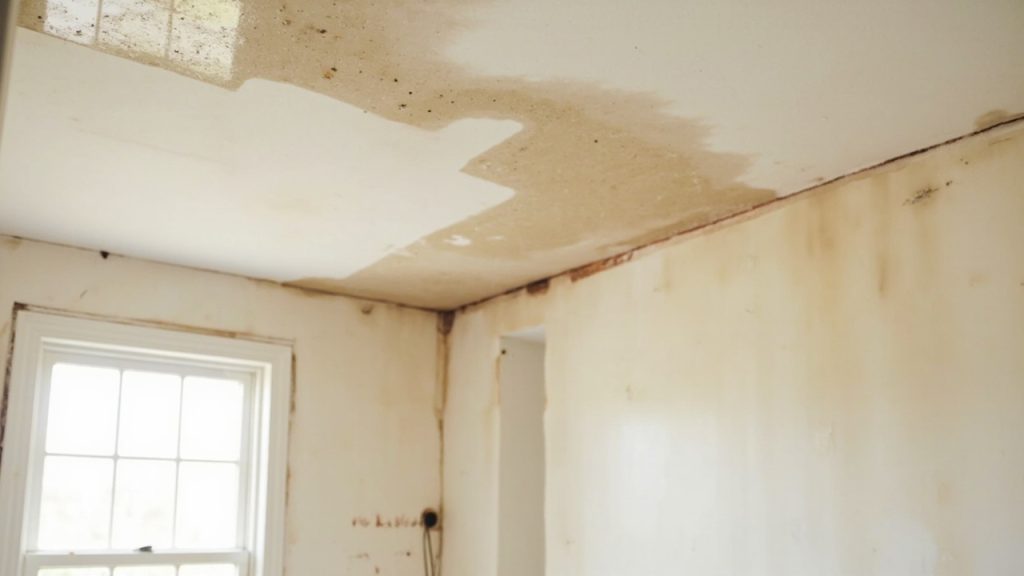
A second floor laundry room sounds like a dream upgrade. No hauling laundry up and down stairs. Easier access to bedrooms. Better resale appeal. But after 15 years of responding to water damage calls across Southfield, Oak Park, and the broader Detroit metro, I can tell you this with confidence: upper-floor laundry setups are one of the most destructive sources of residential water damage we see.
When a washing machine supply line bursts in a basement, you get a wet floor. When it bursts on the second floor of your Southfield home, you get a soaked subfloor, a ruined first-floor ceiling, saturated wall cavities, and a mold problem that can grow silently for weeks before you notice it.
This article breaks down exactly why upper-floor laundry rooms carry amplified risk, what to do the moment you discover a leak, and what full professional restoration looks like when the gravity-fed damage has already spread.
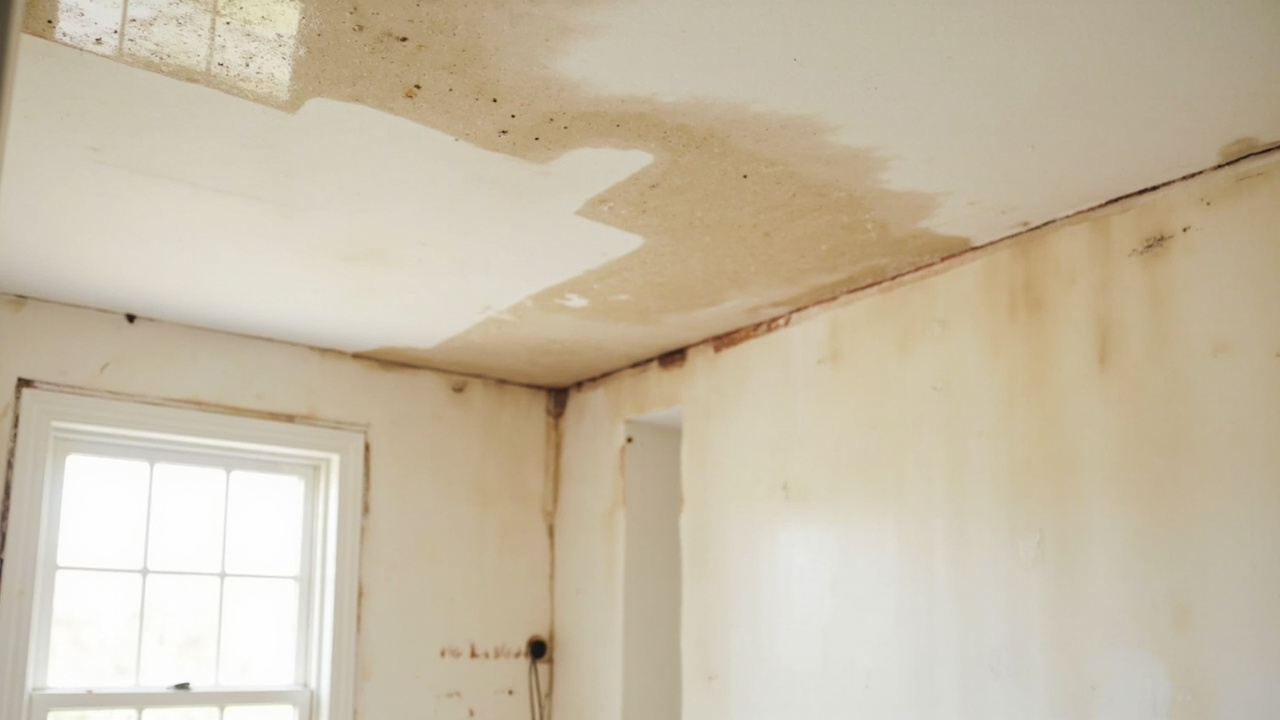
The Gravity Effect and Why Upper-Floor Leaks Hit Harder
Water always finds the path of least resistance downward. On a ground-level floor, a leak spreads horizontally across a surface. On the second floor, that same water immediately starts migrating through your floor assembly.
Most Southfield homes built from the mid-20th century onward use wood-framed floor systems. Water enters the subfloor, wicks into the OSB or plywood sheathing, then travels along floor joists, drywall cavities, and eventually soaks through the ceiling below. The worst part is how far it travels before you see it.
A slow supply line drip can saturate a 10-square-foot section of subfloor before a single water stain appears on your first-floor ceiling. By that point, you are dealing with Category 1 water (clean supply water) that has had time to become absorbed into porous structural materials. Left longer, it can escalate into conditions that support mold growth within 24 to 48 hours.
What Gets Damaged and in What Order
The sequence of damage matters. It determines repair scope, structural risk, and what your insurance adjuster will document.
- Subfloor sheathing (OSB or plywood) absorbs water fast and swells, causing floor buckling
- Floor joists absorb moisture along their length, weakening the structural connection over time
- First-floor ceiling drywall becomes saturated and begins to sag
- Interior wall cavities trap moisture and create ideal conditions for mold colonization
- Any hardwood flooring in the laundry room area or adjacent hallways begins to cup or crown
- Insulation between floors loses all thermal value once wet
The question homeowners always ask us is, “Will my first-floor ceiling collapse?” The honest answer is yes, it can, especially if the ceiling drywall has been saturated for more than a few hours. Drywall loses structural integrity quickly when wet. If you see a bulging ceiling, do not stand under it.
The Most Common Causes in Southfield and Metro Detroit Homes
Every second-floor laundry failure we respond to falls into one of a few categories. Knowing the culprits helps you assess your own risk before a problem starts.
Washing Machine Supply Line Failures
The standard rubber washing machine supply line is the single biggest risk factor in upper-floor laundry setups. These hoses have a finite service life, and most homeowners never replace them until one bursts. A burst supply line on the second floor flows at full municipal water pressure until someone shuts it off. That can mean hundreds of gallons before you even realize what happened.
Braided stainless steel supply lines last significantly longer than rubber and are much more resistant to pressure failure. If your Southfield home has original rubber hoses on an upper-floor washer, replacing them now costs far less than the water damage claim you will file later.
Clogged or Absent Floor Drains
Many second-floor laundry rooms in newer Southfield builds lack a floor drain entirely. Some have drains that back up because the drain line is shared with other fixtures and becomes restricted. When the washer discharges and the drain cannot keep up, water overflows directly onto your floor assembly.
Frozen Pipe Bursts During Detroit Winters
Southfield sits in Oakland County, and like the rest of the Detroit metro, it sees sustained cold snaps where overnight lows drop well below freezing for days at a time. Supply lines that run through exterior walls or inadequately insulated interior spaces are vulnerable to freezing. When a frozen pipe thaws, it often ruptures at the point of ice expansion. If that pipe serves your second-floor laundry room, the results are severe.
The FEMA winter storm preparedness guidelines specifically identify uninsulated supply lines as a freeze-burst risk, and that guidance applies directly to the laundry supply lines running through your upper floors.
Washing Machine Pan Overflow
Building codes for second-floor laundry installations in Michigan typically require an overflow pan beneath the washer, but pans only help if they drain properly. A pan without a functional drain line, or one that is blocked with lint and debris, fills up fast and spills over the edge just like a clogged floor drain would.
Immediate Emergency Steps When a Second-Floor Laundry Leak Happens
Speed is the most important variable in limiting damage. Every minute of water intrusion adds to the restoration scope. Here is exactly what to do.
- Shut off the washing machine supply valves first. They are directly behind or beside the unit. Turn both the hot and cold valves clockwise until fully closed.
- If supply valves are inaccessible or the source is unclear, shut off your home’s main water valve. In most Southfield homes, the main shutoff is in the basement utility area near the front of the house.
- Go to your electrical panel and cut power to the first-floor area below the leak. Water and live circuits in ceiling fixtures or outlets below a wet ceiling is a genuine electrocution risk.
- Do not attempt to mop or dry the second floor with household fans. You need professional-grade air movers and dehumidifiers to actually dry structural materials, not just the surface.
- Take photos and video of the damage before you touch anything. Your insurance carrier will need documentation.
- Call a professional water damage restoration company immediately. In the Detroit metro, a company with IICRC S500-certified technicians should be your baseline requirement.
Do not wait 24 hours to see how things dry out. Structural drying in a multi-floor assembly requires industrial psychrometrics equipment and moisture mapping with thermal imaging cameras. Household fans accomplish almost nothing in wall cavities and subfloor assemblies.
What the Professional Restoration Process Actually Involves
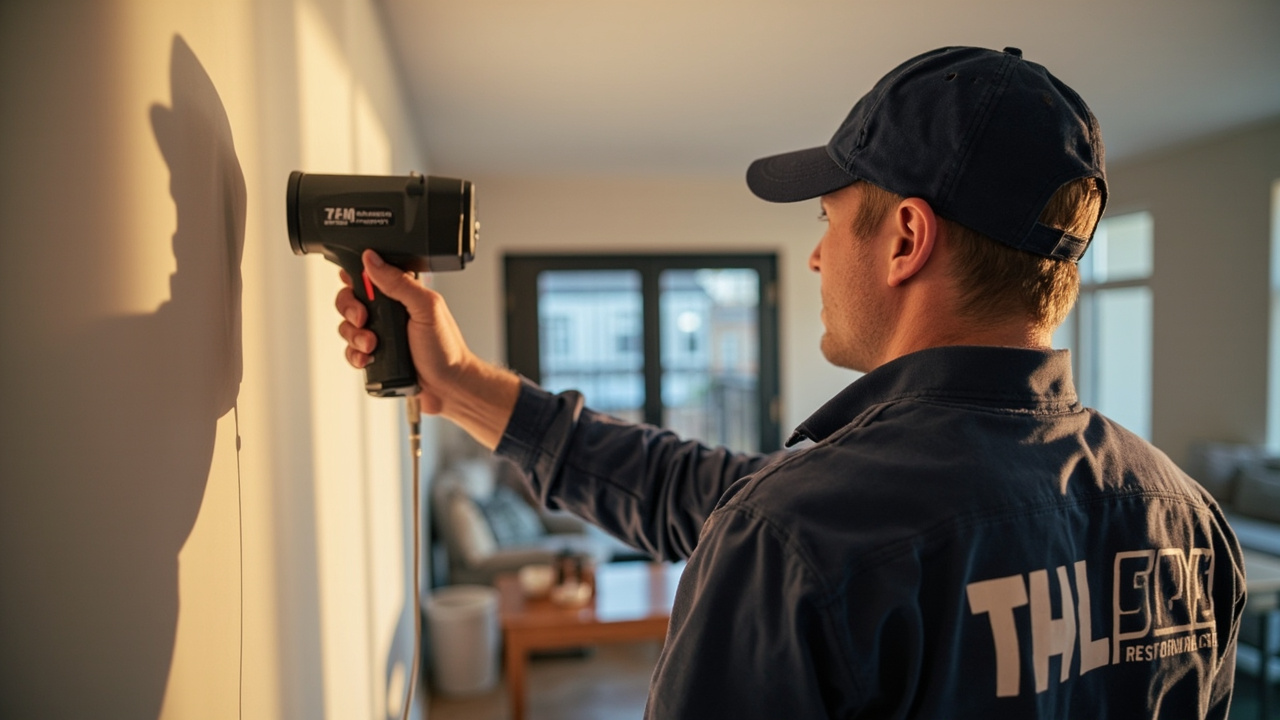
When our crew arrives at a Southfield home after a second-floor laundry loss, the first thing we do is moisture mapping. We use infrared thermal cameras and pin-type moisture meters to trace exactly where water has traveled. This is not optional. You cannot dry what you cannot find.
Moisture Mapping and Thermal Imaging
Thermal imaging identifies temperature differentials in walls and ceilings that indicate moisture presence. It tells us where water has wicked into wall cavities, how far along joists the saturation has spread, and whether the first-floor ceiling is at collapse risk. The IICRC S500 Standard for Professional Water Damage Restoration requires documentation of moisture readings throughout the affected area as a baseline for a proper drying plan.
Water Extraction and Structural Drying
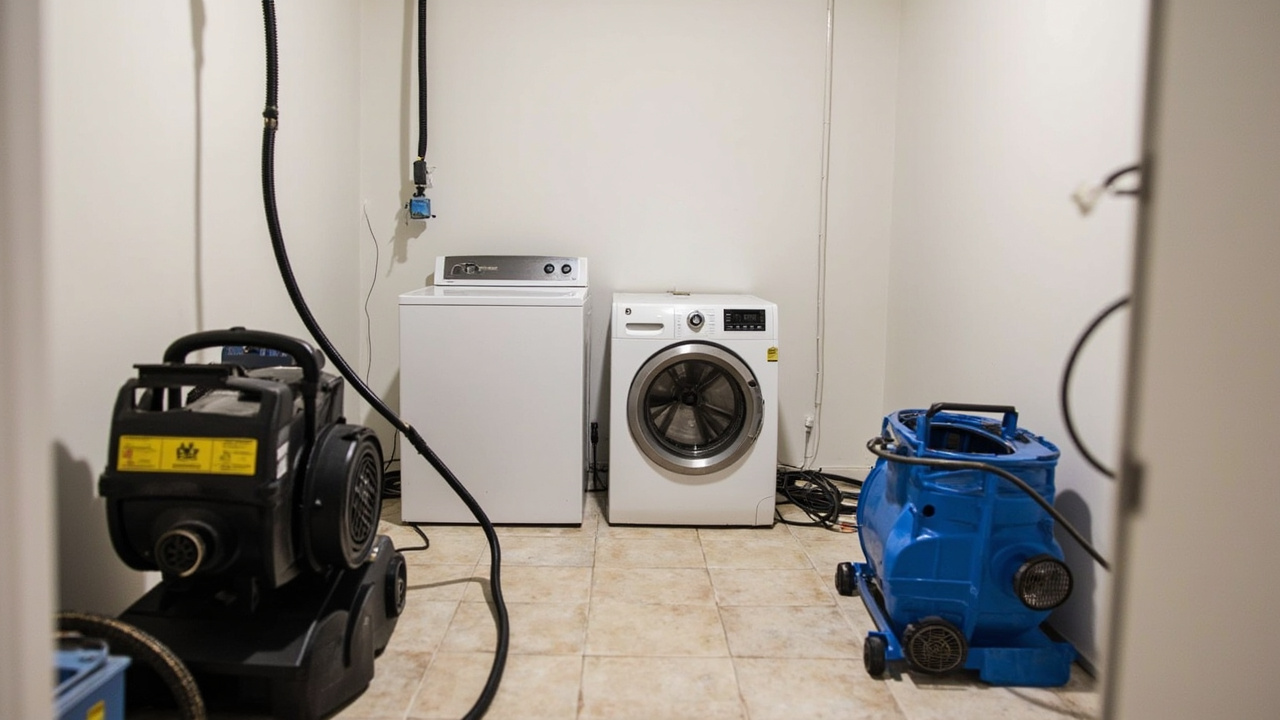
Standing water comes out first with truck-mounted or portable extraction units. Then we set industrial air movers and refrigerant dehumidifiers in a calculated drying configuration. The goal is to create specific airflow and vapor pressure conditions that pull moisture out of structural materials at a controlled rate.
Drying a second-floor laundry water loss typically takes three to five days minimum, with daily moisture readings to track progress. If readings plateau, we may need to perform flood cuts in the wall and ceiling drywall to expose cavities and allow direct airflow to joists and framing.
Subflooring Assessment
OSB subfloor sheathing does not recover well from saturation. Once it swells, the structural integrity is compromised and the surface becomes irregular. Unlike solid hardwood, which can sometimes be dried and saved as detailed in our guide on how to save hardwood floors after a water leak, OSB typically requires replacement once it has absorbed significant moisture.
Carpet and pad in adjacent second-floor rooms are almost always a loss after a supply line burst. If you have questions about whether wet flooring is salvageable, our breakdown of deciding whether wet carpet can be saved walks through exactly what determines that assessment.
Mold Risk Assessment
Second-floor laundry losses create the exact conditions mold needs: moisture, organic material (wood framing, drywall paper), and limited airflow inside cavities. If the leak went undetected for more than 48 hours, or if the structure was not dried properly by a previous attempt, mold remediation becomes part of the scope.
Bleach applied to surface mold on drywall does not address mold growing inside wall cavities or in subfloor assemblies. For a deeper explanation of why surface treatments fail on structural mold, read our article on why bleach won’t fix structural mold.
Damage Scope by Structural Material Type
| Material | Water Absorption Rate | Typical Outcome After Saturation | Salvageable? |
|---|---|---|---|
| OSB Subfloor Sheathing | High, absorbs quickly | Swelling, delamination, structural failure | Rarely, usually replaced |
| Solid Hardwood Flooring | Moderate, absorbs through grain | Cupping, crowning, potential warping | Often, if dried within 24-48 hours |
| Laminate Flooring | Very high at seams and edges | Swelling, bubbling, delamination | Rarely |
| Ceiling Drywall (Below) | High, absorbs through face and paper | Sagging, crumbling, mold growth on paper | Rarely, usually replaced |
| Wood Floor Joists | Moderate, absorbs along grain | Strength reduction, mold on surface | Often, with proper drying and treatment |
| Fiberglass Batt Insulation | Very high, traps moisture | Loss of R-value, mold, compaction | Never, always replaced |
Typical Restoration Timeline for a Second-Floor Laundry Loss
| Phase | What Happens | Typical Duration |
|---|---|---|
| Emergency Response | Arrival, moisture mapping, water extraction begins | Within 1-2 hours of call in Detroit metro |
| Structural Drying | Air movers, dehumidifiers, daily monitoring | 3 to 7 days depending on saturation level |
| Demolition (if needed) | Flood cuts, subfloor removal, ceiling removal below | 1 to 2 days |
| Mold Remediation (if needed) | HEPA remediation, antimicrobial treatment, clearance testing | 2 to 5 days |
| Rebuild and Restoration | Subfloor replacement, drywall, flooring, painting | 1 to 3 weeks depending on scope |
| Final Inspection | Post-drying clearance readings, documentation for insurance | 1 day |
Navigating Your Insurance Claim After a Second-Floor Laundry Loss
Most standard homeowners insurance policies in Michigan cover sudden and accidental water damage from appliance failures like a burst washing machine supply line. What they often deny is gradual leakage that occurred over time and went unreported. This distinction is critical.
If your supply line had been weeping slowly for weeks and you did not notice, your carrier may dispute coverage based on the gradual damage exclusion. Document when you first discovered the damage, and document it accurately.
Working with a restoration company that provides complete moisture mapping reports, photo documentation, and detailed scope of loss reports gives your claim the best chance at full coverage. Our detailed guide on how to get your Detroit home insurance to actually pay for water restoration covers exactly what documentation matters most to adjusters at carriers like State Farm, Allstate, and Citizens.
If the loss occurred in a specific area of the city, our resource on filing a successful water damage insurance claim outlines the process step by step. The documentation principles apply across metro Detroit whether your home is in Southfield, Farmington Hills, or West Bloomfield.
Reducing Your Risk Before a Loss Happens
Second-floor laundry setups are not inherently dangerous if maintained properly. These are the practical steps that genuinely reduce your risk.
- Replace rubber washing machine hoses with braided stainless steel lines every five to seven years
- Install an automatic water shutoff device that detects leaks at the washer and closes the supply valve automatically
- Verify your washer pan has a functional drain line that exits to a proper waste connection
- Inspect supply line connections at the back of the washer twice a year for signs of mineral buildup, corrosion, or cracking at the fittings
- Know where your main water shutoff valve is located and confirm it opens and closes freely before you need it in an emergency
- If your home has supply lines running through an exterior wall near the laundry room, confirm the wall is adequately insulated before each winter
Why Second-Floor Losses in Southfield Require Local Expertise
Southfield’s housing stock ranges from mid-century ranch and tri-level homes to newer construction near the Northwestern Highway corridor and the Lahser Road area. Floor assembly construction varies significantly between these eras. Older framing systems often used solid lumber joists that respond differently to moisture than the engineered lumber common in builds from the past 15 to 20 years.
A technician who has only worked in newer construction may miss the nuances of drying an older balloon-framed wall cavity, where water can travel vertically through an uninterrupted wall cavity from the second floor all the way to the basement rim joist. This is exactly the kind of moisture migration that shows up weeks later as mold in a completely unexpected location.
Restoration work in Oakland County also intersects with local building permit requirements. In Southfield, structural repairs that involve replacing floor sheathing, ceiling drywall, or wall framing may require a permit and inspection before work is enclosed. A restoration contractor who knows local Detroit Building Codes and Oakland County requirements protects you from compliance issues when you sell the home.
If you have a second-floor laundry room and you are reading this after discovering a leak, the time to call is now, not after you have tried to dry things out yourself. The difference between a contained structural drying project and a full mold remediation job is often measured in hours.
We respond to water damage emergencies across Southfield, Oak Park, Ferndale, Clawson, and the broader Detroit metro around the clock. Call us and we will tell you exactly what you are dealing with and what it takes to fix it right.
{
“@context”: “https://schema.org”,
“@type”: “BlogPosting”,
“headline”: “Why a Second Floor Laundry Room Is a Hidden Water Damage Risk in Your Southfield Home”,
“description”: “Second floor laundry rooms cause serious water damage in Southfield homes. Learn the risks, emergency steps, and when to call a Detroit restoration pro.”,
“wordCount”: 2313,
“datePublished”: “2026-06-13T12:19:00.000Z”,
“dateModified”: “2026-06-13T12:19:00.000Z”,
“inLanguage”: “en-US”,
“mainEntityOfPage”: {
“@type”: “WebPage”,
“@id”: “https://ironwoodwaterdamagerestorationdetroit.com”
},
“publisher”: {
“@type”: “LocalBusiness”,
“name”: “Ironwood Water Damage Restoration Detroit”,
“url”: “https://ironwoodwaterdamagerestorationdetroit.com”
},
“author”: {
“@type”: “Organization”,
“name”: “Ironwood Water Damage Restoration Detroit”,
“url”: “https://ironwoodwaterdamagerestorationdetroit.com”
},
“image”: {
“@type”: “ImageObject”,
“url”: “https://ironwoodwaterdamagerestorationdetroit.com/wp-content/uploads/2026/03/the-hidden-risks-of-putting-your-laundry-room-on-t-1.jpg”
}
}
{
“@context”: “https://schema.org”,
“@type”: “LocalBusiness”,
“name”: “Ironwood Water Damage Restoration Detroit”,
“url”: “https://ironwoodwaterdamagerestorationdetroit.com”,
“address”: {
“@type”: “PostalAddress”,
“addressLocality”: “Detroit”
},
“areaServed”: {
“@type”: “City”,
“name”: “Detroit”
}
}
{
“@context”: “https://schema.org”,
“@type”: “BreadcrumbList”,
“itemListElement”: [
{
“@type”: “ListItem”,
“position”: 1,
“name”: “Home”,
“item”: “https://ironwoodwaterdamagerestorationdetroit.com”
},
{
“@type”: “ListItem”,
“position”: 2,
“name”: “Blog”,
“item”: “https://ironwoodwaterdamagerestorationdetroit.com/blog”
},
{
“@type”: “ListItem”,
“position”: 3,
“name”: “Why a Second Floor Laundry Room Is a Hidden Water Damage Risk in Your Southfield Home”
}
]
}
{
“@context”: “https://schema.org”,
“@type”: “Service”,
“serviceType”: “Water Damage Restoration”,
“provider”: {
“@type”: “LocalBusiness”,
“name”: “Ironwood Water Damage Restoration Detroit”,
“url”: “https://ironwoodwaterdamagerestorationdetroit.com”
},
“areaServed”: {
“@type”: “City”,
“name”: “Detroit”
},
“description”: “Second floor laundry rooms cause serious water damage in Southfield homes. Learn the risks, emergency steps, and when to call a Detroit restoration pro.”
}