
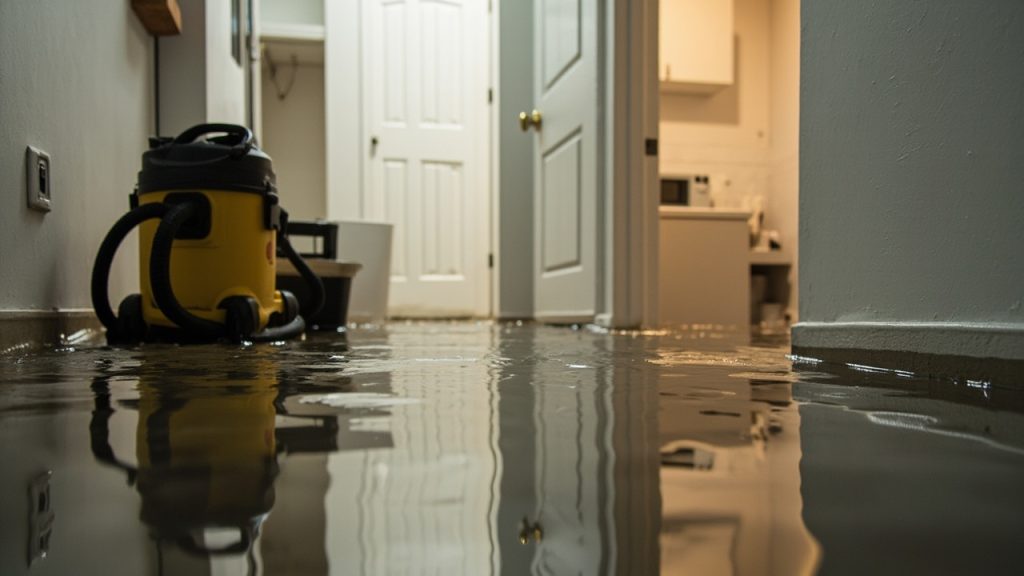
Your basement has standing water. You grab your shop vac from the garage. It seems like a reasonable first move. It is not. In Dearborn and across the greater Detroit metro, this exact decision turns a manageable water loss into a full mold remediation project more often than most homeowners realize.
This guide will tell you exactly what a shop vac can and cannot do, what the risks are, and what the real threshold is between a DIY extraction and a call to a certified restoration professional.
Can a Shop Vac Actually Remove Standing Water From a Basement?
For small, contained spills — say, a few gallons from a tipped water softener tank or a minor appliance leak — a high-capacity wet/dry shop vac can clean things up adequately. That is the honest answer. If the water is less than a quarter inch deep and covers a limited area, a 16-gallon unit with the dry filter removed will do the job if you work quickly.
The problem is that most Dearborn basement floods are not small, contained spills. They are the result of sump pump failure, sewer backup through a floor drain, or hydrostatic pressure forcing water through foundation cracks during heavy rain events. Those situations produce far more water than any shop vac is rated to handle efficiently.
Here is the comparison that matters most in a real flooding scenario.
| Equipment Type | Extraction Rate (Gallons Per Hour) | Tank Capacity | Subfloor Drying | Suited For |
|---|---|---|---|---|
| Standard Shop Vac (6-10 HP) | 15 to 30 GPH | 6 to 16 gallons | No | Spills under 10 gallons |
| Portable Extraction Unit (Pro Grade) | 100 to 150 GPH | 20+ gallons continuous | No | Moderate water loss events |
| Truck-Mounted Extractor (IICRC Standard) | 500 to 1,500+ GPH | Unlimited (continuous) | Yes (with wand tools) | Flooded basements, Category 2 and 3 water |
A truck-mounted extractor pulls water at a rate 30 to 50 times faster than your shop vac. In a basement with two inches of standing water across 800 square feet, that difference is measured in hours. Every extra hour water sits on your concrete slab, inside your wall cavities, and under your subfloor is another hour closer to a mold colony taking hold.
The Electrical Hazard That Most People Ignore Until It Is Too Late
Before you even think about plugging in a shop vac in a flooded basement, you need to think about electrocution risk. This is not an exaggeration. Standing water in contact with any energized outlet, appliance, or wiring creates a lethal shock hazard.
In older Dearborn homes — many of which were built in the postwar era and have not had full electrical upgrades — basement outlets are often not GFCI protected. The Michigan Residential Code requires GFCI protection in wet areas, but code applies to new construction and permitted renovations. Homes that have never had their basements updated may have unprotected circuits that are live when you walk in.
The correct protocol before entering a flooded basement is to shut off power at the main breaker panel, not just the basement circuit. Water conducts electricity and does not stay neatly in one zone. Do not assume your sump pump circuit being off means the rest of the basement is safe.
If you have any doubt, do not go in. Call a professional who carries appropriate PPE and knows how to assess energized water before extraction begins.
Why Category Matters More Than Volume in Dearborn Basement Floods
The IICRC (Institute of Inspection Cleaning and Restoration Certification) classifies water damage into three categories. This classification system determines safe handling procedures, required PPE, and whether materials can be dried in place or must be removed entirely.
- Category 1 (Clean Water) — Comes from a sanitary source like a broken supply line or a clean overflow. Shop vac use is most appropriate here if water is minimal.
- Category 2 (Gray Water) — Contains contaminants from sources like a washing machine overflow, dishwasher discharge, or aquarium spill. Requires gloves, eye protection, and anti-microbial treatment after extraction.
- Category 3 (Black Water) — Sewage backup, rising floodwater, or water that has been sitting long enough to become grossly contaminated. Requires full PPE, disposal protocols, and professional remediation. A shop vac is completely inappropriate here.
Sewer backup is one of the most common causes of basement flooding in Dearborn and surrounding communities like Inkster, Allen Park, and Melvindale. The combined sewer system that serves much of Southeast Michigan, managed by the Great Lakes Water Authority, can surcharge during heavy rainfall events and push sewage back through floor drains. That water is Category 3 by definition the moment it enters your basement.
Running a shop vac through Category 3 water and then dumping it in your utility sink or driveway creates a secondary contamination problem. It also aerosolizes pathogens. This is not a DIY situation under any circumstances.
The Shop Vac Does Not Dry Your Basement. It Only Removes Liquid Water.
This is the most critical thing to understand about why shop vacs fail in real flood situations. Even if you successfully remove all visible standing water, you have addressed maybe 30 to 40 percent of the actual moisture problem.
Water migrates. It wicks into concrete, insulation, drywall, wood framing, and subfloor material within the first hour. A flooded basement in Dearborn during a July storm event — when outdoor dew points are already in the upper 60s — creates an interior environment where the structural materials will not release moisture on their own without active drying equipment.
Psychrometrics is the science behind structural drying. Certified restorers use moisture meters, thermal imaging cameras, and psychrometric calculations to determine how many air movers and dehumidifiers are required to bring a structure back to its pre-loss moisture content. A shop vac has no part in that equation.
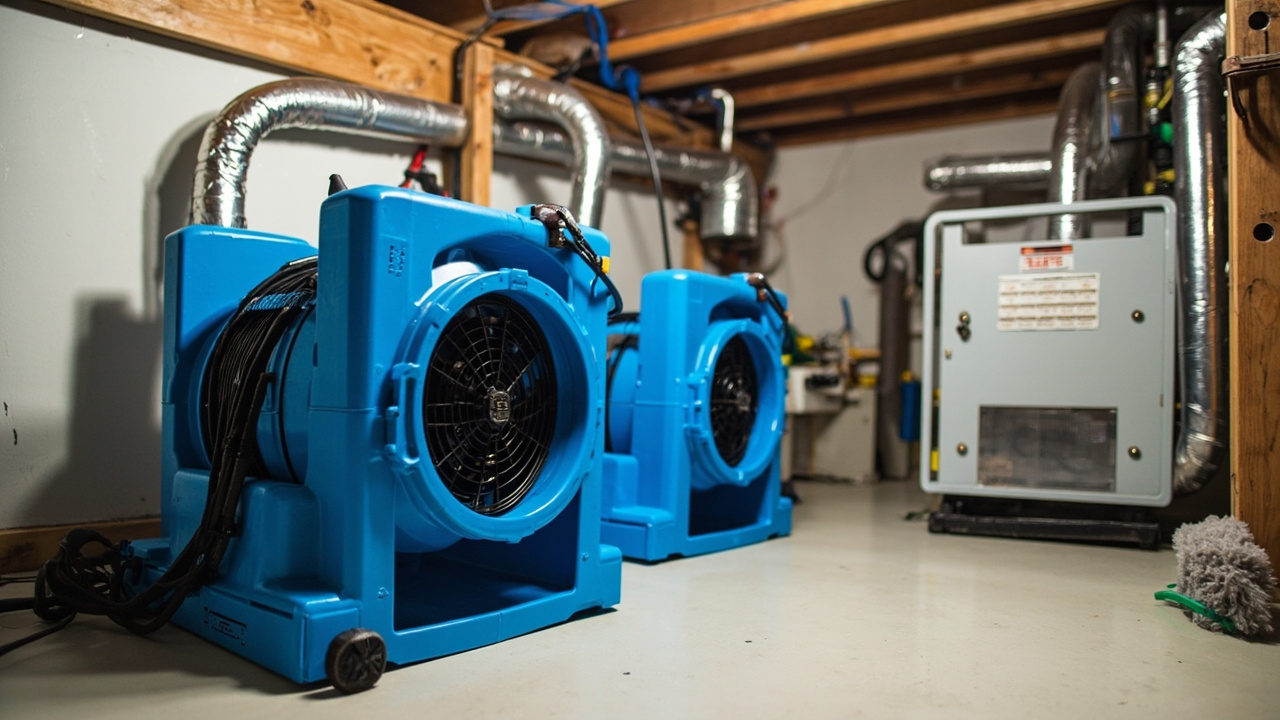
Structural drying typically requires industrial air movers positioned at specific angles to create a vortex airflow pattern, combined with low-grain refrigerant (LGR) dehumidifiers that can pull 100 to 200 pints of water per day from the air and materials. That combination gets your subfloor, wall cavities, and concrete back to acceptable moisture levels — usually between 45 and 55 percent relative humidity at the surface — before mold growth can establish itself.
How Long Does It Take Mold to Grow in a Wet Detroit Basement?
Mold spores are present in every home. They become a problem when they find moisture, a food source (drywall paper, wood framing, carpet backing), and warmth. In a flooded Dearborn basement during warm months, those conditions exist the moment water enters the space.
Under ideal conditions for mold growth, visible colonies can establish within 24 to 72 hours. If you spend two days trying to manage a flooded basement with a shop vac and fans from the hardware store, you are likely handing the mold exactly the time window it needs.
If you want to understand more about why surface treatments do not solve this problem, read our guide on why bleach won’t fix your Ferndale basement mold and when to call a pro.
The cost difference between professional water extraction done immediately versus mold remediation done three weeks later is not close. Mold remediation adds significant expense and often requires demolition of finished materials that could have been saved with fast, proper drying.
| Scenario | Average Drying Time | Mold Risk Level | Materials at Risk | Likely Outcome |
|---|---|---|---|---|
| Shop Vac Only, No Dehumidification | 7 to 21 days (incomplete) | High | Drywall, subfloor, framing, carpet | Mold remediation required |
| Shop Vac Plus Box Fans and Dehumidifier | 5 to 10 days | Moderate to High | Subfloor, insulation, lower wall cavities | Possible mold in hidden cavities |
| Professional Extraction and Structural Drying | 3 to 5 days average | Low | Monitored to pre-loss standards | Full restoration without secondary damage |
What Actually Happens During Professional Water Extraction in Southeast Michigan
When a certified restoration crew arrives at a flooded basement in Dearborn, the process is structured and deliberate. It is nothing like running a shop vac back and forth across a wet floor.
The crew starts with a safety assessment, including moisture mapping with thermal imaging to find hidden water migration behind walls and under flooring. They document everything with photos and moisture readings — information your insurance company will need for the claim.
Speaking of insurance, the documentation phase matters enormously for getting your claim paid. You can learn more about that process in our article on how to get your Detroit home insurance to actually pay for water restoration.
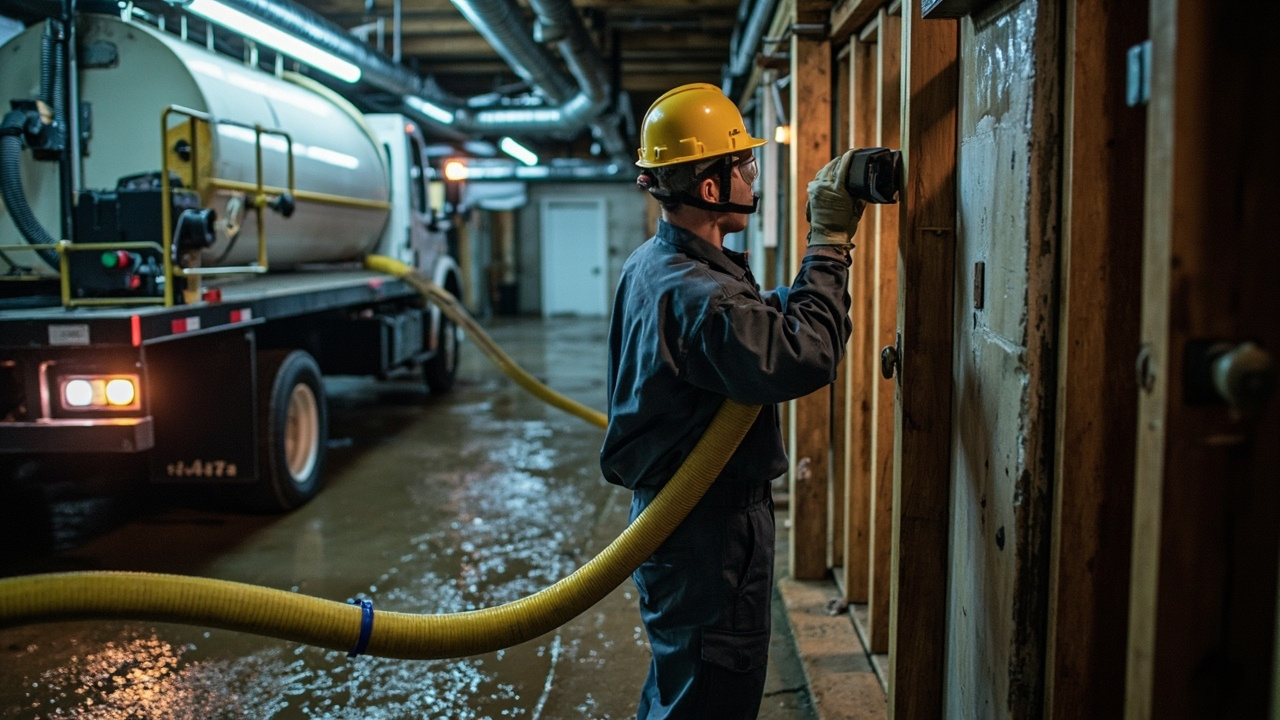
After documentation, the truck-mounted extractor does the heavy lifting. Water comes out of the basement at a rate that makes a shop vac look like a garden hose next to a fire hydrant. Then air movers are placed in a calculated pattern, LGR dehumidifiers are set up, and daily moisture monitoring tracks drying progress against psychrometric targets.
If carpet is involved, the decision between saving it and disposing of it happens early. For guidance on that call in a related situation, our article on deciding whether your wet carpet in Sterling Heights can be saved or needs to go covers the key factors.
Hardwood flooring presents its own set of decisions in a flooded basement. Subfloor moisture trapped under hardwood causes cupping, buckling, and eventual loss of the floor. Our guide on how to save your hardwood floors after a significant water leak in Birmingham MI walks through what is salvageable and what is not.
Dearborn and Southeast Michigan Flooding Patterns You Need to Know
Dearborn sits on relatively flat terrain with soils that have limited permeability. When heavy rain events hit — and Southeast Michigan has seen repeated significant storm events in recent years — the ground saturates quickly and water has nowhere to go but into basement walls and floor drains.
Hydrostatic pressure is a specific concern here. When the water table rises during a major rain event, it pushes against the exterior of your foundation walls. Block foundation walls, which are common in postwar Dearborn construction, are particularly vulnerable. Water forces through the mortar joints and produces seepage that no shop vac strategy addresses at the root cause.
The Detroit Water and Sewerage Department (DWSD) combined sewer overflow events are a related problem for homeowners in the area. During heavy rain, stormwater and sanitary sewage share the same pipes. When the system surcharges, sewage comes back up through the lowest opening in your home — typically the basement floor drain. Neighbors in the East Dearborn and Dearborn Heights areas are familiar with this scenario.
If your basement has flooded from a sewer backup, you are dealing with Category 3 black water. Full stop. Do not use a shop vac. Do not run fans. Call a restoration company with proper containment protocols.
When a Shop Vac Is Appropriate and What to Do First
To be fair to the tool, here is the situation where a shop vac is a legitimate first response. If a washing machine supply hose fails, a utility sink overflows, or a water heater leaks and you have less than 10 gallons of Category 1 water on a hard floor, you can use a wet/dry vac to remove standing water before the restoration team arrives.
If you go this route, take these steps first.
- Shut off the water source causing the leak.
- Turn off power at the main breaker before entering the wet area.
- Remove the dry filter from the shop vac before using it for water. Running liquid through a dry filter destroys the motor.
- Use a GFCI extension cord or confirm the outlet is GFCI protected before plugging in.
- Wear rubber-soled boots. Do not enter in socks or bare feet.
- Dump extracted water into a utility sink, toilet, or outdoor area — not back onto the floor.
- Call a restoration professional anyway, because the shop vac does not address moisture in the subfloor or walls.
If water is more than one inch deep across a large area, skip the shop vac entirely. The math does not work. You will empty and refill that tank dozens of times while water continues wicking into your floor assembly and framing.
What to Tell Your Insurance Company Before You Start Any Cleanup
One thing homeowners in Dearborn consistently get wrong is starting aggressive DIY cleanup before documenting the damage for their insurance claim. Adjusters need to see the pre-mitigation condition. If you vacuum up all the water and start running fans before taking photos and calling your insurer, you may compromise your ability to claim restoration costs.
Take photos and video of all standing water, affected materials, and the apparent source before touching anything. Call your insurance company immediately. Then call a restoration professional. Let the professional document moisture readings and scope of damage formally — that documentation is what gets claims approved.
For a detailed breakdown of the claims process, read our guide on filing a successful water damage insurance claim for your Corktown home.
The Real Reason Professionals Use Industrial Equipment
A truck-mounted extractor, LGR dehumidifiers, and industrial air movers are not upsells. They are the minimum equipment required to actually restore a flooded structure to pre-loss condition. The IICRC S500 Standard for Professional Water Damage Restoration defines what that equipment threshold is and why it exists.
CFM (cubic feet per minute) and lift pressure are the two specs that separate professional extraction from consumer wet/dry vacuums. High lift pressure is what pulls water out of porous materials like concrete and carpet backing. Consumer shop vacs generate adequate lift for liquid on hard surfaces, but almost none for moisture locked in porous substrates. That gap is where mold grows.
If you are standing in a wet Dearborn basement right now, the most useful thing you can do is stop the water source, turn off the electricity, get out of the water, and make two calls — your insurance company and a certified restoration team. Do not spend the next three hours fighting a shop vac battle you will not win.
{
“@context”: “https://schema.org”,
“@type”: “BlogPosting”,
“headline”: “Why You Should Never Use a Regular Shop Vac to Clean Up a Flooded Basement in Dearborn”,
“description”: “Using a shop vac on a flooded basement in Dearborn? Learn the real risks — mold, electrical hazards, and structural damage — before you plug anything in.”,
“wordCount”: 2324,
“datePublished”: “2026-06-26T10:44:00.000Z”,
“dateModified”: “2026-06-26T10:44:00.000Z”,
“inLanguage”: “en-US”,
“mainEntityOfPage”: {
“@type”: “WebPage”,
“@id”: “https://ironwoodwaterdamagerestorationdetroit.com”
},
“publisher”: {
“@type”: “LocalBusiness”,
“name”: “Ironwood Water Damage Restoration Detroit”,
“url”: “https://ironwoodwaterdamagerestorationdetroit.com”
},
“author”: {
“@type”: “Organization”,
“name”: “Ironwood Water Damage Restoration Detroit”,
“url”: “https://ironwoodwaterdamagerestorationdetroit.com”
},
“image”: {
“@type”: “ImageObject”,
“url”: “https://ironwoodwaterdamagerestorationdetroit.com/wp-content/uploads/2026/03/why-you-should-never-use-a-regular-shop-vac-to-cle-1.jpg”
}
}
{
“@context”: “https://schema.org”,
“@type”: “LocalBusiness”,
“name”: “Ironwood Water Damage Restoration Detroit”,
“url”: “https://ironwoodwaterdamagerestorationdetroit.com”,
“address”: {
“@type”: “PostalAddress”,
“addressLocality”: “Detroit”
},
“areaServed”: {
“@type”: “City”,
“name”: “Detroit”
}
}
{
“@context”: “https://schema.org”,
“@type”: “FAQPage”,
“mainEntity”: [
{
“@type”: “Question”,
“name”: “Can a Shop Vac Actually Remove Standing Water From a Basement?”,
“acceptedAnswer”: {
“@type”: “Answer”,
“text”: “For small, contained spills — say, a few gallons from a tipped water softener tank or a minor appliance leak — a high-capacity wet/dry shop vac can clean things up adequately. That is the honest answer. If the water is less than a quarter inch deep and covers a limited area, a 16-gallon unit with the dry filter removed will do the job if you work quickly.”
}
},
{
“@type”: “Question”,
“name”: “How Long Does It Take Mold to Grow in a Wet Detroit Basement?”,
“acceptedAnswer”: {
“@type”: “Answer”,
“text”: “Mold spores are present in every home. They become a problem when they find moisture, a food source (drywall paper, wood framing, carpet backing), and warmth. In a flooded Dearborn basement during warm months, those conditions exist the moment water enters the space.”
}
}
]
}
{
“@context”: “https://schema.org”,
“@type”: “BreadcrumbList”,
“itemListElement”: [
{
“@type”: “ListItem”,
“position”: 1,
“name”: “Home”,
“item”: “https://ironwoodwaterdamagerestorationdetroit.com”
},
{
“@type”: “ListItem”,
“position”: 2,
“name”: “Blog”,
“item”: “https://ironwoodwaterdamagerestorationdetroit.com/blog”
},
{
“@type”: “ListItem”,
“position”: 3,
“name”: “Why You Should Never Use a Regular Shop Vac to Clean Up a Flooded Basement in Dearborn”
}
]
}
{
“@context”: “https://schema.org”,
“@type”: “Service”,
“serviceType”: “Water Damage Restoration”,
“provider”: {
“@type”: “LocalBusiness”,
“name”: “Ironwood Water Damage Restoration Detroit”,
“url”: “https://ironwoodwaterdamagerestorationdetroit.com”
},
“areaServed”: {
“@type”: “City”,
“name”: “Detroit”
},
“description”: “Using a shop vac on a flooded basement in Dearborn? Learn the real risks — mold, electrical hazards, and structural damage — before you plug anything in.”
}