

Your indoor pool is a luxury. The damage it causes to your drywall, framing, and structural supports is not. If you own a home in West Bloomfield, Bloomfield Hills, or anywhere in Oakland County with an enclosed pool, there is a very good chance that moisture is actively destroying materials behind your walls right now. The problem is not the pool itself. The problem is physics, and most pool enclosures in Southeast Michigan are losing that fight every single day.

The Physics Behind Indoor Pool Humidity Damage
A residential indoor pool evaporates between 20 and 30 gallons of water per day under normal operating conditions. Crank up the water temperature above 84°F, run the jets, or leave the pool uncovered overnight, and that number climbs fast. All of that water goes somewhere. In a properly managed enclosure, it gets captured by a dehumidification system. In most homes we inspect across the Detroit metro area, it soaks into every porous material it can find.
This is where psychrometrics matters. Psychrometrics is the study of air and water vapor mixtures. When warm, saturated pool air contacts a cold surface, such as an exterior wall during a Michigan January, the air drops below its dew point and water condenses. That condensation happens inside your wall cavity, not on the surface where you can see it. By the time you notice a problem, the damage is already weeks or months old.
Detroit sits in ASHRAE Climate Zone 5A. Our winters create extreme temperature differentials between indoor pool rooms (typically 82°F to 86°F) and outdoor air that can drop to single digits. That differential is essentially a pump driving moisture through your wall assembly from inside to outside. Without a continuous vapor retarder installed on the warm side of the wall, your insulation, sheathing, and framing absorb that moisture load season after season.
What Relative Humidity Is Doing to Your Enclosure
The ideal relative humidity (RH) for an indoor pool room sits between 50% and 60%. Most unmanaged residential enclosures run between 75% and 90% RH. At those levels, drywall paper becomes a food source for mold. Wood framing loses structural integrity. Steel fasteners and support beams begin to corrode. This is not a slow, theoretical process. In Michigan’s climate, we see significant structural degradation within 18 to 24 months of inadequate humidity control.
| Relative Humidity Level | Effect on Pool Enclosure Materials | Timeframe to Visible Damage |
|---|---|---|
| 50% to 60% RH | Safe zone. Materials stable. Mold growth unlikely. | No damage expected |
| 61% to 70% RH | Paint begins to peel. Minor condensation on cold surfaces. | 6 to 12 months |
| 71% to 80% RH | Mold colonization begins. Drywall paper softens. Wood swells. | 3 to 6 months |
| Above 80% RH | Rapid structural degradation. Active mold. Steel corrosion accelerates. | Weeks to a few months |
Recognizing the Signs of Humidity Damage in Your Pool Room
The tricky part about indoor pool humidity damage is that it hides. The most severe damage happens inside wall cavities, above drop ceilings, and within structural members you cannot see. That said, there are reliable surface indicators that tell us what is happening deeper in the structure.
Here is what to look for during a walk-through of your pool enclosure:
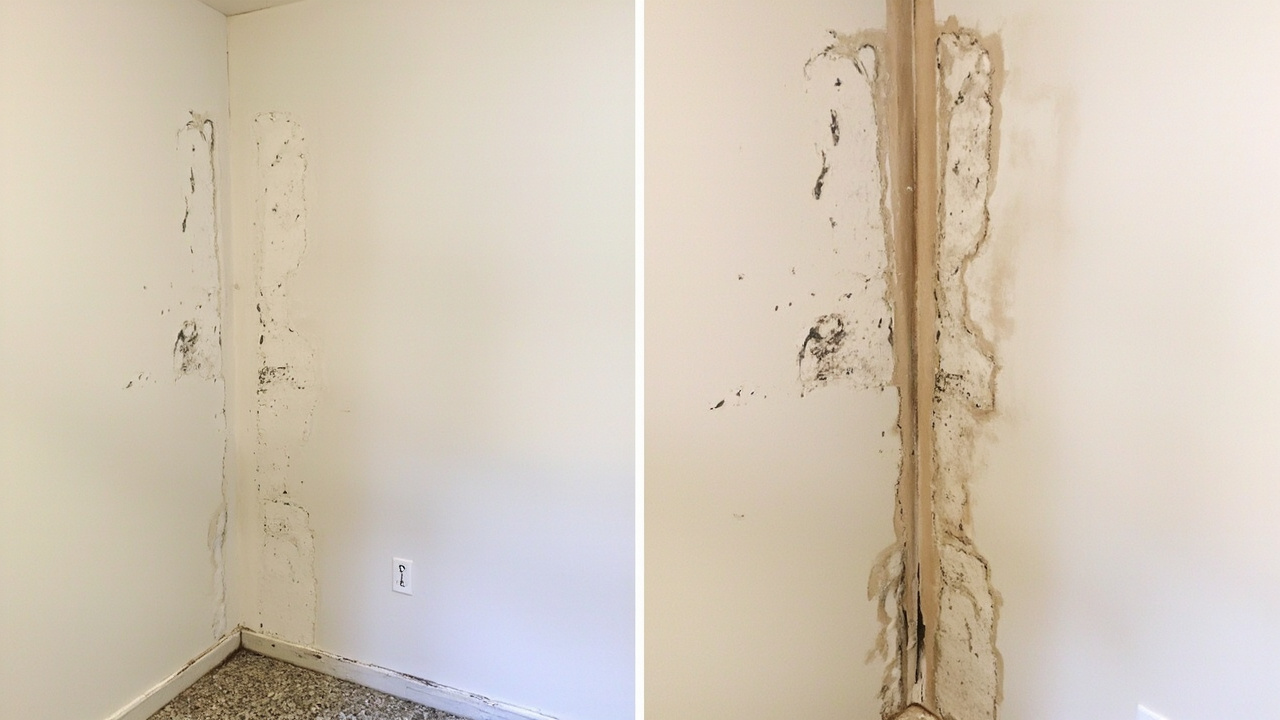
- Peeling or bubbling paint on walls and ceiling, especially near the waterline or exterior walls
- Efflorescence on masonry or concrete, which is that chalky white mineral deposit left behind as water migrates through block walls
- Rust stains running down walls from metal hardware, fasteners, or structural connectors
- Soft or spongy drywall when you press on it, indicating the paper and core have absorbed moisture
- A persistent musty or chlorine-mixed-with-mildew odor that does not clear after ventilation
- Sweating walls or windows, meaning visible condensation forming on cool surfaces during winter months
- Warped or buckled wood trim, door frames, or cabinetry adjacent to the pool area
- Discoloration or dark staining on ceiling materials, which often indicates mold colony growth above the surface
If you see two or more of these signs, the damage is already active. Waiting to address it compounds the remediation scope significantly.
What Is Actually Happening Inside Your Walls
When pool air migrates into your wall assembly, it follows a predictable path of destruction. First, the insulation absorbs moisture and loses its R-value. Saturated fiberglass insulation provides almost no thermal resistance, which accelerates condensation further and creates a thermal bridging effect through the framing members themselves.
The wood framing is next. Dimensional lumber supports mold growth once moisture content exceeds 19%. In pool enclosures with poor humidity control, we routinely measure wood moisture content between 25% and 35% during inspections. At those levels, the structural integrity of ceiling joists, wall studs, and roof rafters becomes compromised. We have opened walls in West Bloomfield homes where the studs crumbled under hand pressure.
Steel components fare no better. Pool environments carry elevated chloramine levels in the air, a byproduct of chlorine reacting with organic matter. Chloramines accelerate corrosion on structural steel, HVAC ductwork, and any metal fasteners embedded in the structure. This is not surface rust. This is active galvanic corrosion that can compromise load-bearing connections.
The Mold Problem in High-Humidity Pool Enclosures
The mold strains that thrive in pool enclosures are aggressive. Aspergillus and Penicillium species colonize drywall paper and wood within 24 to 48 hours of sustained moisture. Stachybotrys chartarum, commonly called black mold, establishes itself in materials that have experienced prolonged wetness. Pool room ceilings and the backside of drywall in exterior walls are prime locations for Stachybotrys growth because those surfaces experience repeated wet and dry cycles.
According to the EPA’s guidance on mold and moisture, controlling moisture is the only way to control mold. No antimicrobial coating or cleaning product addresses the underlying issue. If your pool enclosure is running at 80% RH, mold will return regardless of how many times you treat the surface.
For homeowners who have already found mold in adjacent living spaces, the situation is more serious. Pool humidity does not stay contained to the pool room. It migrates into attached garages, mechanical rooms, and even the main living areas of West Bloomfield homes. If you have mold appearing in spaces that do not seem connected to your pool, that humidity migration is likely the culprit. Our article on why bleach won’t fix mold in Southeast Michigan homes explains why surface treatments fail and what professional remediation actually involves.
The Remediation Process for Pool Enclosure Damage
When our IICRC-certified team responds to an indoor pool humidity damage call in Oakland County, the process follows a structured sequence. Guessing where the damage stops is not acceptable. We locate it precisely before any demolition begins.
Step One: Moisture Mapping with Thermal Imaging
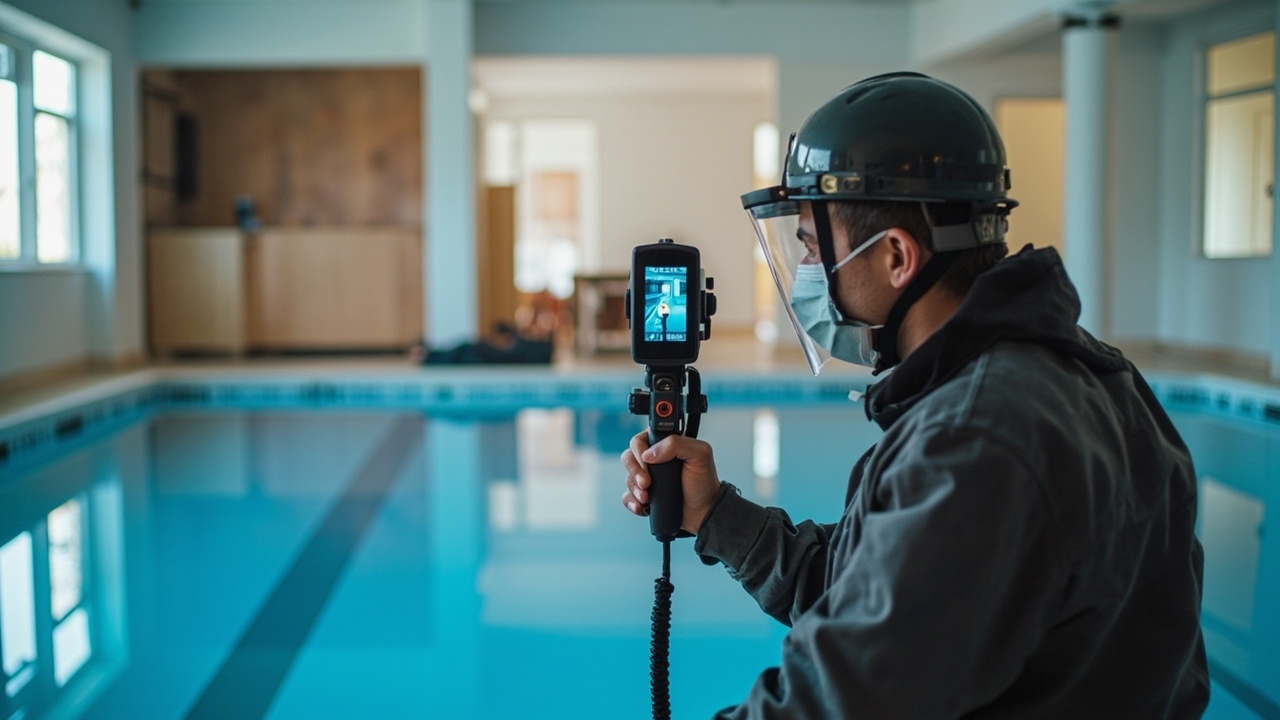
We use infrared thermography cameras alongside calibrated moisture meters to map every affected area. Thermal imaging shows temperature differentials in wall and ceiling surfaces that indicate moisture accumulation behind the finish layer. This prevents us from removing materials that are still dry and ensures we find all affected zones, including areas you would never think to check like the space above pool enclosure drop ceilings and inside soffit cavities.
Step Two: Controlled Demolition and Material Removal
Affected drywall, insulation, and any non-salvageable wood framing gets removed under containment. We use negative air pressure with HEPA filtration to prevent mold spores from migrating into adjacent living spaces during demolition. Drywall in pool environments is almost never salvageable once significant moisture absorption has occurred. The paper face is gone, and the gypsum core is compromised.
Step Three: Structural Drying and Antimicrobial Treatment
Commercial-grade desiccant dehumidifiers and high-velocity air movers bring structural members down to acceptable moisture content levels, typically below 16% for wood framing. This process takes between three and seven days depending on the extent of saturation. Once dry, exposed framing and masonry receive antimicrobial treatment targeting the specific mold species identified during inspection.
Step Four: Rebuilding with the Right Materials
Standard drywall does not belong in a pool enclosure. Cement board or fiberglass-reinforced panels are appropriate for pool room walls below the waterline. Above that, moisture-resistant gypsum with a sealed vapor retarder on the warm side is the minimum acceptable standard. Ignoring this in the rebuild phase means repeating the same damage cycle.
If the damage has spread to hardwood flooring in adjacent spaces, that requires its own assessment. Our guide on saving hardwood floors after water exposure in Birmingham and surrounding areas covers the salvageability factors in detail.
Prevention Strategies That Actually Work
Once remediation is complete, the system that caused the damage needs to change. Restoration without prevention is just a delay.
Proper Dehumidification for Michigan Pool Rooms
Residential dehumidifiers from hardware stores cannot handle pool room loads. A properly sized pool enclosure in West Bloomfield requires a dedicated natatorium dehumidification system from manufacturers like Dectron or Seresco. These units are engineered specifically for high-evaporation environments and maintain precise humidity setpoints regardless of outdoor conditions.
Sizing matters. The calculation depends on pool surface area, water temperature, bather load, and the cubic footage of the enclosure. An undersized unit runs continuously and still fails to maintain safe humidity levels. According to ASHRAE’s engineering guidelines, pool enclosure HVAC design must account for the full evaporation load plus adequate air turnover rates, typically a minimum of four to six air changes per hour for residential natatoriums.
Vapor Barriers and Why Continuity Matters
A vapor retarder installed on only part of a wall assembly does not work. Moisture finds every gap, penetration, and seam. In ASHRAE Zone 5A, the vapor retarder belongs on the interior side of the wall insulation, meaning the warm side during winter. Any penetrations for electrical outlets, light fixtures, or plumbing must be sealed. A single unsealed electrical box in a pool room wall cavity creates a direct moisture pathway into the insulation layer.
Pool Covers Reduce the Evaporation Load
An automatic pool cover reduces evaporation by roughly 95% when the pool is not in use. For a 15-by-30-foot residential pool, that means preventing up to 25 gallons of water per day from entering the air of your enclosure during overnight and off-hours periods. Pool covers are one of the most cost-effective humidity reduction tools available to residential pool owners.
| Prevention Measure | Humidity Reduction Effectiveness | Maintenance Requirement |
|---|---|---|
| Dedicated natatorium dehumidifier (Dectron, Seresco) | High. Maintains target RH setpoint continuously. | Annual service, filter replacement |
| Automatic pool cover | High for off-hours. Reduces overnight evaporation by up to 95%. | Mechanism inspection annually |
| Continuous vapor retarder (warm-side installation) | High. Prevents moisture migration into wall assembly. | Inspect at any renovation or repair |
| Positive exhaust ventilation | Moderate. Removes humid air but increases heating load in winter. | Fan motor and damper checks seasonally |
| Residential dehumidifier (portable units) | Low. Insufficient for full pool evaporation load. | Frequent emptying, filter cleaning |
The Cost of Waiting Versus Acting Early
Early intervention on indoor pool humidity damage is always less expensive than waiting. A moisture issue caught at the paint-peeling stage involves surface preparation and improved humidity control. That same issue found two years later involves structural drywall removal, framing replacement, mold remediation, vapor barrier installation, and full refinishing of the enclosure surfaces.
The scope difference is not marginal. We have seen pool enclosure restorations in Oakland County that expanded from a single wall repair to a complete gut of the enclosure because an owner assumed the peeling paint was a cosmetic issue. The structural framing, the ceiling assembly, and the subfloor were all compromised by the time the full extent of the damage was mapped.
If your home experienced pool-related moisture damage and you are working through an insurance claim, the documentation you gather early in the process matters significantly. Our resource on getting your Detroit home insurance to pay for water restoration walks through what adjusters look for and how to document damage correctly from the start.
For homeowners whose damage has spread to carpeted areas in adjacent rooms, the salvageability question depends on contamination level and saturation duration. Our breakdown of when wet carpet can be saved versus replaced covers the key decision factors professionals use during assessment.
What to Do Right Now If You Suspect Pool Room Damage
Do not wait for a full wall failure before calling for an inspection. If you see any of the warning signs listed above, the right move is a professional moisture assessment using thermal imaging and calibrated meters. That inspection gives you an accurate picture of what is affected, what is still salvageable, and what your remediation scope actually looks like before any work begins.
We serve homeowners throughout West Bloomfield, Bloomfield Hills, Orchard Lake, Keego Harbor, and the broader Detroit metro area including Wayne, Oakland, and Macomb counties. Pool enclosure assessments require specific experience with natatorium environments, not just general water damage knowledge. Make sure whoever you call has documented experience with high-humidity pool room remediation and holds current IICRC certification in structural drying.
The damage your indoor pool is causing right now is measurable and stoppable. The longer the enclosure runs at high humidity without intervention, the deeper the remediation scope grows. Get an accurate assessment, fix the system, and restore the structure. That sequence works. Everything else is just delay.
{
“@context”: “https://schema.org”,
“@type”: “BlogPosting”,
“headline”: “Why Your Indoor Pool in West Bloomfield Is Destroying Your Drywall (And How to Stop It)”,
“description”: “Indoor pool humidity damage is silently rotting West Bloomfield homes. Learn the signs, the science, and how Detroit restoration pros stop the damage fast.”,
“wordCount”: 2187,
“datePublished”: “2026-07-18T11:35:00.000Z”,
“dateModified”: “2026-07-18T11:35:00.000Z”,
“inLanguage”: “en-US”,
“mainEntityOfPage”: {
“@type”: “WebPage”,
“@id”: “https://ironwoodwaterdamagerestorationdetroit.com”
},
“publisher”: {
“@type”: “LocalBusiness”,
“name”: “Ironwood Water Damage Restoration Detroit”,
“url”: “https://ironwoodwaterdamagerestorationdetroit.com”
},
“author”: {
“@type”: “Organization”,
“name”: “Ironwood Water Damage Restoration Detroit”,
“url”: “https://ironwoodwaterdamagerestorationdetroit.com”
},
“image”: {
“@type”: “ImageObject”,
“url”: “https://ironwoodwaterdamagerestorationdetroit.com/wp-content/uploads/2026/03/why-your-indoor-pool-in-west-bloomfield-is-destroy-1.jpg”
}
}
{
“@context”: “https://schema.org”,
“@type”: “LocalBusiness”,
“name”: “Ironwood Water Damage Restoration Detroit”,
“url”: “https://ironwoodwaterdamagerestorationdetroit.com”,
“address”: {
“@type”: “PostalAddress”,
“addressLocality”: “Detroit”
},
“areaServed”: {
“@type”: “City”,
“name”: “Detroit”
}
}
{
“@context”: “https://schema.org”,
“@type”: “BreadcrumbList”,
“itemListElement”: [
{
“@type”: “ListItem”,
“position”: 1,
“name”: “Home”,
“item”: “https://ironwoodwaterdamagerestorationdetroit.com”
},
{
“@type”: “ListItem”,
“position”: 2,
“name”: “Blog”,
“item”: “https://ironwoodwaterdamagerestorationdetroit.com/blog”
},
{
“@type”: “ListItem”,
“position”: 3,
“name”: “Why Your Indoor Pool in West Bloomfield Is Destroying Your Drywall (And How to Stop It)”
}
]
}
{
“@context”: “https://schema.org”,
“@type”: “Service”,
“serviceType”: “Water Damage Restoration”,
“provider”: {
“@type”: “LocalBusiness”,
“name”: “Ironwood Water Damage Restoration Detroit”,
“url”: “https://ironwoodwaterdamagerestorationdetroit.com”
},
“areaServed”: {
“@type”: “City”,
“name”: “Detroit”
},
“description”: “Indoor pool humidity damage is silently rotting West Bloomfield homes. Learn the signs, the science, and how Detroit restoration pros stop the damage fast.”
}