

Water pooling under your kitchen island is one of those problems that feels manageable until it isn’t. By the time you notice a soft spot in your floor or a musty smell coming from the cabinet below the sink, the damage has usually been building for days. If you live in Clawson, Royal Oak, or anywhere across the Metro Detroit area, here is exactly what to do right now.

Shut It Off First, Diagnose Second
Before you open a single cabinet door or grab a flashlight, shut off the water supply to your kitchen island. On most island installations, you will find angle stop valves beneath the sink cabinet. Turn them clockwise until they stop. If your island does not have dedicated shut-offs, go to your main water shut-off in the basement or utility room.
Do not skip this step. A slow drip from a flexible supply line can saturate a wood subfloor in less than 48 hours. Southeast Michigan homes, especially those in Clawson and Berkley built between the postwar era and the early 2000s, commonly use 3/4-inch tongue-and-groove plywood subflooring that absorbs water quickly and delaminates fast.
Once the water is off, dry out the inside of the cabinet with towels or a shop vac. Then look up and look carefully.
The Four Most Common Sources of Kitchen Island Leaks
Island plumbing leaks in Metro Detroit homes tend to come from one of four places. Knowing which one you are dealing with determines whether this is a Monday morning plumber call or a same-day emergency restoration situation.
1. The P-Trap and Drain Connection
The P-trap is the curved pipe directly beneath your island sink drain. It connects to a horizontal drain line that runs to the wall or floor. On kitchen islands, this run is longer than a standard wall sink, which means more joints, more vibration stress, and more opportunity for a slip-joint to loosen over time.
Look for white mineral deposits or dark staining along the PVC fittings. That is dried water. If the P-trap connection is loose, hand-tighten the slip-joint nut and run water to test. If it leaks at the trap arm where it enters the floor, you likely have a venting issue. Many older Clawson homes still have S-trap configurations that were installed before current Michigan Plumbing Code required proper P-trap and venting setups. An S-trap can siphon itself dry and allow sewer gas in, but more relevantly here, it creates drainage backpressure that stresses connections and causes chronic seeping leaks.
2. Flexible Supply Lines
The braided stainless or plastic supply lines connecting your angle stop valves to the faucet are the most failure-prone component in any island installation. They have a finite lifespan and can fail at the compression fitting where they connect to the valve or at the faucet shank above.
Run your fingers along both supply lines from bottom to top. Wet or damp at the connection point means a failed compression fitting. A crack along the body of the line means replacement is non-negotiable. These are not repairable.
3. Dishwasher Connections and the Air Gap
If your island has a dishwasher, the drain hose, water supply connection, and the dishwasher air gap on the countertop are all potential leak points. The air gap is that chrome cylinder near your faucet. If it is clogged or cracked, water can back up and leak downward into the cabinet below.
Check the dishwasher supply line connection at the solenoid valve on the lower front of the unit. Also check where the drain hose clamps to the garbage disposal or drain pipe. Loose clamps or cracked hoses here cause slow leaks that sit on the dishwasher pan floor and eventually seep into the subfloor.
4. Garbage Disposal Seal Failure
The mounting ring seal between your garbage disposal and the sink basket can fail, especially on units that have been in service for several years. This type of leak drips directly down the disposal body and pools at the base. It is easy to confuse with a P-trap leak because the water ends up in the same place. Press down on the sink basket from above and check for movement. A loose or cracked sink strainer gasket is the culprit here.

What Is Happening Inside Your Floor Right Now
This is the part most homeowners underestimate. The visible water inside your cabinet is only part of the story. Water follows the path of least resistance, and under a kitchen island, that means it flows along the subfloor surface, wicks into the edges of flooring materials, and travels outward in every direction.
In a Clawson or Royal Oak home with hardwood floors over a plywood subfloor, moisture penetration can cause subfloor delamination within 72 hours of a sustained leak. That means the layers of the plywood begin to separate. Once delamination starts, the subfloor loses structural integrity and cannot simply be dried back to its original condition. Replacement becomes necessary.
If your kitchen has tile over a cement backer board, water can still penetrate through grout lines and saturate the backer board below, eventually reaching the subfloor. The tile surface staying dry above does not mean there is no damage below. This is exactly why a hygrometer or a professional-grade moisture meter is essential for accurate assessment. Surface observations are not enough.
The other concern is mold. The Great Lakes region has naturally elevated ambient humidity levels, particularly from late spring through early fall. That environmental moisture, combined with a wet subfloor in a low-ventilation space like the interior of an island cabinet, creates near-perfect mold germination conditions. Mold colony formation can begin within 24 to 48 hours at the right temperature and moisture levels. The EPA’s guidance on mold growth confirms that cellulose-rich materials like wood are primary targets. If you are concerned about mold after a kitchen leak, read our breakdown of why bleach won’t solve a mold problem in your Metro Detroit home.
Moisture Levels That Tell You If Your Floor Is Dry or Damaged
| Material Type | Safe Moisture Content | Elevated (Monitor) | Damaged (Restoration Required) |
|---|---|---|---|
| Hardwood Flooring | 6% to 9% | 10% to 14% | 15% and above |
| Plywood Subfloor | Below 16% | 16% to 19% | 20% and above |
| Cement Backer Board | Below 4% | 4% to 6% | 7% and above (structural concern) |
| Drywall or Toe-Kick Panel | Below 12% | 12% to 17% | 17% and above (replacement likely) |
These readings are taken with a calibrated pin-type or pinless moisture meter. Restoration work following IICRC S500 Standards requires documentation of these readings at multiple points across the affected area before and after drying to confirm the structure has returned to acceptable moisture levels.
The Toe-Kick Problem Nobody Warns You About
Kitchen islands have a unique structural challenge that wall cabinets do not. The toe-kick, that recessed panel at the base of the island cabinetry, traps moisture against the bottom of the cabinet boxes. It is essentially a dam. Water that seeps onto the subfloor cannot evaporate naturally because the toe-kick blocks airflow at floor level.
Restoration professionals frequently remove the toe-kick panels on island cabinetry during the drying process. This allows air movers to direct heated airflow directly at the wet subfloor beneath the cabinet base. Without this step, drying times extend significantly and mold risk increases.
This is one reason why the drying process for a kitchen island leak takes longer than a similar-sized wall cabinet leak. Expect a properly executed structural drying job on a kitchen island in the Detroit metro area to take between 3 and 5 days under active LGR dehumidification and directional air mover placement.
How a Professional Restoration Assessment Actually Works
When a restoration team arrives at a Clawson home with a kitchen island leak, the first tool used is not a shop vac. It is a thermal imaging camera. Thermal imaging detects temperature differentials in building materials caused by evaporative cooling at wet surfaces. This lets a technician see exactly how far the water migration has spread without cutting into floors or walls.
After thermal imaging maps the affected zone, a moisture meter takes readings at grid points across the area to establish a baseline. The restoration team then determines the water category. Most kitchen island leaks involve gray water from drain backflow or dishwasher drain issues. A clean supply line failure is Category 1 water. The distinction matters because gray water requires antimicrobial treatment of affected surfaces in addition to physical drying.
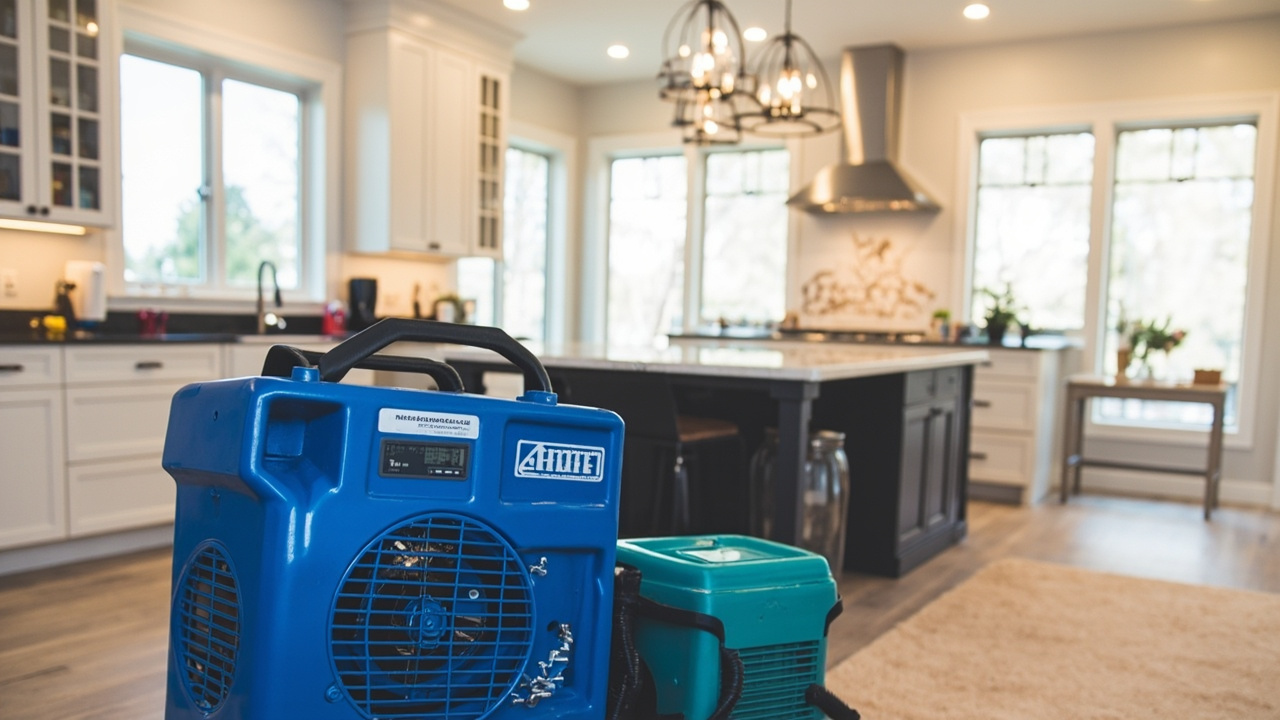
The drying equipment setup for a kitchen island typically includes
- LGR dehumidifiers positioned to handle the cubic footage of the kitchen space
- Directed air movers placed at the toe-kick opening and inside the cabinet base
- A hygrometer to monitor ambient relative humidity during the drying cycle
- Antimicrobial spray application to exposed wood framing and subfloor if gray water was involved
- Daily moisture readings documented to verify drying progress against IICRC S500 drying goals
If your home has hardwood floors in the kitchen, the assessment and drying process is more involved. You can read a detailed breakdown of what that process looks like in our guide to saving hardwood floors after a water leak in Southeast Michigan.
Drying Timeline and What Affects It
| Factor | Faster Drying | Slower Drying |
|---|---|---|
| Flooring Type | Tile over concrete slab | Hardwood or laminate over plywood |
| Leak Duration | Caught within hours | Ongoing for days or weeks |
| Ambient Humidity | Low (winter, heated home) | High (Metro Detroit summer, 70%+ RH) |
| Subfloor Condition | Intact, no delamination | Delaminated or swollen panels |
| Cabinet Removal | Toe-kick removed, airflow accessible | Cabinet base intact, restricted airflow |
| Water Category | Category 1 clean water | Category 2 gray water (requires extra treatment) |
Filing an Insurance Claim for a Kitchen Island Leak in Michigan
Most standard Michigan homeowner insurance policies cover sudden and accidental water damage from a plumbing failure. A supply line that burst is typically covered. A P-trap that has been seeping for six months due to neglect is typically not. The distinction is critical when you file your claim.
Document everything before cleanup begins. Take photos and video of the wet subfloor, the affected cabinet interiors, the failed plumbing component, and the flooring surface above. Keep the failed supply line or fitting as physical evidence. Do not throw it away.
Restoration companies that follow proper IICRC protocol generate moisture logs, drying reports, and scope-of-loss documentation that your adjuster needs to process the claim accurately. If you are navigating this process for the first time, our detailed guide on getting your Detroit home insurance to pay for water restoration walks through the documentation requirements step by step. Homeowners in Corktown, Midtown, and Grosse Pointe have found that thorough documentation from day one significantly reduces claim disputes. For additional claim filing guidance specific to the Corktown area, see our article on filing a successful water damage insurance claim for your Corktown home.
When the Damage Is to Carpet Adjacent to the Island
Some Clawson and Troy homes have an open floor plan where the kitchen flows into a carpeted dining or living area. Water from an island leak can wick into carpet and pad within hours. Whether that carpet can be saved depends on how long it has been wet and whether the water was clean or gray. Our guide on deciding if your wet carpet can be saved covers the decision criteria directly.
What You Can Do Right Now While You Wait for Help
After shutting off the water supply, do the following to reduce damage while you wait for a restoration team to arrive.
- Pull everything out of the island cabinet and dry the interior surfaces with clean towels
- Place a box fan near the open cabinet door to begin surface air movement
- If the subfloor feels soft or spongy, do not walk on it more than necessary
- Do not use a hair dryer or heat gun on wood surfaces as rapid surface drying can cause cracking while the interior remains wet
- Take photos of all wet materials before you move or dry anything
- If you can see standing water beneath the cabinet base, use a wet/dry shop vac to extract it
A Metro Detroit restoration team operating on a standard response commitment can typically be on site in 60 minutes or less for Wayne County and Oakland County addresses. Getting the moisture extraction started quickly is the single biggest factor in whether your subfloor survives intact or needs to be replaced.
If you are dealing with a kitchen island leak in Clawson, Royal Oak, Berkley, or anywhere across the Detroit metro area, call a restoration company with verifiable IICRC certification and specific experience in structural drying. The floor under that island is worth protecting, and in most cases it can be saved if you move fast.
{
“@context”: “https://schema.org”,
“@type”: “BlogPosting”,
“headline”: “Tracking Down the Leak Under Your Clawson Kitchen Island (Without Ripping Up the Floor)”,
“description”: “Kitchen island plumbing leak in Clawson or Detroit? Find the source fast, protect your subfloor, and know when to call a restoration pro.”,
“wordCount”: 2115,
“datePublished”: “2026-07-19T05:32:00.000Z”,
“dateModified”: “2026-07-19T05:32:00.000Z”,
“inLanguage”: “en-US”,
“mainEntityOfPage”: {
“@type”: “WebPage”,
“@id”: “https://ironwoodwaterdamagerestorationdetroit.com”
},
“publisher”: {
“@type”: “LocalBusiness”,
“name”: “Ironwood Water Damage Restoration Detroit”,
“url”: “https://ironwoodwaterdamagerestorationdetroit.com”
},
“author”: {
“@type”: “Organization”,
“name”: “Ironwood Water Damage Restoration Detroit”,
“url”: “https://ironwoodwaterdamagerestorationdetroit.com”
},
“image”: {
“@type”: “ImageObject”,
“url”: “https://ironwoodwaterdamagerestorationdetroit.com/wp-content/uploads/2026/03/tracking-down-the-leak-under-your-clawson-kitchen-1.jpg”
}
}
{
“@context”: “https://schema.org”,
“@type”: “LocalBusiness”,
“name”: “Ironwood Water Damage Restoration Detroit”,
“url”: “https://ironwoodwaterdamagerestorationdetroit.com”,
“address”: {
“@type”: “PostalAddress”,
“addressLocality”: “Detroit”
},
“areaServed”: {
“@type”: “City”,
“name”: “Detroit”
}
}
{
“@context”: “https://schema.org”,
“@type”: “BreadcrumbList”,
“itemListElement”: [
{
“@type”: “ListItem”,
“position”: 1,
“name”: “Home”,
“item”: “https://ironwoodwaterdamagerestorationdetroit.com”
},
{
“@type”: “ListItem”,
“position”: 2,
“name”: “Blog”,
“item”: “https://ironwoodwaterdamagerestorationdetroit.com/blog”
},
{
“@type”: “ListItem”,
“position”: 3,
“name”: “Tracking Down the Leak Under Your Clawson Kitchen Island (Without Ripping Up the Floor)”
}
]
}
{
“@context”: “https://schema.org”,
“@type”: “Service”,
“serviceType”: “Water Damage Restoration”,
“provider”: {
“@type”: “LocalBusiness”,
“name”: “Ironwood Water Damage Restoration Detroit”,
“url”: “https://ironwoodwaterdamagerestorationdetroit.com”
},
“areaServed”: {
“@type”: “City”,
“name”: “Detroit”
},
“description”: “Kitchen island plumbing leak in Clawson or Detroit? Find the source fast, protect your subfloor, and know when to call a restoration pro.”
}