
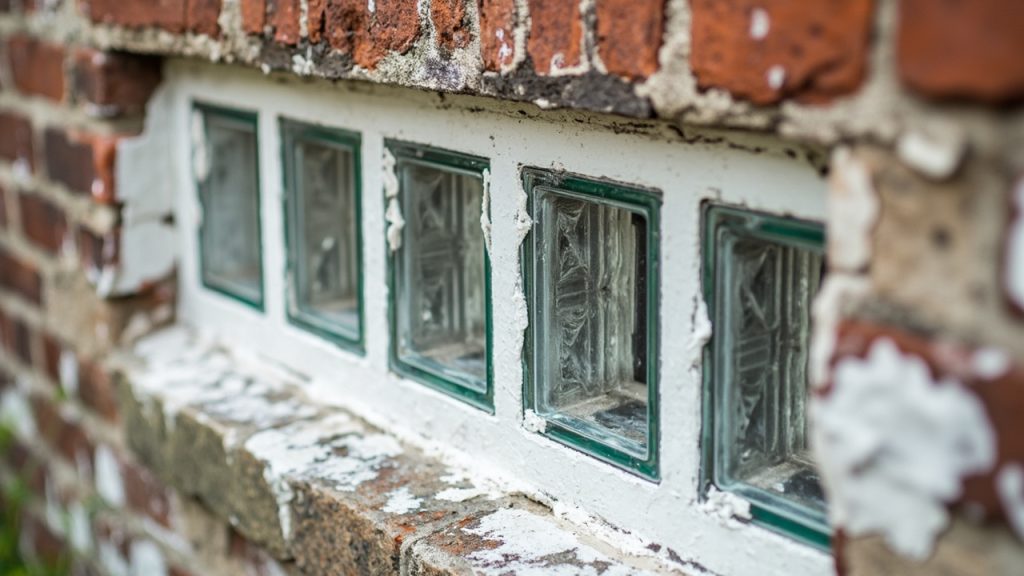
Glass block windows have been a fixture in Detroit basements for decades. Walk down any block in Jefferson-Chalmers, East English Village, or Morningside and you will see them in nearly every home. They look solid. They feel permanent. And yet homeowners call us every spring after a good rain or snowmelt saying the same thing: the basement is wet again, and the water is coming in right around those glass blocks.
If that sounds familiar, you are not dealing with a fluke. You are dealing with a combination of material age, Southeast Michigan’s specific soil and climate conditions, and a failure mode that glass block windows are uniquely prone to. This article walks you through exactly why this happens and what you can do about it.

What Makes Glass Block Windows Fail in Detroit’s Climate
Glass block windows are not a single piece of material. They are individual glass blocks set in mortar, just like brickwork. That mortar is the weak point. In a stable climate, mortar can last for a very long time. Detroit does not have a stable climate.
Southeast Michigan sees an average of roughly 33 inches of precipitation per year, spread across heavy spring rains, summer thunderstorms, and significant snowfall that melts repeatedly before winter ends. More damaging than the water itself is the freeze-thaw cycle. Water gets into tiny gaps in the mortar, freezes, expands, and physically forces the mortar apart. This process repeats dozens of times each winter. By the time the mortar looks visibly cracked, it has already been compromised for years.
Detroit’s soil makes this worse. The greater metro area sits on heavy clay, particularly in the older residential corridors on the east side. Clay does not drain well. It holds water against your foundation wall for extended periods after a rain event. That sustained hydrostatic pressure forces water through any gap it can find, and mortar joints that have started to deteriorate are exactly those gaps.
The Specific Ways Mortar Fails Around Glass Block
Mortar failure is not always obvious from the inside. Here is what to look for around your glass block windows.
- Efflorescence is the white, chalky mineral deposit that appears on block surfaces or on your basement wall nearby. It means water has moved through the mortar and evaporated, leaving minerals behind. It is a direct sign of active water intrusion.
- Hairline cracks in the mortar joints are often invisible until you run your hand across them or probe them with a screwdriver. If the screwdriver sinks in easily, the mortar has lost its integrity.
- Separation at the perimeter is where the glass block panel meets the surrounding masonry or the window buck. This joint sees the most movement from foundation settling and freeze-thaw cycles. It is frequently the first place water enters.
- Failed or missing silicone bead along the interior perimeter. Many installers apply a silicone caulk bead as a secondary seal. That silicone degrades, shrinks, and pulls away from the block surface over time.
- Improper vent installation in glass block panels that include a ventilation insert. These vents need to be sealed and fitted correctly. Poorly installed vents are a direct water entry point.
Hydrostatic Pressure and Why Your Wall Cannot Always Win
Hydrostatic pressure is the force that saturated soil exerts against your foundation wall. After a heavy rain or during snowmelt, the clay soil around Eastside Detroit homes becomes essentially waterlogged. That water has nowhere to go quickly, so it pushes against the basement wall with significant force.
Glass block panels, even when properly installed, are not waterproofing systems. They are windows. They are designed to keep out casual water contact, not sustained pressure from saturated soil. When hydrostatic pressure is high enough, water will push through mortar joints that look perfectly fine on a dry day. This is why so many homeowners are puzzled: they had the windows repointed, everything looked good, and then the first major storm brought water in again.
The real fix often requires addressing the drainage conditions outside the window, not just the mortar inside. According to guidance from the U.S. Environmental Protection Agency on moisture and mold, controlling water entry at the source is always more effective than sealing from the interior alone.

The Damage That Happens After the Leak Starts
A slow glass block leak does not feel like an emergency. A small damp patch after a rain, maybe a bit of musty smell. Many homeowners in the Gratiot corridor or around the far east side neighborhoods near the Detroit River treat it as a nuisance and move on.
That is how water damage compounds quietly over months and years.
Sill Plate Rot
The sill plate is the horizontal wood member that sits on top of your foundation wall. In homes built during Detroit’s postwar building boom, that sill plate is often original wood, now 70 or 80 years old. Persistent moisture from a leaking glass block window wicks directly into that sill plate. Wood rot sets in slowly. By the time you notice soft or discolored wood, structural integrity is already compromised.
Mold Growth in Basement Wall Cavities
Mold needs three things to grow: organic material, warmth, and moisture. A leaking basement window provides the moisture. The wood framing, insulation, and drywall around and below the window provide the organic material. Detroit’s basements are rarely cold enough to prevent mold growth year-round. Given the right conditions, certain mold species can establish a colony within 24 to 48 hours of a moisture event.
Bleach-based products will not solve a mold problem that stems from an ongoing leak. If you want to understand why surface treatments fall short, read our breakdown of why bleach won’t fix your basement mold and when to call a pro. The principle applies to Eastside Detroit basements just as much as it does in Ferndale.
Foundation Erosion Over Time
Water that enters along a mortar joint does not stay there. It travels. Over time, repeated water intrusion can wash out fine particles from the surrounding masonry, a process called erosion or spalling. The window opening itself can begin to grow, creating a larger gap and accelerating the leak rate.
Comparing Your Repair Options
Not every glass block leak requires a full restoration project. The right approach depends on where the water is entering and how severe the damage is. Use this table as a starting diagnostic.
| Leak Location | Likely Cause | Appropriate Fix | DIY Feasible? |
|---|---|---|---|
| Top edge of the panel, interior | Failed perimeter caulk or silicone bead | Remove old sealant, clean surface, apply new silicone | Yes, if access is clear |
| Between individual glass blocks | Mortar joint deterioration | Repointing mortar joints, full panel replacement if severe | Minor repointing only |
| Bottom edge, pooling on the floor | Hydrostatic pressure or poor window well drainage | Exterior drainage improvement, interior drain tile system | No, requires excavation or professional drain tile |
| Around the vent insert | Poor vent fit or failed vent seal | Replace vent insert, reseal perimeter | Possibly, depends on vent type |
| General seeping across the wall near the window | Saturated clay soil, hydrostatic pressure on the wall | Full basement waterproofing system evaluation | No |
When a DIY Fix Makes Sense and When It Does Not
If you can clearly see a failed silicone bead along the perimeter and the leak is limited to wet weather only, a DIY reseal is a reasonable first step. Clean the joint thoroughly, let it dry completely, and apply a polyurethane or silicone sealant rated for below-grade masonry applications. This is not a permanent fix for deteriorated mortar, but it can stop minor infiltration while you plan a longer-term solution.
Do not attempt a DIY fix if any of the following are true.
- Water comes in during dry weather or without rain, which suggests a rising water table or drainage pipe issue.
- You see white mineral deposits (efflorescence) on the wall surrounding the window, indicating the leak has been ongoing long enough to leave mineral traces.
- The wood near the window feels soft or spongy when you press on it.
- You smell a persistent musty odor that does not go away after the basement dries out.
- The mortar between blocks crumbles or can be scraped out easily with a fingernail.
In any of those situations, you are dealing with a problem that has progressed past what surface sealing can address. A professional assessment will identify how far the damage has spread and whether remediation of existing water damage is needed alongside the window repair.
What Professional Restoration Looks Like for Glass Block Leaks
When a restoration crew responds to a glass block window leak, the process goes well beyond repointing mortar. The goal is to stop the water, dry the affected area completely, and remediate any biological growth that has developed.
Professionals follow the IICRC S500 Standard for Professional Water Damage Restoration, which defines the protocols for moisture assessment, drying goals, and documentation. This matters for insurance claims and for ensuring the work is done correctly, not just until the next rain.
Step-by-Step Process for a Glass Block Window Water Intrusion
First, a moisture mapping inspection identifies how far water has traveled from the window opening. Thermal imaging cameras and moisture meters reveal wet framing, insulation, and drywall that look dry on the surface.
Second, affected materials are removed. This typically means cutting out drywall or removing paneling that has absorbed moisture. Wet insulation comes out entirely because it cannot be dried effectively in place.
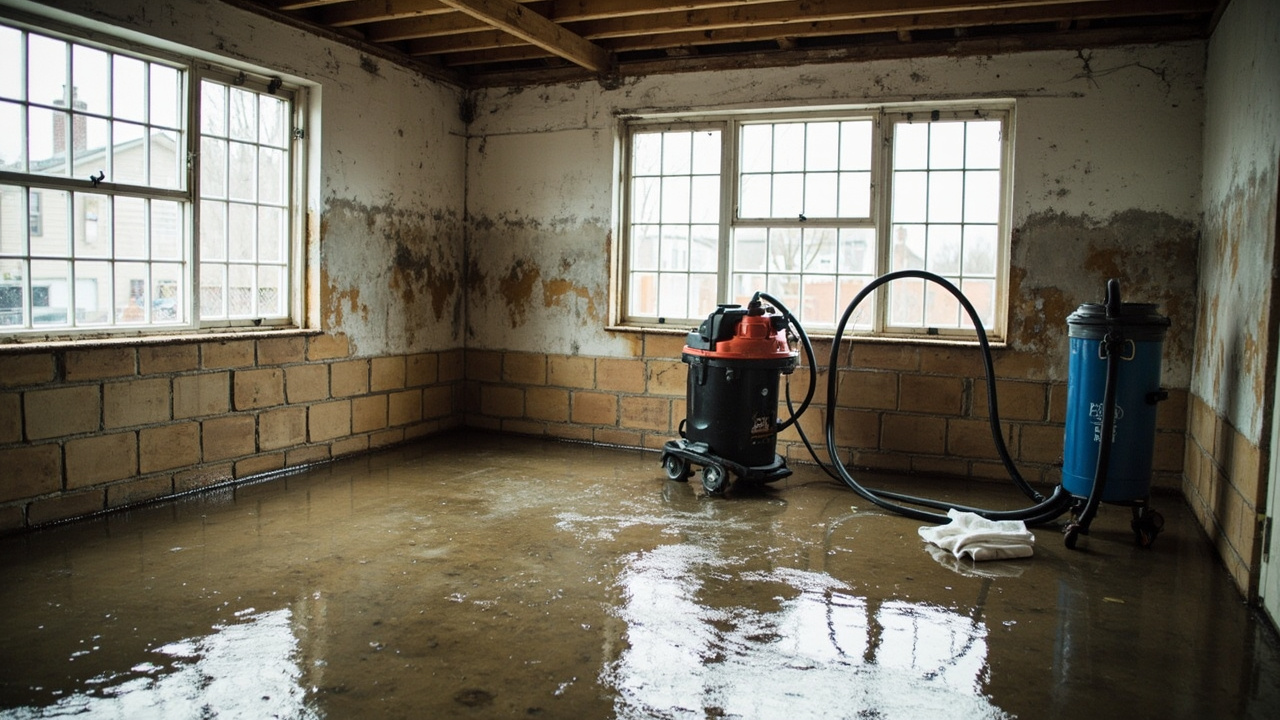
Third, industrial air movers and dehumidifiers run continuously until structural drying goals are met. In a Detroit basement, this process typically takes three to five days depending on the extent of saturation. The clay soil environment means ambient humidity in the basement is already elevated, which extends drying time compared to other regions.
Fourth, if mold is present, remediation follows established containment and treatment protocols before any reconstruction begins.
Fifth, the window itself is addressed. Depending on the condition of the panel, this may mean repointing mortar joints, replacing the entire glass block panel, improving the exterior window well and drainage, or a combination of all three.
Comparing the Cost of Waiting vs. Acting Now
The single most expensive mistake Detroit homeowners make with basement water intrusion is treating it as a low-priority problem. The table below illustrates how costs escalate as a glass block leak goes unaddressed.
| Stage of Damage | What Is Typically Affected | Relative Cost Range | Time to Reach This Stage |
|---|---|---|---|
| Fresh leak, no structural damage | Wet concrete floor, surface moisture on wall | Low (sealing and minor drying) | Immediately after first leak event |
| Ongoing leak, minor mold | Drywall, insulation, surface mold on masonry | Moderate (drying plus mold remediation) | 2 to 6 weeks of unchecked moisture |
| Chronic leak, established mold | Framing, sill plate beginning to soften, mold colonies | High (remediation plus structural repair) | Several months of ignored leaking |
| Long-term neglect | Significant structural wood rot, widespread mold, possible foundation erosion | Very high (full remediation, structural repair, waterproofing system) | One or more years of unaddressed moisture |
Insurance Coverage and Glass Block Window Leaks
Coverage for basement water damage tied to a glass block window leak depends heavily on how the claim is filed and how the damage is documented. Sudden and accidental water intrusion is typically covered differently than gradual leakage, which insurers often deny as a maintenance issue.
If you are navigating this with your insurance company, documenting the condition of the mortar, the age of the window installation, and the specific weather event that triggered the leak strengthens your position significantly. For detailed guidance on how Detroit homeowners can improve their odds with an insurance claim, read our article on how to get your Detroit home insurance to actually pay for water restoration.
If you are in Corktown or another area where older housing stock creates specific documentation challenges, this guide on filing a successful water damage insurance claim for your Corktown home covers the process in detail.
The Broader Waterproofing Picture for Eastside Homes
Glass block windows are one entry point for water, but they rarely fail in isolation. Homes in the Jefferson-Chalmers area, Chandler Park, and east of Gratiot near Eight Mile were largely built between the 1920s and 1950s. Foundation walls in that era were poured concrete or concrete block, both of which develop porosity over time. If your glass block window is leaking, there is a reasonable chance moisture is also finding its way in through the wall itself.
A glass block window repair that does not account for the surrounding wall condition may reduce the visible leak without eliminating the moisture problem. This is why a thorough moisture inspection that looks at the entire basement envelope, not just the window, gives you a clearer picture of what you are actually dealing with.
Water damage in the basement can also migrate upward into flooring on the level above. If you have hardwood floors on your first floor above a wet basement, the subfloor may be absorbing moisture from below. Our guide on saving hardwood floors after a water leak walks through what can be salvaged and what needs to come out.
Quick Triage Guide for Right Now
If you are reading this because you have water coming in today, here is what to do immediately while you arrange for a professional inspection.
- Move belongings away from the wet area to prevent secondary damage to furniture, stored items, and flooring.
- Place towels or a wet-dry vacuum to remove standing water from the floor. Do not let water sit on concrete long-term.
- Run a dehumidifier in the basement if you have one. This will not dry the wall, but it reduces ambient humidity and slows mold development.
- Take photos of the leak source, the water path on the wall, and any visible efflorescence or mortar damage. These photos are valuable for insurance documentation.
- Do not apply caulk or patching compound over wet or damp mortar. Sealing moisture in accelerates decay.
Glass block windows are a durable feature of Eastside Detroit homes, and they can absolutely last for many more decades when the mortar is maintained and drainage conditions are managed. The problem is that most of those windows have been in place for 50 or 60 years with minimal attention. When the leaks start, the fix is more involved than a tube of silicone, but it is entirely solvable.
If you are seeing signs of a glass block window leak in your Detroit basement, reach out for an inspection. The sooner the water entry point is confirmed and the existing moisture is mapped, the less repair work ends up on the table.