
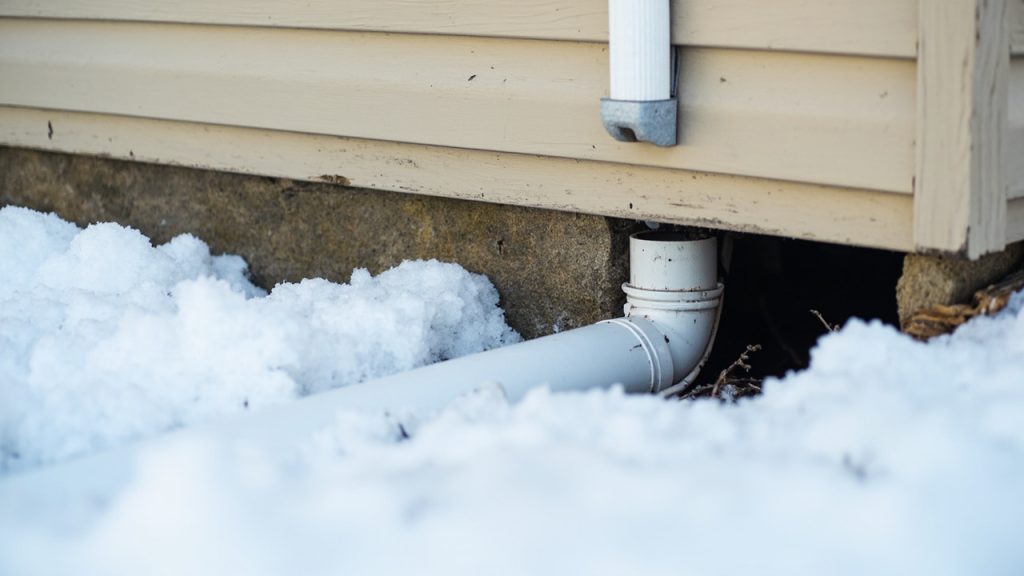
A frozen sump pump discharge line is one of the most common reasons Detroit-area basements flood in January and February. The pump runs, the motor hums, but the water has nowhere to go. Within hours, you are looking at a flooded basement floor, damaged drywall, and a potential mold problem that starts growing within 24 to 48 hours.
If you are a homeowner in Grosse Pointe, Grosse Pointe Farms, or anywhere along the Lake St. Clair shoreline, your discharge line is especially vulnerable. The combination of Great Lakes weather patterns, Southeast Michigan’s clay-heavy soil, and the region’s freeze-thaw cycles creates conditions that freeze exterior PVC discharge piping faster than most homeowners expect.
This guide covers how to identify a frozen line, how to safely thaw it, and the permanent fixes that keep it from freezing again.
How to Tell If Your Discharge Line Is Actually Frozen
The signs are usually obvious once you know what to look for. The tricky part is that a frozen discharge line can mimic other pump failures, so it helps to check the exterior first before assuming the pump itself is broken.
- The sump pump motor runs continuously but the water level in the basin does not drop
- You hear a steady humming or cycling noise from the pump every few minutes
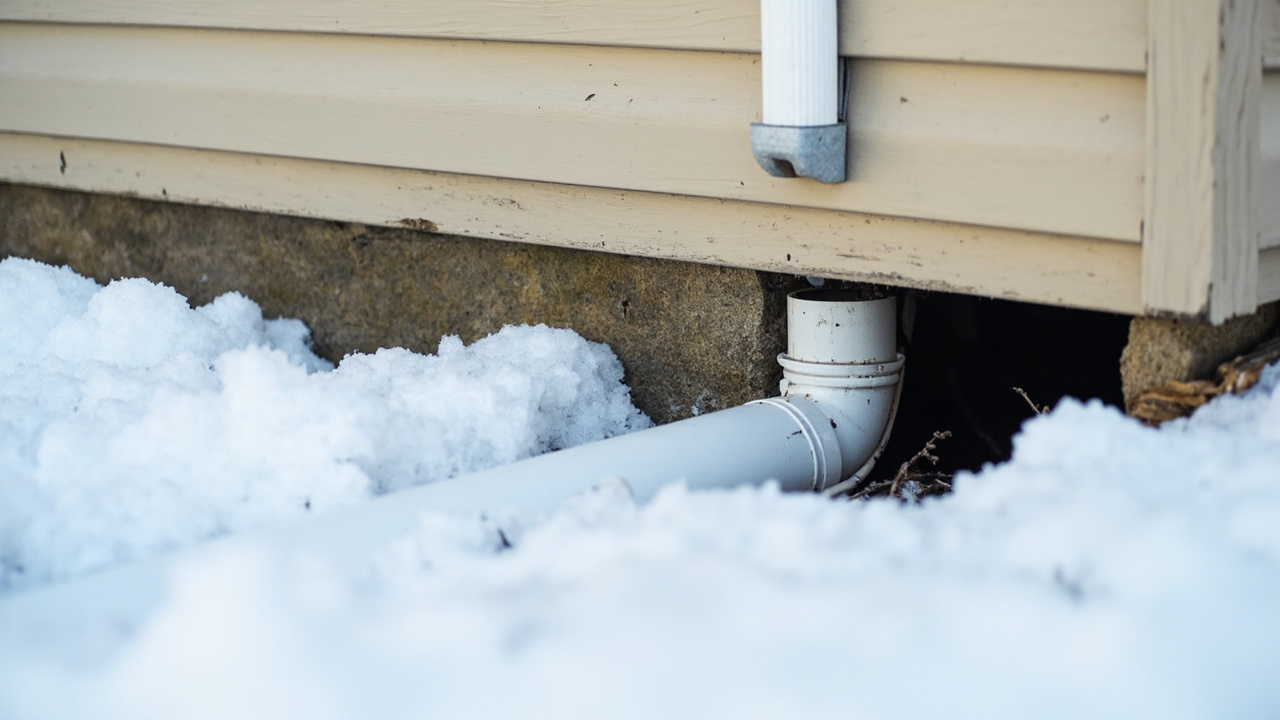
- The pipe exit point on the exterior of your home has visible ice buildup or is completely sealed with ice
- Water is backing up through the floor drain or seeping under the basement walls
- The discharge pipe feels rigid and cold along its entire length, with no water movement when you place your hand on it
Walk outside and find where the discharge pipe exits your home’s foundation. In most Grosse Pointe and East Detroit homes built between the 1940s and 1980s, this exit point sits just a few inches above grade. That placement made sense when the houses were built. It does not hold up well against modern freeze cycles, which are more unpredictable than they used to be.
If the exit point is encased in ice or you can see water pooling near the foundation because it cannot drain, your line is frozen. Move to the next section immediately.
Immediate Steps to Thaw a Frozen Discharge Line Safely
Do not panic, but do act fast. A sump pump running against a frozen or blocked line can burn out the motor within a few hours. Your first priority is relieving the pressure on the pump, then thawing the line.
Step 1 — Unplug the Pump Temporarily
Before you do anything else, unplug the sump pump. Water and electricity are a serious hazard combination. If the basin is already overflowing, do not step into standing water with the pump plugged in. Use a battery-powered backup pump if you have one to manage water levels while you work on the line.
Step 2 — Locate the Entire Length of the Discharge Pipe
Most discharge pipes run from the pump basin, up through the floor or wall, and then exit the foundation wall or rim joist before heading to a dry well, a downspout connector, or a point several feet from the home. In Wayne County homes with finished basements, part of the pipe may be hidden behind drywall. Trace what you can see.
Step 3 — Apply Controlled Heat to the Exterior Section
The freeze almost always starts at or near the pipe’s exit point and works inward. Use one of the following methods to apply heat. Do not use open flames, blowtorches, or heat guns at close range on PVC piping. PVC softens and deforms at temperatures well below what a torch produces, and an open flame near a wood rim joist is a fire hazard.
- Wrap the frozen section in self-regulating heat tape (products like Frost King or Easy Heat are available at local hardware stores in Sterling Heights and Warren). Heat tape designed for pipe freeze protection is the safest and most effective method.
- Pour warm water (not boiling) directly over the exit point. This works for minor ice blockages at the pipe opening. Have a bucket and towels ready because the water will run back toward you.
- Use a standard hair dryer on a long extension cord. Keep it moving along the pipe and maintain a safe distance from any moisture. Do not set it down or leave it unattended.
Step 4 — Check the Check Valve
Once the exterior section is thawed, examine the check valve inside the basement. This one-way valve sits on the discharge pipe, usually a foot or two above the pump basin. Its job is to prevent backflow from re-entering the basin after each pump cycle. In freezing conditions, ice that forms in the pipe can force water back past the check valve, causing it to stick or fail. If the valve is stuck open, water flows back into the basin continuously and the pump short-cycles. A stuck or cracked check valve needs replacement, and it is a straightforward repair if you have basic plumbing experience.
Step 5 — Test the System Before Walking Away
Plug the pump back in and add water to the basin with a garden hose to trigger the float switch. Watch the water move through the pipe and confirm it exits cleanly at the discharge point. If the pump still runs without the water level dropping, call a plumber or water damage restoration professional. You may have a second freeze point further down the line.
Why Detroit Winters Are Uniquely Hard on Discharge Lines
Michigan’s frost line depth is 42 inches, according to the Michigan Bureau of Construction Codes. That means the ground stays frozen to a depth of 3.5 feet during a hard winter. Most residential sump pump discharge lines do not run anywhere near that depth. They sit at or just below grade, which puts them squarely in the freeze zone for three to four months out of the year.
The clay soil that dominates Southeast Michigan from Dearborn to St. Clair Shores makes this worse. Clay retains moisture. It holds the cold. When the temperature drops to single digits, as it does several times each winter in the greater Detroit area, saturated clay surrounding a shallow discharge pipe becomes a freeze accelerator. The pipe does not just get cold; it gets held in cold soil that will not release heat.
The freeze-thaw cycles of Great Lakes winters compound the problem. A pipe that thaws on a 38-degree afternoon and then refreezes overnight expands and contracts repeatedly. PVC piping handles thermal expansion reasonably well, but fittings, elbows, and the pipe-to-foundation junction are weak points. After several seasons of freeze-thaw stress, cracks develop at those joints, and a cracked discharge pipe can cause water to flood your foundation wall instead of draining away from it.
Permanent Solutions That Actually Work
Thawing the line buys you time. The following fixes address the root cause and prevent the problem from repeating each winter.
Install a Discharge Freeze Protection Device
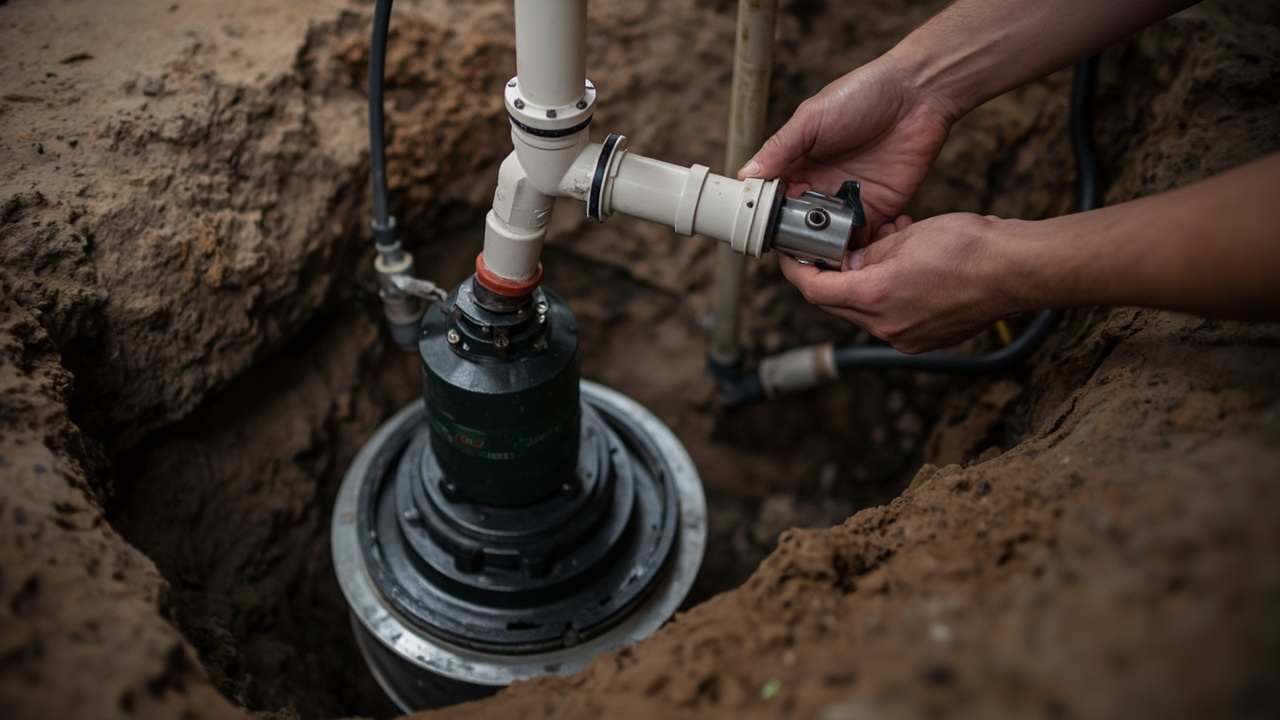
Products like the IceGuard discharge attachment are designed specifically for this problem. The device installs at the exterior wall where the discharge pipe exits the foundation. It has side openings that allow water to escape even when the discharge line is completely frozen. The pump still runs, and water drains away from the foundation, just not through the normal pipe path. This is the single most cost-effective upgrade you can make to an existing system, and installation takes less than an hour for a plumber or experienced DIYer.
Bury the Line Deeper
If your discharge pipe runs along the surface or is buried only a few inches, a re-installation that brings it closer to or below the frost line significantly reduces freeze risk. This is a bigger project and involves excavation, but it is the right long-term solution for homes where the discharge needs to travel a significant distance across the yard to reach a drain field or municipal connection. Ask any contractor about compliance with plumbing code standards for burial depth and slope requirements in your municipality. Grosse Pointe Park and Grosse Pointe Woods each have their own local code enforcement offices that can provide specific depth requirements for your property.
Correct the Slope of the Discharge Pipe
Discharge pipes need to maintain a consistent downward slope away from the house, typically a minimum of one-quarter inch of drop per foot of horizontal run. If any section of the pipe is flat or has a reverse slope, water sits in that section between pump cycles. Standing water in a pipe below freezing temperatures is a recipe for a blockage. A plumber can use a simple level to identify and correct slope problems without replacing the entire run.
Install Self-Regulating Heat Cable Along the Pipe
For pipes that cannot be buried deeper without significant excavation, self-regulating heat cable installed along the exterior pipe run is a reliable preventative measure. Unlike fixed-wattage heat tape, self-regulating cable automatically increases or decreases output based on ambient temperature. It draws more power when the temperature drops and less when it warms up, which keeps operating costs reasonable. Wrap it in pipe insulation after installation to maximize efficiency.
Use a Larger Diameter Discharge Pipe
Standard residential discharge pipes are often 1.5-inch or 2-inch diameter PVC. A larger diameter pipe resists complete blockage longer because it takes more ice accumulation to fully seal the opening. Upgrading to a 3-inch pipe on the exterior run is a simple change that provides a meaningful buffer during a hard freeze.
| Preventative Solution | Best For | Difficulty Level | Long-Term Effectiveness |
|---|---|---|---|
| IceGuard or Freeze Relief Device | All homes, quick upgrade | Easy (DIY possible) | Good (backup, not primary fix) |
| Deeper Pipe Burial | Homes with long exterior runs | High (requires excavation) | Excellent |
| Correcting Pipe Slope | Homes with pooling or flat sections | Medium (plumber needed) | Very Good |
| Self-Regulating Heat Cable | Homes where burial isn’t feasible | Medium (DIY possible) | Very Good |
| Larger Diameter Pipe | Upgrade during any pipe replacement | Medium (plumber recommended) | Good (supplementary benefit) |
What Happens to Your Basement If the Pump Fails During a Freeze
A sump pump that cannot discharge water will fail at stopping basement flooding. Once hydrostatic pressure builds up against the basement walls and floor slab, water finds a way in through floor cracks, wall cracks, and the cove joint where the floor meets the wall. This is especially common in the brick and block foundation homes throughout Grosse Pointe and Indian Village.
Even a few inches of water in a finished basement causes significant damage. Drywall wicks water up from the base within minutes. Insulation in stud cavities becomes saturated and stays wet for days. Hardwood floors buckle. Carpet padding becomes a reservoir for moisture and the organic material that mold feeds on. If you are dealing with water-damaged flooring already, the guidance in this guide on saving hardwood floors after a water leak is directly applicable to what you are facing.
Mold growth begins within 24 to 48 hours of water exposure in the right conditions. Southeast Michigan basements in winter present exactly those conditions: enclosed space, organic materials (drywall paper, wood framing, carpet fiber), and moisture. A basement that flooded on Monday night can have active mold colonies by Wednesday morning if it is not dried out properly. If you discover mold after a flood event, read why bleach is not an effective solution for basement mold before you start spraying anything.
The Tools You Need on Hand Before Winter Hits
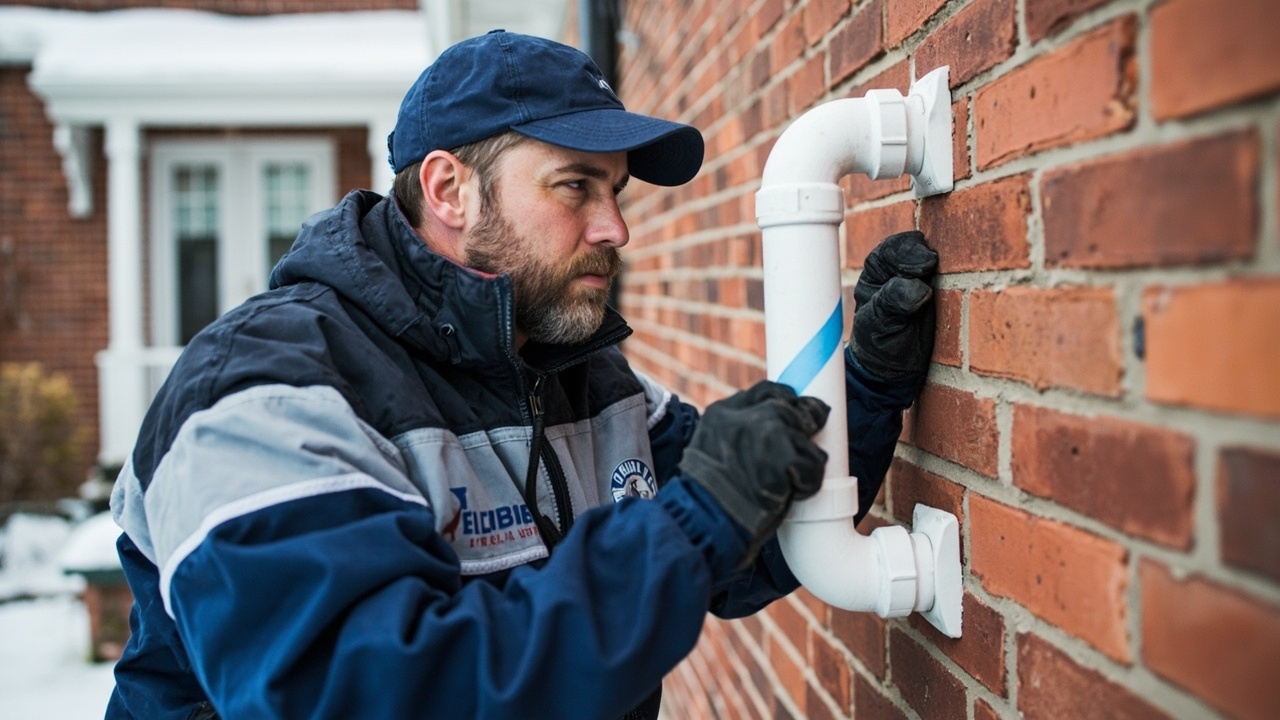
Preparation is faster and cheaper than an emergency repair. Before the first hard freeze, make sure you have these items accessible in your home.
- Self-regulating heat tape (enough to cover the full exterior pipe run)
- Pipe insulation foam wrap in the correct diameter for your discharge pipe
- A shop vacuum with wet/dry capability for managing small water intrusion events
- A flathead and Phillips screwdriver for removing the check valve for inspection
- Teflon tape and a spare check valve in the correct size for your pump
- A battery-operated backup sump pump with a charged battery
- The phone number of a local IICRC-certified water damage restoration company
Common Mistakes That Make the Problem Worse
These are the errors restoration professionals see repeatedly during Michigan winters.
| Mistake | Why It Makes Things Worse | What to Do Instead |
|---|---|---|
| Using a propane torch to thaw the pipe | Fire risk, destroys PVC, can ignite rim joist | Use heat tape or warm water only |
| Leaving the pump running against a frozen line | Burns out the motor within hours | Unplug the pump until the line is clear |
| Pouring boiling water on the pipe | Thermal shock cracks PVC at connection points | Use warm, not boiling, water |
| Not checking the check valve after a freeze | A failed check valve causes the pump to short-cycle and waste energy | Inspect and replace the check valve as part of post-freeze protocol |
| Redirecting discharge toward the house | Water pools at the foundation and increases hydrostatic pressure | Ensure all discharge runs 10 or more feet away from the foundation |
When to Call a Water Damage Restoration Professional
Some situations are beyond a DIY response. Call a professional if you encounter any of the following.
Your basement already has standing water. Water mitigation in a flooded space requires professional equipment, including truck-mounted extractors, industrial air movers, and desiccant or refrigerant dehumidifiers. A shop vac does not have the capacity to remove the moisture from building materials before mold sets in.
You see visible water staining or efflorescence on your basement walls. These are signs that water has been entering through the foundation over a longer period. A sump pump failure may be the latest episode in an ongoing waterproofing problem that needs professional assessment.
Your pump has been running against a frozen line for hours or days. The motor damage and potential flooding require both a plumber and a restoration professional to address the system failure and any resulting water damage simultaneously.
You suspect mold is already present. Mold remediation in Wayne County requires proper containment, HEPA filtration, and disposal protocols. It is not a cleaning task.
If you end up filing an insurance claim for basement flooding caused by a pump failure, documentation is critical. Review the details of how to get your Detroit home insurance to actually pay for water restoration before you call your insurer. The way you present the claim matters significantly. For specific claim filing guidance, this resource on filing a successful water damage insurance claim walks through the documentation process step by step.
A frozen sump pump discharge line is a fixable problem when you catch it early. The damage it causes when you do not catch it is expensive, time-consuming, and stressful. Take 30 minutes this week to walk your discharge line from the pump basin to the exterior exit point. Look for shallow burial depth, improper slope, missing insulation, and any cracks at fittings or elbows. The problems that will flood your basement in February are visible right now if you know what you are looking for.
If you find damage, or if you are not sure what you are looking at, call a licensed professional before the ground freezes. The window for exterior pipe work in Southeast Michigan closes fast once temperatures drop.