
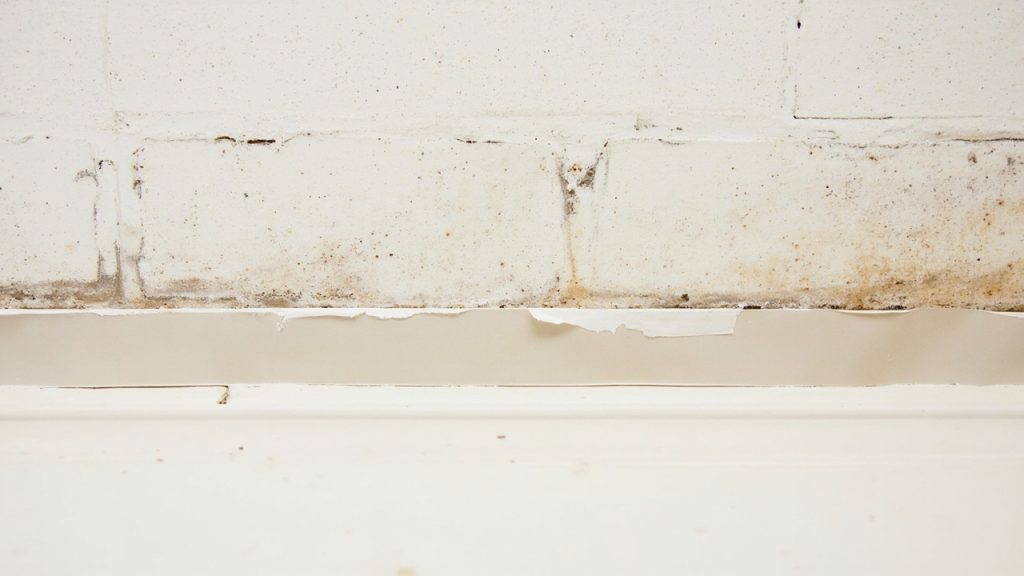
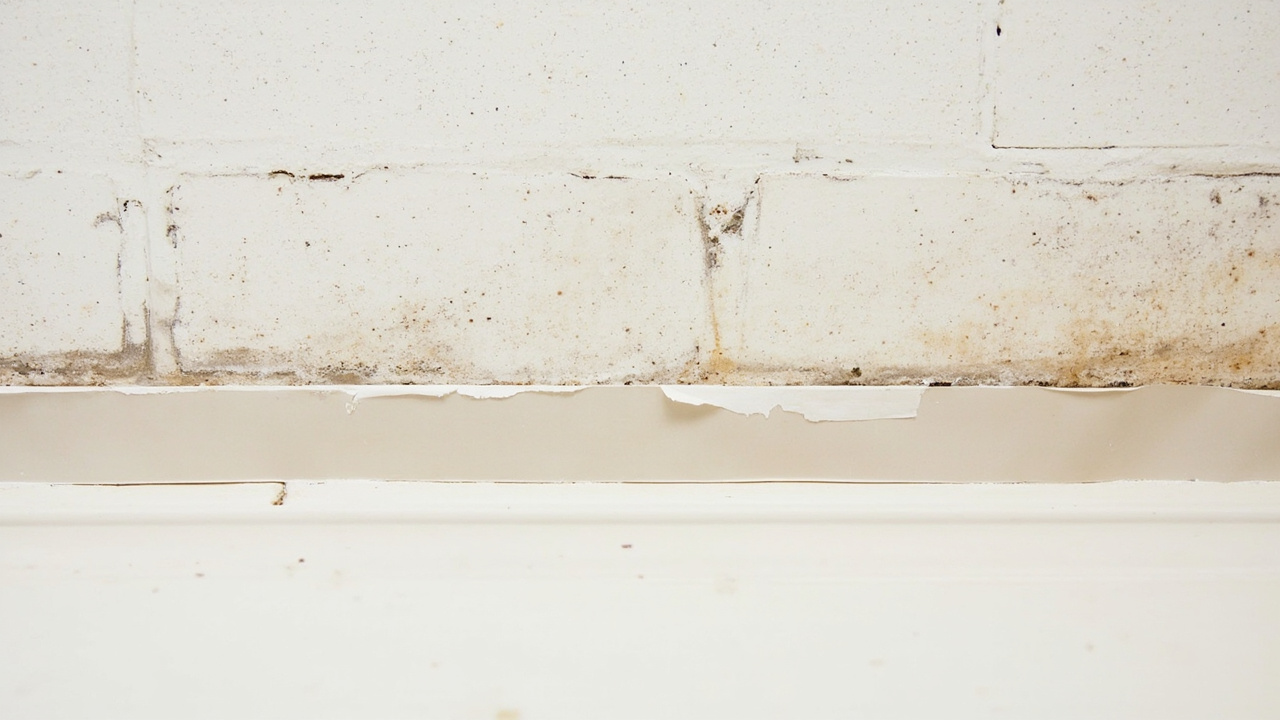
That bubbling, curling strip of tape along your basement wall is not a drywall problem. It is a moisture problem. And if you are in Sterling Heights, the odds are high that your soil, your foundation age, and the Great Lakes climate are all working against you at the same time.
Peeling drywall tape in a below-grade space is one of the earliest visible signs that water is moving through or behind your walls. Most homeowners ignore it for months, patch it with a little joint compound, and then wonder why mold shows up six weeks later. This guide explains exactly what is happening, how to tell whether you have a cosmetic issue or a serious water intrusion problem, and what steps actually stop it from coming back.
Why Detroit and Sterling Heights Basements Are Especially Vulnerable
Metro Detroit sits on a layer of dense clay-heavy glacial till soil. That matters because clay does not drain well. When rain falls or snow melts, water stays near your foundation walls for days, sometimes weeks. That sustained contact creates hydrostatic pressure, which is the force water exerts against your foundation as it tries to find a path through.
Sterling Heights sits in Macomb County, where much of the residential construction from the 1960s through the 1990s used poured concrete or concrete block foundations. Both are vulnerable to hairline cracking over time. Block foundations in particular have mortar joints that absorb moisture like a sponge. Once water gets into the block cavities, it wicks toward the interior surface and directly into your finished drywall assembly.
On top of that, Detroit summers push relative humidity into the 70 to 85 percent range on a regular basis. That ambient moisture alone is enough to soften joint compound and break the bond between drywall tape and the paper face of the board. You do not even need a visible leak. Sustained high humidity in an unventilated basement does the same damage slowly.
Identifying the Root Cause Before You Touch Anything
There are two very different reasons drywall tape peels in a basement. One is bad installation. The other is active moisture intrusion. The repair approach for each is completely different. Treating a water intrusion problem like an installation problem will cost you far more in the long run.
Signs It Was a Bad Installation
- Tape is peeling in isolated areas near a seam, not along the base of the wall
- The tape lifts cleanly without any wet or soft material behind it
- The drywall itself feels firm and dry when you press on it
- No musty odor in the area
- Peeling appeared within the first year or two after the basement was finished
- No history of flooding, sump pump failure, or visible seepage
Signs You Have a Moisture or Water Intrusion Problem
- Tape is peeling along the base of the wall, especially at floor level
- The drywall feels soft, spongy, or crumbles slightly when pressed
- You see white powdery deposits on the foundation wall (efflorescence) where the drywall meets the block or concrete
- There is a musty or earthy smell that gets worse after rain
- Visible staining, rust streaks, or discoloration on the lower sections of the wall
- Tape is peeling in multiple locations across the room
- The room feels damp even in winter
Efflorescence is one of the most reliable indicators. It is the white, chalky mineral residue left behind when water moves through masonry and evaporates at the surface. If you see it on your block or poured foundation walls, water is actively migrating through. No amount of re-taping fixes that.
What Peeling Tape Actually Tells You About Your Basement Assembly
Standard drywall uses a paper face that bonds well with joint compound under normal conditions. But standard drywall has no place in a basement. Below-grade spaces require moisture-resistant board, often called greenboard or glass-mat gypsum board. When contractors use standard drywall in a finished basement, the paper face becomes a food source for mold the moment moisture levels rise.
The EPA’s guidance on mold in buildings is clear that controlling moisture is the only real solution. Mold remediation without addressing the water source always fails. That principle applies directly to peeling basement tape. You can re-tape every seam in your basement, but if hydrostatic pressure is pushing water through your foundation, the tape will fail again within one season.
The framing behind the drywall is also at risk. Most Sterling Heights basements from the 1970s and 1980s used dimensional lumber framed directly against the foundation wall with little to no vapor barrier. Once moisture gets into that cavity, the studs and bottom plate begin to rot. By the time tape is peeling at the floor level, the bottom plate may already have significant damage.
The Danger of Letting This Go
Peeling drywall tape is a symptom, not the disease. The disease is moisture. And unchecked moisture in a below-grade enclosed space leads directly to mold growth, typically within 48 to 72 hours of saturation at temperatures above 60 degrees Fahrenheit.
The mold species most commonly found in chronically damp Detroit-area basements include Cladosporium, Aspergillus, and in cases of prolonged saturation, Stachybotrys chartarum, commonly called black mold. Stachybotrys requires sustained wet material to colonize, which is exactly what a water-logged drywall assembly provides. Once it establishes behind your walls, remediation requires full containment, negative air pressure, and disposal of all contaminated materials.
If you are seeing peeling tape and wondering whether you also need to worry about mold, read our article on why bleach won’t fix your Ferndale basement mold and when the situation requires a professional remediation team.
Comparing the Real Costs of DIY Patching vs. Professional Remediation
This is where a lot of homeowners make a financially costly mistake. They spend a weekend re-taping, priming, and painting. The wall looks fine. Then three months later the tape is peeling again, the smell is worse, and now there is visible mold growth at the base of the wall. The table below compares what you are actually dealing with in each scenario.
| Situation | Appropriate Response | Typical Timeline | Recurrence Risk Without Root Cause Fix |
|---|---|---|---|
| Poor original installation, no moisture | Re-tape with setting-type mud and fiberglass mesh tape | 1 to 2 days | Low |
| High ambient humidity only | Commercial-grade dehumidification, re-tape with moisture-resistant materials | 3 to 5 days including drying | Moderate without ongoing humidity control |
| Active seepage through foundation wall | Water intrusion mitigation first, then full drywall demo and rebuild with proper vapor barrier | 1 to 3 weeks depending on scope | High if foundation issue is not resolved |
| Mold present behind walls | Professional mold remediation per IICRC S520 standards, full containment and disposal | 3 to 7 days for remediation alone | Very high without water source correction |
How Moisture-Resistant Materials Actually Work in a Finished Basement
If you are rebuilding after a moisture event or finishing a Sterling Heights basement from scratch, material selection is everything. Standard paper-faced drywall fails in high-humidity environments. Here is what actually belongs in a below-grade assembly.
The Right Materials for Basement Drywall Work
Glass-mat gypsum board eliminates the paper face entirely, removing the organic material that mold feeds on. It costs more than standard board but performs significantly better in below-grade applications. Pair it with setting-type mud rather than pre-mixed all-purpose compound. Pre-mixed compound takes longer to cure and retains moisture longer, which is a problem when ambient humidity is already high.
For tape, fiberglass mesh tape with a tight weave is preferable in basements over standard paper tape. Paper tape bonds well but has no moisture resistance. Fiberglass mesh tape applied with a strong-bonding setting compound holds up far better against the humidity swings that Detroit basements experience between January and August.
Before any drywall goes up, a continuous vapor barrier should run from the foundation footing up behind the framing. In older Sterling Heights homes where the framing is already against the concrete, this step is often missing entirely. That gap in the building envelope is frequently the reason you are dealing with peeling tape in the first place.
| Material | Appropriate for Basement | Mold Resistance | Performance in High Humidity |
|---|---|---|---|
| Standard paper-faced drywall | No | Poor | Poor |
| Greenboard (moisture-resistant gypsum) | Marginal | Moderate | Moderate |
| Glass-mat gypsum board | Yes | Good | Good |
| Paper drywall tape | No | Poor | Poor |
| Fiberglass mesh tape with setting-type mud | Yes | Good | Good |
| Pre-mixed all-purpose compound | No | Poor | Poor |
| Setting-type (hot mud) compound | Yes | Good | Good |
Dehumidification Is Not Optional in a Metro Detroit Basement
Even after you address the source of moisture intrusion and rebuild with the right materials, your finished basement needs active humidity control year-round. Consumer-grade dehumidifiers are not sufficient for a space that sees regular humidity spikes from Michigan’s summer weather patterns.
The EPA recommends keeping indoor relative humidity between 30 and 50 percent to prevent mold growth and material degradation. In a Sterling Heights basement during July and August, hitting that target without mechanical dehumidification is impossible.
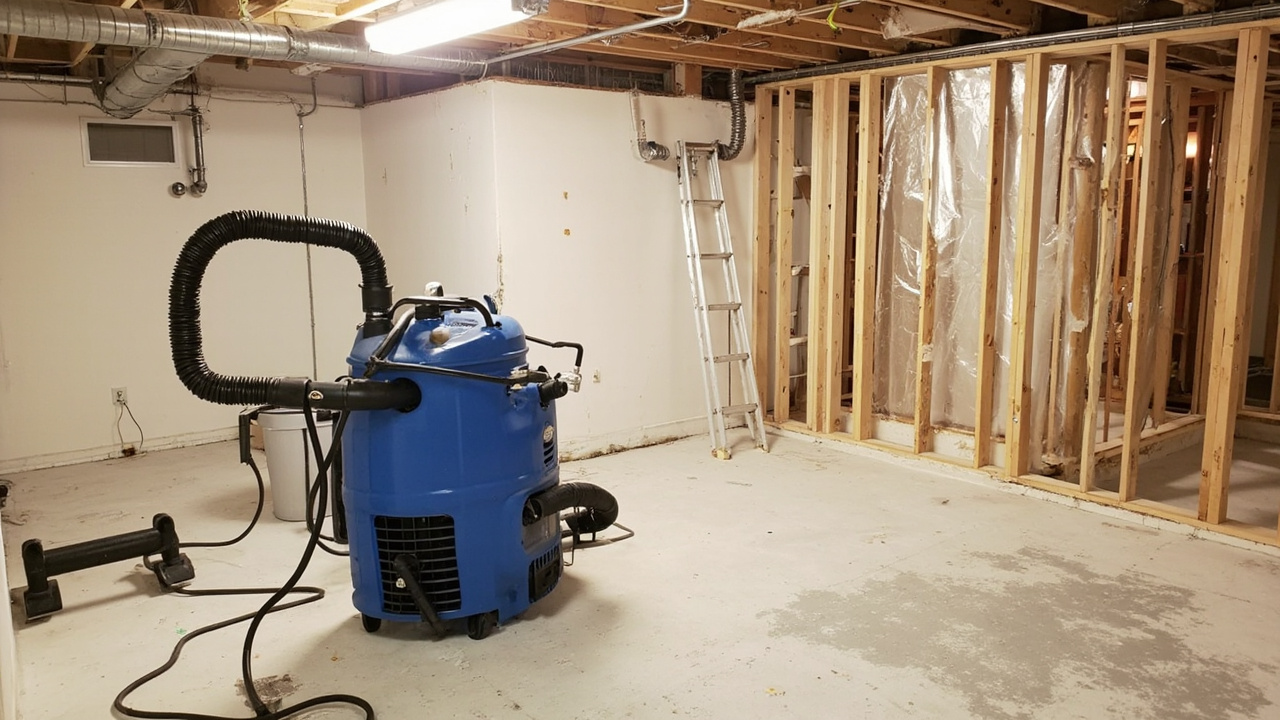
Commercial-grade dehumidifiers, the kind used in water damage restoration, move significantly more air volume and pull far more moisture per hour than a box store unit. A restoration company will often leave industrial dehumidification equipment running for 3 to 5 days after a moisture event to bring structural materials back to acceptable moisture content levels before any reconstruction begins. That is an IICRC S500 standard, not a recommendation.
When You Need to Stop DIYing and Call a Water Damage Restoration Professional
Some basement tape situations are straightforward repairs. Others indicate a problem that will cost you far more if you handle it incorrectly. Here is how to know which situation you are in.
Call a professional if any of the following are true. Your sump pump has failed or you have had visible water on the floor in the past two years. You see efflorescence on any foundation wall surface. The drywall at floor level has gone soft, discolored, or crumbles at the bottom edge. You smell mold but cannot see it. The tape is peeling in multiple rooms or along multiple walls. Your basement has flooded at any point due to drain backup, sump failure, or foundation seepage.
If your situation involves a past water event that was never properly dried, you may also be dealing with a delayed insurance claim situation. Understanding how your homeowner’s policy handles water damage is critical before you start any demolition. Our guide on how to get your Detroit home insurance to actually pay for water restoration covers the documentation steps that matter most when filing a claim.
If the water event was recent and you are also dealing with wet flooring in other parts of the home, the decisions you make in the next 24 to 48 hours significantly affect what can be saved. Our article on deciding whether your wet carpet in Sterling Heights can be saved or needs to go walks through the specific thresholds restoration professionals use to make that call.
A Practical Diagnostic Process You Can Do Before Calling Anyone
Before you pick up the phone or swing a hammer, spend 20 minutes doing a proper assessment. This helps you communicate clearly with a restoration professional and gives you a clearer picture of what you are dealing with.
Start at the base of each wall. Press firmly on the drywall at floor level. If it gives, feels spongy, or makes a crunching sound, the board is compromised. Move along the wall and note every location where tape is lifting. Check whether the lifting follows seams, runs horizontally along the bottom, or appears in random spots.
Look at the floor near the walls. Any rust staining on the concrete floor, white mineral deposits, or visible cracks in the floor slab near the perimeter are signs of hydrostatic pressure coming up through the slab or around the footer. That is a waterproofing problem, not a drywall problem.
Check your sump pit if you have one. Is the water level high? Does the pump run frequently even without recent rain? These are signs that your drainage tile system around the foundation is overwhelmed or failing, which directly contributes to the moisture your walls are absorbing.
Finally, use a simple hygrometer (a cheap humidity meter available at any hardware store) to measure the relative humidity in the basement. If it reads above 60 percent consistently, you have a humidity management problem independent of any foundation issue.
What Happens During a Professional Basement Moisture Assessment
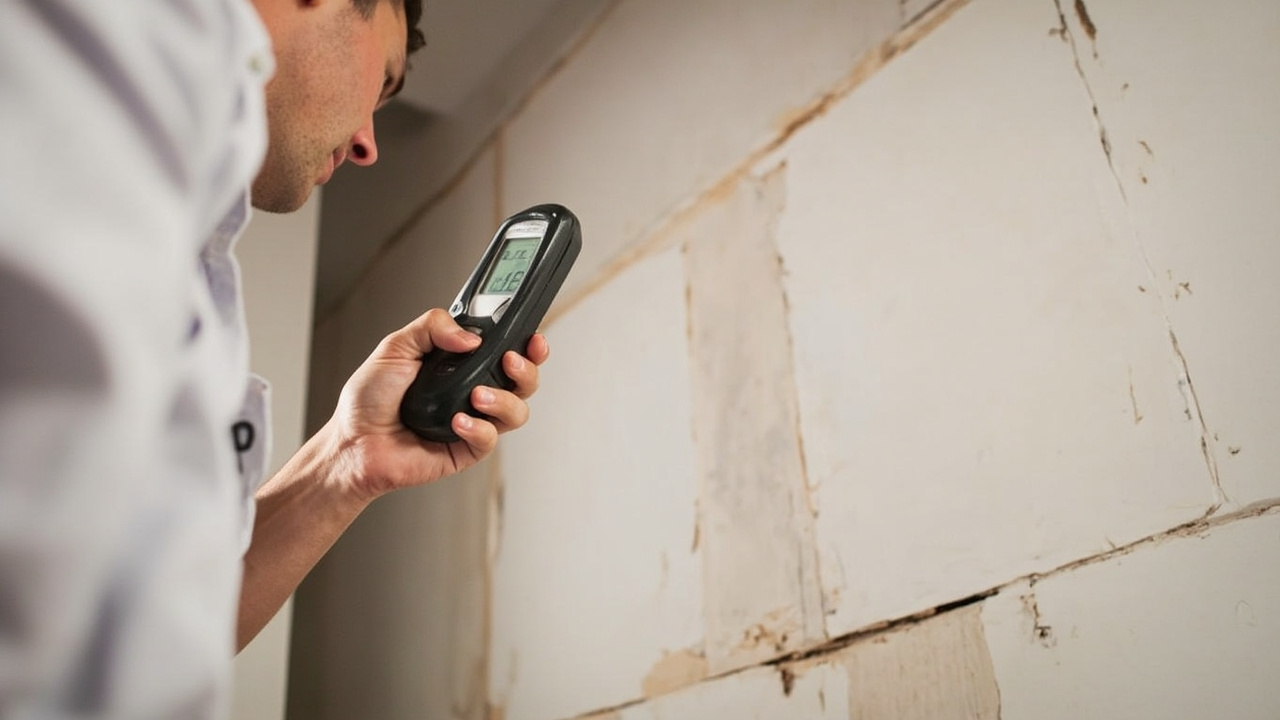
A trained water damage restoration technician does not just look at the walls. They use thermal imaging cameras to detect cool spots behind the drywall where moisture is present but not yet visible. They use penetrating moisture meters to measure the actual moisture content of wall assemblies, framing lumber, and subfloor materials. They check the structural components behind finished walls without necessarily removing everything.
If the assessment reveals water-damaged framing, the scope of work changes significantly. Rotted bottom plates in a finished basement wall require full wall demo, lumber replacement, proper drying of the foundation surface, vapor barrier installation, and rebuild with appropriate materials. Skipping the structural assessment and just re-taping the surface is not a repair. It is a cover-up that creates a much larger problem.
For homeowners who have experienced flooding that also affected other floors of the home, the process of documenting and filing correctly matters as much as the physical repair. Our detailed guide on filing a successful water damage insurance claim outlines what insurers look for and how proper documentation protects your claim.
The Right Next Step If Your Tape Is Already Peeling
Do not re-tape yet. That is the single most important thing to take away from this article. Re-taping a basement wall with an active moisture problem wastes your time and your money, and it hides the damage that a restoration professional needs to see in order to accurately assess the scope of repair.
Instead, document what you see right now. Take photos of the peeling tape, the base of the walls, any efflorescence or staining, and the condition of your sump pit. Note how long the issue has been present and whether it has gotten worse over time or after rain events. That information is valuable both for a restoration assessment and for any insurance claim you may need to file.
If the moisture situation in your Sterling Heights basement is also affecting other materials throughout the home, including hardwood flooring on floors above the basement, read our guide on how to save hardwood floors after a water leak for the timing and process that gives flooring the best chance of survival.
Peeling drywall tape in a Sterling Heights basement is a message. The building is telling you something is wrong with moisture control. Pay attention to it now, while the scope of damage is still manageable. The longer this sits, the more structural material gets compromised, and the closer you get to a mold situation that requires full remediation rather than targeted repair.
If you are in Metro Detroit and what you are seeing matches any of the warning signs described above, reach out to a local water damage restoration professional who understands the specific construction and climate challenges of this area. A proper assessment costs you nothing compared to what delayed action costs in structural repairs and mold remediation down the road.
{
“@context”: “https://schema.org”,
“@type”: “BlogPosting”,
“headline”: “Why the Drywall Tape in Your Sterling Heights Basement Is Peeling Off the Walls”,
“description”: “Peeling drywall tape in your Sterling Heights basement is rarely cosmetic. Learn what’s really causing it and when to call a water damage pro in Metro Detroit.”,
“wordCount”: 2545,
“datePublished”: “2026-08-01T09:36:00.000Z”,
“dateModified”: “2026-08-01T09:36:00.000Z”,
“inLanguage”: “en-US”,
“mainEntityOfPage”: {
“@type”: “WebPage”,
“@id”: “https://ironwoodwaterdamagerestorationdetroit.com”
},
“publisher”: {
“@type”: “LocalBusiness”,
“name”: “Ironwood Water Damage Restoration Detroit”,
“url”: “https://ironwoodwaterdamagerestorationdetroit.com”
},
“author”: {
“@type”: “Organization”,
“name”: “Ironwood Water Damage Restoration Detroit”,
“url”: “https://ironwoodwaterdamagerestorationdetroit.com”
},
“image”: {
“@type”: “ImageObject”,
“url”: “https://ironwoodwaterdamagerestorationdetroit.com/wp-content/uploads/2026/03/why-the-drywall-tape-in-your-sterling-heights-base-1.jpg”
}
}
{
“@context”: “https://schema.org”,
“@type”: “LocalBusiness”,
“name”: “Ironwood Water Damage Restoration Detroit”,
“url”: “https://ironwoodwaterdamagerestorationdetroit.com”,
“address”: {
“@type”: “PostalAddress”,
“addressLocality”: “Detroit”
},
“areaServed”: {
“@type”: “City”,
“name”: “Detroit”
}
}
{
“@context”: “https://schema.org”,
“@type”: “BreadcrumbList”,
“itemListElement”: [
{
“@type”: “ListItem”,
“position”: 1,
“name”: “Home”,
“item”: “https://ironwoodwaterdamagerestorationdetroit.com”
},
{
“@type”: “ListItem”,
“position”: 2,
“name”: “Blog”,
“item”: “https://ironwoodwaterdamagerestorationdetroit.com/blog”
},
{
“@type”: “ListItem”,
“position”: 3,
“name”: “Why the Drywall Tape in Your Sterling Heights Basement Is Peeling Off the Walls”
}
]
}
{
“@context”: “https://schema.org”,
“@type”: “Service”,
“serviceType”: “Water Damage Restoration”,
“provider”: {
“@type”: “LocalBusiness”,
“name”: “Ironwood Water Damage Restoration Detroit”,
“url”: “https://ironwoodwaterdamagerestorationdetroit.com”
},
“areaServed”: {
“@type”: “City”,
“name”: “Detroit”
},
“description”: “Peeling drywall tape in your Sterling Heights basement is rarely cosmetic. Learn what’s really causing it and when to call a water damage pro in Metro Detroit.”
}