
Why Your Westland Crawl Space Vents Are Making Your Floors Rot
Your crawl space vents are open. The building code said they should be open. So why does your floor feel soft near the bathroom? Why does your home smell like a basement no matter how many candles you burn?
Here is the short answer. In Southeast Michigan’s climate, open crawl space vents pull humid outside air directly under your home, where it condenses on cold wood and concrete, feeds mold colonies, and slowly destroys your floor framing from below. The advice to “keep your vents open” was written for a different era of construction. For Westland and the broader Wayne County area, it is causing real structural damage right now.

Why Detroit’s Humidity Makes Crawl Space Vents a Liability
Detroit sits at the edge of the Great Lakes climate zone. That matters enormously for crawl spaces. During July and August, Metro Detroit regularly sees outdoor relative humidity levels between 70% and 85%. In some stretches, it pushes past 90% during overnight hours.
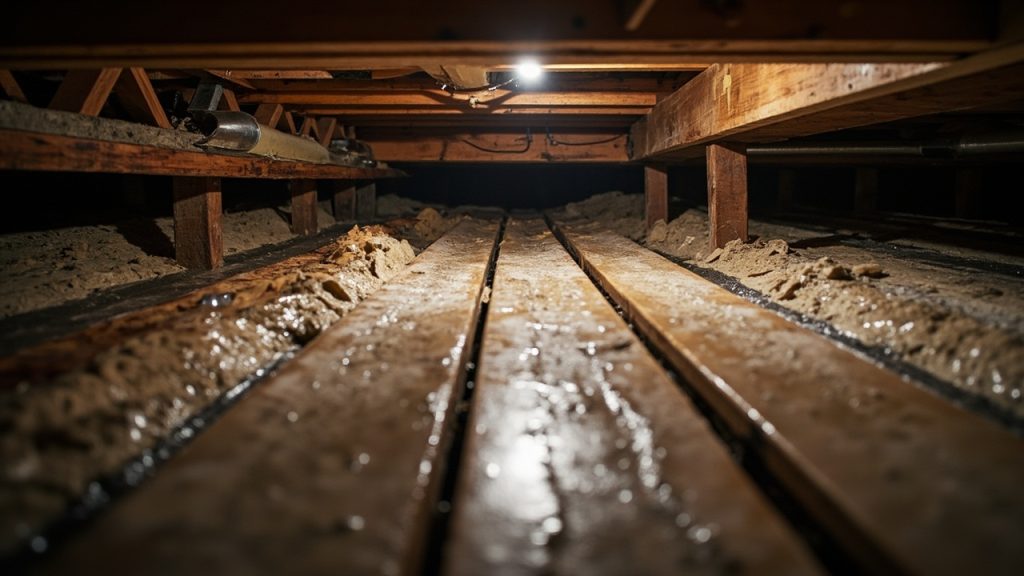
When that warm, moisture-saturated air flows through your open foundation vents, it contacts the cooler surfaces inside your crawl space, including your floor joists, rim joists, and any exposed soil. The air cools below its dew point and deposits liquid water directly onto the wood. This is not a slow process. On a humid August morning in Westland, you can have measurable moisture accumulation on your joists within hours of the vents opening to outside air.
Westland and neighboring communities like Garden City, Wayne, and Inkster also sit on heavy clay soil, common throughout Southeast Michigan. Clay soil does not drain well. It holds groundwater near the surface and pushes moisture vapor upward through the soil into your crawl space floor. Open vents do not solve that. They add a second moisture source on top of the first.
The result is a crawl space that stays perpetually damp regardless of how many vents you have or how large they are.
The Stack Effect and What It Means for Your Indoor Air Quality
There is a physical phenomenon called the Stack Effect. It works like a chimney. Warm air inside your home rises and escapes through upper levels, gaps around windows, and attic spaces. As it exits, it creates negative pressure on the lower levels of the house, including the crawl space. That negative pressure pulls air upward from below.
According to the EPA’s guidance on mold and moisture, roughly 40% to 50% of the air you breathe on the first floor of your home originates from the crawl space. In homes with open vents, that air carries mold spores, soil gases, and elevated humidity directly into your living space.
For families in Royal Oak, Dearborn, and Westland who wonder why their allergy symptoms worsen at home, or why their asthma flares up during summer, the crawl space is frequently the source. The Asthma and Allergy Foundation of America consistently identifies indoor mold as a primary trigger, and crawl space mold is one of the most under-diagnosed contributors in older Michigan homes.
Five Signs Your Westland Home Has a Crawl Space Moisture Problem
You do not need a moisture meter to detect early warning signs. These are the physical symptoms that show up in the house before the damage becomes structural.
- Soft or springy floors near bathrooms, kitchens, or exterior walls. The subfloor and floor joists are absorbing moisture and beginning to compress under load.
- Efflorescence on foundation walls. That white, chalky powder you see on concrete block or poured concrete is mineral deposits left behind by water moving through the wall under hydrostatic pressure.
- Persistent musty odors that return no matter how often you clean. Mold produces volatile organic compounds as it metabolizes organic material like wood. The smell is the byproduct.
- Condensation on windows during summer months. When your indoor humidity climbs because of crawl space air infiltration, the excess moisture collects on cold glass surfaces.
- Visible mold on floor joists or insulation. If you look through a vent opening with a flashlight and see dark staining or fuzzy growth on the wood, the problem is already past the early stage.
If two or more of these signs are present, the crawl space moisture has already reached a level where professional assessment is warranted. If you are also dealing with visible floor damage, read our guide on how to save your hardwood floors after a significant water leak for a clearer picture of what structural water damage looks like from above.
Vented vs. Encapsulated Crawl Spaces — What the Data Shows
The construction industry has largely moved away from the vented crawl space model in humid climates. The Michigan Building Code’s Part 4 provisions now permit sealed crawl space systems as a compliant alternative, and restoration professionals across Metro Detroit have seen the results firsthand. Here is how the two approaches compare in real-world Southeast Michigan conditions.
| Factor | Vented Crawl Space | Encapsulated (Sealed) Crawl Space |
|---|---|---|
| Summer Humidity Inside Crawl Space | Tracks outdoor humidity (70–85% in Detroit summers) | Controlled to 50–55% with dehumidifier |
| Wood Moisture Content on Joists | Often exceeds 19% (mold threshold) | Maintained below 16% |
| Mold Risk | High during June through September | Low with proper maintenance |
| Heating and Cooling Efficiency | Significant energy loss through floor | Estimated 15–18% energy savings on floor-adjacent HVAC load |
| Pest Entry Points | Multiple open vent screens (often deteriorated) | Single sealed system with periodic inspection |
| Freeze-Thaw Cycle Damage | Pipes in crawl space vulnerable | Conditioned space reduces freeze risk |
The energy savings figure comes from building science research and is consistent with what we observe on encapsulation jobs in Westland and surrounding communities. Homeowners notice reduced heating bills within the first winter after encapsulation, which is significant given Michigan’s heating season.
How Crawl Space Moisture Damage Gets Diagnosed and Treated
When a restoration crew arrives at a home in Westland or Dearborn Heights with confirmed crawl space moisture damage, the process follows a specific sequence based on IICRC S500 standards for professional water damage restoration. Those standards exist because psychrometrics, the science of air moisture, dictates a specific order of operations. Skipping steps creates callbacks and allows mold to return.
Step 1 — Moisture Mapping and Assessment
Technicians use pin-type moisture meters to read wood moisture content across floor joists, rim joists, and subfloor material. A thermal imaging camera identifies cold spots where condensation is pooling inside wall cavities above the crawl space. This data drives every decision that follows.
Step 2 — Water Extraction and Debris Removal
If standing water is present, it is extracted first. Old vapor barriers, wet insulation, and organic debris are removed. Saturated fiberglass batt insulation between floor joists holds water against wood for months. It comes out completely.
Step 3 — Structural Drying
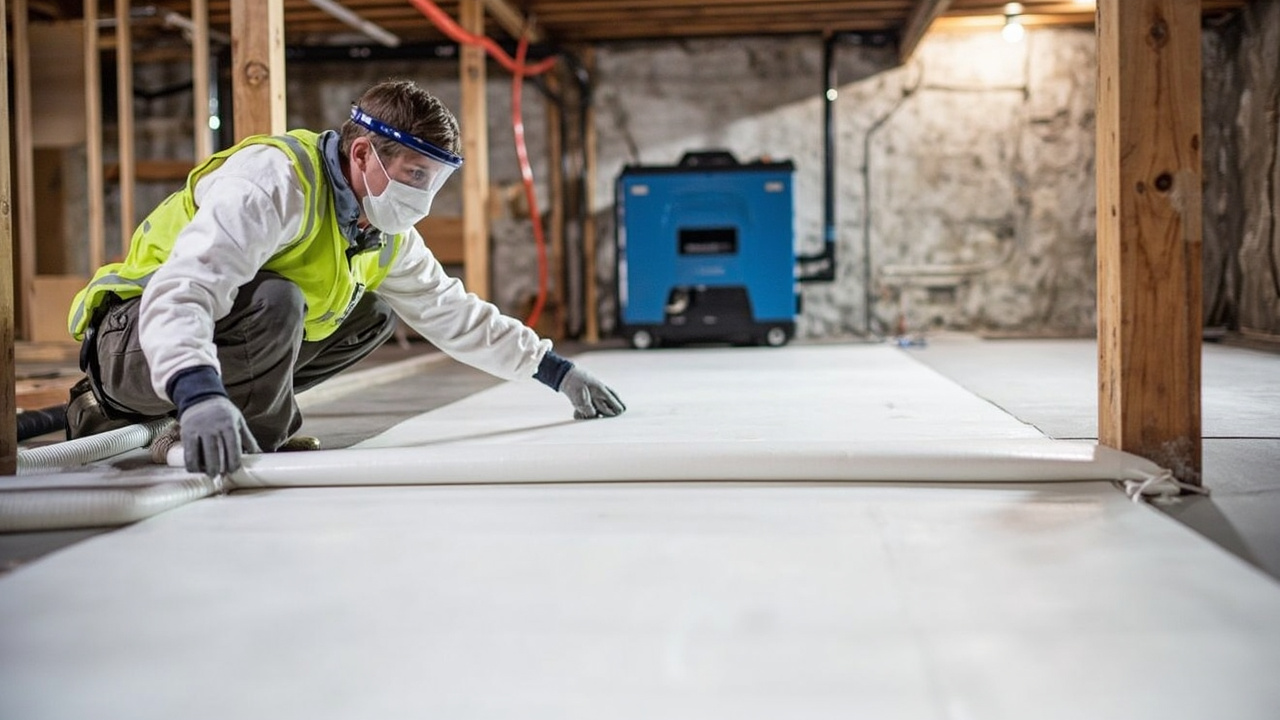
Commercial desiccant or refrigerant dehumidifiers and high-velocity air movers are placed throughout the crawl space. The goal is to bring wood moisture content below 16% before any remediation or encapsulation begins. Drying times in Westland crawl spaces typically run three to five days depending on initial conditions.
Step 4 — Antimicrobial Treatment
Visible mold colonies on joists and framing are treated following EPA mold guidelines. If the affected area is significant, full mold remediation protocols apply. For context on what distinguishes surface mold from a deeper remediation problem, see our article on why bleach won’t fix your basement mold.
Step 5 — Encapsulation Installation
A heavy-duty vapor barrier, typically 12 to 20 mil reinforced polyethylene, is installed across the entire crawl space floor and up the foundation walls, sealed at seams and termination points. Foundation vents are sealed. A crawl space dehumidifier with a drain line or condensate pump is installed to maintain relative humidity below 55% year-round.
Step 6 — Sump System Review
In homes on Westland’s clay soil where hydrostatic pressure pushes groundwater upward, a sump pump system may be added or evaluated as part of the overall moisture control plan. Clay soil does not give groundwater anywhere to go, so it comes up through the floor of the crawl space. A sump pit and pump addresses that source directly.
What Crawl Space Work Actually Costs to Fix (Range Factors)
Specific costs vary widely based on crawl space square footage, the extent of mold remediation needed, whether structural repairs to joists are required, and whether a sump system is part of the scope. The table below gives you a realistic breakdown of variables that drive cost, so you know what questions to ask.
| Scope Item | What Drives the Cost Up | What Keeps It Lower |
|---|---|---|
| Vapor Barrier Installation | Large crawl space, difficult access, multiple obstacles | Small footprint, clean existing conditions |
| Mold Remediation | Extensive coverage on joists, spreading to subfloor | Early detection, limited to one area |
| Structural Joist Repair | Multiple compromised joists, sistering required | Surface damage only, no structural loss |
| Dehumidifier System | Larger capacity unit needed, complex drainage routing | Smaller space, straightforward drain line installation |
| Sump Pump Installation | Rock or heavily compacted soil, no existing pit | Existing pit in place, accessible location |
If insurance is involved, documentation of the moisture source matters significantly. Water damage tied to sudden events may be covered differently than long-term seepage. For guidance on how to approach that conversation with your carrier, our article on how to get your Detroit home insurance to pay for water restoration walks through what documentation you need and how to frame the claim.
Why This Is Not a DIY Project for Most Westland Homes
Crawl space encapsulation looks straightforward on a home improvement video. In practice, the moisture science underneath a Westland home built on clay soil in a Great Lakes climate is not forgiving of shortcuts. Under-sizing the dehumidifier leaves the space humid. Not sealing the rim joist allows warm attic and wall air to bypass the encapsulation entirely. Leaving even a small section of unsealed vapor barrier creates a moisture entry point that wicks water under the entire barrier over time.
The other issue is mold identification. Homeowners frequently miss mold on the underside of subfloor sheathing because it requires knowing where to look and what early-stage Penicillium and Cladosporium colonies look like on OSB versus solid wood. Missing active mold under a freshly installed vapor barrier means sealing the problem in, not solving it.
IICRC-certified technicians follow a documented drying and remediation protocol that produces measurable outcomes. Moisture readings are taken before and after, with documentation that can support an insurance claim or a real estate disclosure if you sell the home.
If you have already noticed soft spots in your floors and are trying to understand the scope of damage before calling anyone, check our resource on deciding whether water-damaged flooring can be saved for a framework on how professionals assess floor system damage.
Serving Westland and the Surrounding Wayne County Area
Homeowners across Westland, Garden City, Dearborn, Inkster, Wayne, and Livonia deal with the same clay soil and Great Lakes humidity combination. The crawl space moisture problems we see in a 1960s ranch in Westland look almost identical to those in a brick colonial in Grosse Pointe or a bungalow in Corktown. The climate does not discriminate by neighborhood.. Read more about The Hidden Reason Your Corktown Art Studio Always Feels Damp in the Summer.
If you want to understand the claims process for a home in the Corktown area specifically, our guide on filing a successful water damage insurance claim for your Corktown home covers the documentation steps that make the difference between a paid claim and a denied one.
The right time to address crawl space moisture is before you can see the damage from above. If your floors are already soft or you have identified mold on your joists, the timeline for structural repairs is compressing. Contact a certified restoration professional, request a moisture assessment, and get actual readings before deciding on a scope of work. That assessment will tell you whether this is a vapor barrier and dehumidifier job or whether the structural framing needs to be part of the repair plan.. Read more about Why Your Bamboo Floors in Berkley Might Be Bubbling After a Minor Spill.
The open vents under your home were not designed for Southeast Michigan summers. Closing them and controlling moisture the right way is one of the most direct investments a Metro Detroit homeowner can make in the long-term integrity of their floor system.
{
“@context”: “https://schema.org”,
“@type”: “BlogPosting”,
“headline”: “Why Your Westland Crawl Space Vents Are Making Your Floors Rot (The Truth Detroit Homeowners Need)”,
“description”: “Open crawl space vents in Westland don’t prevent moisture—they cause it. Learn why Detroit’s climate turns your vents against you and what to do instead.”,
“wordCount”: 2026,
“datePublished”: “2026-08-05T12:31:00.000Z”,
“dateModified”: “2026-08-05T12:31:00.000Z”,
“inLanguage”: “en-US”,
“mainEntityOfPage”: {
“@type”: “WebPage”,
“@id”: “https://ironwoodwaterdamagerestorationdetroit.com”
},
“publisher”: {
“@type”: “LocalBusiness”,
“name”: “Ironwood Water Damage Restoration Detroit”,
“url”: “https://ironwoodwaterdamagerestorationdetroit.com”
},
“author”: {
“@type”: “Organization”,
“name”: “Ironwood Water Damage Restoration Detroit”,
“url”: “https://ironwoodwaterdamagerestorationdetroit.com”
},
“image”: {
“@type”: “ImageObject”,
“url”: “https://ironwoodwaterdamagerestorationdetroit.com/wp-content/uploads/2026/03/why-your-westland-crawl-space-vents-are-actually-m-1.jpg”
}
}
{
“@context”: “https://schema.org”,
“@type”: “LocalBusiness”,
“name”: “Ironwood Water Damage Restoration Detroit”,
“url”: “https://ironwoodwaterdamagerestorationdetroit.com”,
“address”: {
“@type”: “PostalAddress”,
“addressLocality”: “Detroit”
},
“areaServed”: {
“@type”: “City”,
“name”: “Detroit”
}
}
{
“@context”: “https://schema.org”,
“@type”: “BreadcrumbList”,
“itemListElement”: [
{
“@type”: “ListItem”,
“position”: 1,
“name”: “Home”,
“item”: “https://ironwoodwaterdamagerestorationdetroit.com”
},
{
“@type”: “ListItem”,
“position”: 2,
“name”: “Blog”,
“item”: “https://ironwoodwaterdamagerestorationdetroit.com/blog”
},
{
“@type”: “ListItem”,
“position”: 3,
“name”: “Why Your Westland Crawl Space Vents Are Making Your Floors Rot (The Truth Detroit Homeowners Need)”
}
]
}
{
“@context”: “https://schema.org”,
“@type”: “Service”,
“serviceType”: “Water Damage Restoration”,
“provider”: {
“@type”: “LocalBusiness”,
“name”: “Ironwood Water Damage Restoration Detroit”,
“url”: “https://ironwoodwaterdamagerestorationdetroit.com”
},
“areaServed”: {
“@type”: “City”,
“name”: “Detroit”
},
“description”: “Open crawl space vents in Westland don’t prevent moisture—they cause it. Learn why Detroit’s climate turns your vents against you and what to do instead.”
}