
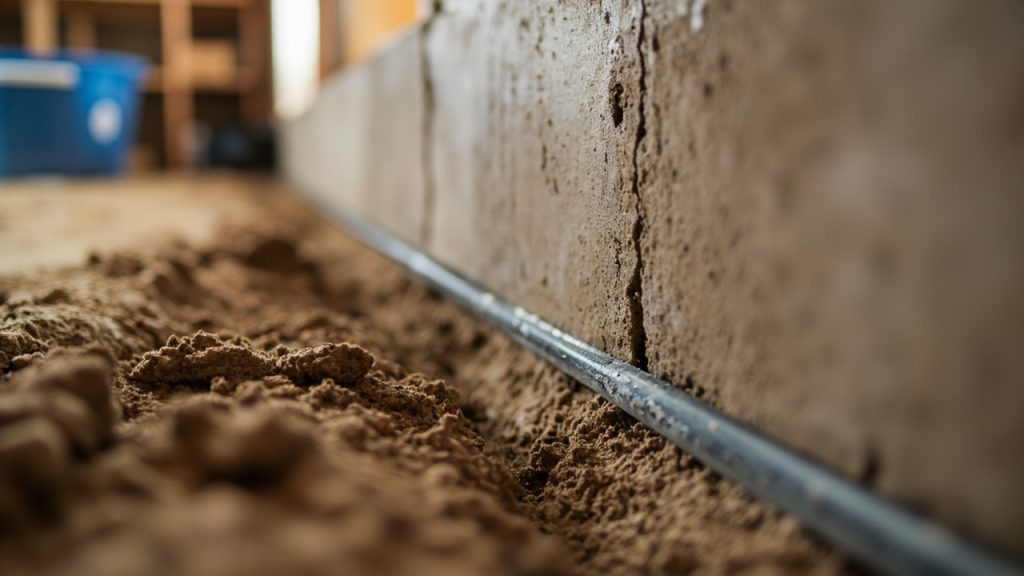
Your Ferndale basement has two problems. You only know about one of them.
Water damage is the obvious one. The musty smell, the stained drywall, the sump pump that runs all night during a spring storm. But that moisture is doing something else, something most homeowners don’t find out about until the structural damage is already done. It is turning your basement into a feeding ground for Eastern Subterranean Termites.
In Metro Detroit, the combination of Great Lakes humidity, aging housing stock, and heavy clay soil creates conditions that pest control companies and restoration crews both hate to see. Ferndale, Royal Oak, and the older neighborhoods north of Eight Mile Road are particularly vulnerable because of the age of the homes and the construction methods used in their foundations and sill plates.. Read more about Managing Unexpected Humidity in Your New Ferndale Basement Apartment.
This guide will show you how to tell the difference between termite damage and water damage, why they almost always show up together in Michigan basements, and what it takes to fix both problems at the same time.
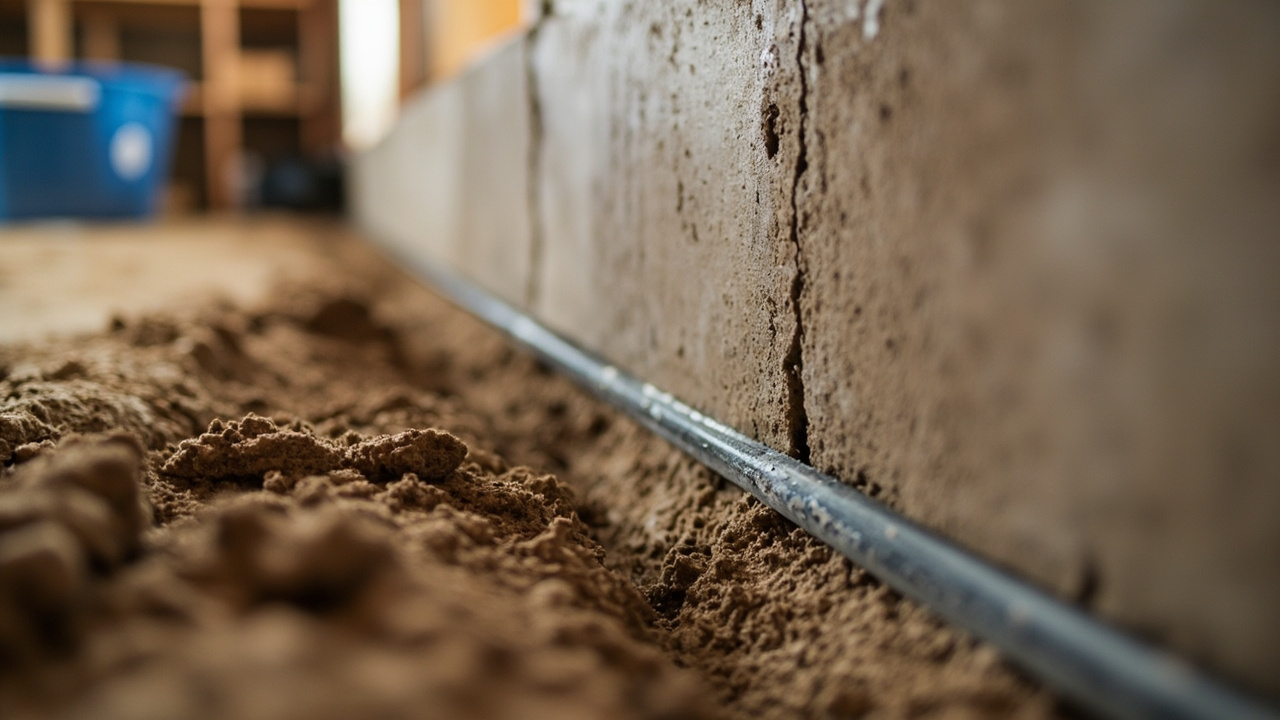
Termite Damage vs. Water Damage — What You Are Actually Looking At
Most homeowners can’t tell these two types of damage apart on sight. That’s not a criticism. The visual symptoms genuinely overlap. Both cause wood to weaken, warp, and discolor. Both can destroy subflooring and load-bearing framing. The difference is in the details.
What Water Damage Looks Like in a Basement
Water damage presents as staining first. You’ll see brown or yellowish rings on drywall, efflorescence (white mineral deposits) on concrete block walls, and rust streaks near floor drains. Drywall delamination, where the paper face of the drywall bubbles and separates from the core, is a reliable early indicator.
Wood affected by moisture alone will feel spongy or soft. If the moisture content (MC) of a wood framing member climbs above 19 percent, fungal organisms begin to colonize. Dry rot caused by Serpula lacrymans will cause the wood to crack in a distinctive cube-like pattern. You’ll also find black surface staining from Stachybotrys, commonly called black mold, in areas with sustained high moisture levels.
What Termite Damage Looks Like in a Basement
Termite activity has its own signatures. Mud tubes are the clearest sign. Eastern Subterranean Termites (Reticulitermes flavipes) build pencil-width tunnels made of soil, chewed wood, and saliva. You’ll find these running along foundation walls, across sill plates, and up floor joists.
Frass, which is termite excrement, looks like tiny wood-colored pellets and collects beneath active feeding zones. Swarmers, the winged reproductive termites, appear in late spring and are often the first above-ground sign of an established colony. Their discarded wings near windowsills or floor cracks are a major warning signal.. Read more about Why Your Detroit Lawn Cracks Are a Warning Sign for Future Basement Flooding.
Wood damaged by termites sounds hollow when tapped. The outer shell may look intact while the interior has been consumed entirely. This is what makes termite damage so structurally dangerous. The sill plate sitting on top of your foundation wall can be completely hollowed out while still looking solid from the outside.
| Damage Type | Visual Signs | Wood Texture | Odor Present | Structural Risk Level |
|---|---|---|---|---|
| Water Damage Only | Staining, efflorescence, drywall delamination | Spongy, soft, crumbles under pressure | Musty, earthy | Moderate (escalates with mold) |
| Termite Damage Only | Mud tubes, frass, swarmer wings | Hollow when tapped, thin outer shell remains | Faint, sweet-ish | High (silent structural failure) |
| Combined Damage | All of the above, often with visible framing failure | Collapsed internally, crumbles on contact | Strong musty plus ammonia notes | Severe (immediate repair needed) |
The Science Behind Why Wet Wood Attracts Termites
Eastern Subterranean Termites need three things to thrive: cellulose material, moisture, and warmth. Your wet basement provides all three in abundance.
Termites cannot process dry wood efficiently. Their digestive systems depend on the microorganisms in their gut, and those organisms need moisture to survive. When wood reaches an MC above 15 percent, it becomes significantly easier for Reticulitermes flavipes to break down the cellulose. Above 19 percent, the wood is also being colonized by the fungi that termites actively seek out, because partially decayed wood is even easier to consume.
Psychrometry, the study of air-water vapor relationships, explains why Detroit basements are particularly at risk. The Great Lakes climate produces some of the highest ambient humidity levels in the Midwest during summer months. When warm, humid air enters a cooler basement through foundation cracks, rim joists, or poorly sealed windows, it deposits moisture directly onto wood framing surfaces. This is condensation-driven moisture loading, and it happens even when there is no active leak.
Hydrostatic pressure from Michigan’s clay-heavy soils makes this worse. Clay holds water. After a heavy rain, clay soil surrounding a Ferndale foundation stays saturated for days, pushing moisture through the poured concrete or block wall continuously. The result is a consistently damp environment that never fully dries between rain events.

Where Combined Damage Shows Up First in Metro Detroit Homes
After working in older Metro Detroit homes for years, certain failure zones show up again and again.
Sill Plates and Rim Joists
The sill plate is the horizontal wood member bolted directly to the top of your foundation wall. It is the first piece of wood in your home’s structural system, and it sits in the most moisture-prone location possible. In homes built before modern building code requirements required pressure-treated lumber at this contact point, sill plates are almost always untreated fir or pine. They rot and get consumed by termites faster than any other framing component.
In neighborhoods like Ferndale’s older blocks near Woodward Avenue, or in the historic homes around Palmer Park in Detroit proper, sill plate replacement is among the most common structural repairs we perform.
Subflooring at the Perimeter
Subfloor panels at the outer edges of a home’s first floor sit directly above the rim joist and sill plate. When those lower members are compromised by moisture or termites, the subfloor above follows quickly. You’ll notice it as a soft or bouncy spot near exterior walls. By the time you feel it underfoot, the damage below is often extensive.
Basement Window Frames and Sashes
Original wood window frames in older basements are a direct termite entry path. They stay damp from condensation and rain infiltration, and they are rarely inspected. Mud tubes along the interior frame of a basement window are a sign that a colony has established a feeding route that goes well beyond the window itself.
Diagnosing the Problem with Professional Tools
You can find obvious signs yourself. But the full picture requires instruments that go beyond what you can see.
A moisture meter gives you the actual MC reading of any wood member. Restoration professionals following IICRC S500 Standards use both pin-type and non-invasive meters to map moisture distribution across framing, subflooring, and wall assemblies. A reading above 19 percent triggers a structural drying protocol. Readings above 28 percent often indicate active fungal decay has already started.
Thermal imaging cameras detect temperature differentials in walls and floors that indicate moisture presence behind finished surfaces. A wet framing member behind drywall is colder than the surrounding dry material. The camera finds it without cutting a single hole.
If termite activity is suspected, a licensed pest inspector probes wood with an awl to find hollow sections and checks for mud tubes in low-light areas like crawl spaces, behind insulation batts, and along foundation sills.
The diagnostic checklist that professionals use at an inspection typically covers the following points.
- Moisture meter readings at sill plate, rim joist, and subfloor perimeter (target MC below 15 percent)
- Thermal scan of all basement walls and ceiling plane
- Visual inspection of foundation wall for efflorescence, cracks, and active seepage
- Probe test on all exposed wood framing within 24 inches of foundation
- Check all basement window frames, floor drains, and sump pit areas for mud tubes
- Inspect crawl space vapor barrier integrity and ventilation rate
- Identify any prior patch repairs that may be masking active damage zones
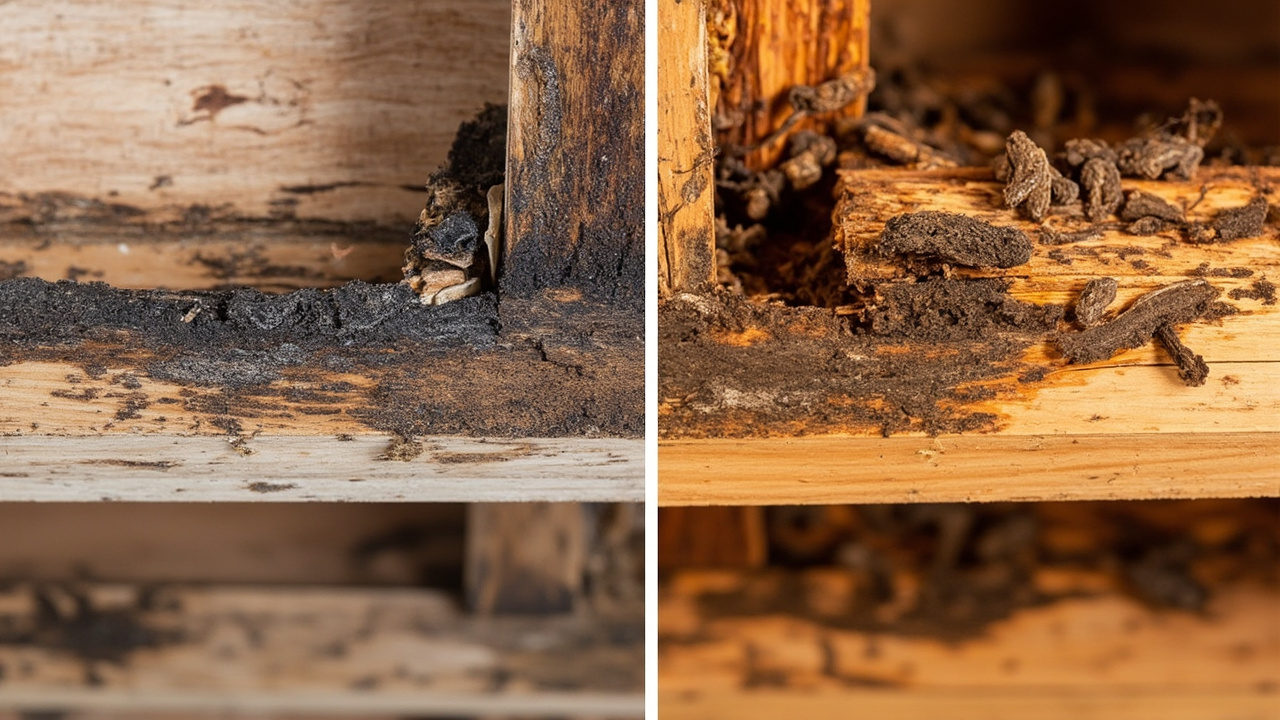
The Restoration Process When Both Problems Are Present
Treating water damage and termite damage separately is a mistake. If you dry out the basement without addressing the termite colony, the colony survives in the soil and reestablishes as soon as conditions allow. If you treat the termites without fixing the moisture source, the wood will rot and attract pests again within a couple of seasons.
Step One — Structural Drying
Structural drying comes first. The pest control phase cannot begin until the moisture source is identified and controlled. This means finding the entry point, whether that is a failed sump pump, a cracked wall, a grading problem outside the home, or condensation from inadequate vapor barriers. Industrial dehumidifiers and air movers reduce the MC of affected framing to below 15 percent before any structural repairs begin.
This phase typically takes between three and five days in a standard Ferndale basement, depending on the extent of saturation and the time of year. Summer humidity levels in Metro Detroit slow drying times considerably because the ambient moisture in the air is already high.
Step Two — Structural Repair and Remediation
Once the wood is dry and the pest inspector has treated the colony, damaged framing gets replaced. Sill plates compromised by a combination of rot and termite feeding are sistered or fully replaced with pressure-treated lumber that meets current Michigan Building Code specifications. Subflooring panels that have lost structural integrity are removed and replaced. Black mold colonies identified during drying are remediated following proper containment protocols.
This is also when drywall delamination gets addressed. Saturated drywall does not recover. It has to come out. Leaving damaged drywall in place traps moisture behind it and feeds the next mold cycle.
If you are dealing with damage and thinking about insurance coverage, our guide on how to get your Detroit home insurance to actually pay for water restoration walks through what adjusters look for and how to document your claim properly.
Step Three — Prevention and Encapsulation
Prevention work is what separates a repair that lasts from one that fails in 18 months. This includes sealing foundation cracks, installing or upgrading vapor barriers, improving exterior grading to direct water away from the foundation, and ensuring the basement has adequate mechanical dehumidification capacity for Michigan’s humid summers.
For Ferndale homes specifically, the combination of mature tree root systems and aging clay tile drain systems means that exterior water management needs to be evaluated as part of any complete restoration plan.
| Restoration Phase | Primary Goal | Tools Used | Typical Duration | Who Performs It |
|---|---|---|---|---|
| Emergency Moisture Control | Stop active water entry and begin drying | Sump pumps, wet vacs, containment barriers | Day 1 | Restoration crew |
| Structural Drying | Reduce wood MC below 15 percent | Industrial dehumidifiers, air movers, moisture meters, thermal camera | 3 to 5 days | Restoration crew (IICRC certified) |
| Pest Treatment | Eliminate active termite colony | Liquid termiticide, bait stations, borax-treated lumber | 1 to 2 days | Licensed pest control operator |
| Structural Repair | Replace compromised framing and sheathing | Pressure-treated lumber, structural screws, LVL beam sections | 2 to 7 days (varies by scope) | General contractor or restoration crew |
| Encapsulation and Prevention | Stop recurrence | Vapor barriers, crack injection, drainage improvements | 1 to 3 days | Restoration crew or waterproofing contractor |
When You Are Dealing with Mold on Top of Everything Else
Mold loves the same conditions that termites do. If your basement has been wet for more than 48 hours at any point, you likely have a mold situation developing alongside any structural issues. Black mold (Stachybotrys) requires sustained moisture and cellulose to establish, and a wet sill plate or wet drywall gives it exactly that.
A lot of homeowners try to clean visible mold themselves. If you have gone that route, our article on why bleach won’t fix your Ferndale basement mold explains exactly why surface treatments don’t address the root cause and when the situation requires professional remediation.
For homes in Indian Village, Sherwood Forest, or the older Craftsman bungalow neighborhoods throughout Ferndale and Royal Oak, the combination of original wood framing, original plaster walls, and basement drainage systems that predate modern building code means the risk profile is higher. These homes are worth protecting. They are also worth inspecting thoroughly when problems appear.
Protecting Your Home’s Value Before Problems Compound
Combined water and termite damage is one of the few things that can reduce a home’s resale value significantly and quickly. Michigan home inspectors are trained to identify both, and a report showing active or past termite activity alongside moisture-compromised framing will stop a sale in its tracks.
The EPA’s guidance on indoor moisture control makes clear that consistent moisture management is the single most effective way to prevent both biological growth and pest infestation in residential structures. In practical terms, that means keeping your basement’s relative humidity below 50 percent year-round and inspecting your sill plate and rim joist system at least once a year.
If you’ve had hardwood floors affected by a related leak, the information in our guide on how to save hardwood floors after a significant water leak applies to Ferndale and Metro Detroit homes as well.
And if you are working through an insurance claim for any of this damage, the process is worth understanding before you talk to your adjuster. Our guide to filing a successful water damage insurance claim covers the documentation, timelines, and common claim denial triggers that Detroit-area homeowners face.
What to Do Right Now If You Suspect Either Problem
Don’t wait on this. The relationship between moisture and structural pests is self-reinforcing. The longer the moisture stays, the more the wood degrades. The more the wood degrades, the deeper the termite damage penetrates. The deeper the damage goes, the more expensive the repair becomes.
If you see mud tubes, frass, soft spots in your floor near exterior walls, or the musty smell that won’t go away no matter how many times you run the dehumidifier, get a professional assessment. Not a pest-only inspection. Not a water-only assessment. You need someone who can evaluate the full picture, because in a Metro Detroit basement, these problems rarely come alone.
Contact our team for a free damage inspection anywhere in the Metro Detroit area. We bring the moisture meters, the thermal camera, and 15 years of experience working in Ferndale basements, crawl spaces, and historic foundations throughout Southeast Michigan. We’ll tell you exactly what you’re dealing with, and what it will take to fix it correctly.
{
“@context”: “https://schema.org”,
“@type”: “BlogPosting”,
“headline”: “Why Termites Love Your Wet Ferndale Basement More Than You Do”,
“description”: “Wet basements in Ferndale attract Eastern Subterranean Termites fast. Learn how to spot the damage, understand the science, and protect your home’s structure.”,
“wordCount”: 2381,
“datePublished”: “2026-08-20T13:36:00.000Z”,
“dateModified”: “2026-08-20T13:36:00.000Z”,
“inLanguage”: “en-US”,
“mainEntityOfPage”: {
“@type”: “WebPage”,
“@id”: “https://ironwoodwaterdamagerestorationdetroit.com”
},
“publisher”: {
“@type”: “LocalBusiness”,
“name”: “Ironwood Water Damage Restoration Detroit”,
“url”: “https://ironwoodwaterdamagerestorationdetroit.com”
},
“author”: {
“@type”: “Organization”,
“name”: “Ironwood Water Damage Restoration Detroit”,
“url”: “https://ironwoodwaterdamagerestorationdetroit.com”
},
“image”: {
“@type”: “ImageObject”,
“url”: “https://ironwoodwaterdamagerestorationdetroit.com/wp-content/uploads/2026/03/why-termites-love-your-wet-ferndale-basement-more-1.jpg”
}
}
{
“@context”: “https://schema.org”,
“@type”: “LocalBusiness”,
“name”: “Ironwood Water Damage Restoration Detroit”,
“url”: “https://ironwoodwaterdamagerestorationdetroit.com”,
“address”: {
“@type”: “PostalAddress”,
“addressLocality”: “Detroit”
},
“areaServed”: {
“@type”: “City”,
“name”: “Detroit”
}
}
{
“@context”: “https://schema.org”,
“@type”: “BreadcrumbList”,
“itemListElement”: [
{
“@type”: “ListItem”,
“position”: 1,
“name”: “Home”,
“item”: “https://ironwoodwaterdamagerestorationdetroit.com”
},
{
“@type”: “ListItem”,
“position”: 2,
“name”: “Blog”,
“item”: “https://ironwoodwaterdamagerestorationdetroit.com/blog”
},
{
“@type”: “ListItem”,
“position”: 3,
“name”: “Why Termites Love Your Wet Ferndale Basement More Than You Do”
}
]
}
{
“@context”: “https://schema.org”,
“@type”: “Service”,
“serviceType”: “Water Damage Restoration”,
“provider”: {
“@type”: “LocalBusiness”,
“name”: “Ironwood Water Damage Restoration Detroit”,
“url”: “https://ironwoodwaterdamagerestorationdetroit.com”
},
“areaServed”: {
“@type”: “City”,
“name”: “Detroit”
},
“description”: “Wet basements in Ferndale attract Eastern Subterranean Termites fast. Learn how to spot the damage, understand the science, and protect your home’s structure.”
}