
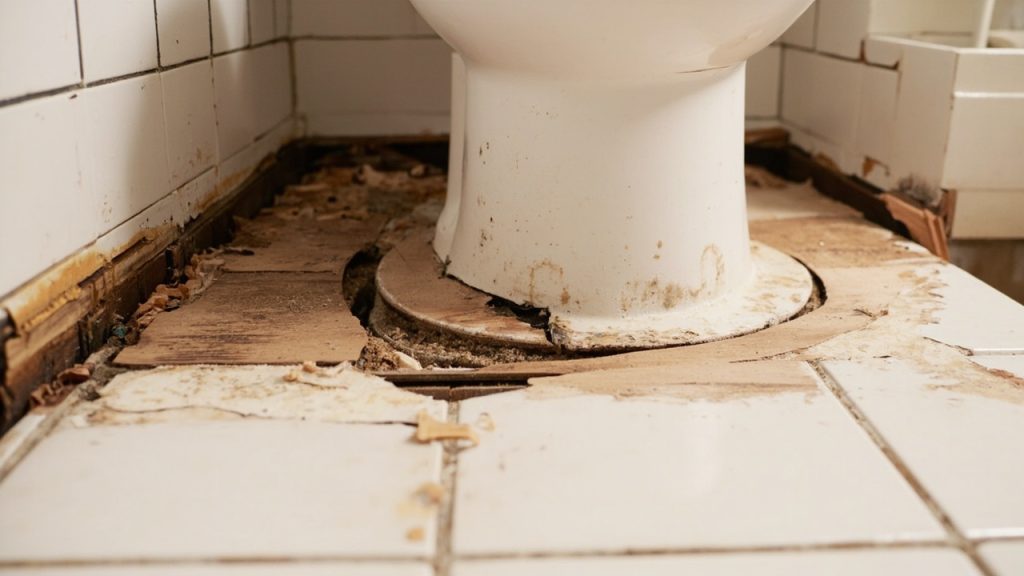
Your bathroom floor looks fine. The toilet flushes. Nothing seems wrong. But underneath that tile, your subfloor could be turning to mush right now, and a worn-out wax ring is the reason.
This is one of the most common calls we get from Royal Oak homeowners. The houses in this area, many of them built between the 1940s and 1980s, were plumbed with original cast-iron flanges and wax rings that are well past their service life. The leak is slow. It is quiet. And by the time you smell something off or feel the floor give slightly under your feet, the damage has already spread.

What a Wax Ring Actually Does (And Why It Fails)
The wax ring sits between the base of your toilet and the floor flange, which is the fitting that connects your toilet to the drain pipe below. That soft ring of wax creates a watertight seal. Every flush pushes water and waste through that seal.
Wax rings do not last forever. They get brittle, compressed, or displaced. When your toilet rocks even slightly, it breaks the seal. A toilet that has been re-seated without replacing the ring is an especially common culprit. We see this constantly in Royal Oak homes where previous owners did quick DIY fixes.
Flange height matters too. If the flange sits too far below the finished floor level, the wax ring has to compress too much to bridge the gap. Detroit building codes require proper flange height relative to the finished floor, and when a bathroom gets retiled without raising the flange, that gap quietly destroys the seal over time.
Signs Your Toilet Wax Ring Is Already Leaking
The tricky part is that a failing wax ring rarely produces a puddle you can see. The water escapes downward, not outward. Here is what you actually watch for.
- Sewer gas smell in the bathroom. Hydrogen sulfide has a distinct rotten egg odor. When the wax seal fails, sewer gases bypass the trap and enter your living space. This is both a health concern and a clear warning signal.
- A toilet that rocks or shifts. Even slight movement when you sit down indicates the seal has been compromised. A properly sealed toilet does not move at all.
- Soft or spongy flooring near the base. Press down on the tile or vinyl around the toilet. If it gives, the subfloor underneath is already water-damaged.
- Water stains on the ceiling below the bathroom. If you have a first-floor bathroom above a basement or crawl space, check the ceiling directly below. Brown staining is a dead giveaway.
- Mold growth at the base of the toilet. Black or gray discoloration along the caulk line or grout near the toilet base means moisture has been sitting there for a while.
- Unusually high water bills. This one applies less to wax ring leaks specifically, but if you are investigating multiple bathroom issues, unexplained water usage is worth checking.
The Hidden Damage Nobody Talks About
Replacing a wax ring costs relatively little if you catch the problem early. What costs real money is what happens when you do not.
The water that escapes through a failed seal is not clean water. It is Category 2 or Category 3 contaminated water, meaning it carries bacteria, pathogens, and waste particles. The EPA’s guidance on water-damaged materials is clear that porous materials exposed to contaminated water need professional assessment, not just drying.
In a typical Royal Oak bathroom, the toilet sits on a plywood subfloor, often 3/4-inch OSB or older board lumber. That material soaks up contaminated water like a sponge. Once it starts to delaminate or rot, the structural integrity of that section of your floor is gone. We have pulled up tiles in Royal Oak homes and found subfloor material that crumbled in our hands, with the rot spreading two or three feet beyond the toilet base.
Mold follows water damage within 24 to 72 hours under the right conditions. Bathrooms are warm and humid, which makes them ideal environments for mold growth. By the time the floor feels soft, there is a high probability that mold colonies are already established beneath the tile. If you are in a home with crawl space access, that mold can spread into the structural framing below.
If you have dealt with mold growth in other parts of your home and thought bleach would solve it, read our article on why bleach will not fix the problem. The same principles apply under your bathroom floor.
DIY Wax Ring Replacement vs. Calling a Restoration Professional
Replacing a wax ring is a legitimate DIY job if the damage is limited to the seal itself. If you catch it early, before the subfloor is compromised, here is what that process looks like and when it stops being a DIY situation.
| Situation | DIY Appropriate? | Professional Needed? |
|---|---|---|
| Toilet rocks, no floor softness, no odor | Yes, replace the wax ring | No, unless flange is damaged |
| Sewer gas odor with minor rocking | Possibly, inspect flange first | Recommended for flange inspection |
| Soft or spongy subfloor at toilet base | No | Yes, moisture assessment needed |
| Visible mold under toilet base or caulk | No | Yes, mold remediation required |
| Water stains on ceiling below bathroom | No | Yes, structural drying and inspection |
| Floor tiles cracked or lifting near toilet | No | Yes, full subfloor assessment needed |
The most dangerous assumption homeowners make is that a new wax ring fixes everything. It fixes the leak source. It does not dry the subfloor, kill the mold, or restore structural integrity to damaged framing. Those require different tools and professional assessment.
What Subfloor Repair and Restoration Actually Involves
When we respond to a Royal Oak home with a toilet wax ring water damage situation, the process follows a specific sequence that aligns with IICRC S500 standards for water damage restoration. This is not guesswork. It is a documented protocol that exists because water damage behaves in predictable ways.
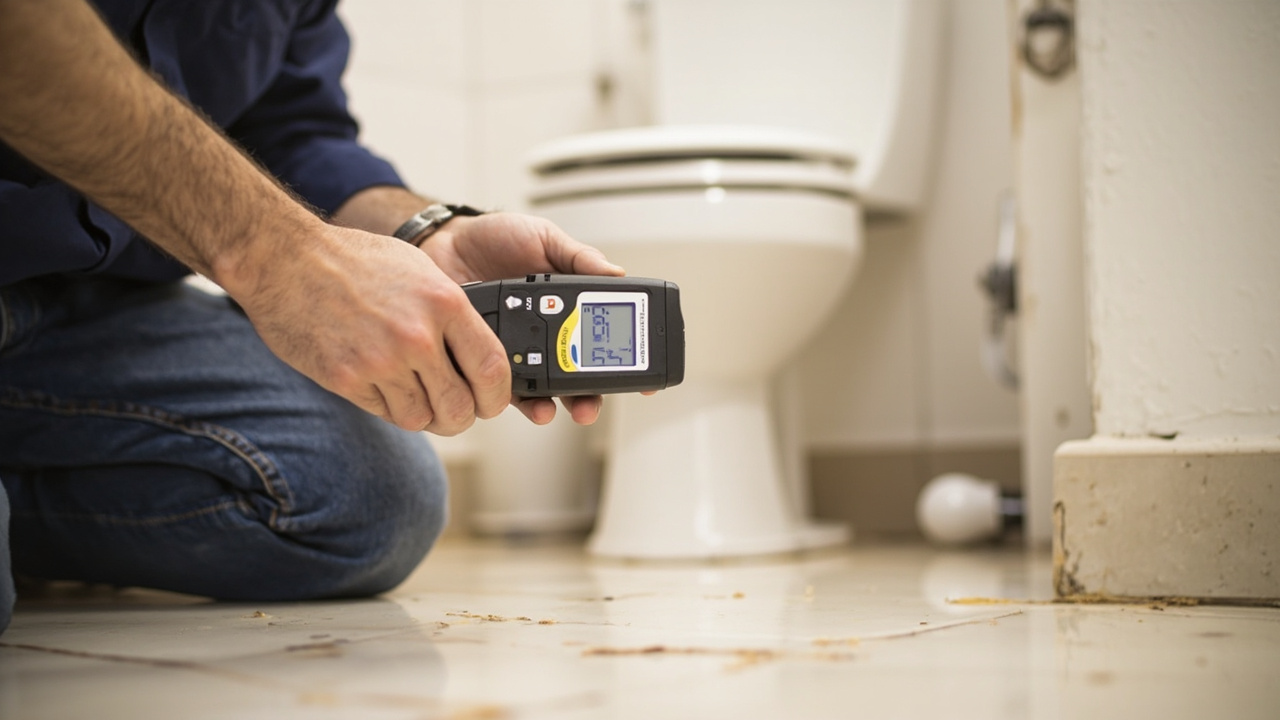
Step 1 — Moisture Mapping and Inspection. We use calibrated moisture meters and thermal imaging to find exactly how far the water has traveled. The affected area is almost always larger than it looks. In a bathroom above a basement, we check the ceiling below, the wall cavities, and the floor joists.
Step 2 — Controlled Demolition. Tile, vinyl, or hardwood flooring gets removed in the affected zone. Damaged subfloor sections are cut out and removed. We document everything with photos for your insurance claim before anything is discarded.
Step 3 — Contaminated Material Removal. Because wax ring leaks involve Category 2 or 3 water, contaminated materials are bagged and disposed of according to protocol. This is not the same as standard construction debris.
Step 4 — Antimicrobial Treatment. The exposed framing and surrounding surfaces are treated with EPA-registered antimicrobial agents to stop mold growth before drying begins.
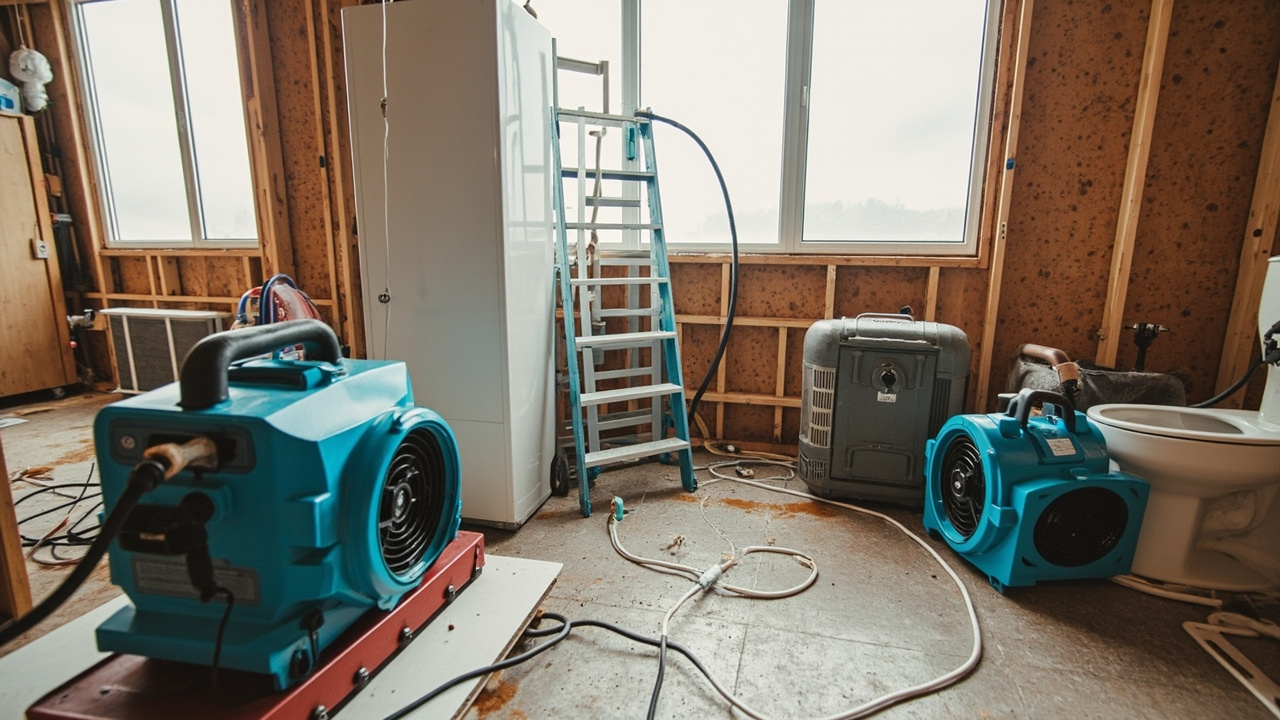
Step 5 — Structural Drying. Industrial air movers and dehumidifiers run until the moisture content in the remaining structural materials drops to acceptable levels. In Metro Detroit’s climate, where ambient humidity can work against the drying process, this typically takes between three and five days depending on the extent of saturation.
Step 6 — Mold Clearance Testing. If mold was present, we recommend post-remediation testing before reconstruction begins. This protects you and documents that the space is safe.
Step 7 — Subfloor Reconstruction. New subfloor panels go in, the flange gets inspected and corrected if needed, and the bathroom gets rebuilt. If your hardwood floors were affected by the water spread, our guide on saving hardwood floors after a water leak covers what is salvageable and what is not.
How Long Does Toilet Water Damage Restoration Take
| Phase | Typical Timeframe | Notes |
|---|---|---|
| Initial inspection and moisture mapping | 2 to 4 hours | Same-day response available for Metro Detroit |
| Demolition and contaminated material removal | 1 day | Depends on scope of affected area |
| Structural drying | 3 to 5 days | Longer in humid months, shorter in winter |
| Mold remediation (if present) | 1 to 3 days | Clearance testing adds time but protects you |
| Subfloor and flooring reconstruction | 1 to 3 days | Tile work may extend timeline |
| Total estimated project timeline | 7 to 14 days | Varies by severity and insurance processing |
Does Homeowners Insurance Cover a Wax Ring Leak
This is where a lot of Royal Oak homeowners get frustrated. The answer depends on how the damage is classified.
Michigan homeowners insurance policies generally cover sudden and accidental water damage. A burst pipe fits that description. A slow, ongoing leak from a deteriorated wax ring is often classified differently. Insurers may argue that the damage resulted from a maintenance issue that built up over time, which can trigger an exclusion.
That said, the resulting water damage, meaning the rotted subfloor and mold growth, may still be covered even if the leak source itself is not. This distinction matters enormously when you file a claim. Proper documentation, including moisture readings, photos of the damage extent, and a written scope of work from an IICRC-certified restoration contractor, significantly strengthens your position.
For a detailed walkthrough of how to approach your insurance company and what documentation they need, read our guide on getting your Detroit home insurance to actually pay for water restoration. If you are specifically in Corktown or dealing with an older historic home, the claims process has some additional nuances covered in our Corktown insurance claim guide.
Royal Oak Homes Face a Specific Risk Profile
Royal Oak sits in the heart of Oakland County with a housing stock that skews heavily toward mid-century construction. Many of these homes have original cast-iron drain systems that have experienced decades of freeze-thaw cycles. When cast-iron flanges crack or shift even slightly, the wax ring cannot maintain a proper seal regardless of how new the ring is.
The city also sits in an area where crawl space construction is common, meaning water that escapes through a bathroom floor does not just damage the subfloor above. It drops into a crawl space where it pools, raises humidity to damaging levels, and creates ideal conditions for mold to colonize the structural framing of the home.
Neighboring communities like Berkley, Clawson, and Hazel Park share similar construction profiles. If you own a home in any of these areas and your bathroom was last renovated more than fifteen years ago, a wax ring inspection should be on your radar. If your carpet in other parts of the home has been affected by moisture migration from a bathroom, our guide on evaluating wet carpet for salvageability applies here too.
What to Do Right Now If You Suspect a Leak
If you are reading this because your bathroom already smells like sewer gas or your floor already feels soft, here is the immediate action sequence.
- Stop using the toilet. Every flush pushes more contaminated water through the failed seal and deeper into the subfloor.
- Shut off the water supply to the toilet using the valve behind and below the tank.
- Do not pull up the toilet yourself unless you have the training and materials to properly assess the damage beneath it. Disturbing a heavily water-damaged subfloor without a moisture assessment can spread contamination.
- Call a water damage restoration company that carries IICRC certification for water damage restoration and mold remediation. Ask specifically about their experience with contaminated water situations.
- Document everything with your phone before any work begins. Photos and video protect you during the insurance claims process.
A small, slow leak from a wax ring is not a minor inconvenience. In the homes we see across Royal Oak, Ferndale, and Detroit proper, it is one of the most consistent causes of serious subfloor rot we deal with. The fix is straightforward when the damage is caught early. When it is not, the restoration scope grows significantly.
If you are in the Metro Detroit area and you are not sure whether what you are seeing is a wax ring problem or something else, a professional moisture assessment takes a few hours and gives you a definitive answer. That is a much better starting point than waiting to see if the floor gets worse.
{
“@context”: “https://schema.org”,
“@type”: “BlogPosting”,
“headline”: “How a Failing Toilet Wax Ring Is Secretly Rotting Your Royal Oak Bathroom Floor”,
“description”: “A leaking toilet wax ring can rot your Royal Oak subfloor without any visible water. Learn the warning signs and when to call Detroit water damage restoration pros.”,
“wordCount”: 2014,
“datePublished”: “2026-07-08T04:54:00.000Z”,
“dateModified”: “2026-07-08T04:54:00.000Z”,
“inLanguage”: “en-US”,
“mainEntityOfPage”: {
“@type”: “WebPage”,
“@id”: “https://ironwoodwaterdamagerestorationdetroit.com”
},
“publisher”: {
“@type”: “LocalBusiness”,
“name”: “Ironwood Water Damage Restoration Detroit”,
“url”: “https://ironwoodwaterdamagerestorationdetroit.com”
},
“author”: {
“@type”: “Organization”,
“name”: “Ironwood Water Damage Restoration Detroit”,
“url”: “https://ironwoodwaterdamagerestorationdetroit.com”
},
“image”: {
“@type”: “ImageObject”,
“url”: “https://ironwoodwaterdamagerestorationdetroit.com/wp-content/uploads/2026/03/how-a-failing-toilet-wax-ring-is-secretly-rotting-1.jpg”
}
}
{
“@context”: “https://schema.org”,
“@type”: “LocalBusiness”,
“name”: “Ironwood Water Damage Restoration Detroit”,
“url”: “https://ironwoodwaterdamagerestorationdetroit.com”,
“address”: {
“@type”: “PostalAddress”,
“addressLocality”: “Detroit”
},
“areaServed”: {
“@type”: “City”,
“name”: “Detroit”
}
}
{
“@context”: “https://schema.org”,
“@type”: “BreadcrumbList”,
“itemListElement”: [
{
“@type”: “ListItem”,
“position”: 1,
“name”: “Home”,
“item”: “https://ironwoodwaterdamagerestorationdetroit.com”
},
{
“@type”: “ListItem”,
“position”: 2,
“name”: “Blog”,
“item”: “https://ironwoodwaterdamagerestorationdetroit.com/blog”
},
{
“@type”: “ListItem”,
“position”: 3,
“name”: “How a Failing Toilet Wax Ring Is Secretly Rotting Your Royal Oak Bathroom Floor”
}
]
}
{
“@context”: “https://schema.org”,
“@type”: “Service”,
“serviceType”: “Water Damage Restoration”,
“provider”: {
“@type”: “LocalBusiness”,
“name”: “Ironwood Water Damage Restoration Detroit”,
“url”: “https://ironwoodwaterdamagerestorationdetroit.com”
},
“areaServed”: {
“@type”: “City”,
“name”: “Detroit”
},
“description”: “A leaking toilet wax ring can rot your Royal Oak subfloor without any visible water. Learn the warning signs and when to call Detroit water damage restoration pros.”
}