
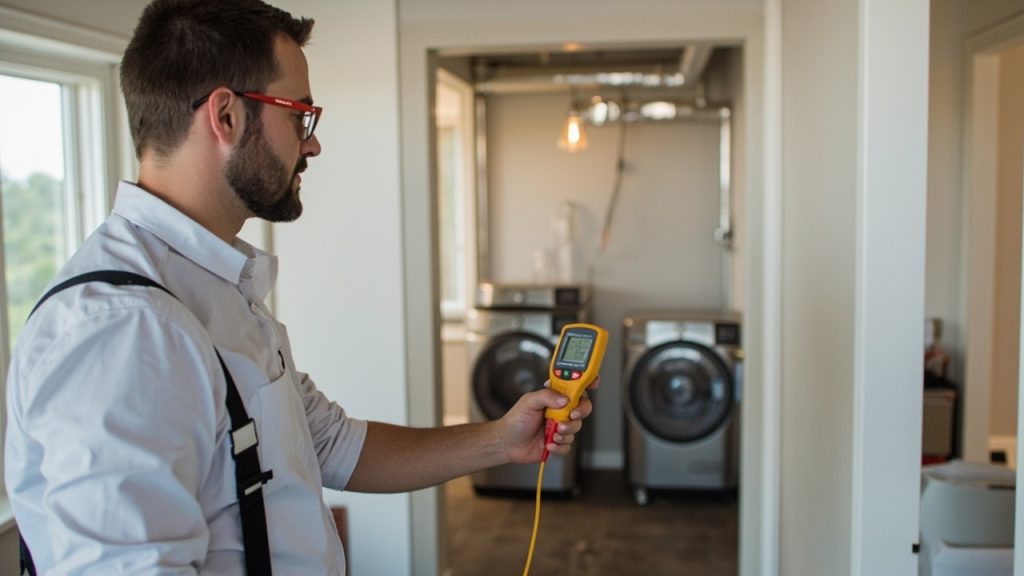
A laundry tub overflow in a finished basement can destroy drywall, ruin flooring, and create mold conditions within 24 to 48 hours. Garden City homeowners face this more than most, and the reason is straightforward. The area’s housing stock is heavily populated with mid-century ranch homes and split-levels where finished basements double as laundry rooms. When that utility tub overflows, water has nowhere to go except into your carpet, your insulation, and behind your baseboards.
This article walks you through what to do in the first hour, how professional restoration actually works, and what you need to know before you call your insurance company.
Why Laundry Tub Overflows Hit Finished Basements So Hard
In most Detroit-area homes built before the 1980s, the laundry tub sits on a concrete slab or sits adjacent to a finished area. Garden City’s neighborhoods like Marquette Park and the streets near Cherry Hill Road are full of these layouts. The moment a clogged drain or a failed washing machine supply hose causes an overflow, water spreads laterally across the slab within minutes.
Finished basements trap moisture in ways that unfinished ones do not. Water gets behind vinyl baseboards. It saturates fiberglass batt insulation inside your walls. It wicks up into drywall through capillary action. What looks like a minor puddle on your surface can mean saturated structural materials you cannot see without a moisture meter or thermal imaging camera.
Garden City’s older cast-iron drain systems also play a role. Partial blockages are common in homes with aging plumbing, and those blockages cause slow drainage that backs water up into your utility tub during a heavy wash cycle.
Immediate Safety Steps in the First 10 Minutes
Do not walk into standing water without checking for electrical hazards first. Basements in Wayne County homes often have GFCI-protected outlets near the laundry area, but older homes may not be fully up to code. Your first move is to shut off the circuit breaker for the basement, not just the laundry circuit.
- Turn off the water supply to your washing machine or the main shutoff valve near your water meter.
- Kill power to the basement at your electrical panel before entering any standing water.
- Put on rubber-soled shoes or rubber boots before you step into the affected area.
- Open basement windows if temperature allows to begin air movement.
- Remove any electronics, furniture, and personal items from the wet area immediately.
- Take photos and short video clips of all affected areas before you move anything, for your insurance claim.
- Call a professional restoration company. Do not wait to see if it dries on its own.
That last point matters more than most homeowners realize. Waiting even 12 hours allows mold spores to begin colonizing wet drywall. Southeast Michigan’s indoor humidity levels in spring and summer accelerate that timeline significantly.
Understanding Water Category and Why It Changes Everything
Not all water damage is the same. The IICRC S500 Standard, which governs professional water damage restoration, defines three categories of water based on contamination level.
| Water Category | Source Example | Contamination Level | Cleanup Approach |
|---|---|---|---|
| Category 1 (Clean) | Fresh water supply line, laundry tub overflow from a clean source | Low, originates from sanitary source | Extraction, structural drying, monitoring |
| Category 2 (Gray) | Washing machine discharge, laundry tub with detergent and lint | Moderate, contains chemical and biological contaminants | Extraction, antimicrobial treatment, structural drying |
| Category 3 (Black) | Sewage backup, floodwater from outside | High, contains pathogens and toxins | Full contamination remediation, PPE required, materials often removed |
Here is the complication with laundry tub overflows. Water that originates from a fresh supply line starts as Category 1. The moment it mixes with detergent residue, lint trap buildup, or sits on your basement floor for more than 24 hours, it degrades to Category 2 gray water. Gray water contains biological material that you cannot remove with a shop vac and a fan.
This is why laundry tub overflow cleanup requires antimicrobial treatment, not just drying. A professional crew will apply EPA-registered antimicrobial solutions to all affected surfaces after water extraction. This step is not optional when gray water is involved.
What Professional Laundry Tub Overflow Cleanup Actually Looks Like
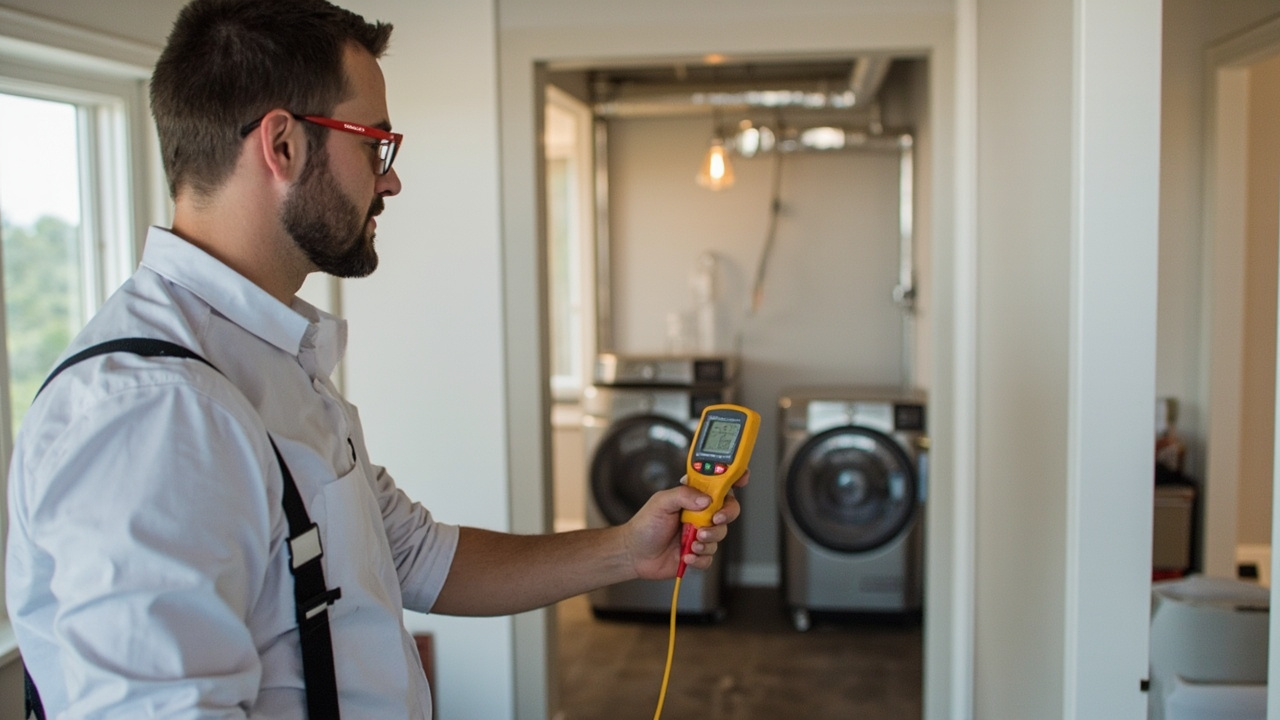
When our crew arrives at a Garden City home within 60 minutes of your call, the first tool that comes off the truck is a moisture meter and a thermal imaging camera. We map the full extent of water migration before we touch anything. Water in finished basements almost always travels further than it appears.
Moisture Mapping and Scope Assessment
Thermal imaging shows temperature differentials on walls and floors that indicate hidden moisture. A damp wall cavity shows cooler than surrounding dry materials. This lets us identify every affected zone, including areas behind your finished walls that show no visible sign of water damage from the surface.
A moisture meter reading above 16 to 18 percent in drywall indicates saturation that will not dry without mechanical intervention. Structural wood components like subfloor sheathing and wall framing have their own acceptable moisture thresholds, and we measure each separately.
Water Extraction
Truck-mounted extractors pull standing water from your carpet and pad far more effectively than any consumer wet vac. These units generate water lift in the range of 200 inches and move hundreds of gallons per hour. After bulk extraction, weighted extraction tools pull residual moisture from carpet fibers and cushion.
If the carpet is salvageable (see the factors in the next section), we float it off the subfloor and extract moisture from both sides. If the pad is saturated, it gets removed. Carpet pad cannot be effectively dried and holds biological contamination once gray water is involved.
Structural Drying with LGR Dehumidifiers and Air Movers
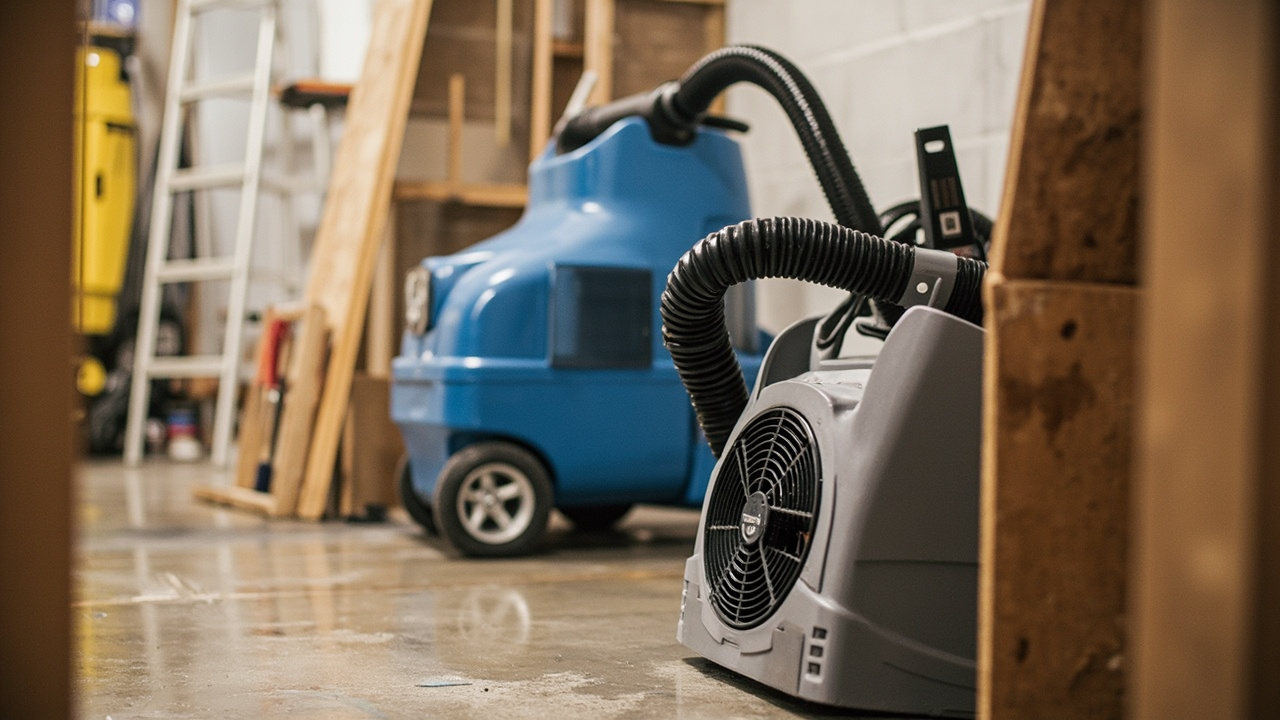
This is where the real science happens. Low-grain refrigerant (LGR) dehumidifiers pull moisture out of the air and out of structural materials simultaneously. A standard consumer dehumidifier bought at a hardware store is not designed for this. LGR units used in professional restoration can remove 100 to 150 pints of water per day under controlled conditions.
Air movers create a circular airflow pattern that forces moisture from wet materials into the air, where the dehumidifier captures it. Placement follows psychrometric principles. The goal is to create a controlled drying environment where relative humidity drops to below 40 percent and materials return to acceptable moisture content, typically within 3 to 5 days for a finished basement scenario.
Antimicrobial Treatment and Documentation
After extraction and before equipment setup, affected surfaces get treated with EPA-registered antimicrobial agents. This includes the subfloor, wall cavities where accessible, and any structural framing that got wet. Daily moisture readings get logged throughout the drying cycle. This documentation matters for your insurance claim and proves the work was done to IICRC standards.
When Finished Basement Materials Can Be Saved vs. When They Have to Go
This is the conversation nobody wants to have, but it is better to know the criteria upfront.
| Material | Can Be Saved If… | Needs Removal If… | Typical Drying Time |
|---|---|---|---|
| Carpet | Category 1 water, extracted within 24 hours, pad removed | Gray water exposure, padding saturated, dried over 48 hours | 24 to 72 hours with equipment |
| Drywall | Moisture content below 1 percent with targeted drying, less than 24-hour exposure | Wicking above 12 inches from floor, gray water, visible delamination | 3 to 5 days if salvageable |
| Hardwood Flooring | Solid hardwood, dried within 48 hours, no cupping beyond 1/16 inch | Engineered flooring with delamination, cupping over 1/8 inch, subfloor damage | 5 to 14 days if saveable |
| Insulation (Fiberglass Batt) | Rarely. Only if dry in under 24 hours and no contamination | Any gray water contact, any compression from water weight | Remove and replace is standard |
| Subfloor (OSB or Plywood) | Dried within 48 to 72 hours, no swelling or delamination | OSB swelling beyond 1/8 inch, soft spots, mold growth beginning | 5 to 10 days |
For homeowners with hardwood floors in their finished basements, the timeline is especially tight. You can read more about the specific drying process in our guide on how to save hardwood floors after a water leak, which covers the science of wood moisture and when salvage is realistic.
Why DIY Drying Fails in Finished Basements
A box fan and a consumer dehumidifier will not dry a finished basement after a laundry tub overflow. The physics do not support it. Standard consumer dehumidifiers are rated for ambient air moisture, not for extracting moisture from saturated building materials. They lack the refrigerant capacity and airflow engineering of LGR professional units.
More critically, DIY drying leaves moisture behind walls. Baseboards seal the bottom of your drywall against the floor. Water wicks up behind that seal and saturates the lower 6 to 12 inches of your drywall without any visible sign on the surface. That trapped moisture creates the exact conditions mold needs. Mold colonies can become established within 48 to 72 hours in Michigan’s indoor climate.
If you are thinking bleach will solve a mold problem that develops from missed moisture, that is worth reading about separately. Our article on why bleach does not fix basement mold explains why surface treatment fails when the root moisture problem is inside your walls.
Similarly, wet carpet decisions are not always obvious. If you are uncertain whether your basement carpet can be saved, the breakdown in our article on deciding whether wet carpet can be saved or needs replacement gives you the specific criteria professional restorers use.
Navigating Your Homeowner’s Insurance Claim After a Laundry Tub Overflow
Michigan homeowner’s insurance policies generally cover sudden and accidental water damage from interior sources. A laundry tub overflow caused by a clogged drain or a washing machine malfunction usually qualifies under this language. Gradual leaks, on the other hand, are typically excluded.
The documentation you take in those first 10 minutes is your claim’s foundation. Photos, video, and the written scope of damage from a professional restoration company support your adjuster’s assessment. Carriers like State Farm, Auto Club Group, and Frankenmuth Mutual all operate in Wayne County and have established processes for water damage claims.
For a deeper walkthrough of how to work with your carrier and avoid common claim mistakes, our guide on getting your Detroit home insurance to pay for water restoration is worth reading before you call your agent. If you are in a more specific situation involving documentation for a finished space, our resource on filing a successful water damage insurance claim covers the step-by-step process in detail.
One practical point: do not dispose of damaged materials before your adjuster has seen them. Adjusters need to inspect damaged carpet, drywall, and flooring before authorizing replacement costs. Your restoration company will know how to coordinate removal timing with your claim process.
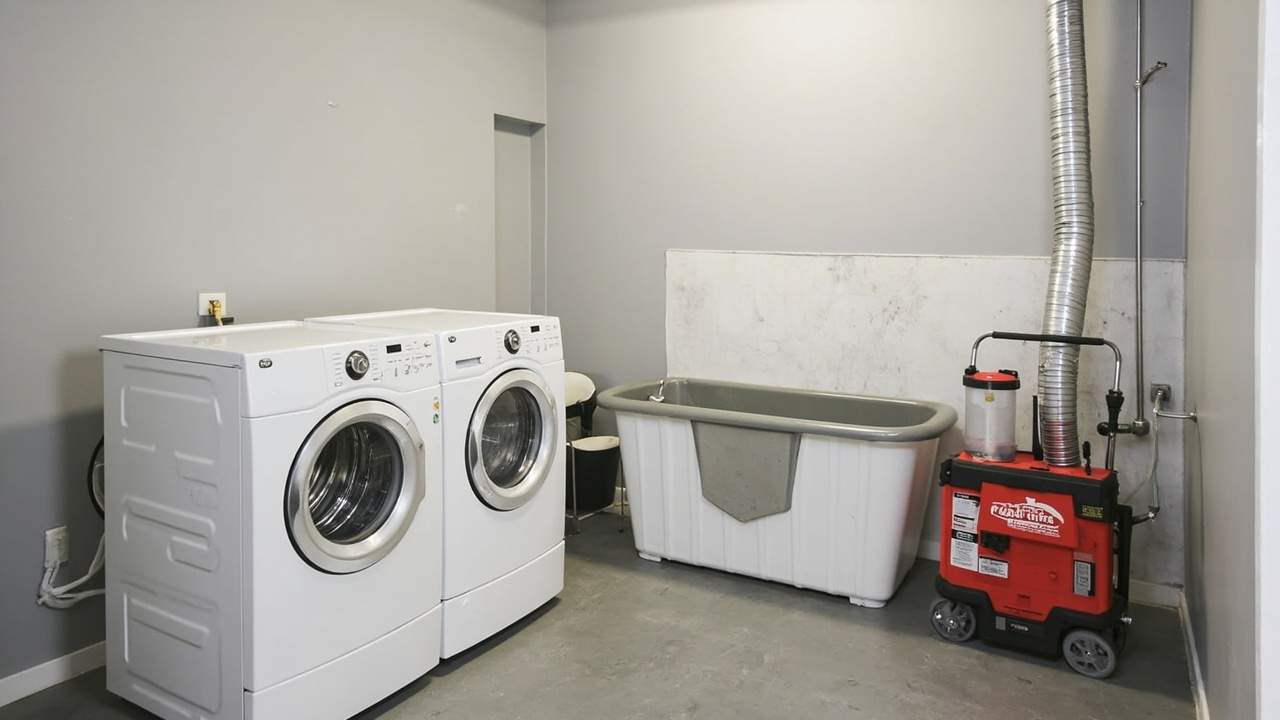
Preventing the Next Laundry Tub Overflow in Your Garden City Home
Prevention is cheaper than restoration by a significant margin. These are the specific steps worth taking in a typical Garden City or Westland-area home with an older laundry setup.
- Install a water sensor alarm directly in your laundry tub or on the floor beside your washing machine. These cost very little and sound an alert the moment water contacts the sensor.
- Check your washing machine supply hoses for bulging, cracking, or mineral deposits annually. Braided stainless steel hoses last significantly longer than rubber hoses.
- Snake your laundry tub drain once per year to clear lint and soap scum buildup, especially in homes with cast-iron drain lines.
- Consider a pressure-reducing valve if your home’s water pressure exceeds 80 PSI. High pressure accelerates hose and fitting failure. Homes near the Cherry Hill corridor sometimes show elevated municipal pressure.
- Install an automatic washing machine shutoff valve. These devices detect flow irregularities and cut supply water before a full overflow occurs.
- Check your sump pump discharge path seasonally. A blocked discharge causes pump backup that can compound a laundry overflow event during heavy rain.
The EPA’s residential water leak guidance estimates that the average home wastes significant water annually from undetected leaks and appliance failures. Many of those failures start slowly before becoming a full overflow event.
Serving Garden City and the Surrounding Metro Detroit Area
Our restoration teams serve Garden City, Westland, Inkster, Dearborn Heights, Livonia, and across Wayne County. We respond to finished basement water damage calls around the clock because overflows do not wait for business hours. When you call, we ask four quick questions, confirm your address, and dispatch a crew. Our standard response target for the Garden City area is 60 minutes or less from your call.
If your laundry tub has overflowed and your finished basement is wet right now, do not wait to see what happens. The cost of drying materials that are still salvageable is a fraction of the cost of replacing them after mold has set in. Call us, get the water out fast, and let the documentation work for your insurance claim.
{
“@context”: “https://schema.org”,
“@type”: “BlogPosting”,
“headline”: “How Garden City Homeowners Can Protect Their Finished Basements From Laundry Tub Overflows”,
“description”: “Laundry tub overflow in your Garden City finished basement? Learn immediate steps, professional restoration, and how to protect your investment for good.”,
“wordCount”: 2133,
“datePublished”: “2026-06-21T09:13:00.000Z”,
“dateModified”: “2026-06-21T09:13:00.000Z”,
“inLanguage”: “en-US”,
“mainEntityOfPage”: {
“@type”: “WebPage”,
“@id”: “https://ironwoodwaterdamagerestorationdetroit.com”
},
“publisher”: {
“@type”: “LocalBusiness”,
“name”: “Ironwood Water Damage Restoration Detroit”,
“url”: “https://ironwoodwaterdamagerestorationdetroit.com”
},
“author”: {
“@type”: “Organization”,
“name”: “Ironwood Water Damage Restoration Detroit”,
“url”: “https://ironwoodwaterdamagerestorationdetroit.com”
},
“image”: {
“@type”: “ImageObject”,
“url”: “https://ironwoodwaterdamagerestorationdetroit.com/wp-content/uploads/2026/03/protecting-your-garden-city-finished-basement-from-1.jpg”
}
}
{
“@context”: “https://schema.org”,
“@type”: “LocalBusiness”,
“name”: “Ironwood Water Damage Restoration Detroit”,
“url”: “https://ironwoodwaterdamagerestorationdetroit.com”,
“address”: {
“@type”: “PostalAddress”,
“addressLocality”: “Detroit”
},
“areaServed”: {
“@type”: “City”,
“name”: “Detroit”
}
}
{
“@context”: “https://schema.org”,
“@type”: “BreadcrumbList”,
“itemListElement”: [
{
“@type”: “ListItem”,
“position”: 1,
“name”: “Home”,
“item”: “https://ironwoodwaterdamagerestorationdetroit.com”
},
{
“@type”: “ListItem”,
“position”: 2,
“name”: “Blog”,
“item”: “https://ironwoodwaterdamagerestorationdetroit.com/blog”
},
{
“@type”: “ListItem”,
“position”: 3,
“name”: “How Garden City Homeowners Can Protect Their Finished Basements From Laundry Tub Overflows”
}
]
}
{
“@context”: “https://schema.org”,
“@type”: “Service”,
“serviceType”: “Water Damage Restoration”,
“provider”: {
“@type”: “LocalBusiness”,
“name”: “Ironwood Water Damage Restoration Detroit”,
“url”: “https://ironwoodwaterdamagerestorationdetroit.com”
},
“areaServed”: {
“@type”: “City”,
“name”: “Detroit”
},
“description”: “Laundry tub overflow in your Garden City finished basement? Learn immediate steps, professional restoration, and how to protect your investment for good.”
}