
What a Grease Trap Backup Actually Means for Your Restaurant
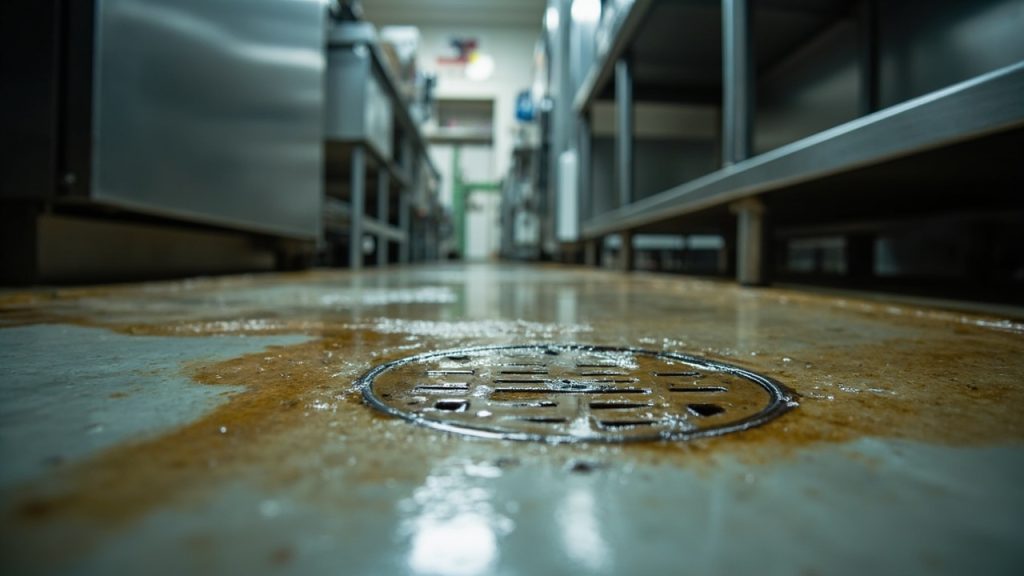
A commercial grease trap backup is not just a plumbing problem. It is a Category 3 water damage event, a health code violation waiting to happen, and a potential forced closure by the Wayne County Health Department. For Greektown restaurant owners on Monroe Street, this is one of the fastest ways to lose a week of revenue and your operating permit in the same afternoon.
Category 3 water, also called black water, contains raw sewage, FOG (Fats, Oils, and Grease) buildup, and a load of pathogens including E. coli, Salmonella, and Listeria. When a grease trap fails, this material does not stay in the trap. It backs up into floor drains, spreads across kitchen tile, and contaminates everything it touches. No amount of mop-and-bucket work clears a Category 3 event. It requires professional extraction, antimicrobial treatment, and structural drying performed to IICRC S500 standards.
Why Detroit Restaurants Face This Problem More Than You Think
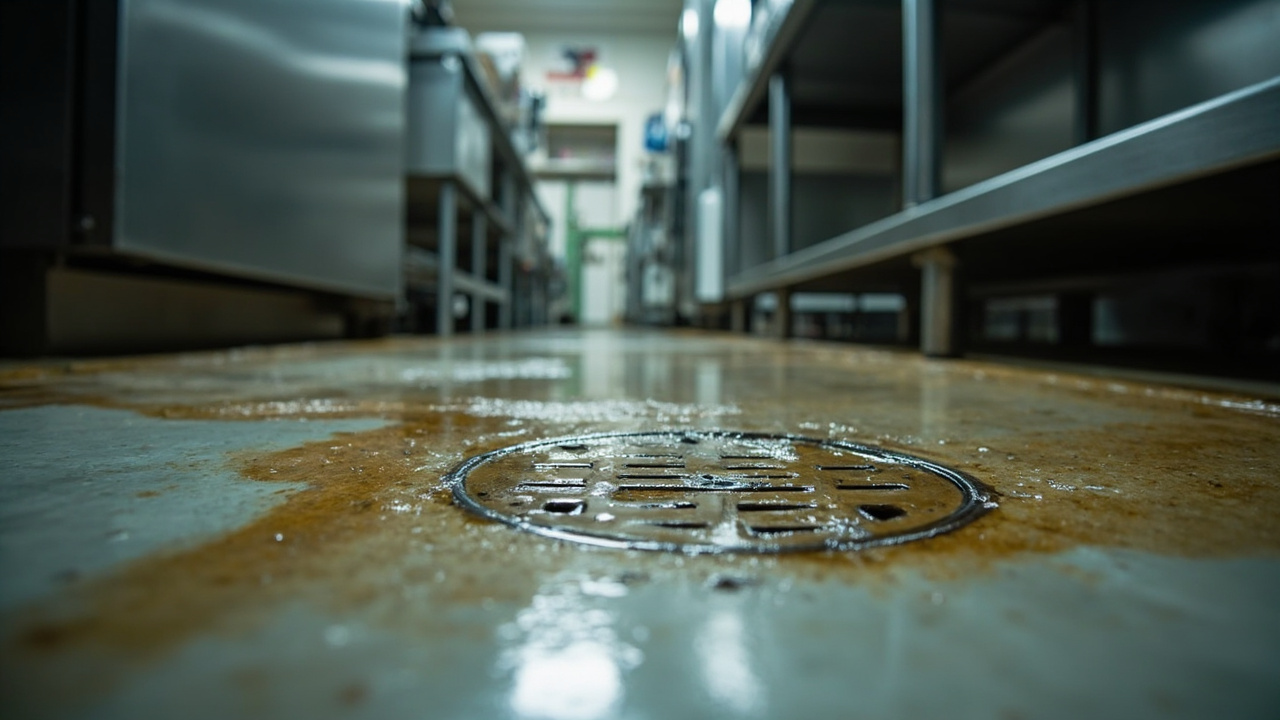
Detroit’s restaurant density in areas like Greektown, Eastern Market, and Corktown means aging sewer infrastructure takes a beating. The Detroit Water and Sewerage Department (DWSD) manages a combined sewer system in many parts of the city. That system handles both stormwater and wastewater in the same pipes. During heavy rain events, surges in the system can push material backward through grease traps that are already close to capacity.
Midtown and New Center restaurants deal with cast iron lateral lines from older construction that corrode and narrow over time. Narrower pipes catch FOG faster. When a grease trap is not pumped on schedule and a surge event hits, the backup happens within minutes, not hours.
The Detroit Water and Sewerage Department mandates that food service establishments maintain functioning grease interceptors and keep them pumped to prevent FOG from entering the public sewer system. A backup that traces back to interceptor neglect can result in fines and a required inspection before you resume operations.
The Pathogens Inside a Grease Trap Overflow
Restaurant owners often underestimate what is actually in a grease trap backup. This is not cooking oil on the floor. The water carries biological material from every drain in your kitchen and dishwashing station.
- E. coli and fecal coliform bacteria from food prep waste
- Salmonella, especially in kitchens handling raw poultry
- Listeria monocytogenes, which survives on cold surfaces and tile grout
- Campylobacter from raw meat runoff
- Grease-eating anaerobic bacteria that produce hydrogen sulfide gas (the rotten egg smell)
- Mold spores that activate on wet drywall and wood framing within 24 to 48 hours
Hydrogen sulfide gas is particularly dangerous in enclosed commercial kitchens. At concentrations above 100 ppm, it causes immediate respiratory distress. MIOSHA (Michigan Occupational Safety and Health Administration) treats exposure to hydrogen sulfide as a serious workplace hazard. Any staff member who enters a contaminated kitchen without proper PPE is at risk, and you as the employer carry that liability.
Immediate Steps When a Backup Hits Your Kitchen
The first 30 minutes matter most. What you do before a restoration crew arrives determines how much damage spreads and how long your cleanup takes.
Shut off gas lines to all cooking equipment immediately. Grease on a hot surface is a fire hazard, and a backup near an open flame violates NFPA 96, the standard for commercial kitchen ventilation control and fire protection. Then shut off water supply to reduce the volume entering the drain system. Do not attempt to run dishwashers or food prep sinks while the trap is backed up.
Clear all staff from the kitchen. This is a Category 3 biohazard event. Rubber boots and latex gloves are not adequate PPE for this type of contamination. Move any food inventory that has not been exposed to a dry, separate storage area and document what you are discarding. Your insurance claim will need that inventory list.
Call your restoration team before you call your plumber. The plumber will clear the clog, but if the contaminated water has already spread, you need extraction and disinfection running in parallel. Waiting until after the plumber finishes means that black water has been sitting on your tile, soaking into grout, and potentially wicking up your drywall for additional hours.

The Commercial Restoration Process Step by Step
Professional Category 3 cleanup in a commercial kitchen follows a defined sequence. Skipping steps creates liability and often leads to mold remediation costs down the road.
Step 1 – Extraction and Containment
Industrial truck-mounted extractors remove standing water and the FOG layer from floor surfaces. This is not a wet vac job. Commercial extractors move several hundred gallons per hour and are necessary when grease-laden water has pooled across a large kitchen footprint. Containment barriers isolate the kitchen from dining areas to prevent cross-contamination.
Step 2 – Antimicrobial Treatment
Every surface that contacted the backup water receives an EPA-registered antimicrobial disinfectant application. Tile grout, floor drains, wall bases, equipment legs, and any exposed framing all get treated. Bioremediation products that break down FOG residue are applied to drains and trap components. This is not bleach. Bleach does not penetrate grease and does not meet the IICRC S500 standard for Category 3 remediation.
Step 3 – Structural Drying
Commercial desiccant dehumidifiers and high-velocity air movers run continuously to bring moisture levels in walls and flooring below the threshold for mold growth. In Detroit’s humid summers, ambient moisture in a Greektown kitchen can already be elevated. Drying typically takes between 3 and 5 days for standard commercial kitchen construction, longer if the backup reached into adjacent storage rooms or walk-in cooler enclosures.
Step 4 – Air Quality Control
HEPA air scrubbers run throughout the drying process to capture airborne particulates and neutralize the sulfur-based odor compounds. In an open kitchen design common in Eastern Market-style restaurants, odor migration to the dining area is fast. Air scrubbers and negative air pressure machines prevent that spread.
Step 5 – Clearance Testing and Documentation
Before your kitchen reopens, moisture readings and air quality data are documented and provided to you. This documentation is what you show the Wayne County Health Department inspector. It proves the remediation was performed to standard and that the space is safe for food preparation.
| Factor | Category 1 (Clean Water) | Category 3 (Grease Trap Backup) |
|---|---|---|
| Water Source | Supply lines, rain intrusion | Sewage, grease trap overflow |
| Pathogen Risk | Low | High (E. coli, Salmonella, Listeria) |
| PPE Required | Basic (gloves, boots) | Full biohazard (respirator, Tyvek suit) |
| Disinfection Protocol | Optional | Mandatory per IICRC S500 |
| Drying Timeline | 1 to 3 days | 3 to 7 days |
| Regulatory Clearance Needed | Typically no | Yes (Health Dept. inspection) |
| Insurance Category | Standard water damage | Specialty biohazard, check policy |
Detroit Compliance Requirements You Cannot Ignore
The DWSD requires all food service establishments to have a functioning grease interceptor sized appropriately for the facility. Restaurants in Greektown operating under a food service license from the Wayne County Health Department must maintain these interceptors and demonstrate proper disposal records. If a backup results from interceptor failure or neglect, the DWSD can require a system inspection and proof of corrective action before the restaurant’s connection to the public sewer is fully restored.
The Great Lakes Water Authority (GLWA), which operates the regional wastewater treatment system, classifies FOG discharge into the public sewer as a violation of the regional sewer use ordinance. Documented violations can result in surcharges or enforcement actions that go beyond a single incident fine. Keeping signed pumping manifests from a licensed grease hauler is your first line of defense if GLWA or the DWSD opens an inquiry.
Your restoration documentation also matters for the Michigan Department of Environment, Great Lakes, and Energy (EGLE) if the backup involved any discharge to the exterior or a storm drain. This is more common in older Greektown properties where floor drain routing is not clearly mapped.
How Business Interruption Insurance Applies Here
Most commercial property policies include business interruption coverage, but grease trap backups fall into a specific claims category. The cause of the loss, a sewer backup or drain overflow, is sometimes excluded from standard commercial policies unless you have an endorsement for sewer and drain backup. Check your policy before a backup happens, not after.
Restoration documentation from an IICRC-certified firm strengthens your claim. Insurance adjusters for commercial claims need to see moisture logs, extraction reports, and antimicrobial treatment records to validate the scope of loss. A professional restoration company provides this as part of the job file. If you want more detail on how insurance documentation works for water-related claims in Detroit, read through this breakdown of how Detroit property insurance claims work for water restoration.

Preventing the Next Backup Before It Happens
Reactive cleanup is expensive and disruptive. A prevention plan costs a fraction of what a Category 3 remediation event costs in downtime, labor, and potential fines.
| Interceptor Size | Recommended Pump Frequency | FOG Level Trigger for Early Pumping | Notes |
|---|---|---|---|
| Under 500 gallons | Every 4 to 6 weeks | 25% FOG accumulation | Common in smaller Greektown storefronts |
| 500 to 1,000 gallons | Every 6 to 8 weeks | 25% FOG accumulation | Standard for mid-volume kitchens |
| 1,000 to 2,000 gallons | Every 8 to 12 weeks | 25% FOG accumulation | High-volume facilities, Eastern Market vendors |
| Above 2,000 gallons | Quarterly minimum | 25% FOG accumulation | Large event venues, banquet facilities |
Hydro-Jetting the Lateral Lines
Pumping the trap handles the FOG inside the interceptor. It does not clear FOG that has already migrated into the lateral lines connecting your grease trap to the city sewer. Hydro-jetting uses high-pressure water to scour the interior walls of those pipes and remove hardened grease deposits. Schedule hydro-jetting at least once per year for kitchens with high-volume frying operations. Greektown restaurants that use fryers heavily for saganaki, loukoumades, or fried seafood menus should consider twice-yearly jetting.
Staff Practices That Directly Reduce FOG Load
Train your kitchen staff on proper grease disposal. Pouring fry oil down the drain, even in small amounts, accelerates trap buildup significantly. Use grease collection containers for all liquid fats. Scrape food debris from plates and cookware before washing to reduce solid material entering the trap. These two practices alone extend pump intervals and reduce the risk of an unexpected backup between scheduled service dates.
If you are dealing with related moisture issues in other parts of your facility, the guidance on why surface cleaning is not enough for biological contamination applies directly to grease trap residue on porous surfaces.
What Happens If You Try to Handle This Without a Pro
Some owners attempt to manage a grease trap backup with their own staff and cleaning supplies. This creates several problems beyond the obvious health risks.
First, surface cleaning does not address moisture that has wicked into grout lines, wall bases, or any wood framing. Mold growth begins within 24 to 48 hours on wet organic material. A contaminated kitchen that looks clean after a mop job can develop active mold colonies inside wall cavities within a week. At that point, you are dealing with a mold remediation project on top of the original Category 3 cleanup, which is a significantly larger scope and cost.
Second, DIY cleanup does not produce the documentation a Wayne County Health Department inspector needs to sign off on your reopening. An inspector who visits a kitchen cleaned by a non-certified party will require a professional assessment before clearing you to operate. You end up paying for both the DIY attempt and the professional job.
Third, MIOSHA requires employers to protect workers from biohazard exposure. If a staff member develops an illness traceable to exposure during an unprotected cleanup, the employer liability exposure is significant. Professional remediation teams carry appropriate PPE and follow established exposure protocols that protect both the workers and the business owner.
Choosing a Restoration Contractor Who Knows Commercial Work
Not every water damage company has experience in commercial food service environments. A contractor who handles residential flooding in Sterling Heights does not automatically have the equipment or protocol knowledge to handle a Category 3 event in a licensed commercial kitchen. Ask specifically whether the contractor holds IICRC certification, has experience with Wayne County Health Department clearance processes, and carries the commercial-grade extraction and drying equipment a large kitchen footprint requires.
For restaurant owners in the Detroit metro who also deal with moisture damage in connected structures or attached properties, the process for documenting and filing restoration claims is covered in detail at this guide to filing a successful water damage insurance claim in Corktown.
When a backup happens, every hour counts. A grease trap overflow that sits for four hours costs significantly more to remediate than one addressed in the first 60 minutes. Call a certified commercial restoration team with 24-hour availability. Get your plumber on the same call. Document everything from the moment you discover the backup, and do not let your staff enter the kitchen without your restoration crew clearing the space first.