

If you own a waterfront property along Lake St. Clair or the Detroit River corridor, your seawall is the first line of defense between your home and thousands of gallons of groundwater. When that wall starts to fail, your basement pays the price. Understanding the connection between seawall erosion and basement seepage is the difference between catching a problem early and facing a full structural restoration.
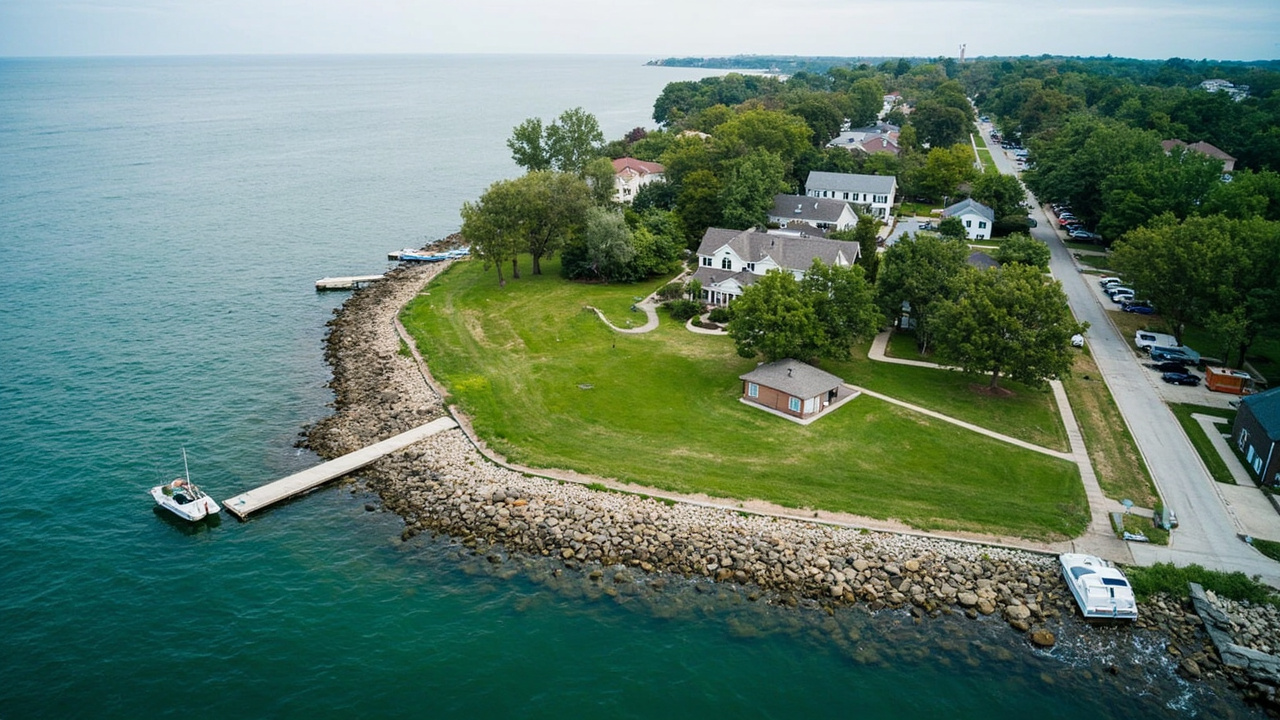
What Happens When a Grosse Pointe Seawall Starts to Fail
Seawalls along the Lake St. Clair shoreline take a beating year-round. Freeze-thaw cycles crack and shift the wall structure. Wave action gradually undermines the base. Detroit blue clay, the dense glacial soil that runs beneath much of Wayne County, swells when saturated and contracts when dry. That constant movement puts enormous lateral pressure on any vertical structure embedded in it.
When a seawall develops even a small breach, the mechanics shift quickly. Water finds the path of least resistance through the soil. That path almost always leads toward your foundation. Hydrostatic pressure builds against your basement walls, and the same blue clay that once held firm becomes a saturated conduit pushing water inward.
The physical signs of seawall failure include visible cracking or bowing in the wall face, sinkholes or depressions forming in your lawn near the water’s edge, sections of riprap or steel sheet piling that have shifted or separated, and waterlogging in areas that previously drained well. These are not cosmetic issues. Each one signals that groundwater is already moving where it should not.
The Hydrostatic Pressure Problem Specific to Detroit Waterfront Homes
Hydrostatic pressure is the force water exerts as it saturates the soil surrounding your foundation. In normal conditions, a functioning seawall and proper grading keep groundwater at a safe distance. When that system breaks down near the Detroit River or Lake St. Clair, the water table rises faster than in non-waterfront settings.
Current monitoring data shows that the Lake St. Clair water level fluctuates seasonally, with high-water periods putting sustained pressure on aging seawalls in communities like Grosse Pointe Shores, St. Clair Shores, and along the Jefferson Avenue corridor. Homes built on this shoreline before modern engineering standards were adopted are especially vulnerable. Their foundations were not designed to handle repeated high-water seasons without a sound seawall doing its job.
Even a short section of compromised steel sheet piling or a section of concrete seawall with failed weep holes can allow enough groundwater migration to cause active seepage through poured concrete or block foundation walls within a single rain season.
Immediate Steps When Lake or River Water Reaches Your Basement
If water is actively entering your basement right now, safety comes before everything else.
- Do not enter a flooded basement without first shutting off electricity at the main breaker. Standing water and live circuits are a fatal combination.
- If your main panel is in the basement, call your utility provider to cut power from the street before you go near the area.
- Do not run gasoline-powered pumps indoors. Carbon monoxide builds quickly in enclosed spaces.
- Document everything before you touch anything. Photos and video of the water level, the entry point, and any visible structural damage are critical for your insurance claim.
- Call a certified water damage restoration company immediately. The 24- to 48-hour window before mold begins colonizing wet materials is real, and it closes fast.
Once the space is safe to enter, your restoration crew will begin water extraction using truck-mounted or portable extraction units. Speed matters here. For guidance on dealing with your insurance company during this process, read through how to get your Detroit home insurance to actually pay for water restoration before you file your claim.

The Step-by-Step Restoration Process for Seawall-Related Flooding
Seawall-related flooding is structurally different from a broken pipe or appliance leak. The water source is external, continuous, and often laden with silt, organic material, and microorganisms from the lake or river. That changes the restoration approach significantly.
Phase 1 — Water Extraction and Categorization
Water from Lake St. Clair or the Detroit River is classified as Category 3 (black water) under IICRC S500 Standards. This means it carries contaminants and requires a higher level of personal protective equipment and disposal protocol than a typical clean water event. Your restoration team should treat all groundwater intrusion from a seawall breach as Category 3 regardless of how clear it looks.
Extraction removes standing water from the floor, from wall cavities if insulation has absorbed moisture, and from any stored items or structural cavities. This step can take several hours for a typical finished Grosse Pointe basement.
Phase 2 — Structural Drying with Great Lakes Humidity in Mind
The Detroit metro area sits in a high-humidity zone year-round, and properties along Lake St. Clair experience ambient moisture levels that slow structural drying considerably. A restoration team working in this area needs to account for outdoor dew point when calculating the number of commercial dehumidifiers needed and the air movement required to achieve proper evaporation rates.
Industrial desiccant dehumidifiers or refrigerant-based units sized for the actual square footage are placed throughout the affected area. Airmovers push saturated air toward the dehumidifiers. Moisture readings are taken daily using pin and pinless meters on every structural material, including the concrete block or poured foundation wall itself.
Phase 3 — Mold Prevention and Remediation Assessment
If the seawall breach has been ongoing for any length of time before you discovered it, mold growth is already likely. Grosse Pointe basements with finished drywall, wood framing, and carpet absorb moisture at different rates, and the combination creates ideal conditions for mold colonization within 24 to 72 hours of a water event.
Antifungal treatments are applied to structural cavities after drying is confirmed. If visible mold growth is present, a formal remediation protocol applies. Learn why surface treatments alone are not enough in our article on why bleach won’t fix your basement mold and when to call a pro.
Phase 4 — Structural Assessment and Rebuild
After drying and remediation, the foundation walls need a second inspection. Seawall failure can introduce lateral pressure that causes foundation wall bowing. Even minor inward deflection of a block wall needs to be documented and evaluated by a structural engineer before any rebuild begins. Ignoring this step turns a water damage project into a future foundation failure.
Warning Signs Your Seawall Is Compromised Before the Flooding Starts
| Warning Sign | What It Indicates | Urgency Level |
|---|---|---|
| Sinkholes or depressions near the water’s edge | Soil migration through a wall breach | High — act within days |
| Visible cracks in concrete seawall face | Structural fracture allowing water penetration | Medium to High |
| Bowing or leaning wall sections | Hydrostatic pressure exceeding wall capacity | High — immediate inspection needed |
| Rust staining along steel sheet piling joints | Corrosion compromising joint integrity | Medium — monitor closely |
| Efflorescence (white mineral deposits) on basement walls | Water migration already occurring through foundation | High — seepage is active |
| Saturated lawn or standing water away from the shore | Groundwater migration from seawall failure | High — investigate immediately |
Regulatory Requirements for Seawall Repair in Michigan
You cannot simply hire a contractor and start rebuilding a seawall without going through the right channels. The Michigan Department of Environment, Great Lakes, and Energy (EGLE) regulates all work along the Great Lakes shoreline and connecting waterways, including Lake St. Clair and the Detroit River. Any repair, reconstruction, or modification to a seawall requires a permit under the Michigan Inland Lakes and Streams Act and potentially the Soil Erosion and Sedimentation Control Act.
Wayne County also has its own review process for properties in regulated flood zones identified on FEMA Flood Maps. If your Grosse Pointe property sits in a Special Flood Hazard Area, your rebuild scope may trigger elevation certificate requirements under the Michigan Residential Building Code.
Working without these permits can result in stop-work orders, fines, and forced removal of non-compliant repairs. Get the permits first. It adds time upfront but protects you from far more costly problems later.

Long-Term Protection Strategies for Waterfront Homes in the Grosse Pointe Area
Sump Pump Systems That Can Handle High-Water Events
A single sump pump with no backup is not adequate for a home with an aging seawall on Lake St. Clair. Waterfront properties in Grosse Pointe Park, Grosse Pointe Farms, and St. Clair Shores should have a primary pump paired with a battery backup unit, and ideally a water-powered emergency backup as a third layer. During a sustained high-water event, power outages and pump failure happen at the same time the water table is highest. A tiered sump system manages that overlap.
French Drains and Interior Drainage Systems
Interior French drain systems channel water that enters through the foundation wall to the sump pit before it spreads across the floor. This does not stop the seawall from failing, but it gives you managed drainage while your seawall is being repaired. Combined with a waterproof membrane applied to interior foundation walls, this system significantly reduces the damage from any future seepage event.
Seawall Maintenance That Actually Prevents Failure
Weep holes in seawall construction exist to relieve hydrostatic pressure from behind the wall. When these holes clog with silt or debris, pressure builds to the point of structural failure. Annual inspection and cleaning of weep holes, combined with riprap maintenance at the base of the wall, extends seawall life considerably.
Steel sheet piling systems should be inspected for corrosion at the waterline annually. Epoxy or urethane injection can seal minor cracks in concrete seawalls before they propagate. Catching these issues before a high-water season is the most cost-effective form of property protection available to Jefferson Avenue corridor homeowners.
Comparing Seawall Restoration Approaches by Property Type
| Property Type | Most Common Seawall Type | Primary Failure Mode | Recommended Restoration Approach |
|---|---|---|---|
| Older Grosse Pointe Shores estate (pre-modern codes) | Poured concrete or stone masonry | Cracking, settlement, soil loss behind wall | Urethane void filling, surface patching, riprap addition |
| Mid-century waterfront home | Steel sheet piling | Corrosion at joints, wall separation | Epoxy injection at joints, tie-back anchors, full panel replacement if needed |
| Modern construction with engineered wall | Vinyl or composite sheet piling | UV degradation, anchor failure | Anchor replacement, cap repair, joint resealing |
| St. Clair Shores or East Jefferson canal property | Concrete block or timber | Timber rot, block erosion, cap deterioration | Full section replacement, EGLE-permitted rebuild |
Insurance Coverage for Seawall and Basement Flooding Events
Standard homeowner’s insurance policies in Michigan typically exclude flood damage from rising surface water, which is exactly what a seawall failure event produces. That exclusion trips up many waterfront homeowners who assume they are covered when they are not.
Flood insurance through the National Flood Insurance Program (NFIP) covers building structure damage from flooding, but seawall repair itself is generally excluded. You may have coverage for the water damage inside the structure while paying out of pocket for the seawall work. Knowing this before an event allows you to budget accordingly and document damage correctly at the time of loss.
If your situation involves overlapping coverage questions, our article on filing a successful water damage insurance claim walks through the documentation and communication strategies that help claims move forward rather than stall.
For properties where the basement includes finished hardwood floors or high-end carpet, the material-specific decisions that follow a water event are time-sensitive. Our guides on saving hardwood floors after a water leak and deciding whether wet carpet can be saved give you the information you need before the restoration crew arrives.
When to Call a Water Damage Restoration Professional
If you see active water coming through a foundation wall, white efflorescence deposits forming on basement concrete, or any structural bowing in your foundation, stop treating this as a DIY project. Seawall-related flooding involves Category 3 water, structural risk, potential mold exposure, and regulatory compliance across multiple agencies.
A certified restoration contractor familiar with Grosse Pointe waterfront properties understands the specific soil conditions, the seasonal pressure cycles from Lake St. Clair, and the documentation requirements for both EGLE permits and insurance claims. That local knowledge is not interchangeable with generic water cleanup service.
If your seawall is showing failure signs, get a structural assessment done before the next high-water season. The cost of proactive maintenance is a fraction of what basement flooding and foundation repair runs after the fact. Waterfront property values in the Grosse Pointe area are significant, and protecting that investment starts at the shoreline.
{
“@context”: “https://schema.org”,
“@type”: “BlogPosting”,
“headline”: “How Grosse Pointe Seawall Failure Causes Basement Flooding (And What to Do About It)”,
“description”: “Seawall erosion on Lake St. Clair and the Detroit River puts Grosse Pointe basements at serious risk. Here’s what to do and how to protect your home.”,
“wordCount”: 2058,
“datePublished”: “2026-05-30T07:11:00.000Z”,
“dateModified”: “2026-05-30T07:11:00.000Z”,
“inLanguage”: “en-US”,
“mainEntityOfPage”: {
“@type”: “WebPage”,
“@id”: “https://ironwoodwaterdamagerestorationdetroit.com”
},
“publisher”: {
“@type”: “LocalBusiness”,
“name”: “Ironwood Water Damage Restoration Detroit”,
“url”: “https://ironwoodwaterdamagerestorationdetroit.com”
},
“author”: {
“@type”: “Organization”,
“name”: “Ironwood Water Damage Restoration Detroit”,
“url”: “https://ironwoodwaterdamagerestorationdetroit.com”
},
“image”: {
“@type”: “ImageObject”,
“url”: “https://ironwoodwaterdamagerestorationdetroit.com/wp-content/uploads/2026/03/protecting-your-grosse-pointe-seawall-from-erosion-1.jpg”
}
}
{
“@context”: “https://schema.org”,
“@type”: “LocalBusiness”,
“name”: “Ironwood Water Damage Restoration Detroit”,
“url”: “https://ironwoodwaterdamagerestorationdetroit.com”,
“address”: {
“@type”: “PostalAddress”,
“addressLocality”: “Detroit”
},
“areaServed”: {
“@type”: “City”,
“name”: “Detroit”
}
}
{
“@context”: “https://schema.org”,
“@type”: “BreadcrumbList”,
“itemListElement”: [
{
“@type”: “ListItem”,
“position”: 1,
“name”: “Home”,
“item”: “https://ironwoodwaterdamagerestorationdetroit.com”
},
{
“@type”: “ListItem”,
“position”: 2,
“name”: “Blog”,
“item”: “https://ironwoodwaterdamagerestorationdetroit.com/blog”
},
{
“@type”: “ListItem”,
“position”: 3,
“name”: “How Grosse Pointe Seawall Failure Causes Basement Flooding (And What to Do About It)”
}
]
}
{
“@context”: “https://schema.org”,
“@type”: “Service”,
“serviceType”: “Water Damage Restoration”,
“provider”: {
“@type”: “LocalBusiness”,
“name”: “Ironwood Water Damage Restoration Detroit”,
“url”: “https://ironwoodwaterdamagerestorationdetroit.com”
},
“areaServed”: {
“@type”: “City”,
“name”: “Detroit”
},
“description”: “Seawall erosion on Lake St. Clair and the Detroit River puts Grosse Pointe basements at serious risk. Here’s what to do and how to protect your home.”
}