

Your pipes are under attack right now, and you probably have no idea. If you own a home in East English Village, Indian Village, or anywhere else in Detroit’s east side, the city’s water distribution system may be pushing water through your plumbing at pressures well above what those older pipes can safely handle. The damage builds slowly, invisibly, and then one day a joint fails, a supply line blows, or a pinhole leak quietly soaks your basement subfloor for weeks before you notice.
This is not a rare problem. It is one of the most common and most misdiagnosed causes of water damage we see in Detroit homes.
What the Detroit Water and Sewerage Department Sends Into Your Pipes
The Detroit Water and Sewerage Department (DWSD) manages one of the largest water systems in the country, serving Detroit and dozens of surrounding communities. The system is old, built across different eras, and it runs at varying pressures depending on your location and elevation within the grid.
Safe residential water pressure sits between 40 and 60 PSI (pounds per square inch). At that range, your fixtures, appliances, and pipes all function within their design tolerances. The problem is that many sections of Detroit’s distribution network regularly push water at 80 PSI or higher. Some homes near fire hydrant clusters or elevated main lines see pressure spikes well above that during demand surges or after a water main break gets repaired and the system restores pressure.
East English Village sits on a relatively flat grid, but the infrastructure in many blocks dates back to the mid-twentieth century. When that old infrastructure interacts with modern pressure demands, the pipes inside your walls take the hit.
Why Older Detroit Home Plumbing Is Especially Vulnerable
Most homes in East English Village, Sherwood Forest, and the University District were built between the 1920s and 1960s. That means your plumbing is likely galvanized steel or early copper, both of which were not engineered for sustained high-pressure delivery.
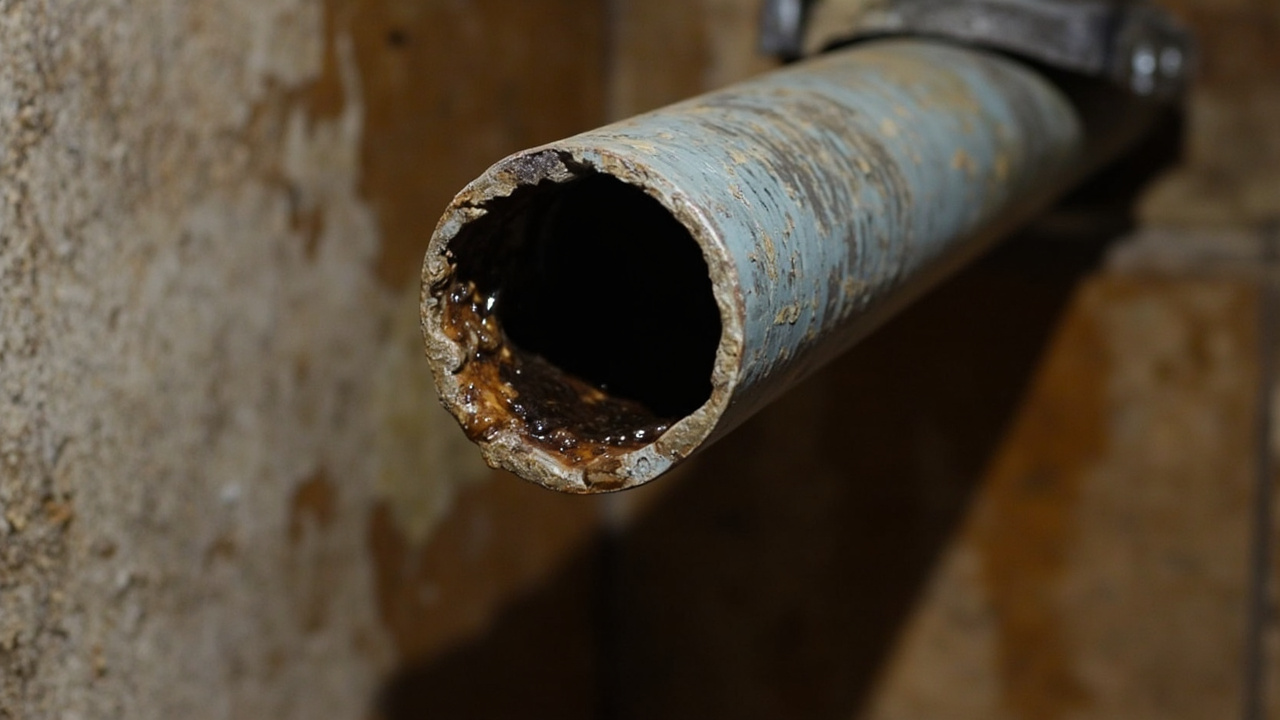
Galvanized pipe corrodes from the inside out. The internal buildup narrows the diameter, which increases velocity, which amplifies the destructive effect of high pressure. Even copper, which is far more durable, develops pinhole leaks at solder joints and fittings when pressure stays consistently above 80 PSI over months and years.
Wayne County plumbing codes require a Pressure Reducing Valve (PRV) on new construction and major renovations. But if your home has never had one installed, or if an existing PRV has failed (they typically last 7 to 12 years), you may be running unregulated city pressure straight into pipes that were never built for it.
The Physical Signs Your Water Pressure Is Too High
You do not need a pressure gauge to suspect a problem. Your home will tell you through a specific set of symptoms that most homeowners dismiss as minor annoyances rather than warnings.
- Water hammer — that loud banging or thudding sound when you shut off a faucet or an appliance valve closes is hydraulic shock. High-velocity water stops abruptly and slams into the pipe wall. Each occurrence stresses your joints.
- Faucets and showerheads that spray aggressively even at low handle settings.
- Running toilets where the fill valve cannot seat properly because incoming pressure overwhelms the float mechanism.
- Supply lines under sinks or behind toilets that feel firm and rigid rather than slightly pliable.
- Appliances like dishwashers and washing machines that leak at connection points after only a few years of use.
- Visible moisture or water staining around pipe penetrations in basement walls or utility rooms.
- Your water meter dial spinning even when all fixtures are off, which indicates an active leak somewhere in the system.
If you are seeing two or more of these in your East English Village or Morningside home, pressure is a likely culprit.

From Pinhole Leaks to Catastrophic Pipe Bursts — How the Damage Escalates
High water pressure does not cause a dramatic pipe burst on day one. It works gradually, and the progression follows a predictable path that experienced restoration professionals recognize immediately.
Stage One — Joint Fatigue and Pinhole Leaks
Solder joints and threaded connections are the weakest points in any plumbing system. Sustained overpressure causes microscopic movement at these joints with every pressure cycle. Over time, that movement opens tiny gaps. Pinhole leaks in copper pipe are almost always pressure-related. A single pinhole leak inside a wall cavity can discharge enough water over 30 days to saturate insulation, rot structural framing, and trigger significant mold growth before you see any visible sign from the living space.
Stage Two — Appliance and Fixture Failure
Your washing machine supply hoses, refrigerator ice maker lines, and dishwasher connections all carry manufacturer-rated maximum pressure specs. Most are rated for 80 PSI or below. When city pressure spikes to 90 or 100 PSI during a system fluctuation, those hoses can blow. A burst washing machine supply line can discharge hundreds of gallons per hour into your basement or utility room before you even get home from work. We have responded to these calls from Chandler Park to the far east side of Detroit more times than we can count.
Stage Three — Thermal Expansion and Slab or Foundation Damage
In homes with water heaters, high pressure creates a secondary problem called thermal expansion. When water heats up, it expands. In a closed system under high pressure, that expansion has nowhere to go and exerts enormous force on the tank and connecting pipes. Over time, this contributes to water heater failures and, in homes with in-slab plumbing, to slab leaks. Slab leaks are among the most expensive water damage scenarios we handle in Detroit because the water migrates through concrete and emerges far from the actual leak point, making detection and remediation both time-consuming and disruptive.
| Pressure Level (PSI) | Risk Level | Likely Damage | Typical Detection Timeline |
|---|---|---|---|
| 40 to 60 PSI | Safe | Minimal wear over normal lifespan | No damage expected |
| 60 to 80 PSI | Moderate Risk | Accelerated fixture wear, occasional water hammer | 3 to 7 years |
| 80 to 100 PSI | High Risk | Joint leaks, appliance line failures, pinhole leaks | 1 to 3 years |
| Above 100 PSI | Critical | Pipe bursts, slab leaks, major appliance failures | Months to weeks |
What to Do Immediately When a Pipe Fails
If you are dealing with an active leak or burst pipe right now, the first 30 minutes determine how much structural damage you end up with. Do not wait to assess the situation. Move fast.
- Locate your main shut-off valve and close it immediately. In most East English Village homes, this is in the basement near the front foundation wall where the service line enters the house. If you do not know where yours is, find it today before you need it.
- Turn off your water heater at the breaker or gas supply to prevent it from running dry and overheating.
- Open a faucet on the lowest floor to drain pressure from the system and slow any residual flow.
- Document everything with photos and video before you move or touch anything. This documentation is critical for your insurance claim. Our guide on how to get your Detroit home insurance to actually pay for water restoration walks through exactly what adjusters look for.
- Move valuables, electronics, and important documents out of the affected area if it is safe to do so.
- Call a licensed plumber to stop the source and a water damage restoration professional to begin extraction before water migrates further.
Do not use a shop vac and a few box fans and assume you handled it. Water travels through subfloor assemblies, inside wall cavities, and under flooring faster than most people expect. What looks like a contained puddle at the surface is often connected to saturated framing members you cannot see.

The Professional Water Damage Restoration Process for Detroit Homes
IICRC-certified water damage restoration is not simply drying things out. It is a structured process that follows the S500 Standard for Professional Water Damage Restoration and accounts for the specific construction and climate conditions of Detroit homes.
Water Extraction
We use truck-mounted and portable extraction units to remove standing water from affected areas. In Detroit basements, which are often unfinished or partially finished with concrete floors, this step is usually straightforward. In finished spaces with carpet, hardwood, or tile, extraction decisions affect whether those materials can be saved or need to go. For flooring-specific guidance, see our article on how to save hardwood floors after a significant water leak and our breakdown of when wet carpet can be saved versus when it needs to go.
Structural Drying
After extraction, the real work begins. We place commercial-grade desiccant dehumidifiers and high-velocity air movers in a calculated pattern based on the specific moisture readings taken throughout the structure. Detroit’s climate adds a layer of complexity here. In the colder months, exterior temperatures pull moisture through building assemblies in ways that differ from summer conditions. Drying a water-damaged home in February in East English Village requires a different equipment configuration than the same square footage in July.
We track moisture content in framing, subfloor, and wall assemblies with penetrating and non-penetrating meters daily until everything reaches target values. This process typically takes 3 to 5 days for a Category 1 water loss in a standard Detroit residential basement, longer if the water sat undiscovered or if building materials were heavily saturated.
Mold Prevention and Remediation
Mold colonization begins within 24 to 72 hours in water-damaged materials when conditions support growth. Detroit’s humidity levels, combined with the organic content in older wood framing and drywall, create near-ideal conditions. We apply EPA-registered antimicrobials to affected surfaces as part of the drying process to inhibit mold development.
If mold growth is already present when we arrive, that requires a separate remediation protocol. Bleach is not a solution for established mold in a structural assembly. Our article on why bleach will not fix your basement mold explains why surface treatments fail and what professional remediation actually involves.
Protecting Your Home Before the Next Leak Happens
The single most effective thing you can do to protect your plumbing from city pressure damage is to have a licensed plumber install a quality Pressure Reducing Valve (PRV) if you do not have one, or test and replace an aging one. A brass PRV with an adjustable cartridge, set to 55 to 60 PSI at the point of entry, eliminates the primary risk factor entirely. Pair that with a thermal expansion tank on your water heater to manage closed-system pressure, and you have addressed the two most common high-pressure failure points.
You can also contact DWSD directly to report suspected main line pressure issues in your neighborhood. Their emergency line handles water main breaks and can connect you with their distribution team for pressure concerns on your block.
| Protective Measure | What It Does | Service Life | Priority |
|---|---|---|---|
| Pressure Reducing Valve (PRV) | Limits incoming city pressure to a set PSI | 7 to 12 years | High |
| Thermal Expansion Tank | Absorbs pressure from heated water in a closed system | 5 to 10 years | High |
| Water Pressure Gauge Test | Identifies current PSI at your service entry | One-time test, repeat annually | Medium |
| Appliance Supply Line Inspection | Identifies aging braided or rubber lines before they fail | Replace every 5 years | Medium |
| Water Leak Detection Device | Alerts you to flow anomalies, can auto-shutoff | Varies by brand | Medium |
Insurance Coverage and What to Expect After a Pipe Burst
Most standard homeowner’s insurance policies in Michigan cover sudden and accidental water damage from burst pipes. They do not cover slow leaks that built up over time due to deferred maintenance. This distinction matters enormously when pressure-related damage occurs. A pipe that failed suddenly in a pressure spike is generally covered. A pinhole leak that dripped for months and rotted your subfloor is often not.
Document the failure point and the surrounding conditions as thoroughly as possible before any repairs begin. If you are navigating an insurance claim for a Corktown, Midtown, or east side Detroit property, our guide to filing a successful water damage insurance claim gives you a practical framework for working with your adjuster and maximizing your settlement.
The Institute of Inspection Cleaning and Restoration Certification (IICRC) sets the industry standards that insurance companies use to evaluate restoration scopes and pricing. Working with a certified restoration contractor gives your claim credibility and protects you from underpayment.
If You Suspect High Pressure Is Already Damaging Your Plumbing
Buy a simple pressure gauge at any hardware store and thread it onto an outdoor hose bib. Take a reading in the early morning when demand is low and again at peak daytime hours. If you are reading above 70 PSI at either point, your home needs a functioning PRV before the next cold snap, the next pressure surge from a neighborhood main break, or the next time your washing machine fills a cycle.
East English Village, Jefferson-Chalmers, and the Morningside neighborhood all sit in sections of Detroit where the distribution infrastructure is under increasing stress. Water main breaks in Wayne County are a regular occurrence, and each repair cycle causes pressure normalization events that spike levels downstream. Your older home’s plumbing absorbs every one of those spikes.
If you are already seeing signs of damage, or if you had a pipe fail and you are dealing with the aftermath, call a restoration professional right away. A 60-minute response window makes a measurable difference in how much structural material needs to come out and how long the drying process takes. The water in your walls and subfloor does not wait for a convenient time.
{
“@context”: “https://schema.org”,
“@type”: “BlogPosting”,
“headline”: “How High City Water Pressure Is Secretly Ruining the Pipes in Your East English Village Home”,
“description”: “High city water pressure silently destroys Detroit home plumbing. Learn the warning signs, damage risks, and what to do before a pipe bursts in your home.”,
“wordCount”: 2263,
“datePublished”: “2026-05-28T08:38:00.000Z”,
“dateModified”: “2026-05-28T08:38:00.000Z”,
“inLanguage”: “en-US”,
“mainEntityOfPage”: {
“@type”: “WebPage”,
“@id”: “https://ironwoodwaterdamagerestorationdetroit.com”
},
“publisher”: {
“@type”: “LocalBusiness”,
“name”: “Ironwood Water Damage Restoration Detroit”,
“url”: “https://ironwoodwaterdamagerestorationdetroit.com”
},
“author”: {
“@type”: “Organization”,
“name”: “Ironwood Water Damage Restoration Detroit”,
“url”: “https://ironwoodwaterdamagerestorationdetroit.com”
},
“image”: {
“@type”: “ImageObject”,
“url”: “https://ironwoodwaterdamagerestorationdetroit.com/wp-content/uploads/2026/03/how-high-city-water-pressure-is-secretly-ruining-t-1.jpg”
}
}
{
“@context”: “https://schema.org”,
“@type”: “LocalBusiness”,
“name”: “Ironwood Water Damage Restoration Detroit”,
“url”: “https://ironwoodwaterdamagerestorationdetroit.com”,
“address”: {
“@type”: “PostalAddress”,
“addressLocality”: “Detroit”
},
“areaServed”: {
“@type”: “City”,
“name”: “Detroit”
}
}
{
“@context”: “https://schema.org”,
“@type”: “BreadcrumbList”,
“itemListElement”: [
{
“@type”: “ListItem”,
“position”: 1,
“name”: “Home”,
“item”: “https://ironwoodwaterdamagerestorationdetroit.com”
},
{
“@type”: “ListItem”,
“position”: 2,
“name”: “Blog”,
“item”: “https://ironwoodwaterdamagerestorationdetroit.com/blog”
},
{
“@type”: “ListItem”,
“position”: 3,
“name”: “How High City Water Pressure Is Secretly Ruining the Pipes in Your East English Village Home”
}
]
}
{
“@context”: “https://schema.org”,
“@type”: “Service”,
“serviceType”: “Water Damage Restoration”,
“provider”: {
“@type”: “LocalBusiness”,
“name”: “Ironwood Water Damage Restoration Detroit”,
“url”: “https://ironwoodwaterdamagerestorationdetroit.com”
},
“areaServed”: {
“@type”: “City”,
“name”: “Detroit”
},
“description”: “High city water pressure silently destroys Detroit home plumbing. Learn the warning signs, damage risks, and what to do before a pipe bursts in your home.”
}