
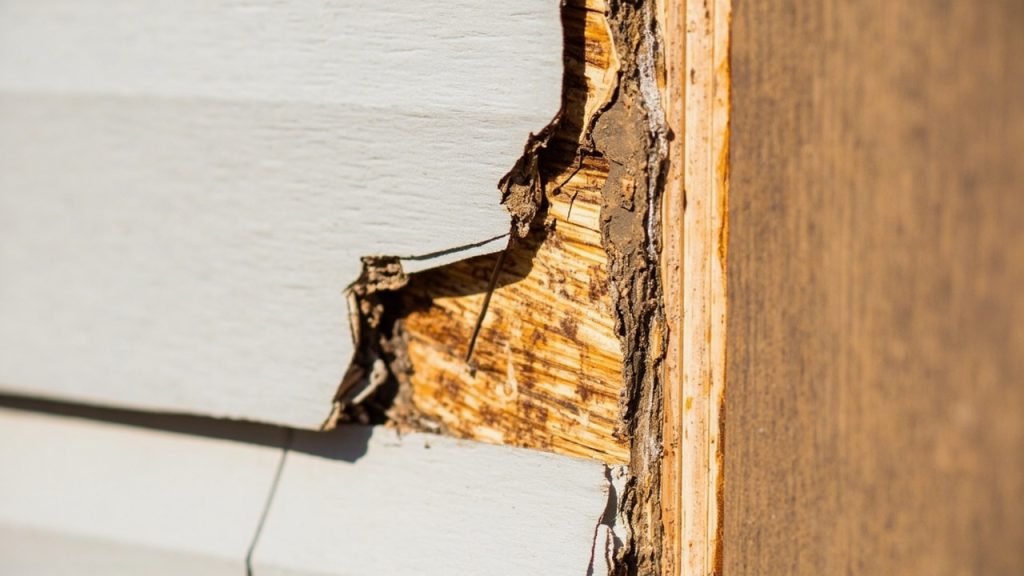
Sterling Heights has more vinyl-sided homes per square mile than almost any other city in Macomb County. That siding looks clean, modern, and low-maintenance. What it does not look like is a place where thousands of dollars of structural rot and black mold can quietly grow for months before you notice a single sign.
That is exactly the problem. Vinyl siding is designed to shed water on its surface. It is not designed to be a sealed barrier. Behind every panel is a gap, and behind that gap is your home’s substrate, house wrap, sheathing, and framing. When moisture finds a way in, and in Metro Detroit it always finds a way, that concealed space becomes a damage zone that no one can see from the curb.
Why Sterling Heights Homes Are Especially Vulnerable
Michigan’s freeze-thaw cycle is one of the most aggressive in the Midwest. Sterling Heights sits far enough inland to get brutal cold snaps in January and February, but it is close enough to Lake St. Clair to pull in heavy moisture during spring and early summer. That combination is particularly punishing for exterior envelope systems.
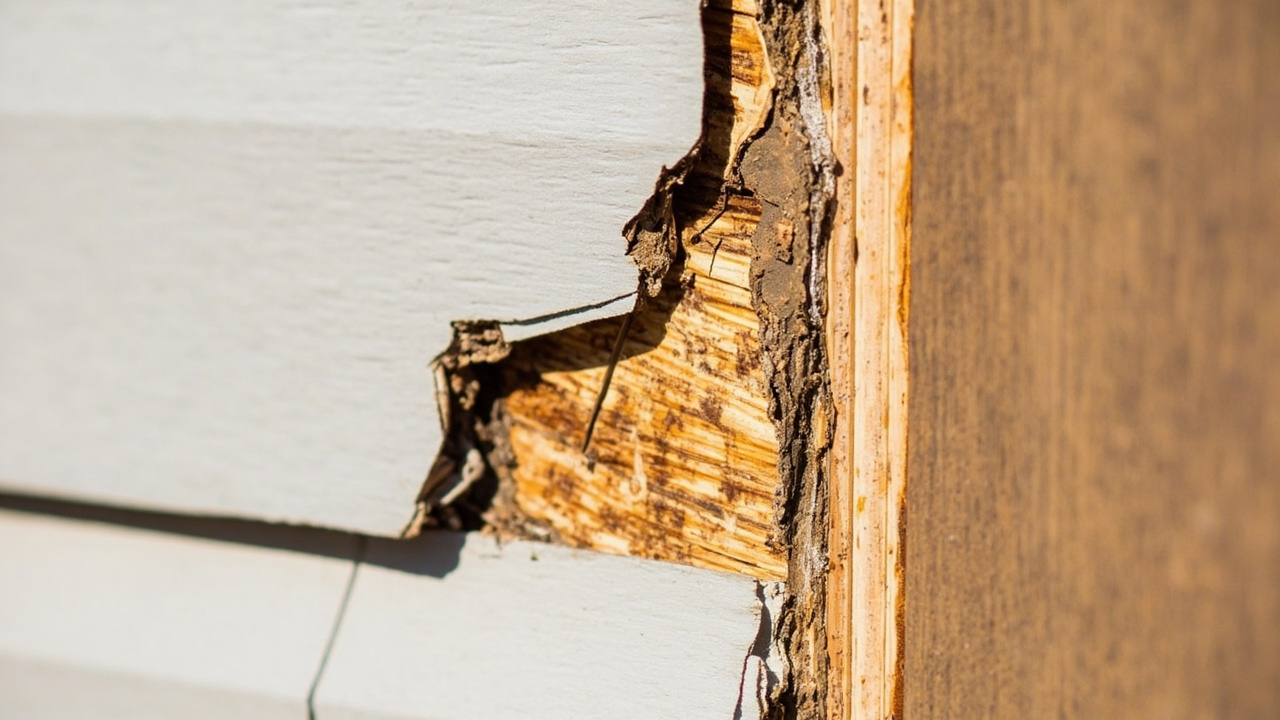
During a freeze-thaw event, any water that has already infiltrated your siding system expands as it freezes. This expansion widens existing micro-cracks in caulking, pops lap joints slightly, and degrades window capping over time. Every thaw cycle lets more water in. By the time spring arrives, the OSB (Oriented Strand Board) sheathing behind your vinyl panels may already be compromised.
Homes in subdivisions built in the late 1990s and early 2000s across Sterling Heights, Warren, and Shelby Township were commonly sided with products and installation methods that are now known to allow moisture intrusion at the butt joints and J-channels. Those homes are now at the age where that deferred damage is showing up in restoration calls.
5 Warning Signs That Moisture Is Behind Your Siding
You rarely see active water running behind vinyl panels. What you see instead are secondary symptoms, the things moisture causes as it sits trapped against your sheathing and framing.
- Soft or spongy spots along exterior walls. Press firmly on the siding with your palm. If it flexes or feels soft in a way that solid sections do not, the OSB or plywood sheathing underneath has likely absorbed moisture and started to degrade.
- Interior drywall staining that has no obvious source. A yellowish or brownish stain appearing on an exterior wall, particularly below a window, often traces back to water infiltration through the window capping or Z-flashing rather than a plumbing leak.
- Bubbling or peeling paint on interior walls. When moisture migrates inward through your vapor barrier and into the drywall, interior paint loses adhesion. This almost always appears on exterior-facing walls first.
- Persistent musty odors in rooms along exterior walls. This is one of the earliest signs of mold colonization inside the wall cavity. By the time you smell it, mold has been growing for weeks, possibly months.
- Visible organic growth at the base of siding panels or around window frames. Green algae or black streaking at the bottom edge of a panel run is a sign that moisture is consistently present in that area. It often means the weep holes in the siding are blocked or the drainage plane has failed.
If you are seeing any of these signs on your Sterling Heights home, get a moisture reading done before you call a siding contractor. You need to know what is behind the wall before it gets re-sided.
What Causes Water to Get Behind Vinyl Siding
The entry points are almost always at transitions and penetrations, not through the flat face of the siding itself. Here is where water gets in.
Failed or Missing Z-Flashing Above Windows
Z-flashing is the bent metal strip that sits above window and door frames to direct water over the top of the window capping and away from the opening. When it is installed incorrectly, missing entirely, or has corroded after years of exposure, water runs directly into the rough opening and soaks the framing and sheathing around the window.
Ice Dam Formation at Eaves
Sterling Heights homeowners with inadequate attic insulation commonly experience ice dams. When heat from the living space warms the roof deck, snow melts and refreezes at the cold eaves. That ice backs up under shingles and eventually finds its way into the wall cavity behind the siding at the top courses. The U.S. Department of Energy notes that proper attic insulation is the primary defense against ice dam formation, but many homes in this area are under-insulated by current standards.
Improper House Wrap Installation
House wrap, whether Tyvek or a similar product, must lap correctly. The upper layer must always overlap the lower layer so water runs over it like shingles, not under it. In production-built homes across Macomb County, house wrap is sometimes installed backwards at overlaps, stapled with gaps, or torn during siding installation and never repaired. That wrap is the last line of defense before moisture hits your sheathing.
Clogged or Failing Gutters
When gutters overflow, water runs down the exterior wall. Vinyl siding’s lapped design is meant to drain water downward, but consistent saturation at the top courses will eventually find the nail hem gaps and enter the wall system. Hydrostatic pressure is not dramatic at this scale, but slow and consistent moisture is often more damaging over time than a single flood event.
The Hidden Dangers When This Gets Ignored
The two things that turn a manageable moisture problem into a major restoration project are structural wood rot and black mold. Both can be present simultaneously, and both are invisible from outside the home.
OSB Rot and Structural Degradation
OSB is the most common sheathing material in homes built across Sterling Heights, Troy, and Clinton Township from the 1980s onward. It is engineered wood, and it is highly susceptible to moisture damage when exposed continuously. Once OSB begins to delaminate and rot, it loses its structural integrity and can no longer properly anchor siding fasteners or resist racking forces on the wall. By the time OSB is visibly rotted, the damage has usually spread several feet beyond what is obvious.
Replacing rotted sheathing is not a simple patch job. It involves removing siding, stripping house wrap, replacing the sheathing, installing new house wrap with correct lapping, and re-siding. Catching it early, before rot spreads to wall studs, is the difference between a moderate repair and a structural rebuild.
Black Mold (Stachybotrys chartarum) in Wall Cavities
Wall cavities are dark, often warm, and when moisture is present, they hold humidity at levels that mold thrives in. Stachybotrys chartarum (black mold) requires continuously wet organic material to colonize. OSB and framing lumber are exactly that material. Once mold establishes in a wall cavity, it does not stay contained. HVAC systems pull air from wall penetrations and can distribute spores throughout the living space.
The U.S. Environmental Protection Agency recommends professional remediation for any mold covering more than 10 square feet. Inside a wall cavity, that threshold is reached faster than most homeowners expect. If you suspect mold is involved, read more about why bleach does not fix mold and when professional intervention is necessary.
Comparing Vinyl Siding to Other Cladding Options in Michigan’s Climate
| Siding Type | Moisture Vulnerability | Damage Visibility | Typical Failure Point |
|---|---|---|---|
| Vinyl Siding | High (concealed cavity) | Low (damage is hidden) | Lap joints, J-channels, window capping |
| Fiber Cement (Hardie Board) | Moderate | Moderate (paint peeling visible) | End cuts, butt joints without caulk |
| Brick Veneer | Low (if weep screed intact) | High (efflorescence visible early) | Weep holes, mortar cracks |
| Wood Lap Siding | Very High | High (rot and paint failure obvious) | Paint failure, end grain exposure |
The core problem with vinyl siding is not that it fails catastrophically. It is that it hides damage well. A brick veneer home shows efflorescence within a season. A vinyl-sided home in the same condition might look perfectly fine for two or three years while rot and mold develop out of view.
What the Professional Restoration Process Looks Like
When an IICRC-certified restoration team responds to a suspected water damage situation behind siding, the process follows a specific diagnostic and remediation sequence. Rushing straight to replacement is the wrong move without knowing the full scope of damage.
Step 1. Moisture Mapping and Thermal Inspection
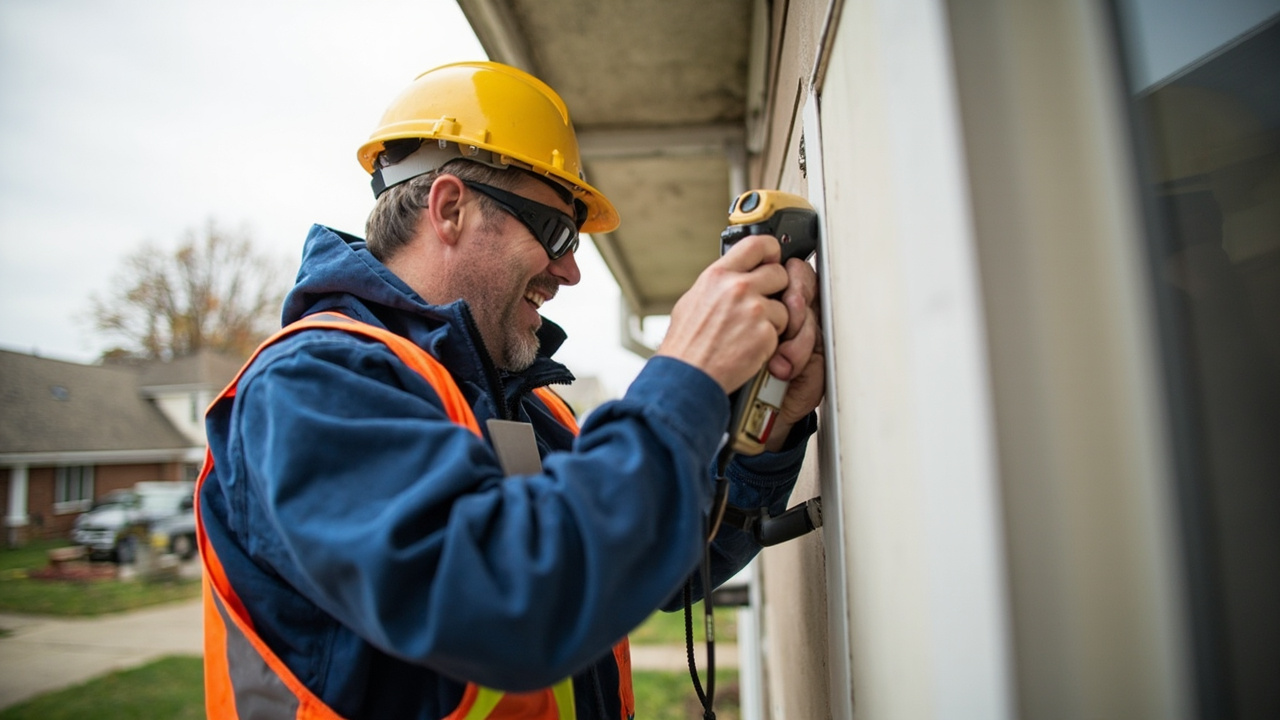
Using a combination of penetrating moisture meters and infrared thermal imaging, technicians map exactly where elevated moisture levels exist inside the wall system. This tells you precisely which sections of siding need to come off and which sections can stay.
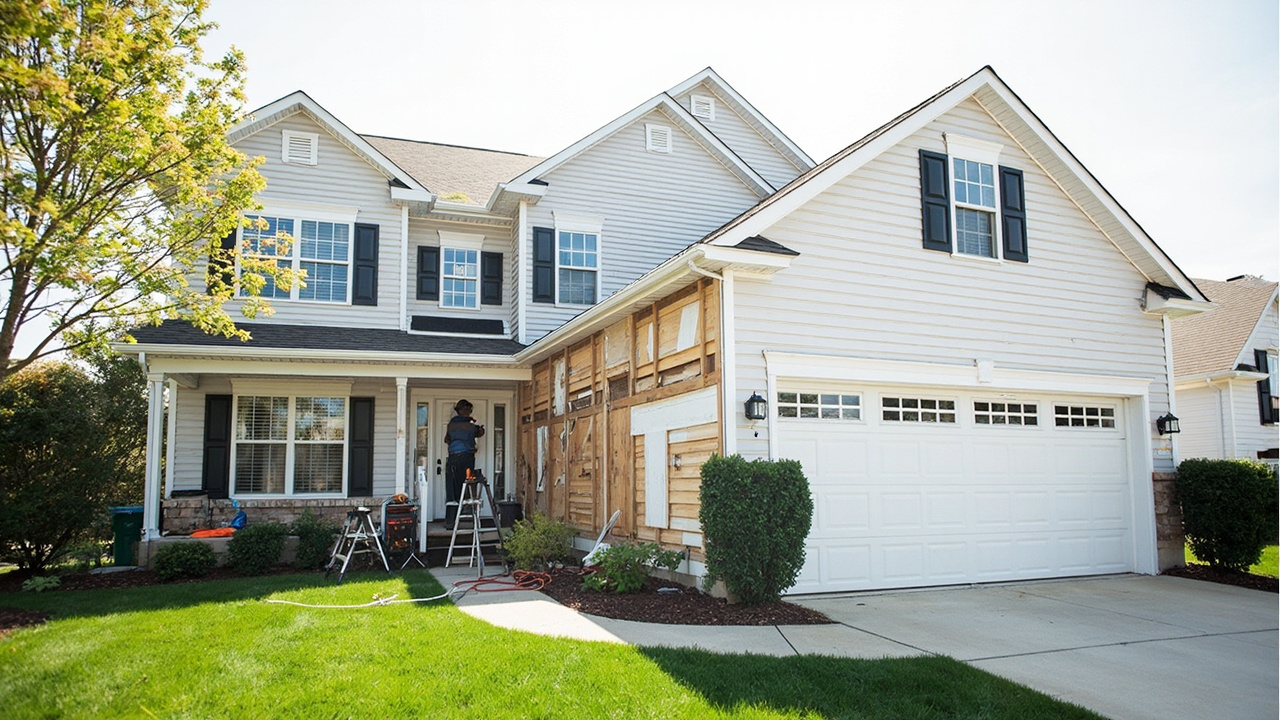
Step 2. Controlled Siding Removal
Panels come off in the affected zones. This is done carefully to preserve undamaged sections and avoid unnecessary cost. Once panels are removed, the house wrap and sheathing are visually inspected and tested for moisture content. OSB readings above 19 percent moisture content indicate active deterioration.
Step 3. Substrate Drying and Mold Remediation
If OSB and framing are wet but not yet rotted, commercial desiccant dehumidifiers and air movers can dry the wall cavity in place. If mold is present, the affected materials are removed, HEPA-vacuumed, and treated before any new sheathing is installed. The area is tested post-remediation before enclosure.
Step 4. Sheathing and House Wrap Replacement
New OSB sheathing goes in with correct fastener schedules per Michigan Building Code. House wrap is installed with correct lapping direction, taped seams at all penetrations, and proper integration with window flashing. Z-flashing is inspected and replaced at every window in the affected zone.
Step 5. Siding Reinstallation and Sealing
New siding panels are installed with appropriate clearance from grade, correctly spaced weep holes, and properly sealed J-channels at all termination points. Caulking is applied only where the siding manufacturer specifies, not everywhere. Over-caulking blocks weep holes and creates the very moisture traps you are trying to eliminate.
For homeowners dealing with concurrent damage to interior surfaces, see our guide on whether wet carpet in Sterling Heights can be saved or needs replacement.
Typical Restoration Timelines for Siding-Related Water Damage
| Damage Scope | Affected Area | Estimated Timeline | Key Factors |
|---|---|---|---|
| Minor moisture intrusion, no rot or mold | 1 to 2 wall sections | 3 to 5 days | Drying time, weather window for siding reinstall |
| OSB rot, limited to 1 elevation | One full wall | 7 to 14 days | Material lead time, mold testing turnaround |
| Mold in wall cavity plus OSB rot | Multiple wall sections | 14 to 21 days | Remediation containment setup, post-test clearance |
| Structural framing damage involved | Whole elevation or corner assembly | 21 to 35+ days | Structural repair permits, building inspection |
Navigating Michigan Insurance Claims for Siding Water Damage
This is where many Sterling Heights homeowners get frustrated. Standard Michigan homeowners policies cover sudden and accidental water damage. They typically do not cover damage that developed gradually over time, which is exactly how siding moisture damage accumulates.
The documentation you gather in the first 48 hours after discovery matters enormously. Moisture readings, thermal images, and written restoration assessments create a timeline that helps establish when the damage became active, not how long ago it started. A professional restoration contractor who understands Michigan insurance claim language will document the project in a way that supports your claim.
For detailed guidance on making your claim work, read our guide on how to get your Detroit home insurance to actually pay for water restoration. If the damage involves specific rooms or finished spaces, our article on filing a successful water damage insurance claim walks through the documentation process in detail.
One specific point on Michigan claims. If your siding damage involves window frames and the window capping was installed improperly, the liable party may be the original installer rather than your insurer. A restoration contractor familiar with Macomb County construction practices can help you identify whether this applies to your situation.
What Homeowners in Sterling Heights Should Do Right Now
If you live in a home sided with vinyl and it was built before 2010, a professional moisture inspection is worth scheduling before fall arrives. Michigan’s next freeze-thaw season will do exactly what every previous season has done: exploit whatever small gaps and cracks exist in your exterior envelope and push moisture further into your wall system.
Walk around your foundation perimeter and look at the bottom course of siding. Check around every window and door for caulking that has pulled away or cracked. Press on siding panels at window corners and at the base of the wall. If anything feels soft or different from the surrounding panels, that is your cue to call for a moisture assessment.
You do not need to rip off panels yourself. A trained technician with a moisture meter can give you a clear picture of what is happening inside your wall in under an hour without causing any damage to your home. That information either gives you peace of mind or gives you a plan. Either way, you are better off knowing.
Our team handles water damage restoration across Metro Detroit, including Sterling Heights, Warren, Shelby Township, Troy, and Macomb Township. We respond 24 hours a day because moisture damage does not work on business hours. If you have concerns about what might be behind your siding, call us and we will come take a look.
{
“@context”: “https://schema.org”,
“@type”: “BlogPosting”,
“headline”: “How Modern Vinyl Siding Hides Serious Water Damage in Sterling Heights Homes”,
“description”: “Vinyl siding looks great until it doesn’t. Learn how hidden water damage forms behind siding in Sterling Heights and what Metro Detroit homeowners should do.”,
“wordCount”: 2206,
“datePublished”: “2026-04-28T10:28:00.000Z”,
“dateModified”: “2026-04-28T10:28:00.000Z”,
“inLanguage”: “en-US”,
“mainEntityOfPage”: {
“@type”: “WebPage”,
“@id”: “https://ironwoodwaterdamagerestorationdetroit.com”
},
“publisher”: {
“@type”: “LocalBusiness”,
“name”: “Ironwood Water Damage Restoration Detroit”,
“url”: “https://ironwoodwaterdamagerestorationdetroit.com”
},
“author”: {
“@type”: “Organization”,
“name”: “Ironwood Water Damage Restoration Detroit”,
“url”: “https://ironwoodwaterdamagerestorationdetroit.com”
},
“image”: {
“@type”: “ImageObject”,
“url”: “https://ironwoodwaterdamagerestorationdetroit.com/wp-content/uploads/2026/03/why-modern-vinyl-siding-can-sometimes-hide-major-w-1.jpg”
}
}
{
“@context”: “https://schema.org”,
“@type”: “LocalBusiness”,
“name”: “Ironwood Water Damage Restoration Detroit”,
“url”: “https://ironwoodwaterdamagerestorationdetroit.com”,
“address”: {
“@type”: “PostalAddress”,
“addressLocality”: “Detroit”
},
“areaServed”: {
“@type”: “City”,
“name”: “Detroit”
}
}
{
“@context”: “https://schema.org”,
“@type”: “BreadcrumbList”,
“itemListElement”: [
{
“@type”: “ListItem”,
“position”: 1,
“name”: “Home”,
“item”: “https://ironwoodwaterdamagerestorationdetroit.com”
},
{
“@type”: “ListItem”,
“position”: 2,
“name”: “Blog”,
“item”: “https://ironwoodwaterdamagerestorationdetroit.com/blog”
},
{
“@type”: “ListItem”,
“position”: 3,
“name”: “How Modern Vinyl Siding Hides Serious Water Damage in Sterling Heights Homes”
}
]
}
{
“@context”: “https://schema.org”,
“@type”: “Service”,
“serviceType”: “Water Damage Restoration”,
“provider”: {
“@type”: “LocalBusiness”,
“name”: “Ironwood Water Damage Restoration Detroit”,
“url”: “https://ironwoodwaterdamagerestorationdetroit.com”
},
“areaServed”: {
“@type”: “City”,
“name”: “Detroit”
},
“description”: “Vinyl siding looks great until it doesn’t. Learn how hidden water damage forms behind siding in Sterling Heights and what Metro Detroit homeowners should do.”
}