

Your radiant floor heating system is working silently beneath your feet right now. If it is leaking, you will not hear it. You will not see it. But the damage is building every single day inside your slab, your subfloor, and your walls. By the time most Troy homeowners notice something is wrong, the repair bill has already multiplied several times over.
This guide covers the specific radiant floor heating leak symptoms that matter in Metro Detroit homes, what the Detroit winter climate does to these systems, and the exact steps you need to take before a small problem turns into a structural crisis.
Immediate Signs You Have a Radiant Floor Leak
The first clues are subtle. Most homeowners in Troy, Birmingham, and Bloomfield Hills write them off as normal seasonal settling. They are not.
- Warm patches on a cold floor. If one section of your floor feels noticeably warmer than the rest when the system is off or at low output, a leak may be concentrating heat from escaping hot water directly beneath that spot.
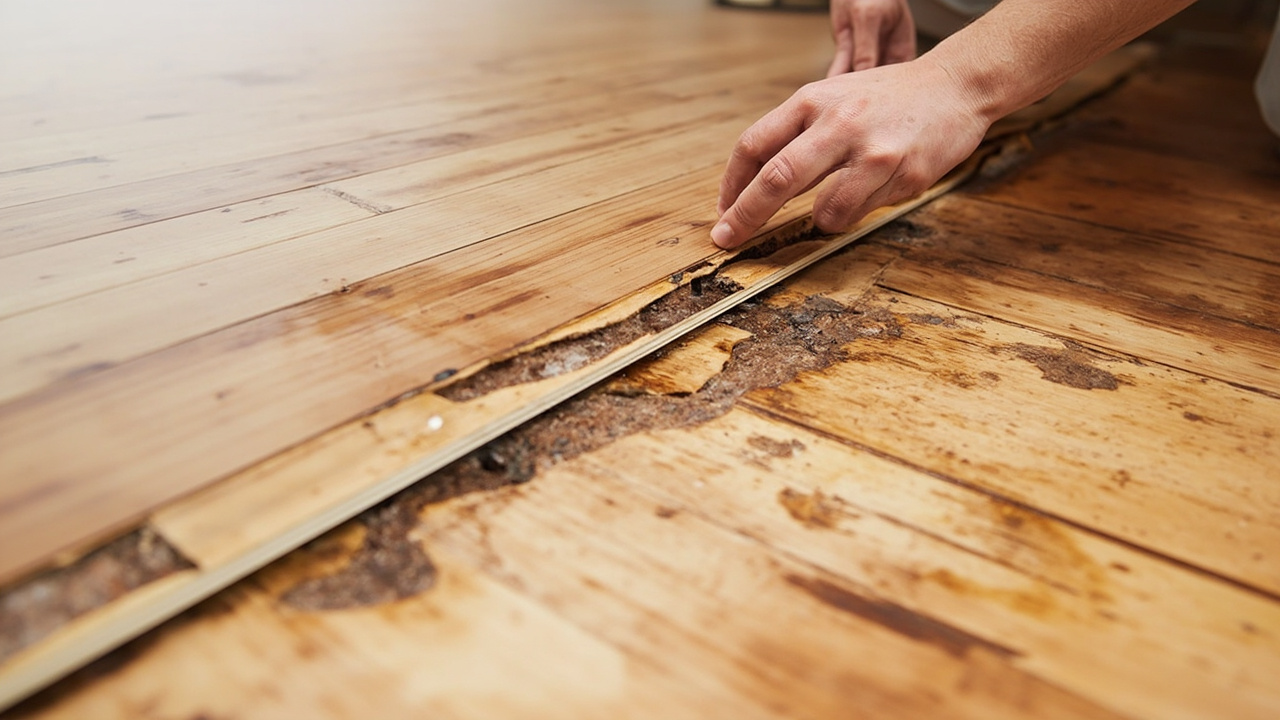
- Damp spots or soft areas underfoot. Engineered hardwood or tile that feels slightly spongy or uneven is a red flag. This usually means moisture has been building in the subfloor for weeks.
- Peeling adhesive or lifted flooring edges. Hydronic leaks release glycol solution mixed with water. This mixture attacks floor adhesives from below, causing tiles to pop or hardwood planks to cup and buckle.
- Unexplained increase in your Detroit Water and Sewerage Department bill. A consistent pressure drop forces your boiler to make-up water more frequently. That water has to come from somewhere.
- A faint hissing or gurgling sound in the floor. This is more common with higher-pressure leaks and is often mistaken for normal pipe expansion noise.
- A sweet or chemical odor near floor vents or baseboards. Glycol has a distinct smell. If you notice it, your hydronic system has breached its loop.
If you recognize two or more of these symptoms, stop treating this as a maintenance item. This is a water damage emergency that requires professional assessment today.
Technical Red Flags Your System Is Telling You
Beyond what you can see and smell, your heating system itself is broadcasting warning signals. You just need to know where to look.
Boiler Pressure Gauge Readings
A healthy closed-loop hydronic heating system operates between 12 and 15 PSI at rest. If your pressure gauge reads below 10 PSI consistently, or if you find yourself needing to manually add water to the system every few weeks, you have a leak somewhere in the loop. Many homeowners in Rochester Hills and Grosse Pointe have reported adding water monthly for a full heating season before someone finally checked the slab.
A pressure drop of even 2 to 3 PSI per week indicates significant fluid loss. Do not ignore this number.
The Circulation Pump Running Constantly
Your circulation pump should cycle on and off based on thermostat demand. If the pump runs without stopping, the system is trying to compensate for heat loss caused by escaping fluid. This also accelerates pump wear and can lead to a complete system failure on top of your water damage problem.
Boiler Short-Cycling or Locking Out
Modern boilers have safety sensors that detect low water conditions and abnormal pressure. Repeated lockouts or error codes on your boiler display are the system screaming for help. Do not simply reset the boiler and walk away.

Why Detroit Winters Are Especially Hard on Radiant Systems
Metro Detroit experiences some of the most punishing freeze-thaw cycles in the Midwest. Temperatures swing from single digits to the mid-40s within the same week during January and February. For PEX piping embedded in concrete slabs or beneath engineered subfloors, this thermal cycling is a long-term stress test.
PEX tubing is flexible and durable, but connection points at the manifold are vulnerable. Where PEX meets copper or brass fittings, different rates of thermal expansion create micro-stress at the joint. Over multiple seasons, that stress cracks the connection. This is not a defect. It is physics, and it happens in high-end construction throughout Troy, Bloomfield Township, and West Bloomfield.
Michigan’s clay-heavy soil compounds this problem further. When the ground freezes and thaws under a slab-on-grade foundation, the slab itself shifts slightly. Even a few millimeters of movement can stress tubing that has been in place for years. According to the Michigan Department of Environment, Great Lakes, and Energy, the state’s glacial clay soil is particularly prone to frost heave, making foundation movement a real seasonal concern for homes throughout Oakland County.
Copper manifolds are another common failure point. Corrosion accelerates in Metro Detroit’s water chemistry, and pinhole leaks at manifold connections are a frequent source of slow, silent slab leaks in luxury homes built with high-end hydronic systems.
| System Component | Common Failure Mode in Michigan | Average Time Before Symptoms Appear |
|---|---|---|
| PEX-to-Manifold Fittings | Micro-cracking from freeze-thaw stress | 3 to 7 heating seasons |
| Copper Manifold | Pinhole corrosion from water chemistry | 5 to 12 years |
| Embedded PEX Tubing | Slab movement causing abrasion leaks | 7 to 15 years |
| Loop Connections at Branch Points | Glycol degradation loosening compression fittings | 4 to 8 years |
The Real Cost of Waiting Even 48 Hours
Water damage from a radiant floor leak does not follow the same pattern as a burst pipe or roof failure. The water moves slowly, spreading outward and downward. It saturates the concrete, enters the subfloor assembly, and wicks up into wall framing through the sill plate.
Mold colonization begins within 24 to 48 hours on organic materials like wood framing, drywall paper, and flooring adhesives when conditions are right. The warm temperatures generated by the radiant system itself create the ideal environment for mold growth. A leak beneath a heated slab is essentially a mold incubator.
For homeowners in Troy and Birmingham with engineered hardwood or imported stone tile floors, the financial exposure is significant. Moisture trapped beneath these materials causes irreversible damage within days. If you are concerned about whether your floors can be salvaged, read our guide on how to save your hardwood floors after a significant water leak in Birmingham MI for a clear breakdown of what is recoverable and what is not.
Structural damage follows moisture. When subfloor OSB or plywood stays wet for more than a week, it begins to delaminate and lose structural integrity. Floor joists in basements below radiant-heated main floors are also at risk. At that point, you are no longer dealing with a heating repair. You are dealing with a structural remediation project.
Professional Leak Detection Methods That Do Not Wreck Your Floor
A common misconception is that finding a radiant floor leak means tearing up the entire floor. It does not. Professional leak detection has changed significantly, and experienced IICRC Certified restoration technicians use two primary methods to locate leaks non-invasively.
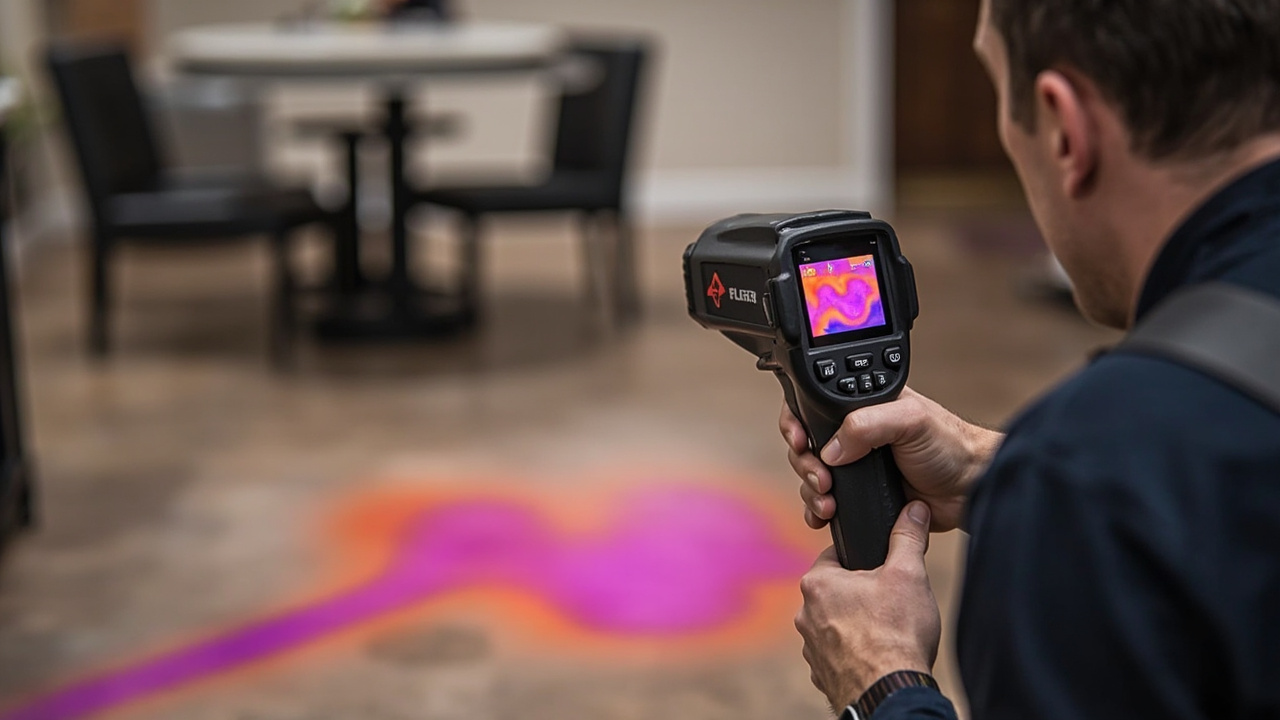
Thermal Imaging (FLIR Cameras)
Thermal imaging cameras detect temperature differentials on the floor surface. A leaking hydronic loop releases heat in a specific pattern that is distinctly different from normal floor temperatures. An experienced technician can identify the leak zone to within a few square feet without removing a single tile or board. This technology works best when the system has been running for at least 30 minutes before the scan.
The IICRC (Institute of Inspection Cleaning and Restoration Certification) sets the standards for moisture detection and drying protocol that qualified restoration companies follow. When evaluating contractors, ask specifically if they hold current IICRC certifications for water damage restoration.
Acoustic Leak Detection
Acoustic sensors amplify the sound of pressurized fluid escaping through a crack or pinhole in PEX tubing. Technicians press sensors directly against the floor surface at regular intervals to triangulate the exact leak location. This method is particularly effective in concrete slab installations common in Troy and Bloomfield Hills custom builds.
Together, these two methods allow a skilled team to locate a radiant floor leak with minimal demolition, which dramatically reduces repair costs and disruption to your home.
| Detection Method | Best For | Accuracy Range | Floor Disturbance |
|---|---|---|---|
| Thermal Imaging (FLIR) | Active hydronic systems, warm-to-touch floors | Within 2 to 4 square feet | None |
| Acoustic Leak Detection | Concrete slabs, higher-pressure leaks | Within 1 to 3 square feet | None |
| Pressure Testing | Confirming leak exists, estimating severity | Confirms loop, not location | None |
| Exploratory Demo (last resort) | When non-invasive methods are inconclusive | Exact location once opened | Significant |
What Happens After the Leak Is Found
Locating the leak is only the first step. The water damage restoration process that follows is just as critical as the plumbing repair itself.
After the hydronic system is shut down at the manifold and the leak is repaired by a licensed plumber, a water damage restoration team must assess and dry the affected area properly. This typically involves moisture mapping the entire impacted zone using calibrated moisture meters, followed by the placement of desiccant dehumidifiers and air movers designed for low-level drying beneath slabs and subflooring.
Depending on the extent of saturation, the structural drying process takes between three and seven days. Skipping or shortcutting this process is the number one reason mold appears weeks after a homeowner thought the problem was resolved. If you have questions about whether a DIY approach to mold is sufficient after water damage, read why bleach won’t fix your Ferndale basement mold and when to call a pro. The same principles apply to radiant leak aftermath.
Navigating Insurance for a Radiant Floor Leak Claim
Radiant floor leak claims are among the most contested in residential water damage. Insurance companies frequently dispute whether the damage qualifies as sudden and accidental (typically covered) versus long-term seepage or maintenance neglect (typically excluded).
Document everything before any repairs begin. Photographs, thermal imaging reports, moisture readings, and system pressure logs all support your claim. An IICRC Certified restoration company will generate the documentation your adjuster needs.
For a detailed walkthrough of how to handle the insurance process, read our guide on how to get your Detroit home insurance to actually pay for water restoration. You can also review the specifics of building a strong claim in our piece on filing a successful water damage insurance claim.
Emergency Steps to Take Right Now
If you are reading this because you think you have an active radiant floor leak, here is what to do immediately.
- Locate your manifold. In most Troy and Bloomfield builds, it is in a utility room, basement mechanical area, or closet near the boiler. It will have multiple loop ports with individual shutoff valves.
- Shut off the zone you suspect is leaking by closing the supply and return valves for that loop at the manifold. Do not shut off the entire boiler unless you are unsure which zone is affected.
- Note your boiler pressure gauge reading and take a photo of it.
- Photograph any visible floor damage, wet spots, or lifted flooring.
- Do not attempt to run a shop vac over the area or apply fans without professional guidance. Improper drying can drive moisture deeper into the slab or spread contamination.
- Call a water damage restoration company that has thermal imaging equipment and experience with slab leaks in Metro Detroit homes. Make sure they are IICRC Certified.
If the affected area includes carpeted rooms in adjacent spaces, the moisture may have already wicked into those zones. Our guide on deciding whether your wet carpet in Sterling Heights can be saved or needs to go will help you assess whether those materials are salvageable while you wait for a professional assessment.
Why Troy and Bloomfield Homes Are at Higher Risk Than Most
The density of radiant floor heating systems in Oakland County’s luxury housing stock is higher than almost anywhere else in Michigan. Custom builds in Bloomfield Hills, the Cranbrook corridor, and newer construction along Long Lake Road frequently feature full-home hydronic systems with multiple manifolds and zone controls. More system means more potential failure points.
These homes also tend to feature expensive, moisture-sensitive floor materials. Italian marble, wide-plank white oak, and large-format porcelain tile are all extremely vulnerable to subfloor moisture. The repair costs for these materials dwarf those of standard residential flooring, making early detection especially important.
A water damage event in a Troy luxury home is not just a plumbing problem. It is a coordinated restoration event involving leak detection specialists, licensed plumbers, IICRC Certified drying technicians, and specialty flooring contractors. The sooner all of those teams are mobilized, the better the outcome.
If you suspect a radiant floor heating leak in your home, call Ironwood Water Damage Restoration at (313) 307-6838. We serve Troy, Bloomfield Hills, Birmingham, Grosse Pointe, Royal Oak, and the surrounding Metro Detroit area with 24-hour emergency response and thermal imaging leak detection.
{
“@context”: “https://schema.org”,
“@type”: “BlogPosting”,
“headline”: “How Radiant Floor Heating Leaks Can Destroy Your Luxury Troy Home From the Inside Out”,
“description”: “Radiant floor heating leaks in Troy homes cause hidden water damage fast. Learn the warning signs, what Detroit winters do to PEX pipes, and when to call a pro.”,
“wordCount”: 2114,
“datePublished”: “2026-05-31T07:59:00.000Z”,
“dateModified”: “2026-05-31T07:59:00.000Z”,
“inLanguage”: “en-US”,
“mainEntityOfPage”: {
“@type”: “WebPage”,
“@id”: “https://ironwoodwaterdamagerestorationdetroit.com”
},
“publisher”: {
“@type”: “LocalBusiness”,
“name”: “Ironwood Water Damage Restoration Detroit”,
“url”: “https://ironwoodwaterdamagerestorationdetroit.com”
},
“author”: {
“@type”: “Organization”,
“name”: “Ironwood Water Damage Restoration Detroit”,
“url”: “https://ironwoodwaterdamagerestorationdetroit.com”
},
“image”: {
“@type”: “ImageObject”,
“url”: “https://ironwoodwaterdamagerestorationdetroit.com/wp-content/uploads/2026/03/how-radiant-floor-heating-leaks-can-destroy-your-l-1.jpg”
}
}
{
“@context”: “https://schema.org”,
“@type”: “LocalBusiness”,
“name”: “Ironwood Water Damage Restoration Detroit”,
“url”: “https://ironwoodwaterdamagerestorationdetroit.com”,
“address”: {
“@type”: “PostalAddress”,
“addressLocality”: “Detroit”
},
“areaServed”: {
“@type”: “City”,
“name”: “Detroit”
}
}
{
“@context”: “https://schema.org”,
“@type”: “BreadcrumbList”,
“itemListElement”: [
{
“@type”: “ListItem”,
“position”: 1,
“name”: “Home”,
“item”: “https://ironwoodwaterdamagerestorationdetroit.com”
},
{
“@type”: “ListItem”,
“position”: 2,
“name”: “Blog”,
“item”: “https://ironwoodwaterdamagerestorationdetroit.com/blog”
},
{
“@type”: “ListItem”,
“position”: 3,
“name”: “How Radiant Floor Heating Leaks Can Destroy Your Luxury Troy Home From the Inside Out”
}
]
}
{
“@context”: “https://schema.org”,
“@type”: “Service”,
“serviceType”: “Water Damage Restoration”,
“provider”: {
“@type”: “LocalBusiness”,
“name”: “Ironwood Water Damage Restoration Detroit”,
“url”: “https://ironwoodwaterdamagerestorationdetroit.com”
},
“areaServed”: {
“@type”: “City”,
“name”: “Detroit”
},
“description”: “Radiant floor heating leaks in Troy homes cause hidden water damage fast. Learn the warning signs, what Detroit winters do to PEX pipes, and when to call a pro.”
}