
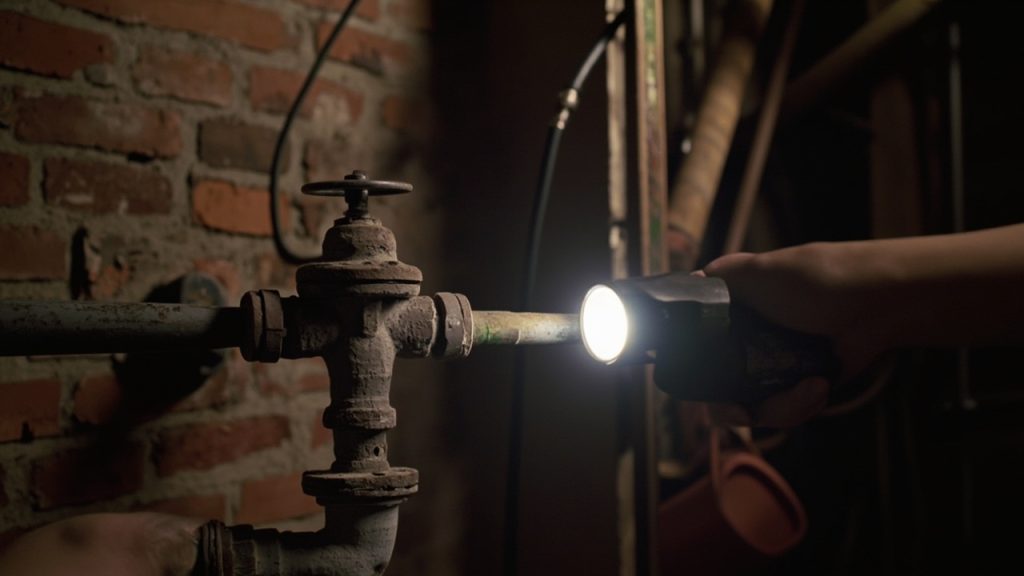
A shared water main leak in a Hamtramck duplex is one of the most frustrating property problems you can face. You are not sure whose pipe it is. You do not know who pays for the damage. And the water is still moving through your walls while you figure it out.
Hamtramck has one of the highest densities of pre-war duplexes in Wayne County. Many of these buildings were constructed before 1950, with shared plumbing stacks, single main shut-off valves, and supply lines that run directly through adjoining walls. When a leak starts in shared infrastructure, responsibility gets complicated fast.
This guide walks you through every common scenario, the relevant Michigan law, and what steps to take right now to protect your property and your finances.
First Step Before Anything Else — Shut Off the Water
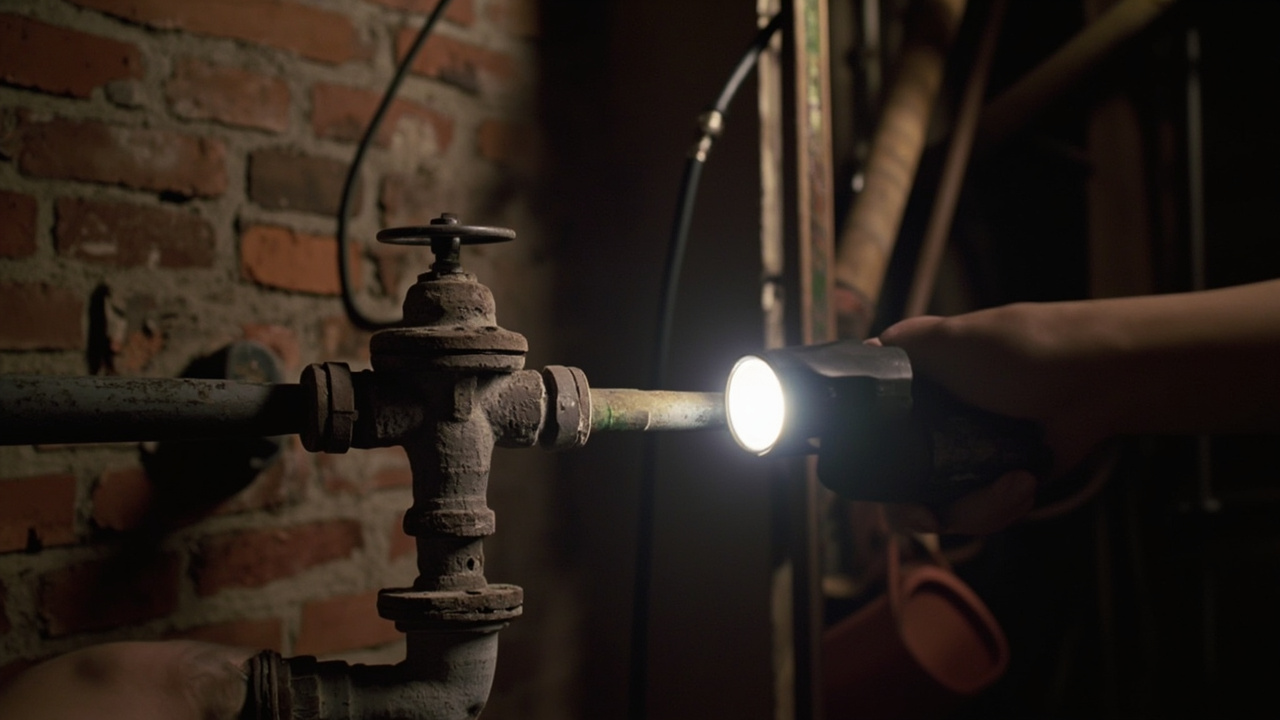
Before you call your landlord, your neighbor, your insurance company, or an attorney, find the main shut-off valve and close it. In most older Hamtramck duplexes, this valve sits in the basement near the front of the building, close to where the service line enters from the street.
If the valve is shared between both units, you or the building owner must shut it off for the whole structure. Water moving through a leak causes exponentially more damage with every hour it runs. Drywall saturates in under two hours. Subfloor materials begin warping within four to six hours. Mold colonization can begin within 24 to 48 hours under the right temperature conditions.
Stop the source. Then start documenting.
Determining Your Ownership Structure Changes Everything
Hamtramck duplexes fall into two main ownership categories, and the liability rules are different for each.
Single-Owner Rental Duplexes
One landlord owns both units and rents to tenants. In this case, Michigan Compiled Law 554.139 applies directly. Under this statute, a landlord must keep rental property fit for its intended use and maintain it in reasonable repair. This includes plumbing infrastructure. If a shared water main, supply line, or plumbing stack fails and causes damage to a tenant’s unit, the landlord is responsible for both the repair and the resulting damage.
There is one important exception. If a tenant caused the failure through negligence — say, leaving a hose bib open during a hard freeze or improperly installing a washing machine connection — the landlord may argue comparative fault. Michigan courts use a comparative negligence standard, which means fault can be split proportionally.
Two-Owner Duplexes (Side-by-Side or Upper-Lower)
This is where duplex water leak responsibility gets genuinely difficult. If you and your neighbor each own one unit of a two-family duplex, and you share a main water line, neither of you has clear automatic liability when that shared line fails. The ownership documents — the deed, any recorded easements, or a condominium master deed if the property was ever converted — control who is responsible for maintaining what.
Many Wayne County duplexes have no formal shared maintenance agreement on record. That leaves both owners in a disputed gray area, and the outcome often comes down to who can prove the source of the leak and whether negligence was involved.
The Source of the Leak Rule in Michigan
Michigan courts have consistently applied a straightforward principle in neighbor-to-neighbor water damage cases. The party whose property or negligence caused the leak is generally liable for resulting damages. This is called the “source of the leak” rule, and it has direct implications for how you document and report your situation.
There are two categories that matter most.
Sudden Accidental Discharge
If a pipe simply fails without any warning and without any negligence on the property owner’s part, this is typically treated as an accidental loss. Homeowners insurance policies cover this under the dwelling protection section. This is the most common scenario in aging Hamtramck housing stock, where galvanized steel pipes corrode from the inside over decades and fail without visible exterior warning signs.
Negligence-Based Leaks
If a property owner knew about a leak and failed to repair it within a reasonable timeframe, that crosses into negligence territory. Under Michigan law, “reasonable timeframe” for repairs is not precisely defined in statute, but local ordinances and Detroit Building Safety Engineering and Environmental Department (BSEED) enforcement guidelines provide useful benchmarks. Active water intrusion affecting habitability is treated as an urgent repair condition, generally requiring action within 24 to 72 hours of notice.
If you gave your neighbor or landlord written notice of a visible leak, and they delayed repairs, that documentation becomes critical evidence.

Scenario Breakdown for Common Hamtramck Duplex Situations
| Scenario | Who Owns the Pipe | Likely Responsible Party | Applicable Michigan Law |
|---|---|---|---|
| Shared main line bursts, no negligence | Both owners equally | Both parties share repair cost equally | Deed easement terms, MCL 554.139 if rental |
| Upstairs unit pipe leaks into downstairs unit | Upstairs owner or landlord | Upstairs unit owner or landlord | Source of leak rule, MCL 554.139 |
| Tenant causes pipe failure through negligence | Landlord owns pipe | Tenant (comparative fault applies) | MCL 554.139, Michigan negligence statute |
| Shared plumbing stack fails at joint in wall | Unclear or shared | Both parties dispute; insurance subrogation likely | Wayne County court precedent, deed review |
| DWSD service line leak before the meter | City of Detroit / DWSD | DWSD responsible up to the meter | DWSD service line policy |
Detroit-Specific Considerations and DWSD Guidelines
The Detroit Water and Sewerage Department (DWSD) draws a hard line at the water meter. Everything from the street main to your meter is the city’s responsibility. Everything past the meter — including the service line inside your property — falls on the property owner.
This matters for Hamtramck duplexes because many older properties have a single meter serving both units. If your shared service line fails between the meter and the building’s main shut-off, both owners carry joint responsibility for that repair, regardless of which unit the physical leak appears in.
Hamtramck properties also fall under city code enforcement. The Detroit BSEED has jurisdiction over structural and plumbing code violations. If a neighbor’s unrepaired leak is affecting your unit, you can file a complaint with BSEED, which creates an official record of the condition and the date notice was given. That record is valuable if you later need to pursue a claim.
Many older Hamtramck and Poletown-area duplexes also have clay-tile sewer laterals that have been compromised by decades of freeze-thaw cycles. A failing lateral can back up into the basement, which creates a completely separate liability question around sewer backup coverage. Standard homeowners policies do not cover sewer backup unless you have added that rider.
How Insurance and Subrogation Work in These Situations
When your insurance company pays out your claim for water damage caused by a neighbor’s pipe, they do not simply absorb that cost. They pursue the responsible party through subrogation. That means your insurer steps into your shoes legally and goes after the at-fault neighbor’s insurance to recover what they paid you.
This process plays out regularly in Wayne County, and the key factor is always documentation. Your adjuster needs to establish the source, the timeline, and any evidence of prior notice. That is why your first job after shutting off the water is to document everything before any mitigation work begins.
For more detail on getting your insurer to actually pay out what you are owed, read our guide on how to get your Detroit home insurance to actually pay for water restoration.
If you are a Hamtramck landlord with units in buildings near Caniff Avenue or Jos Campau, filing a claim correctly from the start makes the difference between full coverage and a partial denial. See the detailed breakdown in our guide on filing a successful water damage insurance claim for critical documentation steps.
Evidence Documentation Checklist Before Mitigation Starts
Restoration work can legally begin immediately. But before any drying equipment is placed or any material is removed, capture this evidence.
- Photograph all visible water, moisture staining, and structural damage from multiple angles
- Record a video walkthrough of both affected units if possible
- Document the location of the source pipe or connection point with close-up photos
- Photograph the main shut-off valve and its condition
- Note the date and time of discovery in writing, with a timestamp if possible
- Save any text messages, emails, or voicemails related to prior complaints about the leak
- Write down the names of any witnesses, including other tenants or neighbors
- Request written confirmation from a plumber identifying the source and cause of failure
- File a BSEED complaint if a landlord or neighbor has refused to address the issue
This evidence package is what separates a fully settled claim from a disputed one that drags on for months.

What the Water Damage Mitigation Timeline Actually Looks Like
| Timeframe After Discovery | What Happens to the Property | Action Required |
|---|---|---|
| 0 to 1 hour | Active water movement, surface saturation | Shut off main, document, call restoration company |
| 1 to 4 hours | Drywall begins full saturation, flooring absorbs moisture | Professional moisture mapping, extraction begins |
| 4 to 24 hours | Subfloor swelling, wall cavity moisture migrates | Structural drying equipment placed, HEPA air filtration |
| 24 to 48 hours | Mold spore activation risk increases significantly | Daily moisture readings, material removal assessment |
| 48 to 72 hours | Active mold growth possible in hidden cavities | Aggressive drying or controlled demolition of affected materials |
| 72+ hours | Structural compromise, confirmed mold colonization | Remediation protocols, potential Category 3 reclassification |
One note on mold. Hamtramck’s older housing stock frequently has basements with minimal ventilation and existing moisture conditions. A water main leak in this environment does not take 48 hours to trigger mold growth. It can happen faster. If you see visible microbial growth after a water event, do not attempt cleanup with bleach. Surface treatment with household bleach does not address growth inside wall cavities or beneath flooring materials. Read why that approach fails in our article on why bleach won’t fix basement mold.
Protecting Floors and Interior Finishes While the Dispute Gets Sorted
The liability dispute between you and your neighbor or landlord can take weeks or months to resolve. Your floors and walls cannot wait that long. Water damage to hardwood flooring becomes permanent cupping and warping within days if not addressed by a professional with industrial drying equipment and moisture meters. Our guide on saving hardwood floors after a water leak covers the exact intervention window and drying methods that give the floor a chance at restoration versus replacement.
Similarly, carpet in affected rooms requires an immediate evaluation. Water-saturated carpet can sometimes be extracted, dried, and saved within the first 24 hours. After that window, delamination and microbial contamination make replacement the only safe option. The decision process is explained in detail in our resource on whether wet carpet can be saved or needs replacement.
When to Involve a Michigan Property Attorney
Not every shared water main leak requires legal action. Many resolve through insurance claims and direct communication. But you should contact a Michigan property attorney when any of these conditions apply.
Your neighbor refuses to acknowledge responsibility and their insurer denies your subrogation claim. The damage amount is large enough that a disputed settlement could cost you significantly out of pocket. You have documented prior written notice that was ignored, which shifts the situation from accident into negligence. Or the ownership documents are unclear about shared plumbing maintenance obligations, and both parties need a legal interpretation of the deed or recorded easements.
Wayne County District Court handles smaller property damage disputes. Circuit Court handles larger amounts. An attorney who handles Michigan property and landlord-tenant matters can tell you in a single consultation whether you have a viable claim worth pursuing and what your realistic recovery looks like.
Managing the Relationship with Your Neighbor During the Process
In a duplex situation, you likely share walls, a driveway, and potentially a yard with the person who may be on the other side of this dispute. Keep every communication in writing from this point forward. Do not threaten, do not speculate about fault out loud, and do not allow their contractor or their insurance adjuster to inspect your unit without your own documentation in place first.
Request that any agreements about repair costs, timelines, or access be confirmed by text or email. If a verbal agreement is made, send a follow-up message summarizing what was agreed to and ask them to confirm. These records matter significantly in any later dispute resolution.
Getting Professional Water Mitigation Started Immediately
The liability question and the mitigation work are two separate tracks, and they run at the same time. You do not need to resolve who is at fault before beginning professional drying and water extraction. Your insurance policy covers your immediate mitigation costs, and subrogation handles the rest later.
In Hamtramck and across the greater Detroit metro area, water damage that is addressed within the first few hours has a substantially higher rate of material preservation and a lower total claim cost. The building’s age is already working against you. The plumbing is aging. The wall cavities may already have baseline moisture levels above normal. Waiting for clarity on responsibility while water spreads through your structure is the most expensive decision you can make.
If you have a shared water main leak in your duplex right now, call a certified water mitigation company immediately. Document everything before work begins, notify your insurance carrier, and get the source identified by a licensed plumber in writing. Those three steps, done in the first two hours, set up every piece of the process that follows.
Ironwood Water Damage Restoration serves Hamtramck and the surrounding Detroit metro area 24 hours a day, seven days a week. If you need a rapid response team to assess your duplex water damage, extract standing water, and begin the structural drying process, call us now. We work directly with insurance adjusters and can document the damage on-site to support your claim from the moment we arrive.
{
“@context”: “https://schema.org”,
“@type”: “BlogPosting”,
“headline”: “How to Handle Shared Water Main Leaks in Your Hamtramck Multi-Family Duplex”,
“description”: “Shared water main leak in your Hamtramck duplex? Learn who’s liable, what Michigan law says, and exactly what to do before damage spreads.”,
“wordCount”: 2313,
“datePublished”: “2026-05-20T13:52:00.000Z”,
“dateModified”: “2026-05-20T13:52:00.000Z”,
“inLanguage”: “en-US”,
“mainEntityOfPage”: {
“@type”: “WebPage”,
“@id”: “https://ironwoodwaterdamagerestorationdetroit.com”
},
“publisher”: {
“@type”: “LocalBusiness”,
“name”: “Ironwood Water Damage Restoration Detroit”,
“url”: “https://ironwoodwaterdamagerestorationdetroit.com”
},
“author”: {
“@type”: “Organization”,
“name”: “Ironwood Water Damage Restoration Detroit”,
“url”: “https://ironwoodwaterdamagerestorationdetroit.com”
},
“image”: {
“@type”: “ImageObject”,
“url”: “https://ironwoodwaterdamagerestorationdetroit.com/wp-content/uploads/2026/03/managing-shared-water-main-leaks-in-your-multi-fam-1.jpg”
}
}
{
“@context”: “https://schema.org”,
“@type”: “LocalBusiness”,
“name”: “Ironwood Water Damage Restoration Detroit”,
“url”: “https://ironwoodwaterdamagerestorationdetroit.com”,
“address”: {
“@type”: “PostalAddress”,
“addressLocality”: “Detroit”
},
“areaServed”: {
“@type”: “City”,
“name”: “Detroit”
}
}
{
“@context”: “https://schema.org”,
“@type”: “BreadcrumbList”,
“itemListElement”: [
{
“@type”: “ListItem”,
“position”: 1,
“name”: “Home”,
“item”: “https://ironwoodwaterdamagerestorationdetroit.com”
},
{
“@type”: “ListItem”,
“position”: 2,
“name”: “Blog”,
“item”: “https://ironwoodwaterdamagerestorationdetroit.com/blog”
},
{
“@type”: “ListItem”,
“position”: 3,
“name”: “How to Handle Shared Water Main Leaks in Your Hamtramck Multi-Family Duplex”
}
]
}
{
“@context”: “https://schema.org”,
“@type”: “Service”,
“serviceType”: “Water Damage Restoration”,
“provider”: {
“@type”: “LocalBusiness”,
“name”: “Ironwood Water Damage Restoration Detroit”,
“url”: “https://ironwoodwaterdamagerestorationdetroit.com”
},
“areaServed”: {
“@type”: “City”,
“name”: “Detroit”
},
“description”: “Shared water main leak in your Hamtramck duplex? Learn who’s liable, what Michigan law says, and exactly what to do before damage spreads.”
}