
When the Grid Goes Down, Your Basement Is the First to Pay for It
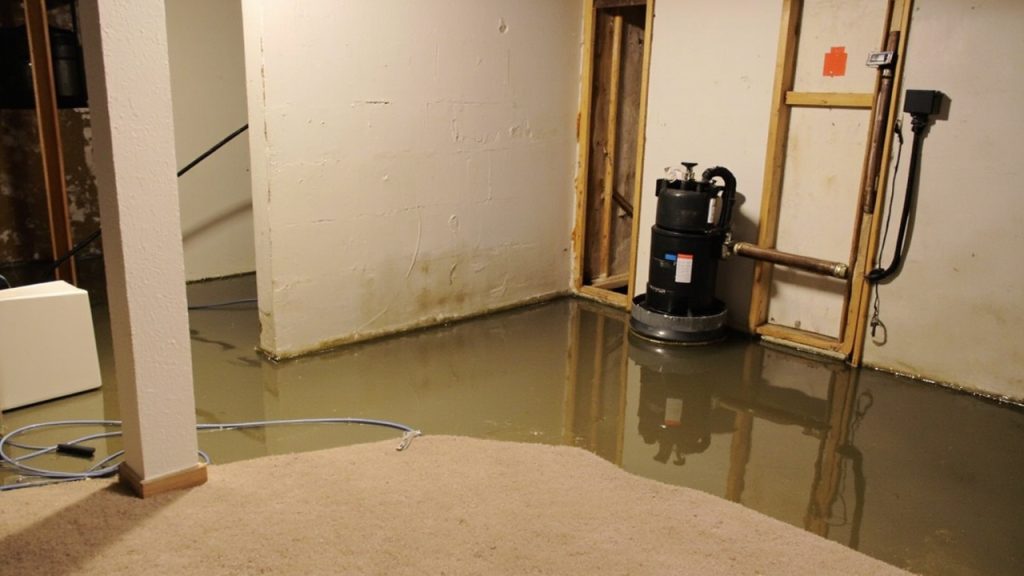
The power cuts out. Rain is hammering the roof. And somewhere in your finished Canton basement, you hear it — water. Not a drip. The sound of water moving where it should not be.
This is not a rare scenario in Wayne County. When a strong storm rolls through the western Detroit suburbs, DTE Energy outages can knock out power for hours or even days. And when your primary sump pump goes silent, hydrostatic pressure from saturated soil does not wait for the grid to come back online.
If you have a finished basement — drywall, carpet, a bar, a home office — you are looking at a situation that can escalate from manageable to catastrophic in under two hours.

Why Standard Sump Pumps Fail During a Storm Outage
Most Canton homes use a standard 120-volt AC submersible sump pump. It does one job well, but only when it has power. The moment the circuit goes dead, the pump stops. The pit fills. Water backs up under your slab or through your foundation wall.
Michigan’s clay-heavy soil compounds this problem fast. Clay does not drain. It holds water like a sponge pressed against your foundation. During a prolonged storm, hydrostatic pressure builds against your basement walls and floor. That pressure does not care that the power is out. It will find every crack, every cold joint, every tired sump pit seal.
Homes built in Canton’s newer subdivisions in areas like Cherry Hill Village or near Ford Road often have deeper basements and higher finished ceilings, which means more to lose and more surface area for water to damage before anyone notices.
The Physics of Hydrostatic Pressure in Southeast Michigan Soils
Hydrostatic pressure is the force that saturated groundwater exerts against your foundation. The Michigan Department of Environment, Great Lakes, and Energy has documented how southeast Michigan’s clay-dominant soils retain moisture at rates that dramatically increase basement water intrusion risk during sustained storm events.
Even a modest rise in the water table — two to three feet during a heavy rain event — can generate enough pressure to push water through a hairline crack in a poured concrete foundation. Once your pump is offline, that pressure has nowhere to go except inward.
The First 30 Minutes Matter Most
If you are reading this mid-storm, here is the order of operations. Do not skip steps.
- Do not enter the basement if you see standing water and are unsure whether your electrical panel is in the flood zone. Standing water and live circuits are a fatal combination. Locate your main breaker first — if it is upstairs or in the garage, cut the basement circuits before going down.
- Shut off the circuit breakers feeding any finished basement outlets, lights, and appliances. If your panel is in the basement and you cannot reach it safely, call your utility and wait for a safety shutoff.
- Check your sump pit. If water is at or above the pit rim, you need a backup pump deployed immediately.
- Move anything off the floor that can be moved. Furniture on legs buys you time. Carpet and drywall do not.
- Document everything with your phone before touching a single item. Photos and video are your insurance claim.
Short-Term Flood Defense Without Utility Power
You have options even without grid power. None of them replace a professional extraction team, but they can slow the damage while you wait for help.
Battery Backup Sump Systems
If you had a battery backup system installed before the storm, this is its moment. Units from brands like Wayne or Basement Watchdog are designed to activate the moment AC power drops. A properly sized and recently charged backup can run for six to twelve hours depending on how aggressively it is cycling. Check the indicator light to confirm it is actually running.
Running a Generator Safely for Sump Pump Power
A portable generator can power your primary sump pump, but there are rules that keep people alive. Never run a generator inside your home, garage, or any enclosed space. Carbon monoxide poisoning kills more people during and after storms than the flooding itself. Keep the unit at least twenty feet from any door or window, use a properly rated outdoor extension cord, and do not back-feed it into your home’s electrical system without a licensed electrician-installed transfer switch.
Manual Submersible Pumps
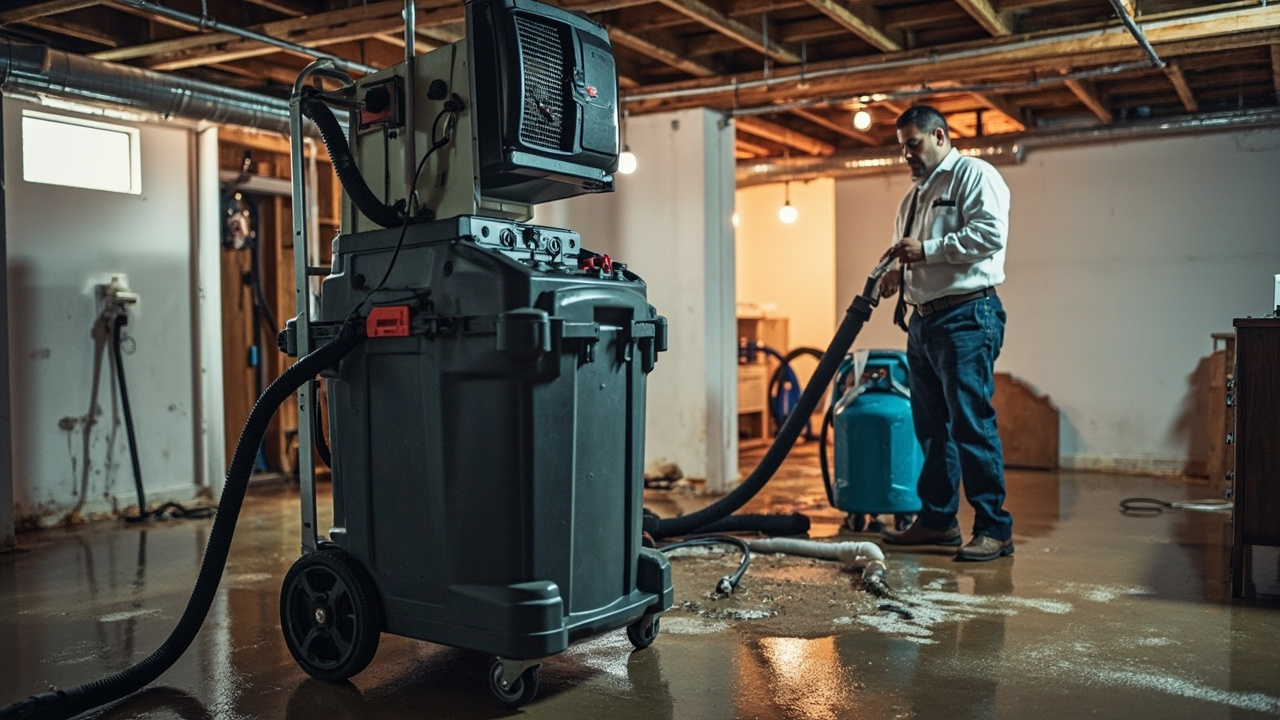
A gas-powered or hand-operated submersible pump can move significant water volume when power is out. If you have a shop vac with a pump-out mode, that works for minor accumulation. For anything over an inch of standing water across a finished basement floor, you need a high-volume pump — the kind a restoration crew brings on a truck.
Understanding the Water You Are Dealing With
Not all basement flood water is the same. The category of water determines how aggressively you need to respond and what materials can be saved.
| Water Category | Source | Health Risk | Typical Action |
|---|---|---|---|
| Category 1 (Clean) | Groundwater infiltration, rain seepage | Low | Extract, dry, monitor for mold |
| Category 2 (Gray) | Sump pit overflow with prior use, appliance discharge | Moderate | Extract, treat, remove porous materials |
| Category 3 (Black) | Sewer backup, combined sewer overflow | High (biohazard) | Full protective equipment, demolition likely required |
Detroit and many of its western suburbs including Canton are tied to the Detroit Water and Sewerage Department’s combined sewer system. During heavy rain events, that system can surcharge, pushing sewage backward through floor drains and ejector pits. If you smell sewage or see dark, cloudy water, you are dealing with Category 3 black water. Do not touch it without protection. This requires professional remediation.
Knowing the water category also matters for your insurance claim. Michigan homeowners policies treat sewer backup and overland flooding as separate covered perils — and many homeowners do not realize they need a specific rider for each. More on that below.
What a Professional Water Extraction and Drying Process Actually Looks Like
Once water intrusion stops or slows, the clock on mold growth starts immediately. Mold colonization in a warm, wet basement can begin in as little as 24 to 48 hours. A finished basement with drywall, insulation, and carpet creates an ideal growth environment.
A restoration team certified by the IICRC (Institute of Inspection Cleaning and Restoration Certification) follows a specific protocol that goes well beyond mopping up water.
Step One: Water Extraction
Truck-mounted or portable extraction units pull standing water from floors, carpet padding, and wall cavities at a volume that no consumer pump can match. For a typical Canton finished basement — around 800 to 1,200 square feet — a full extraction can take one to three hours depending on depth and materials.
Step Two: Material Assessment and Controlled Demolition
Wet drywall is a mold farm. Saturated carpet padding almost never fully dries. A restoration technician takes moisture readings with a calibrated moisture meter, not just a visual check. Materials that read above acceptable thresholds get removed. This is not aggressive — it is the only way to prevent a mold remediation job six weeks later that costs several times more.
If you want to understand what happens when mold gets a foothold in finished drywall, read about why bleach won’t fix basement mold and when professional remediation becomes necessary.
Step Three: Structural Drying
Industrial dehumidifiers and air movers work together to pull moisture from framing, subfloor, and concrete. These are not store-rental units. Commercial LGR (low-grain refrigerant) dehumidifiers can remove gallons of water per day from the air and surrounding materials. Depending on the extent of the saturation, drying can take three to seven days with daily moisture monitoring.
Step Four: Antimicrobial Treatment
After drying, affected surfaces receive an EPA-registered antimicrobial treatment to suppress any residual mold spores before reconstruction begins. Skipping this step is how basements get re-remediated six months later.
How Long Each Phase Takes (And What to Expect)
| Phase | Typical Timeframe | What Happens |
|---|---|---|
| Emergency Extraction | 2 to 6 hours on-site | Water removed, safety assessment, equipment staged |
| Material Removal (demo) | 4 to 8 hours | Wet drywall, insulation, carpet padding removed and bagged |
| Structural Drying | 3 to 7 days | Equipment runs continuously, daily readings taken |
| Antimicrobial Treatment | Half day after drying complete | Surfaces treated and dried before reconstruction |
| Reconstruction | 1 to 3 weeks | Drywall, flooring, paint restored to pre-loss condition |

Documenting the Damage for Your Michigan Insurance Claim
Michigan homeowners insurance claims for basement flooding have specific nuances that trip up a lot of Canton homeowners. Your standard policy covers sudden and accidental discharge but may exclude groundwater intrusion, sewer backup, or surface water flooding unless you purchased the right endorsements.
Here is what you need to document before anything gets moved or repaired.
- Video walkthrough of all affected areas, including standing water depth markers
- Photos of the sump pit showing pump position and water level
- Screenshot or printout of the DTE Energy outage map showing your service address was offline during the event
- Photos of any visible entry points where water came in
- Serial numbers and model numbers of any damaged appliances or mechanical equipment
- A written timeline of when you first noticed water and what steps you took
The difference between a sewer backup claim and an overland flooding claim can determine whether you receive any payout at all. Read more about how to get your Detroit home insurance to actually pay for water restoration before you file.
For homeowners in Corktown or the greater Detroit area dealing with similar documentation issues, the process for filing a successful water damage insurance claim walks through the specific steps that get claims approved rather than denied.
Protecting Your Finished Floors and Soft Goods
Two material categories take the most abuse in a basement flood and require immediate decisions.
Hardwood Flooring
If you have hardwood floors in a finished basement, the window for saving them is narrow. Cupping begins within hours of saturation. The faster water gets extracted and drying begins, the better the odds. But basement hardwood that sits wet for more than 24 to 48 hours almost always requires full replacement. For context on what the drying process looks like for wood flooring, see how to save hardwood floors after a water leak.
Carpet and Padding
Basement carpet is almost never worth saving after a Category 2 or 3 flood event. The padding underneath absorbs and holds water that cannot be extracted without full removal, and it becomes a mold substrate within days. Category 1 clean water events on carpet within the first 24 hours offer better odds, but it depends on what the padding is made of. If you are on the fence, read through how to decide whether wet carpet can be saved or needs to go.
What to Install Before the Next Storm Season
Canton’s storm season brings serious weather. Preventing a repeat means adding redundancy to your water management system.
A battery backup sump system is the single best upgrade for a finished basement. Pair it with a water alarm in the sump pit and you get advance warning before the pit overflows. For homes with older, cracked foundation walls, interior drain tile systems tied to a sealed sump pit provide far better protection than surface-level sealants alone.
A whole-home transfer switch for a standby generator is a longer-term investment that pays back fast in a neighborhood with frequent DTE outages. It automatically switches your home’s critical circuits — including the sump pump — to generator power within seconds of a grid outage, without any manual action required during a storm.
When to Call for Emergency Water Damage Help in the Canton and Detroit Area
Call a restoration team immediately if any of the following are true.
- Water depth is more than one inch across a finished floor
- You smell sewage or see discolored water
- Water has been standing for more than four hours
- Any finished wall materials are visibly wet from the floor up
- Your HVAC equipment, water heater, or electrical panel is submerged or wet
A 24-hour emergency response team has the extraction equipment, moisture meters, and IICRC-trained technicians to stop secondary damage before it compounds. Waiting until morning to call because the storm is still going is one of the most expensive decisions Canton homeowners make. The damage does not pause while you wait.
If you are in Canton, Dearborn, Westland, Livonia, or anywhere across the Detroit metro and your finished basement is taking on water right now, call for emergency water extraction immediately. Ironwood Water Damage Restoration serves the greater Detroit area around the clock and can deploy to your home the same day.
{
“@context”: “https://schema.org”,
“@type”: “BlogPosting”,
“headline”: “How to Keep Your Finished Basement in Canton Dry When the Power Goes Out”,
“description”: “Canton homeowner? Learn what to do when a power outage kills your sump pump and your finished basement starts flooding. Real steps, real solutions.”,
“wordCount”: 2107,
“datePublished”: “2026-07-17T10:47:00.000Z”,
“dateModified”: “2026-07-17T10:47:00.000Z”,
“inLanguage”: “en-US”,
“mainEntityOfPage”: {
“@type”: “WebPage”,
“@id”: “https://ironwoodwaterdamagerestorationdetroit.com”
},
“publisher”: {
“@type”: “LocalBusiness”,
“name”: “Ironwood Water Damage Restoration Detroit”,
“url”: “https://ironwoodwaterdamagerestorationdetroit.com”
},
“author”: {
“@type”: “Organization”,
“name”: “Ironwood Water Damage Restoration Detroit”,
“url”: “https://ironwoodwaterdamagerestorationdetroit.com”
},
“image”: {
“@type”: “ImageObject”,
“url”: “https://ironwoodwaterdamagerestorationdetroit.com/wp-content/uploads/2026/03/keeping-your-finished-basement-in-canton-dry-durin-1.jpg”
}
}
{
“@context”: “https://schema.org”,
“@type”: “LocalBusiness”,
“name”: “Ironwood Water Damage Restoration Detroit”,
“url”: “https://ironwoodwaterdamagerestorationdetroit.com”,
“address”: {
“@type”: “PostalAddress”,
“addressLocality”: “Detroit”
},
“areaServed”: {
“@type”: “City”,
“name”: “Detroit”
}
}
{
“@context”: “https://schema.org”,
“@type”: “BreadcrumbList”,
“itemListElement”: [
{
“@type”: “ListItem”,
“position”: 1,
“name”: “Home”,
“item”: “https://ironwoodwaterdamagerestorationdetroit.com”
},
{
“@type”: “ListItem”,
“position”: 2,
“name”: “Blog”,
“item”: “https://ironwoodwaterdamagerestorationdetroit.com/blog”
},
{
“@type”: “ListItem”,
“position”: 3,
“name”: “How to Keep Your Finished Basement in Canton Dry When the Power Goes Out”
}
]
}
{
“@context”: “https://schema.org”,
“@type”: “Service”,
“serviceType”: “Water Damage Restoration”,
“provider”: {
“@type”: “LocalBusiness”,
“name”: “Ironwood Water Damage Restoration Detroit”,
“url”: “https://ironwoodwaterdamagerestorationdetroit.com”
},
“areaServed”: {
“@type”: “City”,
“name”: “Detroit”
},
“description”: “Canton homeowner? Learn what to do when a power outage kills your sump pump and your finished basement starts flooding. Real steps, real solutions.”
}