
A Sink Overflow Can Cost You Your Entire Deposit If You Handle It Wrong
Your bathroom sink ran over while you were asleep. Or maybe the kitchen faucet clogged and you didn’t notice until water was soaking into the cabinet below. Either way, you’re now staring at wet floors, swollen baseboards, and a growing knot in your stomach about what your landlord is going to say when move-out time comes.
In Midtown Detroit, where renters occupy everything from converted lofts near Wayne State to older brick walk-ups on Canfield and Cass, water damage in apartments is one of the most common causes of security deposit disputes. The good news is that acting fast and documenting correctly puts you in a strong position. The bad news is that most renters wait too long, wipe things down with a towel, and assume the problem is gone.
It is not gone. Here is what you need to do.

The First 30 Minutes Are the Most Important
Water damage is not a slow-moving problem. Moisture wicks into drywall, subfloor, and cabinet boxes within minutes. Mold growth can begin within 24 to 48 hours under the right conditions. In Detroit’s humid summer months, that window gets even shorter.
Do these things immediately, in this order.
- Shut off the water supply. Under every sink is a shutoff valve. Turn it clockwise until it stops. If the valve is seized or broken, go to your building’s main shutoff. Call your building manager at the same time.
- Kill the power to any nearby outlets. Water and electricity are a lethal combination. If the overflow soaked a wall with an outlet or the floor near an appliance, do not touch anything until the breaker for that area is off.
- Take video before you touch anything. Walk the entire affected area with your phone. Get close-up footage of standing water, saturated cabinets, warped flooring, and any wet walls. This video is your legal protection.
- Notify your landlord in writing, right now. Send a text or email with the time, what happened, and that you are documenting the damage. The timestamp matters if this becomes a deposit dispute later.
- Blot up standing surface water. Use old towels or a mop to remove pooled water from the floor surface only. Do not disturb walls, cabinets, or anything structural. You want a restoration professional to assess those with a moisture meter before anything is moved or dried.
Why a Sink Overflow Is More Serious Than It Looks
A sink overflow in an apartment is not the same as spilling water on your kitchen floor at home. Apartment construction creates hidden pathways for water to travel. In a Midtown high-rise or a vintage Detroit brick building, water from your unit can seep through the subfloor, travel along joists, and appear in the unit below you. This is called inter-floor seepage, and it is one of the most complex problems in multi-family water damage restoration.
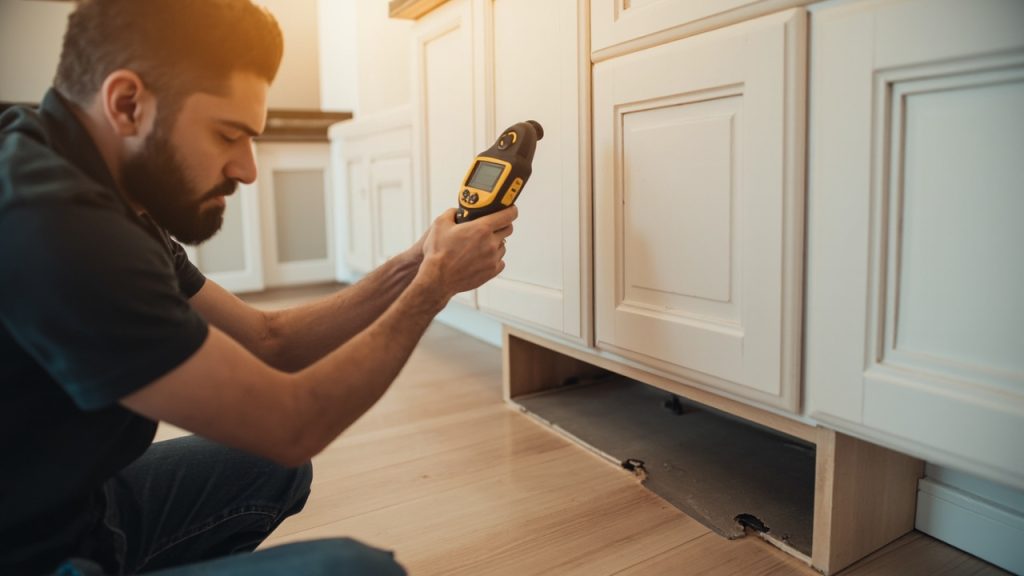
When water gets into the subfloor layer, the wood swells and delaminates. By the time the surface looks dry, the structural layer underneath can be holding significant moisture. A restoration technician uses a non-invasive moisture meter to read the actual moisture content inside walls and floors, not just the surface. Readings above 16% in wood materials typically indicate active moisture intrusion that needs professional drying equipment.
The water category matters too. According to the IICRC (Institute of Inspection Cleaning and Restoration Certification), water is classified into three categories based on contamination level. A clean water sink overflow is typically Category 1. But if the overflow sits for hours, or if it picks up soap scum, food debris, or backing up from a drain, it can escalate to Category 2 grey water. That changes the sanitization requirements significantly.
| Water Category | Source | Health Risk | Required Treatment |
|---|---|---|---|
| Category 1 (Clean) | Clean water supply line, fresh overflow | Low | Extraction, structural drying, dehumidification |
| Category 2 (Grey) | Sink with debris, slow drain backup, dishwasher | Moderate | Extraction, antimicrobial treatment, drying, air scrubbing |
| Category 3 (Black) | Sewage, toilet overflow, floodwater | High | Full remediation, material removal, sanitization |
What Professional Apartment Sink Overflow Cleanup Actually Looks Like
When a restoration crew arrives at your Midtown apartment, they are not there to mop your floor and leave. A proper professional response follows a defined process based on the science of psychrometry, which is the relationship between heat, humidity, and airflow that determines how fast structural materials dry.
Here is what that process looks like from start to finish.
Step 1 – Moisture Assessment
Technicians use penetrating and non-penetrating moisture meters to map the affected area. They check walls, cabinets, floor layers, and potentially the ceiling of the unit below. This creates a documented moisture baseline that is critical for your records and for any insurance claim.
Step 2 – Water Extraction
Industrial wet-vac extractors pull water from flooring surfaces. For hardwood or engineered wood, specialized floor mat extraction systems draw moisture from inside the wood layers without requiring removal. If carpet is involved, check out the guidance on whether wet carpet can be saved or needs to be replaced before your landlord makes that call without you.
Step 3 – Structural Drying with Industrial Air Movers
High-velocity air movers are placed at calculated positions to create a vortex of airflow across wet surfaces. These are not household fans. They move air in precise patterns to accelerate evaporation from inside wall cavities and floor assemblies. In a typical Midtown apartment bathroom or kitchen, expect 2 to 4 air movers running for 3 to 5 days.
Step 4 – Dehumidification
Air movers push moisture into the air. Commercial dehumidifiers then pull that moisture out. The two pieces of equipment work together as a system. Running only one without the other produces poor results and a longer drying timeline.
Step 5 – Sanitization
Any Category 2 water source requires antimicrobial treatment of affected surfaces. This is not optional. It is also something your landlord will be looking for when they inspect. Documented sanitization from a certified restoration company protects you from being charged for mold remediation later.

Hardwood and Subfloor Damage in Older Detroit Apartments
Many Midtown and New Center apartment buildings were built between the 1920s and 1960s. These buildings often have original hardwood floors laid over solid wood subfloors. That combination holds moisture differently than modern construction. The wood swells, buckles, and can develop cupping within days of a water event.
If you have hardwood floors in your unit, the stakes are high. A landlord can legitimately charge for floor refinishing or replacement if moisture damage is not addressed and documented quickly. The resource on saving hardwood floors after a water leak breaks down exactly what is salvageable and what the restoration process looks like for wood flooring.
The Mold Timeline That Landlords Use Against Renters
Michigan landlords have a legal basis to withhold security deposits for mold damage caused by tenant negligence. The argument they use is simple. If you reported a water event and did not take steps to dry the area, mold that appears later is your fault.
This is why documentation and professional response timing matters so much. A restoration company’s invoice showing a same-day or next-day response is direct evidence that you acted responsibly. A landlord cannot charge you for mold that develops after you demonstrated reasonable care.
| Time After Water Event | What Is Happening | Risk Level |
|---|---|---|
| 0 to 1 hour | Water wicks into flooring, cabinets, and wall base | Moderate |
| 1 to 12 hours | Drywall absorbs moisture, wood begins to swell | High |
| 12 to 24 hours | Paint blisters, furniture warps, odor begins | Very High |
| 24 to 48 hours | Mold spores begin to colonize in wet materials | Critical |
| 48+ hours | Visible mold growth, structural compromise begins | Severe |
If you are concerned about mold that may have already developed before you found the moisture, read about why bleach is not an effective mold treatment and when professional remediation is the only real option.
Who Pays for the Cleanup, You or Your Landlord
This is the question every renter asks, and the answer depends on cause and documentation.
If the sink overflowed because of a faulty fixture, a blocked building drain line, or a plumbing failure, that is typically the landlord’s responsibility under Michigan landlord-tenant law and standard lease terms. Document the defect. Get a plumber’s written assessment if possible.
If the overflow was caused by leaving the faucet running, a clogged drain you were aware of, or any tenant negligence, your renters insurance policy is your first line of defense. Most renters insurance policies in Wayne County cover sudden and accidental water damage to personal property and may include liability coverage if your overflow damaged the unit below.
Call your renters insurance carrier immediately after taking your video documentation. Give them the same time-stamped information you gave your landlord. For guidance on how to work an insurance claim so it actually pays out, the article on getting Detroit home insurance to pay for water restoration walks through the process that restoration professionals use with adjusters. If your situation involves a more complex claim, the breakdown for filing a successful water damage insurance claim in the Detroit area is also worth reading before you call your adjuster.

What Your Landlord Will Look for at Move-Out
A Detroit landlord performing a move-out inspection after a disclosed water event will look for a few specific things. Staining at baseboard level, soft flooring, musty odor, and visible mold are the four most common findings that result in deposit deductions.
All four of these are preventable with proper professional drying. A completed restoration report from an IICRC-certified company showing final moisture readings at or below normal baselines gives you objective evidence that the area was properly dried and restored. That report is worth keeping with your lease documents until well after your deposit is returned.
Detroit and Wayne County follow the Michigan Landlord-Tenant Relationships Act, which requires landlords to provide an itemized list of any deposit deductions within 30 days of move-out. If they cannot produce evidence of damage that was not present at move-in, they cannot legally withhold. Your documentation, your written notification to the landlord, and your restoration company’s report are the three things that protect you in that process.
You can review Michigan’s tenant rights framework through the Michigan Attorney General’s tenant protection resources to understand exactly what the law requires from your landlord in a damage dispute.
Serving Renters Across Detroit’s Apartment Corridors
Our crews respond to apartment water damage throughout Midtown, Corktown, Woodbridge, New Center, and the Rivertown district. We serve renters in high-rises, walk-up flats, converted lofts, and historic brick apartment buildings throughout Wayne County. Response times to the I-94 corridor and Woodward Avenue corridors run under 60 minutes for most calls.
We understand that renters are not homeowners. You do not have the same leverage, the same time, or the same budget. Our team works directly with renters insurance adjusters, provides documentation in the format landlords and property managers expect, and explains every step of the process clearly before any work begins.
If your sink overflowed in the last 24 hours, call us now. If it happened longer ago and you are starting to smell something musty, that is more urgent, not less. The sooner a moisture assessment happens, the more options you have to protect your deposit and your health.
Call our Detroit emergency line at (313) 555-0192. We answer 24 hours a day, 7 days a week. Tell us your building address and we will give you an honest assessment of what the situation looks like before anyone shows up to your door.
{
“@context”: “https://schema.org”,
“@type”: “BlogPosting”,
“headline”: “How to Protect Your Security Deposit After a Minor Sink Overflow in Your Midtown Apartment”,
“description”: “Sink overflow in your Midtown Detroit apartment? Follow these steps to document damage, dry it fast, and protect your security deposit from deductions.”,
“wordCount”: 1939,
“datePublished”: “2026-07-10T13:41:00.000Z”,
“dateModified”: “2026-07-10T13:41:00.000Z”,
“inLanguage”: “en-US”,
“mainEntityOfPage”: {
“@type”: “WebPage”,
“@id”: “https://ironwoodwaterdamagerestorationdetroit.com”
},
“publisher”: {
“@type”: “LocalBusiness”,
“name”: “Ironwood Water Damage Restoration Detroit”,
“url”: “https://ironwoodwaterdamagerestorationdetroit.com”
},
“author”: {
“@type”: “Organization”,
“name”: “Ironwood Water Damage Restoration Detroit”,
“url”: “https://ironwoodwaterdamagerestorationdetroit.com”
},
“image”: {
“@type”: “ImageObject”,
“url”: “https://ironwoodwaterdamagerestorationdetroit.com/wp-content/uploads/2026/03/how-to-protect-your-security-deposit-after-a-minor-1.jpg”
}
}
{
“@context”: “https://schema.org”,
“@type”: “LocalBusiness”,
“name”: “Ironwood Water Damage Restoration Detroit”,
“url”: “https://ironwoodwaterdamagerestorationdetroit.com”,
“address”: {
“@type”: “PostalAddress”,
“addressLocality”: “Detroit”
},
“areaServed”: {
“@type”: “City”,
“name”: “Detroit”
}
}
{
“@context”: “https://schema.org”,
“@type”: “BreadcrumbList”,
“itemListElement”: [
{
“@type”: “ListItem”,
“position”: 1,
“name”: “Home”,
“item”: “https://ironwoodwaterdamagerestorationdetroit.com”
},
{
“@type”: “ListItem”,
“position”: 2,
“name”: “Blog”,
“item”: “https://ironwoodwaterdamagerestorationdetroit.com/blog”
},
{
“@type”: “ListItem”,
“position”: 3,
“name”: “How to Protect Your Security Deposit After a Minor Sink Overflow in Your Midtown Apartment”
}
]
}
{
“@context”: “https://schema.org”,
“@type”: “Service”,
“serviceType”: “Water Damage Restoration”,
“provider”: {
“@type”: “LocalBusiness”,
“name”: “Ironwood Water Damage Restoration Detroit”,
“url”: “https://ironwoodwaterdamagerestorationdetroit.com”
},
“areaServed”: {
“@type”: “City”,
“name”: “Detroit”
},
“description”: “Sink overflow in your Midtown Detroit apartment? Follow these steps to document damage, dry it fast, and protect your security deposit from deductions.”
}