
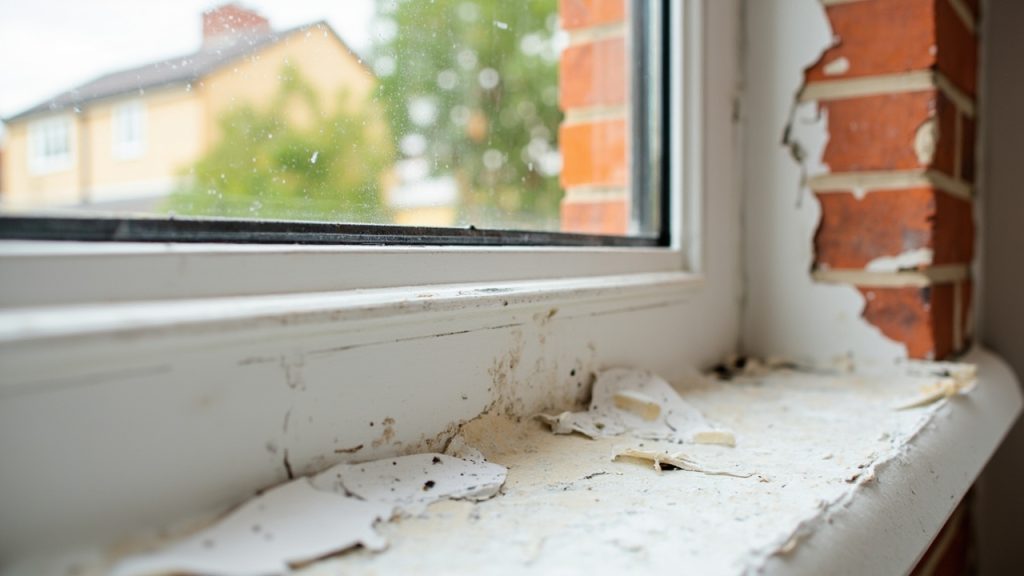
Peeling Paint Is Not Just a Cosmetic Problem in Indian Village
If you own a historic home in Indian Village, East English Village, or along Seminole Drive, peeling paint on your interior walls is rarely just an eyesore. In most cases it is a symptom, not the source. What sits behind that bubbling, flaking paint is often a slow-moving water infiltration problem working its way through your brick masonry and into your living space.
Detroit’s historic neighborhoods are filled with gorgeous clay brick homes built decades ago. That brick is porous by nature, and when mortar joints fail, water finds a way in. The result shows up on your walls before it shows up anywhere else.
Why Detroit’s Climate Turns Brick Walls Into Water Entry Points
Detroit averages around 33 inches of annual precipitation, and that moisture hits your home in every form imaginable: rain, sleet, freezing rain, and snow melt. The real damage, though, comes from freeze-thaw cycles.
Water seeps into hairline cracks in mortar joints or through the brick face itself. When temperatures drop below freezing, that water expands by roughly 9 percent in volume. That expansion forces cracks wider. When temperatures rise, more water enters the now-larger crack. Repeat that cycle 40 to 60 times per winter, which is typical for southeast Michigan, and what started as a hairline crack becomes a genuine structural gap.
This is not a theory. It is basic physics, and it is exactly why homes in Phoenix or Miami do not share the same masonry failure patterns as homes in the Detroit metro. Our climate is the aggressor here, and Indian Village’s pre-war brick homes were not built with modern waterproofing systems in mind.
How Water Actually Moves Through Brick
Brick moves water in two ways. The first is direct penetration through cracks or gaps in mortar joints. The second is capillary action, where water is drawn through the microscopic pores in the brick itself, even when no visible crack exists.
Common Michigan clay bricks have a porosity rate that allows significant moisture absorption under sustained rain or snow melt conditions. Once that moisture crosses the wythe (the thickness of a single brick layer), it hits your interior wall assembly, condenses, and starts the process that ends with peeling paint, wet drywall, and eventually mold.
Hydrostatic pressure from soil against basement walls adds another layer of force pushing water inward. Homes in lower-lying blocks near the Detroit River corridor or near Chandler Park can experience this more acutely after heavy rain events.
Common Signs That Water Is Leaking Through Your Brick Masonry
You do not need a moisture meter to recognize early warning signs. Here is what to look for on both the interior and exterior of your home.
- Efflorescence — White, chalky powder or streaks on the exterior brick face. This is mineral salt left behind as water evaporates through the brick. It means water is actively moving through your masonry.
- Spalling — Brick faces that are flaking, chipping, or crumbling at the surface. This is freeze-thaw damage to the brick itself. Once spalling starts, water entry accelerates.
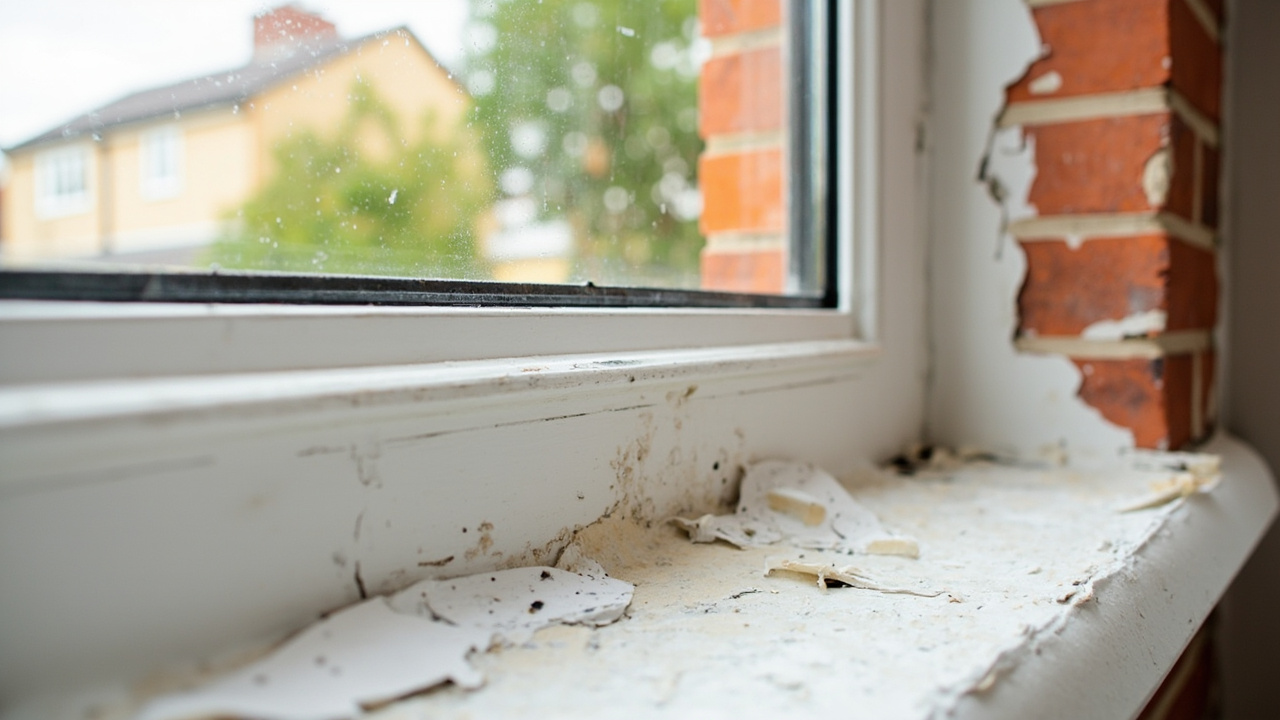
- Peeling or bubbling interior paint — Especially along exterior walls, windowsills, or at the base of walls near the floor line.
- Damp or stained drywall — Yellowish or brownish water stains that appear after heavy rain or snow melt are a direct indicator of masonry infiltration.
- Musty odor near exterior walls — Moisture trapped in wall cavities creates mold conditions quickly. If a room smells like a basement, treat it like one.
- Crumbling or recessed mortar joints — Run your finger across the mortar between bricks. If it crumbles or feels soft, tuckpointing is overdue.
- Interior condensation on window frames or sills — Often mistaken for HVAC issues, this can point to water migrating through the brick surrounding the window opening.

The 4 Root Causes of Brick Water Infiltration in Historic Detroit Homes
1. Mortar Joint Failure
Mortar joints are the weakest link in any brick wall system. Original mortar in Indian Village homes is often a lime-based mix that has reached the end of its service life. When joints erode below the brick face, they create channels that direct water straight into the wall cavity. Proper tuckpointing with the correct mortar type is the fix. Using Type S mortar on an older home that was built with softer lime mortar can actually cause more damage, so material matching matters significantly in historic districts.
2. Saturated Brick Porosity
Over time, the outer weathering surface of brick breaks down. Aged brick absorbs water faster than new brick. A brick wall that sits under a failed gutter or downspout for a single season can absorb enough moisture to feed interior damage for months. The National Park Service’s Preservation Briefs on repointing mortar joints specifically address how to approach this in historic structures, which is directly applicable to Indian Village’s historic district requirements.
3. Failed or Missing Masonry Flashing
Flashing is the metal or rubberized membrane installed at transition points, above windows, at roof-to-wall intersections, and at shelf angles above foundation walls. In older Detroit homes, original flashing was often lead or galvanized steel, both of which have long since corroded or been improperly patched. When flashing fails, water bypasses the brick face entirely and enters the wall assembly at a structural seam.
4. Blocked or Missing Weep Holes
Weep holes are small openings at the bottom of brick veneer walls, typically spaced every 24 inches along the mortar joint above the flashing. They allow water that collects in the wall cavity to drain out rather than build up. On older homes, these are often absent entirely, or they have been filled in during previous renovation work. Blocked weep holes trap water inside the cavity and accelerate structural deterioration.
What Happens When You Ignore Brick Water Damage
| Timeframe | What Develops | Risk Level |
|---|---|---|
| 0 to 3 months | Surface efflorescence, early paint bubbling, damp smell | Low to Moderate |
| 3 to 9 months | Mold colonization in wall cavity, drywall staining, mortar erosion worsens | Moderate to High |
| 9 to 18 months | Wood framing rot, structural integrity of wall assembly compromised | High |
| 18 months and beyond | Foundation seepage, load-bearing wall damage, potential Detroit Building Code violations | Severe |
Mold is the most immediate health concern. Within 24 to 48 hours of sustained moisture in a wall cavity, mold colonies can establish. The cavity between your brick wythe and interior drywall is dark, insulated, and often undisturbed. That is prime mold territory. If you are already seeing peeling paint, mold growth behind that wall is a real possibility. For more on why surface treatments are not enough once mold has established, read our guide on why bleach won’t fix your Ferndale basement mold. The same principle applies to wall cavity mold in Indian Village homes.
Wood rot in the framing members directly attached to or near the brick is a structural issue. Many Indian Village homes have balloon framing or platform framing with wood ledger plates resting on or near the masonry. Once that wood stays wet, rot sets in and a wall repair becomes a structural repair.
Professional Remediation vs. DIY Approaches
There are situations where a homeowner can address early-stage masonry moisture with a quality silane-siloxane penetrating sealer. These sealers work by chemically bonding to the brick and reducing water absorption without changing the brick’s appearance or breathability. They are appropriate when the masonry is structurally sound and mortar joints are intact. They are not appropriate when joints are failing, flashing is missing, or water has already penetrated the wall cavity.
| Condition | DIY Silane-Siloxane Sealer | Professional Tuckpointing | Full Masonry Restoration |
|---|---|---|---|
| Mortar joints intact, minor surface porosity | Appropriate | Not required | Not required |
| Mortar erosion less than 1/4 inch deep | Not sufficient alone | Required | Not required |
| Spalling brick, deep mortar erosion | Not appropriate | Partial fix only | Required |
| Interior water staining or mold present | Not appropriate | Part of solution | Plus interior remediation required |
| Failed flashing or missing weep holes | Not appropriate | Supplemental only | Flashing replacement essential |
One important note for Indian Village homeowners specifically. The neighborhood is listed on the National Register of Historic Places, and certain exterior modifications require approval from Detroit’s Historic District Commission. Any masonry repair work that alters the appearance, texture, or material of the exterior brick may need to comply with Detroit Building Code and historic preservation guidelines. Using the wrong mortar type or installing a vapor barrier incorrectly can violate those standards and create new problems down the line. Work with a contractor who understands these requirements, not one who applies the same approach they would use on a new construction home in Macomb County.
How Water Damage Restoration Works When Brick Is the Source
When you call a water damage restoration professional for a masonry-related leak, the process is not simply patching the wall and repainting. A thorough assessment involves several steps.
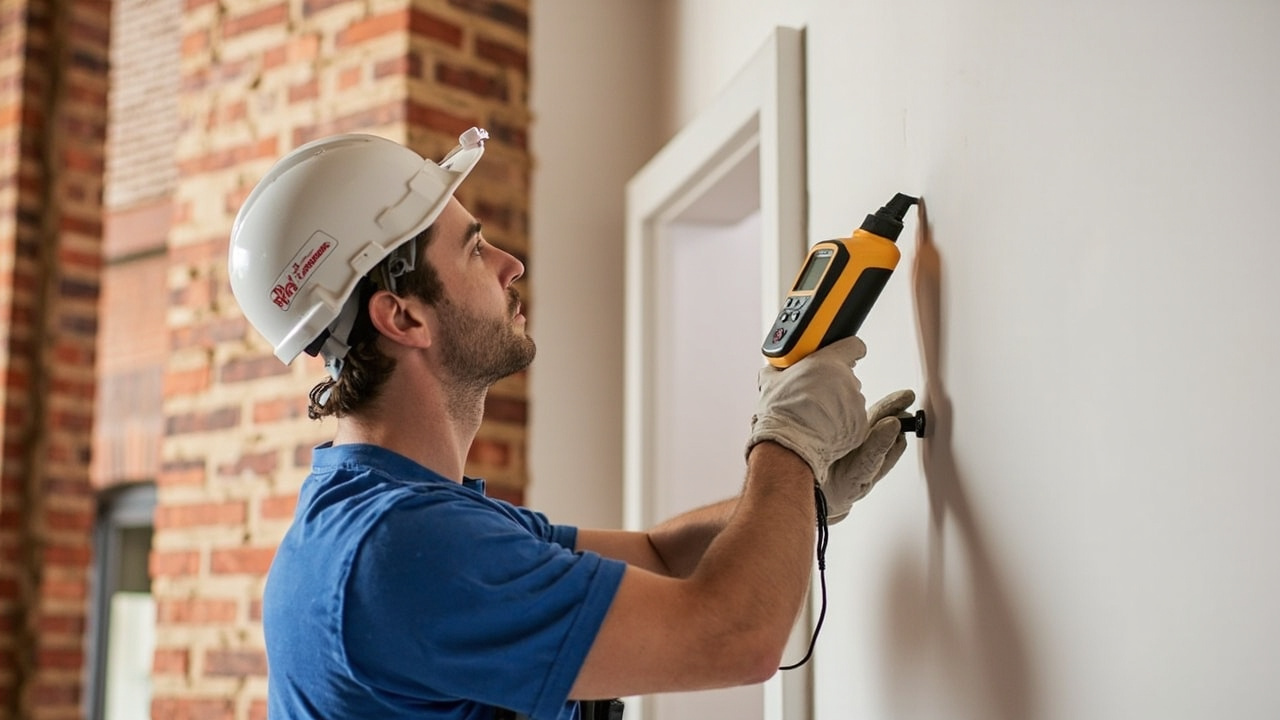
The first step is moisture mapping. Using thermal imaging cameras and pin-type moisture meters, a technician maps how far moisture has spread inside the wall assembly and into adjacent materials like insulation, drywall, and wood framing. This tells you the true scope of damage, not just the visible portion.
The second step is identifying the entry point. This means inspecting the exterior masonry closely, checking flashing at window heads and roof transitions, probing mortar joint depth, and sometimes using a hose test to confirm the leak path. Without confirming the entry point, any interior remediation is temporary at best.
The third step is controlled drying of the wall cavity. This typically involves strategic removal of drywall sections to allow air movement, commercial-grade dehumidifiers pulling moisture from the assembly, and in some cases structural drying equipment positioned to dry the brick from the interior side. IICRC standards govern how drying targets are set and how long the process runs to reach acceptable moisture levels.
The fourth step is mold remediation if colonies are present. This is not optional if moisture has been present for more than a short period. Containment, HEPA filtration, and physical removal of affected materials are required before any reconstruction begins.
The fifth step is coordinating the exterior repair. Interior remediation without fixing the masonry source is pointless. Tuckpointing, flashing replacement, weep hole installation, and sealing all need to happen before walls are closed up.
If your home has experienced water intrusion from masonry, the damage may qualify under your homeowner’s insurance policy depending on how the leak is classified. For guidance on navigating that process, our article on how to get your Detroit home insurance to actually pay for water restoration covers what adjusters look for and how to document your claim effectively. If you are in a specific situation involving a Corktown or adjacent neighborhood property, the guidance in our Corktown water damage insurance claim guide is directly relevant.
For homeowners whose water intrusion has also damaged interior flooring, the restoration picture gets more complicated. Water that travels from masonry down through wall cavities often pools at the base of walls and saturates hardwood floors. Our resource on saving hardwood floors after a significant water leak explains what the drying window looks like and when floors can be salvaged versus when they need replacement.
The IICRC Standard and Why It Matters for Brick Leak Remediation
The Institute of Inspection, Cleaning and Restoration Certification (IICRC) sets the technical standards for water damage restoration work across the country. In the context of masonry-related water damage, the relevant standards govern moisture content thresholds, drying validation, mold remediation protocols, and documentation requirements. A contractor working to IICRC standards will provide drying logs, moisture readings, and a documented completion benchmark. This documentation also supports insurance claims and protects you if future buyers question past water damage during a home sale.
When to Stop Waiting and Call a Professional
Peeling paint in one spot near a window might be worth monitoring through one rain event. But if you are seeing any of the following, stop waiting.
- Peeling or bubbling paint on multiple exterior walls
- Any visible mold growth inside the home near an exterior wall
- A musty odor that does not go away after airing out the room
- Water staining that grows in size after rain or snow melt
- Soft or spongy drywall along an exterior wall
- Efflorescence appearing on exterior brick for the first time or spreading rapidly
Indian Village homes are some of the most architecturally significant properties in the Detroit metro, with high replacement values and equally high stakes when water damage goes unchecked. The longer moisture sits in a wall cavity, the more expensive the remediation becomes, and the more likely you are facing a structural repair on top of a water damage remediation.
If you are seeing signs of water leaking through your brick masonry, reach out for a professional moisture assessment. A proper inspection gives you a clear picture of what you are dealing with before you commit to any repair approach, and it can save you from tearing apart a wall only to discover the entry point is somewhere entirely different than where the damage appears.
{
“@context”: “https://schema.org”,
“@type”: “BlogPosting”,
“headline”: “Is That Peeling Paint in Indian Village Hiding a Brick Masonry Water Problem”,
“description”: “Peeling paint in Detroit’s Indian Village could signal water leaking through brick masonry. Learn the causes, risks, and when to call a pro.”,
“wordCount”: 2177,
“datePublished”: “2026-06-11T09:14:00.000Z”,
“dateModified”: “2026-06-11T09:14:00.000Z”,
“inLanguage”: “en-US”,
“mainEntityOfPage”: {
“@type”: “WebPage”,
“@id”: “https://ironwoodwaterdamagerestorationdetroit.com”
},
“publisher”: {
“@type”: “LocalBusiness”,
“name”: “Ironwood Water Damage Restoration Detroit”,
“url”: “https://ironwoodwaterdamagerestorationdetroit.com”
},
“author”: {
“@type”: “Organization”,
“name”: “Ironwood Water Damage Restoration Detroit”,
“url”: “https://ironwoodwaterdamagerestorationdetroit.com”
},
“image”: {
“@type”: “ImageObject”,
“url”: “https://ironwoodwaterdamagerestorationdetroit.com/wp-content/uploads/2026/03/is-your-peeling-paint-in-indian-village-a-sign-of-1.jpg”
}
}
{
“@context”: “https://schema.org”,
“@type”: “LocalBusiness”,
“name”: “Ironwood Water Damage Restoration Detroit”,
“url”: “https://ironwoodwaterdamagerestorationdetroit.com”,
“address”: {
“@type”: “PostalAddress”,
“addressLocality”: “Detroit”
},
“areaServed”: {
“@type”: “City”,
“name”: “Detroit”
}
}
{
“@context”: “https://schema.org”,
“@type”: “BreadcrumbList”,
“itemListElement”: [
{
“@type”: “ListItem”,
“position”: 1,
“name”: “Home”,
“item”: “https://ironwoodwaterdamagerestorationdetroit.com”
},
{
“@type”: “ListItem”,
“position”: 2,
“name”: “Blog”,
“item”: “https://ironwoodwaterdamagerestorationdetroit.com/blog”
},
{
“@type”: “ListItem”,
“position”: 3,
“name”: “Is That Peeling Paint in Indian Village Hiding a Brick Masonry Water Problem”
}
]
}
{
“@context”: “https://schema.org”,
“@type”: “Service”,
“serviceType”: “Water Damage Restoration”,
“provider”: {
“@type”: “LocalBusiness”,
“name”: “Ironwood Water Damage Restoration Detroit”,
“url”: “https://ironwoodwaterdamagerestorationdetroit.com”
},
“areaServed”: {
“@type”: “City”,
“name”: “Detroit”
},
“description”: “Peeling paint in Detroit’s Indian Village could signal water leaking through brick masonry. Learn the causes, risks, and when to call a pro.”
}