
Key Takeaways for Birmingham Homeowners
- Disconnect power at the breaker immediately when you suspect a hot tub leak. Water and 240-volt circuits are a life-safety issue first.
- Clay soil throughout Oakland County holds moisture against your foundation far longer than sandy soil would. Even a slow drip compounds into serious hydrostatic pressure damage.
- Hot tub water is classified as grey water under the IICRC S500 Standard. It requires professional sanitization, not just drying.
- Document all damage with photos and video before any repairs begin. Premature restoration work can void your insurance coverage.
- Response time is the single variable that separates a straightforward drying job from a full structural restoration. Call an IICRC-certified team the same day you discover the problem.
A 500-Gallon Leak Does Not Announce Itself
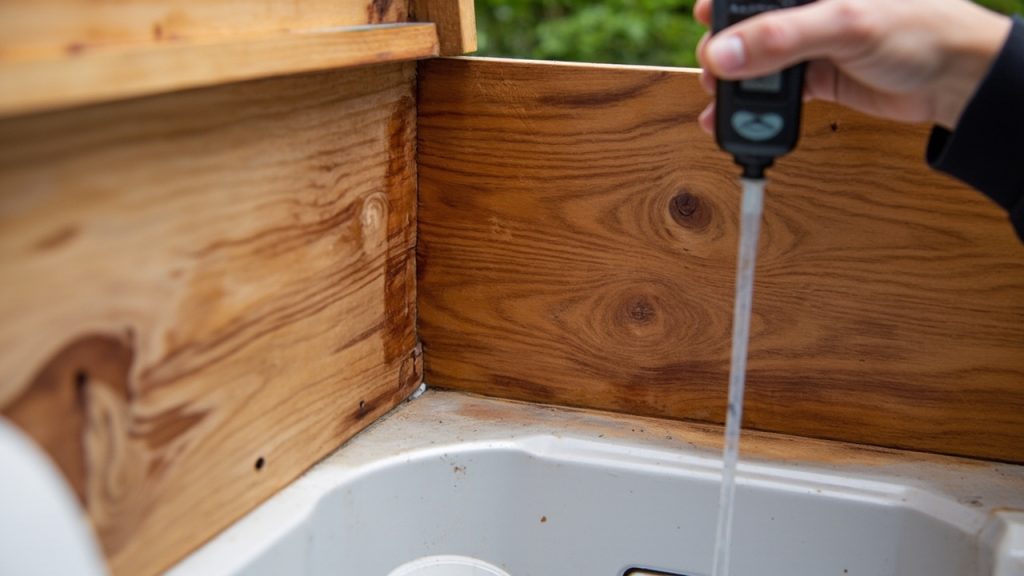
Keeping your new luxury hot tub from flooding your Birmingham backyard and foundation starts long before a problem appears. You bought a high-end spa for your Birmingham home. The installation looked clean. The first few weeks went perfectly. Then you noticed the grass near the pad staying wet a little too long, or worse, a damp smell coming from your basement crawl space. By the time most homeowners connect the dots, water has already been migrating toward the foundation for weeks.. Read more about Why Curbless Showers in Your Birmingham Remodel Might Be Leaking Into the Subfloor.
Hot tub leak damage is one of the most underestimated sources of residential water intrusion in the greater Detroit metro. A full-size spa holds between 400 and 600 gallons of water. A slow pump seal failure can bleed dozens of gallons per day directly into your soil, your deck framing, or your basement slab without ever showing a visible puddle on the surface.. Read more about Why Your Detroit Lawn Cracks Are a Warning Sign for Future Basement Flooding.
This guide covers exactly what happens when a luxury hot tub leaks, why Birmingham and the surrounding Oakland County communities face specific structural risks, and what a professional restoration process actually looks like from start to finish. It is written by the team at Ironwood Water Damage Restoration, IICRC-certified technicians who have served the southeast Michigan corridor for years and have worked on dozens of hot tub leak cases across Birmingham, Bloomfield Hills, Royal Oak, and the broader Oakland County region.. Read more about Finding an Emergency Water Restoration Team in Bloomfield Hills When Every Minute Counts.
Why Birmingham Homeowners Face Elevated Risk from Hot Tub Leaks
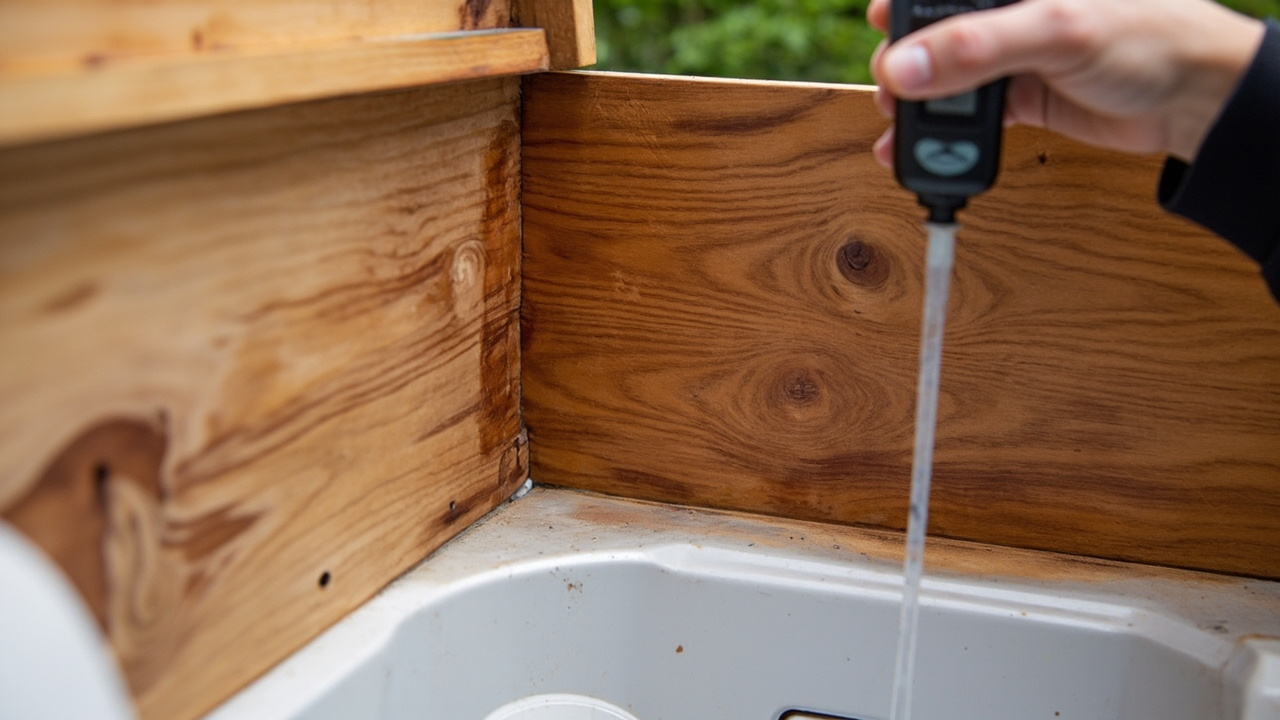
Birmingham sits on a clay-heavy soil profile common throughout Oakland County and the broader southeast Michigan region. Clay soil does not absorb and release water the way sandy or loamy soils do. Instead, it expands when wet and contracts sharply during dry periods, which creates hydrostatic pressure cycles against your foundation walls.. Read more about How to Read a Professional Water Damage Estimate for Your Birmingham Home Insurance.
Now add a slow hot tub leak. Over weeks or months, that constant moisture load saturates the clay around your foundation. The soil swells. Pressure builds against the concrete or block. Cracks follow. Water finds the path of least resistance and enters the basement or crawl space.
Detroit’s freeze-thaw cycle makes this worse. When saturated soil freezes, it expands even more aggressively. Homeowners in Bloomfield Hills, Royal Oak, and Grosse Pointe see the same pattern every spring. What started as a minor hot tub plumbing issue in the fall becomes a visible foundation crack by March.
Wayne County and Oakland County building codes require proper drainage planning for any permanent pool or spa installation. But code compliance at installation does not prevent future equipment failure. Pump seals wear. Plumbing unions crack under freeze pressure. Shell fittings loosen over time.
The Most Common Causes of Hot Tub Leaks in Michigan
Understanding where the leak originates changes how you respond. Not all hot tub leaks are equal in urgency or contamination risk.
Pump Seal Failures
The circulation pump is the most common failure point. The wet-end seal sits between the motor shaft and the pump housing. When it degrades, water seeps out continuously, even when the tub is off. The leak is usually slow and often goes unnoticed until the ground around the equipment bay is visibly saturated.
Plumbing Union Cracks
PVC plumbing unions are threaded connections that allow the spa’s internal plumbing to be disconnected for service. Michigan winters stress these joints hard. A single overnight freeze with inadequate winterization can split a union clean through, and a cracked union can dump large volumes of water fast.
Shell Fitting and Jet Leaks
Jet bodies, light housings, and drain fittings all penetrate the acrylic shell. The gaskets behind each fitting compress and degrade over time. A leaking jet fitting often drips directly into the foam insulation layer packed inside the spa cabinet. The polyurethane foam insulation absorbs and holds moisture silently, preventing detection until the cabinet walls show water staining or mold growth.
Freeze Damage to Internal Plumbing
A hot tub that loses power during a Detroit winter can freeze solid internally within 24 to 48 hours at sustained temperatures below 20 degrees Fahrenheit. When the internal pipes freeze and burst, the damage is immediate and severe. This is classified as a sudden and accidental loss, which matters a great deal for insurance purposes.
| Leak Source | Detection Difficulty | Typical Severity | Contamination Level |
|---|---|---|---|
| Pump Seal Failure | High (slow and hidden) | Moderate to High | Grey Water |
| Plumbing Union Crack | Medium | High | Grey Water |
| Shell Fitting Leak | Very High (foam absorption) | Moderate | Grey Water |
| Freeze Burst | Low (immediate and obvious) | Severe | Grey Water |
| Drain Line Failure | Medium | Moderate | Grey to Black Water |
Grey water from a hot tub carries residual chemicals, body oils, and biofilm. It is not sewage, but it is not clean water either. Prolonged contact with wood framing, drywall, or insulation creates ideal conditions for mold growth. The IICRC S500 Standard for water damage restoration classifies spa water as Category 2, meaning it requires professional handling and sanitization, not just drying.
What Happens to Your Foundation and Subfloor When You Wait
The damage from hot tub leak water does not stop at the surface. It moves. Understanding the timeline helps you understand why calling a restoration team quickly is not an overreaction.
| Time After Leak Starts | What Is Happening | Reversibility |
|---|---|---|
| 0 to 24 Hours | Water absorbs into soil and surface materials | High with fast response |
| 24 to 72 Hours | Subfloor swelling begins, drywall wicking starts | Moderate |
| 72 Hours to 1 Week | Mold spore germination begins, wood framing at risk | Reduced significantly |
| 1 to 3 Weeks | Active mold colonies, structural softening in subfloor | Low without major remediation |
| Beyond 3 Weeks | Foundation saturation, hydrostatic pressure damage, black mold | Structural repair required |
Detroit’s average relative humidity during warmer months sits above 70 percent consistently. That ambient moisture accelerates mold incubation periods compared to drier climates. A subfloor that would take five or six days to develop active mold growth in Phoenix can show visible colonies in under 72 hours in a Birmingham basement in July.
If you are concerned about mold that has already appeared, read about why bleach won’t fix basement mold and when you actually need a professional remediation team.

Immediate Steps to Take When You Discover the Leak
Do not wait to confirm the source before acting. Here is the correct sequence.
- Disconnect power at the breaker. Hot tubs run on 240-volt circuits. Water and live electrical equipment is a life-safety emergency before it is a restoration emergency.
- Stop water flow. Locate the spa’s main shutoff or drain valve and stop active water movement. If the tub is feeding from a supply line, close that valve.
- Remove standing water. Use a wet-dry vacuum or submersible pump to pull visible water off hard surfaces immediately. Every minute of contact increases absorption depth.
- Move porous materials out of the wet zone. Cushions, rugs, stored items, and cardboard boxes in the area become secondary damage sources the moment they absorb water.
- Document everything before touching it. Take photos and video of all affected areas, water lines on walls, and the condition of the hot tub equipment. This documentation is critical for your insurance claim.
- Open windows and run fans if safe. Increasing airflow slows secondary absorption while you wait for professional equipment.
- Call a restoration company, not just a plumber. A plumber fixes the source. A restoration company handles the structural water damage left behind. You need both.
How Professional Hot Tub Leak Damage Restoration Works
When a certified restoration team responds to a hot tub leak in the Birmingham area, the process follows a specific technical protocol, not a general cleanup routine.
Inspection and Moisture Mapping
The first tool on site is a thermal imaging camera. Infrared thermography shows temperature differentials in walls, floors, and ceilings that reveal hidden moisture pockets invisible to the naked eye. A pin-type or pinless moisture meter then confirms saturation levels in specific materials. This mapping defines the actual scope of damage, which is almost always larger than what you can see.
Water Extraction
Truck-mounted extraction units pull water from carpet, subfloor assemblies, and soil much faster than consumer equipment. For hot tub leak damage near a foundation, extraction often includes addressing water that has migrated into block or poured concrete wall cavities.
Structural Drying with Psychrometric Calculations
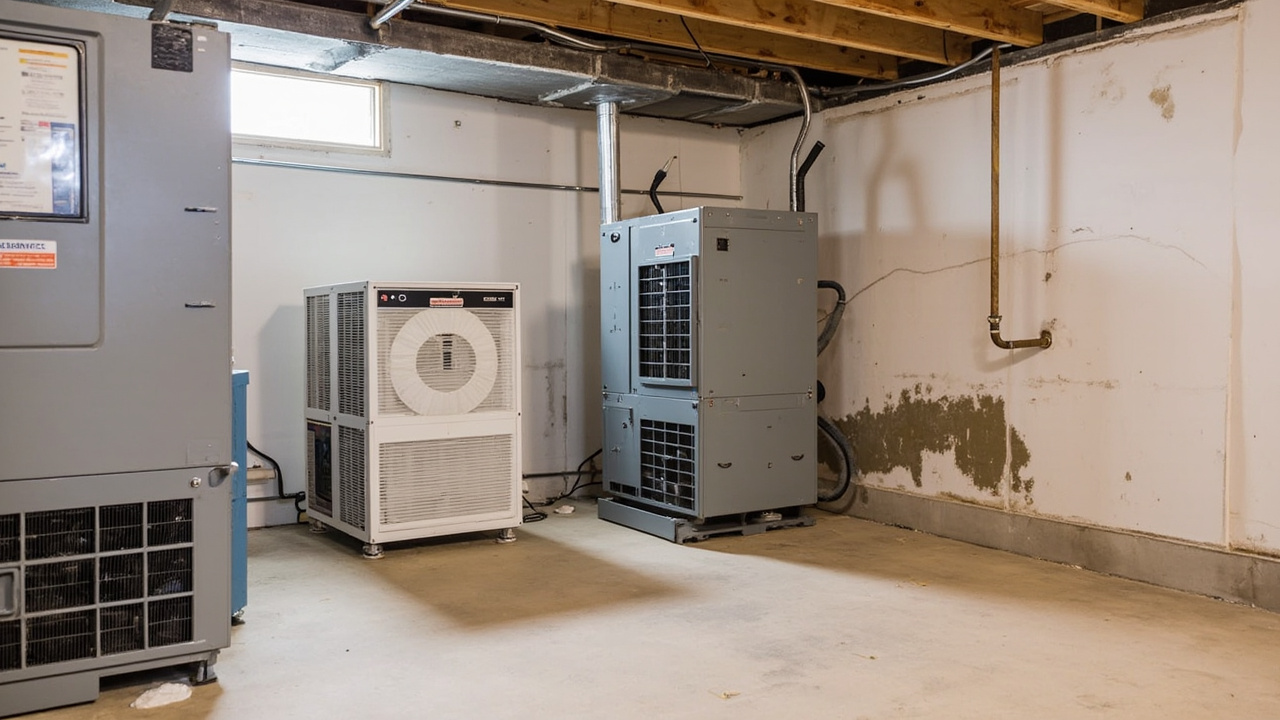
Industrial-grade dehumidifiers are sized and placed based on psychrometric science. Psychrometry is the study of the thermodynamic properties of moist air, and restoration technicians use dew point, grain depression, and specific humidity calculations to determine how many units are needed, where to place them, and what airflow rate will achieve target dryness within the minimum time window.
For saturated subfloors, drying times typically range from three to five days with proper industrial equipment. Without it, a wet subfloor in a Detroit home can stay at elevated moisture content for weeks, creating conditions for subfloor rot and structural integrity loss in the floor joists below.
If your floors took significant water exposure, the question of whether they can be saved is not always obvious. This guide on saving hardwood floors after a water leak in Birmingham walks through the key decision points.
Antimicrobial Treatment and Mold Remediation
Because hot tub water is classified as grey water under IICRC S500 standards, antimicrobial application is not optional. All affected structural materials receive treatment after drying. If mold colonies are already present, the scope shifts to full mold remediation, which involves containment barriers, HEPA air filtration, and removal of compromised materials per EPA mold remediation guidelines.
Final Clearance Testing
Before equipment comes out and reconstruction begins, moisture readings across all affected materials must return to acceptable baselines. In Michigan, that standard accounts for the ambient humidity levels typical for the current season. A reading acceptable in February may not be acceptable in August without additional dehumidification time.
Navigating the Insurance Claim After a Hot Tub Leak
Coverage for hot tub leak damage depends heavily on the cause and how quickly you reported it. Michigan homeowners insurance policies generally cover sudden and accidental water damage. A pipe that burst overnight is typically covered. A slow pump seal leak that went unaddressed for two months is where claims get complicated.
Insurance adjusters look for evidence of neglect or deferred maintenance. Your documentation from the initial discovery matters enormously here. A restoration company that provides a detailed moisture report with thermal imaging evidence gives your adjuster objective data rather than just your account of events.
For a full breakdown of how to position your claim, read through the process of getting your Detroit home insurance to actually pay for water restoration. If your hot tub leak has affected adjacent carpet or flooring, this resource on deciding whether wet carpet can be saved will also help you understand what documentation your adjuster will want for those materials specifically.
One critical step many homeowners skip is filing the claim before all repairs are complete. Do not let a contractor restore anything before your adjuster has seen and photographed the damage. Premature repairs can void coverage for the costs already incurred.
For homeowners in Corktown, Indian Village, or other neighborhoods with older housing stock, the structural complexity of those homes adds variables to the claims process. The guide on filing a successful water damage insurance claim for a Corktown home covers those nuances in detail.
Prevention Strategies That Actually Work for Michigan Climates
The best hot tub leak is the one that never becomes a restoration job. These are the steps that matter most in the Detroit metro’s specific climate context.
- Winterize properly every year. If your spa will lose power or be unused for more than 72 hours during below-freezing temperatures, drain and blow out all internal lines. Do not rely on the spa’s built-in freeze protection if power is uncertain.
- Inspect pump seals annually. A certified spa technician can pressure-test the plumbing system and identify seal wear before it becomes a leak. This is far less expensive than a subfloor restoration job.
- Grade the surrounding soil away from the foundation. The ground around your hot tub pad should slope away from the house at a minimum of one inch per foot for the first six feet. This directs any surface overflow away from your foundation rather than toward it.
- Install a moisture sensor under the spa cabinet. Wireless moisture alarms placed in the equipment bay alert you to water presence before it migrates to the soil. These devices cost very little relative to what they can prevent.
- Check the drain line annually. Spa drain lines can become clogged with biofilm and overflow during backwash cycles. In Birmingham, drain lines should terminate well away from the foundation and the property line per Oakland County setback requirements.
Speed Is the Only Variable You Control Once Damage Has Started
The difference between a straightforward drying job and a full structural restoration almost always comes down to how quickly the response happened. Water does not pause. It moves into every available void, every crack in the subfloor, every space between the foam insulation and the spa cabinet wall.
If you are in Birmingham, Bloomfield Hills, Troy, or anywhere in the southeast Michigan corridor and you have discovered a hot tub leak or unexplained moisture near your foundation, do not wait to see if it dries on its own. It won’t. The clay soil common throughout Oakland County will hold that moisture far longer than the surface suggests, and damage accumulates silently underneath.
Ironwood Water Damage Restoration is an IICRC-certified team with extensive experience in structural drying and mold remediation across the Detroit metro. When you call, ask to see the moisture mapping before work begins, and ask for daily drying logs so you can verify progress for your insurance claim. That is the standard of care that gets claims approved and homes returned to safe, dry condition.
Call us directly or visit our contact page to request a same-day assessment. The sooner a certified technician is on site with a moisture meter and a thermal camera, the more of your home you get to keep.
{
“@context”: “https://schema.org”,
“@type”: “BlogPosting”,
“headline”: “Keeping Your New Luxury Hot Tub from Flooding Your Birmingham Backyard and Foundation”,
“description”: “Learn how to protect your Birmingham home from hot tub leak damage. IICRC-certified tips on prevention, restoration, and insurance claims for Oakland County homeowners.”,
“wordCount”: 2448,
“datePublished”: “2026-08-22T13:51:00.000Z”,
“dateModified”: “2026-08-22T13:51:00.000Z”,
“inLanguage”: “en-US”,
“mainEntityOfPage”: {
“@type”: “WebPage”,
“@id”: “https://ironwoodwaterdamagerestorationdetroit.com”
},
“publisher”: {
“@type”: “LocalBusiness”,
“name”: “Ironwood Water Damage Restoration Detroit”,
“url”: “https://ironwoodwaterdamagerestorationdetroit.com”
},
“author”: {
“@type”: “Organization”,
“name”: “Ironwood Water Damage Restoration Detroit”,
“url”: “https://ironwoodwaterdamagerestorationdetroit.com”
},
“image”: {
“@type”: “ImageObject”,
“url”: “https://ironwoodwaterdamagerestorationdetroit.com/wp-content/uploads/2026/03/keeping-your-new-luxury-hot-tub-from-flooding-your-1.jpg”
}
}
{
“@context”: “https://schema.org”,
“@type”: “LocalBusiness”,
“name”: “Ironwood Water Damage Restoration Detroit”,
“url”: “https://ironwoodwaterdamagerestorationdetroit.com”,
“address”: {
“@type”: “PostalAddress”,
“addressLocality”: “Detroit”
},
“areaServed”: {
“@type”: “City”,
“name”: “Detroit”
}
}
{
“@context”: “https://schema.org”,
“@type”: “BreadcrumbList”,
“itemListElement”: [
{
“@type”: “ListItem”,
“position”: 1,
“name”: “Home”,
“item”: “https://ironwoodwaterdamagerestorationdetroit.com”
},
{
“@type”: “ListItem”,
“position”: 2,
“name”: “Blog”,
“item”: “https://ironwoodwaterdamagerestorationdetroit.com/blog”
},
{
“@type”: “ListItem”,
“position”: 3,
“name”: “Keeping Your New Luxury Hot Tub from Flooding Your Birmingham Backyard and Foundation”
}
]
}
{
“@context”: “https://schema.org”,
“@type”: “Service”,
“serviceType”: “Water Damage Restoration”,
“provider”: {
“@type”: “LocalBusiness”,
“name”: “Ironwood Water Damage Restoration Detroit”,
“url”: “https://ironwoodwaterdamagerestorationdetroit.com”
},
“areaServed”: {
“@type”: “City”,
“name”: “Detroit”
},
“description”: “Learn how to protect your Birmingham home from hot tub leak damage. IICRC-certified tips on prevention, restoration, and insurance claims for Oakland County homeowners.”
}