

When a heavy rain rolls through Detroit, the Cass Corridor does not drain the same way a suburb with wide lawns and open soil does. Rooftops, parking lots, alleys, and century-old sidewalks cover nearly every square foot of the neighborhood. Water has nowhere to go. It moves fast, it moves in volume, and it finds the lowest point it can reach, which is usually a basement floor drain or a foundation wall joint.
If you own or manage property in the Cass Corridor, Midtown, or anywhere along the Woodward corridor, understanding how stormwater moves through this part of the city is not academic. It is property protection.

Why the Cass Corridor Has a Stormwater Problem That Suburbs Do Not
Detroit receives roughly 33 to 34 inches of precipitation annually. That number is similar to many Midwest cities. The difference is how the land handles it. In Grosse Pointe or Northville, a meaningful percentage of that rainfall soaks into yards, parks, and tree lawns. In the Cass Corridor, impervious surface coverage is extraordinarily high. Brick buildings share walls. Parking lots abut sidewalks. Green space is scarce.
When rain hits an impervious surface, it becomes surface runoff almost immediately. That runoff needs a destination, and in most of central Detroit, that destination is the combined sewer system.
The Combined Sewer System and Why It Matters to You
Detroit operates a Combined Sewer System (CSS), a pipe network designed to carry both sanitary sewage and stormwater in the same pipes. This system works adequately during dry conditions or light rain. During a significant storm event, the volume of stormwater can overwhelm the system’s capacity.
When the system is overloaded, Combined Sewer Overflows (CSOs) occur. The Great Lakes Water Authority (GLWA), which manages regional wastewater treatment, monitors and reports these events. During a CSO event, a mixture of stormwater and raw sewage can discharge into the Rouge River watershed or the Detroit River. More directly relevant to property owners, the overflow can reverse course and push back through service laterals into basements.
That is called a sanitary sewer backup, and it is one of the most damaging and hazardous events a building in the Cass Corridor can experience.
What DWSD Is Doing About Stormwater Infrastructure in Detroit
The Detroit Water and Sewerage Department (DWSD) manages the city’s local water and sewer infrastructure. DWSD has been expanding its Green Stormwater Infrastructure (GSI) program across the city, targeting high-impervious neighborhoods where traditional grey infrastructure alone cannot handle peak flows.
GSI projects in and around Midtown and the Cass Corridor have included bioswales along boulevard medians, permeable pavement installations in surface parking areas, and tree pit systems designed to capture and slow stormwater before it reaches the sewer inlet.
The DWSD Drainage Charge and Credit Program
DWSD assesses a stormwater drainage charge on most properties. The charge is calculated based on the estimated impervious surface area of your parcel. A large commercial lot covered in asphalt pays significantly more than a small lot with grass and trees.
Property owners can reduce this charge by implementing qualifying GSI measures on their land. DWSD offers drainage charge credits for approved stormwater management installations. This is a direct financial incentive to install features that also protect your building from flood damage. Eligible measures include rain gardens, green roofs, bioswales, and permeable pavement systems.
The credit program is administered through DWSD’s stormwater credit application process. Properties must meet minimum design and sizing standards, and installations typically need to be verified after completion. Credits can reduce the drainage charge by a meaningful percentage, which adds up quickly on commercial or multi-family properties with large impervious footprints.
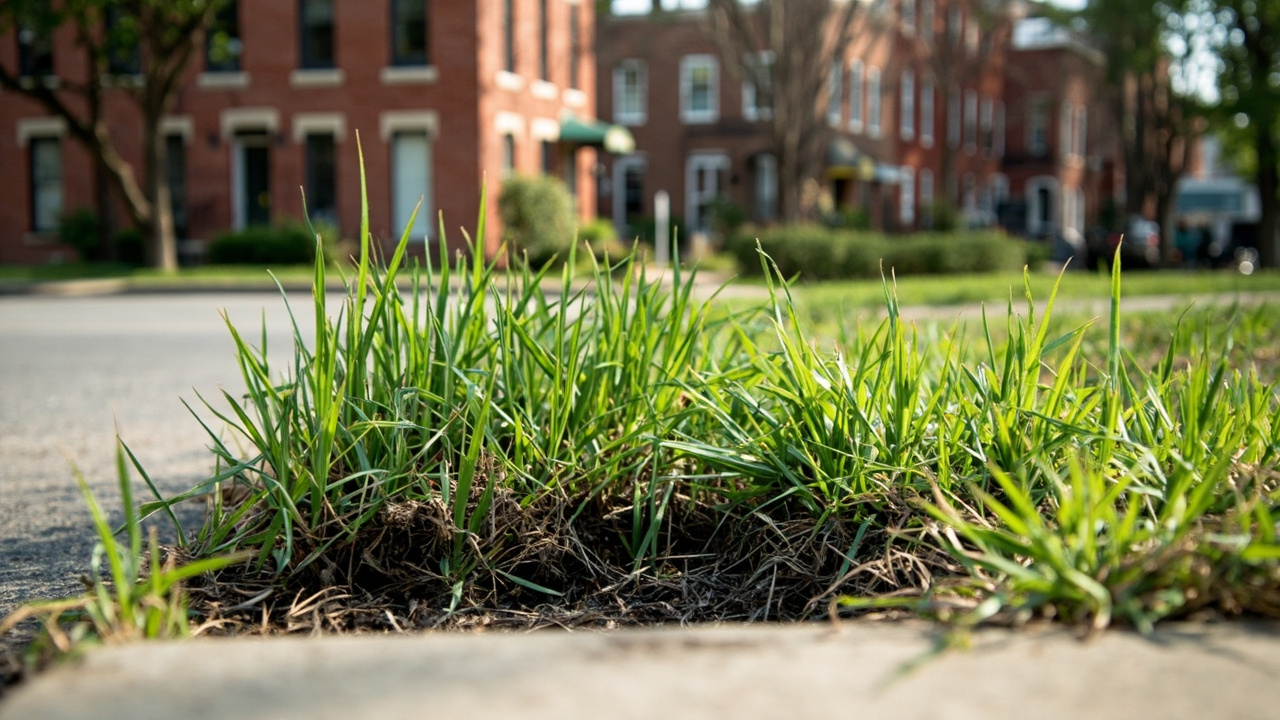
Green Infrastructure vs. Grey Infrastructure in a Dense Urban Neighborhood
Grey infrastructure refers to the traditional engineered approach to stormwater management. Pipes, inlets, detention basins, and pumping stations move water away from properties quickly. Grey infrastructure works well when it is sized correctly and maintained. The problem is that Detroit’s combined sewer pipes in the Cass Corridor were designed for a different era. Peak storm flows now regularly exceed design capacity.
Green infrastructure intercepts stormwater before it reaches the pipe. It slows runoff, allows infiltration into soil, and reduces peak flow volumes in the sewer system. In a neighborhood like the Cass Corridor, where land is tight, green infrastructure requires creativity.
| Infrastructure Type | How It Works | Best Fit in Cass Corridor | Maintenance Level |
|---|---|---|---|
| Bioswale | Vegetated channel that slows and filters runoff | Alleys, parking lot edges, boulevard medians | Low to moderate |
| Rain Garden | Shallow depression with deep-rooted plants that absorbs runoff | Side yards, vacant lot conversions | Low |
| Green Roof | Vegetated roof layer retains rainfall at the source | Flat-roofed commercial and residential buildings | Moderate |
| Permeable Pavement | Porous surface allows water to pass through to sub-base | Parking lots, walkways, service drives | Moderate (requires periodic vacuuming) |
| Cistern/Rain Barrel | Captures roof runoff for later use or slow release | Residential and small commercial rooftops | Low |
| Traditional Pipe Upgrades | Larger diameter pipes handle higher flow volumes | Street-level city infrastructure | High (city responsibility) |
How Stormwater Mismanagement Damages Cass Corridor Buildings
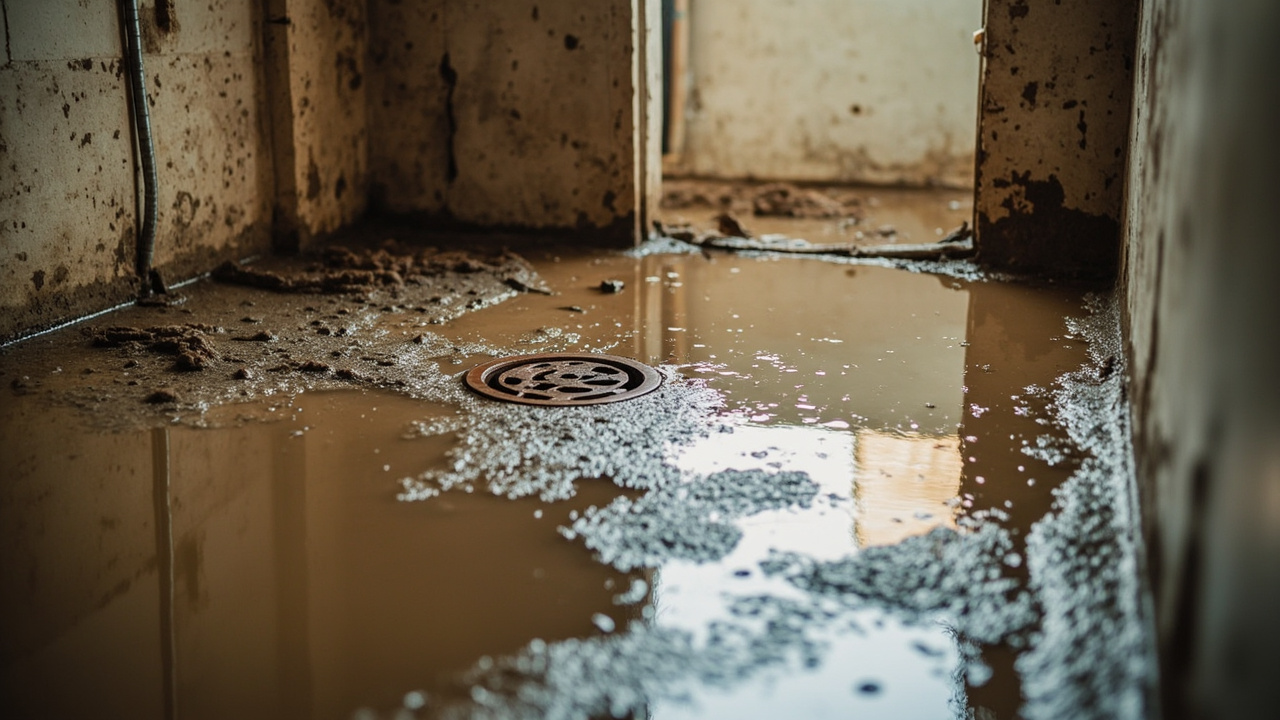
The connection between street-level flooding and interior building damage is direct. When the combined sewer surcharges during a storm, pressure builds in the lateral pipes connecting buildings to the main. If your building does not have a functioning backflow prevention valve, that pressurized water finds the path of least resistance, which is through your floor drains or the base of your toilet stack.
Even without a full sewer backup event, surface runoff that pools against foundation walls drives hydrostatic pressure. Older masonry foundations in the Cass Corridor, many of which date back to the early 20th century, are porous. Water migrates through mortar joints and block faces. Over time, repeated wet-dry cycles accelerate deterioration and create conditions where mold establishes itself inside wall cavities and floor assemblies.
The Mold Timeline After a Basement Flood
Mold growth can begin within 24 to 48 hours on wet porous materials. In a basement that flooded during a storm, every hour of delay in extraction and drying increases the probability of a secondary mold remediation scope. If you have seen any of the signs described in our guide on why bleach does not fix basement mold, you already understand that surface treatment does not address what is growing inside the framing.
Stormwater intrusion events also compromise finished flooring. Hardwood floors can be saved if drying begins quickly and correctly. Wet carpet in a basement is a different calculation, and the decision to save or replace depends on what the water carried and how long it sat.
Practical Steps Property Owners Can Take Right Now
You do not need to wait for a city GSI project to reach your block. There are actions you can take on your own parcel that reduce flood risk and may qualify for drainage charge credits.
- Install a backflow prevention valve on your building’s main sewer lateral. This is the single most effective protection against sanitary sewer backups during CSO events. DWSD has periodically offered rebate programs for this installation, so check current program availability before scheduling the work.
- Regrade soil and hardscape around your foundation so that the first six to ten feet of grade slope away from the building at a minimum two percent grade. Many Cass Corridor buildings have settled, and the grade now slopes toward the foundation wall.
- Disconnect downspouts from the combined sewer where permitted, and direct them to a rain barrel or splash block that discharges onto permeable ground. Every gallon you keep out of the sewer system during a storm event reduces your contribution to peak flow surcharging.
- Convert any small side or rear yard areas to rain garden design. Even a 100 square foot depression planted with native sedges and grasses can absorb thousands of gallons over the course of a storm season.
- Inspect and clear roof drains, gutters, and area drains before every storm season. Blocked drainage at the surface level accelerates ponding and wall infiltration.
- Apply waterproof membrane coatings to below-grade foundation walls from the interior where exterior access is not feasible. Crystalline waterproofing products bond with the concrete matrix and resist hydrostatic pressure from repeated stormwater events.
Understanding the National Pollutant Discharge Elimination System Connection
Detroit’s combined sewer system operates under a National Pollutant Discharge Elimination System (NPDES) permit issued by the Michigan Department of Environment, Great Lakes, and Energy (EGLE). This permit governs when and how combined sewer overflows can legally discharge to receiving waters like the Rouge River watershed and the Detroit River.
DWSD and GLWA are required under this permit to implement Long-Term Control Plans (LTCPs) that progressively reduce the frequency and volume of CSO events. These plans directly shape which neighborhoods receive GSI investments and pipe capacity upgrades. Staying current on DWSD’s published capital improvement plans tells you what infrastructure relief may be coming to your block and over what timeline.
The Michigan EGLE website publishes current NPDES permit documents and CSO event reports, which give property owners a data-driven picture of how often their area’s sewer system has been overloaded.
Stormwater Risk by Building Type in the Cass Corridor
| Building Type | Primary Stormwater Risk | Most Common Damage Pathway | Priority Mitigation Action |
|---|---|---|---|
| Single-family residential (pre-1950 construction) | Foundation seepage, sewer backup | Porous block foundation, no backflow valve | Backflow valve installation, interior waterproofing |
| Multi-family flat (2-4 units) | Basement unit flooding, shared lateral backup | Single lateral serving multiple units overwhelmed during CSO | Backflow valve, sump pump with battery backup |
| Commercial storefront (ground floor retail) | Surface ponding at entry, floor drain backup | Sidewalk grading toward entry, no internal drain check valve | Threshold barriers, floor drain check valves, regrade approach |
| Mixed-use mid-rise | Roof drain overload, parking deck runoff | Undersized roof drains, parking runoff directed to building perimeter | Secondary roof drain overflow scuppers, permeable parking surface |
| Converted loft or adaptive reuse | Variable, depends on original construction | Original industrial drainage not designed for residential use patterns | Full plumbing and drainage audit before occupancy |
What to Do When the Damage Is Already Done
Stormwater prevention planning is valuable, but storms do not wait for plans. If your Cass Corridor property has already experienced a basement backup or stormwater intrusion, the priority sequence is extraction, structural drying, and then assessment of secondary damage to finishes and contents.
Water from a combined sewer backup is classified as Category 3 water, which means it carries sewage contamination. This is not a mop-and-fan situation. It requires proper protective equipment, appropriate disinfection protocols, and often the removal of porous materials like carpet, drywall, and insulation that cannot be adequately decontaminated.
Insurance coverage for stormwater and sewer backup damage varies significantly between policies. Many standard homeowner and landlord policies exclude flood and sewer backup without a specific endorsement. Before the next storm season, review your policy terms carefully. Our detailed resource on getting Detroit home insurance to pay for water restoration walks through exactly what documentation and policy language to look for.
For Corktown neighbors just to the southwest of the Cass Corridor, who face similar combined sewer challenges along the I-75 trench corridor, the insurance claim process has its own set of considerations covered in our guide on filing a successful water damage claim for Corktown properties.
The Longer View on Stormwater Management in Dense Detroit Neighborhoods
The Cass Corridor and Midtown have experienced significant reinvestment over the past decade. New residential construction, adaptive reuse projects, and institutional expansion from Wayne State University and the Detroit Medical Center district have added density and with it, more impervious surface to an already stressed drainage system.
DWSD’s GSI program is scaling to meet this, but municipal infrastructure moves on a timeline measured in years and budget cycles. Property owners who act on their own parcels, whether through backflow valves, downspout disconnection, or small-scale rain gardens, directly reduce their own flood risk without waiting for city capital programs to reach their block.
The Jefferson-Chalmers neighborhood on Detroit’s east side offers a case study in what happens when stormwater infrastructure is outpaced by development and climate variability. Properties in that floodplain have faced repeated inundation. The Cass Corridor is not a floodplain in the mapped sense, but its impervious surface density creates similar risk dynamics during intense rainfall events.
Every structural improvement you make to your building’s drainage and waterproofing is an investment in the property’s long-term value and habitability. And every time a major storm event passes without a basement flood or interior water intrusion, that investment pays a return you can measure.
If your property has experienced stormwater damage or you want a professional assessment of your building’s current vulnerability, reach out to our team. We have worked on properties throughout the Cass Corridor, Midtown, New Center, and across greater Detroit for years. We know what these buildings look like from the inside when water gets in, and we know what it takes to get them dry and protected again.
{
“@context”: “https://schema.org”,
“@type”: “BlogPosting”,
“headline”: “Managing Stormwater Runoff in the Densely Packed Neighborhoods of the Cass Corridor”,
“description”: “Learn how stormwater runoff affects Cass Corridor properties in Detroit and what you can do to protect your building from basement backups and flood damage.”,
“wordCount”: 2139,
“datePublished”: “2026-06-15T05:41:00.000Z”,
“dateModified”: “2026-06-15T05:41:00.000Z”,
“inLanguage”: “en-US”,
“mainEntityOfPage”: {
“@type”: “WebPage”,
“@id”: “https://ironwoodwaterdamagerestorationdetroit.com”
},
“publisher”: {
“@type”: “LocalBusiness”,
“name”: “Ironwood Water Damage Restoration Detroit”,
“url”: “https://ironwoodwaterdamagerestorationdetroit.com”
},
“author”: {
“@type”: “Organization”,
“name”: “Ironwood Water Damage Restoration Detroit”,
“url”: “https://ironwoodwaterdamagerestorationdetroit.com”
},
“image”: {
“@type”: “ImageObject”,
“url”: “https://ironwoodwaterdamagerestorationdetroit.com/wp-content/uploads/2026/03/managing-stormwater-runoff-in-the-densely-packed-n-1.jpg”
}
}
{
“@context”: “https://schema.org”,
“@type”: “LocalBusiness”,
“name”: “Ironwood Water Damage Restoration Detroit”,
“url”: “https://ironwoodwaterdamagerestorationdetroit.com”,
“address”: {
“@type”: “PostalAddress”,
“addressLocality”: “Detroit”
},
“areaServed”: {
“@type”: “City”,
“name”: “Detroit”
}
}
{
“@context”: “https://schema.org”,
“@type”: “BreadcrumbList”,
“itemListElement”: [
{
“@type”: “ListItem”,
“position”: 1,
“name”: “Home”,
“item”: “https://ironwoodwaterdamagerestorationdetroit.com”
},
{
“@type”: “ListItem”,
“position”: 2,
“name”: “Blog”,
“item”: “https://ironwoodwaterdamagerestorationdetroit.com/blog”
},
{
“@type”: “ListItem”,
“position”: 3,
“name”: “Managing Stormwater Runoff in the Densely Packed Neighborhoods of the Cass Corridor”
}
]
}
{
“@context”: “https://schema.org”,
“@type”: “Service”,
“serviceType”: “Water Damage Restoration”,
“provider”: {
“@type”: “LocalBusiness”,
“name”: “Ironwood Water Damage Restoration Detroit”,
“url”: “https://ironwoodwaterdamagerestorationdetroit.com”
},
“areaServed”: {
“@type”: “City”,
“name”: “Detroit”
},
“description”: “Learn how stormwater runoff affects Cass Corridor properties in Detroit and what you can do to protect your building from basement backups and flood damage.”
}