
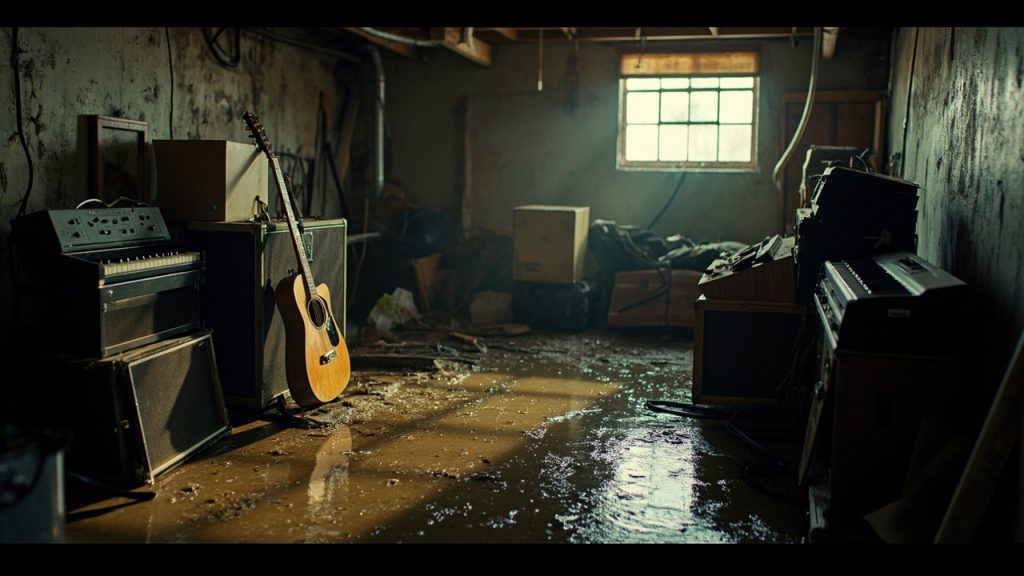
Your basement just flooded, and sitting in six inches of water is the vintage Les Paul you’ve had since before you can remember, the upright bass you gigged across Metro Detroit for years, or the Yamaha grand you refinished by hand. The panic is real. The clock is already running against you.
Water and wood do not negotiate. Within the first few hours, hygroscopic materials like spruce, maple, rosewood, and felt start absorbing moisture at a cellular level. Swelling, delamination, and mold colonization begin faster than most people expect. What you do in the next 24 hours determines whether those instruments are restorable or lost.
This guide covers exactly what to do, what not to do, and how professional water damage restoration for musical instruments works in the Highland Park and greater Detroit area.
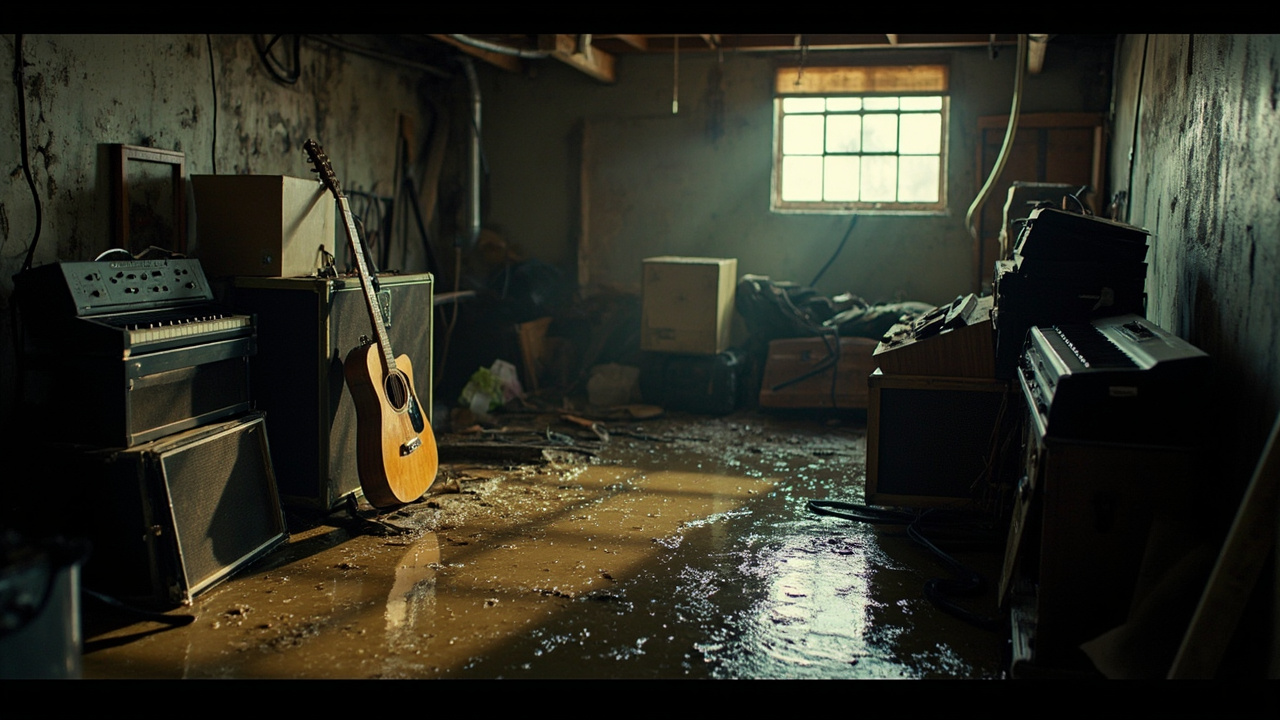
What Happens to Instruments Inside a Flooded Basement
Most musical instruments are built from materials that are structurally sensitive to moisture changes. Acoustic instruments in particular are engineered to function within a very specific relative humidity range, typically between 45% and 55% RH. When a basement flood drops that RH to near saturation, the consequences compound rapidly.
Wood grain absorbs water unevenly across the grain and along it. That uneven expansion creates internal stress. Soundboards crack. Necks torque. Hide glue joints, which are used in virtually every quality stringed instrument built before the modern era, soften and delaminate at temperatures above 140°F or in sustained high moisture. Finishes blister and lift. Fretboards swell and push frets out of their slots.
Brass and woodwind instruments face different problems. Valves and slides seize from oxidation. Cork and felt pads on woodwinds absorb water and compress permanently, destroying the airtight seal they depend on. Lacquer coatings on brass instruments blister. Pad cups fill with sediment if the flooding carried debris.
Electronics in amplifiers, vintage pedals, and recording gear face the most urgent threat. Water and electrical components produce corrosion almost immediately. Circuit boards that sit in standing water for more than a few hours often require component-level repair or replacement.
The First 24 Hours After Your Basement Floods
Speed is the only variable you fully control. Here is what needs to happen immediately.
- Cut power to the basement at your breaker panel before entering standing water. Flooded basements in older Highland Park homes often have aging wiring, and electrocution risk is real.
- Remove instruments from standing water as quickly as possible. Do not wait for the water to recede on its own.
- Do not force open instrument cases that have been submerged. The case itself may be holding the instrument in a more stable humidity environment than the open air. Let a professional assess it first if you are unsure.
- Do not use a hair dryer, space heater, or direct sunlight to dry instruments. Rapid or uneven drying causes more cracking than the water itself. Wood needs to dry slowly and with controlled humidity.
- Remove strings from acoustic guitars and basses. Tension on a swollen neck accelerates damage to the neck joint and truss rod channel.
- Do not wipe down a varnished violin or cello with anything abrasive. Water-soluble varnishes, common on older instruments, can be smeared or removed entirely.
- Document everything with photos and video before moving anything. Your insurance adjuster will need this, and so will the restoration team.
- Contact an IICRC Certified Firm immediately. Professional-grade extraction and dehumidification equipment needs to be running within hours, not days.
If your piano is on a ground-level floor directly above the flooded basement, check whether moisture has migrated upward into the subfloor beneath the instrument. Pianos transfer moisture from the floor up through their legs and frame. The same principles that apply to saving hardwood floors after a water leak apply to the wood in a piano’s base and cabinet.
Instrument-Specific Water Damage and What Restoration Involves
Grand and Upright Pianos
A piano is arguably the most complex instrument to restore after water damage. The soundboard, typically quartersawn Sitka spruce, is under continuous tension from string load. When it absorbs moisture, it swells and can crown or crack. A crowned soundboard affects tone, but a cracked one can render the instrument non-functional.
The pin block, which holds the tuning pins, is made from multiple laminated hardwood layers. Extended moisture exposure causes delamination that makes the pins unable to hold tension. You can re-pin a pin block, but it requires a skilled piano technician and is expensive.
Felt hammers and dampers absorb water and distort. Key bushings swell and cause keys to stick. The action, which is the mechanical assembly connecting keys to hammers, involves hundreds of wooden and felt components that all respond to humidity.
Professional restoration for a piano involves controlled drying at a stable temperature, meticulous humidity management throughout the drying process, and eventual referral to a qualified piano technician for regulation, voicing, and tuning. We work directly with Detroit-area piano technicians for the final mechanical restoration phase.
Vintage Guitars and Acoustic Stringed Instruments
Acoustic guitars, archtops, mandolins, and orchestral string instruments like violins, violas, and cellos rely on hide glue at every joint. Hide glue is reversible by design, which is actually useful for repair, but it means prolonged moisture exposure causes braces to pop off the top, seams to open, and necks to detach at the dovetail or mortise joint.
The top of an acoustic guitar is the most vulnerable component. A spruce or cedar top will absorb water faster than the maple or mahogany back and sides, creating differential expansion that leads to cracks near the bridge plate or along the grain.
Finish type matters enormously. Nitrocellulose lacquer, common on vintage American instruments, is more moisture-sensitive than modern polyurethane finishes. It clouds, blushes, and checks in high humidity. Restoring a nitro finish requires a luthier with experience in vintage finish work, not just a water damage contractor.
For orchestral strings, varnish stability is the primary concern. Instruments with oil varnish are generally more forgiving than those with spirit varnish. Either way, do not attempt to clean or polish a wet instrument. Let it stabilize first under controlled conditions.
Woodwind Instruments
Clarinets, oboes, and bassoons made from grenadilla or other dense tropical woods are prone to cracking when exposed to rapid moisture changes. The bore of a wooden woodwind is a precisely machined channel, and any swelling can affect intonation and key seating.
Pads on saxophones, clarinets, and flutes are made from leather, felt, and bladder skin. Even brief submersion typically requires full re-padding. The resonators inside each pad cup also corrode or displace in flood water. A woodwind technician will assess each key individually during the restoration process.
Metal flutes and saxophones are more resilient structurally, but the mechanism requires full disassembly, ultrasonic cleaning, and individual inspection of each spring and post. This is where our restoration partnerships with instrument repair shops in the Wayne County area become important.
Brass Instruments
Trumpets, trombones, French horns, and tubas are metal instruments, but they are not immune to flood damage. Valve casings accumulate sediment. Slides seize from oxidation, especially in older lacquer-free instruments. Water-keys, the small drainage valves on most brass instruments, can become clogged with debris.
Ultrasonic cleaning is the standard approach for flood-affected brass instruments. The process uses high-frequency sound waves in a cleaning solution to remove sediment, oxidation, and contaminants from interior chambers and valve casings without abrasion. After cleaning, each instrument is inspected for dents, damaged slides, and deteriorated cork bumpers before being returned to service.

How Professional Restoration Differs From DIY Drying
The single biggest mistake people make after a Highland Park basement flood is setting up box fans and opening windows, then waiting. In Michigan’s climate, ambient outdoor air in spring and fall often carries 60% to 80% relative humidity. You are not drying the instruments. You are feeding them more moisture.
Professional water damage restoration uses industrial-grade desiccant or refrigerant dehumidifiers capable of dropping a basement environment to below 40% RH consistently. Combined with air movers positioned for directed airflow, the drying science is specific and measurable. Technicians use psychrometric calculations to monitor the grain depression, or the difference between moisture content in the structure and the target dry standard, at multiple points throughout the process.
For instruments specifically, we use separate climate-controlled drying chambers that allow us to bring items down to target moisture content at a controlled rate, typically over 5 to 14 days depending on species density and degree of saturation. Rushing this process is what causes the irreversible cracking that makes restoration impossible.
| Instrument Type | Primary Risk After Flooding | Target Drying Timeframe | Post-Drying Specialist Needed |
|---|---|---|---|
| Grand or Upright Piano | Soundboard cracking, pin block delamination, action swelling | 10 to 21 days | Piano technician for regulation and tuning |
| Acoustic Guitar or Archtop | Brace delamination, top cracking, neck joint failure | 7 to 14 days | Luthier for brace regluing and setup |
| Violin, Viola, Cello | Seam opening, varnish damage, post displacement | 7 to 14 days | Luthier for top removal, interior repair, and regraduation |
| Woodwind (Clarinet, Oboe, Flute) | Bore swelling, pad saturation, key mechanism corrosion | 3 to 7 days | Woodwind technician for full re-padding |
| Brass (Trumpet, Trombone, Tuba) | Valve seizure, slide oxidation, lacquer blistering | 1 to 3 days | Brass technician for ultrasonic cleaning and re-lacquer if needed |
| Vintage Amplifier or Recording Gear | Circuit board corrosion, transformer saturation, speaker cone damage | Immediate professional drying required | Electronics technician for component-level inspection |
Mold Risk in Highland Park Basements
Highland Park sits inside Wayne County, and like much of Detroit’s inner-ring neighborhoods, its housing stock includes a significant number of homes built between the 1910s and 1950s. These basements often have stone or block foundations with limited vapor barriers. Moisture intrusion during flooding doesn’t just stay in the basement. It wicks into framing, insulation, and the drywall above grade.
Mold can begin colonizing porous surfaces within 24 to 48 hours under the right temperature and humidity conditions. Musical instruments stored in an untreated flooded basement are at serious mold risk, particularly cases and fabric-lined storage. The inside of a piano cabinet, the interior of a guitar case, and the inside of a soft gig bag are all ideal environments for mold growth once saturated.
If you are seeing any surface growth on instrument cases or visible fuzzing on felt or leather components, do not attempt to clean it with bleach or household sprays. Bleach does not address the root cause and can damage finishes and fabrics. For a deeper look at why surface treatments fall short, read our piece on why bleach won’t fix basement mold.
Proper mold remediation in a basement involves containment, HEPA-filtered air scrubbing, antimicrobial treatment of affected surfaces, and verification testing by a qualified inspector. The EPA’s mold cleanup guidelines recommend professional remediation for any affected area over 10 square feet, which most basement floods will exceed.
Detroit’s Climate Makes Recovery Harder
Michigan weather creates particular challenges for post-flood recovery. Spring snowmelt and summer thunderstorms are the two most common triggers for Highland Park basement flooding. Both tend to occur during periods of already-elevated outdoor humidity.
When ambient outdoor air is at 70% RH and you open your basement windows after a flood, you are not ventilating the moisture out. You are letting it stay or accumulate. This is the most common well-intentioned error we see from homeowners across Metro Detroit, from Midtown to Hamtramck to the northwest neighborhoods near Palmer Park.
Michigan winters create a different problem during recovery. Cold air holds less moisture than warm air, which means if a flood event happens in late fall and a homeowner heats the basement quickly, the sudden temperature rise causes rapid evaporation from structural materials that can accelerate wood cracking just as effectively as too-slow drying.
Professional drying accounts for seasonal psychrometric conditions. Target drying conditions are calculated against outdoor air properties, not just interior readings, to ensure the drying system is actually removing moisture rather than recirculating it.
Filing an Insurance Claim for Flooded Instruments in Michigan
Most standard homeowner’s insurance policies in Michigan do not automatically cover musical instruments at replacement value. If you have a vintage guitar worth several thousand dollars or a restored upright piano, you likely need a scheduled personal property endorsement or a separate instrument floater policy to be fully covered.
That said, the water damage itself, and the cost of professional restoration of your structure, typically falls under sudden and accidental water damage coverage if the flooding source is internal, such as a burst pipe, failed sump pump, or appliance failure. Ground-level flooding from external sources is generally excluded under standard policies and requires separate flood insurance through the National Flood Insurance Program.
Documentation is everything. Our team photographs the damage in detail, produces a written scope of work, and provides a restoration report that insurance adjusters can use to process your claim. If you need a primer on navigating this process, our guide on getting Detroit home insurance to pay for water restoration covers the most common claim disputes and how to avoid them. For Corktown residents with specific structural concerns, the detail in filing a successful water damage insurance claim for a Corktown home applies broadly across Wayne County neighborhoods.
| Flood Source | Typically Covered by Standard Homeowner Policy | Notes |
|---|---|---|
| Burst pipe or failed appliance | Yes, sudden and accidental | Must act quickly to mitigate. Delayed response can reduce claim payout. |
| Failed sump pump | Sometimes, with sump pump rider | Check your policy for specific sump pump backup coverage endorsement. |
| Sewer or drain backup | Rarely in base policy | Requires a separate water backup endorsement to be covered. |
| Surface or groundwater flooding | No | Requires NFIP flood insurance or a private flood policy. |
| Roof leak from storm damage | Yes, wind and hail event | Instruments damaged by roof leak intrusion may qualify as contents claim. |
Working With Detroit-Area Instrument Repair Specialists
Water damage restoration stops where instrument repair begins. Our role is to stabilize your instruments, bring them to a safe moisture content, remove any mold contamination, and document the full scope of damage. What comes next, structural repairs to the instrument itself, requires a luthier, piano technician, or woodwind specialist.
We maintain working relationships with instrument repair professionals across the Detroit area, including Wayne County and Oakland County shops that specialize in vintage fretted instruments, classical strings, and keyboard instruments. Detroit’s musical community is one of the deepest in the country. The Detroit Symphony Orchestra, the hundreds of working musicians in the Midtown and Woodbridge neighborhoods, the jazz scene anchored around the Detroit Jazz Festival, all of that musical culture means real instrument expertise exists here locally. We know who to send your instruments to when the drying phase is complete.
Restoration is a handoff between specialists, not a single transaction. A piano that has been dried correctly by a water damage team and then assessed by a qualified piano technician has a real path back to playability. One that was dried with box fans in a humid Michigan basement in April probably does not.
When to Call for Immediate Help
If your basement has flooded and instruments are affected, do not wait to see how things dry out on their own. The moisture content in a submerged acoustic instrument begins causing permanent damage within hours. The difference between a restored instrument and a total loss often comes down to whether professional drying equipment was running within the first day.
Our team works across Highland Park, Hamtramck, the Palmer Woods area, Midtown Detroit, and throughout Wayne County. We carry IICRC certification and use calibrated moisture meters, thermal imaging cameras, and psychrometric logging equipment to manage every step of the drying process with real data, not guesswork.
Call us the moment the water stops rising. Document everything before you move anything. And let us bring the right equipment to give your instruments the best possible chance at a full recovery.
You may also find this helpful. The Hidden Reason Your Corktown Art Studio Always Feels Damp in the Summer.
{
“@context”: “https://schema.org”,
“@type”: “BlogPosting”,
“headline”: “Saving Your Vintage Gear and Instruments After a Highland Park Basement Flood”,
“description”: “Basement flood in Highland Park? Learn how to save vintage guitars, pianos, and brass instruments from water damage before it becomes permanent.”,
“wordCount”: 2633,
“datePublished”: “2026-08-09T05:13:00.000Z”,
“dateModified”: “2026-08-09T05:13:00.000Z”,
“inLanguage”: “en-US”,
“mainEntityOfPage”: {
“@type”: “WebPage”,
“@id”: “https://ironwoodwaterdamagerestorationdetroit.com”
},
“publisher”: {
“@type”: “LocalBusiness”,
“name”: “Ironwood Water Damage Restoration Detroit”,
“url”: “https://ironwoodwaterdamagerestorationdetroit.com”
},
“author”: {
“@type”: “Organization”,
“name”: “Ironwood Water Damage Restoration Detroit”,
“url”: “https://ironwoodwaterdamagerestorationdetroit.com”
},
“image”: {
“@type”: “ImageObject”,
“url”: “https://ironwoodwaterdamagerestorationdetroit.com/wp-content/uploads/2026/03/saving-your-vintage-gear-and-instruments-after-a-h-1.jpg”
}
}
{
“@context”: “https://schema.org”,
“@type”: “LocalBusiness”,
“name”: “Ironwood Water Damage Restoration Detroit”,
“url”: “https://ironwoodwaterdamagerestorationdetroit.com”,
“address”: {
“@type”: “PostalAddress”,
“addressLocality”: “Detroit”
},
“areaServed”: {
“@type”: “City”,
“name”: “Detroit”
}
}
{
“@context”: “https://schema.org”,
“@type”: “BreadcrumbList”,
“itemListElement”: [
{
“@type”: “ListItem”,
“position”: 1,
“name”: “Home”,
“item”: “https://ironwoodwaterdamagerestorationdetroit.com”
},
{
“@type”: “ListItem”,
“position”: 2,
“name”: “Blog”,
“item”: “https://ironwoodwaterdamagerestorationdetroit.com/blog”
},
{
“@type”: “ListItem”,
“position”: 3,
“name”: “Saving Your Vintage Gear and Instruments After a Highland Park Basement Flood”
}
]
}
{
“@context”: “https://schema.org”,
“@type”: “Service”,
“serviceType”: “Water Damage Restoration”,
“provider”: {
“@type”: “LocalBusiness”,
“name”: “Ironwood Water Damage Restoration Detroit”,
“url”: “https://ironwoodwaterdamagerestorationdetroit.com”
},
“areaServed”: {
“@type”: “City”,
“name”: “Detroit”
},
“description”: “Basement flood in Highland Park? Learn how to save vintage guitars, pianos, and brass instruments from water damage before it becomes permanent.”
}