
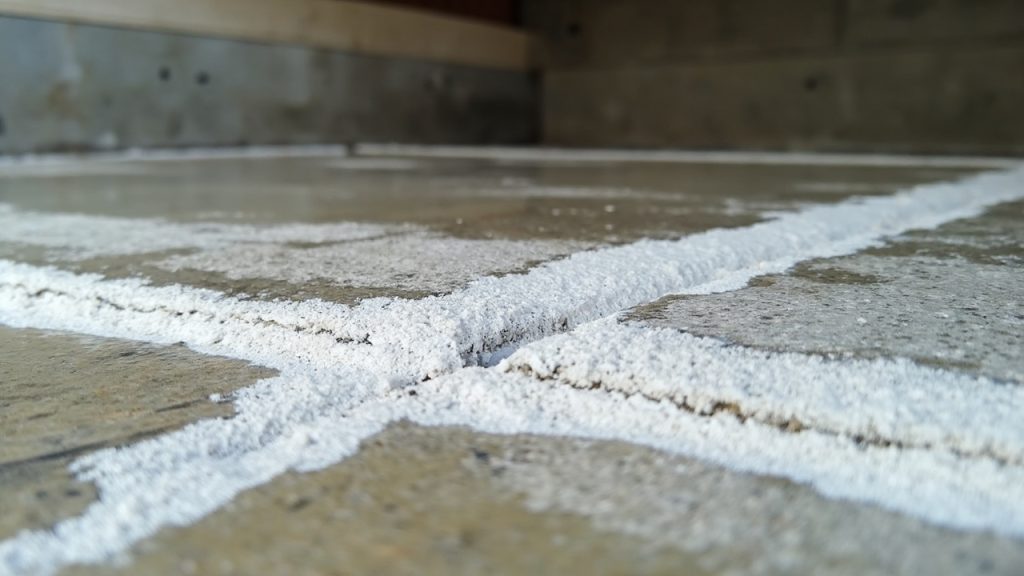
A damp garage floor is one of those problems that feels minor until it isn’t. You notice the concrete looks wet. Maybe there’s a white powdery crust along the edges. Maybe you’re getting mold on stored boxes or rust forming on tools. In Eastside Detroit neighborhoods like Jefferson-Chalmers, East English Village, and Chandler Park, this is a common complaint. The soil, the climate, and the age of the concrete all work against you.
Before you buy a product or call anyone, you need to know where the moisture is actually coming from. Treating condensation the same way you treat hydrostatic seepage is a waste of time and money. This guide walks you through the diagnosis first, then the fix.
The Plastic Sheet Test Every Detroit Homeowner Should Know
This is the single most useful thing you can do before spending a dollar on repairs. Tape a 12-by-12-inch piece of plastic sheeting flat to your garage floor. Seal all four edges completely with duct tape. Leave it for 48 hours, then check it.
- Moisture on top of the plastic means the water is coming from the air. That’s a condensation problem caused by humidity. The concrete itself is fine.
- Moisture under the plastic means water is moving up through the slab. That points to hydrostatic pressure or capillary action pulling groundwater through the porous concrete.
- Moisture both above and below means you have a combined problem, which is more common than people expect in Southeast Michigan.
Run this test in the morning when the floor is most likely to show its worst behavior. Do it in two or three spots across the slab if you have a large garage.
Why Detroit Garages Are Especially Vulnerable to Moisture
Southeast Michigan sits on a unique combination of geological and climate factors that make garage moisture worse than in most other regions of the country.
Wayne County Clay Soil and Hydrostatic Pressure
Wayne County soil has a high clay content. Clay doesn’t drain. When it rains, that soil absorbs water and holds it directly against your garage slab for days. The weight of that saturated soil creates hydrostatic pressure, which pushes water through any crack, joint, or porous section of your concrete.
This is different from a leak. There’s no single entry point. The water is being forced in under pressure across a wide area. You can see this clearly after a heavy rain event, which Detroit averages roughly 34 inches of annually. When that water has nowhere to go in tight, clay-heavy soil, your slab absorbs it.
The Michigan Department of Environment, Great Lakes, and Energy (EGLE) has published data on groundwater levels across Wayne County, and many Eastside Detroit neighborhoods sit in areas with naturally elevated water tables, particularly those closer to the Detroit River and Lake St. Clair shoreline.
Great Lakes Humidity and Condensation Season
Proximity to the Great Lakes means Detroit experiences high relative humidity, especially from late spring through early fall. Warm, humid air flows into a cooler garage and hits the cold concrete slab. The concrete acts like a cold glass of water on a hot day. The moisture condenses directly on the surface.
This is purely a surface phenomenon. No water is coming through the slab itself, but the floor still looks and feels wet. This is why garage floors that seem fine in January suddenly appear soaked in June.
Freeze-Thaw Cycles and Concrete Degradation
Detroit averages over 40 freeze-thaw cycles per year. Every time water gets into a concrete pore, freezes, and expands, it widens that pore slightly. Over years and decades, this increases the permeability rating of the slab. A garage floor that was adequately sealed when it was poured in 1975 may now absorb water far more readily simply because of weather exposure. This is especially true for garages in older Eastside neighborhoods like Morningside or Regent Park where original concrete slabs have had decades of Michigan winters working on them.

Reading the Warning Signs on Your Concrete
Your garage floor gives you clues. Knowing how to read them saves significant time in diagnosis.
| What You See | What It Likely Means | Urgency Level |
|---|---|---|
| White powdery deposits along edges or cracks | Efflorescence from mineral-laden water seeping through the slab | Moderate. Address the seepage source. |
| Uniform surface dampness on humid days only | Condensation from Great Lakes humidity hitting cold concrete | Low. Manage with ventilation and dehumidification. |
| Wet spots near cracks or control joints | Hydrostatic pressure forcing water through specific failure points | High. Requires professional-grade waterproofing. |
| Dark staining at the base of walls where slab meets foundation | Capillary action wicking water up from the footing area | High. Indicates ongoing moisture intrusion at the joint. |
| Mold growth on lower portions of walls or stored items | Persistent elevated humidity, likely combined condensation and minor seepage | High. Mold spreads. Address immediately. |
| Heaving or cracking in the slab surface | Freeze-thaw damage or expansive clay soil movement below the slab | Very High. Structural concern. |
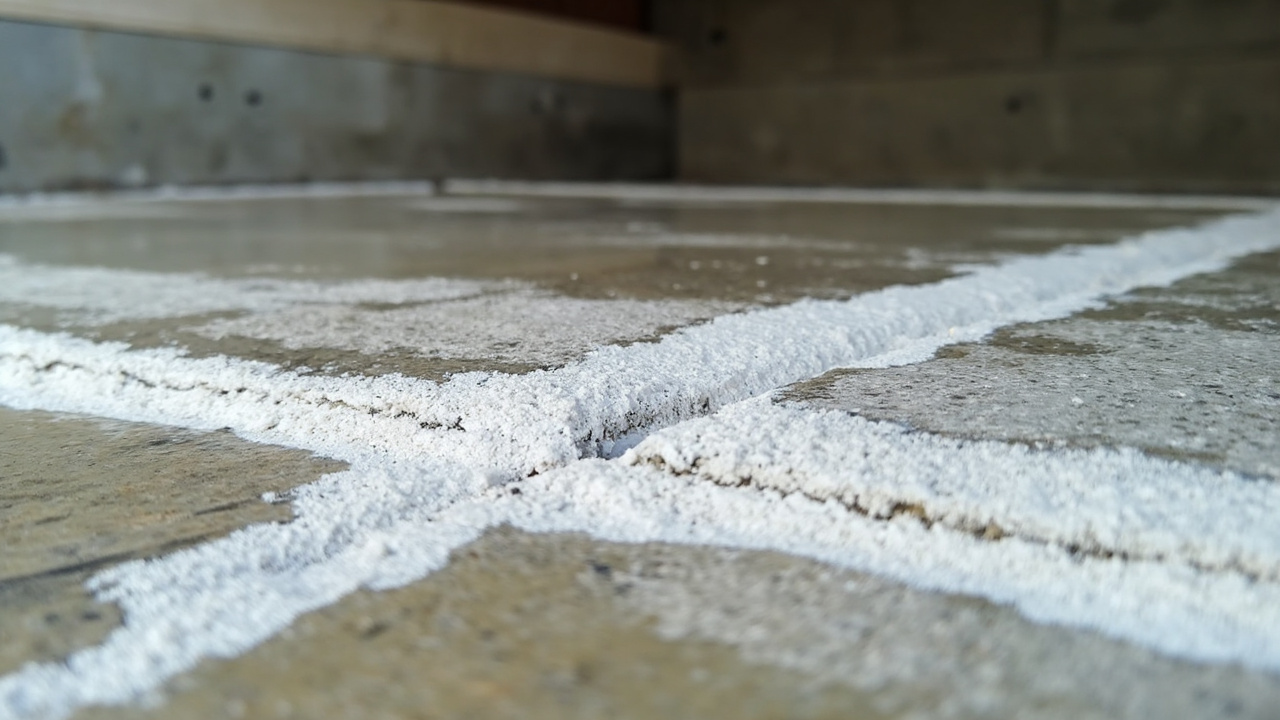
Efflorescence deserves special attention. That white powder is calcium carbonate left behind when water moves through concrete, dissolves minerals, and evaporates at the surface. It is direct evidence that liquid water has been traveling through your slab. It is not harmful on its own, but it tells you seepage is happening.
Short-Term Steps You Can Take Right Now
While you plan a permanent fix, these steps reduce damage and slow the problem.
Dehumidification
A portable dehumidifier rated for the square footage of your garage will address condensation-based moisture immediately. For most single-car garages, a 50-pint unit is adequate. Run it continuously during humid months and empty the reservoir daily or connect a direct drain hose. The goal is to keep relative humidity below 60 percent. Above that threshold, condensation on cold concrete becomes likely, and mold growth becomes possible.
Improve Ventilation
If your garage has windows, open them during cool, dry mornings to allow air exchange. A simple exhaust fan installed near the roofline will move humid air out and draw drier air in. This is especially relevant in attached garages where the temperature differential between the interior and the concrete slab is most extreme.
Address Gutters and Grading
Walk the perimeter of your garage. Are your gutters clean and draining water away from the structure? Is the ground sloped toward or away from the foundation? Negative grading, where the soil slopes back toward the garage, channels every rainfall directly against your slab. A few hours of regrading the soil or extending your downspout drainage can meaningfully reduce how much water your slab sees during rain events.
Professional Long-Term Solutions Worth Understanding
If the plastic sheet test confirmed water is coming through the slab, you need a solution that addresses the source, not just the surface.
Crystalline Waterproofing Compounds
These products work by penetrating the concrete and reacting chemically to form crystals inside the pores and capillaries of the slab. Unlike surface coatings that can peel, crystalline waterproofing becomes part of the concrete itself. Brands like Xypex and Kryton are industry-standard options used by professional restoration teams in Southeast Michigan. The concrete must be clean, sound, and slightly damp for the product to bond and react correctly. This is not a good weekend DIY project if you’ve never worked with the material before.
Vapor Barriers and Sub-Slab Systems
In cases where the garage will be converted to usable living or workshop space, a vapor barrier system installed over the existing slab creates a physical break between the concrete and the interior environment. These systems use reinforced polyethylene sheeting with sealed seams and a drainage channel at the perimeter. They’re paired with a drainage mat sub-floor that allows any residual moisture to move laterally to a collection point rather than being trapped under flooring materials.
Epoxy Coatings with Moisture Vapor Barriers
Standard epoxy coatings fail on damp concrete. The moisture vapor pushes up through the slab and causes the coating to bubble and delaminate. Professional-grade epoxy systems designed for high-moisture environments include a moisture-tolerant primer that bonds to the concrete at the chemical level, then a topcoat that resists vapor transmission. The concrete must have a moisture vapor emission rate below the product’s rated threshold, measured with a calcium chloride test or an in-situ relative humidity probe, before application.
French Drain and Sump Pump Systems
For garages with serious hydrostatic pressure issues, the most effective long-term solution is a sub-perimeter drainage system. A trench is cut around the interior perimeter of the slab, a perforated drain pipe is installed at the footing level in a gravel bed, and water is directed to a sump pit with an electric pump. This system intercepts water before it can build enough pressure to force through the slab. It does not stop water from entering the soil, but it removes the pressure that drives water through concrete. In older Eastside Detroit homes, this is often the only permanent solution.
| Solution Type | Best For | DIY Feasible? | Expected Longevity |
|---|---|---|---|
| Dehumidifier and ventilation | Condensation-only problems | Yes | Ongoing maintenance |
| Crystalline waterproofing | Moderate seepage through porous slab | Possible with research | Permanent (becomes part of concrete) |
| Moisture-tolerant epoxy system | Moderate moisture, aesthetic finish desired | Not recommended | 8 to 15 years depending on traffic |
| Vapor barrier and drainage mat | Converting garage to usable space | Possible for experienced DIYer | 15 to 20 years |
| Interior French drain and sump pump | High hydrostatic pressure, persistent seepage | No | 20+ years with sump maintenance |
| Polyurethane crack injection | Specific crack sealing under hydrostatic conditions | No | Permanent at injection point |

When a Damp Garage Floor Signals a Bigger Problem
Some moisture signs are cosmetic. Others signal something that needs a professional assessment fast.
Call a certified water restoration professional if you see any of the following. Structural cracks that are widening over time, especially diagonal cracks in a corner or stair-step cracks where the slab meets the wall, can indicate soil movement below the slab. Polyurethane injection can seal an active crack, but the underlying cause needs evaluation.
Persistent mold growth that keeps returning after cleaning is a red flag. Surface mold in a garage can spread to shared walls with a living space. If your garage is attached to your home, mold in that environment is not isolated. It circulates into your living area through gaps, shared walls, and HVAC systems. Before you treat mold with any product, read why bleach won’t fix your mold problem and understand what actually works.
If you are dealing with a wood subfloor in an adjacent space or have hardwood in areas connected to the garage, moisture migration is a real concern. The same groundwater causing your garage slab to stay damp can affect adjacent flooring materials. See the guide on saving hardwood floors after water intrusion for guidance on what’s recoverable.
A water-damaged garage that led to a homeowner’s insurance claim is also something to handle carefully. Most policies cover sudden and accidental water damage, not gradual seepage. But the documentation matters enormously. If you’re navigating that process, the guide on getting your Detroit home insurance to pay for water restoration walks through what adjusters look for and how to strengthen your claim.
IICRC Standards and Why Certification Matters for This Work
The Institute of Inspection, Cleaning and Restoration Certification (IICRC) publishes the S500 Standard for Professional Water Damage Restoration. This is the industry benchmark that governs how moisture is assessed, what equipment is used, and how drying is documented. When you hire a contractor for garage moisture work, ask whether they follow IICRC protocols. Contractors who do use calibrated moisture meters, psychrometric calculations, and documented drying logs. Those who don’t are guessing.
In a city where many restoration companies operate without formal training, this distinction matters. Eastside Detroit homeowners dealing with recurring moisture issues often call us after a previous contractor applied a surface product that failed within one season. The failure point is almost always the same. They treated the symptom without diagnosing the source.
A Realistic View of What a Professional Assessment Involves
A proper moisture assessment of your garage slab is not a quick visual inspection. A qualified technician will use a pin-type or non-destructive moisture meter to map moisture levels across the entire slab. They’ll check relative humidity in the ambient air and compare it to the dew point to determine whether condensation is occurring. They’ll look at the age and condition of the concrete, examine any visible cracks or control joints, check the exterior grading and drainage, and review the interior drainage situation.
This assessment gives you a clear picture of whether you have one problem or three overlapping problems. A concrete slab in Jefferson-Chalmers with clay soil, an aging surface, and a blocked gutter downspout can show moisture from all three causes simultaneously. Treating only one will give you only partial results.
If moisture in your garage has already spread to adjacent carpeted areas or storage rooms, you’ll also want to understand your options there. The guide on deciding whether wet carpet can be saved covers the thresholds for restoration versus replacement.
The Diagnostic Sequence That Actually Works
If you take nothing else from this guide, follow this sequence before spending money on any product or service.
- Run the plastic sheet test in at least two spots for 48 hours.
- Check your gutters and downspout extensions. Make sure water is draining at least four feet away from the structure.
- Check the grading around the garage. The ground should slope away from the structure.
- Look for efflorescence, active cracks, or staining at wall-to-floor joints.
- Note when the dampness occurs. After rain? During humid weather? Both?
- Based on your plastic sheet results, pursue either condensation management (dehumidification, ventilation) or seepage solutions (waterproofing, drainage).
- If you find signs of mold, structural cracking, or persistent seepage despite surface treatments, call a certified restoration professional for an assessment.
A damp garage floor in Eastside Detroit is almost always fixable. The fix might be a dehumidifier and a cleaned gutter, or it might be a sub-slab drainage system. The only way to know is to diagnose it correctly first. If you need a professional set of eyes on the problem, reach out to a certified restoration team with experience in Southeast Michigan’s specific soil and climate conditions. A proper assessment costs far less than repairing mold damage or a failed epoxy coating six months from now.
{
“@context”: “https://schema.org”,
“@type”: “BlogPosting”,
“headline”: “Tracking Down the Source of Damp Concrete in Your Eastside Detroit Garage”,
“description”: “Is your Eastside Detroit garage floor wet? Learn how to find the source of moisture, test for condensation vs. seepage, and fix it for good.”,
“wordCount”: 2378,
“datePublished”: “2026-04-26T07:16:00.000Z”,
“dateModified”: “2026-04-26T07:16:00.000Z”,
“inLanguage”: “en-US”,
“mainEntityOfPage”: {
“@type”: “WebPage”,
“@id”: “https://ironwoodwaterdamagerestorationdetroit.com”
},
“publisher”: {
“@type”: “LocalBusiness”,
“name”: “Ironwood Water Damage Restoration Detroit”,
“url”: “https://ironwoodwaterdamagerestorationdetroit.com”
},
“author”: {
“@type”: “Organization”,
“name”: “Ironwood Water Damage Restoration Detroit”,
“url”: “https://ironwoodwaterdamagerestorationdetroit.com”
},
“image”: {
“@type”: “ImageObject”,
“url”: “https://ironwoodwaterdamagerestorationdetroit.com/wp-content/uploads/2026/03/tracking-down-the-source-of-damp-concrete-in-your-1.jpg”
}
}
{
“@context”: “https://schema.org”,
“@type”: “LocalBusiness”,
“name”: “Ironwood Water Damage Restoration Detroit”,
“url”: “https://ironwoodwaterdamagerestorationdetroit.com”,
“address”: {
“@type”: “PostalAddress”,
“addressLocality”: “Detroit”
},
“areaServed”: {
“@type”: “City”,
“name”: “Detroit”
}
}
{
“@context”: “https://schema.org”,
“@type”: “BreadcrumbList”,
“itemListElement”: [
{
“@type”: “ListItem”,
“position”: 1,
“name”: “Home”,
“item”: “https://ironwoodwaterdamagerestorationdetroit.com”
},
{
“@type”: “ListItem”,
“position”: 2,
“name”: “Blog”,
“item”: “https://ironwoodwaterdamagerestorationdetroit.com/blog”
},
{
“@type”: “ListItem”,
“position”: 3,
“name”: “Tracking Down the Source of Damp Concrete in Your Eastside Detroit Garage”
}
]
}
{
“@context”: “https://schema.org”,
“@type”: “Service”,
“serviceType”: “Water Damage Restoration”,
“provider”: {
“@type”: “LocalBusiness”,
“name”: “Ironwood Water Damage Restoration Detroit”,
“url”: “https://ironwoodwaterdamagerestorationdetroit.com”
},
“areaServed”: {
“@type”: “City”,
“name”: “Detroit”
},
“description”: “Is your Eastside Detroit garage floor wet? Learn how to find the source of moisture, test for condensation vs. seepage, and fix it for good.”
}