

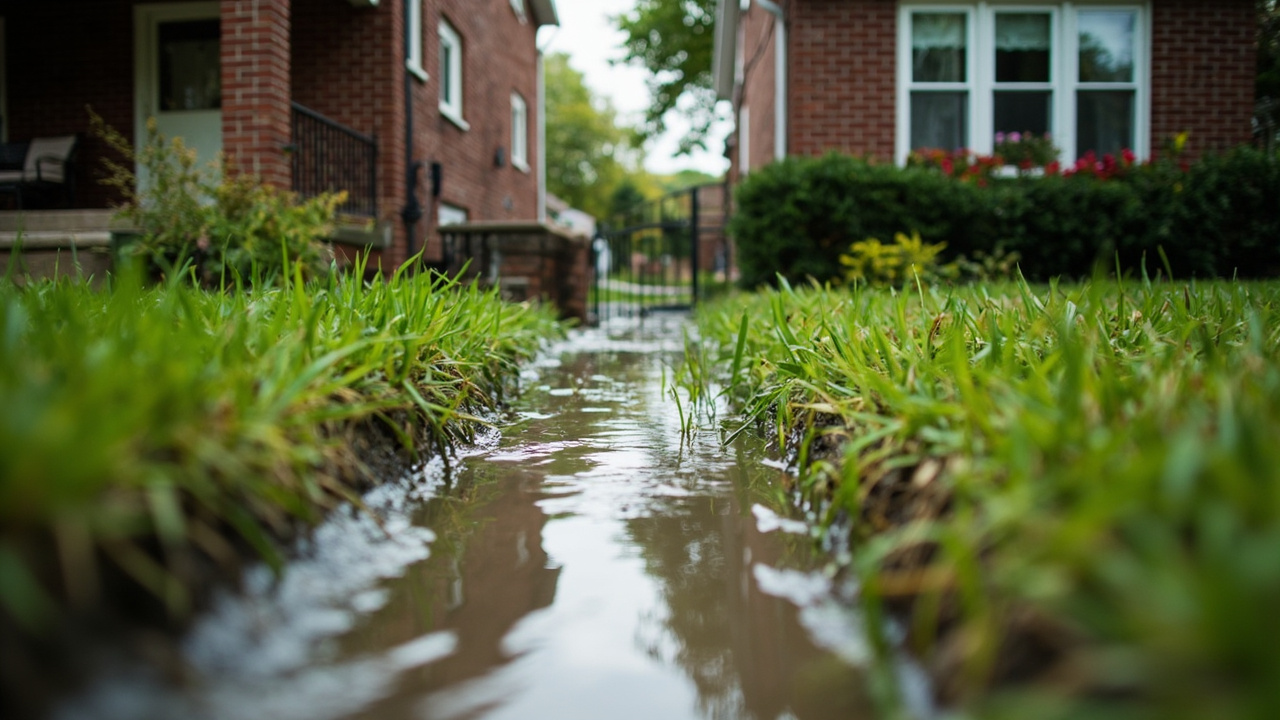
Water flowing from your neighbor’s yard into your basement is one of the most frustrating things a Detroit homeowner faces. You did nothing wrong. You maintain your property. But every time a heavy rain hits the Bagley neighborhood, you’re the one mopping up water that originated next door.
This is not a rare problem in Detroit. The combination of aging housing stock, clay-heavy soil, aging infrastructure, and close-set lots makes surface water runoff a neighborhood-wide issue across much of the city’s northwest side. Understanding what’s happening physically, what your legal options are, and what actually fixes it will save you from repeating the same cleanup cycle year after year.
Why Surface Water Runoff Is a Specific Problem in Bagley and Northwest Detroit
Bagley sits in a part of Detroit where the housing was largely built between the 1920s and 1950s. Those homes were graded toward the street or the rear alley at the time of construction. Decades of settling, landscape changes, additions, and concrete work have altered those original grades in ways the original builders never intended.
When a neighboring property adds a concrete patio, a garage pad, or even just lets their lawn die off and become compacted, the result is more impervious surface. Water that used to absorb into soil now sheets off and follows gravity, which often means it flows directly toward the lowest point, which is frequently your yard and your foundation.
Detroit also sits on a thick layer of glacial clay soil. Clay does not drain. When the clay saturates during a heavy rain event, any additional water has nowhere to go but sideways or into basements through foundation cracks and mortar joints. Hydrostatic pressure builds up against your foundation wall, and water finds the path of least resistance.
The Detroit Water and Sewerage Department (DWSD) manages a combined sewer system across much of the city. In older neighborhoods like Bagley, a single pipe carries both stormwater and sanitary sewage. During intense rain events, that system reaches capacity, which contributes to basement backups and limits how much street drainage can handle. You can learn more about how Detroit’s combined sewer overflow (CSO) system works by reviewing the Michigan Department of Environment, Great Lakes, and Energy (EGLE) resources on stormwater management.
Surface Water Runoff vs. Sewer Backup — Two Different Problems
These two issues look similar when water is in your basement, but they are legally and mechanically different. Mixing them up costs homeowners money when it comes time to file an insurance claim.
| Water Source | Entry Point | Insurance Coverage | Responsible Party |
|---|---|---|---|
| Surface water runoff | Foundation cracks, window wells, grade-level openings | Often excluded from standard homeowner policies; may require flood endorsement | Homeowner, neighbor (civil dispute), or municipality depending on cause |
| Sewer backup | Floor drains, laundry tubs, toilets | Covered with sewer backup endorsement, not standard HO policy | DWSD if main line fails; homeowner if lateral fails |
| Groundwater intrusion | Cove joint at floor-wall junction, porous block walls | Generally not covered without specific endorsement | Homeowner responsibility to waterproof |
If water is coming in through a floor drain, that points to a sewer issue. If water is seeping through your foundation wall at or below grade level, that is surface water or groundwater pressure. A professional restoration team can document the entry point accurately, which matters when your adjuster reviews the claim. For help navigating that process, read our guide on how to get your Detroit home insurance to actually pay for water restoration.
Is Your Neighbor Legally Responsible for the Runoff?
Michigan follows what is called the “natural flow” doctrine for surface water disputes. Under this framework, an upper landowner has the right to drain their property naturally downhill. But that right has limits. If your neighbor has altered their grading, added impervious surfaces, or installed a downspout that directs concentrated water toward your property, they may have created an unnatural condition that changes their liability.
Wayne County drainage codes and City of Detroit ordinances require that property improvements not redirect stormwater in a way that damages adjacent properties. If you have documented evidence that your neighbor’s concrete work or landscaping change caused or worsened flooding on your lot, you may have grounds for a complaint through the city or a civil claim.
Before going that route, talk to your neighbor. Most people don’t know their yard is flooding yours. A simple conversation and a shared drainage solution often resolves it faster than any legal process.

What to Do When Active Runoff Is Entering Your Home
If water is actively coming in right now, your immediate priority is damage control. Here is what to do in order.
- Shut off electricity to the basement at the breaker panel before entering standing water.
- Do not use a standard vacuum or home equipment to remove standing water. You need a pump rated for the volume.
- Move items off the floor and document everything with photos and video before touching anything for insurance purposes.
- Call a licensed water damage restoration company to begin extraction and drying within the first few hours. The IICRC S500 Standard for Professional Water Damage Restoration sets the guideline that secondary damage, including mold growth, begins within 24 to 48 hours of water exposure.
- Keep a written log of the date, time, weather conditions, and the visible water entry point.
That log is critical. If this is a repeat problem tied to your neighbor’s yard, documentation builds your case for a civil claim or a code enforcement complaint.
One concern many homeowners miss after cleanup is mold. If water sat in your basement even for a short time, mold can begin developing inside wall cavities and under subfloors. That’s a secondary problem that outlasts the original flood. Read more about why surface-level cleaning often misses the real issue in our article on why bleach won’t fix basement mold and when to call a pro.
Long-Term Drainage Solutions That Actually Work in Detroit
Cleaning up after every rain is not a solution. The fix has to address the source. These are the drainage interventions that work in Bagley and similar northwest Detroit neighborhoods, given the clay soil and lot configurations.
Yard Regrading
The most direct fix when a neighbor’s runoff is the cause is to create a positive grade along your property line that redirects water away from your foundation. Detroit lots tend to be narrow, which limits how much grade change is practical, but even a modest slope toward the street or rear can significantly reduce water intrusion.
French Drains Along the Property Line
A French drain is a perforated pipe wrapped in filter fabric and buried in a gravel trench. Installed along the uphill side of your property line, it intercepts water before it reaches your foundation and directs it toward a sump basin or to daylight at the front or rear of the lot. In clay-heavy soil, the trench depth and gravel specification matter. A shallow, undersized French drain fills with silt and fails within a few years. Proper installation goes deep enough to intercept the water table at the relevant saturation point.
Sump Pump Systems
A sump pump handles water that has already entered the perimeter drainage system under your basement floor. In neighborhoods like Bagley, a dual-pump setup with a battery backup is the standard recommendation. When the power goes out during a storm event, which is exactly when you need it most, a battery backup keeps the sump running.
Downspout Extensions and Disconnection
Detroit’s green infrastructure program, administered through DWSD, offers credit incentives for homeowners who disconnect downspouts from the combined sewer system and redirect them to permeable areas. This reduces sewer overload and keeps your neighbor’s roof runoff out of the shared pipe system. If your neighbor’s downspouts drain toward your property, this is the conversation to have with them first.
| Solution | Best For | Typical Timeline to Install | Effectiveness in Clay Soil |
|---|---|---|---|
| Yard regrading | Surface sheet flow from adjacent lots | 1 to 3 days | High if grade change is sufficient |
| French drain (perimeter) | High water table and lateral groundwater | 2 to 5 days | Moderate to high with proper depth and gravel spec |
| Interior sump system | Water that has already passed through foundation | 1 to 2 days | High for managing existing intrusion |
| Downspout disconnection | Roof runoff entering combined sewer system | Half a day | Moderate, reduces overall volume entering yard |
| Foundation crack injection | Specific entry points in poured concrete walls | 1 day | High for sealing existing cracks |
DWSD Credits and Detroit’s Green Infrastructure Incentives
Detroit homeowners pay a drainage charge on their water bills based on the impervious surface area of their property. DWSD offers a residential drainage credit program for homeowners who disconnect downspouts and implement approved green infrastructure practices like rain gardens and permeable pavers. These credits reduce your monthly bill and reduce the volume of stormwater entering the overtaxed combined sewer system.
If you are planning a yard drainage project to address runoff from an adjacent property, applying for the DWSD drainage credit at the same time makes financial sense. The application process requires documentation of your green infrastructure installation, and a restoration or drainage contractor familiar with Detroit’s requirements can help you compile that paperwork.
Neighborhoods Beyond Bagley Where This Problem Is Common
While Bagley residents deal with this regularly, the same conditions exist across much of northwest and east Detroit. Homeowners near the Jefferson Chalmers flood zone on the east side face compounding pressure from the Detroit River proximity and aging seawall infrastructure. Residents near the Grosse Pointe borders in areas like East English Village deal with similar clay soil and close lot grading challenges.
In the University District and Grandmont-Rosedale neighborhoods, larger lot sizes sometimes help, but tree root interference with older clay tile drain systems creates its own set of complications. Each neighborhood has its own micro-drainage patterns, and a restoration team familiar with Detroit’s specific geography will assess your lot differently than a generic contractor would.

After the Flood — Protecting What’s Inside Your Home
Even after you fix the exterior drainage problem, the damage already done needs professional attention. Wet drywall, soaked insulation, and saturated subfloor materials do not dry out on their own in a Detroit basement. The humidity stays trapped, and mold follows.
If your flooring took water, the timeline for saving it matters. Hardwood in particular is time-sensitive. Read about what restoration looks like for water-damaged floors in our article on how to save hardwood floors after a significant water leak. For carpeted areas, the decision between drying and replacement depends on contamination level, saturation depth, and how long it sat wet, which our guide on deciding whether wet carpet can be saved or needs to go covers in detail.
On the insurance side, documenting the entry point, the source, and the timeline of damage is what determines whether your claim gets paid. If this is a recurring neighbor-related runoff problem, a letter from an IICRC-certified restoration professional documenting the water source can strengthen your claim significantly. Our guide on filing a successful water damage insurance claim walks through what adjusters look for.
Dealing with surface water runoff from a neighbor’s yard in your Bagley home is a fixable problem. The fix is not a one-size-fits-all solution. It requires an honest assessment of your lot grade, your neighbor’s drainage situation, your soil conditions, and your foundation’s current condition. When you get that full picture, you stop cleaning up the same mess after every storm and start preventing it before it starts.
If water is coming in now or you want a professional assessment of your drainage situation before the next heavy rain, call a certified Detroit restoration team. An on-site evaluation takes about an hour and gives you a clear picture of what’s driving the problem and what will actually stop it.
{
“@context”: “https://schema.org”,
“@type”: “BlogPosting”,
“headline”: “What Bagley Homeowners Can Do When the Neighbor’s Yard Keeps Flooding Their Property”,
“description”: “Surface water runoff from a neighbor’s yard is a real problem in Detroit’s Bagley neighborhood. Here’s what causes it and how to fix it for good.”,
“wordCount”: 1962,
“datePublished”: “2026-05-21T12:05:00.000Z”,
“dateModified”: “2026-05-21T12:05:00.000Z”,
“inLanguage”: “en-US”,
“mainEntityOfPage”: {
“@type”: “WebPage”,
“@id”: “https://ironwoodwaterdamagerestorationdetroit.com”
},
“publisher”: {
“@type”: “LocalBusiness”,
“name”: “Ironwood Water Damage Restoration Detroit”,
“url”: “https://ironwoodwaterdamagerestorationdetroit.com”
},
“author”: {
“@type”: “Organization”,
“name”: “Ironwood Water Damage Restoration Detroit”,
“url”: “https://ironwoodwaterdamagerestorationdetroit.com”
},
“image”: {
“@type”: “ImageObject”,
“url”: “https://ironwoodwaterdamagerestorationdetroit.com/wp-content/uploads/2026/03/dealing-with-surface-water-runoff-from-the-neighbo-1.jpg”
}
}
{
“@context”: “https://schema.org”,
“@type”: “LocalBusiness”,
“name”: “Ironwood Water Damage Restoration Detroit”,
“url”: “https://ironwoodwaterdamagerestorationdetroit.com”,
“address”: {
“@type”: “PostalAddress”,
“addressLocality”: “Detroit”
},
“areaServed”: {
“@type”: “City”,
“name”: “Detroit”
}
}
{
“@context”: “https://schema.org”,
“@type”: “FAQPage”,
“mainEntity”: [
{
“@type”: “Question”,
“name”: “Is Your Neighbor Legally Responsible for the Runoff?”,
“acceptedAnswer”: {
“@type”: “Answer”,
“text”: “Michigan follows what is called the \”natural flow\” doctrine for surface water disputes. Under this framework, an upper landowner has the right to drain their property naturally downhill. But that right has limits. If your neighbor has altered their grading, added impervious surfaces, or installed a downspout that directs concentrated water toward your property, they may have created an unnatural condition that changes their liability.”
}
}
]
}
{
“@context”: “https://schema.org”,
“@type”: “BreadcrumbList”,
“itemListElement”: [
{
“@type”: “ListItem”,
“position”: 1,
“name”: “Home”,
“item”: “https://ironwoodwaterdamagerestorationdetroit.com”
},
{
“@type”: “ListItem”,
“position”: 2,
“name”: “Blog”,
“item”: “https://ironwoodwaterdamagerestorationdetroit.com/blog”
},
{
“@type”: “ListItem”,
“position”: 3,
“name”: “What Bagley Homeowners Can Do When the Neighbor’s Yard Keeps Flooding Their Property”
}
]
}
{
“@context”: “https://schema.org”,
“@type”: “Service”,
“serviceType”: “Water Damage Restoration”,
“provider”: {
“@type”: “LocalBusiness”,
“name”: “Ironwood Water Damage Restoration Detroit”,
“url”: “https://ironwoodwaterdamagerestorationdetroit.com”
},
“areaServed”: {
“@type”: “City”,
“name”: “Detroit”
},
“description”: “Surface water runoff from a neighbor’s yard is a real problem in Detroit’s Bagley neighborhood. Here’s what causes it and how to fix it for good.”
}