
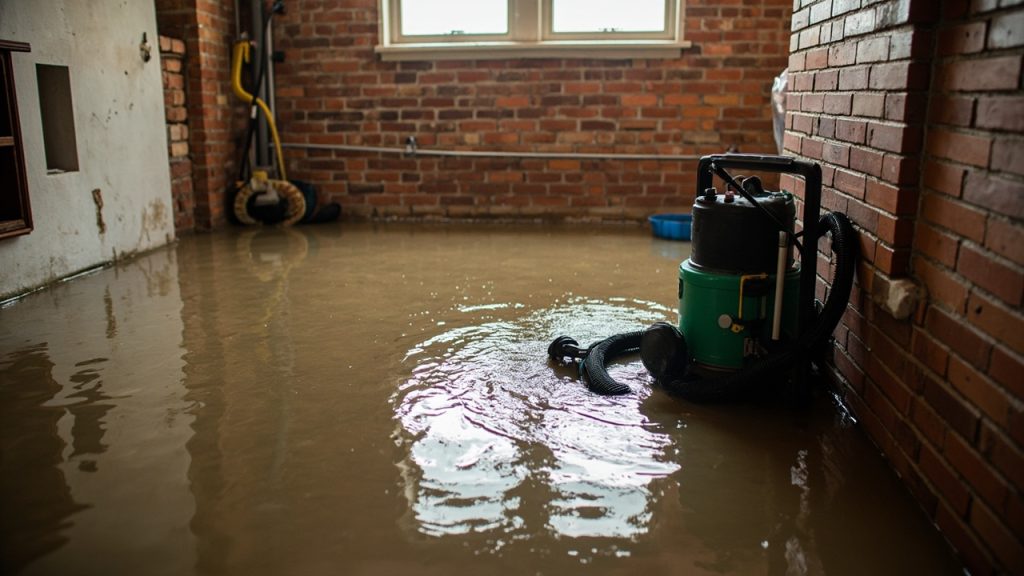
Water is rushing down your street. Your basement is filling up. A water main on your Brightmoor block just let go, and you have no idea what to do first, who to call, or who is going to pay for the mess. You are not in the wrong for feeling overwhelmed. This happens more often than most Detroiters realize, and the response you take in the next 60 minutes determines how much damage you actually end up dealing with.
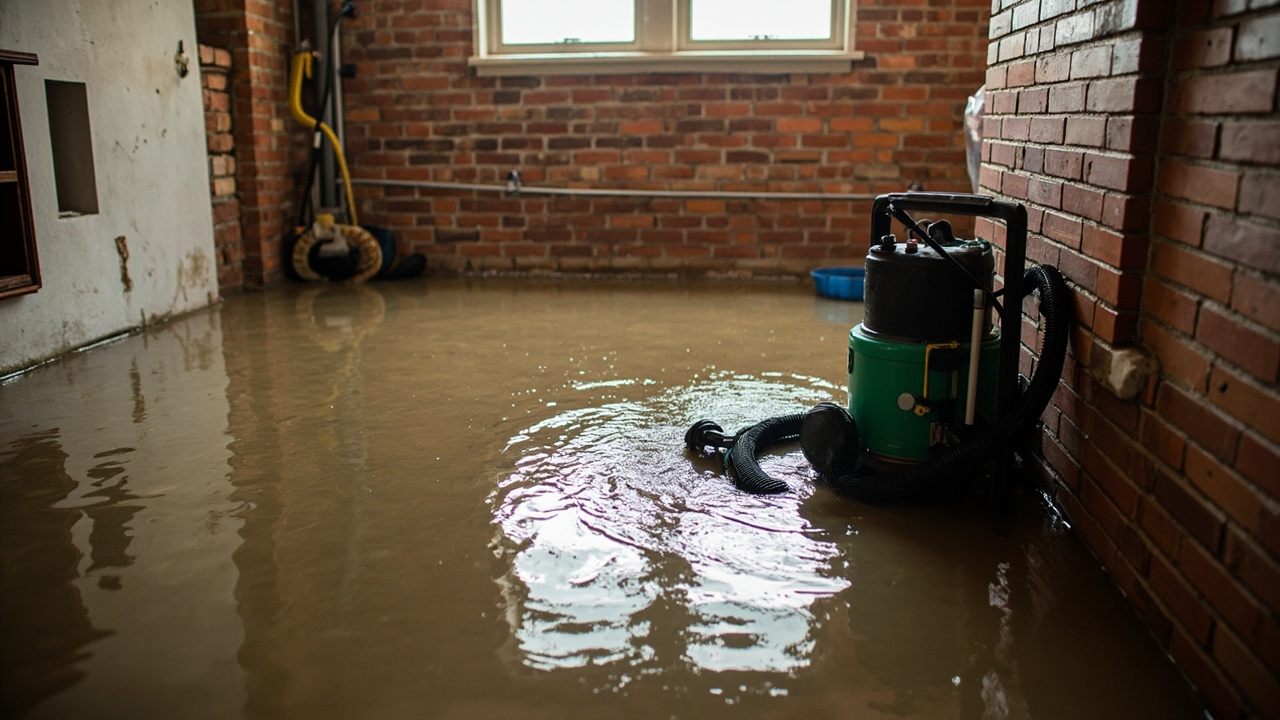
What to Do in the First 60 Minutes
Speed is everything with water intrusion. Every minute of standing water increases the risk of structural damage, contamination, and mold colonization. Here is exactly what to do the moment you realize a water main break has affected your property.
- Call the Detroit Water and Sewerage Department (DWSD) emergency line at 313-267-8000. Report the break immediately. DWSD is responsible for the water main up to the property line. They need to shut off flow to stop the source. Document the time you called.
- Shut off your home’s main water valve. Even if the break is city-side, this protects your internal plumbing from pressure surges.
- Cut power to any rooms with standing water at your breaker panel. Do not step into flooded areas before doing this.
- Move valuables, documents, and electronics to higher ground immediately. Focus on irreplaceable items first.
- Document everything with video and photos before touching anything. Walk the perimeter of your property. Capture the street, the point of entry, and every affected room. This documentation is critical for your insurance claim.
- Call a licensed water damage restoration company. If water has entered your home, you need professional extraction equipment running within hours, not days.
- Contact your homeowners insurance carrier to open a claim. Do this before any cleanup begins. Do not let a contractor start work without documented insurer approval unless you are facing an immediate safety threat.
Do not wait to see “how bad it gets.” Category 1 clean water from a main break can become Category 3 contaminated water once it contacts soil, sewage lines, and building materials. The classification changes your restoration scope and your costs significantly.
Who Is Actually Responsible When a Detroit Water Main Breaks
This is the question every Brightmoor and Grandmont Rosedale homeowner asks. The answer depends on exactly where the break occurred. Detroit’s water infrastructure is aging, and main breaks are a documented, recurring problem throughout the city.
The Detroit Water and Sewerage Department owns and maintains the public water main, which runs under the street or public right-of-way. DWSD is responsible for that pipe. If their main fails and water enters your property, you have grounds to file a claim against the city for damages caused by their infrastructure failure.
However, the private service line is a different story entirely.
The Service Line Split That Catches Homeowners Off Guard
The service line is the pipe that runs from the public main to your home’s water meter. In most Detroit properties, including older stock in neighborhoods like Brightmoor, Bagley, and Chadsey-Condon, the homeowner owns and is responsible for the portion of that service line that runs from the property line to the house. DWSD owns the section from the main to the property line.
If the break is on your side of the property line, it is your responsibility and your insurance claim. If the break is in the city main or the city’s section of the service line, you file against DWSD.
| Break Location | Responsible Party | Who You Contact First | Claim Filed Against |
|---|---|---|---|
| Public water main (under the street) | DWSD / City of Detroit | DWSD Emergency Line (313-267-8000) | City of Detroit |
| Service line from main to property line | DWSD | DWSD Emergency Line | City of Detroit |
| Service line from property line to house | Homeowner | Licensed plumber | Homeowners insurance |
| Internal plumbing inside the home | Homeowner | Licensed plumber | Homeowners insurance |
Filing a claim against DWSD requires submitting a written notice to the City of Detroit’s Law Department within a specific timeframe. Miss that window and you lose your right to recover damages. An attorney experienced in municipal claims can help you file correctly.
Health and Safety Risks You Cannot Ignore
A water main break is not just a flooding event. It is a structural and biological hazard if not handled correctly.
Structural Integrity Concerns
Water saturating your foundation walls, floor joists, or sill plates compromises the load-bearing capacity of those materials. Detroit homes, particularly the brick bungalows and older two-flats common in Brightmoor and Northwest Detroit, are especially vulnerable. Mortar between brick courses absorbs water and deteriorates. Wood framing begins to lose structural integrity after prolonged saturation. If your basement block or poured concrete walls show bowing, cracking, or efflorescence after a flood event, contact the Detroit Building Safety Engineering and Environmental Department (BSEED) for a structural inspection before reoccupying the space.
Mold Colonization Begins Fast
Mold spores are present in every home. They only need moisture, a food source like drywall or wood, and temperatures above 40 degrees Fahrenheit to begin colonizing. In Detroit’s climate, where humid summers follow damp spring thaws, a flooded basement can show visible mold growth within 24 to 48 hours of the initial event.
This is not a bleach problem. Surface cleaning does not address mold inside wall cavities or beneath flooring. If you are dealing with mold after a flood, read our breakdown of why bleach won’t fix your basement mold and when to call a pro before you make the situation worse.
Contamination Classification Matters
Water from a city main break starts as Category 1 (clean water). Once it mixes with soil, sewage backflow, or sits for more than 24 hours, it can escalate to Category 2 (gray water) or Category 3 (black water). Category 3 requires full PPE, antimicrobial treatment, and disposal of porous materials that cannot be effectively sanitized. This is governed by IICRC S500 standards, which any certified restoration technician should be following on your job.
The Restoration Process From Extraction to Final Drying
Professional water damage restoration follows a defined process. Understanding the stages helps you hold your contractor accountable and set realistic expectations.
Stage 1 — Emergency Extraction
Truck-mounted or portable extraction units remove standing water. Submersible pumps handle high-volume basement flooding. Speed here directly limits how much material needs to be removed later. Getting a restoration crew on-site within two to four hours of the event is the target for minimizing secondary damage.
Stage 2 — Material Assessment and Demo
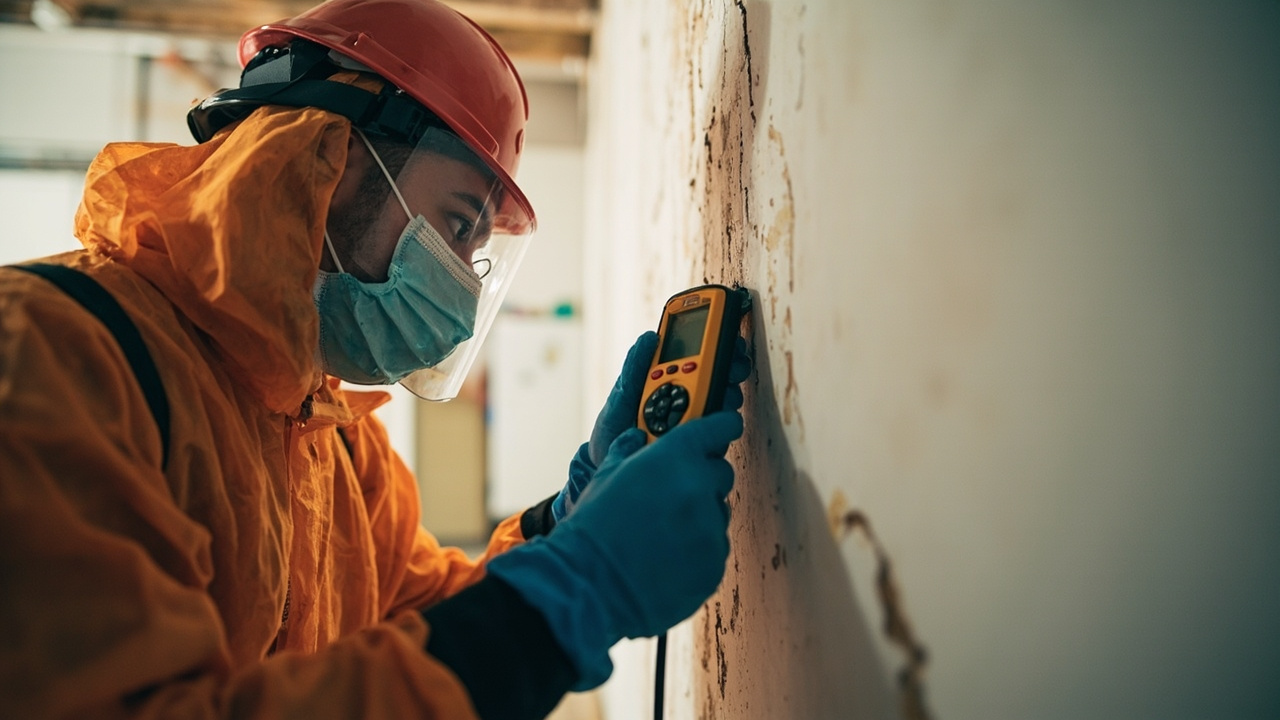
Wet drywall, saturated insulation, and soaked carpet padding almost always need to come out. These materials do not dry effectively in place and become mold substrates. A moisture mapping process using thermal imaging cameras and pin-type or pinless moisture meters maps the full extent of water migration behind walls and under floors.
If your hardwood floors took on water during the event, the window for saving them is narrow. Our guide on how to save hardwood floors after a water leak covers the extraction and drying criteria that determine whether floors can be saved or need replacement.
Stage 3 — Structural Drying with Psychrometrics
This is where the science comes in. Structural drying is not just pointing fans at wet walls. It uses psychrometrics, the study of air properties like temperature, relative humidity, and dew point, to create drying conditions that pull moisture from building materials into the air and remove it. Commercial-grade desiccant or refrigerant dehumidifiers, axial air movers, and heat systems work together to achieve target drying goals, typically measured by daily moisture readings. A drying log is maintained throughout, documenting progress toward dry standard.
For flooded carpet specifically, the situation is more nuanced. We have a full breakdown on deciding whether wet carpet can be saved or needs to go that covers the decision criteria restoration professionals use.
Stage 4 — Antimicrobial Treatment and Clearance
Once materials reach dry standard, affected surfaces receive EPA-registered antimicrobial treatment. If mold remediation is required, that scope follows IICRC S520 protocols. Air clearance testing may be required before reconstruction begins, particularly if Category 3 water was present.
| Restoration Stage | Typical Timeframe | Key Actions | Documentation Produced |
|---|---|---|---|
| Emergency Extraction | Day 1 (within hours) | Water removal, material pre-assessment | Arrival photos, extraction logs |
| Demo and Material Removal | Day 1 to Day 2 | Drywall cuts, flooring removal, insulation pull | Moisture maps, demo scope |
| Structural Drying | Day 2 to Day 5 (typical) | Dehumidifier and air mover placement, daily readings | Daily drying logs with psychrometric data |
| Antimicrobial Treatment | Day 3 to Day 5 | Surface treatment, mold remediation if required | Treatment records, clearance test results |
| Clearance and Reconstruction Handoff | Day 5 to Day 7 (typical) | Final moisture readings, scope handed to rebuild contractor | Final moisture readings, completion report |
Navigating Your Insurance Claim After a Municipal Water Event
This is where most homeowners lose money, not at the restoration stage but at the insurance stage. A water main break has a more complicated claims path than a standard plumbing failure inside the home.
What Your Homeowners Policy May and May Not Cover
Standard homeowners policies cover sudden and accidental water damage in most cases. However, flood damage from external sources, including a city main break that sends water across your yard and into your basement, is often excluded under standard HO-3 policies and falls under separate flood insurance coverage administered through programs like the National Flood Insurance Program.
The distinction your adjuster will make is whether water entered your home from a ground-level overflow (often treated as flood) versus whether it entered through a backed-up drain or broken pipe connected to your home’s plumbing system. These are different coverage triggers. Document the entry point precisely and photograph it before any cleanup.
For a full walkthrough of how to position your claim correctly from the start, our guide on how to get your Detroit home insurance to actually pay for water restoration is required reading before you sit down with your adjuster. And if you are in Corktown or nearby, our piece on filing a successful water damage insurance claim for your Corktown home gives you the tactical steps that get claims approved rather than delayed.
Filing Against the City of Detroit Separately
If DWSD’s main or service line failed and caused your property damage, you have the right to file a tort claim against the city. This is a separate process from your homeowners insurance claim. Detroit’s municipal claim process has strict notice requirements, so do not delay. Keep every piece of documentation from the event, including DWSD work orders, your call logs, contractor invoices, and the complete restoration drying log. An attorney familiar with Michigan municipal liability law should review your claim before submission.
Why Detroit Basements Face Unique Flood Risk From Main Breaks
Detroit’s water infrastructure is among the oldest in the Midwest. Cast iron mains installed in neighborhoods like Brightmoor, Bagley, and Fitzgerald decades ago are brittle and susceptible to cracking during freeze-thaw cycles. When ground temperatures swing sharply through a Michigan winter, that thermal movement stresses aging cast iron and it fails.
Detroit basements sit low. Finished or unfinished, most Detroit residential basements are below the water table in certain soil conditions, and the city’s combined sewer system means a main break can pressurize storm and sanitary lines simultaneously. A sump pump failure during or after a main break event can turn a manageable flood into a Category 3 sanitary sewage event inside the home.
The U.S. Environmental Protection Agency classifies water contaminated by sewage as a serious health hazard requiring professional remediation. If your basement flood involved any sewage contact, this is not a DIY wet-vac situation. It requires full personal protective equipment, licensed disposal of contaminated materials, and professional antimicrobial treatment.
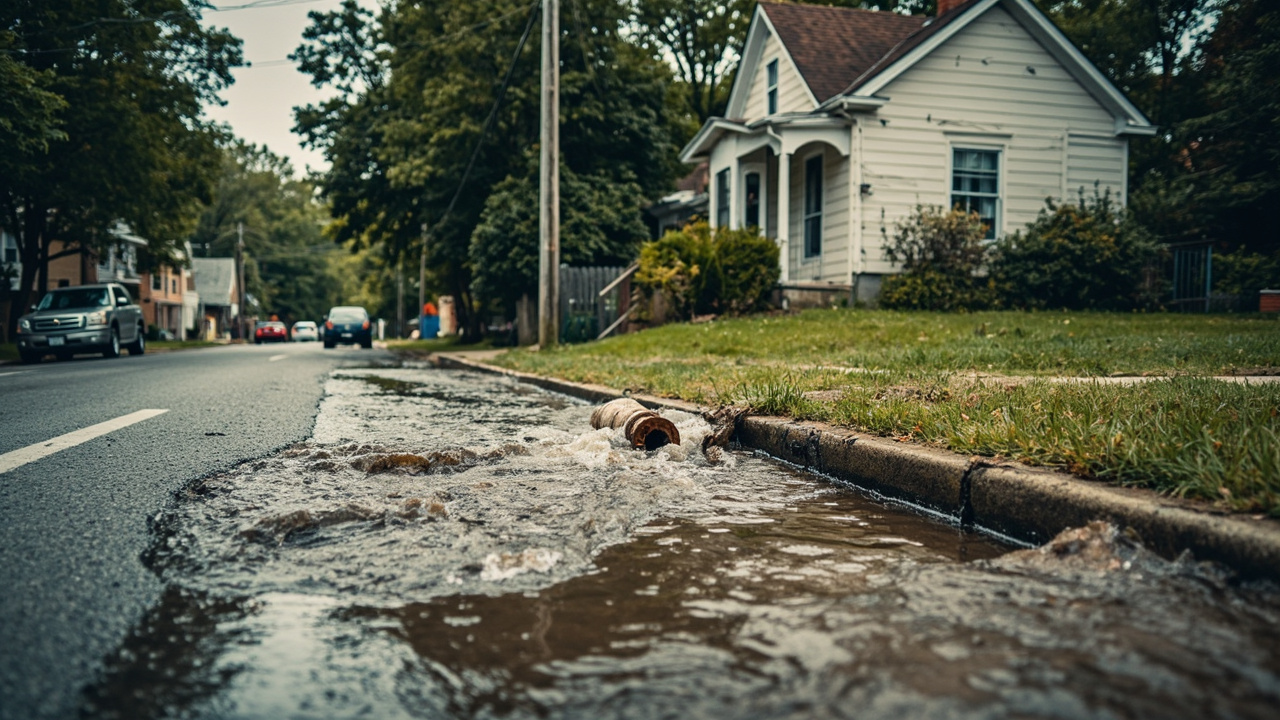
When to Call a Professional Restoration Company vs. Handling It Yourself
Minor surface water from a very brief, localized event on clean concrete can sometimes be managed with consumer-grade equipment. But most main break flooding in a Detroit residential setting crosses the threshold for professional intervention quickly. Here is how to assess it.
- Water has penetrated drywall, insulation, or wood framing. Requires professional moisture mapping and structural drying.
- Standing water in the basement exceeded two inches. Extraction equipment and drying logs are needed for insurance documentation.
- Water was present for more than 12 hours before cleanup began. Mold risk assessment is required.
- Any possibility of sewage contact. Full Category 3 remediation protocol applies.
- Finished basement with carpet, drywall, or drop ceilings. Material removal and content manipulation require trained technicians.
- You are filing an insurance claim. Professional documentation from an IICRC-certified firm is almost always required by adjusters to validate scope and cost.
Attempting to dry a flooded basement with box fans and a residential dehumidifier does not produce adequate air movement or dehumidification rates to meet dry standard under IICRC S500. It may appear dry to the eye while leaving 20 to 30 percent moisture content in wall cavities, which is exactly the moisture level where Stachybotrys and Cladosporium mold colonies thrive.
Getting Your Home Back After a Brightmoor Flood Event
Burst water mains are a reality for Detroit homeowners. The city’s aging grid, the brutal Michigan freeze-thaw season, and the density of older residential infrastructure in neighborhoods like Brightmoor, Minock Park, and Rosedale Park all contribute to an above-average risk of main break events affecting nearby properties.
The homeowners who recover fastest, and recover the most from their insurance and municipal claims, are the ones who document fast, call a certified restoration company within hours, and understand the difference between city liability and homeowner responsibility from the first phone call.
If water is in your home right now after a main break, call a local IICRC-certified Detroit restoration team immediately. The faster extraction begins, the more material can be saved and the smaller your overall claim and disruption. Do not wait for the adjuster to schedule an inspection before starting emergency mitigation. Most policies require you to mitigate promptly, and delaying can give an insurance company grounds to reduce your payout.
{
“@context”: “https://schema.org”,
“@type”: “BlogPosting”,
“headline”: “What to Do After a Burst Water Main Floods Your Brightmoor Street Property”,
“description”: “Burst water main flooding your Brightmoor property? Learn who’s responsible, what DWSD covers, and how to start water damage recovery fast in Detroit.”,
“wordCount”: 2327,
“datePublished”: “2026-06-27T04:38:00.000Z”,
“dateModified”: “2026-06-27T04:38:00.000Z”,
“inLanguage”: “en-US”,
“mainEntityOfPage”: {
“@type”: “WebPage”,
“@id”: “https://ironwoodwaterdamagerestorationdetroit.com”
},
“publisher”: {
“@type”: “LocalBusiness”,
“name”: “Ironwood Water Damage Restoration Detroit”,
“url”: “https://ironwoodwaterdamagerestorationdetroit.com”
},
“author”: {
“@type”: “Organization”,
“name”: “Ironwood Water Damage Restoration Detroit”,
“url”: “https://ironwoodwaterdamagerestorationdetroit.com”
},
“image”: {
“@type”: “ImageObject”,
“url”: “https://ironwoodwaterdamagerestorationdetroit.com/wp-content/uploads/2026/03/dealing-with-the-aftermath-of-a-burst-water-main-o-1.jpg”
}
}
{
“@context”: “https://schema.org”,
“@type”: “LocalBusiness”,
“name”: “Ironwood Water Damage Restoration Detroit”,
“url”: “https://ironwoodwaterdamagerestorationdetroit.com”,
“address”: {
“@type”: “PostalAddress”,
“addressLocality”: “Detroit”
},
“areaServed”: {
“@type”: “City”,
“name”: “Detroit”
}
}
{
“@context”: “https://schema.org”,
“@type”: “BreadcrumbList”,
“itemListElement”: [
{
“@type”: “ListItem”,
“position”: 1,
“name”: “Home”,
“item”: “https://ironwoodwaterdamagerestorationdetroit.com”
},
{
“@type”: “ListItem”,
“position”: 2,
“name”: “Blog”,
“item”: “https://ironwoodwaterdamagerestorationdetroit.com/blog”
},
{
“@type”: “ListItem”,
“position”: 3,
“name”: “What to Do After a Burst Water Main Floods Your Brightmoor Street Property”
}
]
}
{
“@context”: “https://schema.org”,
“@type”: “Service”,
“serviceType”: “Water Damage Restoration”,
“provider”: {
“@type”: “LocalBusiness”,
“name”: “Ironwood Water Damage Restoration Detroit”,
“url”: “https://ironwoodwaterdamagerestorationdetroit.com”
},
“areaServed”: {
“@type”: “City”,
“name”: “Detroit”
},
“description”: “Burst water main flooding your Brightmoor property? Learn who’s responsible, what DWSD covers, and how to start water damage recovery fast in Detroit.”
}