
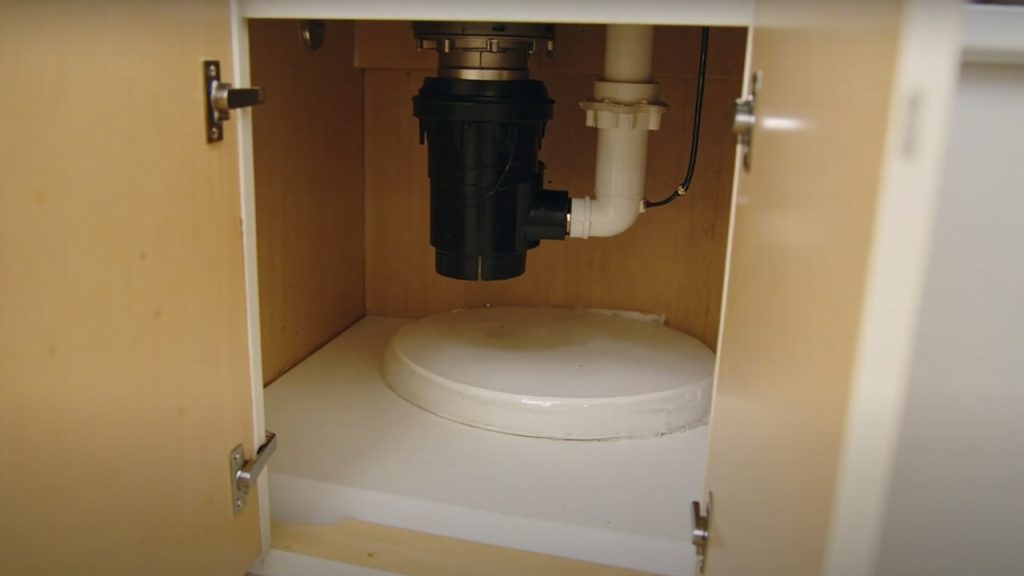
Expert Leaking Garbage Disposal Repair and Water Damage Restoration in West Bloomfield, MI
A puddle under your kitchen sink is easy to dismiss. You wipe it up, close the cabinet door, and tell yourself you’ll deal with it later. But in West Bloomfield homes, where many kitchens sit on finished lower levels or above hardwood floors, “later” turns into subfloor rot, mold behind the cabinet walls, and a much larger repair bill. A leaking garbage disposal is a water damage event, not just a plumbing nuisance.
This guide walks you through exactly what to do the moment you spot that leak, what the water is doing to your home right now, and when you need a water damage restoration crew, not just a plumber.
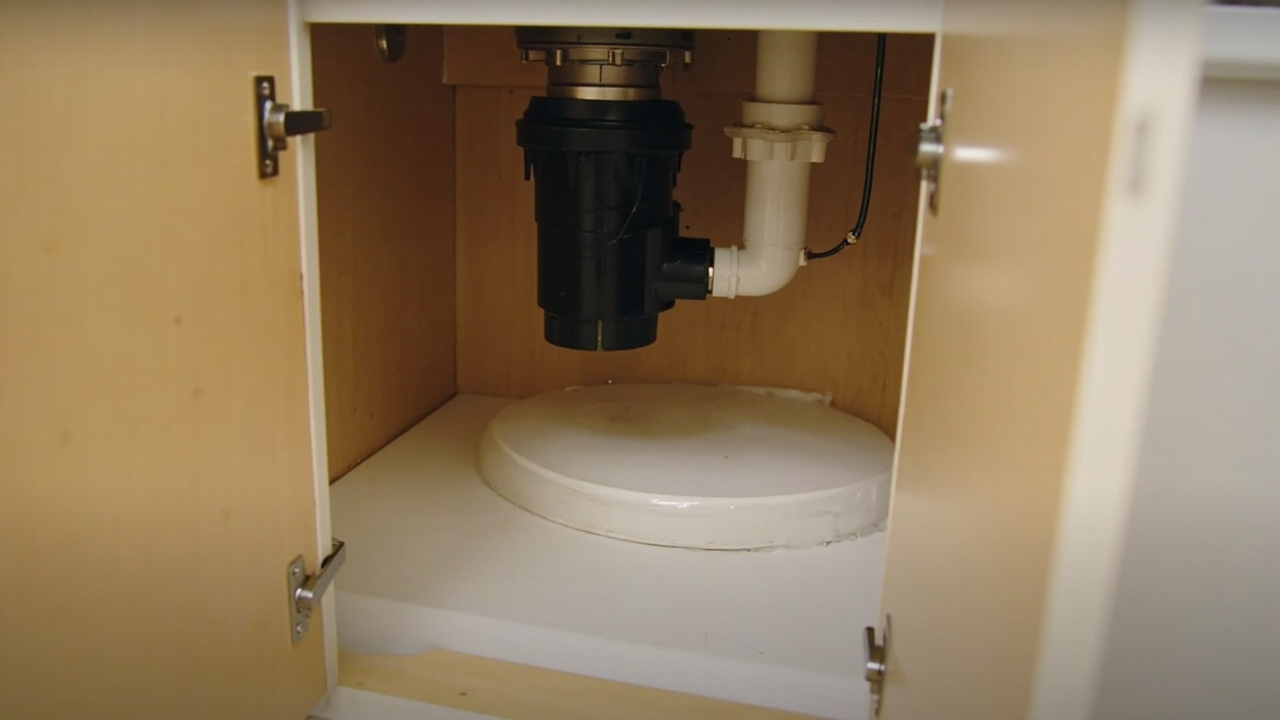
Why a Garbage Disposal Leak Is an Emergency in West Bloomfield Homes
West Bloomfield Township sits in Oakland County, and the housing stock here reflects decades of quality construction. But quality construction does not make a home immune to moisture intrusion. Most kitchen cabinets in the area are built from particleboard or MDF with a wood veneer. These materials absorb water fast.
Within 24 to 48 hours of a slow, ongoing leak, particleboard cabinet bases begin to swell and delaminate. Within 72 hours, mold spore germination can begin in dark, humid cabinet interiors. If water migrates past the cabinet floor and reaches the subfloor beneath, you are looking at structural wood degradation that goes far beyond what a plumber can fix.
Homes near Orchard Lake and Pine Lake in the West Bloomfield area also tend to have naturally higher ambient humidity levels, especially during warm months. That elevated baseline moisture accelerates every stage of this damage timeline.
The point is simple. Do not wait and see. Treat a leaking disposal as an emergency from minute one.
Common Causes of Disposal Leaks We See in Oakland County Homes
Not every disposal leak comes from the same place. Identifying the source tells you whether you need a plumber, a restoration crew, or both. Here are the four most common failure points we find in West Bloomfield kitchens.
Worn Sink Flange Gasket
The sink flange is the metal ring that connects the disposal unit to the drain opening in your sink basin. It is sealed with plumber’s putty and a rubber gasket. Over time, vibration from the disposal motor works that gasket loose. When it fails, water leaks from the very top of the unit and runs down the outside of the housing. This is one of the most common leaks we see on older InSinkErator and Badger disposal units.
Cracked Disposal Housing
The outer housing of a garbage disposal can crack from age, impact, or internal freezing during an unoccupied home’s winter months. A cracked housing leaks from the side or bottom of the unit. This type of failure usually means the disposal needs full replacement, not repair.
Loose or Degraded Drain Connection
Two drain lines connect to most disposal units. The main drain line exits toward the P-trap, and a secondary dishwasher drain line enters from the side. The rubber gaskets and clamps at these connection points harden and crack with age. A loose drain connection will leak from the side of the unit, and the water often pools under the dishwasher as well as under the sink.
Dishwasher Inlet Failure
If your dishwasher drains through your disposal, a degraded inlet hose or loose clamp at the disposal’s dishwasher inlet port will send dirty water under your sink with every wash cycle. This is a particularly problematic leak because it only happens intermittently, making it easy to miss until the damage is already done.
- Leak from the top of the unit, near the sink basin: Flange gasket failure
- Leak from the side of the unit, mid-body: Drain connection or dishwasher inlet
- Leak from the bottom of the unit: Cracked internal seals or housing
- Leak that only appears after running the dishwasher: Dishwasher inlet hose failure

The Water Damage Timeline Under Your Kitchen Sink
Knowing what the water is doing hour by hour helps you understand why speed matters. The following table reflects what we typically document during moisture mapping assessments on West Bloomfield kitchen water damage jobs.
| Time After Leak Begins | What Is Happening to Your Home | Restoration Complexity |
|---|---|---|
| 0 to 1 hour | Water pooling on cabinet floor, beginning to wick into particleboard base | Low. Wipe-down, monitoring, and plumbing fix may be sufficient. |
| 1 to 24 hours | Cabinet base swelling, water reaching subfloor through gaps, potential spread to adjacent cabinet runs | Moderate. Professional drying equipment and moisture mapping needed. |
| 24 to 48 hours | Subfloor saturation, cabinet base delaminating, drywall behind cabinet beginning to absorb moisture | High. Structural materials likely compromised, cabinet removal probable. |
| 48 to 72 hours | Active mold growth beginning on organic surfaces, subfloor structural integrity at risk | Severe. Mold remediation protocol required alongside structural drying. |
| 72 hours and beyond | Established mold colonies, possible spread to wall cavity, subfloor replacement likely necessary | Emergency. Full remediation and reconstruction scope. |
What to Do Right Now If You Spot the Leak
Before you call anyone, take these steps immediately.
First, cut power to the disposal at the wall switch and, if you can access it safely, at the circuit breaker. Water and an active electrical appliance under your sink is a serious shock hazard. Second, turn off the cold water supply line feeding the sink. Third, clear everything out from under the sink so you can see the full extent of the leak source and any pooling.
Take photos of everything before you wipe anything up. Document the water pooling, the cabinet interior, and the disposal unit itself. Those photos are evidence for your homeowners insurance claim, and they matter. For a full breakdown of how to document water damage for a successful insurance outcome, read our guide on how to get your Detroit home insurance to actually pay for water restoration.
Use dry towels or a wet/dry shop vac to remove standing water from the cabinet floor. Do not use a regular household vacuum. Do not leave wet materials sitting in the cabinet. Open the cabinet doors fully to allow air circulation while you wait for help.
The Professional Water Damage Restoration Process for Kitchen Leaks
A plumber can stop the leak. A water damage restoration company addresses what the water already did. These are two different services, and most West Bloomfield homeowners need both after a disposal leak that has been active for more than a few hours.
Step 1: Moisture Mapping and Scope Assessment
An IICRC Certified Technician uses thermal imaging cameras and calibrated moisture meters to map exactly where water has traveled. Water does not stay where you see it. It wicks through cabinet bases, travels along subfloor seams, and migrates into wall cavities. Moisture mapping prevents incomplete drying, which is the number one cause of mold growth after a restoration job.
Step 2: Emergency Water Extraction
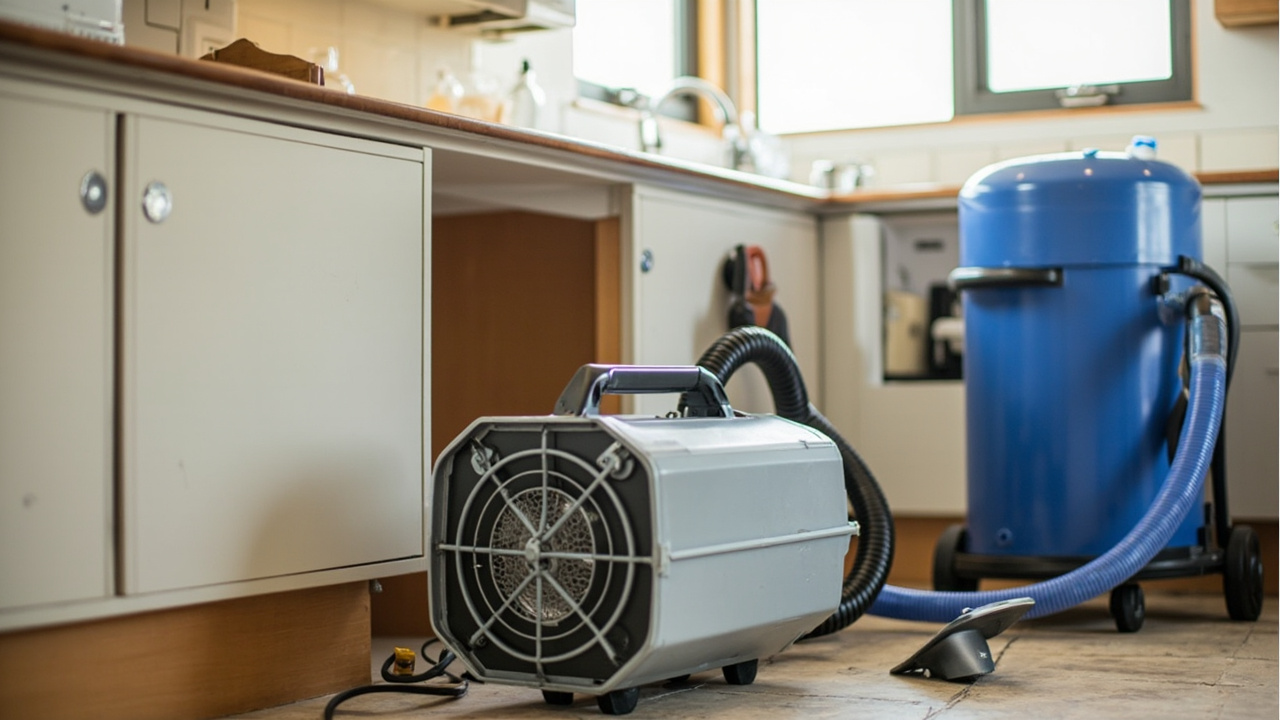
High-powered extraction units remove any standing or trapped water from the affected area. Under-sink spaces are tight, so technicians use specialized extraction wands designed for confined spaces. This step reduces the total drying time significantly and lowers the risk of secondary damage.
Step 3: Controlled Structural Drying
Industrial air movers and commercial dehumidifiers dry the cabinet structure, subfloor, and surrounding wall framing from the inside out. This is not the same as opening a window or pointing a box fan at the cabinet. Structural drying targets the moisture content inside the wood itself and is measured daily with moisture meters until readings return to acceptable baseline levels for the Oakland County climate zone.
Step 4: Antimicrobial Treatment
Any surface that was in contact with water receives an EPA-registered antimicrobial application. This is standard protocol under IICRC S500 guidelines for water damage restoration. It suppresses mold growth during the drying phase and treats any early-stage microbial activity that may have begun before restoration started. For more on why surface-level treatments alone do not address mold, our article on why bleach won’t fix your mold problem explains the science clearly.
Step 5: Documentation and Insurance Support
Every reading, every photo, and every piece of equipment placed on-site gets logged in a restoration report. This documentation package is what your insurance adjuster needs to process your claim accurately. Many West Bloomfield homeowners do not realize that gaps in this documentation lead to partial claim denials.
Comparing DIY Cleanup to Professional Restoration
Some homeowners want to handle the cleanup themselves. Here is an honest comparison of outcomes.
| Factor | DIY Cleanup | Professional Restoration |
|---|---|---|
| Moisture detection | Visual only, misses moisture inside wood and walls | Thermal imaging and calibrated meters, accurate to within the wall cavity |
| Drying speed | 3 to 10 days with household fans | 2 to 4 days with industrial air movers and dehumidifiers |
| Mold risk after cleanup | High, especially if any moisture remains in subfloor or wall framing | Low, with antimicrobial treatment and verified moisture readings |
| Insurance documentation | Minimal, may not satisfy adjuster requirements | Full scope report, daily moisture logs, photo documentation |
| Cabinet and subfloor assessment | Visual inspection only | Material testing, replacement recommendations with cost documentation for claims |
| Long-term outcome | High likelihood of latent mold discovery within 30 to 90 days | Verified dry structure with documentation confirming remediation |
Does Homeowners Insurance Cover a Garbage Disposal Leak in West Bloomfield
The short answer is that it depends on the cause and how quickly you acted. Most standard homeowners insurance policies in Michigan cover sudden and accidental water damage. A disposal that fails without warning and leaks into the cabinet typically qualifies as a covered event.
What does not qualify is neglect. If an adjuster determines the leak was slow and ongoing and you failed to address it promptly, the claim can be partially or fully denied. This is exactly why documentation and prompt action matter. The Michigan Department of Insurance and Financial Services provides consumer guidance on what standard homeowners policies must cover under state law, which is worth reviewing if your insurer pushes back on a claim.
If you are preparing to file a claim, our detailed guide on filing a successful water damage insurance claim walks through every step of the process from first contact with your insurer to final settlement.
How Disposal Leaks Affect More Than Just the Cabinet
If water from your disposal leak has reached the kitchen floor, you may be dealing with secondary damage that is not obvious at first glance. Hardwood floors in Oakland County kitchens can cup and buckle within 48 hours of moisture exposure from below. The damage is often invisible on the surface but severe at the subfloor connection. Our guide on how to save hardwood floors after a water leak covers the specific conditions that determine whether floors can be restored or need replacement.
If your kitchen has any carpeting nearby, perhaps in an adjacent dining area or an open-plan layout, check our breakdown of when wet carpet can be saved versus when it needs to go. The decision factors are specific and matter for both your health and your insurance claim.
Why West Bloomfield Response Time Matters More Than Price
We get calls from West Bloomfield homeowners who spent two days calling around for the best price after discovering a disposal leak. By the time a crew arrived, the subfloor was saturated and cabinet replacement was unavoidable. The cost of those extra days of damage far exceeded any savings from a lower service rate.
When you call for water damage restoration after a disposal leak, the critical question is not the hourly rate. The critical question is how fast can a certified crew be on-site. For Oakland County properties, an on-site response time under 60 minutes is the standard you should expect from any restoration company you call.
The Institute of Inspection, Cleaning and Restoration Certification (IICRC) sets the industry standards for water damage restoration scope and procedures. When you hire a restoration company, confirm your technicians hold current IICRC Water Damage Restoration Technician (WRT) certification. That certification means your technician is trained in the science of structural drying, not just surface cleanup.
Frequently Asked Questions About Disposal Leaks and Water Damage
How long does water damage restoration take for a kitchen sink leak?
Most kitchen leak restoration jobs in West Bloomfield take two to four days for structural drying, assuming the water did not penetrate deeply into the subfloor. If subfloor saturation occurred, add one to two additional drying days and a separate assessment for structural replacement needs.
Can I keep using my kitchen while the restoration equipment runs?
Yes, in most cases. Air movers and dehumidifiers under the sink do not prevent kitchen use. Technicians route equipment to minimize disruption. If cabinet removal is required, you will lose access to that cabinet run until the drying and reconstruction phases are complete.
Will my cabinet have to be replaced?
Solid wood cabinet frames often survive a short-duration leak with proper drying. Particleboard or MDF cabinet bases that have swollen or delaminated cannot be fully restored and typically require replacement. A moisture mapping assessment will tell you definitively which materials are salvageable before any demolition begins.
What if I already cleaned up the water and it looks dry?
Looking dry and being dry are not the same thing. Wood and particleboard can hold significant moisture below the surface while appearing dry to the touch. If your leak was active for more than a couple of hours before you caught it, a professional moisture assessment is worth scheduling even if the visible water is gone. Latent moisture is the primary driver of mold growth after kitchen water events.
A leaking garbage disposal is a manageable problem when you act fast. It becomes a serious structural and health issue when you delay. If you have spotted water under your West Bloomfield kitchen sink, call a certified restoration crew today and get a moisture assessment done before you replace the disposal and close that cabinet door.
{
“@context”: “https://schema.org”,
“@type”: “BlogPosting”,
“headline”: “What to Do When Your Garbage Disposal Starts Leaking Under the Kitchen Sink in West Bloomfield”,
“description”: “Garbage disposal leaking under your West Bloomfield kitchen sink? Here’s what to do right now to stop water damage, mold, and cabinet rot.”,
“wordCount”: 2323,
“datePublished”: “2026-05-13T05:10:00.000Z”,
“dateModified”: “2026-05-13T05:10:00.000Z”,
“inLanguage”: “en-US”,
“mainEntityOfPage”: {
“@type”: “WebPage”,
“@id”: “https://ironwoodwaterdamagerestorationdetroit.com”
},
“publisher”: {
“@type”: “LocalBusiness”,
“name”: “Ironwood Water Damage Restoration Detroit”,
“url”: “https://ironwoodwaterdamagerestorationdetroit.com”
},
“author”: {
“@type”: “Organization”,
“name”: “Ironwood Water Damage Restoration Detroit”,
“url”: “https://ironwoodwaterdamagerestorationdetroit.com”
},
“image”: {
“@type”: “ImageObject”,
“url”: “https://ironwoodwaterdamagerestorationdetroit.com/wp-content/uploads/2026/03/what-to-do-if-your-garbage-disposal-starts-leaking-1.jpg”
}
}
{
“@context”: “https://schema.org”,
“@type”: “LocalBusiness”,
“name”: “Ironwood Water Damage Restoration Detroit”,
“url”: “https://ironwoodwaterdamagerestorationdetroit.com”,
“address”: {
“@type”: “PostalAddress”,
“addressLocality”: “Detroit”
},
“areaServed”: {
“@type”: “City”,
“name”: “Detroit”
}
}
{
“@context”: “https://schema.org”,
“@type”: “FAQPage”,
“mainEntity”: [
{
“@type”: “Question”,
“name”: “How long does water damage restoration take for a kitchen sink leak?”,
“acceptedAnswer”: {
“@type”: “Answer”,
“text”: “Most kitchen leak restoration jobs in West Bloomfield take two to four days for structural drying, assuming the water did not penetrate deeply into the subfloor. If subfloor saturation occurred, add one to two additional drying days and a separate assessment for structural replacement needs.”
}
},
{
“@type”: “Question”,
“name”: “Can I keep using my kitchen while the restoration equipment runs?”,
“acceptedAnswer”: {
“@type”: “Answer”,
“text”: “Yes, in most cases. Air movers and dehumidifiers under the sink do not prevent kitchen use. Technicians route equipment to minimize disruption. If cabinet removal is required, you will lose access to that cabinet run until the drying and reconstruction phases are complete.”
}
},
{
“@type”: “Question”,
“name”: “Will my cabinet have to be replaced?”,
“acceptedAnswer”: {
“@type”: “Answer”,
“text”: “Solid wood cabinet frames often survive a short-duration leak with proper drying. Particleboard or MDF cabinet bases that have swollen or delaminated cannot be fully restored and typically require replacement. A moisture mapping assessment will tell you definitively which materials are salvageable before any demolition begins.”
}
},
{
“@type”: “Question”,
“name”: “What if I already cleaned up the water and it looks dry?”,
“acceptedAnswer”: {
“@type”: “Answer”,
“text”: “Looking dry and being dry are not the same thing. Wood and particleboard can hold significant moisture below the surface while appearing dry to the touch. If your leak was active for more than a couple of hours before you caught it, a professional moisture assessment is worth scheduling even if the visible water is gone. Latent moisture is the primary driver of mold growth after kitchen water events.”
}
}
]
}
{
“@context”: “https://schema.org”,
“@type”: “BreadcrumbList”,
“itemListElement”: [
{
“@type”: “ListItem”,
“position”: 1,
“name”: “Home”,
“item”: “https://ironwoodwaterdamagerestorationdetroit.com”
},
{
“@type”: “ListItem”,
“position”: 2,
“name”: “Blog”,
“item”: “https://ironwoodwaterdamagerestorationdetroit.com/blog”
},
{
“@type”: “ListItem”,
“position”: 3,
“name”: “What to Do When Your Garbage Disposal Starts Leaking Under the Kitchen Sink in West Bloomfield”
}
]
}
{
“@context”: “https://schema.org”,
“@type”: “Service”,
“serviceType”: “Water Damage Restoration”,
“provider”: {
“@type”: “LocalBusiness”,
“name”: “Ironwood Water Damage Restoration Detroit”,
“url”: “https://ironwoodwaterdamagerestorationdetroit.com”
},
“areaServed”: {
“@type”: “City”,
“name”: “Detroit”
},
“description”: “Garbage disposal leaking under your West Bloomfield kitchen sink? Here’s what to do right now to stop water damage, mold, and cabinet rot.”
}