
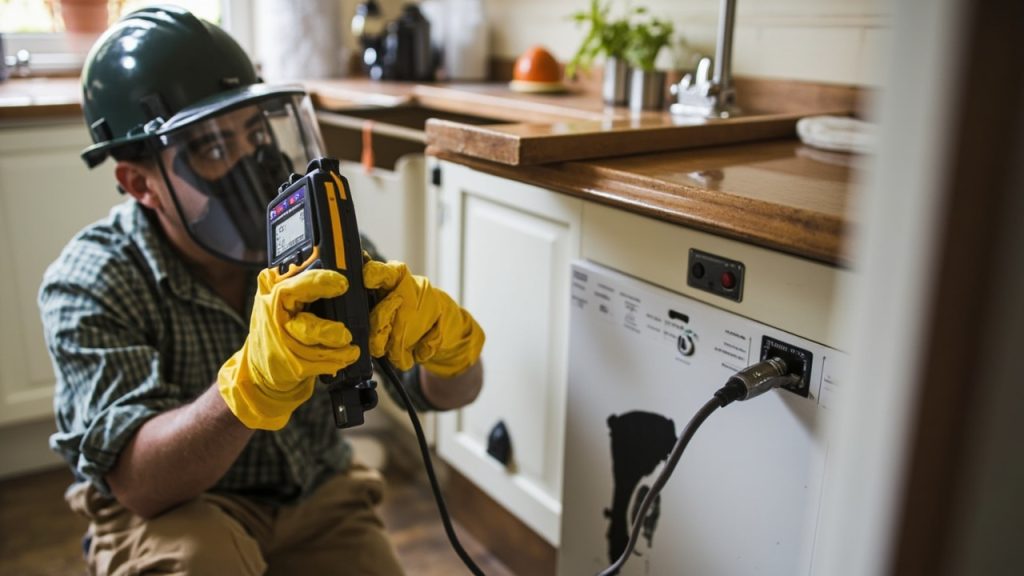
A flooded kitchen outlet is one of the most dangerous things that can happen in your home. Water and electricity together can kill. Before you touch anything, grab a flashlight, step back, and read this guide. The next five minutes could save your life.
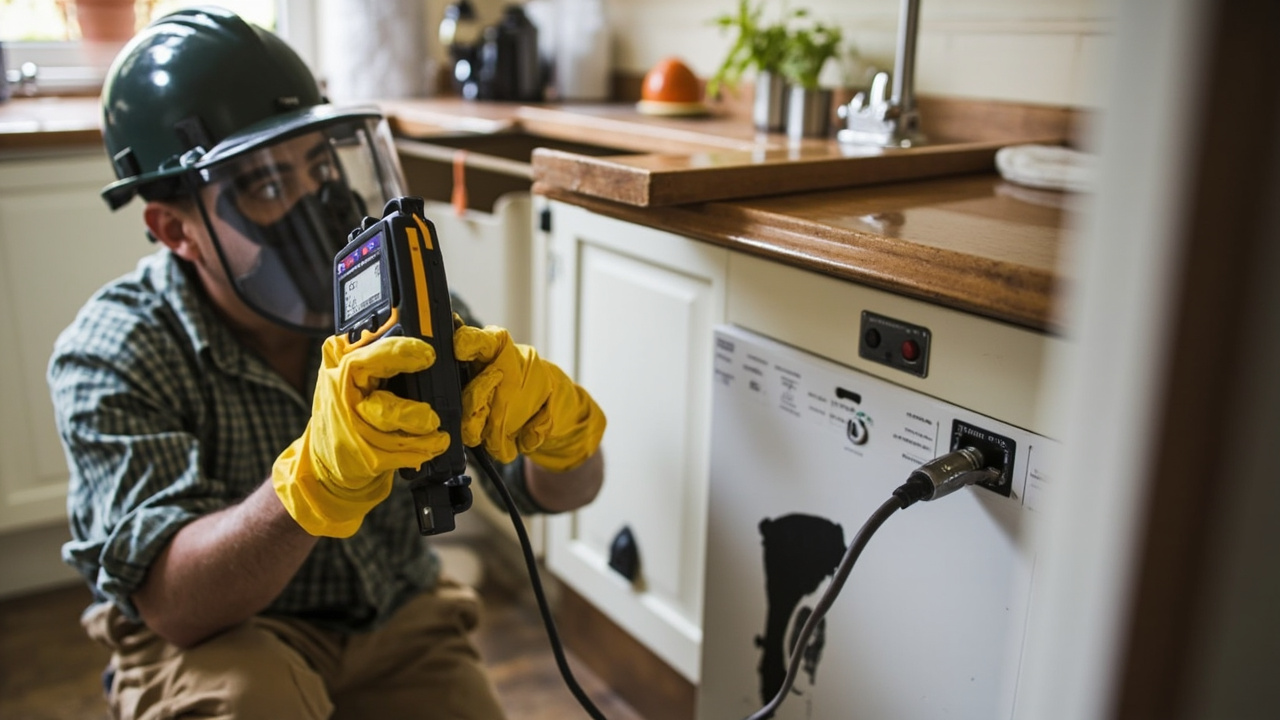
Why Flooded Outlets in a Hazel Park Kitchen Are a Life-Safety Emergency
Residential kitchen outlets run at 120 volts, and a standard 20-amp circuit carries enough current to cause cardiac arrest in under a second of contact. When water reaches an outlet, it does not just create a short circuit. It creates a conductive path that can energize standing water, metal appliance surfaces, and even wet tile floors far from the source.
In the Hazel Park and greater Detroit metro area, the most common kitchen flood sources include burst supply lines under the sink, dishwasher drain failures, and sump pump backups during heavy rain events. Oakland County neighborhoods like Hazel Park sit on older residential lots with aging clay sewer lines, and basement-to-kitchen flooding during storm events is something we see repeatedly every season.
The type of water matters enormously for both safety and restoration. Clean water from a supply line is a Category 1 event under the IICRC S500 Standard for Professional Water Damage Restoration. Sewage-contaminated or toilet overflow water is Category 3, also called black water, and it carries pathogens that create a biohazard risk on top of the electrical danger. Knowing which type you are dealing with changes the restoration plan entirely.
The Immediate Actions to Take Before Anything Else
Do not walk through standing water to reach the outlet. Do not unplug anything from a wet outlet. Do not use a hair dryer on it. Here is what you actually do.
- Go to your main electrical panel. In most Hazel Park homes, this is in the basement or utility room. Shut off the breaker for the kitchen circuit or, if you are unsure which breaker controls that area, shut off the main breaker entirely. Do this with dry hands while standing on a dry surface.
- Call your utility company if the panel itself is wet or inaccessible. DTE Energy has an emergency line for situations where the meter base or service entrance is compromised. Do not attempt to work near the utility meter.
- Do not re-enter the flooded area until power is confirmed off. Use a non-contact voltage tester from a dry position to verify that the circuit is dead before anyone steps into the water.
- Identify the water source and stop it if you can do so safely. The main shutoff valve is usually under the sink or near the water meter. Stopping active water flow limits further damage and reduces the ongoing electrical risk.
- Call a licensed water damage restoration company and a licensed electrician. These are two separate trades and you need both.
That sequence is non-negotiable. Skipping step one to rush to step four has caused electrocution deaths in residential kitchens. Do not improvise.
Visible Signs That an Outlet Has Been Water Damaged
After power is confirmed off and the area is safe to enter, inspect the affected outlets carefully. You are looking for indicators that go beyond surface moisture, because water damage inside an electrical outlet almost always extends deeper than what you can see.
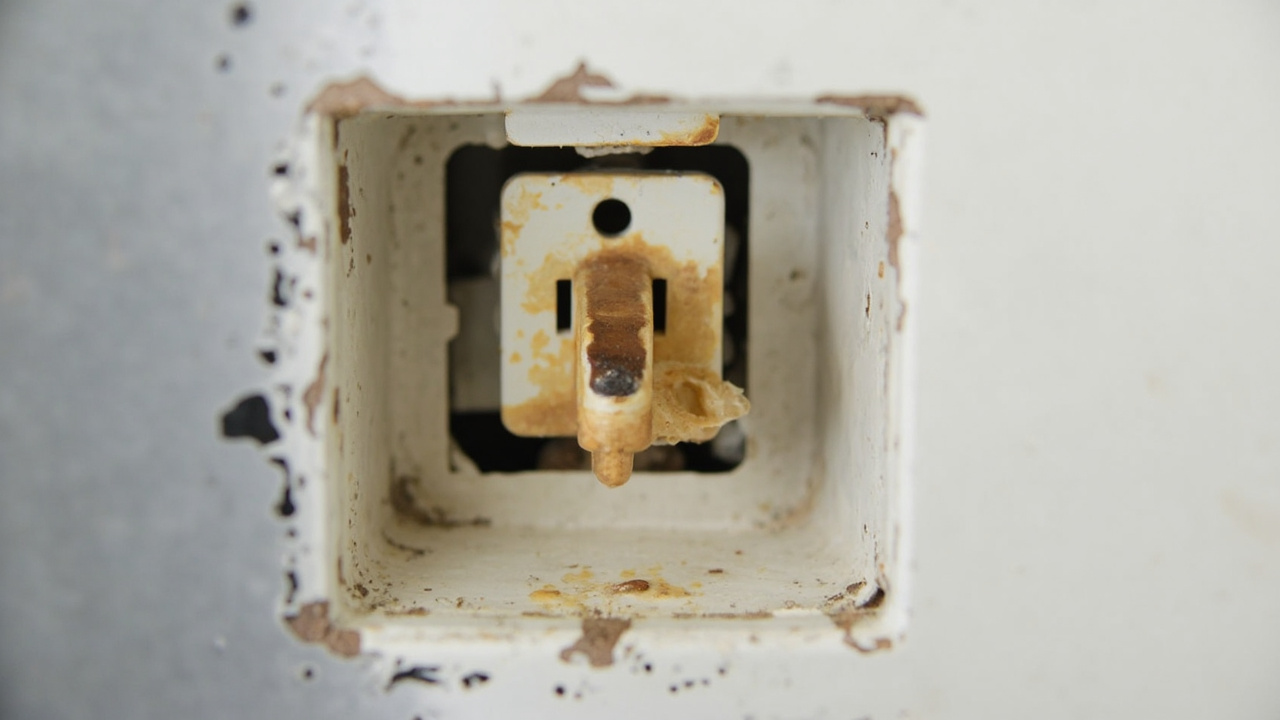
- Discoloration or brown staining around the outlet face or on the wall plate
- Visible rust or oxidation on the outlet slots or ground port
- White mineral deposits or efflorescence on the outlet body
- A burned or acrid smell near the outlet location
- Tripped GFCI outlets that will not reset
- Buzzing or crackling sounds from the outlet or wall, even with breakers off
- Soft or bubbling drywall around the outlet box
Every one of these signs means the outlet itself must be replaced. Not cleaned. Not dried out. Replaced by a licensed electrician who can also inspect the wiring inside the box and the wall cavity behind it.
Why Letting It Air Dry Is a Dangerous Mistake
This is where a lot of Hazel Park homeowners make a costly error. They shut off power, mop up the visible water, and assume the outlet just needs a few days to dry before they reset the breaker. That logic fails for two reasons.
First, corrosion starts within hours of water contact on copper wiring and outlet contacts. Oxidation on electrical connections increases resistance, which generates heat over time. That heat can cause a fire inside the wall long after the outlet looks dry from the outside. The National Fire Protection Association consistently identifies electrical failures following water intrusion events as a leading cause of post-flood residential fires.
Second, wall cavities trap moisture. The insulation and framing behind a kitchen outlet box act like a sponge. Even if the outlet face dries, the wall cavity behind it can hold moisture for weeks. That moisture feeds mold growth inside the wall, which you will not see until the colony is already established. Homeowners in the Jefferson-Chalmers and East English Village areas of Detroit know this problem well from basement flooding that migrates into wall assemblies over time.
If you have had a similar issue with mold developing after water exposure in another part of your home, read about why bleach is not a real solution for mold inside wall cavities. The same principle applies to kitchen walls after an outlet flood.
The Professional Restoration Process for Water-Damaged Outlets
A certified water damage restoration company does not just extract surface water. They assess and address the full scope of moisture intrusion using equipment and methods that a general contractor or handyman cannot replicate.
Thermal Imaging and Moisture Mapping
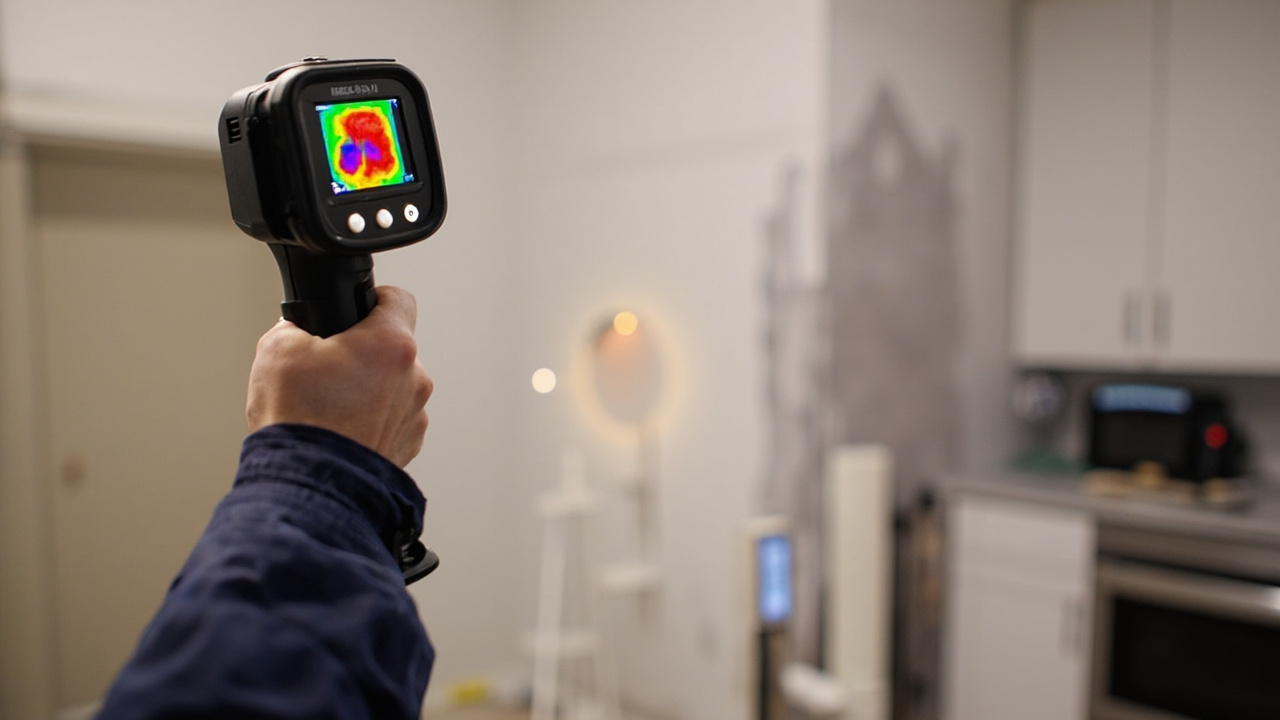
The first tool on site is a thermal imaging camera paired with a calibrated moisture meter. Thermal imaging detects temperature differentials in walls and ceilings that indicate where wet materials are hiding behind drywall. Moisture meters give a quantitative reading of moisture content in wood framing and drywall to establish a drying baseline.
In a typical Hazel Park kitchen flood scenario, moisture mapping often reveals that water has wicked up inside the wall cavity several feet above the visible water line. That hidden moisture is what professional restoration is specifically designed to address.
Structural Drying with Desiccant and Refrigerant Dehumidifiers
Commercial desiccant dehumidifiers and high-velocity air movers create conditions inside the wall assembly that accelerate evaporation. Restoration technicians calculate the number and placement of units based on the psychrometric data for the space, including temperature, relative humidity, and total affected square footage. This is not guesswork. It follows the IICRC S500 drying protocol.
Depending on the severity of saturation, structural drying in a kitchen wall assembly typically takes three to five days with professional equipment. Without professional equipment, the same wall may never fully dry before mold colonizes it.
Electrical Work Coordination
Restoration companies work alongside licensed electricians to ensure that affected circuits are not re-energized until all moisture readings return to acceptable dry standards. In Detroit, the Detroit BSEED (Buildings, Safety Engineering and Environmental Department) requires permits for electrical repairs following water damage in most cases. An electrician pulling the proper permits protects you during any future home sale or insurance claim.
The standard recommendation after any significant water contact with kitchen outlets is to install GFCI (Ground Fault Circuit Interrupter) protected outlets throughout the kitchen. Current Detroit building codes require GFCI protection within six feet of any kitchen water source. If your Hazel Park home was built before the mid-1980s and has never had a kitchen electrical update, you almost certainly do not have compliant GFCI protection in place.
Comparing Water Damage Categories and What They Mean for Your Kitchen
| Water Category | Source Examples | Electrical Risk Level | Restoration Complexity |
|---|---|---|---|
| Category 1 (Clean Water) | Broken supply line, dishwasher supply failure | High (electrocution risk from contact) | Moderate. Drying and outlet replacement. |
| Category 2 (Grey Water) | Dishwasher drain backup, washing machine overflow | High | High. Antimicrobial treatment plus drying and electrical inspection. |
| Category 3 (Black Water) | Sewer backup, toilet overflow, storm flooding with ground contamination | Extreme | Very High. Full biohazard remediation, structural tear-out, complete electrical inspection. |
Typical Restoration Timeline After a Hazel Park Kitchen Flood
| Phase | Action | Typical Timeframe |
|---|---|---|
| Emergency Response | Water extraction, power isolation confirmation, initial moisture mapping | Day 1 (usually within 2 to 4 hours of call) |
| Structural Drying | Air mover and dehumidifier placement, daily moisture monitoring | Days 1 through 4 |
| Electrical Assessment | Licensed electrician inspection, outlet and wiring replacement, GFCI upgrade | Days 2 through 5 (permit-dependent) |
| Mold Prevention Treatment | Antimicrobial application to wall cavity and framing (Category 2 or 3 events) | After drying is confirmed |
| Reconstruction | Drywall repair, paint, cabinet reinstallation if needed | Days 5 through 10 depending on scope |
Filing an Insurance Claim for Electrical Water Damage in Michigan
Most standard Michigan homeowners insurance policies cover sudden and accidental water damage that reaches electrical outlets, but the language in those policies matters enormously. A dishwasher supply line that burst overnight is typically covered. A slow leak that damaged an outlet over several months is often denied as a maintenance failure.
Document everything before any cleanup begins. Photograph the outlet, the standing water, the water source, and the affected cabinetry and flooring. A professional restoration company should provide you with a written moisture map and a scope of work that your adjuster can use to evaluate the claim.
If this is your first time dealing with a water damage insurance claim in Southeast Michigan, read this detailed guide on getting your Detroit home insurance to actually pay for water restoration. The process has specific steps that protect your payout amount.
Homeowners in Corktown, Midtown, or older Detroit neighborhoods also face claims complications tied to the age of electrical systems. If an adjuster questions whether pre-existing wiring conditions contributed to the damage, having an IICRC-certified technician’s assessment as part of your claim file gives you documentation that holds up to scrutiny. For more on navigating that claims process, this guide on filing a successful water damage claim for Detroit-area homes walks through the exact documentation steps.
Secondary Damage You Cannot Afford to Ignore
Kitchen floods rarely stay in the kitchen. Water migrates through subfloor gaps into adjacent rooms, and it travels down wall cavities into basement ceilings. If your kitchen is above a finished basement or has hardwood flooring nearby, those materials need assessment at the same time as the electrical work.
Hardwood flooring is particularly unforgiving after water exposure. The window for successful drying and saving hardwood is shorter than most homeowners expect. This guide on saving hardwood floors after a water leak explains exactly what that timeline looks like and when replacement becomes unavoidable.
If the flood reached adjacent rooms with carpet, the same urgency applies. Wet carpet that sits longer than 24 to 48 hours faces mold growth in the padding and subfloor that makes it unsalvageable. Read how restoration professionals evaluate whether wet carpet can be saved or needs replacement. The decision factors are specific, and making the wrong call in either direction costs money.
Frequently Asked Questions About Flooded Kitchen Outlets
Can I use WD-40 or compressed air to dry out a flooded outlet?
No. WD-40 is a water-displacing lubricant, not a dielectric or electrical-grade cleaner. Spraying it into an outlet can leave a residue that attracts dust and debris and does nothing to address corrosion on wiring connections inside the box. Compressed air can push water deeper into the wall cavity. Neither approach addresses the structural moisture behind the outlet. The outlet needs to be replaced by an electrician.
Can a flooded GFCI outlet be reset once it dries?
A GFCI outlet that tripped due to water intrusion should not be reset until a licensed electrician has physically inspected the device and confirmed that the wiring connections are dry and free of corrosion. GFCI outlets contain internal components that can be damaged by water contact. Resetting a compromised GFCI device restores power to a potentially failed safety device, which defeats the entire purpose of having it.
How long does it take for water inside a wall outlet box to cause mold?
Under the right conditions, mold can begin colonizing wet organic materials like drywall and wood framing within 24 to 48 hours. A kitchen wall cavity that retains moisture after a flood event can develop active mold growth within 72 hours if it is not professionally dried. The drywall, insulation, and wood framing behind the outlet box are all mold-susceptible materials.
Is it safe to run the kitchen while the restoration equipment is running?
No part of the affected kitchen circuit should be used during the restoration and electrical repair process. Your restoration technician and electrician will confirm which circuits are safe to use and which are still isolated. Plan for temporary kitchen disruption, and set up a temporary food prep area in another room if the restoration is expected to take several days.
Get a Professional Assessment Before the Problem Gets Larger
Flooded outlets in a Hazel Park kitchen are not a wait-and-see situation. The electrical risk, the mold growth timeline, and the insurance documentation requirements all demand a fast, organized response. If you have already shut off power and stopped the water source, your next call should be to a certified water damage restoration company that can be on site within hours.
We serve Hazel Park, Ferndale, Royal Oak, and the greater Detroit metro area, and our team responds to emergency calls around the clock. If your kitchen has flooded and your outlets are involved, call now and let us assess the full scope before it costs you more than it has to.
{
“@context”: “https://schema.org”,
“@type”: “BlogPosting”,
“headline”: “What to Do When Your Hazel Park Kitchen Outlets Flood (A Real Safety Guide for Detroit Homeowners)”,
“description”: “Flooded kitchen outlets are a life-threatening emergency. Follow these expert safety steps for Hazel Park and Detroit homeowners before touching anything.”,
“wordCount”: 2265,
“datePublished”: “2026-04-23T06:20:00.000Z”,
“dateModified”: “2026-04-23T06:20:00.000Z”,
“inLanguage”: “en-US”,
“mainEntityOfPage”: {
“@type”: “WebPage”,
“@id”: “https://ironwoodwaterdamagerestorationdetroit.com”
},
“publisher”: {
“@type”: “LocalBusiness”,
“name”: “Ironwood Water Damage Restoration Detroit”,
“url”: “https://ironwoodwaterdamagerestorationdetroit.com”
},
“author”: {
“@type”: “Organization”,
“name”: “Ironwood Water Damage Restoration Detroit”,
“url”: “https://ironwoodwaterdamagerestorationdetroit.com”
},
“image”: {
“@type”: “ImageObject”,
“url”: “https://ironwoodwaterdamagerestorationdetroit.com/wp-content/uploads/2026/03/safety-steps-for-dealing-with-flooded-outlets-in-y-1.jpg”
}
}
{
“@context”: “https://schema.org”,
“@type”: “LocalBusiness”,
“name”: “Ironwood Water Damage Restoration Detroit”,
“url”: “https://ironwoodwaterdamagerestorationdetroit.com”,
“address”: {
“@type”: “PostalAddress”,
“addressLocality”: “Detroit”
},
“areaServed”: {
“@type”: “City”,
“name”: “Detroit”
}
}
{
“@context”: “https://schema.org”,
“@type”: “FAQPage”,
“mainEntity”: [
{
“@type”: “Question”,
“name”: “Can I use WD-40 or compressed air to dry out a flooded outlet?”,
“acceptedAnswer”: {
“@type”: “Answer”,
“text”: “No. WD-40 is a water-displacing lubricant, not a dielectric or electrical-grade cleaner. Spraying it into an outlet can leave a residue that attracts dust and debris and does nothing to address corrosion on wiring connections inside the box. Compressed air can push water deeper into the wall cavity. Neither approach addresses the structural moisture behind the outlet. The outlet needs to be replaced by an electrician.”
}
},
{
“@type”: “Question”,
“name”: “Can a flooded GFCI outlet be reset once it dries?”,
“acceptedAnswer”: {
“@type”: “Answer”,
“text”: “A GFCI outlet that tripped due to water intrusion should not be reset until a licensed electrician has physically inspected the device and confirmed that the wiring connections are dry and free of corrosion. GFCI outlets contain internal components that can be damaged by water contact. Resetting a compromised GFCI device restores power to a potentially failed safety device, which defeats the entire purpose of having it.”
}
},
{
“@type”: “Question”,
“name”: “How long does it take for water inside a wall outlet box to cause mold?”,
“acceptedAnswer”: {
“@type”: “Answer”,
“text”: “Under the right conditions, mold can begin colonizing wet organic materials like drywall and wood framing within 24 to 48 hours. A kitchen wall cavity that retains moisture after a flood event can develop active mold growth within 72 hours if it is not professionally dried. The drywall, insulation, and wood framing behind the outlet box are all mold-susceptible materials.”
}
},
{
“@type”: “Question”,
“name”: “Is it safe to run the kitchen while the restoration equipment is running?”,
“acceptedAnswer”: {
“@type”: “Answer”,
“text”: “No part of the affected kitchen circuit should be used during the restoration and electrical repair process. Your restoration technician and electrician will confirm which circuits are safe to use and which are still isolated. Plan for temporary kitchen disruption, and set up a temporary food prep area in another room if the restoration is expected to take several days.”
}
}
]
}
{
“@context”: “https://schema.org”,
“@type”: “BreadcrumbList”,
“itemListElement”: [
{
“@type”: “ListItem”,
“position”: 1,
“name”: “Home”,
“item”: “https://ironwoodwaterdamagerestorationdetroit.com”
},
{
“@type”: “ListItem”,
“position”: 2,
“name”: “Blog”,
“item”: “https://ironwoodwaterdamagerestorationdetroit.com/blog”
},
{
“@type”: “ListItem”,
“position”: 3,
“name”: “What to Do When Your Hazel Park Kitchen Outlets Flood (A Real Safety Guide for Detroit Homeowners)”
}
]
}
{
“@context”: “https://schema.org”,
“@type”: “Service”,
“serviceType”: “Water Damage Restoration”,
“provider”: {
“@type”: “LocalBusiness”,
“name”: “Ironwood Water Damage Restoration Detroit”,
“url”: “https://ironwoodwaterdamagerestorationdetroit.com”
},
“areaServed”: {
“@type”: “City”,
“name”: “Detroit”
},
“description”: “Flooded kitchen outlets are a life-threatening emergency. Follow these expert safety steps for Hazel Park and Detroit homeowners before touching anything.”
}