
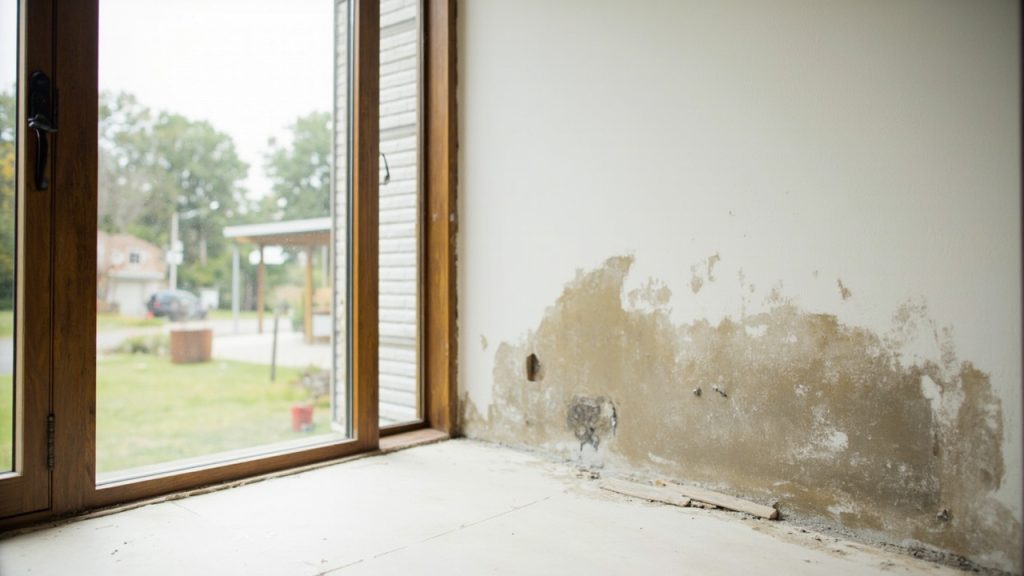
Water is pooling on your travertine floor. The drywall beneath your floor-to-ceiling window is soft to the touch. You can smell that unmistakable musty odor building in the corner. If you live in Lafayette Park, this is not a fringe scenario. It is one of the most common calls we get from residents and property managers in this historic district.
The Mies van der Rohe townhomes and co-ops along Joliet Drive, Stroh Drive, and Pavilion Drive are architectural icons. They are also buildings with a very specific set of vulnerabilities. The same expansive glass curtain walls that make these homes extraordinary are the first point of failure when Detroit winters do what Detroit winters do.
This article walks you through exactly what causes these leaks, what happens if you wait, and what a proper restoration response looks like. The faster you move, the less damage you absorb.
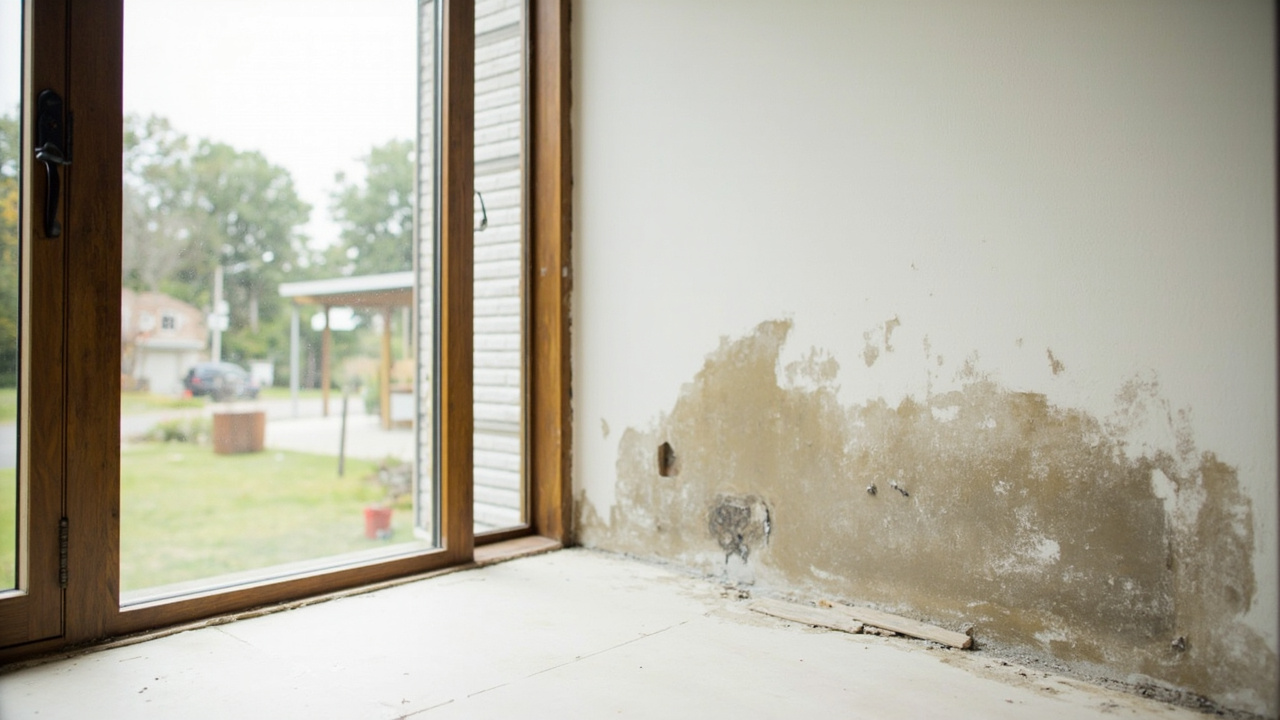
Why Lafayette Park Windows Leak Differently Than Standard Windows
Most window leaks in a standard Detroit residential home involve a failed piece of flashing or a cracked caulk bead. Lafayette Park is a different problem entirely. The fenestration systems in these mid-century modern structures were engineered with specific sealant joint tolerances and weep hole drainage paths that are now decades past their original design life.
The building envelope in these homes relies on a continuous seal between the aluminum frame, the structural steel, and the surrounding masonry or panel system. When any part of that seal degrades, water finds a path. And because these windows run floor to ceiling, the water has a large entry point and a long way to travel inside your wall cavity.
The Four Most Common Failure Points
- Sealant joint failure. The polyurethane or silicone sealant around your window frame has a finite lifespan. Detroit’s freeze-thaw cycles, which routinely shift between well below freezing and above 40 degrees Fahrenheit within the same week during shoulder seasons, cause repeated expansion and contraction. This mechanical stress cracks and separates the sealant over time.
- Weep hole blockages. The aluminum frames in Lafayette Park homes have weep holes at the sill to drain water that enters the glazing pocket. Debris, oxidation, and paint overspray block these holes. Water then backs up and migrates inward.
- Glazing gasket deterioration. The rubber or neoprene gaskets that hold the glass panel in the frame become brittle with age. Once they shrink or crack, wind-driven rain from the Detroit River corridor pushes water directly through the glazing line.
- Structural frame racking. The steel moment frames in these structures do move slightly over time due to soil settlement and thermal cycling. Even minor racking changes the compression on the window frame seals, creating gaps that were not there before.
What Wind-Driven Rain From the Detroit Riverfront Actually Does to These Buildings
Lafayette Park sits on elevated ground just northeast of the Detroit Riverfront. Prevailing winds off Lake St. Clair and the Detroit River channel arrive with significant force, especially during the late fall storms that hit southeast Michigan. During a hard rain event with 25 to 40 mph gusts, water does not just run down the glass. It is driven horizontally at pressure that exceeds what the glazing pocket was designed to drain.
This is called hydrostatic pressure loading on the building envelope. The sealant joints that look fine on a dry day are suddenly under active stress. A hairline crack that would never leak in calm rain becomes a significant water entry point during a storm event.
The National Weather Service Detroit forecast office documents these wind events regularly, and they are not rare. If your window seal is compromised, it is only a matter of time before a storm event exposes it.
The Damage Timeline After a Lafayette Park Window Leak Starts
This is where property managers and homeowners make their biggest mistake. The leak appears, they put a towel down, and they call someone to caulk the outside frame. The visible problem looks resolved. What they do not see is what is happening inside the wall assembly.
| Time After Leak Begins | What Is Happening Inside the Wall | Risk Level |
|---|---|---|
| 0 to 24 hours | Water saturates insulation and drywall paper facing. Moisture spreads laterally via capillary action. | Moderate. Drying still possible if caught quickly. |
| 24 to 72 hours | Relative humidity inside wall cavity exceeds 70%. Mold spores begin colonizing on drywall paper and wood blocking. | High. Mold remediation now likely required. |
| 3 to 7 days | Visible mold growth possible. Drywall structural integrity compromised. Steel framing members begin surface oxidation. | Severe. Material replacement likely required. |
| 7 days or more | Mold colony established. Potential spread to HVAC ductwork. Subfloor and flooring materials significantly damaged. | Critical. Scope of work expands substantially. |
The 72-hour window is critical. IICRC S500 standards identify 72 hours as the threshold after which water damage transitions from a drying project to a remediation project. If you are a property manager at one of the Lafayette Park co-ops, your liability exposure increases significantly after that window closes without documented professional response.

How a Proper Restoration Response Works for These Structures
A standard water damage crew showing up with a few dehumidifiers is not the right response for a Mies van der Rohe building. These structures require a restoration team that understands building envelope engineering and the specific material assemblies used in mid-century curtain wall construction.
Step 1 — Thermal Imaging Inspection
Before any drying equipment goes out, a thermal imaging scan of the affected walls maps exactly where moisture has traveled. Infrared thermography shows the cold, wet areas inside the wall cavity that are invisible to the naked eye. This prevents the common mistake of drying only what you can see and missing the moisture that has migrated 6 to 8 feet laterally behind your drywall.
In Lafayette Park homes with terrazzo or travertine floors, this step is especially important. Water that travels under flooring stays trapped and continues to feed mold growth even after the visible surface dries.
Step 2 — Containment and Source Control Coordination
The restoration team establishes containment around the affected area, then coordinates with a building envelope specialist or glazing contractor to address the actual water entry point. This is not the restoration crew’s job to fix the window itself, but without source control, drying is pointless.
For Lafayette Park properties, the building envelope repair often involves Wayne County building permit requirements, and if the property falls under the Historic District Commission’s oversight, specific material matching requirements apply to any visible exterior work. Original aluminum framing profiles, glass specifications, and sealant colors may need to match historic standards.
Step 3 — Structural Drying and Moisture Extraction
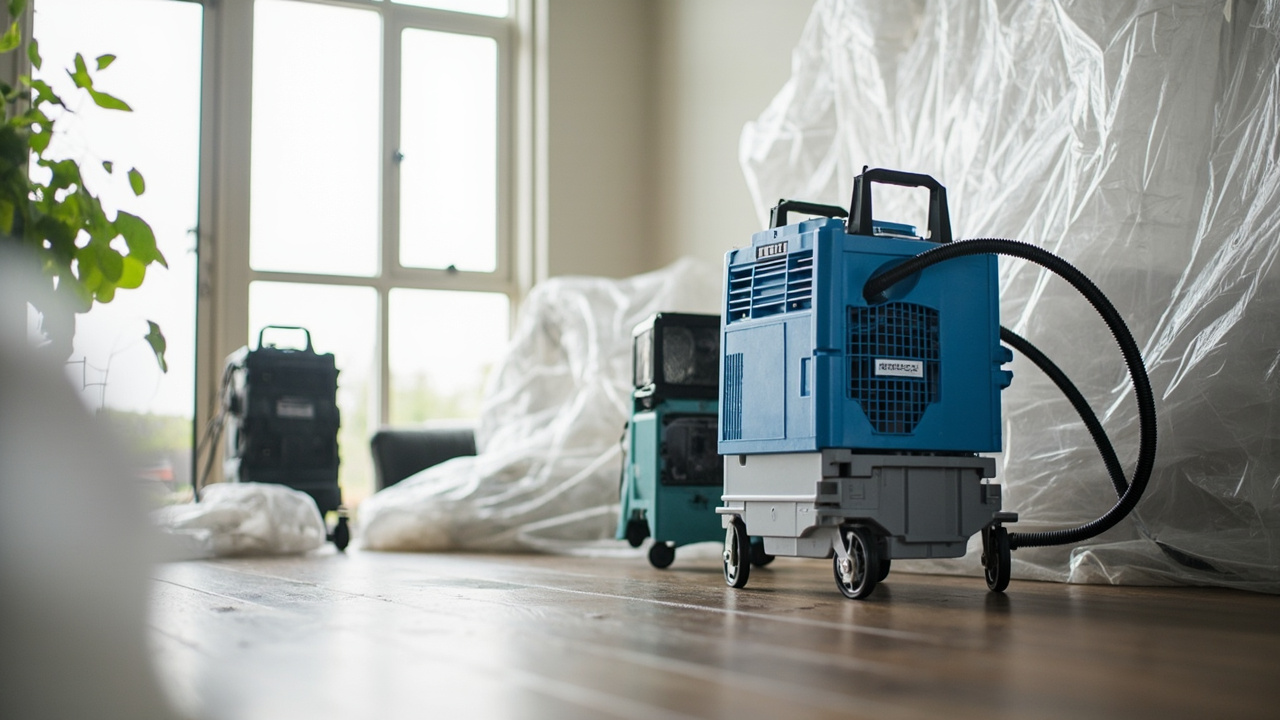
Commercial-grade desiccant dehumidifiers and air movers create a controlled drying environment that pulls moisture out of the wall assembly. In many Lafayette Park cases, targeted drywall removal (flood cuts) is necessary to allow direct airflow to the framing cavity. The goal is to reach acceptable moisture content levels as defined by IICRC S500 standards before any reconstruction begins.
Moisture readings are documented daily. This documentation matters significantly when you file your insurance claim. If you need guidance on working with your adjuster, the process for getting your Detroit home insurance to actually pay for water restoration requires this kind of systematic documentation from the start.
Step 4 — Mold Assessment and Remediation if Required
If the leak has been active for more than a few days, a mold assessment by a qualified industrial hygienist should follow the thermal imaging inspection. This is not optional if you see discoloration on drywall surfaces near the window. Surface mold is almost always a sign of deeper colonization inside the wall cavity.
Bleach is not a solution here. It never is for porous building materials. If you want to understand why surface treatments fail and when professional remediation is required, the detailed explanation in why bleach won’t fix mold in Detroit-area homes covers the chemistry and the risk factors clearly.
Lafayette Park Co-Op and HOA Responsibility
Ownership structure in Lafayette Park is more complex than a standard Detroit residential property. Many residents own shares in a co-op corporation rather than the physical unit itself. This matters when a window leaks because the building envelope is typically the co-op corporation’s responsibility, not the individual unit owner’s.
Property managers and HOA boards need to understand that a leak originating at the window frame is almost always a building envelope issue. The interior water damage may affect the unit, but the source repair obligation typically falls on the co-op. This creates a situation where the co-op corporation carries the liability for the damage scope if response is delayed.
Commercial insurance adjusters evaluating these claims look specifically at response timelines. Prompt professional documentation protects the co-op’s position. If you are dealing with a claim for a specific unit, the guidance on filing a successful water damage insurance claim in Detroit applies directly to this situation, even though it references Corktown specifically.
Comparing Leak Severity and Typical Restoration Scope
| Leak Severity | Typical Signs | Likely Restoration Scope | Estimated Timeline |
|---|---|---|---|
| Minor (sealant bead failure only) | Dampness at window sill, small water stain on drywall, no odor | Thermal scan, targeted drying, sealant replacement | 3 to 5 days of drying |
| Moderate (frame and cavity intrusion) | Water pooling on floor during rain, soft drywall, minor staining on wall surface | Thermal scan, flood cut, structural drying, patch and paint | 5 to 10 days |
| Severe (mold growth present) | Visible mold, strong odor, discoloration extending from window to floor | Mold remediation, full wall section removal, drying, reconstruction | 2 to 4 weeks |
| Critical (subfloor and structural involvement) | Floor material lifting or staining, evidence of long-term chronic leak, odor throughout unit | Full remediation, subfloor replacement, potential framing repair, reconstruction | 4 to 8 weeks |
The difference between a minor and a severe scope often comes down to how quickly the first call was made. A certified restoration contractor like those holding IICRC certification follows documented protocols that keep the scope contained when response is fast.
Protecting Your Floors During Window Leak Response
Lafayette Park homes frequently have original terrazzo floors, concrete slabs, or period hardwood in secondary spaces. Water from a window leak migrates under flooring quickly. Terrazzo is semi-porous and can absorb moisture at the grout joints. Hardwood floors can cup and buckle within 48 hours of sustained moisture exposure.
The immediate steps while you wait for your restoration contractor to arrive are straightforward. Remove standing water with towels or a wet vac. Place a plastic sheet or tarp over flooring within 4 feet of the window. Do not use fans blowing directly at the wall if mold is suspected, since air movement can spread spores.
If you have hardwood floors in any part of your Lafayette Park home and they have been exposed to water, the detailed process for saving hardwood floors after a water leak applies regardless of whether your home is in Birmingham or Lafayette Park. The material behavior is the same.
What to Ask Your Restoration Contractor Before They Start
Not every restoration company has experience with mid-century curtain wall buildings. Before authorizing work on a Lafayette Park property, ask specifically whether the crew has experience with steel frame construction and aluminum curtain wall assemblies. Ask whether they carry commercial restoration equipment, not just residential gear. Confirm they will coordinate directly with your glazing contractor for source documentation.
Ask to see their moisture mapping protocol. If the answer is a blank stare, keep calling. Thermal imaging is standard practice for any credible commercial restoration response, and Lafayette Park properties are commercial-grade buildings whether they are residential co-ops or not.
Emergency Response and Next Steps for Lafayette Park Residents
If you are reading this with water on your floor right now, stop the water source first if you can. Close off the affected room if mold is visible. Call a certified restoration contractor with documented commercial building experience, not a general handyman or a residential plumber. Then call your co-op management office or HOA board to document the incident immediately.
Time is the most expensive variable in any water damage scenario. The longer the wall cavity stays wet, the larger the remediation scope becomes. In a Lafayette Park townhome or co-op unit, that scope can grow fast because of the scale of the wall and window assemblies involved.
We provide emergency response for Lafayette Park, downtown Detroit, Midtown, and the surrounding metro area. If you are dealing with a leaking window right now and need a rapid thermal imaging assessment and moisture mapping, reach out directly. Document the damage with photos before anything is moved or wiped up. That documentation protects both you and your insurance claim from the first moment.
{
“@context”: “https://schema.org”,
“@type”: “BlogPosting”,
“headline”: “What to Do When Your Lafayette Park Floor-to-Ceiling Windows Start Leaking”,
“description”: “Lafayette Park windows leaking? Learn the causes, risks, and restoration steps for Detroit’s iconic Mies van der Rohe homes. Act fast to prevent mold and damage.”,
“wordCount”: 2109,
“datePublished”: “2026-06-09T04:12:00.000Z”,
“dateModified”: “2026-06-09T04:12:00.000Z”,
“inLanguage”: “en-US”,
“mainEntityOfPage”: {
“@type”: “WebPage”,
“@id”: “https://ironwoodwaterdamagerestorationdetroit.com”
},
“publisher”: {
“@type”: “LocalBusiness”,
“name”: “Ironwood Water Damage Restoration Detroit”,
“url”: “https://ironwoodwaterdamagerestorationdetroit.com”
},
“author”: {
“@type”: “Organization”,
“name”: “Ironwood Water Damage Restoration Detroit”,
“url”: “https://ironwoodwaterdamagerestorationdetroit.com”
},
“image”: {
“@type”: “ImageObject”,
“url”: “https://ironwoodwaterdamagerestorationdetroit.com/wp-content/uploads/2026/03/what-to-do-when-your-lafayette-park-floor-to-ceili-1.jpg”
}
}
{
“@context”: “https://schema.org”,
“@type”: “LocalBusiness”,
“name”: “Ironwood Water Damage Restoration Detroit”,
“url”: “https://ironwoodwaterdamagerestorationdetroit.com”,
“address”: {
“@type”: “PostalAddress”,
“addressLocality”: “Detroit”
},
“areaServed”: {
“@type”: “City”,
“name”: “Detroit”
}
}
{
“@context”: “https://schema.org”,
“@type”: “BreadcrumbList”,
“itemListElement”: [
{
“@type”: “ListItem”,
“position”: 1,
“name”: “Home”,
“item”: “https://ironwoodwaterdamagerestorationdetroit.com”
},
{
“@type”: “ListItem”,
“position”: 2,
“name”: “Blog”,
“item”: “https://ironwoodwaterdamagerestorationdetroit.com/blog”
},
{
“@type”: “ListItem”,
“position”: 3,
“name”: “What to Do When Your Lafayette Park Floor-to-Ceiling Windows Start Leaking”
}
]
}
{
“@context”: “https://schema.org”,
“@type”: “Service”,
“serviceType”: “Water Damage Restoration”,
“provider”: {
“@type”: “LocalBusiness”,
“name”: “Ironwood Water Damage Restoration Detroit”,
“url”: “https://ironwoodwaterdamagerestorationdetroit.com”
},
“areaServed”: {
“@type”: “City”,
“name”: “Detroit”
},
“description”: “Lafayette Park windows leaking? Learn the causes, risks, and restoration steps for Detroit’s iconic Mies van der Rohe homes. Act fast to prevent mold and damage.”
}