

Sweating Pipes Are Not a Minor Annoyance
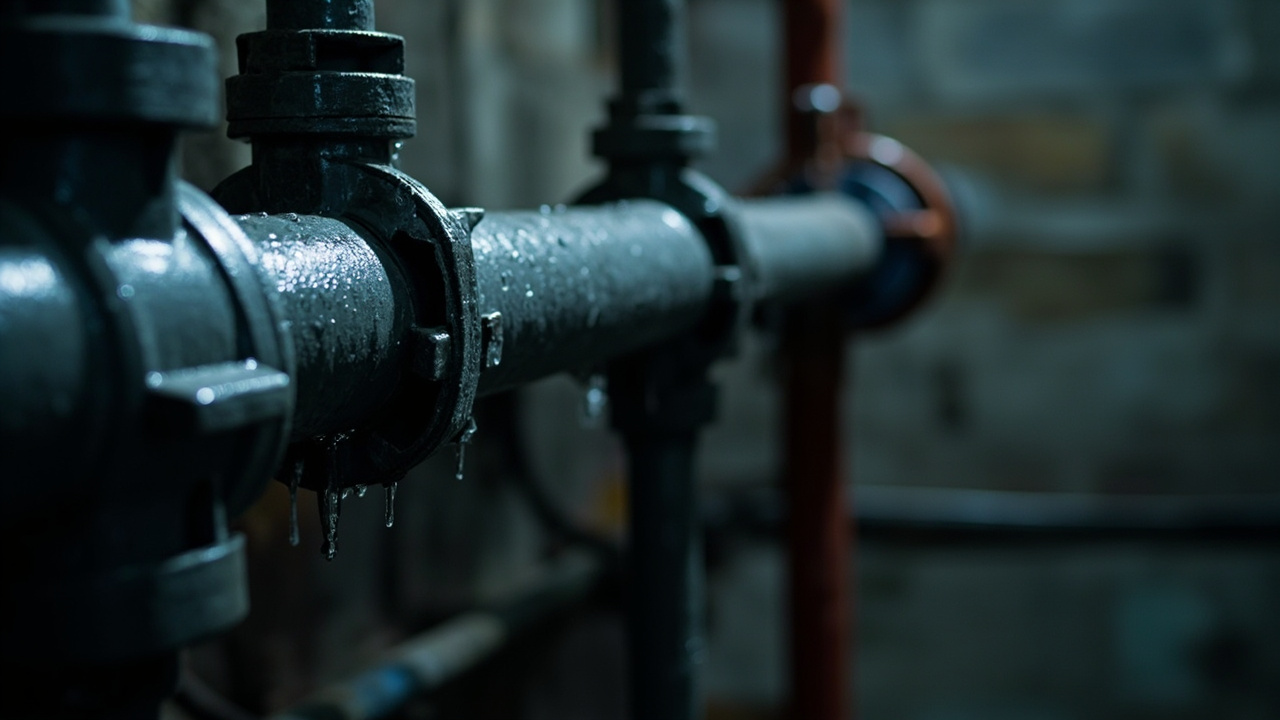
If you press your hand against a cold water pipe in your Detroit basement on a July afternoon, you will feel it. That slick, wet surface is not a leak. It is condensation. And while it looks harmless, the moisture dripping off those pipes is quietly soaking into your floor joists, rusting your pipe hangers, and creating the exact conditions that mold needs to grow.
Detroit summers are legitimately humid. The Great Lakes surrounding Michigan push moisture levels well above what most inland cities experience. When that warm, saturated air contacts a cold pipe carrying 55-degree groundwater, condensation forms fast. This is basic psychrometrics, the study of air and water vapor behavior, and understanding it is the first step to protecting your home.
Why Pipes Sweat in Michigan Homes
The Science Behind Condensation
Condensation forms when a surface temperature drops below the dew point of the surrounding air. The dew point is the temperature at which air becomes fully saturated and releases moisture onto cooler surfaces. In Detroit, the dew point during July and August routinely sits between 60 and 70 degrees Fahrenheit.
Your cold water supply pipes, fed by groundwater that stays around 50 to 55 degrees year-round, are almost always colder than the summer dew point. The result is a continuous film of moisture forming on every exposed cold pipe surface. In a tight, poorly ventilated Michigan basement, that moisture has nowhere to go.
Detroit’s Great Lakes Climate Makes This Worse
Detroit sits in the middle of a Great Lakes moisture corridor. Lake Erie to the southeast and Lake Huron to the northeast both contribute to elevated ambient humidity throughout June, July, and August. Relative humidity in the Detroit metro area regularly reaches 80 to 90 percent on summer mornings before the sun burns it down.
Older homes in neighborhoods like Corktown, Indian Village, and Boston-Edison were built with Michigan basements, those partially buried stone or brick foundations that predate modern vapor barriers. These spaces absorb ground moisture from all four walls, compounding the condensation problem you already have on your pipes.
| Month | Average Relative Humidity (Detroit) | Average Dew Point | Condensation Risk on Cold Pipes |
|---|---|---|---|
| June | 72% | 58°F | Moderate |
| July | 76% | 64°F | High |
| August | 78% | 66°F | High |
| September | 73% | 58°F | Moderate |
The Hidden Damage Sweating Pipes Leave Behind
Most homeowners wipe down a sweating pipe and move on. The problem is everything they cannot see. Consistent dripping from condensation creates the same secondary damage as a slow plumbing leak, just over a longer timeline.
What Actually Gets Damaged
- Floor joists and subfloor absorb dripping moisture and begin to rot from the inside out. In older Wayne County homes with dimensional lumber framing, this damage can compromise structural integrity before you notice any visible signs.
- Pipe hangers and brackets corrode when they stay wet for weeks at a time. Corroded hangers eventually fail, putting stress on pipe joints.
- Drywall and insulation in finished basements wick moisture upward through capillary action, a process called vapor drive. Once insulation gets saturated, it loses all thermal value and becomes a mold substrate.
- Mold colonies can establish themselves on wood framing within 48 to 72 hours of consistent moisture exposure. The dark, still air of a Detroit basement gives mold everything it needs to spread quietly for months.
- Electrical components in utility panels or junction boxes located near sweating pipes face corrosion and short-circuit risk.
If you have noticed a musty smell in your basement this summer, there is a real chance the source is not a plumbing leak at all. It may be the accumulated moisture from weeks of pipe condensation that has already reached your wood framing. For more on why surface treatments alone cannot fix that problem, read why bleach will not fix your Ferndale basement mold.

How to Stop Pipe Sweating Before It Causes Damage
Step 1 – Insulate Every Cold Water Pipe
Foam pipe insulation is the most direct fix. Closed-cell polyethylene foam sleeves slip over supply lines and create a thermal barrier between the cold pipe surface and the warm humid air. The goal is to raise the surface temperature of the pipe above the ambient dew point so condensation stops forming.
Use pipe insulation rated for your pipe diameter. For copper supply lines common in mid-century Detroit homes, standard half-inch or three-quarter-inch sleeves work well. Tape every seam with foil HVAC tape. Any gap in coverage becomes a condensation point.
Step 2 – Run a Dehumidifier in the Basement
A whole-basement dehumidifier pulling relative humidity below 50 percent eliminates the saturation gradient that drives condensation. When the air in your basement is dry enough, the temperature differential between your pipes and the air is no longer enough to push moisture out of suspension.
Size matters here. A 70-pint dehumidifier is the minimum for most Detroit basement footprints. Drain it continuously to a floor drain rather than emptying the bucket manually. If you empty it once and then let it sit full for a weekend, you have accomplished nothing.
Step 3 – Improve Basement Air Circulation
Stagnant air in a basement corners pockets of humidity that the dehumidifier never reaches. A box fan pushing air across the floor toward the dehumidifier intake improves the draw and keeps dew point temperatures more uniform across the space.
If your basement has window wells, make sure they are draining correctly. Pooled water in window wells adds evaporative moisture directly into the basement air. That is a common issue in the older brick bungalows throughout neighborhoods like Mexicantown and West Village.
Step 4 – Check Your Crawl Space and Vapor Barrier
If your home has a crawl space, ground moisture evaporating from exposed soil is contributing to the humidity problem before it even reaches your basement. A proper vapor barrier covering the crawl space floor is one of the highest-impact moisture control measures you can take. Six-mil polyethylene sheeting lapped and taped at the seams dramatically reduces ground moisture vapor drive into the living space above.
| DIY Fix | Difficulty Level | Effectiveness | Best For |
|---|---|---|---|
| Foam pipe insulation | Low | High (direct fix) | Exposed supply lines |
| Basement dehumidifier | Low | High (environmental fix) | Whole-basement humidity control |
| Crawl space vapor barrier | Medium | High (source control) | Homes with dirt-floor crawl spaces |
| Improved air circulation | Low | Medium (supplemental) | Basements with dead-air pockets |
| Window well drainage repair | Medium | Medium (reduces moisture source) | Older brick homes in Detroit neighborhoods |
When DIY Is Not Enough and You Need a Professional
Signs the Moisture Has Already Caused Structural Damage
Pipe insulation and a dehumidifier handle active condensation. They do not reverse damage that has already occurred. If you find any of the following, the situation has moved past DIY territory.
Soft or springy subfloor above the area where pipes run is a sign of rot in progress. Press the heel of your foot into the floor directly above your basement ceiling. If it flexes, the wood underneath has lost structural integrity from sustained moisture exposure.
Visible mold on floor joists, on the back of drywall, or on pipe insulation you pull off to inspect means active biological growth. According to IICRC S500 standards for water damage restoration, any affected structural material within the moisture boundary requires professional assessment before remediation begins.
Rust staining on concrete directly below pipe runs tells you the condensation has been dripping in that spot for an extended period. That concrete is absorbing moisture and wicking it laterally through the slab.
The Tipping Point Between Condensation Control and Water Damage Restoration
The moment moisture has saturated building materials, you are no longer dealing with a humidity problem. You are dealing with a water damage event that requires structural drying, moisture mapping, and potentially mold remediation. The condensation was the cause. The soaked floor joists are the consequence.
Many Detroit homeowners in areas like Jefferson Chalmers or Grandmont Rosedale discover this after a summer of ignoring those wet pipes. By the time a musty smell becomes undeniable, the moisture content in the framing is often well above the 19 percent threshold that IICRC standards identify as the boundary for microbial risk.

How Professional Moisture Assessment Works in Detroit Basements
Moisture Mapping and Thermal Imaging
A professional water damage assessment does not rely on visual inspection alone. Moisture mapping uses calibrated pin and pinless meters to measure moisture content percentages in wood framing, drywall, and concrete at multiple points across the affected area. This creates a map of the moisture boundary, showing exactly how far the saturation has spread.
Thermal imaging cameras reveal temperature differentials across wall surfaces. Wet materials hold temperature differently than dry materials. A thermal camera can identify moisture migration inside walls that look completely dry from the outside. This is especially valuable in Detroit’s older homes where wall cavities are tight and insulation types vary across decades of renovation work.
Structural Drying Protocol
Once moisture mapping defines the boundary, structural drying begins. High-capacity air movers are positioned to create directed airflow across wet surfaces, and commercial dehumidifiers pull the evaporated moisture out of the air. This is different from placing a box-store dehumidifier in the corner. Airflow placement follows psychrometric calculations to maximize evaporation rate without over-drying adjacent materials.
The drying process is monitored with daily moisture readings until all materials reach their dry standard, a baseline specific to the material type and the local climate. In Wayne County, ambient conditions in summer mean drying timelines are longer than in drier climates. A properly executed drying job uses documentation at every stage.
Mold Remediation When It Is Needed
If mold is already present, drying the structure is step one but not the complete solution. Mold remediation requires containment of the affected area, removal of colonized material that cannot be cleaned, and treatment of surfaces that can be retained. This is not a bleach-and-walk-away situation. Surface treatment does not address the hyphal structures that penetrate into wood grain.
Does Homeowner’s Insurance Cover Condensation Damage
This is one of the most common questions we field in the Detroit metro area. The short answer is that it depends on how the damage is classified and documented. Condensation is a maintenance issue, not a sudden and accidental event, which is the standard most homeowners’ policies use to determine coverage.
That said, if condensation has caused mold growth that spreads to other areas, or if a corroded pipe hanger eventually causes a pipe to fail and release water, the resulting damage may fall under a covered peril. Documentation matters enormously. For guidance on how to approach this with your carrier, read about how to get your Detroit home insurance to actually pay for water restoration.
If you are dealing with a Corktown property specifically, the historic nature of many of those homes adds additional documentation complexity. The article on filing a successful water damage insurance claim for your Corktown home covers the specifics.
Other Moisture Problems That Can Develop Alongside Sweating Pipes
Condensation on pipes is often a symptom of a broader moisture problem in the home. While you are addressing the pipes, it is worth checking a few other common failure points in Detroit homes.
Hardwood floors on the main level above a wet basement can absorb vapor drive moisture from below and begin to cup or buckle. If you are seeing gaps or warping, moisture from the basement is often the source. More on that problem is covered in the guide on saving hardwood floors after a water event.
Carpet in finished basement spaces or on lower levels is particularly vulnerable. Once carpet padding absorbs moisture, it holds it against the subfloor and creates a continuous wet environment that accelerates both rot and mold. The decision between drying and replacing is covered in detail in this article on whether wet carpet can be saved or needs to go.
Get a Free Moisture Inspection in Wayne County
If your pipes are sweating and you are not sure whether the moisture has already reached your building materials, do not guess. A professional moisture assessment takes less than an hour and gives you a factual picture of what is happening inside your walls and framing.
We serve homeowners throughout the Detroit metro area, including Wayne County, Oakland County, and Macomb County. Whether you are in a historic Indian Village brick home or a mid-century ranch in Dearborn, the same moisture physics apply. Call us or submit a contact form to schedule your free moisture inspection and get a clear answer before summer does any more damage.
{
“@context”: “https://schema.org”,
“@type”: “BlogPosting”,
“headline”: “What to Do When Your Pipes Start Sweating in the Detroit Summer Humidity”,
“description”: “Sweating pipes in your Detroit home? Learn why it happens, what damage it causes, and when to call a water damage restoration specialist.”,
“wordCount”: 2085,
“datePublished”: “2026-04-11T12:37:00.000Z”,
“dateModified”: “2026-04-11T12:37:00.000Z”,
“inLanguage”: “en-US”,
“mainEntityOfPage”: {
“@type”: “WebPage”,
“@id”: “https://ironwoodwaterdamagerestorationdetroit.com”
},
“publisher”: {
“@type”: “LocalBusiness”,
“name”: “Ironwood Water Damage Restoration Detroit”,
“url”: “https://ironwoodwaterdamagerestorationdetroit.com”
},
“author”: {
“@type”: “Organization”,
“name”: “Ironwood Water Damage Restoration Detroit”,
“url”: “https://ironwoodwaterdamagerestorationdetroit.com”
},
“image”: {
“@type”: “ImageObject”,
“url”: “https://ironwoodwaterdamagerestorationdetroit.com/wp-content/uploads/2026/03/what-to-do-when-your-pipes-start-sweating-in-the-d-1.jpg”
}
}
{
“@context”: “https://schema.org”,
“@type”: “LocalBusiness”,
“name”: “Ironwood Water Damage Restoration Detroit”,
“url”: “https://ironwoodwaterdamagerestorationdetroit.com”,
“address”: {
“@type”: “PostalAddress”,
“addressLocality”: “Detroit”
},
“areaServed”: {
“@type”: “City”,
“name”: “Detroit”
}
}
{
“@context”: “https://schema.org”,
“@type”: “BreadcrumbList”,
“itemListElement”: [
{
“@type”: “ListItem”,
“position”: 1,
“name”: “Home”,
“item”: “https://ironwoodwaterdamagerestorationdetroit.com”
},
{
“@type”: “ListItem”,
“position”: 2,
“name”: “Blog”,
“item”: “https://ironwoodwaterdamagerestorationdetroit.com/blog”
},
{
“@type”: “ListItem”,
“position”: 3,
“name”: “What to Do When Your Pipes Start Sweating in the Detroit Summer Humidity”
}
]
}
{
“@context”: “https://schema.org”,
“@type”: “Service”,
“serviceType”: “Water Damage Restoration”,
“provider”: {
“@type”: “LocalBusiness”,
“name”: “Ironwood Water Damage Restoration Detroit”,
“url”: “https://ironwoodwaterdamagerestorationdetroit.com”
},
“areaServed”: {
“@type”: “City”,
“name”: “Detroit”
},
“description”: “Sweating pipes in your Detroit home? Learn why it happens, what damage it causes, and when to call a water damage restoration specialist.”
}