
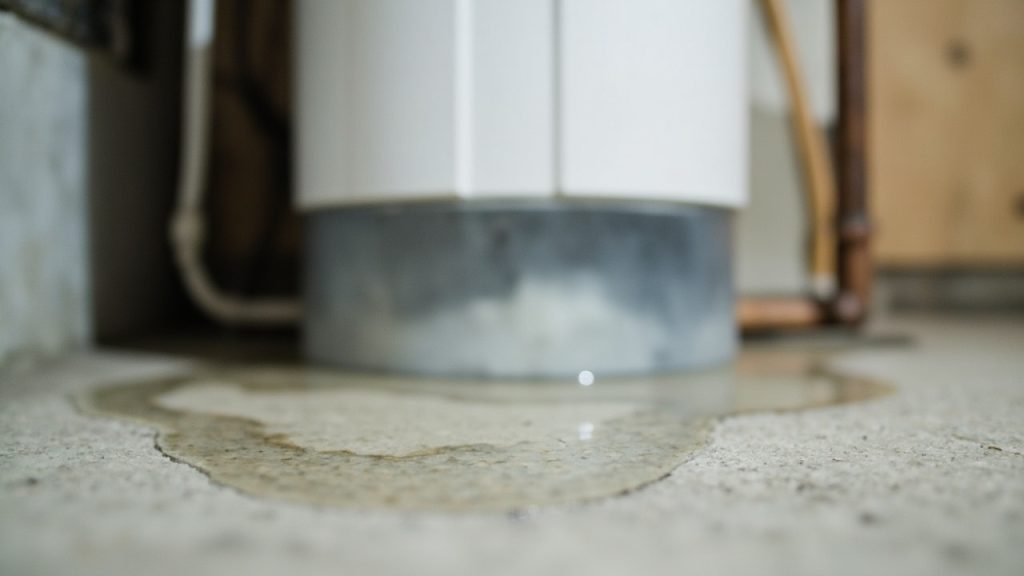
A puddle forming at the base of your water softener is not a small problem. In Shelby Township and the broader Macomb County area, where water hardness regularly pushes past 20 grains per gallon, water softeners run hard. They cycle frequently. And when they fail, they often fail slowly — which is exactly what makes them so destructive to basement floors and subfloors.
If you found water pooling under or around your softener, this guide walks you through what to do right now, what likely caused it, and how to know when the damage has already gone further than you can handle yourself.
Stop the Leak First — Then Figure Out Why
Before you pull the unit away from the wall or start inspecting components, cut off the water supply. Every water softener has a bypass valve, usually a red or blue handle or knob located on the control head or on the inlet and outlet ports at the top of the unit. Turn that valve to the bypass position. This reroutes water around the softener and stops the flow into the system without cutting off water to the rest of your house.
If the bypass valve is broken or the leak is severe, go straight to your main water shutoff. In most Shelby Township homes built after the 1980s, that shutoff is near the water meter in the utility area of the basement. Older homes along the Stoney Creek corridor or near older subdivisions off 23 Mile Road may have the shutoff in a different location — sometimes in a crawl space or near the front foundation wall.
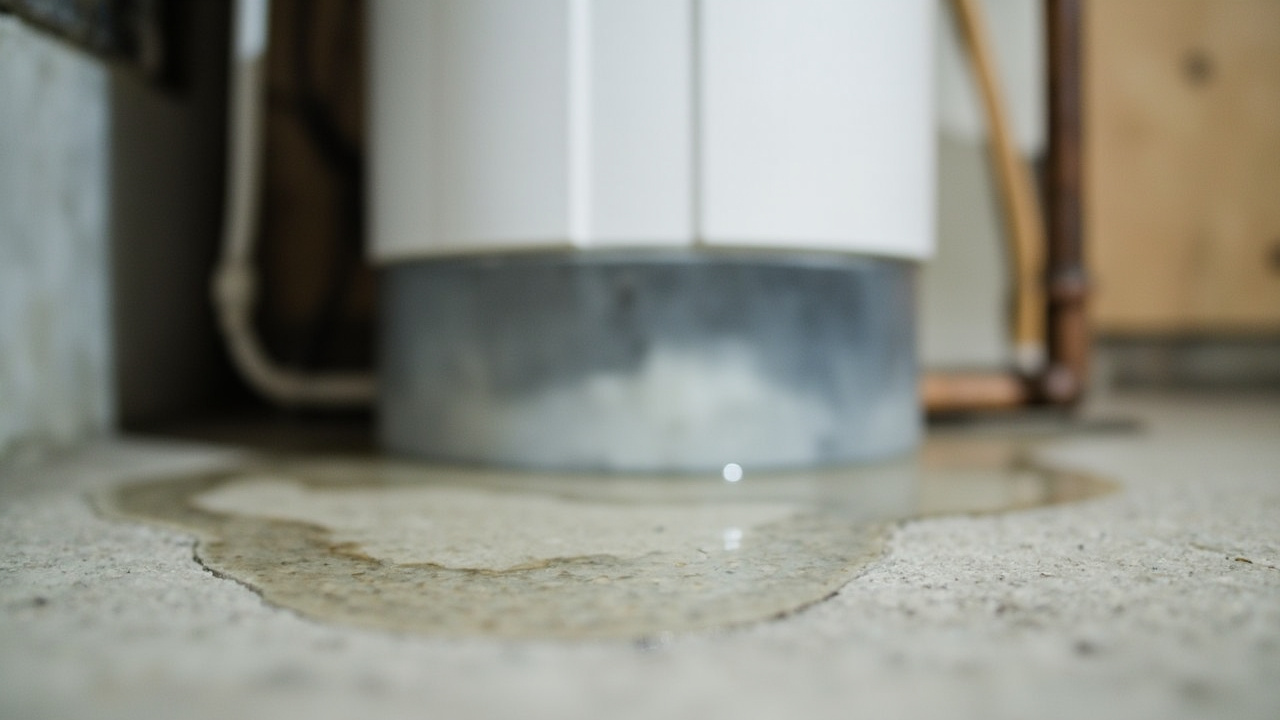
Once water is stopped, use dry towels or a wet-dry vacuum to pull standing water off the floor immediately. Do not wait. Concrete is porous. Water sitting on an unfinished basement floor starts wicking into the slab within minutes.
Why Water Softeners Leak From the Bottom
Not all bottom leaks come from the same source. Misdiagnosing this is the most common mistake homeowners make before calling a plumber or restoration team.
Cracked or Overfilled Brine Tank
The brine tank is the larger tank that holds salt. Over time, a phenomenon called salt bridging creates a hard crust that blocks the tank from operating correctly. When that bridge breaks or gets forced, it can cause a surge of brine that overflows or stresses the tank walls. Plastic brine tanks on older Culligan, Kenmore, or Whirlpool units can develop hairline cracks that are almost invisible until water is actively pooling.
Check the inside of the brine tank for standing water that appears higher than normal. The float assembly inside should prevent overfilling. If the float valve is stuck or corroded, the tank fills continuously and eventually overflows at the base.
Failed O-Rings and Seals at the Control Head
The control head sits at the top of the resin tank and manages regeneration cycles. It connects to the water supply line through a series of O-rings and gaskets. These degrade from constant pressure cycling, especially in homes with Michigan’s hard water, which accelerates mineral buildup inside the valve body. A worn O-ring here sends water down the side of the resin tank, which collects at the bottom and looks like the tank itself is leaking.
This is a fixable plumbing issue. A licensed plumber can replace O-rings on most major brand control heads for a reasonable service call. The restoration concern is what that slow drip has been doing for weeks or months before you noticed it.
Cracked Resin Tank
The resin tank holds thousands of tiny resin beads that remove hardness minerals from your water. Physical cracking is less common but does happen, especially if the unit was impacted, if freezing temperatures reached the basement during a polar vortex event, or if the unit is over a decade old. A crack in the resin tank is not a DIY repair. The tank needs full replacement.
Loose or Degraded Drain Line Connection
Water softeners discharge brine and backwash water through a drain line during regeneration, typically every few nights. This line connects to a floor drain or utility sink. If the fitting at either end has loosened or the tubing has cracked from age, water discharges onto the floor every time the unit regenerates. Because regeneration often happens at 2 or 3 AM, homeowners can go weeks without ever seeing the discharge event itself — just the dry residue or soft concrete damage the next morning.
Condensation vs. an Actual Leak
In summer months, when Macomb County humidity spikes, cold water running through the resin tank can cause condensation to form on the exterior. This can look like a leak but is not. Dry the outside of the tank completely, wait 24 hours, and check again. If moisture returns and you have not run the unit, it is condensation. If moisture appears during or right after a regeneration cycle, you have a real leak.
Why Slow Softener Leaks Cause More Damage Than Burst Pipes
A burst pipe in a Detroit-area basement is obvious. Water everywhere, immediate panic, immediate action. A water softener leaking from the bottom is different. It drips. It seeps. It might only discharge during a regeneration cycle when you are asleep. By the time you see standing water or smell something off, the damage is already weeks old.
Southeast Michigan basements — particularly in Shelby Township, Sterling Heights, and Clinton Township — commonly have concrete slab floors with wood subfloor framing above. Water that contacts that subfloor framing even briefly can start microbial growth within 24 to 48 hours under the right temperature conditions. Brine water, which contains salt and minerals, is particularly corrosive to both concrete and organic materials.
Mold behind finished basement walls or under luxury vinyl plank flooring is a serious problem that bleach will not solve. If you have finished walls near your water softener, see our article on why bleach won’t fix basement mold and when to call a pro for a clear breakdown of what actually works.
The EPA’s mold cleanup guidance is clear that any water-damaged area showing visible mold growth greater than 10 square feet requires professional remediation. In a finished basement, that threshold gets reached faster than most homeowners expect.
The Hard Water Factor in Macomb County
Shelby Township draws water from the Great Lakes watershed, processed through the Detroit Water and Sewerage Department or local municipal systems. Water hardness in this area is consistently high, regularly measured between 18 and 22 grains per gallon depending on the source and season. For context, water above 10.5 grains per gallon is classified as very hard by the Water Quality Association.
That level of mineral content means your water softener runs more regeneration cycles per week than a softener in a softer-water region. More cycles mean more wear on internal components, especially the control valve, brine injector, and drain line connections. A softener designed for a 10-year service life in a low-hardness region may start showing failures in 6 to 8 years in Macomb County conditions.
If your softener is a Kenmore, Whirlpool, or older Sears-branded unit and it is past the 8-year mark, a bottom leak is more likely a sign of end-of-life than a one-part repair situation.
Assessing the Water Damage in Your Basement
After stopping the leak, the next step is an honest assessment of how far water traveled and how long it sat. Use these indicators.
- Soft or spongy concrete near the softener base suggests long-term moisture saturation.
- White mineral deposits (efflorescence) on the concrete floor or base of nearby walls indicate recurring water exposure, not a single event.
- Musty odor in the basement, especially in the corner where the softener sits, points to active microbial growth.
- Discoloration or warping on any wood framing, baseboards, or drywall within 6 feet of the unit.
- Rust staining at the base of the water softener or on nearby pipes.
If you are seeing two or more of these signs, the damage has moved past a simple wipe-down and dry-out scenario.
Water Damage Assessment by Leak Duration
| Estimated Leak Duration | Likely Damage Scope | Recommended Response |
|---|---|---|
| Less than 24 hours | Surface moisture on concrete, minimal absorption | DIY dry-out with fans and dehumidifier, monitor for 72 hours |
| 1 to 3 days | Concrete saturation begins, potential wicking into adjacent wall framing | Professional moisture mapping recommended, targeted drying equipment |
| 3 to 7 days | Subfloor moisture, early microbial growth possible, drywall wicking | Professional structural drying, air quality testing, possible demolition of wet materials |
| More than 1 week | Active mold colonies, structural wood damage, potential black mold in wall cavities | Full remediation required, IICRC-standard water mitigation protocol |
Common Water Softener Brands and Typical Failure Points
| Brand | Common Failure Point in Hard Water Areas | Typical Service Life in Macomb County | Repair vs. Replace Threshold |
|---|---|---|---|
| Culligan | Control valve O-rings, brine float valve | 10 to 14 years with professional servicing | Replace after two major valve repairs |
| Kenmore (Sears) | Resin tank stress fractures, drain line fittings | 7 to 10 years | Replace at 8+ years if leaking from tank body |
| Whirlpool | Control head seal failure, brine tank overflow float | 8 to 12 years | Repair if under 8 years, evaluate beyond that |
| GE (Profile) | Bypass valve degradation, drain saddle connection | 8 to 10 years | Replace if bypass valve is primary failure point |
| EcoWater | Brine injector clogging, O-ring seal at control head | 12 to 15 years | Repair typically cost-effective through 12 years |
Electrical Safety Around a Leaking Water Softener
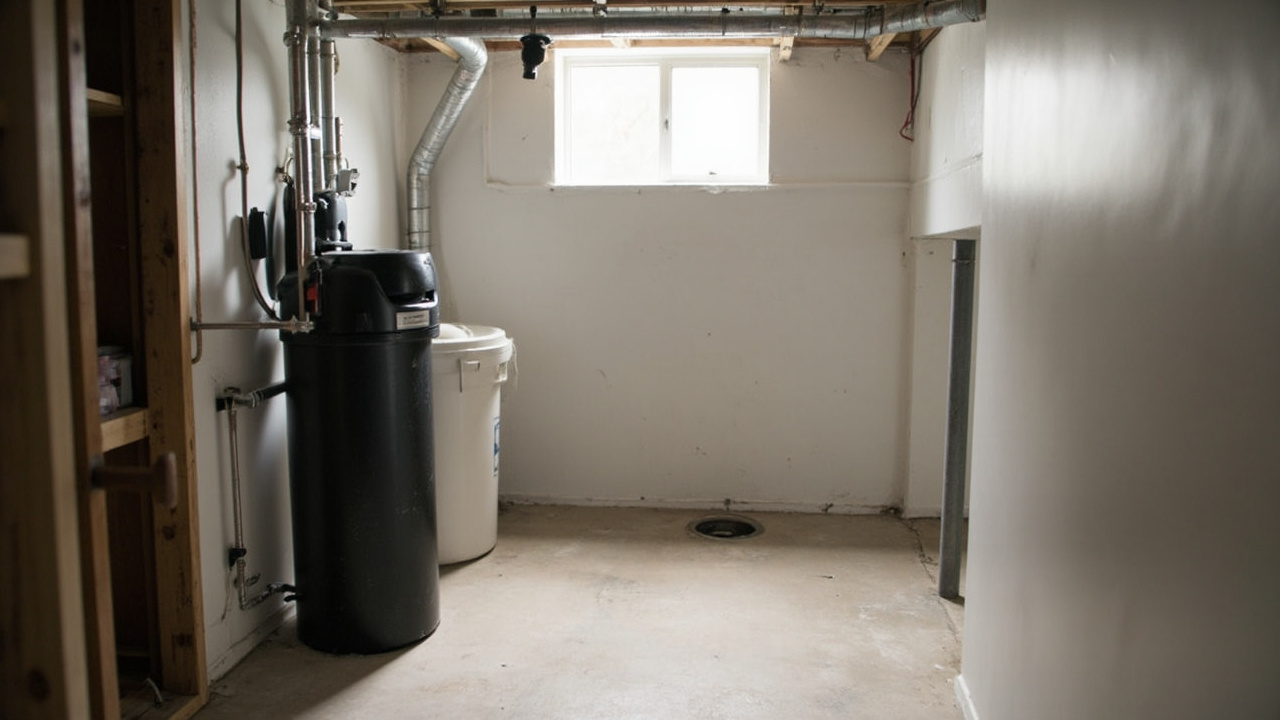
Water softeners plug into a standard 120V outlet, usually on the basement wall near the unit. If water has reached the outlet, the base of the wall, or any power strips nearby, do not touch anything electrical until you shut off the circuit at your breaker panel. This is not optional.
Check for GFCI outlets near the softener. Most Shelby Township homes built after the early 1990s have GFCI protection in unfinished basement utility areas. If the GFCI has tripped, that is a signal that moisture may have already reached the electrical components. Have an electrician verify the outlet before restoring power to the area.
Protecting Your Floors During and After a Softener Leak
If you have hardwood flooring in a finished basement area adjacent to where the softener sits, act fast. Hardwood can show surface warping within 24 to 48 hours of contact with standing water, but the deeper damage — the subfloor saturation and potential delamination — takes longer to appear and longer to address. See our detailed breakdown on how to save hardwood floors after a water leak for specifics on what restoration crews do and when floors can actually be saved.
For homes with carpet near the affected area, the decision to save or replace is time-sensitive. Wet carpet backing is a direct growth medium for mold and bacteria. Our guide on deciding whether wet carpet can be saved or needs to go covers the real criteria restoration professionals use to make that call.
When a Plumber Is Not Enough
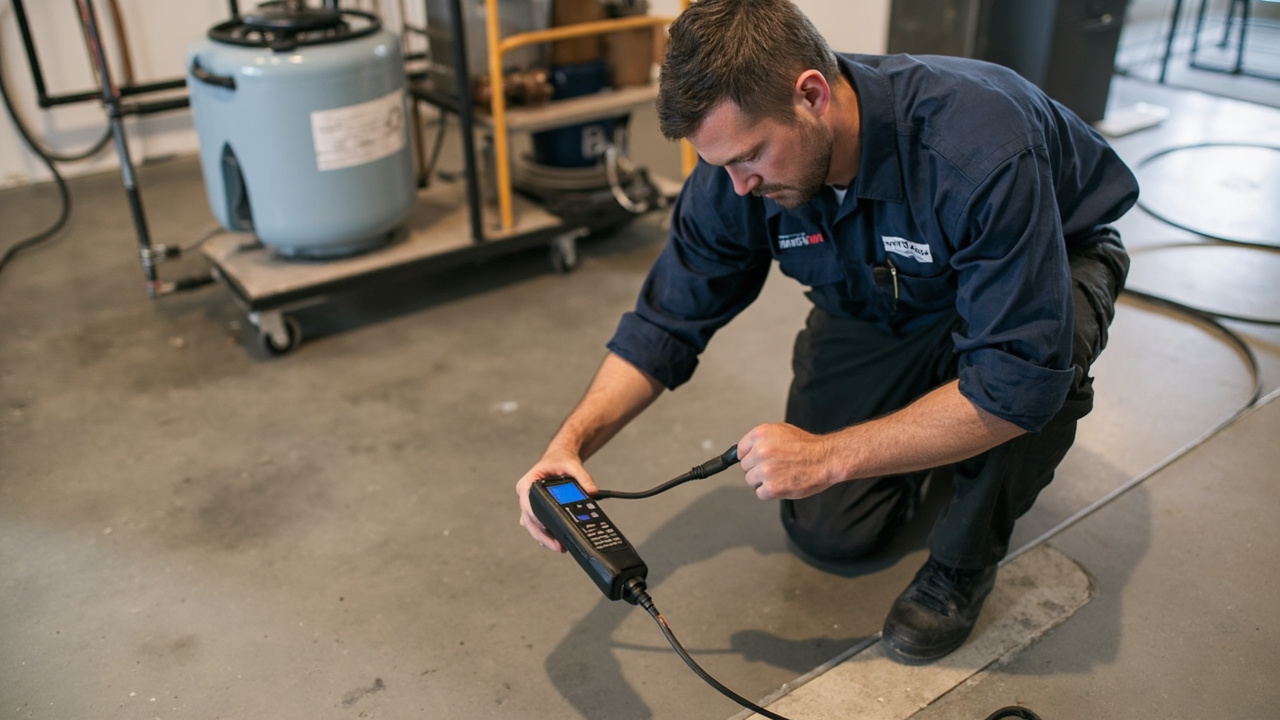
A plumber fixes the source of the leak. That is their job. But a plumber does not carry moisture meters, thermal imaging cameras, or industrial dehumidification equipment. They do not document moisture readings for insurance claims. They do not perform structural drying to IICRC S500 standards.
If water sat for more than a day, or if you cannot confirm how long the leak has been occurring, you need a water damage restoration professional in addition to a plumber. These are two separate services addressing two separate problems.
The IICRC (Institute of Inspection, Cleaning and Restoration Certification) sets the standards that legitimate restoration companies follow for water mitigation and structural drying. Ask any restoration company you contact whether their technicians hold current IICRC certification. It matters for both quality of work and for your insurance claim documentation.
Filing a Claim for Softener Water Damage
Michigan homeowners insurance policies vary significantly in how they handle appliance-related water damage. A sudden and accidental leak is typically covered. A slow leak that developed over weeks or months may be classified as a maintenance issue and denied. Document everything before cleanup begins — photographs of the puddle, the unit, the surrounding floor condition, and any visible efflorescence or staining.
For guidance on working with your insurance company on a water damage claim, see our resources on getting Detroit home insurance to pay for water restoration and the detailed process in our piece on filing a successful water damage insurance claim.
A restoration company with proper documentation practices will create a moisture map, photograph affected areas, and produce a scope of work that supports your claim. This documentation is the difference between a paid claim and a denied one.
What to Expect From Professional Structural Drying
When a restoration team responds to a water softener leak in a Shelby Township basement, here is the general sequence of work under IICRC protocol.
First, moisture mapping with professional meters establishes the full extent of water migration, including into walls and under adjacent flooring. Second, any materials that cannot be dried in place — wet drywall below the moisture line, saturated insulation, soaked carpet padding — are removed. Third, commercial-grade dehumidifiers and air movers are placed to begin the structural drying process. Finally, moisture readings are taken daily until all readings return to dry standard.
In a typical Macomb County basement scenario with a confined softener leak caught within a week, the drying phase takes 3 to 5 days. Larger migration or mold involvement extends that timeline and adds remediation steps.
If you are in Shelby Township, Sterling Heights, Clinton Township, or anywhere in the Metro Detroit area and you found water under your softener today, do not wait on getting a professional assessment. The cost of a moisture inspection is always less than the cost of treating mold that has been growing for two weeks inside your wall cavities.
Call a certified restoration team that serves Macomb County and can be on-site fast. Document the damage before anything is moved or dried. And fix the softener so the problem does not repeat.
{
“@context”: “https://schema.org”,
“@type”: “BlogPosting”,
“headline”: “What to Do When Your Water Softener Is Leaking in Your Shelby Township Basement”,
“description”: “Water softener leaking from bottom in Shelby Township? Learn immediate steps, common causes, and when to call a Detroit restoration pro before mold sets in.”,
“wordCount”: 2341,
“datePublished”: “2026-06-01T11:59:00.000Z”,
“dateModified”: “2026-06-01T11:59:00.000Z”,
“inLanguage”: “en-US”,
“mainEntityOfPage”: {
“@type”: “WebPage”,
“@id”: “https://ironwoodwaterdamagerestorationdetroit.com”
},
“publisher”: {
“@type”: “LocalBusiness”,
“name”: “Ironwood Water Damage Restoration Detroit”,
“url”: “https://ironwoodwaterdamagerestorationdetroit.com”
},
“author”: {
“@type”: “Organization”,
“name”: “Ironwood Water Damage Restoration Detroit”,
“url”: “https://ironwoodwaterdamagerestorationdetroit.com”
},
“image”: {
“@type”: “ImageObject”,
“url”: “https://ironwoodwaterdamagerestorationdetroit.com/wp-content/uploads/2026/03/dealing-with-a-leaking-water-softener-in-your-shel-1.jpg”
}
}
{
“@context”: “https://schema.org”,
“@type”: “LocalBusiness”,
“name”: “Ironwood Water Damage Restoration Detroit”,
“url”: “https://ironwoodwaterdamagerestorationdetroit.com”,
“address”: {
“@type”: “PostalAddress”,
“addressLocality”: “Detroit”
},
“areaServed”: {
“@type”: “City”,
“name”: “Detroit”
}
}
{
“@context”: “https://schema.org”,
“@type”: “BreadcrumbList”,
“itemListElement”: [
{
“@type”: “ListItem”,
“position”: 1,
“name”: “Home”,
“item”: “https://ironwoodwaterdamagerestorationdetroit.com”
},
{
“@type”: “ListItem”,
“position”: 2,
“name”: “Blog”,
“item”: “https://ironwoodwaterdamagerestorationdetroit.com/blog”
},
{
“@type”: “ListItem”,
“position”: 3,
“name”: “What to Do When Your Water Softener Is Leaking in Your Shelby Township Basement”
}
]
}
{
“@context”: “https://schema.org”,
“@type”: “Service”,
“serviceType”: “Water Damage Restoration”,
“provider”: {
“@type”: “LocalBusiness”,
“name”: “Ironwood Water Damage Restoration Detroit”,
“url”: “https://ironwoodwaterdamagerestorationdetroit.com”
},
“areaServed”: {
“@type”: “City”,
“name”: “Detroit”
},
“description”: “Water softener leaking from bottom in Shelby Township? Learn immediate steps, common causes, and when to call a Detroit restoration pro before mold sets in.”
}