

Your basement did not flood because of a freak storm. It flooded because water had nowhere else to go. And in most Grandmont Rosedale homes, that story starts at the roofline, not the foundation wall.
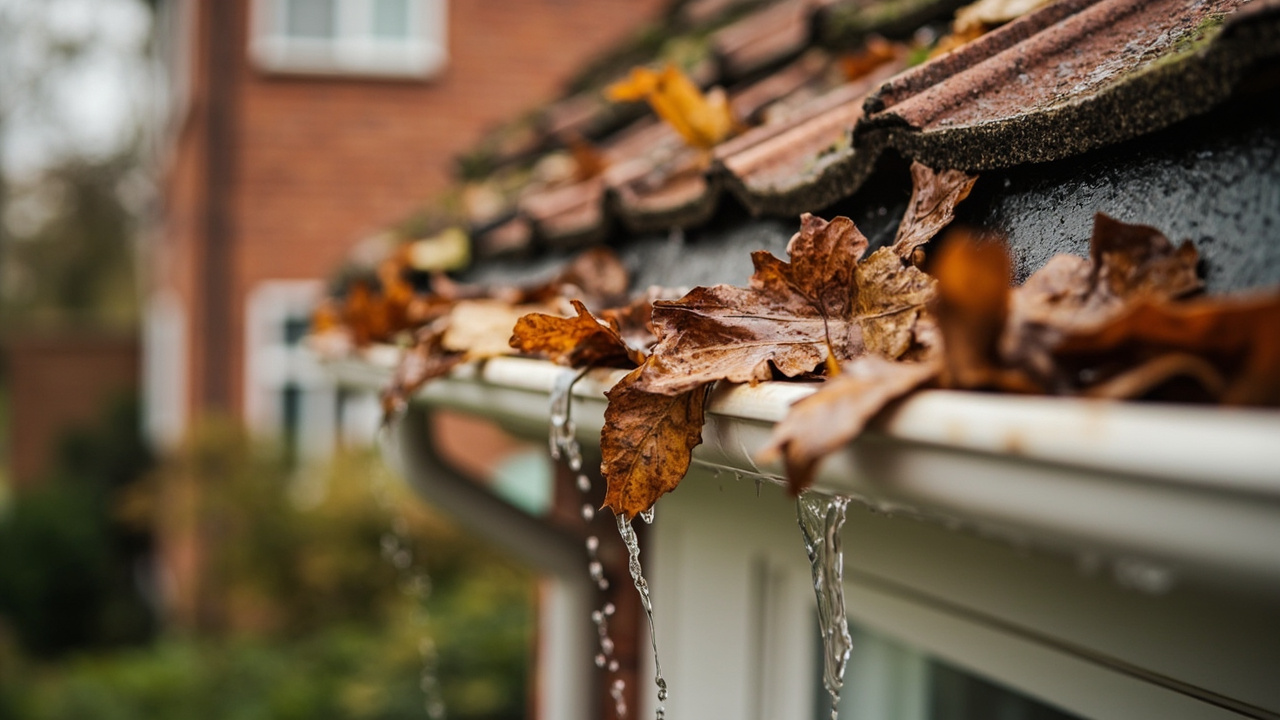
Clogged gutters are the most overlooked cause of basement water intrusion in Detroit. Homeowners blame the sump pump, the storm sewer, or bad luck. But walk around the outside of your house the next time it rains hard. If water is sheeting over the front edge of your gutters, it is pouring straight down into the soil right next to your foundation. That is where the real problem begins.
The Connection Between Your Gutter System and Your Foundation
A functioning gutter system does one job. It takes water off your roof and moves it at least six feet away from the building. When that system fails, water concentrates in what restoration professionals call the critical zone, the first five to ten feet of soil surrounding your foundation.
Grandmont Rosedale homes, most of which were built between the 1920s and 1950s, sit on older foundations that were not designed with modern waterproofing membranes. Many are poured concrete or concrete block. Both are porous. Both crack under sustained moisture pressure.
When gutters clog with oak and maple leaves, which are everywhere in this neighborhood, water backs up and overflows at the fascia line. It saturates the soil directly against the foundation. Over days and weeks, that saturation increases hydrostatic pressure against the exterior wall. Hydrostatic pressure is simply the force water exerts as it presses outward and inward through any available path. Even a hairline crack in a concrete block wall becomes a flood entry point when that pressure builds high enough.
Why Detroit Clay Soil Makes This Worse Than in Other Cities
Not every city has this problem at the same scale. Detroit does, because of geology.
Most of the Metro Detroit area, including Grandmont Rosedale, sits on a base of heavy glacial clay. Clay soil does not drain well. It holds water like a sponge and expands when wet. When your clogged gutters dump hundreds of gallons of water next to your foundation during a spring storm, that clay becomes saturated quickly. It cannot absorb more water and it cannot move water away fast enough.
The result is a zone of saturated, pressurized clay sitting directly against your basement wall. According to the U.S. Environmental Protection Agency’s moisture control guidance, sustained soil moisture against a foundation is one of the primary drivers of indoor water intrusion and subsequent mold growth. Detroit homeowners deal with this dynamic every spring and again in the fall.
Clay soil also shifts when it freezes and thaws. Detroit gets enough freeze-thaw cycles through late winter to physically move the soil against your foundation walls, widening existing cracks and opening new ones. If that same soil is already saturated from a clogged gutter, the damage compounds.
The Math Behind One Rain Event
The numbers are bigger than most homeowners expect. A standard rule of thumb in drainage engineering is that one inch of rainfall on a 1,000 square foot roof produces roughly 620 gallons of water. A typical Grandmont Rosedale bungalow or brick colonial has a footprint of 1,200 to 1,800 square feet.
Detroit’s spring storms regularly deliver two to three inches of rain in a single event. That means a single storm can send well over 2,000 gallons of water cascading off your roof. If the downspouts are blocked or the gutters overflow, much of that volume hits the ground directly against your foundation. No sump pump was designed to handle that volume coming from one direction with that kind of speed.

Four Warning Signs Your Gutters Are Causing Your Wet Basement
You do not need a contractor to identify the early signs. Walk around your home after a hard rain and look for these specific indicators.
- Water pouring over the front edge of the gutter. This is called a gutter waterfall. It means the trough is clogged or the downspout is blocked. All of that water is going straight down next to your foundation.
- Pooling or puddling within six feet of the house. If the grade around your home slopes toward the foundation rather than away from it, water has no exit path. It soaks straight down.
- Peeling paint or white chalky residue on basement walls. That white powder is efflorescence. It is mineral salt left behind when water moves through concrete and evaporates on the interior surface. It is a direct sign of water migration through the wall.
- Horizontal cracks in concrete block walls. Vertical cracks sometimes result from settling. Horizontal cracks are caused by lateral pressure, which is exactly what hydrostatic pressure from saturated clay soil creates. This is a structural warning sign, not a cosmetic one.
- Musty smell in the basement after rain. Mold begins growing within 24 to 48 hours of moisture intrusion. If your basement smells earthy or musty after every storm, water is getting in somewhere, and the source is often the exterior drainage system.
How Clogged Gutters Bypass Your Sump Pump
Many homeowners in Grandmont Rosedale think a working sump pump protects them from basement flooding. It does not protect you from everything. A sump pump handles water that has already entered the drainage tile system beneath your basement floor. It responds to water that reaches the pit.
But when gutters overflow and water saturates the clay soil against your foundation wall, that water enters through the wall above the floor line. It comes in through cracks, through mortar joints in block walls, and through the wall-to-floor cove joint. Your sump pump never sees that water until significant damage has already occurred.
Downspout extensions that terminate too close to the foundation, or that dump into splash blocks that have settled and now direct water back toward the house, create the same problem. The fix is not a bigger sump pump. It is correcting the exterior drainage at the source.
Comparing Gutter Maintenance Costs to Restoration Costs
The cost difference between prevention and recovery is significant. This table reflects current 2026 service ranges in the Metro Detroit market.
| Service or Repair | Typical Cost Range | Frequency Needed |
|---|---|---|
| Professional gutter cleaning (standard home) | Low to moderate | Twice per year minimum |
| Downspout extension installation | Low | One-time, with periodic checks |
| Regrading around foundation | Moderate | Every 10 to 15 years |
| Basement water extraction and drying | Moderate to high | Per incident |
| Foundation crack injection repair | Moderate to high | Per crack, after water intrusion |
| Full interior drainage system (waterproofing) | High | One-time permanent fix |
| Mold remediation after flooding | Moderate to high | Per incident |
The gap between a seasonal gutter cleaning and a full restoration project is not subtle. Most water damage restoration jobs in Detroit that trace back to exterior drainage issues could have been avoided with routine maintenance.
What Happens Inside Your Walls After Water Gets In
Water intrusion is not just a wet floor. Once water penetrates the foundation wall or cove joint, it moves into wall cavities, under flooring, and behind drywall. Within 24 to 48 hours, mold begins colonizing any organic material that stays wet, including wood framing, drywall paper, and insulation.
Many older Grandmont Rosedale homes have finished basements with drywall framing placed directly against the concrete block wall. When that wall weeps, the drywall acts like a wick. The mold problem can spread across the entire finished space before the homeowner even notices the smell. By then, the remediation scope is much larger than a simple drying job.
If you have dealt with a finished basement flood, you may want to read more about why bleach does not solve a mold problem after water damage. Surface treatment does not reach mold growing inside wall cavities.
Immediate Steps When Your Basement Floods
If you are dealing with active flooding right now, prioritize in this order.
- Cut power to the basement at the breaker panel if you can do so safely without stepping in standing water. Never walk into a flooded basement without confirming the power is off. Electrical panels and outlets installed below the flood line are an immediate risk.
- Identify and stop the water source if possible. If a downspout disconnected or a window well is overflowing, address that first. Removing water while it continues to come in is pointless.
- Call a water damage restoration company with IICRC certification. IICRC stands for the Institute of Inspection Cleaning and Restoration Certification. The IICRC S500 standard governs professional water mitigation. Certified technicians follow a documented drying protocol, not guesswork.
- Do not run a single box fan and call it done. Surface evaporation does not dry out wall cavities, subfloor assemblies, or insulation. Professional dehumidification equipment pulls moisture from structural materials over days, not hours. Stopping short of complete drying guarantees mold growth.
- Document everything before you move or discard anything. Photograph standing water, damaged materials, and the source point. Your insurance claim depends on documentation.
If you are unsure how to approach your homeowner’s insurance, the process for getting a claim approved can be confusing. A detailed explanation of how to get your Detroit home insurance to pay for water restoration breaks down what adjusters look for and how to document your loss correctly.

The Drying Process and Why It Takes Longer Than You Expect
Professional water mitigation follows a specific sequence. The IICRC S500 standard for professional water damage restoration classifies water damage by category and class. Class 3 losses, where water has saturated walls and ceiling materials, require significantly more drying time and equipment than a Class 1 loss with wet concrete floors.
Restoration technicians use moisture meters and thermal imaging to map the extent of saturation. They set commercial dehumidifiers and air movers in a calculated pattern based on the square footage and material types involved. Drying logs are recorded daily. The job is not complete until structural materials reach acceptable moisture content readings, not when the floor looks dry to the eye.
| Water Damage Class | Description | Typical Drying Time | Equipment Typically Needed |
|---|---|---|---|
| Class 1 | Minimal absorption, limited to part of a room | 1 to 3 days | Air movers, standard dehumidifier |
| Class 2 | Entire room affected, water wicked into walls | 3 to 5 days | Multiple air movers, commercial dehumidifier |
| Class 3 | Water saturated ceilings, walls, insulation | 5 to 7 days or more | Desiccant or LGR dehumidifiers, wall cavity drying |
| Class 4 | Wet specialty materials (hardwood, plaster, concrete) | 7 to 14 days | Specialty drying systems, extended monitoring |
Older Grandmont Rosedale homes with plaster walls, original hardwood floors, and brick foundations often fall into Class 3 or Class 4 territory when they flood. If water reached your hardwood floors, the timeline and approach changes significantly. The process for saving hardwood floors after a water leak depends heavily on how quickly drying begins and what drying system is used.
Exterior Fixes That Actually Prevent the Problem
Once a restoration is complete, the exterior drainage system has to be corrected or the flooding will repeat. These are the changes that make a measurable difference.
Clean gutters at minimum twice per year, once after spring tree budding and once after the fall leaf drop in late October or early November. Grandmont Rosedale’s mature oak and maple canopy means leaves accumulate fast. A single storm can deposit enough organic debris to fully block a downspout.
Extend all downspouts a minimum of six feet from the foundation wall. Splash blocks that terminate at two feet are insufficient on clay soil. A flexible downspout extension costs very little and diverts water outside the critical saturation zone.
Check the grading around your foundation. Soil should slope away from the house at a rate of about one inch per foot for the first six feet. Settled or eroded soil that runs flat or toward the house needs to be regraded. This is a landscaping task, not a major excavation project, and it has a large impact on basement dryness.
If your basement experiences recurring water intrusion despite corrected exterior drainage, an interior drain tile system with a properly sized sump pump may be the permanent answer. This is a significant investment but eliminates the hydrostatic pressure problem at the foundation level.
Working with Your Insurance After a Gutter-Related Flood
Whether a gutter-related basement flood is covered by insurance depends on your specific policy language and how the claim is presented. Sudden water intrusion during a storm event is often covered differently than gradual seepage attributed to deferred maintenance. The distinction matters a great deal when the adjuster reviews your file.
Document the immediate cause of loss clearly. Photograph the clogged gutter, the overflow point, and the path water took from the exterior to the interior. If you filed a prior claim at this property, be prepared for scrutiny. Understanding how to present your documentation properly is covered in detail in our guide on filing a successful water damage insurance claim.
If your finished basement includes wet carpet, the decision about whether to save or replace it needs to happen quickly. Carpet and pad that stay wet beyond 24 to 48 hours are almost always a source of mold. The analysis for whether wet carpet can be saved or needs to go walks through the factors that determine that call.
What to Look for in a Detroit Water Damage Restoration Company
When you call a restoration company after a basement flood, ask directly whether they hold active IICRC certification. Ask whether they perform daily moisture monitoring with logged readings. Ask whether they can assist with your insurance claim documentation. These are not premium services. They are the baseline for professional water mitigation work.
A company that sends two guys with a wet vac and a box fan is not performing restoration. They are performing cleanup. The difference shows up weeks later when mold surfaces behind the drywall.
If you are in Grandmont Rosedale, Northwest Detroit, or anywhere in the surrounding Metro Detroit area and you are seeing signs of water intrusion, get a professional assessment before the next storm season arrives. The exterior drainage fix costs a fraction of what a full basement restoration runs. And the restoration cost is a fraction of what a compromised foundation costs to repair.
Call a certified restoration team before water makes that decision for you.
{
“@context”: “https://schema.org”,
“@type”: “BlogPosting”,
“headline”: “Why Clogged Gutters in Grandmont Rosedale Are Flooding Basements (And What to Do About It)”,
“description”: “Clogged gutters in Grandmont Rosedale push water into your foundation. Learn how Detroit clay soil and poor drainage cause basement flooding and what to do next.”,
“wordCount”: 2379,
“datePublished”: “2026-04-13T13:31:00.000Z”,
“dateModified”: “2026-04-13T13:31:00.000Z”,
“inLanguage”: “en-US”,
“mainEntityOfPage”: {
“@type”: “WebPage”,
“@id”: “https://ironwoodwaterdamagerestorationdetroit.com”
},
“publisher”: {
“@type”: “LocalBusiness”,
“name”: “Ironwood Water Damage Restoration Detroit”,
“url”: “https://ironwoodwaterdamagerestorationdetroit.com”
},
“author”: {
“@type”: “Organization”,
“name”: “Ironwood Water Damage Restoration Detroit”,
“url”: “https://ironwoodwaterdamagerestorationdetroit.com”
},
“image”: {
“@type”: “ImageObject”,
“url”: “https://ironwoodwaterdamagerestorationdetroit.com/wp-content/uploads/2026/03/how-clogged-gutters-in-grandmont-rosedale-actually-1.jpg”
}
}
{
“@context”: “https://schema.org”,
“@type”: “LocalBusiness”,
“name”: “Ironwood Water Damage Restoration Detroit”,
“url”: “https://ironwoodwaterdamagerestorationdetroit.com”,
“address”: {
“@type”: “PostalAddress”,
“addressLocality”: “Detroit”
},
“areaServed”: {
“@type”: “City”,
“name”: “Detroit”
}
}
{
“@context”: “https://schema.org”,
“@type”: “BreadcrumbList”,
“itemListElement”: [
{
“@type”: “ListItem”,
“position”: 1,
“name”: “Home”,
“item”: “https://ironwoodwaterdamagerestorationdetroit.com”
},
{
“@type”: “ListItem”,
“position”: 2,
“name”: “Blog”,
“item”: “https://ironwoodwaterdamagerestorationdetroit.com/blog”
},
{
“@type”: “ListItem”,
“position”: 3,
“name”: “Why Clogged Gutters in Grandmont Rosedale Are Flooding Basements (And What to Do About It)”
}
]
}
{
“@context”: “https://schema.org”,
“@type”: “Service”,
“serviceType”: “Water Damage Restoration”,
“provider”: {
“@type”: “LocalBusiness”,
“name”: “Ironwood Water Damage Restoration Detroit”,
“url”: “https://ironwoodwaterdamagerestorationdetroit.com”
},
“areaServed”: {
“@type”: “City”,
“name”: “Detroit”
},
“description”: “Clogged gutters in Grandmont Rosedale push water into your foundation. Learn how Detroit clay soil and poor drainage cause basement flooding and what to do next.”
}