

Engineered Wood Water Damage Restoration in Detroit — Can Your Floors Be Saved?
If you have engineered wood floors and water just hit them, you are facing a different problem than your neighbor with solid oak. Engineered wood absorbs, traps, and hides moisture in ways that solid hardwood does not. By the time you notice the damage, the window to save those floors may already be closing.
Berkley homeowners renovating with engineered products over the past several years have discovered this the hard way. The floor looks fine on the surface. Underneath, the plywood core is swelling, the adhesive is breaking down, and mold is starting to grow. This guide explains exactly what is happening, what you can do, and when to call a professional.
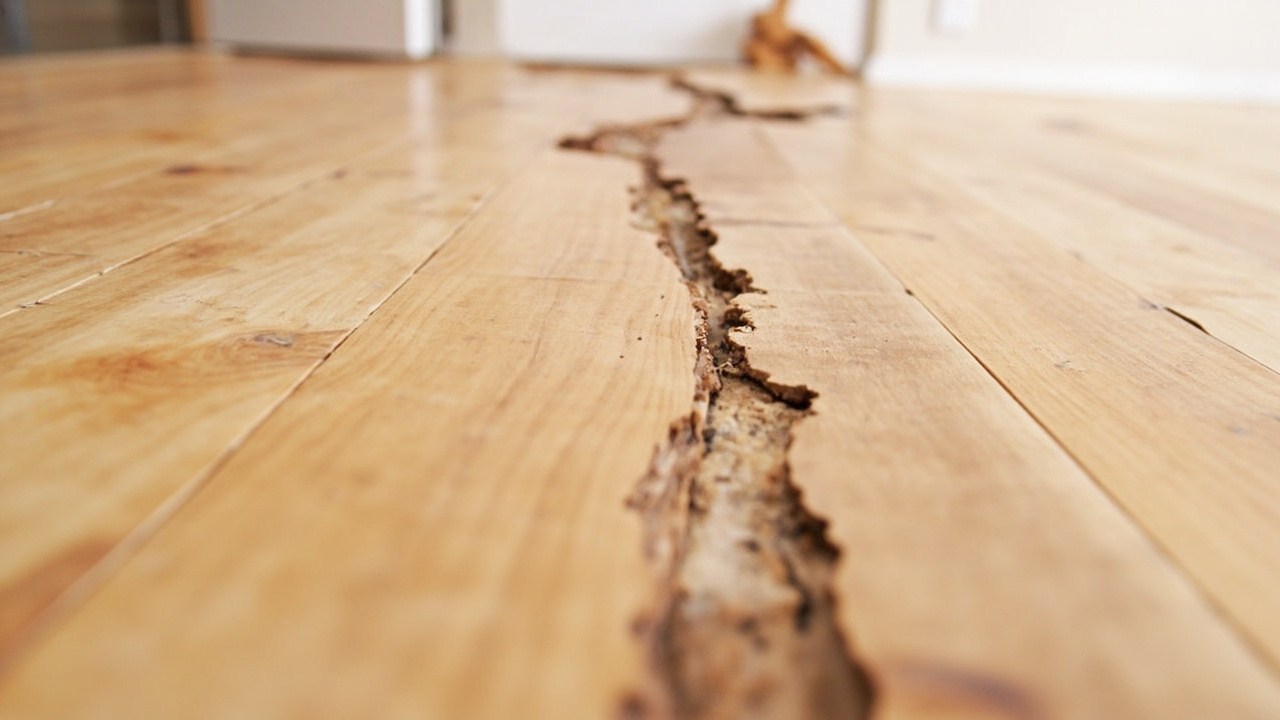
Signs of Water Damage in Engineered Wood Floors
Delamination vs. Warping — Two Very Different Problems
Solid hardwood warps. It cups, crowns, and bows as moisture enters the wood cells. A skilled restorer can often dry solid hardwood back to acceptable moisture content if they get there fast enough.
Engineered wood does something worse. It delaminates. The layers that make up the plank — the veneer on top, the plywood core in the middle, and sometimes a layer of HDF (High-Density Fiberboard) at the base — were bonded with adhesive. Water breaks that bond. Once delamination starts, the floor is not salvageable through drying alone. You are looking at replacement.
Warping in engineered wood can still happen, especially in the top veneer. But the delamination happening in the core is the silent killer. You may not see it until you press down on a plank and feel it flex or bubble.
Cupping and Crowning in Engineered Floors
Cupping happens when the bottom of the plank absorbs more moisture than the top, pulling the edges upward. Crowning is the reverse — the center rises above the edges. Both are visible signs of moisture imbalance through the plank.
In solid hardwood, mild cupping can reverse during the drying process. In engineered wood, cupping often signals that the plywood core is already compromised. The core layers expand at different rates than the veneer. That internal stress frequently causes permanent deformation even after the floor dries.
Musty Odors and Mold Growth
Engineered wood’s layered structure creates pockets where moisture sits. Those pockets are warm, dark, and wet — exactly what mold needs. If you smell a musty odor within 24 to 48 hours of water exposure, mold colonization is likely already underway in the core layers or on the subfloor beneath.
This is not a bleach problem. Mold inside the plank layers cannot be reached by surface treatments. If you are dealing with mold in a neighboring room, check our breakdown of why bleach fails for Ferndale basement mold — the same principles apply here.
The Science Behind Why Engineered Wood Holds Moisture Differently
The Role of the Plywood Core
Standard engineered wood flooring consists of a thin hardwood veneer — sometimes as thin as 2 millimeters — bonded over multiple layers of cross-ply plywood. That cross-ply construction is what makes engineered wood dimensionally stable under normal humidity fluctuations. The grain directions of each layer offset each other, reducing the natural expansion and contraction that occurs in solid wood.
That same cross-ply structure becomes a problem after flooding. Wood is hygroscopic, meaning it absorbs and releases moisture from its environment. When water enters the plywood core through the edges or from the subfloor below via capillary action, the individual plies swell independently. The adhesive holding them together resists that swelling. The result is internal stress that either delaminates the layers or permanently deforms them.
Solid hardwood expands and contracts as a single mass. It can often recover. Engineered wood’s layers fight each other during the process, and that internal conflict causes irreversible damage faster.
Adhesive Breakdown Under Hydrostatic Pressure
The adhesives used to bond engineered flooring layers are typically urea-formaldehyde or polyurethane-based resins. These adhesives are designed for interior humidity fluctuations, not sustained water exposure.
When hydrostatic pressure pushes water up through a concrete slab — a very common situation in Detroit basement flooding events — that water wicks directly into the underside of engineered planks. The sustained moisture exposure softens and eventually dissolves the adhesive bond between layers. You cannot reverse this with drying equipment. Once the bond breaks, the floor must be replaced.
The IICRC S500 Standard for Professional Water Damage Restoration addresses this directly, classifying water-damaged flooring by material type and establishing protocols for when restoration is viable versus when replacement is the only sound recommendation.

Detroit’s Climate Makes Engineered Wood Drying Even Harder
Southeast Michigan Humidity and Drying Times
Detroit’s climate creates a challenging baseline for floor drying. Southeast Michigan regularly sits at 70 to 85 percent relative humidity during summer months. That ambient humidity slows evaporation from wet materials significantly. A floor that might dry in 3 days in Phoenix can take 7 to 10 days in metro Detroit under the same equipment load.
The optimal moisture content for hardwood flooring in a Michigan home typically falls between 6 and 9 percent, adjusted for seasonal humidity. Getting engineered wood back to that range after flooding — before delamination sets in — requires aggressive, calibrated drying. LGR (Low Grain Refrigerant) dehumidification is the standard in this climate because it pulls moisture efficiently even when ambient humidity is high.
Homeowners in Royal Oak, Ferndale, and Hazel Park often call us after trying to run box fans and a residential dehumidifier for three days. By that point, the engineered floor core is gone.
Basement Seepage and Pipe Bursts in Detroit Winters
The two most common water sources that hit engineered floors in the Detroit metro are basement seepage through block foundations and pipe bursts during hard freezes. Both introduce water at floor level, exactly where engineered wood is most vulnerable.
Older neighborhoods like Hamtramck and parts of East Detroit have aging sewer infrastructure. Combined sewer overflows during heavy rain push groundwater and sewage backup into basements. That is a Category 3 water situation under the IICRC classification system — the most contaminated and most dangerous. Engineered flooring that contacts Category 3 water is virtually always a replacement situation, regardless of structural condition, because contamination penetrates the porous core layers.
Winter pipe bursts in Berkley and Huntington Woods homes typically produce Category 1 (clean) water, which gives restorers a better chance at salvage — if they respond within 24 to 48 hours.
The Restoration Process for Water-Damaged Engineered Floors
Moisture Mapping with Infrared Cameras and Moisture Meters
A professional restoration technician does not guess where the moisture is. Thermal imaging cameras detect temperature differentials in the floor surface that indicate moisture saturation beneath. A calibrated moisture meter then confirms actual moisture readings in the wood and subfloor.
This step matters enormously with engineered wood because the visible surface can appear dry while the plywood core is still saturated. Without mapping, a homeowner — or an inexperienced contractor — might reinstall baseboards and furniture over a floor that is still wet. That guarantees mold growth and permanent delamination.
High-Speed Air Movers and LGR Dehumidification
The drying equipment configuration for engineered wood differs from solid hardwood drying. With solid hardwood, technicians sometimes use floor mat drying systems that pull moisture directly up through the boards. Engineered wood’s thin veneer requires lower airflow velocity to avoid overcupping the surface while the core dries.
LGR dehumidifiers are positioned to maintain indoor relative humidity below 50 percent during the drying period. High-speed air movers accelerate surface evaporation. The combination pulls moisture out of the floor system while preventing the ambient air from re-absorbing it into the wet materials.
Daily moisture monitoring determines when the floor has reached acceptable levels. Rushing this process or declaring it done early is one of the most common mistakes in residential water damage restoration.
Subfloor Assessment and Drying
The subfloor beneath engineered wood is often OSB (Oriented Strand Board) or plywood. Both are extremely absorbent. A wet subfloor that is not dried thoroughly will continue to drive moisture back up into any new or reinstalled flooring. It will also support mold growth that affects indoor air quality throughout the home.
In severe flooding cases, the engineered planks must be removed to allow direct drying of the subfloor. If the subfloor has delaminated or shows significant swelling, it requires replacement before any new flooring goes down. The Detroit Building Safety Engineering and Environmental Department (BSEED) sets property maintenance standards that apply to subfloor structural integrity, and a compromised subfloor can affect a home’s compliance status under Wayne County property standards.
For a detailed look at solid hardwood floor restoration by comparison, our guide on saving hardwood floors after a water leak in Birmingham, MI walks through the process side by side.

Engineered Wood vs. Solid Hardwood — How They Compare After Water Damage
| Factor | Solid Hardwood | Engineered Wood |
|---|---|---|
| Primary failure mode | Cupping and warping | Delamination of plywood core layers |
| Reversibility after drying | Often reversible with prompt response | Limited — delamination is permanent |
| Sand and refinish option | Yes, multiple times depending on thickness | Only if veneer is 3mm or thicker, and only once or twice |
| Mold risk in core layers | Lower — single material | Higher — adhesive and core layers trap moisture |
| Response window for salvage | 24 to 72 hours for best results | 24 to 48 hours — shorter window |
| Category 3 water salvage | Rare but possible with surface replacement | Replacement required |
| Typical drying time in Michigan humidity | 5 to 10 days | 7 to 14 days if salvageable |
The Save vs. Replace Decision — What Actually Determines It
When the Wear Layer Is Too Thin to Sand
Many engineered floors installed in the past decade have veneer layers of 2 millimeters or less. After water damage causes even mild surface cupping, that layer cannot be sanded flat without cutting through to the plywood core. The floor looks structurally intact but cannot be refinished. Replacement is the only path.
Floors with a 4 to 6 millimeter veneer — typically found in higher-end engineered products — have more room for sanding after drying. If the core layers are intact and the delamination is minimal, a professional can sometimes dry and refinish these floors. This is the exception, not the rule.
The 24 to 48 Hour Window That Changes Everything
Mold begins colonizing wet porous materials within 24 to 48 hours under typical indoor conditions. In a Michigan summer with elevated ambient humidity, that window can be shorter. Once mold establishes in the plywood core or on the subfloor beneath, the cost and complexity of restoration increase dramatically.
The difference between a call at hour 6 and a call at hour 72 is often the difference between restoration and full floor replacement. This is not a situation where waiting to see if the floor dries on its own is a reasonable choice.
- Within 2 hours — Stop the water source if possible. Remove standing water immediately.
- Within 6 hours — Remove rugs, furniture, and any items sitting on the wet floor. Increase ventilation.
- Within 24 hours — Professional moisture mapping and drying equipment should be in place.
- 48 hours and beyond — Mold risk is elevated. Assessment must include subfloor and core layer inspection.
- 72 hours or more — Assume delamination has occurred. Prepare for probable replacement discussion.
Drying Timeline and Key Benchmarks for Engineered Wood Restoration
| Timeline | What Happens to Engineered Wood | Restoration Viability |
|---|---|---|
| 0 to 6 hours | Surface wet, core beginning to absorb moisture | High — immediate response gives best chance |
| 6 to 24 hours | Core saturation progressing, adhesive softening | Moderate — professional drying may salvage floor |
| 24 to 48 hours | Mold risk emerging, delamination beginning | Low to moderate — outcome depends on veneer thickness and water category |
| 48 to 72 hours | Active mold growth likely, significant delamination | Low — replacement likely required |
| 72 hours or more | Structural failure of core layers, mold established | Replacement recommended in most cases |
What Detroit Homeowners Need to Know About Insurance Claims
Most standard homeowners policies in Michigan cover sudden and accidental water damage, such as a burst pipe, but exclude gradual leaks and flooding from outside the home without a separate flood policy. Engineered wood replacement costs run significantly higher than solid hardwood restoration, making the claim documentation process critical.
A professional restoration company will generate a moisture log, photo documentation, and a written scope of work that your adjuster needs to process the claim correctly. The adjuster may push for restoration over replacement even when the floor is not salvageable. Knowing how to push back matters. Our resource on getting your Detroit home insurance to actually pay for water restoration walks through this process in detail.
If you are specifically dealing with a claim in an older Detroit neighborhood, the guidance in our article on filing a successful water damage insurance claim for a Corktown home covers documentation requirements that apply across the metro area.
One more note for Detroit homeowners. Southeast Michigan falls within federally designated flood zones along the River Rouge, Rouge River, and portions of the Detroit River corridor. Properties in these zones face different insurance requirements. The FEMA Flood Map Service Center allows you to check your property’s flood zone designation, which directly affects your claim options after a flooding event.
When Engineered Wood Cannot Be Saved — What Comes Next
Replacement is not a failure. It is the correct outcome when the floor is beyond restoration. A professional assessment protects you from paying for drying services on a floor that was already past saving when the technician arrived.
During replacement, the subfloor must be fully dried, treated for mold if contamination is present, and inspected for structural integrity before new flooring goes down. Skipping these steps — which a low-cost contractor might do — means your new floor sits on a compromised base. You will have the same problems within months.
If you are weighing similar decisions for other floor materials, our article on deciding whether wet carpet in Sterling Heights can be saved covers the same save vs. replace framework for carpet systems.
Engineered wood is a good product installed in millions of Michigan homes. It just requires faster, more specialized response after water exposure than solid hardwood does. If your floors just got wet, every hour counts. Call a certified restoration professional now, get moisture readings taken, and make the save vs. replace decision based on actual data — not hope.
{
“@context”: “https://schema.org”,
“@type”: “BlogPosting”,
“headline”: “Why Engineered Wood in Berkley Homes Can Be Harder to Dry Than Real Hardwood”,
“description”: “Engineered wood floors flood differently than solid hardwood. Learn why Berkley and Detroit homeowners face tougher drying challenges and what to do fast.”,
“wordCount”: 2405,
“datePublished”: “2026-04-20T05:25:00.000Z”,
“dateModified”: “2026-04-20T05:25:00.000Z”,
“inLanguage”: “en-US”,
“mainEntityOfPage”: {
“@type”: “WebPage”,
“@id”: “https://ironwoodwaterdamagerestorationdetroit.com”
},
“publisher”: {
“@type”: “LocalBusiness”,
“name”: “Ironwood Water Damage Restoration Detroit”,
“url”: “https://ironwoodwaterdamagerestorationdetroit.com”
},
“author”: {
“@type”: “Organization”,
“name”: “Ironwood Water Damage Restoration Detroit”,
“url”: “https://ironwoodwaterdamagerestorationdetroit.com”
},
“image”: {
“@type”: “ImageObject”,
“url”: “https://ironwoodwaterdamagerestorationdetroit.com/wp-content/uploads/2026/03/why-engineered-wood-in-berkley-homes-can-be-harder-1.jpg”
}
}
{
“@context”: “https://schema.org”,
“@type”: “LocalBusiness”,
“name”: “Ironwood Water Damage Restoration Detroit”,
“url”: “https://ironwoodwaterdamagerestorationdetroit.com”,
“address”: {
“@type”: “PostalAddress”,
“addressLocality”: “Detroit”
},
“areaServed”: {
“@type”: “City”,
“name”: “Detroit”
}
}
{
“@context”: “https://schema.org”,
“@type”: “BreadcrumbList”,
“itemListElement”: [
{
“@type”: “ListItem”,
“position”: 1,
“name”: “Home”,
“item”: “https://ironwoodwaterdamagerestorationdetroit.com”
},
{
“@type”: “ListItem”,
“position”: 2,
“name”: “Blog”,
“item”: “https://ironwoodwaterdamagerestorationdetroit.com/blog”
},
{
“@type”: “ListItem”,
“position”: 3,
“name”: “Why Engineered Wood in Berkley Homes Can Be Harder to Dry Than Real Hardwood”
}
]
}
{
“@context”: “https://schema.org”,
“@type”: “Service”,
“serviceType”: “Water Damage Restoration”,
“provider”: {
“@type”: “LocalBusiness”,
“name”: “Ironwood Water Damage Restoration Detroit”,
“url”: “https://ironwoodwaterdamagerestorationdetroit.com”
},
“areaServed”: {
“@type”: “City”,
“name”: “Detroit”
},
“description”: “Engineered wood floors flood differently than solid hardwood. Learn why Berkley and Detroit homeowners face tougher drying challenges and what to do fast.”
}