
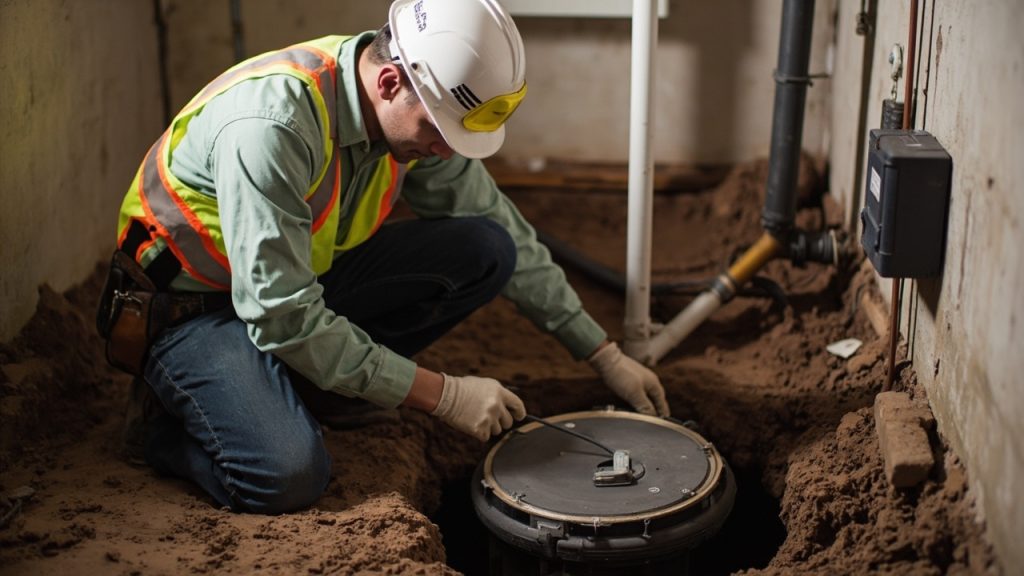
Professional Sump Pump Battery Backup Installation in Harrison Township, MI
If your Harrison Township home sits anywhere near Lake St. Clair, you already know what a hard rain does to your basement. The water table in this corner of Macomb County is high year-round. When a storm knocks out power and your sump pump goes silent, that pit fills up fast. A battery backup system is the one piece of equipment that keeps your basement dry when everything else fails.
This is not a theoretical risk. Homes along the L’Anse Creuse corridor and the lakefront communities off Jefferson Avenue flood regularly during storm cycles. Standard sump pumps run on AC power. The moment Consumers Energy cuts out, they stop. That window, sometimes just 20 or 30 minutes, is enough for groundwater to overtop the pit and spread across your floor.
Why the Ground Under Harrison Township Works Against You
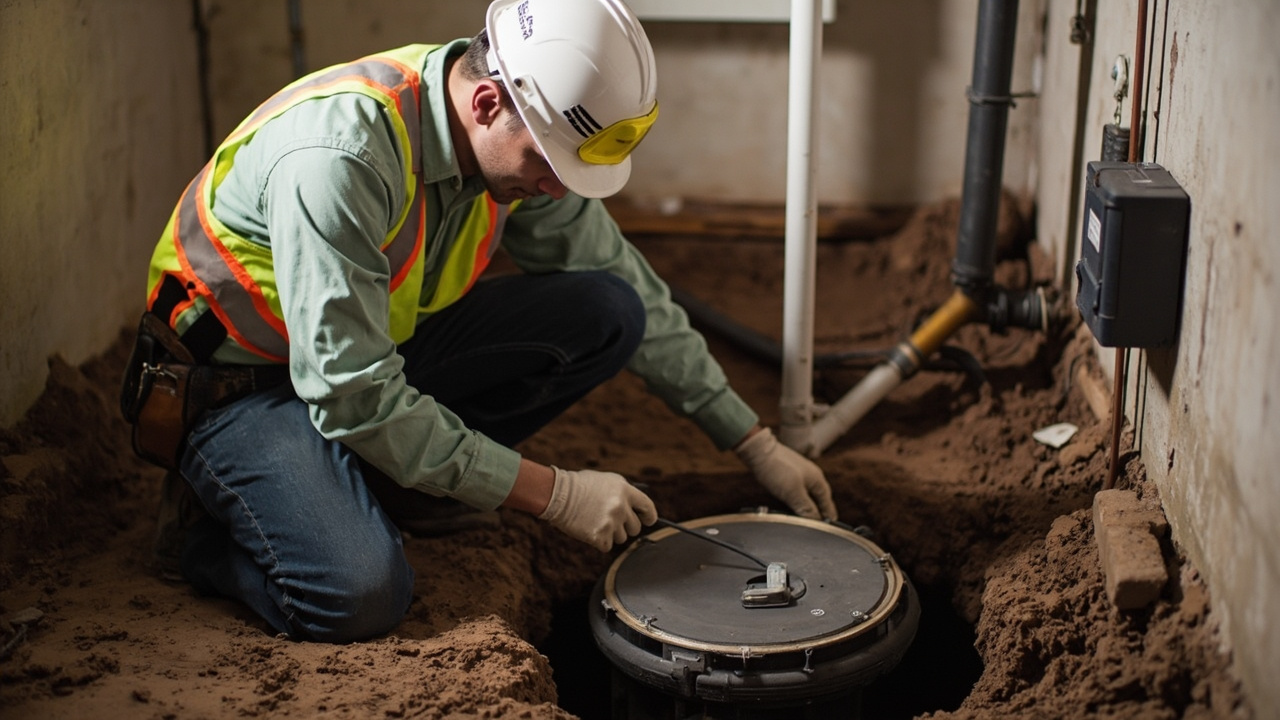
Harrison Township sits on a glacially deposited clay-heavy soil profile. Clay does not drain. When Lake St. Clair flood stages rise during a Macomb County storm event, the surrounding water table rises with it. That hydrostatic pressure pushes directly against your foundation walls and up through your slab.
The U.S. Geological Survey’s water resources data confirms that low-elevation lakefront communities consistently face elevated groundwater pressure during precipitation events. For Harrison Township homeowners, this is not a seasonal problem. It is a baseline condition that worsens every time we get more than an inch of rain in a short period.
A primary sump pump handles normal drainage. But it cannot do anything if it has no power. That is the gap a battery backup fills.
What Happens When Your Primary Pump Loses Power
Power outages during Macomb County storms are common. Overhead line infrastructure along Jefferson Avenue and South River Road is vulnerable to wind and ice. An outage that lasts two hours during a heavy rain event can push several hundred gallons of water into an unprotected basement.
The damage sequence moves quickly. Water contacts drywall, insulation, and framing. Moisture readings in those materials rise within the first hour. If you are not home, you may not discover the problem until mold colonization is already underway. The restoration costs for a flooded basement in Harrison Township, including structural drying, mold remediation, and content loss, are significantly higher than the cost of prevention.
If you have already dealt with a flood and are navigating the insurance side, our guide on how to get your Detroit home insurance to actually pay for water restoration walks through exactly what adjusters look for.
Battery Backup System Types and What They Actually Do
There are two main categories of sump pump battery backup systems. Understanding the difference helps you choose the right fit for your basement configuration and flood risk level.
DC-Powered Backup Pumps
These are standalone pumps that sit beside your primary unit and run entirely on a dedicated battery. They activate automatically when the float switch in the pit rises above a set point. No power from the grid is needed. The pump draws directly from the battery bank.
DC backup pumps typically move between 1,000 and 2,000 GPH (gallons per hour) at a 10-foot head height. That number matters. The higher the head height, meaning the vertical distance water must travel to exit your discharge pipe, the lower the actual flow rate. Harrison Township homes with long horizontal discharge runs to the street need to account for that when sizing the system.
AC/DC Combination Inverter Systems
These systems run your existing primary pump on battery power through an inverter during an outage. They are more complex and generally more expensive, but they allow your primary pump, which is often larger and more powerful, to keep running without grid power. For homes with high-capacity primary pumps already installed, this approach preserves that investment.
The inverter monitors grid power continuously. When it detects a dropout, it switches to battery in under a second. The transition is seamless, and the primary pump never knows the difference.
Battery Chemistry Comparison for Sump Pump Backups
The battery is the most critical component of any backup system. Two chemistries dominate the market for sump pump applications.
| Battery Type | Typical Lifespan | Maintenance Required | Run Time (Avg Pump) | Best For |
|---|---|---|---|---|
| Flooded Lead-Acid | 3 to 5 years | Monthly water level checks | 5 to 7 hours continuous | Budget installations, accessible battery locations |
| AGM (Absorbent Glass Mat) | 5 to 7 years | Minimal, no water top-off | 7 to 10 hours continuous | Sealed installations, homeowners who want low maintenance |
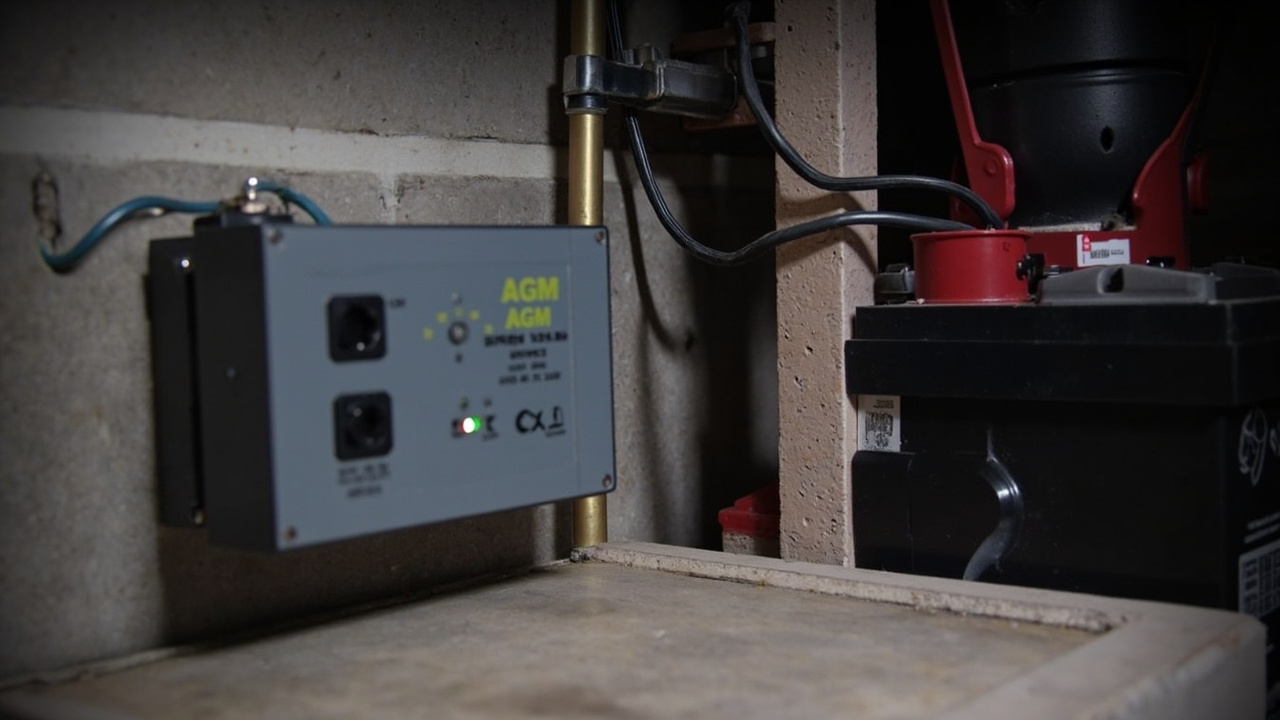
AGM batteries are the standard recommendation for Harrison Township homes. They do not require periodic watering, they handle partial-charge cycles better than flooded lead-acid, and they tolerate the temperature swings in an unfinished Michigan basement without significant capacity loss. For most homeowners, the longer lifespan offsets the higher upfront cost.
What the Installation Process Looks Like
A properly installed battery backup system is not a plug-and-play item from the home improvement store. The installation involves several steps that need to be done correctly to protect both the equipment and your home.
Step 1 — Pit and Primary Pump Assessment
We inspect the existing sump pit diameter and depth. A pit that is too shallow cannot accommodate both the primary pump and a secondary float switch without interference. We also check the condition of the primary pump discharge line and the check valve.
The check valve is critical. It prevents water from flowing back into the pit when the pump cycles off. A failing check valve makes both your primary and backup pump work harder than necessary and shortens their operational life.
Step 2 — Battery System Sizing
We calculate the expected GPH demand based on your pit’s inflow rate. Homes closer to the Lake St. Clair shoreline in Harrison Township can see inflow rates that exceed 1,000 GPH during peak storm events. The backup system needs to meet or exceed that rate to maintain a dry pit.
Step 3 — Backup Pump Installation and Float Switch Calibration
The backup pump float switch is set slightly higher than the primary pump’s activation point. This staging ensures the backup only runs when the primary pump is overwhelmed or offline. Running both pumps simultaneously without this calibration shortens battery run time unnecessarily.
Step 4 — Battery Tray, Charger, and Trickle Maintenance Setup
The battery sits in a vented, corrosion-resistant tray on a shelf or mount above the floor line. A smart charger maintains the battery at full charge continuously without overcharging. This is what keeps the system ready on day 365 of ownership, not just day one.
Step 5 — Alarm and Alert Testing
Every installation ends with a full system test. We simulate a power outage and verify that the backup pump activates, the alarm sounds, and the battery draws down at the expected rate. If the system has a Wi-Fi alert module, we confirm that mobile notifications are functioning before we leave.
Sump Pump Backup System Performance Comparison
| System Type | GPH Capacity | Power Source | Typical Install Time | Ideal Scenario |
|---|---|---|---|---|
| DC Standalone Backup Pump | 1,000 to 2,000 GPH | 12V or 24V AGM battery | 2 to 4 hours | Outage-only protection, standard flood risk |
| AC/DC Inverter System | Matches primary pump (often 3,000+ GPH) | Grid primary, battery backup | 4 to 6 hours | High inflow basements, lakefront homes, existing high-capacity pump |
| Water-Powered Backup | 500 to 1,200 GPH | Municipal water pressure | 1 to 2 hours | Homes without space for battery, low-risk secondary backup |
Water-powered backup systems use your home’s municipal water pressure to drive a venturi pump. They work without batteries or electricity, but they consume municipal water in the process. The EPA’s WaterSense program notes that water-powered sump systems can use significant water volumes during extended operation, which matters for Harrison Township homeowners on metered service. For most lakefront properties with serious flood exposure, a battery-based system delivers more reliable performance.
Local Projects We Have Completed in Harrison Township
We have installed battery backup systems in homes along Beacon Beach Road, in the subdivisions near Metro Parkway, and in older construction along the lake access neighborhoods south of Jefferson. The common thread is the same in every case: the homeowner waited until after a flood to act.
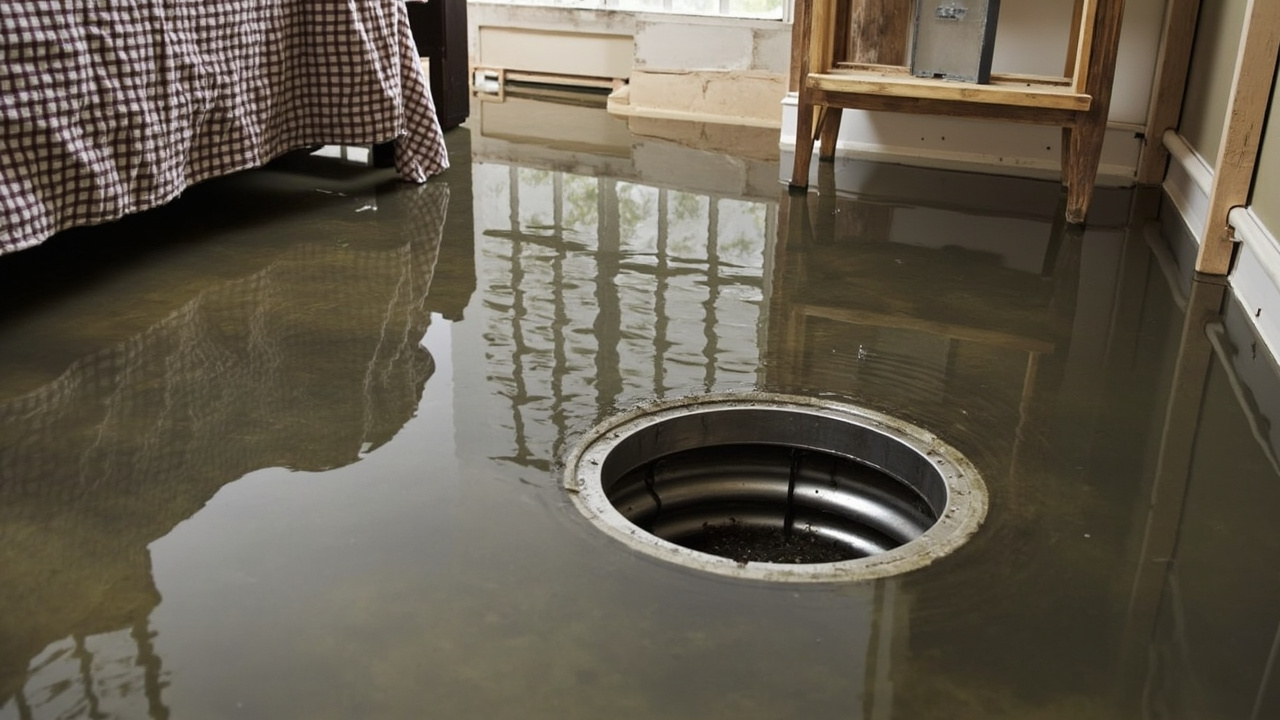
One recurring situation involves finished basements where the sump pump is tucked behind a utility wall. By the time water overtops the pit, it is already wicking into the framing behind the drywall. That pattern drives up restoration costs significantly because the damage is hidden until mold growth makes it visible.
If your basement has already taken water and you are worried about what is growing inside the walls, our article on why bleach will not fix your basement mold explains what actually works and when professional remediation is the only responsible path forward.
Maintenance Schedule to Keep Your Backup Ready
A battery backup system that sits untested for two years may not perform when you need it. Follow this schedule to keep everything operational.
- Every 3 months: Pour a bucket of water into the pit to test primary and backup float switches. Confirm both activate at the right levels.
- Every 6 months: Check battery voltage with a multimeter. AGM batteries should read 12.6 to 12.8 volts at rest when fully charged.
- Every 12 months: Inspect the discharge line and check valve for mineral buildup or debris. Flush the discharge line if flow sounds restricted.
- Every 5 to 7 years: Replace the battery on schedule, even if it appears to be holding charge. Battery capacity degrades gradually and is not always visible until a storm event reveals it.
What Happens After a Basement Flood in Harrison Township
If prevention did not happen in time and water has already entered your basement, speed matters. The first 24 to 48 hours determine whether you are dealing with a drying job or a full demolition and rebuild.
Water that sits on concrete and contacts drywall, insulation, and wood framing begins promoting mold growth within 24 to 72 hours under normal temperature conditions. In a warm Michigan basement in summer, that window shrinks. Extraction and structural drying with commercial dehumidifiers and air movers needs to start immediately.
If you have wet carpet in a finished basement, the decision about whether to save or replace it depends on how long it has been wet and what the subfloor looks like underneath. Our guide on deciding whether wet carpet can be saved gives you a framework for making that call quickly.
For finished spaces with hardwood floors, time is even more critical. Cupping and buckling begin within hours of water contact. Our breakdown on how to save hardwood floors after a water leak covers the drying thresholds that determine whether the floor can be rescued.
And if you are dealing with the insurance side of a basement flood, the process of getting a claim approved for water damage restoration has specific documentation requirements. Our resource on filing a successful water damage insurance claim walks you through what adjusters need to see from the first call forward.
Questions Harrison Township Homeowners Ask Most
How long will a battery backup run during a power outage?
It depends on your inflow rate and the battery capacity. A properly sized AGM battery system running a 1,500 GPH backup pump at moderate cycling will typically last 7 to 10 hours. If the pump is running nearly continuously because of heavy inflow, expect 4 to 6 hours before battery voltage drops below operational threshold.
Do I still need a battery backup if I have a generator?
Generators require manual startup time, fuel, and maintenance. Battery backup systems activate in under a second with no intervention. Many Harrison Township homeowners run both: the battery backup handles the first hour while the generator spins up, and the generator sustains the primary pump for extended outages. They serve different functions.
Can I install a battery backup myself?
The pump itself is not complicated, but float switch calibration, discharge line integration, and check valve inspection require plumbing experience. An incorrectly staged float switch or a check valve that does not seat properly will reduce the system’s effectiveness. For a lakefront property where flood risk is genuine, professional installation ensures the system works when it counts.
Harrison Township basements flood. The water table guarantees it under the right conditions. A sump pump battery backup is the most direct, cost-effective protection available to homeowners in this part of Macomb County. If your basement is currently unprotected, contact our team for an assessment. We work throughout Harrison Township and the greater Detroit metro area, and we can evaluate your pit configuration, inflow rate, and the right battery chemistry for your specific home.
{
“@context”: “https://schema.org”,
“@type”: “BlogPosting”,
“headline”: “Why Every Harrison Township Homeowner Needs a Sump Pump Battery Backup Before the Next Big Storm”,
“description”: “Harrison Township basements flood fast when storms hit. Learn how a sump pump battery backup protects your home from Lake St. Clair storm surge and power outages.”,
“wordCount”: 2107,
“datePublished”: “2026-05-15T10:28:00.000Z”,
“dateModified”: “2026-05-15T10:28:00.000Z”,
“inLanguage”: “en-US”,
“mainEntityOfPage”: {
“@type”: “WebPage”,
“@id”: “https://ironwoodwaterdamagerestorationdetroit.com”
},
“publisher”: {
“@type”: “LocalBusiness”,
“name”: “Ironwood Water Damage Restoration Detroit”,
“url”: “https://ironwoodwaterdamagerestorationdetroit.com”
},
“author”: {
“@type”: “Organization”,
“name”: “Ironwood Water Damage Restoration Detroit”,
“url”: “https://ironwoodwaterdamagerestorationdetroit.com”
},
“image”: {
“@type”: “ImageObject”,
“url”: “https://ironwoodwaterdamagerestorationdetroit.com/wp-content/uploads/2026/03/protecting-your-harrison-township-home-from-baseme-1.jpg”
}
}
{
“@context”: “https://schema.org”,
“@type”: “LocalBusiness”,
“name”: “Ironwood Water Damage Restoration Detroit”,
“url”: “https://ironwoodwaterdamagerestorationdetroit.com”,
“address”: {
“@type”: “PostalAddress”,
“addressLocality”: “Detroit”
},
“areaServed”: {
“@type”: “City”,
“name”: “Detroit”
}
}
{
“@context”: “https://schema.org”,
“@type”: “FAQPage”,
“mainEntity”: [
{
“@type”: “Question”,
“name”: “How long will a battery backup run during a power outage?”,
“acceptedAnswer”: {
“@type”: “Answer”,
“text”: “It depends on your inflow rate and the battery capacity. A properly sized AGM battery system running a 1,500 GPH backup pump at moderate cycling will typically last 7 to 10 hours. If the pump is running nearly continuously because of heavy inflow, expect 4 to 6 hours before battery voltage drops below operational threshold.”
}
},
{
“@type”: “Question”,
“name”: “Do I still need a battery backup if I have a generator?”,
“acceptedAnswer”: {
“@type”: “Answer”,
“text”: “Generators require manual startup time, fuel, and maintenance. Battery backup systems activate in under a second with no intervention. Many Harrison Township homeowners run both: the battery backup handles the first hour while the generator spins up, and the generator sustains the primary pump for extended outages. They serve different functions.”
}
},
{
“@type”: “Question”,
“name”: “Can I install a battery backup myself?”,
“acceptedAnswer”: {
“@type”: “Answer”,
“text”: “The pump itself is not complicated, but float switch calibration, discharge line integration, and check valve inspection require plumbing experience. An incorrectly staged float switch or a check valve that does not seat properly will reduce the system’s effectiveness. For a lakefront property where flood risk is genuine, professional installation ensures the system works when it counts.”
}
}
]
}
{
“@context”: “https://schema.org”,
“@type”: “BreadcrumbList”,
“itemListElement”: [
{
“@type”: “ListItem”,
“position”: 1,
“name”: “Home”,
“item”: “https://ironwoodwaterdamagerestorationdetroit.com”
},
{
“@type”: “ListItem”,
“position”: 2,
“name”: “Blog”,
“item”: “https://ironwoodwaterdamagerestorationdetroit.com/blog”
},
{
“@type”: “ListItem”,
“position”: 3,
“name”: “Why Every Harrison Township Homeowner Needs a Sump Pump Battery Backup Before the Next Big Storm”
}
]
}
{
“@context”: “https://schema.org”,
“@type”: “Service”,
“serviceType”: “Water Damage Restoration”,
“provider”: {
“@type”: “LocalBusiness”,
“name”: “Ironwood Water Damage Restoration Detroit”,
“url”: “https://ironwoodwaterdamagerestorationdetroit.com”
},
“areaServed”: {
“@type”: “City”,
“name”: “Detroit”
},
“description”: “Harrison Township basements flood fast when storms hit. Learn how a sump pump battery backup protects your home from Lake St. Clair storm surge and power outages.”
}