

Window Frost Is Not a Minor Inconvenience
If you walk past your windows on a January morning in Bloomfield Hills and see a thick layer of frost on the glass, your first thought is probably that your home is cold. The real problem is happening inside the wall behind that window frame. Frost and condensation on windows are symptoms of a moisture imbalance that, left unchecked, leads to rot, mold, and structural damage that costs far more to fix than the original cause.
Bloomfield Hills homes present a specific challenge. The large architectural windows common in the area’s estate-style construction create significant thermal bridging. Add in Southeast Michigan’s brutal temperature swings, where outdoor temps regularly drop into the single digits while indoor humidity stays high, and you have the right conditions for serious water intrusion damage.

Why Window Condensation Happens in Detroit’s Climate
The science behind frost on windows comes down to dew point and psychrometrics. When warm, humid indoor air contacts a cold surface, the air cools below its dew point and releases moisture as liquid water or, if the glass is cold enough, as frost.
In the greater Detroit metro, winter indoor relative humidity (RH) in a typical home sits between 30 and 50 percent. A window surface in contact with outdoor air at 10°F can reach a surface temperature well below the dew point of that indoor air. The result is condensation or frost every single morning.
Older construction in areas like Palmer Woods or Indian Village used single-pane windows and drafty framing that actually let moisture escape. Modern airtight construction in Bloomfield Hills and Birmingham traps that moisture inside. Your home holds onto it. Your windows display it.
The EPA’s guidance on mold and moisture confirms that maintaining indoor RH below 60 percent is critical to preventing mold growth, but in tightly sealed modern homes, humidity management requires active systems, not just passive ventilation.
Thermal Bridging and What It Means for Your Frame
Thermal bridging happens when a material with high thermal conductivity connects the cold outside to the warm inside. Window frames, especially aluminum or older wood frames without thermal breaks, act as bridges. Cold travels inward. The frame surface drops below the dew point. Moisture condenses directly on the frame and drips down onto the sill and into the wall cavity.
Even double-pane windows with argon gas fill can experience frame condensation if the edge seal degrades or the frame itself lacks a proper thermal break. When you see frost on the glass perimeter rather than the center of the pane, that tells you the edge seal is failing and cold is transferring through the spacer bar.
Signs Your Window Condensation Has Already Caused Water Damage
The transition from cosmetic condensation to structural water damage is easy to miss because it happens inside the wall. Watch for these specific warning signs around any window in your home.
- Peeling paint or bubbling wallpaper at the corners of window frames, especially the lower corners
- Black or gray discoloration on caulking, drywall tape, or the painted wall surface near the sill
- A soft or spongy feeling when you press on the wood windowsill or apron trim
- A musty odor in a specific room that gets stronger during the day as the home warms up
- Visible dark staining on drywall below the window line
- Gaps forming between the window trim and the wall as the framing swells and shrinks with repeated wetting and drying
That soft spongy windowsill is the most serious indicator. It means the sill plate or the rough framing beneath the finish trim has absorbed enough moisture to begin dry rot. Dry rot in window framing spreads into the king studs and jack studs. Once it reaches the structural framing, you are looking at a full framing repair, not just a sill replacement.
What Moisture Metering Actually Tells You
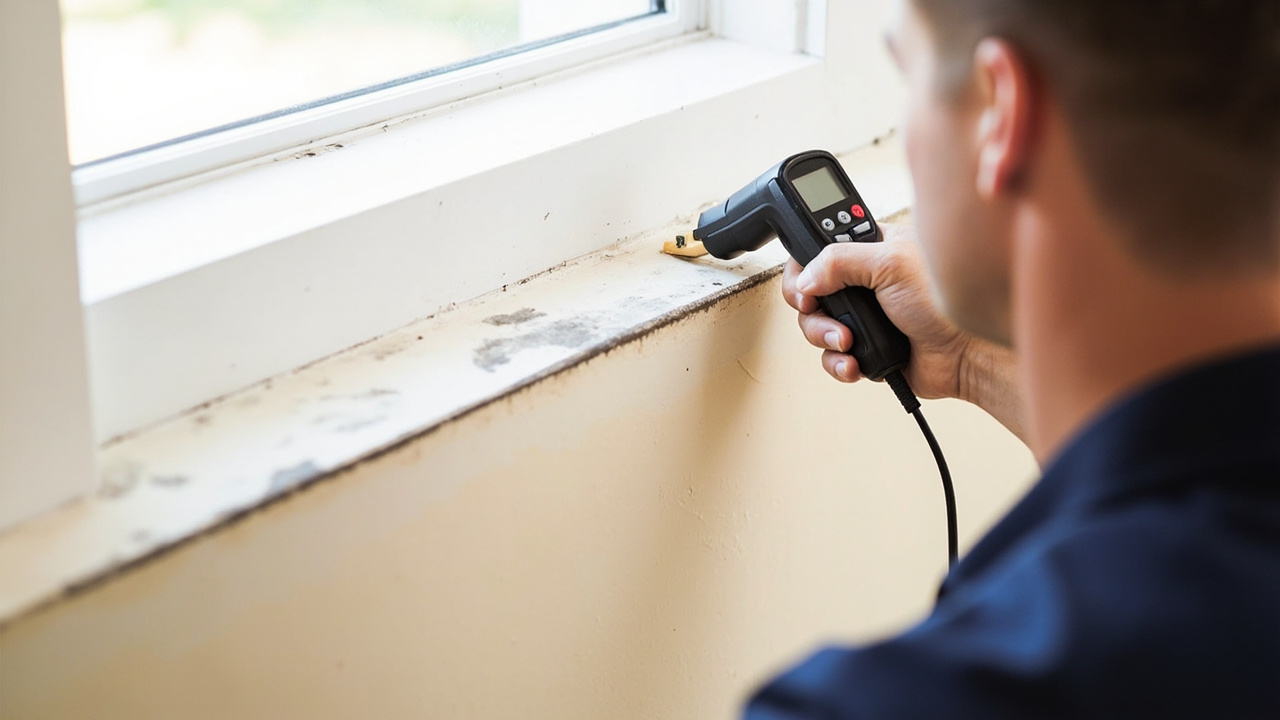
A visual inspection only shows you surface damage. IICRC-certified restoration technicians use calibrated moisture meters to measure moisture content inside the wall assembly without opening it. A reading above 19 percent moisture content in wood framing indicates active moisture damage and conditions favorable for mold colonization.
In Bloomfield Hills homes with plaster walls over wood lath, which are common in properties built before the 1980s, moisture spreads laterally through the lath. What looks like a 12-inch stain on the plaster face can represent 3 feet of affected framing behind it. Thermal imaging cameras detect the temperature differential caused by wet insulation, making the true extent of damage visible without demolition.
What Happens When You Ignore This Damage
The damage progression from window condensation follows a predictable path. Understanding the timeline helps you recognize when you are still in the prevention window and when you have moved into remediation territory.
| Damage Stage | Timeframe | What You See | What Is Happening Inside |
|---|---|---|---|
| Stage 1 – Surface Moisture | Single heating season | Frost, condensation droplets on glass | Moisture contacting frame surfaces, no structural effect yet |
| Stage 2 – Finish Damage | 1 to 2 heating seasons | Paint peeling, minor staining on sill | Moisture penetrating finish wood, paint film failure |
| Stage 3 – Mold Onset | 2 to 3 seasons or sooner | Black spotting on caulk, musty smell | Mold colonies forming on wood and drywall paper |
| Stage 4 – Structural Rot | 3 to 5 seasons | Soft sill, gaps in trim, stained drywall | Dry rot in sill plate, possible king stud damage |
| Stage 5 – Full Remediation Needed | 5 or more seasons | Visible mold, major trim separation | Framing replacement, mold remediation, drywall replacement |
Respiratory issues tied to mold exposure are well-documented. The CDC’s mold and health resource notes that prolonged mold exposure worsens asthma and can cause respiratory infections in otherwise healthy adults. In a Bloomfield Hills home with high ceilings and open floor plans, mold spores from a single damaged window wall can circulate throughout the HVAC system quickly.
Property value is the other concern. A failed moisture inspection during a sale can collapse a deal or force significant price reductions. Oakland County home inspectors frequently flag window sill rot and mold during transactions. Addressing this before listing is far less costly than a buyer’s remediation credit demand.
Professional Remediation vs. DIY Fixes
Wiping condensation off your windows every morning is not remediation. It is maintenance. There is an important difference between managing surface moisture and addressing what has already entered your wall assembly.
If you are at Stage 1 or early Stage 2, consistent surface management plus humidity control can stop the progression. You wipe the sill dry, improve ventilation, and address the moisture source.
If you are at Stage 3 or beyond, you need a professional assessment. The reason bleach and surface cleaning fail on mold in wall cavities is the same reason they fail in basement situations. If you want to understand why surface treatments miss the root cause, the detail in why bleach won’t fix Ferndale basement mold applies directly to wall cavity mold situations as well.
An IICRC-certified technician brings moisture mapping capability, thermal imaging, and psychrometric analysis to determine whether the damage is active or historical. Active damage means moisture is still entering the assembly. Historical damage means the source has dried out but the mold and rot remain. The distinction drives the entire remediation approach.

What a Professional Assessment Covers
A proper moisture inspection for window condensation damage includes several steps that a visual DIY check simply cannot replicate.
- Thermal imaging scan of all exterior walls from the inside to locate cold spots indicating wet insulation
- Moisture meter readings at the sill plate, rough framing, and adjacent drywall at multiple points
- Relative humidity readings in each room compared against the outdoor dew point
- Window frame inspection for failed edge seals, damaged glazing tape, and deteriorated weatherstripping
- Documentation of all affected areas with photos and moisture readings for insurance purposes
If your property has experienced water damage from this kind of chronic moisture intrusion, documenting the damage correctly from the start matters significantly for your insurance claim. Understanding how to get your Detroit home insurance to pay for water restoration can make the difference between a covered claim and paying out of pocket. Chronic moisture claims have specific documentation requirements that differ from sudden water damage events.
Comparing Window Types and Condensation Risk for Detroit Homes
| Window Type | Condensation Risk (Detroit Winter) | Frame Material Consideration | Michigan Building Code Compliance |
|---|---|---|---|
| Single-pane, wood frame | Very High | Wood absorbs moisture directly | Non-compliant for new construction |
| Double-pane, aluminum frame (no thermal break) | High | Aluminum bridges cold aggressively | Marginal compliance, not recommended |
| Double-pane, vinyl frame | Moderate | Vinyl resists moisture absorption | Standard compliant option |
| Double-pane, wood-clad frame | Moderate to Low | Interior wood, exterior aluminum cladding | Compliant, common in Bloomfield Hills estates |
| Triple-pane, fiberglass frame with thermal break | Low | Fiberglass matches glass expansion rate | Exceeds current Michigan energy code |
Prevention Strategies That Actually Work for SE Michigan Homes
Prevention is not complicated, but it requires consistency and the right equipment.
Target indoor relative humidity between 30 and 40 percent during the heating season. At those levels, condensation on quality double-pane windows is minimal. A whole-home humidistat-controlled dehumidifier integrated with your HVAC system is the most reliable way to maintain that range without constant monitoring.
Heat Recovery Ventilators (HRVs) or Energy Recovery Ventilators (ERVs) solve the tightly-sealed modern home problem directly. They exhaust stale humid air and pull in fresh outdoor air simultaneously, recovering thermal energy in the process. Michigan’s climate, with its combination of cold winters and warm humid summers, makes the ERV particularly effective because it manages both heat and moisture exchange. Many Bloomfield Hills custom homes built in the last decade include ERV systems as standard equipment.
Window insulation film applied to the interior glass surface raises the glass surface temperature slightly, which reduces condensation. It is a lower-cost interim measure while planning window replacement, not a permanent solution.
Ensure bathroom exhaust fans vent directly to the exterior, not into the attic or wall cavity. A common Michigan construction defect is bathroom fans venting into the soffit or attic space. That concentrated moisture migrates back into the wall assembly and contributes directly to the condensation problem you are trying to solve.
Checking Your Hardwood Floors Near Problem Windows
One frequently overlooked secondary effect of chronic window condensation is damage to hardwood flooring directly beneath the window. Water running off the sill and down the wall wicks into the subfloor and hardwood surface. If you have noticed cupping or buckling in floor boards near any of your windows, that is a direct consequence of the same moisture problem. The guide on saving hardwood floors after water damage in Birmingham MI covers the specific drying and restoration process for that situation.
When to Schedule a Moisture Inspection Before Winter Ends
The best time to have a moisture inspection done is while the damage is still active. When a restoration technician can see where moisture is migrating during actual cold weather conditions, the assessment is far more accurate than one done in August when the walls are dry.
If you have already spotted any of the warning signs listed earlier in this article, do not wait until spring to address it. Mold growth does not pause because the outdoor temperature is cold. Mold grows anywhere the temperature is above 40°F and moisture content in building materials exceeds threshold levels. Your heated home provides exactly those conditions all winter long.
Bloomfield Hills homeowners dealing with water damage often face the same insurance documentation challenges as homeowners throughout Oakland County. If damage has reached Stage 3 or 4, understanding the claims process from the start is important. The detail in filing a successful water damage insurance claim applies across the Detroit metro area, including suburban Oakland County properties.
If your household includes anyone with asthma, allergies, or respiratory sensitivities, the urgency of addressing active mold is higher. Get a professional moisture mapping assessment done now, while the problem is visible and documentable, rather than waiting for warm weather to mask the symptoms.
Ironwood Water Damage Restoration serves Bloomfield Hills, Birmingham, Royal Oak, and the wider Detroit metro area with IICRC-certified moisture assessments. Contact us for a free on-site moisture inspection to find out exactly what is happening behind your window frames before it becomes a full structural repair.
{
“@context”: “https://schema.org”,
“@type”: “BlogPosting”,
“headline”: “Why Frost on Your Windows Is Slowly Damaging Your Walls in Bloomfield Hills”,
“description”: “Window frost in Bloomfield Hills isn’t just an eyesore. It causes hidden wall damage, mold, and rot. Learn the signs and when to call a Detroit pro.”,
“wordCount”: 2040,
“datePublished”: “2026-06-28T04:52:00.000Z”,
“dateModified”: “2026-06-28T04:52:00.000Z”,
“inLanguage”: “en-US”,
“mainEntityOfPage”: {
“@type”: “WebPage”,
“@id”: “https://ironwoodwaterdamagerestorationdetroit.com”
},
“publisher”: {
“@type”: “LocalBusiness”,
“name”: “Ironwood Water Damage Restoration Detroit”,
“url”: “https://ironwoodwaterdamagerestorationdetroit.com”
},
“author”: {
“@type”: “Organization”,
“name”: “Ironwood Water Damage Restoration Detroit”,
“url”: “https://ironwoodwaterdamagerestorationdetroit.com”
},
“image”: {
“@type”: “ImageObject”,
“url”: “https://ironwoodwaterdamagerestorationdetroit.com/wp-content/uploads/2026/03/why-frost-on-your-windows-is-actually-damaging-you-1.jpg”
}
}
{
“@context”: “https://schema.org”,
“@type”: “LocalBusiness”,
“name”: “Ironwood Water Damage Restoration Detroit”,
“url”: “https://ironwoodwaterdamagerestorationdetroit.com”,
“address”: {
“@type”: “PostalAddress”,
“addressLocality”: “Detroit”
},
“areaServed”: {
“@type”: “City”,
“name”: “Detroit”
}
}
{
“@context”: “https://schema.org”,
“@type”: “BreadcrumbList”,
“itemListElement”: [
{
“@type”: “ListItem”,
“position”: 1,
“name”: “Home”,
“item”: “https://ironwoodwaterdamagerestorationdetroit.com”
},
{
“@type”: “ListItem”,
“position”: 2,
“name”: “Blog”,
“item”: “https://ironwoodwaterdamagerestorationdetroit.com/blog”
},
{
“@type”: “ListItem”,
“position”: 3,
“name”: “Why Frost on Your Windows Is Slowly Damaging Your Walls in Bloomfield Hills”
}
]
}
{
“@context”: “https://schema.org”,
“@type”: “Service”,
“serviceType”: “Water Damage Restoration”,
“provider”: {
“@type”: “LocalBusiness”,
“name”: “Ironwood Water Damage Restoration Detroit”,
“url”: “https://ironwoodwaterdamagerestorationdetroit.com”
},
“areaServed”: {
“@type”: “City”,
“name”: “Detroit”
},
“description”: “Window frost in Bloomfield Hills isn’t just an eyesore. It causes hidden wall damage, mold, and rot. Learn the signs and when to call a Detroit pro.”
}