
Professional Leaking Basement Wall Repair in Macomb County, MI
If you are noticing damp spots on your basement walls and you cannot trace them to a pipe leak, the ground outside your foundation is likely the culprit. Macomb County sits on some of the most reactive clay soil in Southeast Michigan, and every freeze-thaw cycle, every dry summer, and every heavy spring rain changes how that soil pushes against your foundation walls.
This is not a minor cosmetic issue. Left unchecked, hydrostatic pressure from saturated clay soil will crack poured concrete walls, bow cinder block courses, and force water through gaps you cannot even see with the naked eye. The good news is that once you understand the mechanics, the repair path becomes clear.

Why Macomb County Basements Leak More Than You Think
The geography of Macomb County works against homeowners in a very specific way. The county sits in a low-lying corridor between the Clinton River watershed and the Lake St. Clair shoreline. That proximity to Lake St. Clair means the water table in communities like Clinton Township, St. Clair Shores, and Eastpointe sits considerably higher than in inland areas of Michigan.
The soil itself is the bigger story. Macomb County is blanketed in glacial lake deposits, meaning the ground beneath your yard is primarily Michigan clay. Clay soil has a well-documented shrink-swell cycle. During dry summers, clay contracts and pulls away from your foundation walls, sometimes leaving gaps of an inch or more. When fall rains and spring snowmelt arrive, that same clay absorbs water and expands aggressively, pressing directly against your basement walls.
This repeated expansion and contraction is called differential soil movement, and it creates two distinct problems for your foundation. First, the physical pressure during wet periods generates hydrostatic pressure against your walls. Second, the gaps that open during dry periods act as fast channels for water to travel directly down to your footing when rain arrives. Homes along the M-59 Corridor in Sterling Heights and Warren see this pattern play out every single year.
According to the Michigan Department of Environment, Great Lakes, and Energy, Southeast Michigan’s combined sewer systems and high-clay geology make basement water intrusion one of the most common residential structural issues in the Detroit metro region.
What Leaking Basement Walls Actually Look Like
Not every leak shows up as a puddle on your floor. Macomb County homeowners need to recognize the early warning signs before a manageable problem becomes a structural emergency.
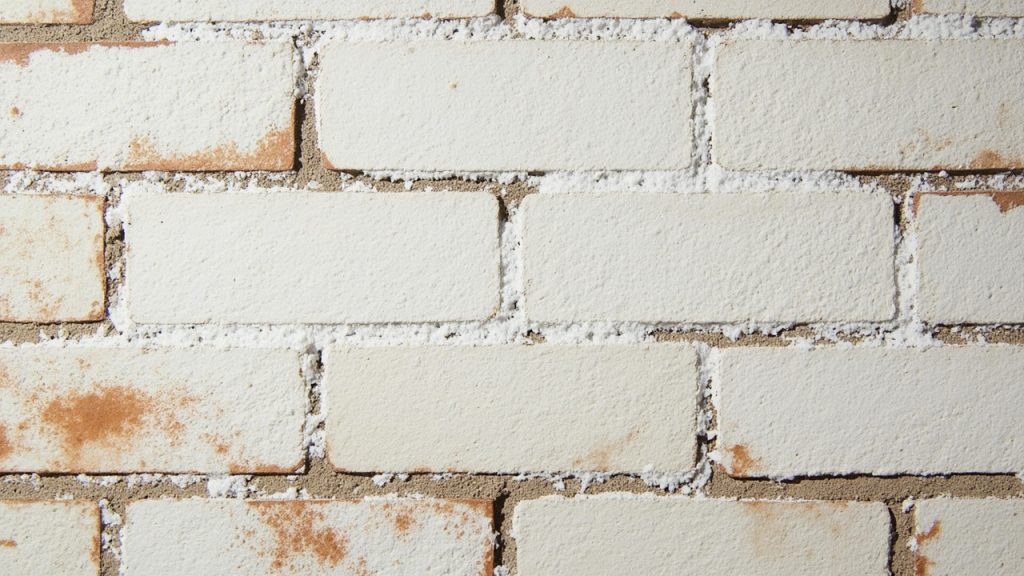
- Efflorescence – That chalky white powder on your block or concrete wall is mineral salt being carried to the surface by water moving through the wall. It is a direct indicator of chronic moisture migration.
- Horizontal cracks – These are the most serious. Horizontal cracks in a cinder block or poured concrete wall signal that lateral soil pressure is exceeding the wall’s structural capacity. This is a foundation emergency, not a patch job.
- Vertical cracks – Hairline vertical cracks in poured concrete walls often result from shrinkage during curing or minor settlement. They become active leaks when hydrostatic pressure builds.
- Stair-step cracks – Common in cinder block foundations throughout Warren and Clinton Township, these follow the mortar joints and indicate differential settlement.
- Damp or musty smell without visible water – Water vapor moves through concrete even without a visible crack. If your basement smells like a wet basement, moisture is actively moving through your walls.
- Mold growth at or near the floor line – Mold on the lower courses of your basement wall almost always points to water wicking up from the footing area.
- Peeling paint or bubbling drywall – Finished basements hide foundation leaks until the damage is significant. Bubbling or staining on drywall near exterior walls is a serious flag.
If you are seeing mold alongside moisture, you are dealing with two separate problems that need to be addressed in the right order. Repair the water intrusion first, then remediate the mold. Bleach will not solve a mold problem that has an active moisture source behind it, and that is true whether you are in Ferndale, Sterling Heights, or anywhere else in the Metro Detroit area.

The Repair Process for Leaking Foundation Walls in Macomb County
There is no universal fix for a leaking basement wall. The right repair depends on the type of foundation, the location of the leak, the severity of the hydrostatic pressure, and whether structural movement has occurred. Here is how a proper repair process works.
Step 1 – Inspection and Moisture Mapping
A thorough inspection goes beyond walking the perimeter with a flashlight. Technicians use moisture meters to identify the moisture content of your walls at multiple points, map crack patterns to distinguish active from dormant cracks, and assess whether any wall movement has occurred. The goal is to understand where water is entering and why before any repair work begins.
Step 2 – Epoxy and Polyurethane Crack Injection
For active water leaks in poured concrete walls, polyurethane injection is the standard repair method. A two-component polyurethane foam is injected under low pressure directly into the crack. It reacts with moisture, expands to fill the void completely, and creates a flexible, waterproof seal. Polyurethane remains flexible after curing, which is critical given Macomb County’s soil movement cycles. Rigid epoxy injection is better suited to structural crack repair in dry conditions where restoring tensile strength matters more than flexibility.
Step 3 – Interior Drainage Systems
When the source of water is hydrostatic pressure against the entire wall rather than a single crack, interior drainage systems manage the water rather than trying to stop it at the wall. A perimeter drain tile system is installed at the footing level, and water that seeps through the wall base is captured and routed to a sump pump. This is the dominant approach in Clinton Township and Chesterfield Township where water table elevation makes exterior waterproofing difficult to maintain long-term.
Step 4 – Exterior Waterproofing and French Drain Installation
Exterior waterproofing addresses the problem at its source. This involves excavating around the foundation, applying a waterproof membrane to the exterior wall surface, installing a drainage board to direct water downward, and installing a French drain at the footing to carry water away from the foundation. This is the most comprehensive solution and the most disruptive to complete. It is often recommended for homes in areas with particularly high water tables or where interior solutions have already failed.
Step 5 – Sump Pump Evaluation and Upgrade
Any basement waterproofing system is only as reliable as the sump pump that removes the water. A sump pump failure during a heavy rain event can flood a finished basement in under an hour. Battery backup systems are a standard recommendation for Macomb County homes, given the frequency of power outages during the spring storm season that drives the most significant water intrusion events.
| Repair Method | Best For | Foundation Type | Disruption Level | Long-Term Suitability for Macomb Clay Soil |
|---|---|---|---|---|
| Polyurethane Crack Injection | Active single-point leaks | Poured concrete | Low | Good, flexible seal tolerates movement |
| Epoxy Crack Injection | Structural crack repair, dry cracks | Poured concrete | Low | Moderate, rigid seal may re-crack with movement |
| Interior Drain Tile System | Chronic hydrostatic pressure, high water table | Block or poured concrete | Moderate | Excellent, manages water rather than blocks it |
| Exterior Waterproofing Membrane | Severe or recurring leaks, new construction approach | Any | High (excavation required) | Excellent when combined with drainage board |
| French Drain Installation | Yard drainage, footing water accumulation | Any | Moderate to High | Excellent for addressing source-level water |
Water Damage Restoration After a Basement Wall Leak
Repairing the wall stops the water from entering. But if water has been coming in for any length of time, you are dealing with a restoration problem on top of a repair problem. These are two different scopes of work, and confusing them leads homeowners to spend money in the wrong order.
Water that has sat against drywall, framing, insulation, or flooring begins to cause secondary damage within 24 to 48 hours under standard Michigan indoor conditions. Below-grade spaces in Macomb County homes tend to run cooler and less ventilated than above-grade spaces, which slows evaporation and extends the window for mold colonization.
Structural drying following a basement leak event follows the IICRC S500 Standard for Professional Water Damage Restoration. This means using calibrated air movers, refrigerant or desiccant dehumidifiers, and moisture monitoring equipment to bring structural materials back to acceptable moisture content before any rebuild work begins. Rushing this step is the single most common reason homeowners call a second time within six months reporting a mold problem.
If your wet carpet in Sterling Heights has been sitting for more than 24 hours, the calculus on whether to dry it versus replace it changes significantly. Understanding when wet carpet can be saved and when it needs to go will save you from paying for drying services on materials that should be replaced.
Insurance coverage for basement water intrusion is one of the most misunderstood topics in homeowner claims. Standard homeowners policies in Michigan typically exclude groundwater intrusion but may cover sudden and accidental water discharge from internal sources. A sump pump failure rider or water backup endorsement changes the coverage picture considerably. If you are navigating a claim, understanding how to get your Detroit home insurance to actually pay for water restoration is worth reading before you call your adjuster.

Warning Signs That a Basement Leak Has Already Caused Hidden Damage
Macomb County’s older housing stock presents a particular challenge. Many homes in Warren, Roseville, and Eastpointe were built between the late 1950s and early 1980s with cinder block foundations and minimal exterior waterproofing. These foundations are more porous than poured concrete and more susceptible to mortar joint deterioration over time.
| Time Since Water Intrusion Began | Expected Damage | Restoration Complexity |
|---|---|---|
| Under 24 hours | Surface saturation, no mold, minimal structural impact | Low, standard extraction and drying |
| 24 to 72 hours | Mold begins colonizing porous materials, drywall swells | Moderate, may require selective demolition |
| 3 to 7 days | Visible mold growth, insulation saturation, subfloor damage | Significant, mold remediation required before rebuild |
| Weeks to months (chronic slow leak) | Structural wood rot, widespread mold, efflorescence, potential wall bowing | Extensive, possible structural repairs needed alongside restoration |
Chronic slow leaks are the most damaging because homeowners often normalize the signs. A persistent musty smell gets chalked up to the basement being a basement. White powder on the block wall gets painted over. These signals are your foundation telling you that water is actively moving through it, and the damage is accumulating with every wet season.
Service Area Across Macomb County
The communities that make up Macomb County each have their own foundation profiles based on age of housing stock, soil composition at the hyperlocal level, and proximity to drainage infrastructure. Here is how the county breaks down from a basement repair standpoint.
Warren and Sterling Heights have a high concentration of mid-century block foundations that require mortar joint tuck-pointing alongside waterproofing. Many of the homes along the M-59 Corridor were built before modern drainage code requirements.
Clinton Township and Chesterfield Township sit closer to the Lake St. Clair drainage basin. Higher water tables in these areas mean hydrostatic pressure is a factor even in dry years. Interior drain tile systems are more commonly the right solution here than crack injection alone.
Macomb Township and Shelby Township have newer housing stock, predominantly poured concrete foundations, but the clay soil composition is just as aggressive. New homes in these areas often see their first active leaks within five to ten years of construction as the soil settles and the original exterior waterproofing membrane begins to degrade.
St. Clair Shores and Roseville are built on some of the flattest, most water-retentive land in the county. Yard drainage problems in these communities directly drive basement wall pressure, and addressing grading and downspout discharge is often a necessary companion to foundation repair.
Richmond, Ray Township, and the northern townships have lower development density and more agricultural soil influence, but the Michigan clay layer is still present. Homes in these areas with sump pump failures during spring snowmelt face rapid basement flooding that requires immediate structural drying response.
The Michigan Department of Health and Human Services recognizes indoor mold as a significant public health concern, which is why addressing the water source rather than just treating surface mold is the professional standard.
Matching the Right Repair to Your Specific Situation
No two basement leak situations in Macomb County are identical. The repair approach depends on the type of crack, the type of foundation, the degree of soil pressure, and whether the leak is isolated or occurring along the entire perimeter. A homeowner in Clinton Township with a cinder block wall and a visible wet line at the third course from the floor has a different problem than a homeowner in Shelby Township with a single hairline crack in a poured concrete wall.
This is why a proper inspection is the non-negotiable first step. Anyone quoting you a repair price without physically inspecting the wall and assessing the soil conditions outside is guessing.
If the water intrusion has already affected your finished basement, the restoration component runs parallel to the repair. Drying cannot be skipped or rushed. The structure needs to reach proper moisture content before any new insulation, drywall, or flooring goes in. Skipping this step and rebuilding over damp framing is how mold problems develop behind finished walls, invisible until they become a health issue.
If you have recently dealt with water damage in other areas of your home alongside the basement issue, understanding the full scope of restoration services available is useful. Hardwood floor recovery after a water leak follows a similarly time-sensitive process, and the decisions you make in the first 48 hours determine the outcome.
Getting a Free Macomb County Foundation Inspection
If your basement walls are showing any of the signs described above, a professional inspection is the right starting point. You will get an honest assessment of what is causing the leak, what type of repair is appropriate for your specific foundation, and what the restoration scope looks like if water damage has already occurred.
Do not wait for a minor seep to become a structural problem. Macomb County clay soil does not get gentler with time, and the next heavy rain or spring snowmelt will push more water against your foundation than the last one did. Contact our team for a free on-site inspection of your Macomb County basement and a clear explanation of what your foundation actually needs.
{
“@context”: “https://schema.org”,
“@type”: “BlogPosting”,
“headline”: “Why Macomb County Soil Shrinkage Is Making Your Basement Walls Leak”,
“description”: “Michigan clay soil in Macomb County expands and contracts with every season, pushing water straight through your foundation. Here is what is actually happening.”,
“wordCount”: 2435,
“datePublished”: “2026-06-29T10:44:00.000Z”,
“dateModified”: “2026-06-29T10:44:00.000Z”,
“inLanguage”: “en-US”,
“mainEntityOfPage”: {
“@type”: “WebPage”,
“@id”: “https://ironwoodwaterdamagerestorationdetroit.com”
},
“publisher”: {
“@type”: “LocalBusiness”,
“name”: “Ironwood Water Damage Restoration Detroit”,
“url”: “https://ironwoodwaterdamagerestorationdetroit.com”
},
“author”: {
“@type”: “Organization”,
“name”: “Ironwood Water Damage Restoration Detroit”,
“url”: “https://ironwoodwaterdamagerestorationdetroit.com”
},
“image”: {
“@type”: “ImageObject”,
“url”: “https://ironwoodwaterdamagerestorationdetroit.com/wp-content/uploads/2026/03/how-macomb-county-soil-shrinkage-is-causing-your-b-1.jpg”
}
}
{
“@context”: “https://schema.org”,
“@type”: “LocalBusiness”,
“name”: “Ironwood Water Damage Restoration Detroit”,
“url”: “https://ironwoodwaterdamagerestorationdetroit.com”,
“address”: {
“@type”: “PostalAddress”,
“addressLocality”: “Detroit”
},
“areaServed”: {
“@type”: “City”,
“name”: “Detroit”
}
}
{
“@context”: “https://schema.org”,
“@type”: “BreadcrumbList”,
“itemListElement”: [
{
“@type”: “ListItem”,
“position”: 1,
“name”: “Home”,
“item”: “https://ironwoodwaterdamagerestorationdetroit.com”
},
{
“@type”: “ListItem”,
“position”: 2,
“name”: “Blog”,
“item”: “https://ironwoodwaterdamagerestorationdetroit.com/blog”
},
{
“@type”: “ListItem”,
“position”: 3,
“name”: “Why Macomb County Soil Shrinkage Is Making Your Basement Walls Leak”
}
]
}
{
“@context”: “https://schema.org”,
“@type”: “Service”,
“serviceType”: “Water Damage Restoration”,
“provider”: {
“@type”: “LocalBusiness”,
“name”: “Ironwood Water Damage Restoration Detroit”,
“url”: “https://ironwoodwaterdamagerestorationdetroit.com”
},
“areaServed”: {
“@type”: “City”,
“name”: “Detroit”
},
“description”: “Michigan clay soil in Macomb County expands and contracts with every season, pushing water straight through your foundation. Here is what is actually happening.”
}