
You spot a water stain on your ceiling. You check the roof after a rainstorm and see nothing obviously wrong. No missing shingles. No obvious cracks. But the dripping continues. What you are missing is likely sitting in your attic right now, and it has claws.
Grosse Pointe’s mature tree canopy, lush landscaping, and older housing stock make it one of the most wildlife-active communities in the Metro Detroit area. Raccoons and squirrels are not just nuisances here. They are structurally destructive animals that create direct pathways for water intrusion, and most homeowners never connect the two problems.
This is a breakdown of how animal damage leads to roof leaks, what the full scope of damage looks like, and what a proper restoration response involves.

How Detroit Wildlife Gets Into Your Roof in the First Place
The raccoons living along the Pointes waterfront and in the tree corridors of Grosse Pointe Park are not small animals. Adult raccoons routinely weigh between 15 and 25 pounds. When a raccoon wants attic access, it does not wait for an existing gap. It creates one.
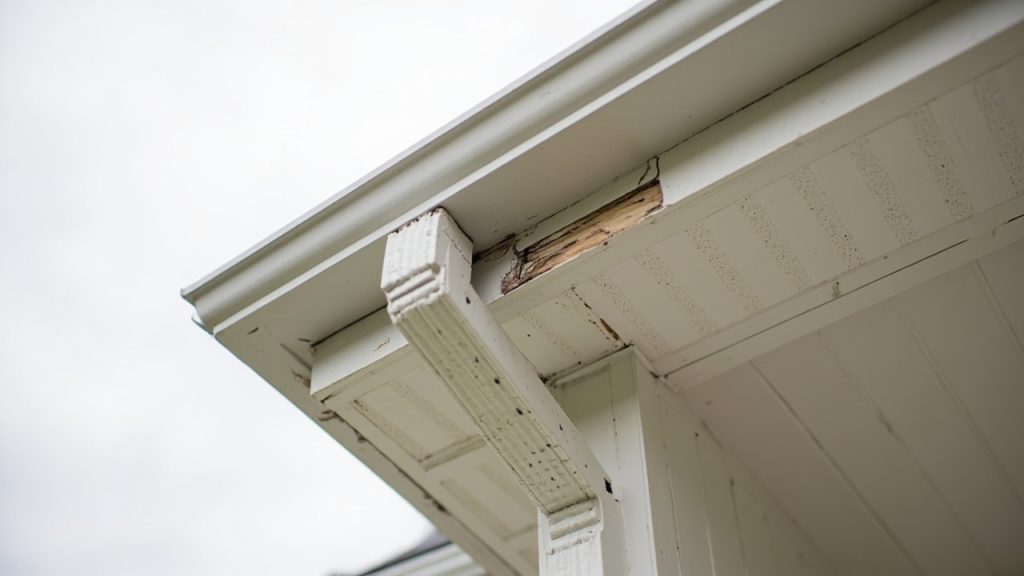
Raccoons target fascia boards, roof vents, and the intersection of the roof deck and soffit. They peel back shingles with their front paws. They rip aluminum flashing away from chimney bases and dormers. In older Grosse Pointe homes, which often have wood fascia that has seen decades of freeze-thaw cycles, this physical damage happens faster than you would expect.
Squirrels take a different approach. They chew. A squirrel’s incisors never stop growing, which means they are constantly looking for material to gnaw. Wood rot around soffits, roof vents, and gable ends gives them a starting point. From there, they can open a gap large enough to allow rainwater and snowmelt to enter the attic space freely.
The Entry Points That Lead to Water Damage
- Pulled or missing step flashing along dormers or chimneys
- Torn roof vents or chewed vent screens
- Compromised soffit panels or fascia boards with gnaw damage
- Lifted or missing asphalt shingles from raccoon prying
- Clogged gutters from nesting debris, causing water to back up under the roof edge
- Burrowed insulation creating voids in the attic that allow moisture to accumulate against the roof deck
Each one of these entry points is a direct water intrusion risk. Michigan’s weather makes that risk serious. Detroit and the surrounding communities receive significant annual snowfall, and the freeze-thaw cycle that runs through late winter creates ice dam formation along roof edges. If an animal has already compromised flashing or soffit material, ice dam water has an easy path into the structure.
What Actually Happens Inside the Attic After Animals Get In
The water damage from animal entry is rarely a single dramatic leak. It is cumulative. A torn vent screen lets in rain during summer storms. A compromised soffit lets in snowmelt in February. Over weeks or months, the roof deck and attic framing absorb moisture repeatedly.
Wet wood in an attic environment does not dry out on its own. Attics in Grosse Pointe homes, especially the large older colonials and Tudors near Grosse Pointe Farms, are often under-ventilated by modern standards. Trapped moisture means the wood stays wet long enough for mold colonies to establish.
On top of water damage, animals introduce their own biological contamination. Raccoon feces carry Baylisascaris procyonis, a roundworm that poses a genuine health risk. Raccoon urine soaks into attic insulation and saturates the wood below it. Squirrel nesting materials, which are typically pulled from the surrounding insulation, concentrate moisture and organic debris in one area, accelerating decay.
The insulation itself is also a loss. Fiberglass batts or blown cellulose that absorbs animal urine loses its thermal resistance, called its R-value. What was installed to meet Wayne County building code minimums for insulation performance is now a compressed, contaminated mat that provides little protection and holds moisture against your roof deck.
The Health and Structural Risks You Cannot Ignore
Water damage restoration professionals working in Detroit see a consistent pattern with animal-entry jobs. The visible damage, meaning the ceiling stain or attic drip, is usually the smallest part of the problem. The structural and biological damage underneath it is what drives the actual restoration scope.
Mold Growth from Urine and Moisture Saturation
Mold needs three things to grow. Moisture, an organic food source, and the right temperature. An attic that has been infiltrated by raccoons or squirrels provides all three. The moisture comes from both the water intrusion and the animal waste. The food source is the wood framing and cellulose insulation. Detroit’s variable temperatures, including humid summers and cold winters with warm interior heat rising into the attic, create a cycle that supports mold growth across multiple species including Stachybotrys and Cladosporium.
If you are already seeing mold elsewhere in your home and are unsure whether animal damage is a contributing source, read why bleach won’t fix your Ferndale basement mold for more context on how mold remediation actually works and when professional intervention is required.
Roof Deck Delamination and Framing Rot
Modern roof decks use oriented strand board (OSB). OSB is strong when dry but degrades significantly when exposed to repeated wetting. Prolonged moisture exposure causes delamination, where the layers of the panel begin to separate and lose load-bearing capacity. Rafter tails, ridge boards, and collar ties can develop soft rot if moisture intrusion goes unaddressed long enough.
In a Grosse Pointe home with 50 to 80 years of age on the structure, the framing may already have limited structural margin. Animal-driven water intrusion that goes undetected for a full season can push that framing past the point of simple repair.
Comparing the Damage Patterns by Animal Type
| Animal | Primary Entry Method | Most Common Entry Points | Resulting Water Intrusion Type | Biological Hazard |
|---|---|---|---|---|
| Raccoon | Physical force, prying | Fascia, roof vents, chimney flashing | Direct opening, large gap, fast intrusion | Baylisascaris roundworm, leptospirosis |
| Squirrel | Gnawing through softened wood | Soffits, gable vents, eave intersections | Gradual seep, concentrated in one area | Salmonella, hantavirus (less common) |
| Bat | Squeezing through gaps as small as 3/8 inch | Ridge cap gaps, loose flashing edges | Guano moisture accumulation, no structural breach | Histoplasma fungus from guano |
The 4-Step Restoration Process for Animal-Driven Water Damage
Once animals have caused water intrusion, you are dealing with two separate but connected problems. The wildlife exclusion side and the water damage restoration side. Both need to happen, and in the right order.
Step 1 — Emergency Tarping and Temporary Weatherproofing
Before any interior work begins, the entry point must be sealed against further weather exposure. This typically means emergency tarping over damaged roof sections or temporary board-up of compromised soffit and fascia areas. In a Detroit winter, leaving an open entry point unaddressed even for 24 hours can result in significant additional snow and ice infiltration.
Step 2 — Water Extraction and Structural Drying
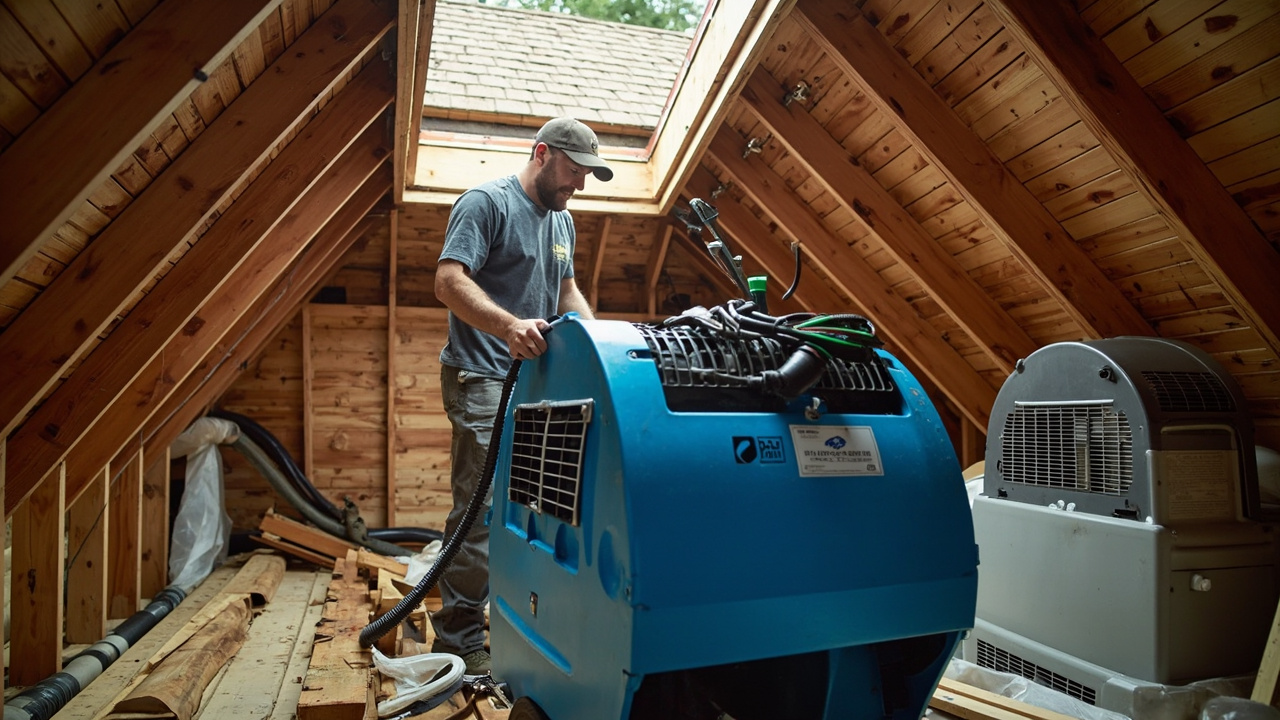
Water extraction addresses any standing water in the attic or upper floor cavities. After extraction, commercial-grade dehumidifiers and air movers are positioned to dry the roof deck, framing, and any affected ceiling assemblies below. IICRC S500 standards guide the drying targets, which require moisture content in structural wood to reach baseline levels before any encapsulation or repair work begins. Skipping this step and closing up a wet attic is one of the most common mistakes on DIY or underqualified jobs, and it leads directly to mold.
Step 3 — Sanitization and Decontamination
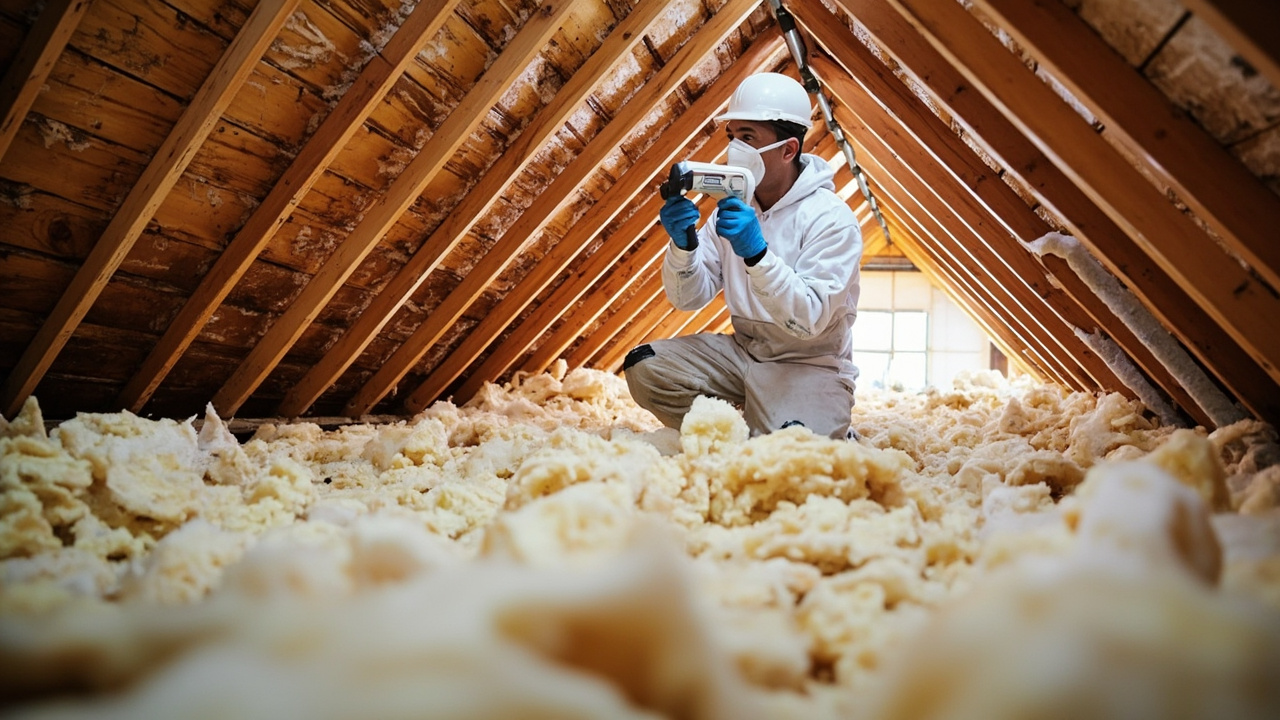
Animal waste removal requires personal protective equipment and EPA-registered disinfectants rated for biological contamination. Contaminated insulation is bagged and removed. Affected wood surfaces are treated with antimicrobial agents before any new insulation or sheathing is installed. This step is not optional. Leaving raccoon feces residue behind, even after visual cleaning, creates an ongoing biological hazard and a persistent odor source.
Mold remediation, when present, follows IICRC S520 protocols. Containment barriers prevent spore spread during removal. Air scrubbers with HEPA filtration run continuously during the remediation phase.
Step 4 — Structural Repair and Roof Restoration
The final phase addresses the structural damage directly. This includes replacing delaminated OSB roof deck sections, repairing or replacing compromised rafters, installing new flashing at all penetrations, and restoring the exterior roofing to a weather-tight condition. New insulation is installed to meet current Wayne County building code requirements for thermal performance.
Does Your Homeowners Insurance Cover Animal Damage to Your Roof
This is the question most Grosse Pointe homeowners ask, and the answer depends on how the damage is characterized.
Michigan homeowners insurance policies generally cover damage that is sudden and accidental. A raccoon tearing through your fascia board in a single event may qualify. The water damage that results from that breach often qualifies as well, provided you report it promptly and can demonstrate the timeline.
What policies typically exclude is gradual damage or neglect. If an adjuster determines that squirrels have been gnawing your soffits for two seasons and the resulting decay was visible and unaddressed, the claim may be denied on the grounds of deferred maintenance.
| Damage Scenario | Likely Coverage Outcome | Key Documentation Needed |
|---|---|---|
| Raccoon tears through roof vent in a single incident | Typically covered as sudden and accidental damage | Photos of breach, wildlife exclusion company report, dated restoration invoice |
| Squirrel gnaw damage discovered after years of entry | Often denied as gradual damage or maintenance neglect | Inspection report, attic photos, written contractor assessment |
| Water damage to ceiling from animal-compromised flashing | Covered if tied to covered roof event, denied if gradual | Moisture mapping report, adjuster walk-through documentation |
| Mold resulting from animal-driven water intrusion | Covered if primary water event is covered, subject to mold sublimits | Air quality testing, mold remediation scope report |
Documenting the damage correctly before any work begins is essential to a successful claim. For a detailed guide on how to work through this process with your insurer, see how to get your Detroit home insurance to actually pay for water restoration. If you are specifically dealing with a claim for your Corktown or near-east side home, the process in filing a successful water damage insurance claim for your Corktown home covers the documentation steps in detail.
Signs You Should Stop Waiting and Call a Restoration Professional
Not every situation requires emergency response, but several indicators mean you should not wait. If you see any of the following, the damage is likely further along than the visible symptoms suggest.
- Ceiling stains that grow or darken after rain or snowmelt events
- Soft spots or sagging in your ceiling drywall
- A persistent musty odor in your upper floors or attic
- Visible mold on attic framing, roof deck, or insulation
- Sounds of animals in the attic combined with any water staining
- Insulation that appears compressed, stained, or disturbed in concentrated areas
- Exterior fascia or soffit panels that show gnaw marks or visible gaps
If water has reached your subfloor or finished flooring on upper levels, the scope expands significantly. For guidance on protecting finished surfaces, how to save your hardwood floors after a significant water leak explains the drying window and when flooring can be salvaged versus replaced.
Why Grosse Pointe Homes Are Particularly Vulnerable
Grosse Pointe’s housing stock is predominantly mid-century and older. The large colonials on Lakeshore Drive, the brick tudors near Grosse Pointe Woods, and the craftsman-style homes throughout Grosse Pointe City all share a common characteristic. They were built with wood fascia, wood soffits, and roofing systems that have been repaired and re-roofed multiple times over the decades.
Each repair cycle can leave small gaps at flashing intersections or transitions between old and new materials. These micro-gaps are invisible to the casual eye but are exactly what a squirrel’s nose finds. Add the overhead tree canopy from the Pointes’ mature elms and oaks, which give wildlife direct highway access to rooflines, and you have a situation that is structurally different from a newer subdivision in Macomb County or western Wayne County.
The Michigan Department of Environment, Great Lakes, and Energy notes that urban wildlife populations in Southeast Michigan have expanded steadily as mature urban forest areas provide both habitat and food corridors. Grosse Pointe sits directly in that corridor.
What to Do Right Now If You Suspect Animal Damage
Start from the outside. Walk the perimeter of your roofline from the ground with binoculars if needed. Look for pulled flashing, damaged vent covers, and any fascia sections that look different from the surrounding material. Then go into the attic during daylight. If you see pinpoints of light coming through the roof deck, you have open penetrations.
Do not attempt to seal gaps yourself before the interior damage has been assessed. Trapping an animal inside the structure accelerates the biological contamination problem. Wildlife exclusion needs to happen in coordination with the restoration assessment, not before or after it in isolation.
Water damage from animal intrusion is one of the more underdiagnosed problems in Detroit-area homes. The leak looks like a roofing problem. The roofing contractor patches the exterior. The interior water damage and mold go unaddressed. Six months later the ceiling fails. Getting a restoration professional into the attic before that cycle completes is the difference between a manageable repair and a major structural loss.
If you are dealing with water in other parts of your home as well, understand that wet materials have strict salvage windows. Deciding whether your wet carpet can be saved or needs to go explains how professionals make that determination and what the timeline looks like for porous materials.
Call a Detroit-area water damage restoration team with IICRC certification and experience in attic decontamination. Get the interior assessed before you get the roof patched. That sequence matters more than most homeowners realize, and it is the difference between resolving this problem once and dealing with its consequences for years.
{
“@context”: “https://schema.org”,
“@type”: “BlogPosting”,
“headline”: “Why Squirrels and Raccoons in Grosse Pointe Are the Secret Cause of Your Roof Leak”,
“description”: “Squirrels and raccoons in Grosse Pointe destroy roofs fast. Learn how animal damage causes water intrusion, mold, and structural decay in Detroit homes.”,
“wordCount”: 2283,
“datePublished”: “2026-07-16T10:11:00.000Z”,
“dateModified”: “2026-07-16T10:11:00.000Z”,
“inLanguage”: “en-US”,
“mainEntityOfPage”: {
“@type”: “WebPage”,
“@id”: “https://ironwoodwaterdamagerestorationdetroit.com”
},
“publisher”: {
“@type”: “LocalBusiness”,
“name”: “Ironwood Water Damage Restoration Detroit”,
“url”: “https://ironwoodwaterdamagerestorationdetroit.com”
},
“author”: {
“@type”: “Organization”,
“name”: “Ironwood Water Damage Restoration Detroit”,
“url”: “https://ironwoodwaterdamagerestorationdetroit.com”
},
“image”: {
“@type”: “ImageObject”,
“url”: “https://ironwoodwaterdamagerestorationdetroit.com/wp-content/uploads/2026/03/why-squirrels-and-raccoons-in-grosse-pointe-are-th-1.jpg”
}
}
{
“@context”: “https://schema.org”,
“@type”: “LocalBusiness”,
“name”: “Ironwood Water Damage Restoration Detroit”,
“url”: “https://ironwoodwaterdamagerestorationdetroit.com”,
“address”: {
“@type”: “PostalAddress”,
“addressLocality”: “Detroit”
},
“areaServed”: {
“@type”: “City”,
“name”: “Detroit”
}
}
{
“@context”: “https://schema.org”,
“@type”: “BreadcrumbList”,
“itemListElement”: [
{
“@type”: “ListItem”,
“position”: 1,
“name”: “Home”,
“item”: “https://ironwoodwaterdamagerestorationdetroit.com”
},
{
“@type”: “ListItem”,
“position”: 2,
“name”: “Blog”,
“item”: “https://ironwoodwaterdamagerestorationdetroit.com/blog”
},
{
“@type”: “ListItem”,
“position”: 3,
“name”: “Why Squirrels and Raccoons in Grosse Pointe Are the Secret Cause of Your Roof Leak”
}
]
}
{
“@context”: “https://schema.org”,
“@type”: “Service”,
“serviceType”: “Water Damage Restoration”,
“provider”: {
“@type”: “LocalBusiness”,
“name”: “Ironwood Water Damage Restoration Detroit”,
“url”: “https://ironwoodwaterdamagerestorationdetroit.com”
},
“areaServed”: {
“@type”: “City”,
“name”: “Detroit”
},
“description”: “Squirrels and raccoons in Grosse Pointe destroy roofs fast. Learn how animal damage causes water intrusion, mold, and structural decay in Detroit homes.”
}