

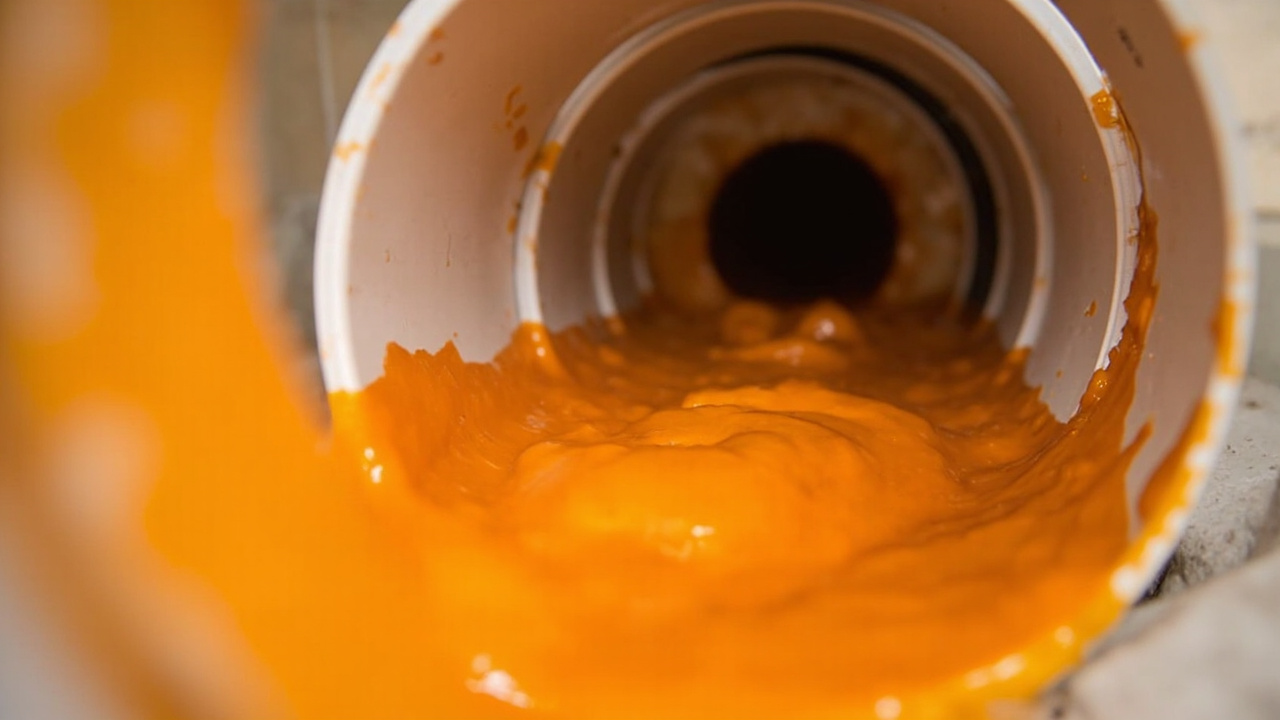
If you pulled back a floor tile or peeked into your sump pump basin and found a thick, gelatinous orange or reddish-brown sludge, you are not dealing with ordinary rust. That material is iron ochre, and it is one of the most aggressive drain-clogging substances found in Southeast Michigan basements. Left alone, it will pack your perimeter drain tile solid and send groundwater straight into your finished basement.
What Iron Ochre Actually Is (And Why It Is Not Just Rust)
Iron ochre is a byproduct of iron-oxidizing bacteria, specifically species like Leptothrix and Gallionella. These microorganisms feed on dissolved iron in groundwater. As they metabolize, they excrete a sticky iron hydroxide compound that looks and feels like orange pudding.
Regular rust is a chemical reaction between iron and oxygen. Iron ochre is a biological process. That distinction matters enormously when you are trying to get rid of it. You cannot neutralize a living colony the same way you treat a corroded pipe fitting.
The sludge builds up in layers inside your French drain pipes and perimeter drain tile. Over time, it completely blocks water flow. Your sump pump runs dry while the soil outside your foundation wall becomes saturated. That pressure has nowhere to go except through your walls and floor.
How to Identify Iron Ochre in Your Drainage System
Homeowners in Clinton Township, Sterling Heights, and the broader Macomb County area frequently mistake iron ochre for other drainage problems. Here is what to look for.
- Texture: Gelatinous or slimy, not hard or flaky like standard rust scale. When you touch it, it smears.
- Color: Ranges from yellow-orange to deep reddish-brown depending on iron concentration and bacterial activity level.
- Odor: A distinct musty or swamp-like smell, sometimes described as sulfuric. This comes from the bacterial activity itself.
- Location patterns: Found coating the inside of perforated drain tile, caked on sump pump floats, staining the concrete floor around the basin, and seeping out of weep holes along foundation walls.
- Staining on pump components: Your sump pump impeller and float switch may be coated in orange residue, which causes mechanical drag and premature motor burnout.
The key difference between iron ochre and standard rust is the gelatinous texture. Rust is brittle and dry. Iron ochre is wet, sticky, and thick. If you can scoop it out with a spoon, you are dealing with ochre.
Why Southeast Michigan Basements Are So Vulnerable
This is not a random problem. There are specific geological reasons why homes from Detroit’s east side through Roseville, Clinton Township, and into the Chesterfield Township corridor see iron ochre at a higher rate than other parts of the country.
Michigan’s glacial clay soils contain naturally elevated iron concentrations. As groundwater moves through these iron-rich clay deposits, it picks up dissolved ferrous iron. The Michigan Department of Environment, Great Lakes, and Energy (EGLE) has documented iron concentrations in Southeast Michigan groundwater that consistently exceed levels found in other Midwest states.
The Great Lakes region also maintains a high water table, particularly after spring thaw and heavy rainfall events. That elevated water table pushes iron-saturated groundwater directly into contact with your drain tile system. When oxygen is present at the pipe perforations, the iron-oxidizing bacteria activate and begin producing ochre colonies.
Homes built on the former wetland areas near Lake St. Clair and the Clinton River watershed are especially prone to this. The soil profile in those areas has held moisture and iron-rich sediment for thousands of years. When you install a French drain system through that soil, you are essentially creating the perfect habitat for Leptothrix and Gallionella to thrive.

The Real Damage Iron Ochre Does to Your Basement System
Structural Consequences of a Clogged French Drain
A French drain system works by intercepting groundwater before it reaches your foundation wall. When ochre blocks the perforated pipe, water has no outlet. Hydrostatic pressure builds against your foundation footing. Concrete block walls develop horizontal cracks. Poured concrete walls bow inward. Floor joints separate.
This is not hypothetical. I have walked through basements in Warren and Eastpointe where complete French drain blockage led to six-inch floor heaving over a single winter season. The repair cost for that kind of structural damage is significant.
What Happens to Your Sump Pump
Iron ochre does not just clog pipes. It migrates into your sump pump basin as a suspended slurry and coats every component. The float switch becomes heavy and unreliable. The check valve gums up. The impeller gets coated in a hard mineral crust after the ochre dries between wet cycles.
A sump pump motor running without adequate water flow overheats. Most residential pumps are not designed to run dry for extended periods. The result is a burnt-out motor at exactly the wrong time, typically during a spring storm when your water table is at its peak. For homeowners dealing with pump failure and flooding, understanding the insurance process is critical. Our guide on how to get your Detroit home insurance to actually pay for water restoration walks through what documentation you need before the adjuster arrives.
Secondary Mold Growth from Elevated Humidity
A partially blocked drain system does not fail all at once. It fails slowly. Water seeps in at a rate your dehumidifier can almost keep up with. Relative humidity in the basement creeps up to 65 or 70 percent. That sustained moisture level creates ideal conditions for mold growth on framing lumber, insulation, and drywall behind finished walls.
By the time you see visible mold, it has been growing for weeks or months in areas you cannot see. If you suspect this is happening in your basement, read our breakdown on why bleach will not fix your Ferndale basement mold before you try to handle it yourself.
| Timeframe | What Happens | Damage Level |
|---|---|---|
| 0 to 6 months | Ochre begins coating interior pipe walls, flow rate reduces by 20 to 40 percent | Low, reversible |
| 6 to 18 months | Pipe perforations begin sealing, sump pump runs less frequently, humidity rises | Moderate, early mold risk |
| 18 to 36 months | Significant blockage, hydrostatic pressure increasing, sump pump shows strain | High, structural risk begins |
| 36 months and beyond | Complete blockage, active seepage, possible sump failure, mold present | Severe, major remediation required |
Why Bleach and Store-Bought Drain Cleaners Do Not Work on Iron Ochre
This is the most common mistake homeowners make. They pour bleach down the floor drain, see the orange color fade temporarily, and assume the problem is solved. It is not.
Bleach oxidizes surface organic material. It does not penetrate a dense ochre deposit packed inside a four-inch perforated drain tile buried under your concrete floor. The bacteria surviving in the deeper layers of the biofilm simply recolonize within weeks.
Chemical drain openers like sodium hydroxide products work on grease and hair. They have no mechanism to break down the iron hydroxide matrix that holds ochre deposits together. You are wasting time and potentially damaging your PVC drain tile with repeated chemical applications.
The IICRC S500 Standard for water damage remediation specifically addresses drain system contamination and the protocols required to address biological growth in drainage infrastructure. Surface-level treatments do not meet that standard.
Professional Remediation Methods That Actually Work
Hydro-Jetting for Drain Tile Restoration
High-pressure water jetting, or hydro-jetting, uses water at pressures between 1,500 and 4,000 PSI to physically blast ochre deposits from the interior of drain tile. A flexible hose with a rotating nozzle head is fed through the cleanout access point and advanced through the pipe run.
This method physically removes the ochre mass rather than chemically dissolving it. The dislodged material flushes to the sump basin where it can be extracted. A camera inspection before and after confirms the pipe is clear.
Hydro-jetting is effective on established ochre blockages, but it requires proper cleanout access points. Many older homes in Clinton Township and south Macomb County do not have accessible cleanouts built into their original drain tile systems. In those cases, a technician may need to core through the slab to create access before jetting can begin.
Chemical Treatment Protocols for Active Ochre Colonies
After mechanical clearing, a phosphoric acid-based flush or a hydrogen peroxide treatment applied at appropriate concentration can reduce active bacterial populations inside the cleaned pipe. This is not a bleach application. These are controlled treatments designed to alter the pH environment that iron-oxidizing bacteria require to reproduce.
The treatment is flushed through the system and then neutralized. This step extends the time before ochre recolonization begins, giving you a longer maintenance interval between cleanings.

Comparing DIY Attempts to Professional Remediation
| Factor | DIY Approach | Professional Remediation |
|---|---|---|
| Effectiveness on established blockage | Low. Bleach and drain cleaners do not reach deep deposits. | High. Hydro-jetting physically removes the ochre mass. |
| Access requirements | Limited to accessible openings at sump basin | Can core new cleanout access points as needed |
| Verification of results | Visual only, no way to confirm full pipe clearance | Camera inspection confirms clearance and pipe condition |
| Risk of pipe damage | Moderate to high with repeated chemical use on PVC tile | Low when performed by trained technician with correct PSI settings |
| Recolonization timeline after treatment | Weeks to months | One to three years with follow-up chemical flush |
| Addresses secondary mold risk | No | Yes, moisture levels assessed and documented |
Prevention Strategies for Clinton Township and Macomb County Homeowners
Install Accessible Cleanout Points
The single most important upgrade you can make to an existing French drain system is adding cleanout access points. These are vertical risers capped at floor level that give a technician direct entry into the drain tile at multiple locations around the perimeter. Without them, the only access point is the sump basin, which limits the reach of any mechanical cleaning tool.
Cleanouts should be placed at each corner of the perimeter drain system and at any horizontal run longer than 20 feet. Mark their locations on a simple sketch and keep it with your home maintenance records.
Annual System Flushing
Homes with confirmed iron ochre history in their soil profile benefit from an annual or biannual maintenance flush. A technician runs water through the system under moderate pressure to displace early-stage ochre accumulation before it hardens and packs. This is far less involved and far less expensive than waiting for a full blockage to develop.
Think of it the same way you think about cleaning your gutters. You do it on a schedule because you know the debris is coming, not because you wait until the water is pouring over the side.
Sump Pump Filters and Basin Maintenance
Wrap-style filters designed to prevent ochre slurry from entering the sump pump impeller are available and worth installing if your system shows active ochre production. Clean or replace these filters annually. Check the float mechanism for ochre buildup at the same time. A float that is 30 percent heavier than it should be due to mineral coating will activate late and put your basement at risk.
Pair this with a battery backup pump system. When your primary pump fails due to ochre-related motor burnout during a storm event, a backup pump operating on a separate float setting can prevent the kind of flooding that ruins finished floors and stored belongings. If you have already experienced water intrusion and are dealing with wet flooring, our guide to deciding whether your wet carpet in Sterling Heights can be saved or needs to go covers the restoration decision-making process in detail.
Backflow Prevention and Drain Routing
A properly installed backflow prevention valve on your sump pump discharge line stops water from cycling back into the basin during pump rest cycles. Without it, iron-rich water re-enters the basin repeatedly, accelerating ochre deposition on the pump components. This is a low-cost upgrade that most plumbers can install in under an hour.
When Iron Ochre Leads to a Flooding Event
If your French drain has already failed and you have standing water in the basement, the remediation sequence matters. You cannot simply pump out the water, dry the space, and call it done. The drain system that allowed the flooding to occur is still blocked. If you do not address it, the next rainfall event or snowmelt cycle will repeat the problem.
Document everything before cleanup begins. Photograph the ochre deposits, the water line on the walls, and any damaged contents. This documentation is essential for your insurance claim. Our detailed resource on filing a successful water damage insurance claim explains exactly what insurers require and where most claims fall short.
Water extraction, structural drying, and drain remediation need to happen in sequence by a team that handles all three. Hiring a carpet cleaning company for extraction and a separate plumber for the drain work while trying to manage mold risk on your own leads to gaps in the restoration process that cost more to fix later.
Getting the Right Assessment for Your Macomb County Home
If you are seeing orange sludge in your sump basin, smelling that swamp odor in your basement, or noticing that your sump pump is running less often than it used to despite recent rain, those are the early warning signs of an ochre blockage in progress. The earlier you address it, the simpler and less expensive the solution.
A camera inspection of your drain tile system will confirm the blockage location and severity within an hour. That information tells you exactly what you are dealing with and whether hydro-jetting, cleanout installation, or full drain tile replacement is the appropriate next step for your specific situation.
Call a water damage restoration contractor with direct experience diagnosing iron ochre in Southeast Michigan soils. This is not a general plumbing problem. It requires someone who understands the biological component, the IICRC S500 remediation standards, and the local soil conditions that make this a recurring issue in Clinton Township, Shelby Township, and the communities along the Lake St. Clair shoreline.
{
“@context”: “https://schema.org”,
“@type”: “BlogPosting”,
“headline”: “Why That Rusty Sludge Is Clogging Your French Drain in Clinton Township”,
“description”: “Orange slime in your basement drain isn’t rust. It’s iron ochre, and it’s destroying your French drain system. Here’s what Detroit homeowners need to know.”,
“wordCount”: 2316,
“datePublished”: “2026-05-22T11:02:00.000Z”,
“dateModified”: “2026-05-22T11:02:00.000Z”,
“inLanguage”: “en-US”,
“mainEntityOfPage”: {
“@type”: “WebPage”,
“@id”: “https://ironwoodwaterdamagerestorationdetroit.com”
},
“publisher”: {
“@type”: “LocalBusiness”,
“name”: “Ironwood Water Damage Restoration Detroit”,
“url”: “https://ironwoodwaterdamagerestorationdetroit.com”
},
“author”: {
“@type”: “Organization”,
“name”: “Ironwood Water Damage Restoration Detroit”,
“url”: “https://ironwoodwaterdamagerestorationdetroit.com”
},
“image”: {
“@type”: “ImageObject”,
“url”: “https://ironwoodwaterdamagerestorationdetroit.com/wp-content/uploads/2026/03/why-that-rusty-sludge-is-clogging-your-french-drai-1.jpg”
}
}
{
“@context”: “https://schema.org”,
“@type”: “LocalBusiness”,
“name”: “Ironwood Water Damage Restoration Detroit”,
“url”: “https://ironwoodwaterdamagerestorationdetroit.com”,
“address”: {
“@type”: “PostalAddress”,
“addressLocality”: “Detroit”
},
“areaServed”: {
“@type”: “City”,
“name”: “Detroit”
}
}
{
“@context”: “https://schema.org”,
“@type”: “BreadcrumbList”,
“itemListElement”: [
{
“@type”: “ListItem”,
“position”: 1,
“name”: “Home”,
“item”: “https://ironwoodwaterdamagerestorationdetroit.com”
},
{
“@type”: “ListItem”,
“position”: 2,
“name”: “Blog”,
“item”: “https://ironwoodwaterdamagerestorationdetroit.com/blog”
},
{
“@type”: “ListItem”,
“position”: 3,
“name”: “Why That Rusty Sludge Is Clogging Your French Drain in Clinton Township”
}
]
}
{
“@context”: “https://schema.org”,
“@type”: “Service”,
“serviceType”: “Water Damage Restoration”,
“provider”: {
“@type”: “LocalBusiness”,
“name”: “Ironwood Water Damage Restoration Detroit”,
“url”: “https://ironwoodwaterdamagerestorationdetroit.com”
},
“areaServed”: {
“@type”: “City”,
“name”: “Detroit”
},
“description”: “Orange slime in your basement drain isn’t rust. It’s iron ochre, and it’s destroying your French drain system. Here’s what Detroit homeowners need to know.”
}