
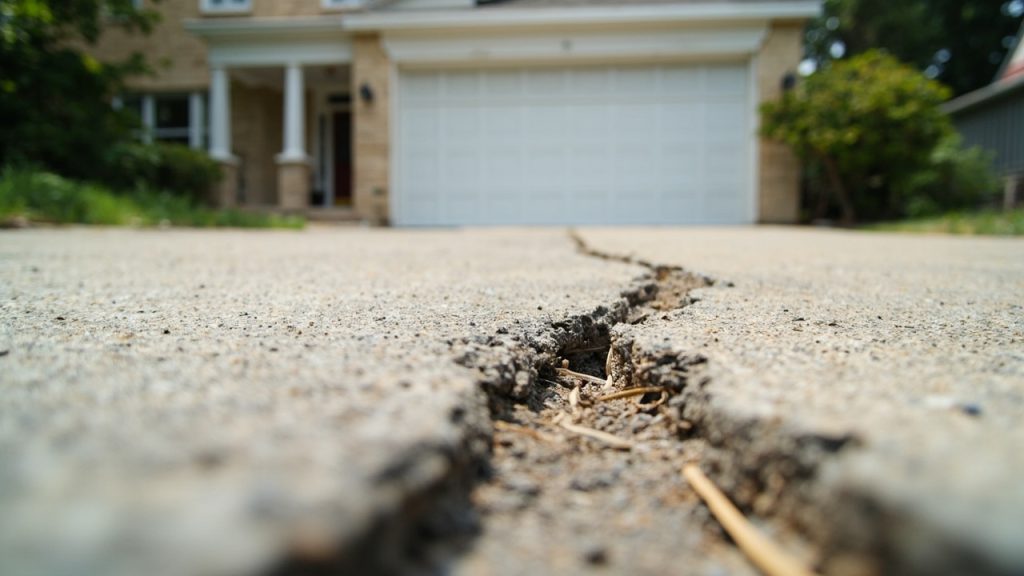
Soil Washout Under Driveway Is the Real Problem You Are Seeing
If your driveway has started cracking, settling, or sinking after hard rain, the concrete slab itself is usually fine. The problem is what is happening underneath it. Soil washout under the driveway subgrade is one of the most common and most misread issues homeowners on Detroit’s Eastside face. By the time you see the slab drop or a void open up along the garage threshold, water has already been moving soil for weeks or months.
This is not a cosmetic problem. A compromised subgrade puts real stress on your foundation perimeter, your garage floor slab, and any underground utilities running beneath the drive. Getting ahead of it is far cheaper than dealing with it after the slab fractures fully or water starts entering your basement wall.
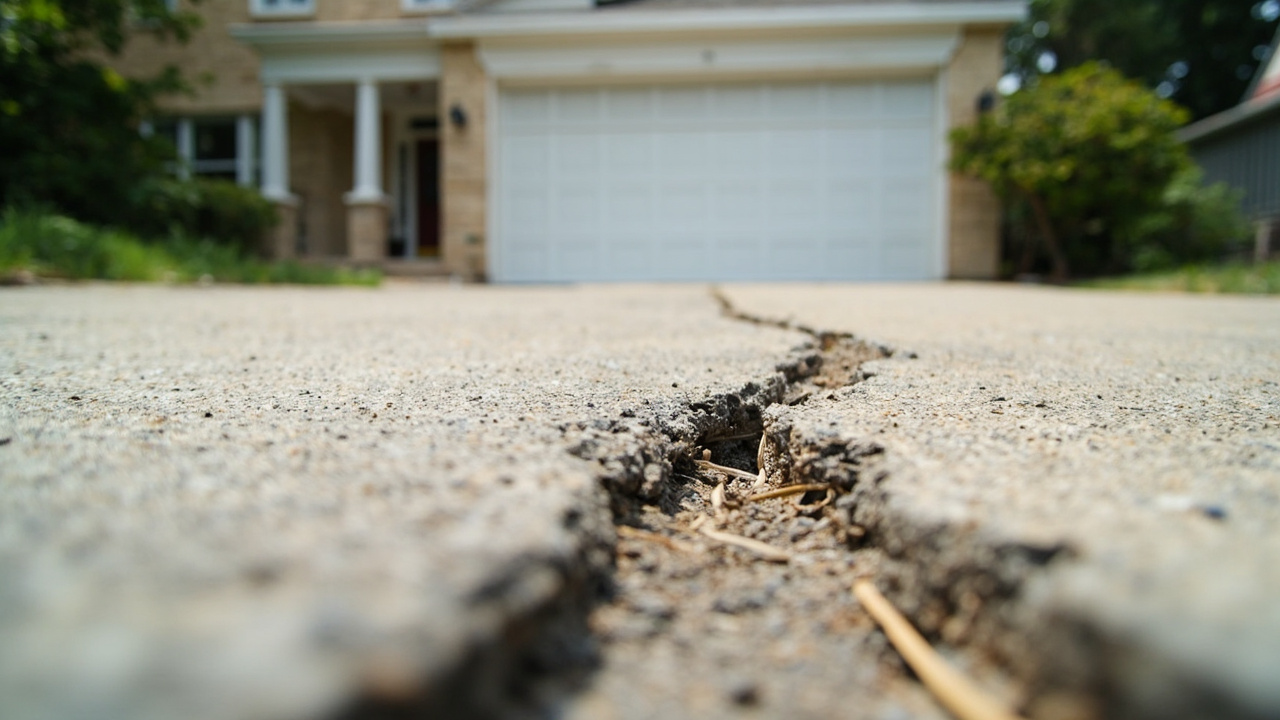
Recognizing the Warning Signs Before a Full Failure
Detroit homeowners often notice something feels wrong before they can explain what it is. The driveway just looks different. Learning to read those early signals can save you a major repair bill.
Cracks That Run Along Panel Joints or Diagonally Across Slabs
Random surface cracks from age are normal. Cracks that travel diagonally from a corner or that open up wider on one side than the other signal uneven subgrade settlement. When soil washes away in one spot, the slab above it loses support and flexes under vehicle weight. That flexing is what creates those diagonal fractures.
Visible Voids Along the Driveway Edge
Crouch down and look under the edge of your concrete slab near the lawn line or the garage apron. If you can see daylight under there, or if you can fit your hand underneath, you have an active void. Voids grow fast once they start. Rain moves through the gap, carries more soil, and the cavity gets larger with each storm cycle.
Pooling Water Near the Garage Threshold
Water should sheet away from your house, not toward it. If you are seeing standing water collect at the base of your garage door after rain, the driveway grade has shifted. That water is not just a puddle. It is actively saturating the subgrade directly beneath your garage floor and the adjacent foundation wall.
A Spongy Feel When You Walk or Drive Over Certain Panels
This one is easy to dismiss. If a slab section deflects slightly when you walk on it or feels hollow when you tap it with your heel, there is a void beneath it. Do not ignore this. A slab with no subgrade support will crack completely the first time a heavy vehicle parks on it.
Why Detroit’s Eastside Soil Is Especially Vulnerable
Southeast Michigan sits on ancient glacial lake bed deposits. The soil profile across Wayne County and into the Grosse Pointe corridor is dense with lacustrine clay and fine silt. That combination behaves well when it is dry and undisturbed. Under repeated wetting and drying cycles, it is highly unstable.
The Freeze-Thaw Cycle Does More Damage Than the Rain Itself
Michigan’s frost line sits at roughly 42 inches below grade. Every winter, ground moisture freezes, expands, and lifts your slab. Every spring, it thaws and drops it back down. After enough cycles, the subgrade no longer compacts back to its original density. Gaps form. Those gaps become pathways for water infiltration the next time it rains hard.
Neighborhoods like East English Village, Jefferson-Chalmers, and Morningside see this pattern play out on street after street. The older the concrete and the original compaction work, the worse the cumulative effect.
Clay Soil Shrinks and Swells With Every Storm
Clay expands when wet and contracts when dry. On the Eastside, many driveways sit directly over native clay with no engineered aggregate base underneath, or with a base that has long since migrated. When clay shrinks in a dry summer, it pulls away from the slab above it and creates micro-voids. The next heavy rain fills those voids with water under pressure, and fine particles of silt get carried away with it. That is soil erosion happening right under your feet.
Heavy Spring Rains Overwhelm Aging Storm Infrastructure
Detroit’s combined sewer system in many Eastside neighborhoods was designed for a different era. When rainfall intensity exceeds what those lines can handle, water backs up into yards and saturates soil faster than it can drain. The city has invested in green infrastructure upgrades, but many blocks in the 48224, 48215, and 48213 zip codes still deal with sheet flow and subsurface saturation after every major storm event.
What Is Actually Causing the Washout Under Your Driveway
Soil does not just disappear. Something is moving it. Identifying the source is the first step toward a lasting fix.
Downspout Discharge Directed Too Close to the Slab
This is the number one cause we see on service calls in Detroit. A downspout that empties at the edge of the driveway or discharges under the slab via a buried pipe creates a concentrated stream of water with every rain event. That stream erodes the subgrade over time. Most homes built before the late 1990s on the Eastside were not designed with proper downspout extensions, and many still lack them.
Leaking Underground Water Lines or Irrigation Systems
A slow leak from an aging water service line or a cracked irrigation pipe running under the driveway will saturate the subgrade continuously. You may not see any surface evidence for months. By the time a slab settles visibly, the void beneath it can be substantial. If your water bill has crept up without explanation, a subsurface leak is worth investigating before you touch the driveway.
Poor Original Soil Compaction
Many driveways installed in Detroit’s older housing stock, particularly in bungalow-dense neighborhoods like Morningside and Regent Park, were poured over improperly compacted fill. The compaction looked adequate at installation but never achieved the density needed to resist long-term moisture cycling. These driveways are simply waiting for enough freeze-thaw seasons and rain events to expose the deficiency.
Hydrostatic Pressure From a High Water Table
Properties close to the Detroit River, Lake St. Clair shoreline, or low-lying sections of Jefferson Avenue can experience hydrostatic pressure pushing upward through the subgrade. Water moving under pressure through saturated soil carries fine particles with it, hollowing out the subgrade from below. This is the same mechanism that causes basement wall leaks in the same neighborhoods.
Comparing Repair Options for Detroit Driveways
Once you have identified the washout source, you have three main paths for repair. The right one depends on the extent of the void, the condition of the slab, and what caused the problem in the first place.
| Repair Method | Best For | Longevity | Disruption Level |
|---|---|---|---|
| Mudjacking (Slabjacking) | Moderate voids, slabs in fair condition | 5 to 10 years depending on drainage correction | Low, driveway usable in 24 hours |
| Polyurethane Injection (Polyjacking) | Most residential applications, freeze-thaw climates | 10 to 20 years with proper drainage management | Very low, driveway usable in 1 to 2 hours |
| Full Slab Replacement | Severely fractured slabs, active leak source, multiple voids | 20 to 30 years with engineered base and drainage | High, 3 to 5 days minimum |
Why Polyurethane Injection Works Better in Michigan’s Climate
Mudjacking uses a cement-based slurry to fill voids and lift slabs. It works, but the slurry is heavy, adds load to an already stressed subgrade, and remains somewhat porous. In Detroit’s freeze-thaw environment, water can re-enter the mudjacked area, freeze, and begin the erosion cycle again.
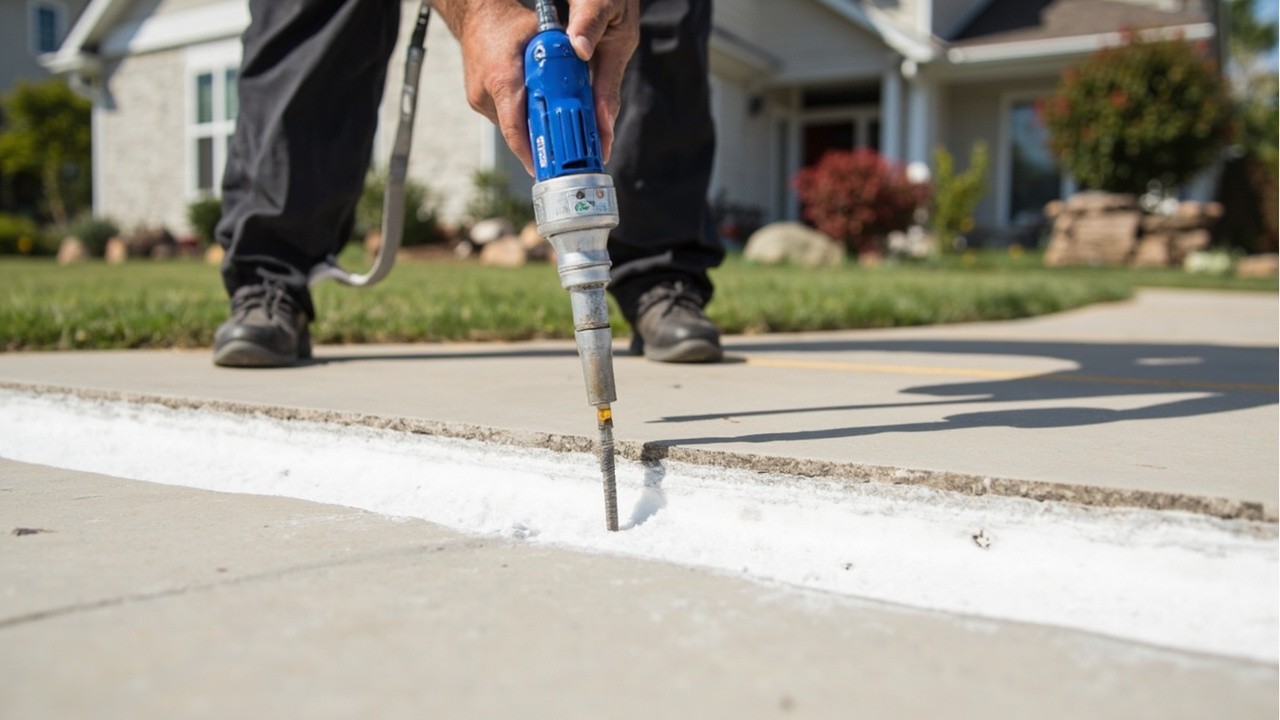
Polyurethane foam injection uses a two-part expanding foam pumped through small-diameter holes drilled in the slab. The foam expands to fill voids completely, weighs a fraction of what mudjacking material does, cures waterproof, and sets in minutes. For the Eastside’s clay and silt soils, this is the more durable choice in most scenarios.
When Full Replacement Is the Only Honest Answer
If the slab has fractured into multiple pieces at different elevations, if the void runs continuously under more than half the driveway, or if there is an active underground leak that has not been corrected, no lifting method will hold. You need a full replacement with a properly engineered aggregate base, verified compaction, and drainage corrections made before the pour. Skipping that sequence just restarts the clock on the same problem.
The Water Damage Connection You Cannot Afford to Miss
Driveway washout rarely stays contained to the driveway. Water moving through your subgrade is on a path toward your foundation. If you are already seeing basement moisture or mold issues, the soil erosion at your driveway may be directly connected. The same water pathway that hollowed out your subgrade is likely the same one depositing moisture against your foundation wall.
Homeowners who file water damage claims sometimes find that foundation-related water intrusion is covered under their policy, but the specifics depend heavily on how the claim is documented and what caused the moisture entry. Understanding how to get your Detroit home insurance to actually pay for water restoration can make a significant difference in what you recover.
Prevention Strategies That Actually Hold Up in Southeast Michigan
Fixing the current washout without changing the drainage conditions around it is a temporary solution. These prevention steps make the difference between a one-time repair and a recurring expense.
- Extend downspouts at least 6 feet from the foundation and direct them toward the yard, not the driveway edge or the garage apron. Use flexible piping to redirect flow away from any paved surface.
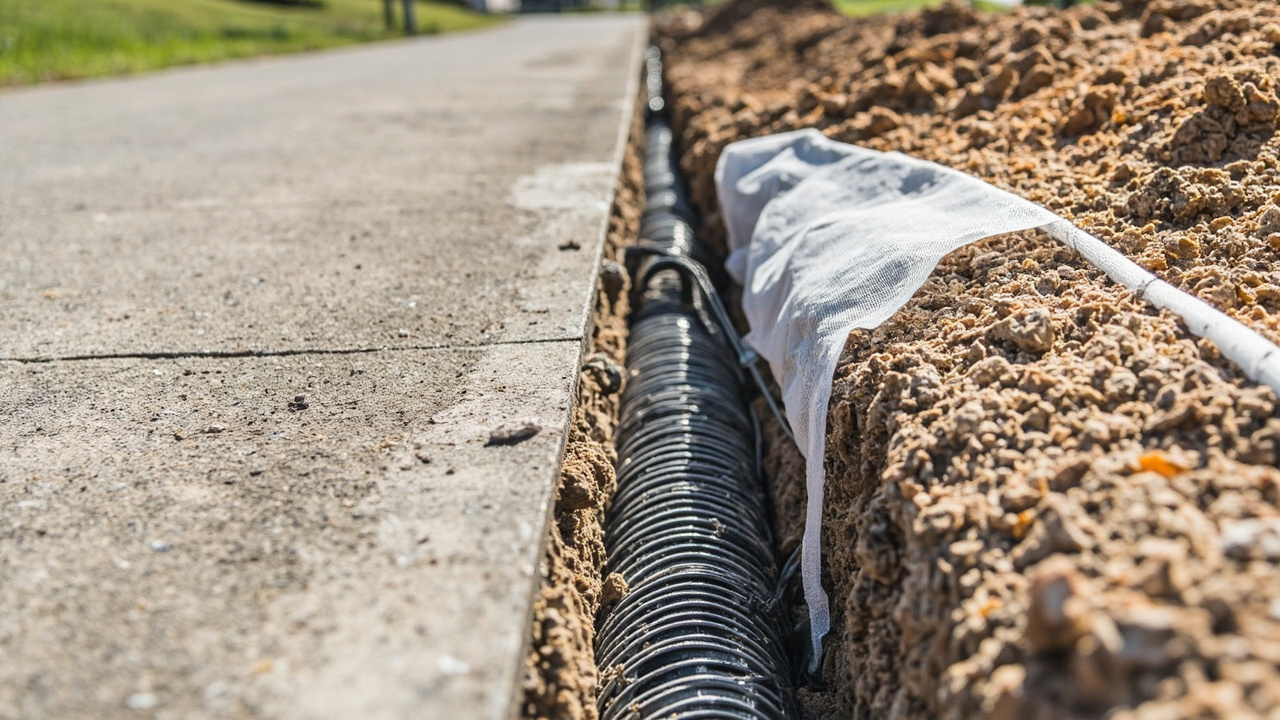
- Install a French drain along the low side of the driveway if your lot naturally directs water toward the garage. A properly installed perforated pipe wrapped in geotextile fabric and bedded in clean angular gravel will intercept surface and subsurface flow before it reaches the subgrade.
- Seal all concrete expansion joints with a polyurethane joint sealant rated for exterior use. Open joints are direct water entry points into the subgrade. Reseal every 3 to 5 years in Michigan’s climate.
- Regrade the lawn areas adjacent to the driveway so surface drainage runs away from the slab at a minimum 2 percent slope. This is the single most cost-effective erosion control measure available.
- Use geotextile fabric as a barrier between soil and any aggregate base during repair or replacement work. It stops fine silt from migrating up into the base material and keeps the aggregate layer stable over time.
- Check your service line and sump discharge annually if your home is over 40 years old. A hairline crack in an aging cast iron or clay tile line under the driveway can move hundreds of gallons of water through your subgrade every week.
Comparing Drainage Solutions for Eastside Detroit Properties
| Drainage Solution | Problem It Addresses | Typical Installation Timeline | Maintenance Requirement |
|---|---|---|---|
| Downspout Extension with Underground Discharge | Concentrated gutter runoff near slab edge | Half day to full day | Inspect and flush annually |
| French Drain Along Driveway Perimeter | Subsurface and surface water migration toward garage | 1 to 2 days | Clean out every 3 to 5 years |
| Channel Drain at Garage Apron | Sheet flow entering garage threshold | Half day | Clear debris seasonally |
| Regrading and Soil Stabilization | General lot drainage toward foundation | 1 to 3 days depending on scope | Monitor grade annually after settlement |
What to Do Right Now If You Suspect Active Washout
Do not park heavy vehicles on any slab section that shows visible settlement or sounds hollow when tapped. The slab can fail suddenly under load, and the drop can damage a vehicle axle or, worse, cause a fall injury.
Mark the edges of any visible void with spray paint or chalk so you can track whether it is growing between rain events. If the void is measurably larger after two storm cycles, the erosion is active and accelerating.
Get a camera inspection of your main water service line if the washout is directly over its path. Leaking municipal water connections and old clay-tile sewer laterals are common in Eastside Detroit neighborhoods built before the mid-1970s. A $150 camera inspection can rule out the most expensive cause before you spend money on slab lifting.
For homeowners in Jefferson-Chalmers or the lower-lying sections near the Chandler Park area, ask about your property’s flood zone designation before making drainage decisions. Properties in or near FEMA-mapped zones may have specific requirements for drainage modifications that affect permit requirements through the City of Detroit Buildings, Safety Engineering, and Environmental Department.
If water has already made its way into your garage or basement as a result of the subgrade saturation, the moisture damage inside the structure needs attention in parallel with the driveway repair. Water that has been sitting against wood framing, drywall, or flooring for more than 48 hours creates conditions for structural damage and mold growth. If you have already seen staining or discoloration on your garage walls or interior floor areas adjacent to the driveway, get a moisture assessment before closing up any repaired areas.
Eastside Detroit homeowners dealing with water entry that may be covered under a homeowners policy should document everything before any work starts. Photographs of the void, the slab settlement, any interior moisture, and the suspected source are essential for a successful claim. Reviewing the insurance claim documentation process before you call your adjuster will put you in a much stronger position.
Get a Professional Assessment Before the Next Rain Event
Soil washout under a driveway is a problem that compounds with every storm. The longer it goes without a drainage correction and void fill, the larger the cavity grows and the more damage radiates outward toward your foundation and garage floor.
If you are seeing any of the warning signs described above, a site evaluation is the right next step. A qualified water damage restoration and drainage specialist who knows the Eastside’s specific soil conditions, aging infrastructure, and freeze-thaw realities can tell you within one visit whether you need polyurethane injection, a French drain, a downspout correction, or some combination of all three.
Call a local Detroit-area specialist with a 313 area code who has actually worked in East English Village, Morningside, Jefferson-Chalmers, and along the Grosse Pointe border. Generic advice from someone who has never seen Michigan clay under a concrete slab will cost you more in the long run than it saves upfront.
{
“@context”: “https://schema.org”,
“@type”: “BlogPosting”,
“headline”: “Why Your Eastside Detroit Driveway Is Sinking and Washing Out After a Heavy Rainstorm”,
“description”: “Soil washing out under your Eastside Detroit driveway? Learn why it happens, what the real risks are, and how to fix it before it gets worse.”,
“wordCount”: 2361,
“datePublished”: “2026-07-31T11:15:00.000Z”,
“dateModified”: “2026-07-31T11:15:00.000Z”,
“inLanguage”: “en-US”,
“mainEntityOfPage”: {
“@type”: “WebPage”,
“@id”: “https://ironwoodwaterdamagerestorationdetroit.com”
},
“publisher”: {
“@type”: “LocalBusiness”,
“name”: “Ironwood Water Damage Restoration Detroit”,
“url”: “https://ironwoodwaterdamagerestorationdetroit.com”
},
“author”: {
“@type”: “Organization”,
“name”: “Ironwood Water Damage Restoration Detroit”,
“url”: “https://ironwoodwaterdamagerestorationdetroit.com”
},
“image”: {
“@type”: “ImageObject”,
“url”: “https://ironwoodwaterdamagerestorationdetroit.com/wp-content/uploads/2026/03/why-your-eastside-detroit-driveway-is-sinking-and-1.jpg”
}
}
{
“@context”: “https://schema.org”,
“@type”: “LocalBusiness”,
“name”: “Ironwood Water Damage Restoration Detroit”,
“url”: “https://ironwoodwaterdamagerestorationdetroit.com”,
“address”: {
“@type”: “PostalAddress”,
“addressLocality”: “Detroit”
},
“areaServed”: {
“@type”: “City”,
“name”: “Detroit”
}
}
{
“@context”: “https://schema.org”,
“@type”: “BreadcrumbList”,
“itemListElement”: [
{
“@type”: “ListItem”,
“position”: 1,
“name”: “Home”,
“item”: “https://ironwoodwaterdamagerestorationdetroit.com”
},
{
“@type”: “ListItem”,
“position”: 2,
“name”: “Blog”,
“item”: “https://ironwoodwaterdamagerestorationdetroit.com/blog”
},
{
“@type”: “ListItem”,
“position”: 3,
“name”: “Why Your Eastside Detroit Driveway Is Sinking and Washing Out After a Heavy Rainstorm”
}
]
}
{
“@context”: “https://schema.org”,
“@type”: “Service”,
“serviceType”: “Water Damage Restoration”,
“provider”: {
“@type”: “LocalBusiness”,
“name”: “Ironwood Water Damage Restoration Detroit”,
“url”: “https://ironwoodwaterdamagerestorationdetroit.com”
},
“areaServed”: {
“@type”: “City”,
“name”: “Detroit”
},
“description”: “Soil washing out under your Eastside Detroit driveway? Learn why it happens, what the real risks are, and how to fix it before it gets worse.”
}