
The Real Reason Your Closet Walls Are Wet
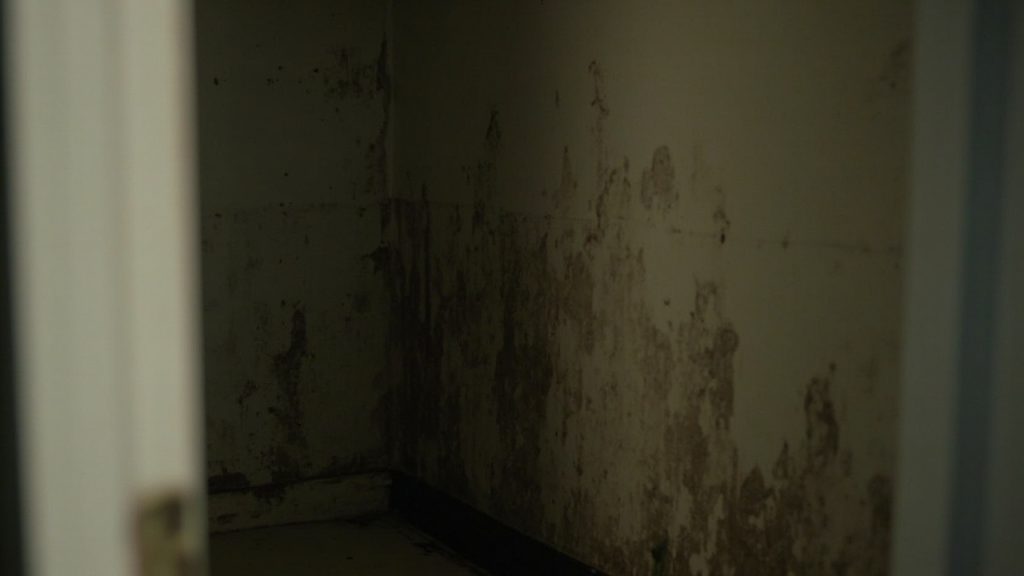
You open your bedroom closet and feel it immediately. That clammy, cold wall. Maybe a musty smell. Maybe a dark spot spreading across the drywall or plaster behind your hanging clothes. This is not a quirk of your house. It is a physics problem, and it plays out in thousands of Grosse Pointe homes every single winter.
The short explanation is condensation. Warm interior air meets a cold exterior wall surface, and moisture drops out of the air and onto that surface. But the longer explanation matters, because the fix depends on understanding why your specific closet is the problem area and not your living room or bedroom wall.

Why Bedroom Closets Turn Into Mold Magnets
Closets along exterior walls are sealed boxes with almost no airflow. Your HVAC system pushes conditioned air through the main living spaces, but that air rarely reaches the back corner of a closet. The result is a stagnant microclimate where relative humidity climbs unchecked.. Read more about Water Seeping Through Your Grosse Pointe Park Fireplace Hearth.
Relative humidity is the percentage of moisture air holds relative to its maximum capacity at a given temperature. When warm, humid air from your living space seeps into that cold closet and touches a wall surface that has dropped below the condensation point, the moisture leaves the air and clings to the wall surface. The wall stays wet. Wet surfaces in dark, poorly ventilated spaces are exactly where mold colonizes.
The closet door makes things worse. It traps that stagnant air. Your clothes and boxes act as hygroscopic materials, meaning they absorb and hold moisture. Over time, the wall cavity behind the drywall or plaster also gets involved. By the time you see a visible spot, the problem has often been building for weeks or months inside the wall.
The Mold Species That Show Up First
Not all closet mold is the same. The most common species in Southeast Michigan bedroom closets are Cladosporium and Aspergillus. Both thrive in cool, damp conditions and can begin colonizing a surface within 24 to 48 hours of sustained moisture. Cladosporium typically appears as a dark olive or black powdery growth. Aspergillus can range from white to green to black depending on the subspecies.
Stachybotrys chartarum, commonly called black mold, requires consistently saturated materials to establish itself. It is less common in closets unless there is an ongoing water source, such as a slow pipe leak or chronic condensation that has never been addressed. Mildew, technically a surface fungus, is also common and often the first thing you notice by smell before you see visible growth.
The Detroit Factor — What Michigan’s Climate Does to Older Homes
Grosse Pointe and the surrounding Wayne County communities sit in a Great Lakes climate zone. That means cold, dry outdoor air in winter hitting exterior wall assemblies that were often designed and built before modern insulation standards existed. Many homes in the Grosse Pointe Park, Grosse Pointe Farms, and Grosse Pointe Woods neighborhoods were built between the 1920s and 1960s. Their exterior walls typically contain minimal cavity insulation or original blown-in materials that have settled and degraded over decades.
When outdoor temperatures drop into the single digits or teens, as they do routinely in January and February along the Lake St. Clair shoreline, the interior face of an under-insulated exterior wall can drop well below 50 degrees Fahrenheit. Your indoor air at 68 to 72 degrees carries significant moisture. The math is straightforward. Cold wall surface plus warm humid air equals condensation.
Thermal bridging makes this worse. In older construction, wood studs, masonry, and other structural elements conduct cold from outside to inside far more efficiently than the insulation between them. The stud itself becomes a cold spot on the interior wall surface. In a closet where air never moves, that cold spot stays wet continuously through the heating season.
Plaster Walls vs. Drywall in Historic Grosse Pointe Homes
Older Grosse Pointe homes frequently have plaster walls rather than modern drywall. Plaster is dense and holds moisture differently. It does not wick and swell the way drywall does, but it can trap moisture within the plaster layers and the wood lath behind it. Mold on plaster walls often grows behind the surface before it becomes visible, making the problem harder to detect early. If you have plaster closet walls and notice any soft spots, efflorescence, or paint bubbling, do not ignore it.
Signs You Have a Mold Problem in Your Closet Right Now
- A persistent musty or earthy odor when you open the closet door, even after removing all items and airing the space out
- Dark spots or fuzzy growth on the wall surface, baseboard, or floor in the corner nearest the exterior wall
- Clothes, shoes, or stored items developing musty odors, spotting, or white powdery residue
- Drywall or plaster that feels soft, bows slightly, or leaves residue when you press on it
- Condensation or moisture visible on the wall surface in morning hours during cold weather
- Unexplained respiratory irritation, nasal congestion, or eye irritation that improves when you leave home
- Paint peeling from the interior closet wall without an obvious water leak source
When You Can Handle It Yourself and When You Cannot
The EPA’s guidance on residential mold cleanup sets a practical threshold. Surface mold covering less than 10 square feet is generally considered manageable for a careful homeowner using proper protective equipment. That is roughly a 3-by-3-foot area. If your closet mold stays within that boundary and you can confirm the moisture source has been corrected, DIY cleanup is a reasonable starting point.
For surface mold on non-porous materials, a solution of water and white vinegar or a borax-based cleaner applied with a stiff brush can remove visible growth. Bleach is less effective than most people assume on porous surfaces because it does not penetrate. You might kill the surface cells while the root structures, called hyphae, remain alive inside the drywall or wood. Read more about why bleach won’t fix your mold problem and when a professional is the right call.
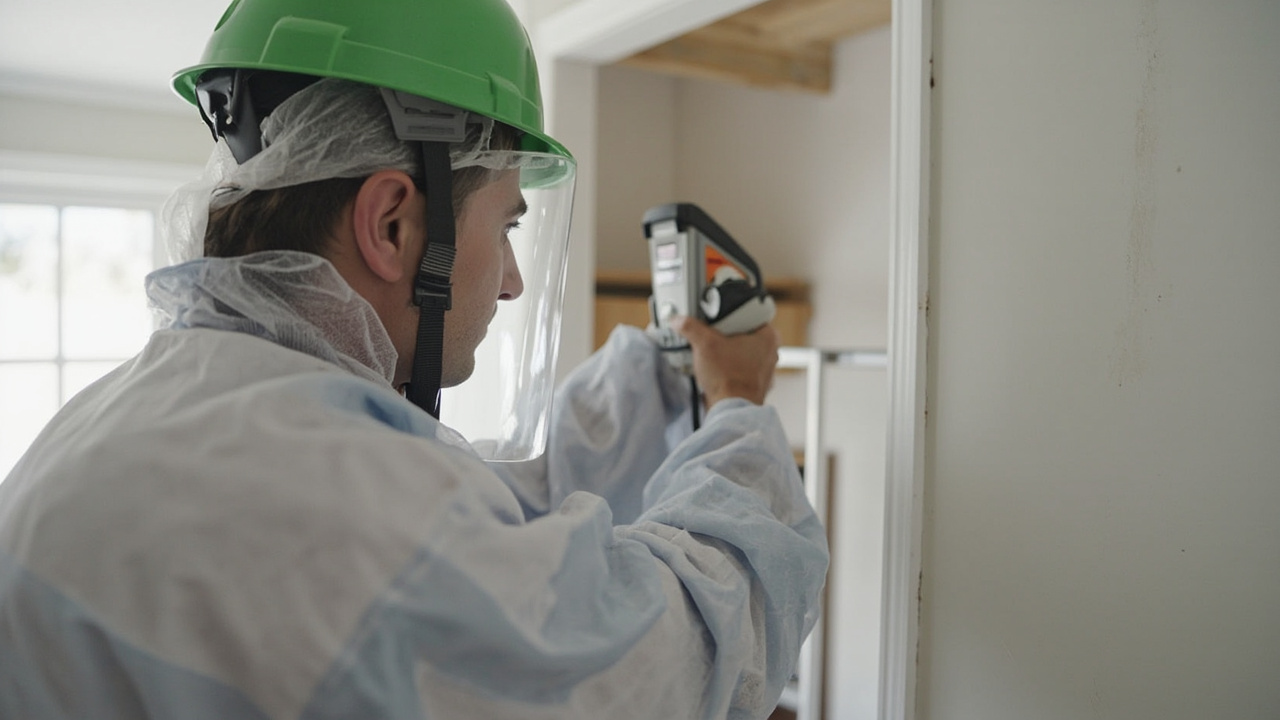
Call a professional remediation company when the affected area exceeds 10 square feet, when you find mold inside the wall cavity, when there is any possibility of Stachybotrys chartarum, when a household member has respiratory conditions or a compromised immune system, or when the moisture problem is ongoing and unresolved.
What IICRC S520 Standards Mean for Your Remediation
When you hire a remediation contractor, ask whether they follow IICRC S520 standards. The IICRC S520 is the professional reference standard for mold remediation published by the Institute of Inspection, Cleaning and Restoration Certification. It defines containment protocols, personal protective equipment requirements, air filtration standards using HEPA filtration, and clearance testing procedures. A contractor who references and follows S520 is doing the work correctly. A contractor who has never heard of it is a red flag.
Remediation Process and What to Expect
Professional mold remediation in a bedroom closet typically follows a defined sequence. First, the area is assessed and the moisture source is confirmed and stopped. Second, containment is established to prevent spores from spreading to other rooms during work. Third, affected materials are removed, bagged, and disposed of according to local Wayne County guidelines. Fourth, remaining surfaces are treated and HEPA vacuumed. Fifth, air scrubbers with HEPA filtration run to capture airborne spores. Finally, clearance testing confirms the space meets acceptable spore counts before reconstruction begins.
| Affected Area | Material Type | Typical Scope | Recommended Action |
|---|---|---|---|
| Under 10 sq ft | Non-porous (painted concrete, tile) | Surface only | DIY with proper PPE |
| Under 10 sq ft | Porous (drywall, wood) | Surface plus substrate risk | Professional assessment recommended |
| 10 to 30 sq ft | Any | Wall cavity likely involved | Licensed remediation contractor |
| Over 30 sq ft | Any | Structural materials affected | Full professional remediation, post-clearance testing |
| Any size | HVAC involved or confirmed Stachybotrys | Systemic contamination risk | Immediate professional remediation |
Permanent Prevention Strategies for Grosse Pointe Homes
Removing existing mold without fixing the underlying moisture condition is temporary. The mold will return. Prevention requires addressing the three core problems: inadequate insulation, poor airflow, and excess interior humidity.
Improving Airflow in Exterior Wall Closets
The simplest intervention costs almost nothing. Leave the closet door open for several hours each day, particularly during winter months. This allows conditioned air from your HVAC system to circulate through the space and prevents the stagnant microclimate from forming. If leaving the door open is not practical, louvered closet doors allow passive air movement even when closed.
Small battery-operated circulation fans placed inside the closet and set on a timer can also maintain air movement. The goal is preventing any single surface from staying cold and still long enough for condensation to accumulate.
Addressing Insulation and Thermal Bridging
For persistent problems in Grosse Pointe’s older housing stock, the permanent fix often involves improving the thermal performance of the exterior wall. This can mean adding rigid foam insulation to the interior face of the closet’s exterior wall, which raises the surface temperature above the condensation point even during the coldest Michigan nights. This is a targeted, cost-effective upgrade that does not require gut-renovating the entire wall assembly.
A building performance contractor or experienced remediation company can use an infrared camera to identify exactly where thermal bridging occurs on your closet walls. The cold spots on the camera image show you precisely where insulation is missing or degraded.
Managing Indoor Humidity Year-Round
The ideal indoor relative humidity range is 30 to 50 percent. Below 30 percent, you get dry skin, static electricity, and wood shrinkage. Above 50 percent, you feed mold. During Michigan winters, most homes without intentional humidity management run too high because of cooking, showering, and normal occupant activity.
A whole-home dehumidifier integrated with your HVAC system is the most effective solution for a home with chronic moisture issues. Portable dehumidifiers work for targeted spaces but require consistent emptying or a floor drain connection. A hygrometer placed inside the closet tells you exactly what conditions exist in that specific microenvironment.
| Relative Humidity Level | Condition | Mold Risk | Recommended Action |
|---|---|---|---|
| Below 30% | Too dry | Minimal | Consider humidifier in winter |
| 30% to 50% | Ideal | Low | Maintain current conditions |
| 50% to 60% | Elevated | Moderate, monitor closets | Improve ventilation, check closets |
| Above 60% | High | High, mold likely active | Dehumidify immediately, inspect problem areas |
| Above 70% | Saturated | Very high, active growth probable | Professional assessment and remediation |

Insurance Coverage for Closet Mold Damage
Whether your homeowner’s insurance covers mold remediation depends heavily on the cause and your specific policy language. Mold resulting from a sudden, accidental water event, such as a burst pipe, is typically covered. Mold resulting from long-term condensation and deferred maintenance is frequently excluded. Documentation matters enormously when you file a claim.
If you suspect an insurance claim may be possible, read our guide on how to get your Detroit home insurance to actually pay for water restoration before you start any cleanup work. Premature cleaning without documentation can undermine a valid claim. You should also review this resource on filing a successful water damage insurance claim to understand what adjusters look for and how to protect your position.
Other Moisture Damage Patterns in Older Metro Detroit Homes
Closet mold rarely exists in isolation. If your home has exterior wall moisture issues in closets, you may have related problems elsewhere. Older Detroit-area homes with hardwood floors often show moisture damage in the same areas where thermal bridging occurs, particularly near exterior walls and below windows. Learn more about protecting hardwood floors from water damage if you see any cupping or discoloration near exterior walls.
Finished basement spaces in Grosse Pointe and Wayne County homes with wall-to-wall carpet also carry significant mold risk when moisture intrusion occurs. If you have a finished basement, understand when wet carpet can be saved and when it needs to go, because the decision timeline is short.
Getting This Problem Resolved Before Next Winter
Cold, damp closet walls in Grosse Pointe are not a mystery and they are not inevitable. They are a predictable result of older wall assemblies meeting Great Lakes winters without adequate insulation or airflow. The physics do not change. What changes is whether you address the conditions or let another winter of condensation feed another season of mold growth.
If you have already found visible mold, do not wait to see if it spreads. Mold colonies do not stabilize on their own. If you are still in the early stages, the prevention strategies above can stop the problem before it requires professional intervention. And if the growth is already beyond what a DIY approach can handle safely, getting a professional assessment from a certified remediation contractor is the right next step.
We serve homeowners throughout Grosse Pointe, Grosse Pointe Park, Grosse Pointe Farms, Grosse Pointe Woods, and the broader Metro Detroit area. If your closet walls feel cold and damp every winter, reach out for an honest assessment of what you are dealing with and what it will take to fix it for good.
{
“@context”: “https://schema.org”,
“@type”: “BlogPosting”,
“headline”: “Why Your Grosse Pointe Closet Walls Feel Cold and Damp Every Winter”,
“description”: “Cold, damp closet walls in Grosse Pointe? Learn why older Detroit-area homes develop mold in bedroom closets and what to do before it spreads.”,
“wordCount”: 2175,
“datePublished”: “2026-08-04T08:43:00.000Z”,
“dateModified”: “2026-08-04T08:43:00.000Z”,
“inLanguage”: “en-US”,
“mainEntityOfPage”: {
“@type”: “WebPage”,
“@id”: “https://ironwoodwaterdamagerestorationdetroit.com”
},
“publisher”: {
“@type”: “LocalBusiness”,
“name”: “Ironwood Water Damage Restoration Detroit”,
“url”: “https://ironwoodwaterdamagerestorationdetroit.com”
},
“author”: {
“@type”: “Organization”,
“name”: “Ironwood Water Damage Restoration Detroit”,
“url”: “https://ironwoodwaterdamagerestorationdetroit.com”
},
“image”: {
“@type”: “ImageObject”,
“url”: “https://ironwoodwaterdamagerestorationdetroit.com/wp-content/uploads/2026/03/why-your-grosse-pointe-closet-walls-feel-cold-and-1.jpg”
}
}
{
“@context”: “https://schema.org”,
“@type”: “LocalBusiness”,
“name”: “Ironwood Water Damage Restoration Detroit”,
“url”: “https://ironwoodwaterdamagerestorationdetroit.com”,
“address”: {
“@type”: “PostalAddress”,
“addressLocality”: “Detroit”
},
“areaServed”: {
“@type”: “City”,
“name”: “Detroit”
}
}
{
“@context”: “https://schema.org”,
“@type”: “BreadcrumbList”,
“itemListElement”: [
{
“@type”: “ListItem”,
“position”: 1,
“name”: “Home”,
“item”: “https://ironwoodwaterdamagerestorationdetroit.com”
},
{
“@type”: “ListItem”,
“position”: 2,
“name”: “Blog”,
“item”: “https://ironwoodwaterdamagerestorationdetroit.com/blog”
},
{
“@type”: “ListItem”,
“position”: 3,
“name”: “Why Your Grosse Pointe Closet Walls Feel Cold and Damp Every Winter”
}
]
}
{
“@context”: “https://schema.org”,
“@type”: “Service”,
“serviceType”: “Water Damage Restoration”,
“provider”: {
“@type”: “LocalBusiness”,
“name”: “Ironwood Water Damage Restoration Detroit”,
“url”: “https://ironwoodwaterdamagerestorationdetroit.com”
},
“areaServed”: {
“@type”: “City”,
“name”: “Detroit”
},
“description”: “Cold, damp closet walls in Grosse Pointe? Learn why older Detroit-area homes develop mold in bedroom closets and what to do before it spreads.”
}