

Window Well Flooding Cleanup and Prevention in Grosse Pointe Farms and Greater Detroit
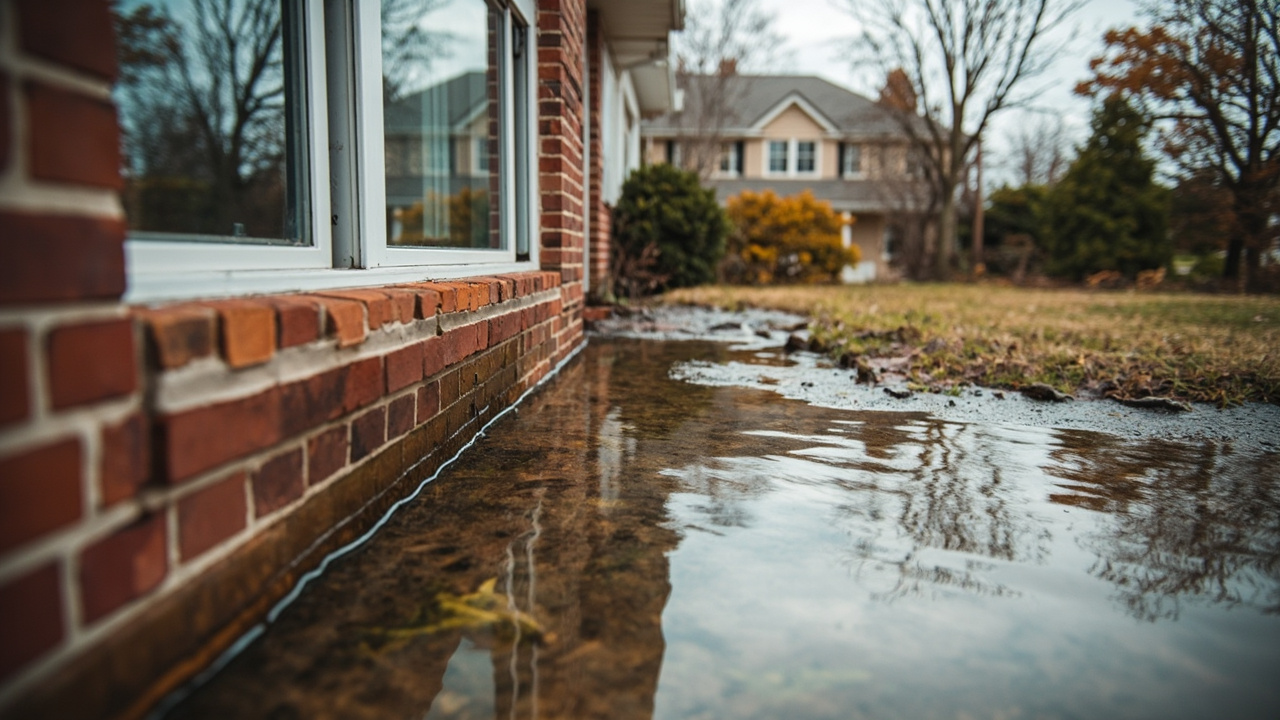
Your window well is full of water. Maybe it already pushed through the window frame and soaked your basement carpet. Maybe you caught it in time and you are standing there with a shop vac wondering what to do next. Either way, this problem does not fix itself, and it will happen again unless you address the root cause.
Window well flooding is one of the most common basement water problems we see in Grosse Pointe Farms, and it is almost always misdiagnosed. Homeowners clean out the leaves, put a plastic cover over it, and call it solved. Then the next heavy rain hits and the cycle starts over.
This guide walks you through what to do right now, why it keeps happening in this specific part of metro Detroit, and what a permanent fix actually looks like.
What to Do Right Now When Your Window Well Is Full
Before anything else, check whether water has already entered the basement. If it has, do not walk into standing water without first cutting power to that area of the home. Water and electrical panels do not mix, and basements in the Farms often have outlets, sump pump wiring, and HVAC equipment near floor level.
Once you have confirmed the space is electrically safe, follow these steps in order.
- Remove standing water from the window well using a submersible pump or a wet/dry shop vac. A standard shop vac handles shallow water well. If the well has more than six inches of water, a small submersible pump is faster.
- If water entered the basement, extract it immediately. Every hour of dwell time drives moisture deeper into concrete block, rim joists, and wall framing.
- Open basement windows on the opposite side of the house to start air movement. Do not point fans at wet walls yet. You want air circulation, not forced drying that traps moisture inside the wall cavity.
- Document everything with photos and video before you clean up. Your insurance adjuster needs this documentation. See our guide on how to get your Detroit home insurance to actually pay for water restoration before you start throwing things away.
- Call a restoration professional if water entered the living space. Hidden moisture inside walls causes mold growth within 24 to 48 hours at Michigan summer humidity levels.
Why Window Wells in Grosse Pointe Farms Flood More Than You Think They Should
Grosse Pointe Farms sits on some of the heaviest clay-dominant soil in Wayne County. That clay is the core of the problem. Clay absorbs water slowly and releases it even more slowly. During a significant rain event, the ground around your foundation becomes saturated before the water has anywhere to go.
Window wells are essentially small bowls dug into the ground next to your foundation. When the surrounding soil is saturated, water migrates toward the lowest point of least resistance. That point is your window well.
The Four Most Common Causes in This Area
Perimeter drain failure. Most homes in Grosse Pointe Farms built before the 1990s have clay tile perimeter drains. These are sections of porous clay pipe installed at the footing level to intercept groundwater before it reaches the foundation wall. After decades, clay tile fractures, collapses, or fills with root intrusion from the large mature trees that line most streets in the Farms. When the perimeter drain fails, hydrostatic pressure builds against the foundation and finds the window well as an outlet.
Clogged window well drain. Most window wells have a small drain at the bottom that connects to the perimeter drain system or daylight drains. When that drain clogs with gravel fines, decomposed organic matter, or clay migration, water has nowhere to go except up and through the window frame.
Improper yard grading. The ground around your home should slope away from the foundation at a minimum of one inch per foot for the first six feet. In the Farms, decades of landscaping, settled soil, and added garden beds often reverse this grade. Water flows toward the house instead of away from it, pooling directly in the window well area.
Sump pump discharge too close to the foundation. This one surprises homeowners. If your sump pump discharges within three to four feet of the foundation, it re-saturates the soil it just drained. That water works its way back into the window well and the cycle continues. Wayne County building code requires discharge to daylight, but enforcement on existing systems is inconsistent.

How Grosse Pointe Farms Soil Makes Everything Worse
Detroit and its eastern suburbs sit on a geological deposit called lacustrine clay, left behind by ancient Lake Erie drainage patterns. According to the U.S. Geological Survey, this type of clay-heavy glacial deposit has very low permeability, meaning water moves through it at a fraction of the rate it would move through sandy or loamy soil.
For homeowners between Mack Avenue and the Lake St. Clair shoreline, this means that even a moderate rain event, around one inch, can saturate the top two feet of soil quickly. The clay does not drain. It holds water against your foundation for hours after the rain stops.
Combine that with Detroit’s documented average of 33 inches of annual precipitation spread across heavy spring and late-summer storms, and you have a structural water problem that never fully goes away on its own.
What a Professional Restoration Response Looks Like
When a certified restoration crew responds to a window well flooding call in Grosse Pointe Farms, the process is methodical. Skipping steps creates mold problems that cost more to fix than the original water damage.
| Phase | What Happens | Typical Timeframe |
|---|---|---|
| Water Extraction | Truck-mount or portable extractors remove standing water from basement floors, window well, and saturated materials | 1 to 3 hours on-site |
| Moisture Mapping | Thermal imaging and moisture meters locate water inside walls, under flooring, and in framing cavities | 1 hour |
| Structural Drying | Commercial dehumidifiers and air movers run continuously. IICRC S500 standards require monitoring until materials reach baseline moisture levels | 3 to 5 days average |
| Antimicrobial Treatment | Applied to all affected surfaces to prevent mold colonization, especially on wood framing and drywall paper | Day 1 and day 3 |
| Final Moisture Clearance | All readings must return to pre-loss baseline before equipment is removed and rebuild begins | End of drying cycle |
The IICRC (Institute of Inspection Cleaning and Restoration Certification) sets the professional standard for water damage response. Any crew working in your home should follow IICRC S500 protocols for water damage and S520 for mold remediation if secondary growth is discovered.
If your carpet or flooring took a hit, the question of what to save versus what to replace depends on the water category and how long it sat. Read our breakdown on whether wet carpet can be saved or needs to go for a detailed look at that decision.
Mold Risk After Window Well Flooding
Grosse Pointe Farms summers average high humidity levels. When moisture from window well flooding soaks into drywall, fiberglass insulation batts, or wood framing, mold spores activate fast. The 24 to 48 hour window is real.
The biggest mistake homeowners make is running a box fan against a wet wall and thinking the problem is handled. If moisture is inside the wall cavity, surface drying does nothing. It often makes conditions inside the wall worse by creating a warm, moist environment that accelerates growth.
If you are reading this days after the event and you notice a musty smell, discoloration on drywall, or efflorescence on your block foundation wall, do not try to bleach it away. Read our article on why bleach will not fix basement mold and when to call a pro before you waste time on a fix that does not work.

Long-Term Solutions That Actually Stop Window Well Flooding
Temporary fixes include plastic covers and cleaning out leaves. Permanent fixes address the drainage system underneath the well and around the foundation. Here is what works in the heavy clay soil of the Grosse Pointe corridor.
Custom Window Well Covers
A properly fitted polycarbonate or galvanized steel cover keeps rainwater out of the well itself. This is a low-cost starting point, but it is not sufficient on its own if your perimeter drain is already compromised. The cover reduces the volume of water entering the well. It does not fix hydrostatic pressure from the surrounding soil.
Window Well Gravel Bed Replacement
Most window wells should have a gravel bed at the bottom, at minimum 12 inches deep, filled with clean washed stone (often 3/4 inch crushed limestone). Over time this gravel bed becomes filled with clay migration and organic matter, losing its drainage capacity. Replacing the gravel bed and installing a filter fabric liner around it restores drainage and slows clay intrusion.
French Drain Installation or Perimeter Drain Cleaning
A French drain (a gravel-filled trench with a perforated pipe) installed around the window well and connected to a daylight outlet or sump basin intercepts groundwater before it reaches the well. For homes with existing perimeter drain systems, hydro-jetting the drain lines clears root intrusion and clay fines that choke flow. A camera inspection of the line first tells you whether cleaning is possible or whether sections need full replacement.
Yard Regrading
Correcting negative grade around the foundation is one of the highest-return investments for basement water problems. A landscaper or grading contractor brings in compacted fill soil and slopes it away from the home. For the typical Grosse Pointe Farms lot, this work is often completed in one day and dramatically reduces the volume of surface water reaching the foundation.
Sump Pump Discharge Relocation
If your sump pump discharges too close to the house, extending the discharge line to daylight at least 10 feet from the foundation stops the re-saturation cycle. Some homeowners connect the discharge to a dry well or a pop-up emitter near the street curb line, which works well on the smaller lots common in this part of Wayne County.
Comparing Window Well Drainage Solutions Side by Side
| Solution | Best For | Addresses Root Cause? | Typical Lifespan |
|---|---|---|---|
| Window well cover only | Minor splash and debris | No | 5 to 10 years |
| Gravel bed replacement | Clogged drain at well base | Partially | 8 to 15 years |
| French drain around well | Saturated soil and poor drainage | Yes | 20 to 30 years |
| Perimeter drain cleaning | Existing tile drain with partial blockage | Yes, if drain is intact | 5 to 10 years post-cleaning |
| Perimeter drain replacement | Collapsed or severely deteriorated tile | Yes | 25 to 40 years |
| Yard regrading | Negative slope toward foundation | Yes | 10 to 20 years |
| Sump pump discharge relocation | Pump re-saturating soil near foundation | Yes | Permanent with maintenance |
What to Tell Your Insurance Company
Coverage for window well flooding depends on what caused it. Most standard homeowners policies in Michigan cover sudden and accidental water intrusion, such as a storm event that overwhelmed a functioning drain system. They typically exclude damage from long-term seepage or a drain that was already failing and never maintained.
The difference between a covered claim and a denied claim often comes down to how the damage is documented and how it is described in your initial report. Before you file, read our full breakdown on filing a successful water damage insurance claim so you understand what language matters and what documentation your adjuster will require.
Signs You Need a Professional, Not a DIY Fix
Some window well flooding events are minor enough to handle yourself. Others require a licensed restoration team. Here is how to tell the difference.
- Water entered the basement and touched flooring, drywall, or insulation. Professional extraction and drying equipment is needed to prevent mold.
- The window frame itself is damaged, warped, or showing wood rot. Structural damage requires a contractor, not just a wet vac.
- You smell a musty odor more than 24 hours after the event. Mold growth has likely started inside wall cavities or behind insulation.
- This is the second or third time the same window well has flooded. Repeat flooding means the drainage system is failing, not just overwhelmed.
- The water level in the well reached the window sill or glass. That volume means significant soil saturation and likely perimeter drain failure.
- You have a finished basement. Finished spaces trap moisture behind walls and under flooring where it is invisible until it becomes a major mold problem.
Why Grosse Pointe Farms Homes Need Neighborhood-Specific Experience
Homes along Kercheval, Provençal Road, and the streets running down toward the Lake St. Clair waterfront have specific characteristics that matter in restoration work. The original construction on many of these homes dates back generations, with stone or brick foundations, clay tile drain systems, and basements that were never designed to handle modern storm water volumes.
The sewage and storm water infrastructure in this part of Wayne County also plays a role. During heavy rain events, combined sewer systems can back-pressure into drain lines connected to window well drains and perimeter drains. This is a different failure mode than simple soil saturation, and it requires a different response.
A restoration crew that only works in new construction suburbs will miss these nuances. You need someone who has worked in these specific homes, understands the local soil conditions, and knows what to look for in a 70-year-old drain system.
If hardwood floors took water damage during the event, the drying timeline and process are different from carpet or tile. Our guide on how to save hardwood floors after a water leak covers the specific steps that give wood flooring the best chance of survival.
Get the Problem Diagnosed Correctly Before You Spend Money
The worst outcome is spending money on a window well cover and gravel bed refresh when your perimeter drain is already collapsed 10 feet away. A proper diagnostic starts with a camera inspection of the drain line, a review of grading around the affected wall, and a check of sump pump discharge location.
If you are in Grosse Pointe Farms or anywhere along the eastern metro corridor from Grosse Pointe Park to St. Clair Shores and your window well has flooded more than once, the drain system below it needs to be looked at by someone who can actually see what is happening underground.
Call a certified water damage restoration professional, get the diagnostic done right, and fix the real problem. Your basement and your insurance rate will both be better for it.
{
“@context”: “https://schema.org”,
“@type”: “BlogPosting”,
“headline”: “Why Your Grosse Pointe Farms Window Wells Keep Filling Up with Water”,
“description”: “Window wells flooding in Grosse Pointe Farms? Learn the real causes, what to do right now, and how to prevent it from happening again.”,
“wordCount”: 2405,
“datePublished”: “2026-04-09T08:55:00.000Z”,
“dateModified”: “2026-04-09T08:55:00.000Z”,
“inLanguage”: “en-US”,
“mainEntityOfPage”: {
“@type”: “WebPage”,
“@id”: “https://ironwoodwaterdamagerestorationdetroit.com”
},
“publisher”: {
“@type”: “LocalBusiness”,
“name”: “Ironwood Water Damage Restoration Detroit”,
“url”: “https://ironwoodwaterdamagerestorationdetroit.com”
},
“author”: {
“@type”: “Organization”,
“name”: “Ironwood Water Damage Restoration Detroit”,
“url”: “https://ironwoodwaterdamagerestorationdetroit.com”
},
“image”: {
“@type”: “ImageObject”,
“url”: “https://ironwoodwaterdamagerestorationdetroit.com/wp-content/uploads/2026/03/why-your-grosse-pointe-farms-window-wells-keep-fil-1.jpg”
}
}
{
“@context”: “https://schema.org”,
“@type”: “LocalBusiness”,
“name”: “Ironwood Water Damage Restoration Detroit”,
“url”: “https://ironwoodwaterdamagerestorationdetroit.com”,
“address”: {
“@type”: “PostalAddress”,
“addressLocality”: “Detroit”
},
“areaServed”: {
“@type”: “City”,
“name”: “Detroit”
}
}
{
“@context”: “https://schema.org”,
“@type”: “BreadcrumbList”,
“itemListElement”: [
{
“@type”: “ListItem”,
“position”: 1,
“name”: “Home”,
“item”: “https://ironwoodwaterdamagerestorationdetroit.com”
},
{
“@type”: “ListItem”,
“position”: 2,
“name”: “Blog”,
“item”: “https://ironwoodwaterdamagerestorationdetroit.com/blog”
},
{
“@type”: “ListItem”,
“position”: 3,
“name”: “Why Your Grosse Pointe Farms Window Wells Keep Filling Up with Water”
}
]
}
{
“@context”: “https://schema.org”,
“@type”: “Service”,
“serviceType”: “Water Damage Restoration”,
“provider”: {
“@type”: “LocalBusiness”,
“name”: “Ironwood Water Damage Restoration Detroit”,
“url”: “https://ironwoodwaterdamagerestorationdetroit.com”
},
“areaServed”: {
“@type”: “City”,
“name”: “Detroit”
},
“description”: “Window wells flooding in Grosse Pointe Farms? Learn the real causes, what to do right now, and how to prevent it from happening again.”
}