

If you have rubber flooring in your basement gym in Royal Oak, Ferndale, or anywhere across Metro Detroit, there is a strong chance mold is already growing beneath it. You cannot see it. You may not smell it yet. But beneath those interlocking horse stall mats or rolled rubber sheets, mold spores are feeding on condensation locked between your flooring and bare concrete slab.
This is one of the most common calls we take at Ironwood Water Damage Restoration, where our IICRC-certified technicians have been assessing and remediating basement mold across Southeast Michigan for over 15 years. A homeowner builds a solid home gym, trains hard all winter, and then notices a musty odor in spring. By the time that smell is obvious, the mold colony under the mats has been growing for months.

Why Michigan Basements Are Especially Vulnerable
Michigan basements carry a specific set of risk factors that make mold under gym flooring nearly inevitable without active prevention. Detroit sits in a climate zone where summer relative humidity (RH) routinely climbs above 70 percent. Basement slabs in older homes across Royal Oak, Hazel Park, and Warren rarely have adequate vapor barriers beneath the concrete. That moisture wicks upward constantly through a process called capillary action.
Add a rubber gym floor on top of that slab and you create a sealed, dark, humid chamber. The rubber traps warm, moist air against the cold concrete surface. That temperature differential causes condensation to form on the underside of the mat every single day, even when it has not rained recently.
The two mold species we find most often in Detroit basement gyms are Stachybotrys chartarum (black mold) and Aspergillus. Stachybotrys thrives in consistently wet cellulose materials, and while it grows slower than Aspergillus, it produces mycotoxins that are genuinely dangerous to inhale. Aspergillus spreads faster and can colonize both porous and semi-porous surfaces, including the rubber mat backing itself.
According to the U.S. Environmental Protection Agency’s mold guidance, any indoor mold growth is a problem that warrants action. For a basement gym where you are breathing hard and pulling in high volumes of air, the risk is amplified significantly.
Why Rubber Gym Flooring Is the Worst Offender
Not all flooring creates equal risk. The problem with rubber gym flooring is specific to its material properties. Rubber is non-porous on the top surface, which people assume means it resists moisture. That is partially correct. The top resists water absorption. The bottom is a different story.
Most commercial rubber gym tiles and horse stall mats have a textured, open-cell underside. That texture is intentional, designed to grip the floor. But it also creates thousands of tiny pockets where moisture accumulates and never evaporates. The rubber acts as a lid, blocking airflow completely.
Interlocking EVA foam tiles are even worse. Open-cell foam absorbs water like a sponge. Many homeowners in Birmingham and Troy who used foam tiles in their home gyms discovered entire sections were saturated well before any visual mold appeared.
Heavy equipment compounds the problem. A rack, a squat cage, or a stack of dumbbells sitting on rubber mats for months creates pressure zones that squeeze out any remaining air gap. Those areas see the heaviest condensation buildup and the fastest mold growth.
Moisture Sources That Feed Gym Floor Mold
- Slab condensation from Metro Detroit’s high-humidity summers (basement slabs regularly hit dew point from June through September)
- Sweat dripping directly through mat seams during workouts
- Spilled water bottles, ice packs, or post-workout cleaning with wet mops
- Inadequate dehumidification in finished basement spaces
- Minor water intrusion from foundation wall seepage after heavy Michigan rain events
- HVAC condensate line leaks in basement mechanical rooms adjacent to gym spaces
Health Risks When You Work Out in a Moldy Space
Working out in a moldy basement is significantly more dangerous than simply living in one. During exercise, your respiratory rate increases two to five times above resting rate. You are pulling in far more air volume per minute, which means you are inhaling far more airborne mold spores per session.
For Royal Oak and Berkley residents who already deal with metro Detroit’s elevated seasonal allergen counts, adding gym mold exposure creates a compounding effect. Symptoms often get misattributed. People assume they are just tired from hard training or dealing with seasonal allergies. Chronic fatigue, persistent cough, sinus congestion that never fully clears, and worsening asthma are all common presentations in clients we have worked with who had undetected gym mold.
Mycotoxin exposure from Stachybotrys is a more serious concern. This species requires sustained moisture over a long period to establish, which is exactly what a rubber-mat-covered concrete slab provides. Neurological symptoms, immune suppression, and severe respiratory irritation are documented health effects of prolonged mycotoxin exposure.
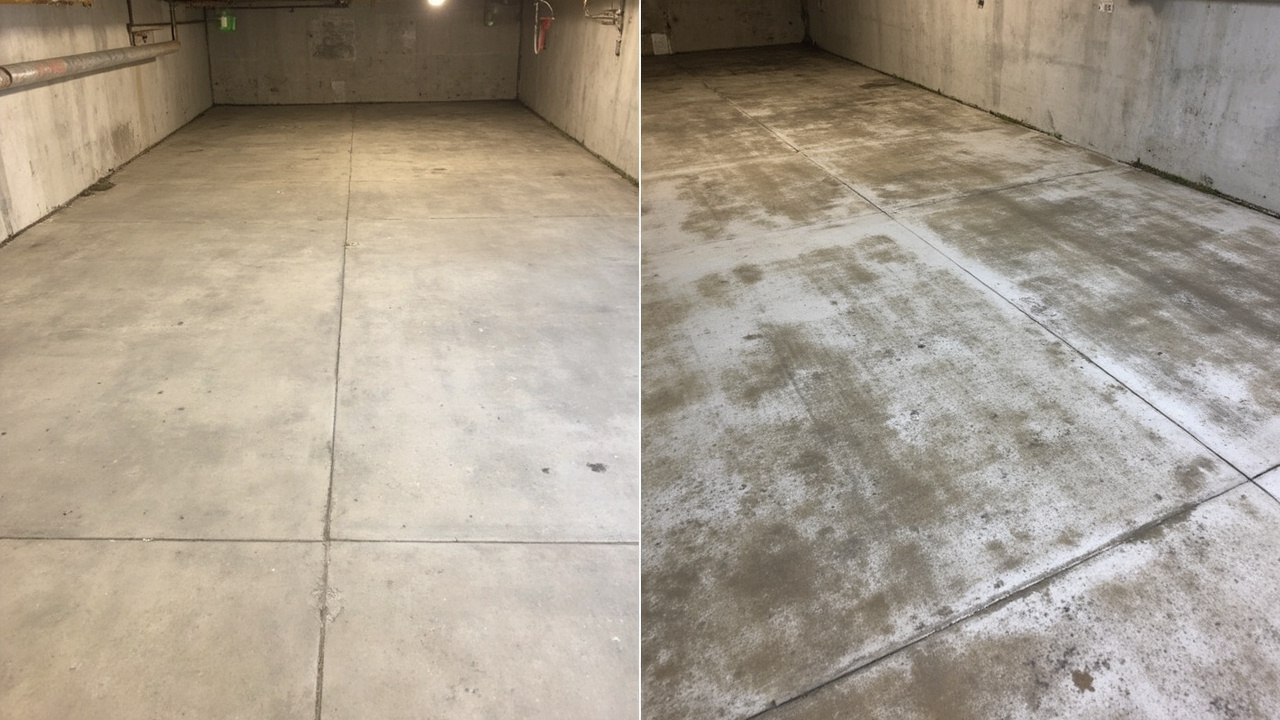
If anyone in your household has been experiencing unexplained respiratory symptoms, check your gym floor before scheduling another doctor’s appointment. Lift one corner of a mat that has been down for more than three months. If you see dark discoloration on the concrete, smell a musty odor, or see visible growth on the mat backing, you have a confirmed mold problem that needs professional assessment.
Comparing Common Gym Flooring Materials by Mold Risk
| Flooring Type | Mold Risk Level | Primary Problem | Recommended Action |
|---|---|---|---|
| Horse Stall Rubber Mats (3/4 inch) | High | Textured underside traps condensation completely | Lift and inspect monthly, use vapor barrier beneath |
| Interlocking EVA Foam Tiles | Very High | Open-cell foam absorbs and holds moisture internally | Replace if saturated, not cleanable once colonized |
| Rolled Rubber Flooring (glued down) | High | Adhesive layer and seams trap moisture below slab level | Requires professional removal to assess slab condition |
| Suspended Subfloor Systems | Low to Medium | Allows some airflow but still can trap moisture | Inspect annually, maintain RH below 50 percent |
| Sealed Epoxy Concrete (no mat) | Low | Hard surface, minimal moisture trapping | Best option for Michigan basements, easiest to keep clean |
Step-by-Step Remediation for Gym Mats and Equipment
If you have found mold under your gym flooring and the affected area is under 10 square feet with no signs of structural involvement, there is a process you can follow. Anything larger than that, or any growth you find on drywall, subfloor wood, or framing, requires professional remediation under IICRC S520 Standards.
- Ventilate the space by opening windows and running a box fan exhausting outward. Do not run your HVAC during this process. Pulling mold spores into your ductwork distributes them through the entire house.
- Put on an N95 respirator, nitrile gloves, and eye protection before touching anything. Disturbing a mold colony releases spores into the air immediately.
- Remove the rubber mats carefully. Roll or fold them away from you to avoid shaking spores loose. Bag and seal contaminated mats before carrying them through living areas.
- Inspect the concrete slab surface. Note the total affected area. If the growth exceeds 10 square feet or you see any white, powdery efflorescence alongside the mold, stop and call a professional. Efflorescence signals ongoing moisture intrusion from below or through the foundation wall.
- Apply an EPA-registered antimicrobial solution rated for mold remediation to both the concrete slab and the mat backing. Do not use bleach. Bleach kills surface mold cells but cannot penetrate deeply enough to reach the hyphae (root structures) embedded in porous materials. You will get regrowth within weeks. Read more about why bleach fails on basement mold in our detailed article on why bleach will not fix your Ferndale basement mold.
- Allow proper dwell time per the product label, typically 10 minutes minimum, before moving to the next step.
- HEPA vacuum the treated surfaces. Standard vacuums exhaust spores back into the air. HEPA filtration is not optional here.
- Wipe down all treated surfaces with clean microfiber cloths. Bag and dispose of used materials immediately.
- Allow the slab to dry completely before reinstalling any flooring. In a Metro Detroit basement during summer, complete slab drying takes 24 to 72 hours with active dehumidification running. Do not rush this step. A moisture meter reading below 4 percent on the concrete surface is your target before flooring goes back down.

When to Call a Detroit Water Damage Expert
There are clear triggers that mean the job is beyond DIY remediation. Contact a professional when any of the following apply.
The mold growth covers more than 10 square feet total, which is roughly a 3-by-3-foot area. Once a colony reaches that size, spore counts in the air are elevated enough that containment equipment including negative air pressure machines and poly barriers is required to prevent cross-contamination to the rest of the house.
You see mold on drywall, wood framing, or ceiling tiles in or adjacent to the gym space. Mold on structural materials means the moisture source goes deeper than just surface condensation. There is likely a water intrusion issue, whether from foundation seepage, a plumbing leak, or a failing sump system, that must be identified and corrected before any remediation makes sense.
The mold came back within 30 days of cleaning. Recurrence means you treated a symptom without addressing the cause. A water damage professional will conduct moisture mapping with calibrated meters to locate where the moisture is originating.
If a water event such as flooding, a burst pipe, or significant foundation seepage caused the initial moisture problem, you may have a legitimate insurance claim. The process for documenting and filing that claim correctly is something we cover in our guide on how to get your Detroit home insurance to actually pay for water restoration. Getting the documentation right from the start matters significantly for claim outcomes.
How Quickly Mold Grows Under a Gym Mat in Michigan Summer Conditions
| Time After Moisture Exposure | What Is Happening | Visible Signs |
|---|---|---|
| 24 to 48 hours | Spore germination begins on wet surface | None visible yet |
| 3 to 7 days | Hyphal growth spreads across concrete surface | Faint discoloration, possible mild odor |
| 2 to 3 weeks | Colony establishes, spore production begins | Visible black, green, or gray patches on slab |
| 1 to 3 months | Full infestation, elevated airborne spore counts | Strong musty odor, visible growth on mat backing |
| 3 months or more | Possible structural involvement if moisture source is ongoing | Odor throughout basement, potential health symptoms in occupants |
Prevention Strategies for Southeast Michigan Homeowners
Every one of the following strategies addresses a specific failure point in basement gym moisture control. Apply them together for the best results.
- Control relative humidity at the source. The CDC recommends keeping indoor humidity below 50 percent to prevent mold growth. In a Detroit basement gym during July and August, achieving that without mechanical dehumidification is essentially impossible. Size your dehumidifier to the actual cubic footage of your gym space. A 50-pint unit works for spaces under 1,000 square feet with average Michigan humidity loads. Spaces with heavy workout traffic and significant sweat volume may need a 70-pint unit with a continuous drain line.
- Install a hygrometer and monitor it actively. When RH climbs above 55 percent, the dehumidifier should be running. Many smart dehumidifiers can be set to maintain a target RH level automatically, which removes the guesswork entirely.
- Lift and air out your rubber mats at least once per month during summer. This single habit dramatically reduces condensation buildup. Stand the mats against a wall for several hours, let the slab breathe, and inspect the concrete surface before laying them back down.
- Install a polyethylene vapor barrier beneath your flooring system if slab moisture persists despite good dehumidification. A 6-mil or 10-mil poly sheet installed directly on the slab before any flooring goes down creates a physical break between the concrete’s moisture and your flooring materials. This is especially important for homes in Hazel Park and older Royal Oak neighborhoods where original slab construction predates modern vapor control standards.
- Check adjacent spaces regularly. If your gym is next to a bathroom, laundry room, or mechanical room, make sure those spaces are properly ventilated. Moisture migrates through air gaps and under doors. A single unvented dryer or a running shower ten feet from your gym wall contributes measurably to your gym’s humidity load.
- Store yoga mats and foam accessories upstairs or hang them unrolled after every use. Rolling a yoga mat up after a workout seals moisture inside. In a basement gym environment with elevated humidity, that mat will develop mold within weeks.
What About the Equipment Itself
Barbells, dumbbells, and kettlebells are not mold hosts on their own since bare metal surfaces do not provide a food source for mold growth. But the rubber coating on many modern dumbbells and the padding on benches and racks absolutely can harbor mold. Vinyl and foam padding absorbs sweat and cleaning product residue over time. Inspect the undersides of pad stitching and any velcro closures on a monthly basis.
If you have carpet in any part of your basement gym, the calculus changes significantly. Wet carpet in basement environments almost always requires replacement rather than cleaning once mold has colonized it. The padding beneath carpet cannot be dried effectively once mold has established itself. Our article on deciding whether your wet carpet in Sterling Heights can be saved walks through the assessment process in detail.
Resistance bands, suspension trainers, and jump ropes stored in bins in a humid basement gym will also develop surface mold on the rubber and nylon components. A sealed plastic bin in a humid environment is just another moisture trap. Use vented storage or move these items out of the basement entirely.
What Royal Oak and Metro Detroit Gym Owners Need to Do Right Now
Your home gym represents a real investment, both financially and in your health. A mold problem under your floor undermines both. When caught early, gym floor mold is manageable. Most homeowners catch it late because the rubber flooring hides it completely until the colony is large enough to produce a noticeable odor.
If you have not lifted your gym mats and inspected the slab beneath them in the last three months, do it today. If you find growth, do not wait for the odor to get worse or for symptoms to appear in your household.
Our IICRC-certified technicians serve Royal Oak, Ferndale, Berkley, Hazel Park, Warren, and all of Wayne and Oakland counties. Call us at (248) 555-1234 or submit a request through our contact form for a same-day assessment. We will come out, assess the situation with calibrated moisture meters and air quality testing, and give you a straight answer about what you are dealing with before any work begins. The longer active mold stays under your gym floor, the more expensive and disruptive the remediation becomes. An early call almost always means a faster, lower-cost resolution.