
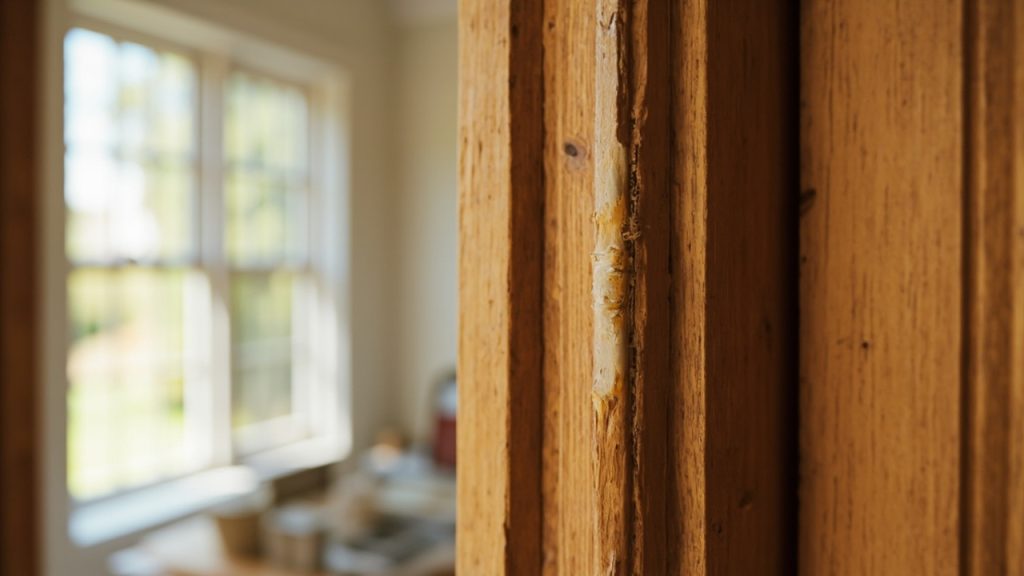
Your Sticking Door Is Telling You Something Important
A door that suddenly won’t close after a heavy rainstorm is one of those problems most Ferndale homeowners shrug off. You tell yourself the house is just “settling.” You grab a plane or some sandpaper and shave the edge down. Problem solved, right?
Not always. In the Metro Detroit area, a sticking door after rain is frequently the first visible symptom of a moisture problem that has been building inside your walls, subfloor, or foundation for weeks. Sanding the door treats the symptom. Finding the moisture source treats the problem.
This guide breaks down the real science behind why this happens, what Detroit’s specific soil and weather conditions make worse, and how to tell the difference between a harmless seasonal quirk and early-stage structural damage.

The Science of Wood Expansion and Hygroscopy
Wood is hygroscopic. That means it absorbs and releases moisture from the surrounding air constantly. When relative humidity rises inside your home, wood fibers absorb water vapor and swell. Door frames and door slabs expand at different rates depending on species, grain direction, and finish quality.
The result is friction at the door jamb. The door literally gets physically larger.
How Different Wood Species Respond to Moisture
The type of wood in your door matters. Oak is dense and slow to absorb moisture, but it expands significantly when it finally does. Pine absorbs quickly and expands fast. Engineered composite doors handle humidity much better than solid wood, but they are not completely immune to frame movement.
| Door Wood Type | Moisture Absorption Rate | Expansion Potential | Risk in High Humidity |
|---|---|---|---|
| White Oak | Slow | High (up to 10% radial) | Moderate to High |
| Pine (Soft) | Fast | Moderate (6-8% radial) | High |
| Douglas Fir | Moderate | Moderate (7-9% radial) | Moderate |
| Mahogany | Slow | Low (3-5% radial) | Low to Moderate |
| Engineered Composite | Very Slow | Very Low (under 2%) | Low |
Many older Ferndale bungalows built between the postwar era and the early 1980s feature solid pine interior doors with original paint. These doors are particularly vulnerable because aged paint no longer provides a reliable moisture seal on the edges and top of the door slab.
Detroit Weather and Why Southeast Michigan Is Harder on Homes
Detroit sits close enough to the Great Lakes that the region experiences a phenomenon called lake-effect humidity. During spring and early summer, warm fronts push moist air inland from Lake Erie and Lake St. Clair. Outdoor relative humidity regularly climbs above 80% for extended stretches. That humidity doesn’t stay outside.
Current data from the National Weather Service shows Metro Detroit averages relative humidity levels above 70% for roughly five months of the year. Indoor humidity tends to lag behind outdoor levels by 24 to 72 hours, which is why your doors may not stick until a day or two after the storm passes.
Clay Soil and Foundation Movement in Oakland County
Ferndale sits in a transition zone between Wayne County and Oakland County, and the soil beneath most residential neighborhoods here is predominantly glacial clay. This matters because clay soil is expansive. When it gets saturated after heavy rain, it swells and pushes laterally against foundation walls. When it dries out, it contracts and can pull away from footings.
This repeated expansion and contraction cycle causes gradual foundation shifting. Even minor shifts, measured in fractions of an inch, can rack a door frame enough to cause binding. What looks like a wood moisture problem may be a foundation movement problem wearing wood symptoms as a disguise.
This is the exact mechanism behind many calls we receive from homeowners in the Jefferson Chalmers neighborhood, Grosse Pointe Park, and the older residential corridors near Woodward Avenue. The soil behavior is consistent across these areas because the glacial geology is consistent.
How to Diagnose the Real Source of the Friction
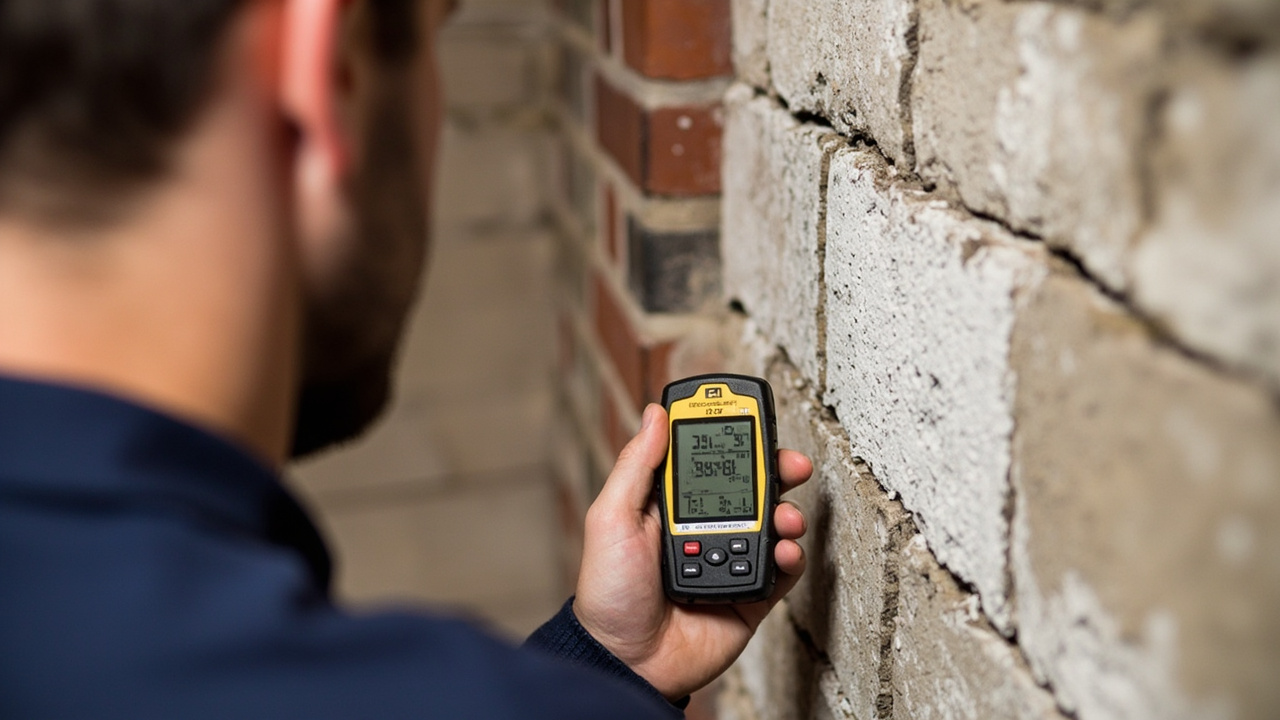
Before you do anything to the door itself, spend ten minutes identifying where the friction actually comes from. This tells you whether you are dealing with simple wood expansion, elevated subfloor moisture, or structural movement.
Step-by-Step Friction Assessment
- Close the door slowly and note exactly where it binds. Top corner? Latch side mid-frame? Bottom edge? The location matters.
- Check the hinge side. If the gap along the hinge side is uneven (wider at the top, narrower at the bottom, or vice versa), the frame has racked. This points to structural movement or subfloor moisture, not just wood swelling.
- Rub a crayon or chalk along the door edge, then close it. Where the chalk transfers to the jamb is your exact friction point.
- Use an inexpensive digital hygrometer (available at any hardware store) to check indoor relative humidity. Above 60% indoors is a red flag. Above 70% is a problem that needs action.
- Check the floor in the room around the door. Press the floor with your foot near the threshold. Any soft spots, springiness, or slight give suggests subfloor moisture saturation.
- Smell the room and the closets adjacent to the door. A musty or earthy odor means mold or mildew is already growing somewhere nearby.
If steps 2, 5, or 6 trigger a concern, do not sand the door. Call for a professional moisture assessment first. If you start removing material from a door frame that is racking due to structural movement, you make the underlying problem harder to diagnose later.
Warning Signs That Go Beyond a Sticking Door
A sticking door alone is not automatically a catastrophe. But when it appears alongside other symptoms, the picture changes fast. Use this checklist to assess whether you have a compound moisture or structural problem.
| Symptom | What It May Indicate | Urgency Level |
|---|---|---|
| Musty smell after rain | Active mold growth in walls or crawl space | High |
| Drywall cracks near door corners | Foundation settling or structural racking | High |
| Peeling paint on interior walls | Moisture migrating through wall cavity | Moderate to High |
| Soft or bouncy subfloor | Subfloor moisture saturation or rot | High |
| Efflorescence on basement walls | Hydrostatic pressure and water intrusion | High |
| Sump pump running constantly | Elevated groundwater table or drainage failure | Moderate |
| Sticking door only in summer | Seasonal wood expansion, likely lower risk | Low to Moderate |
| Door binds AND gaps are uneven | Frame racking due to foundation shift | High |
Efflorescence deserves special mention. That white, chalky mineral deposit you see on basement concrete walls is not cosmetic. It is direct evidence of water moving through your foundation under hydrostatic pressure. If your basement walls show efflorescence and your doors are sticking upstairs, those two problems likely share a single moisture source. You can read more about what happens when basement moisture goes unaddressed in our article on why bleach won’t fix your Ferndale basement mold and when to call a pro.
Hydrostatic Pressure and What It Does to Ferndale Foundations
After a significant rain event, saturated clay soil holds water against your foundation walls like a sponge pressed against the side of a box. The force that water exerts is called hydrostatic pressure. It pushes inward against basement walls and upward against slabs.
Over time, this pressure causes horizontal cracks in poured concrete or block foundations. It pushes moisture through hairline cracks and porous concrete. The moisture then wicks upward into the framing above the foundation sill plate. That sill plate, in many Ferndale homes built before modern building codes, was never pressure-treated. It absorbs moisture, softens, and the door frames attached above it start to move.
A properly maintained sump pump is your primary defense against hydrostatic pressure. Sump pump failure during a heavy rain event is one of the most common causes of sudden, widespread interior door binding that we see after major storms in the Metro Detroit area. If your pump is more than seven to ten years old, have it inspected before the next rainy season.
The EPA’s indoor air quality moisture control guidelines provide a useful framework for understanding how water entry points translate into structural and air quality problems inside a home.
Crawl Space Humidity and Its Role in Door Binding
If your Ferndale home has a crawl space rather than a full basement, the moisture pathway is slightly different but equally damaging. Unventilated or improperly vented crawl spaces trap ground moisture. Without a proper vapor barrier, ground-source humidity rises directly into the subfloor assembly. Subflooring saturated with moisture swells, which in turn lifts and distorts the flooring above it and racks the door frames set into it.
We frequently find that homeowners who report sticking doors on the main floor have a crawl space beneath that shows standing water, deteriorated vapor barriers, or no vapor barrier at all. The IICRC S500 Standard for Professional Water Damage Restoration classifies crawl space moisture intrusion as a Category 1 or Category 2 water loss depending on the source, and remediation protocols require drying the structural components, not just the visible water, before any repairs make lasting sense.
If you have recently dealt with water damage to your floors, you may find useful context in our guide to saving hardwood floors after a water leak, which covers subfloor drying protocols in detail.
Proactive Steps to Reduce Door Binding During Rainy Season
If your home checks out structurally and the issue is purely seasonal wood expansion, there are steps that help reduce the problem year over year.
Sealing and Finishing Door Edges
The top and bottom edges of most interior door slabs are never painted or sealed after installation. Bare wood on those edges absorbs ambient humidity directly. Sealing all six faces of a wood door slab, including the top and bottom edges, dramatically slows moisture uptake. Use a quality oil-based primer or penetrating wood sealer. This single step prevents most humidity-related expansion in doors that are otherwise problem-free.
Controlling Indoor Relative Humidity
A whole-home dehumidifier integrated into your HVAC system keeps indoor relative humidity in the 45% to 55% range year-round. Portable dehumidifiers help in specific rooms or basements. Maintaining humidity below 60% significantly reduces wood expansion in door frames and also suppresses mold growth in wall cavities. You can review broader guidance on managing indoor moisture from the EPA moisture control resource.
Grading and Drainage Around the Foundation
Check the slope of your yard along the foundation perimeter. The ground should slope away from the house at a minimum of six inches over ten feet. Flat or negative grading funnels rainwater directly against foundation walls, increasing hydrostatic pressure. Correcting grading is a low-cost intervention that significantly reduces water intrusion risk in heavy rain events.
When to Stop DIYing and Call a Restoration Specialist
There is a clear line between seasonal wood expansion and structural moisture damage. Cross that line and DIY fixes make things worse by masking symptoms that a restoration professional needs to diagnose accurately.
Call a certified water damage restoration company when you observe any combination of the following. Musty odors that persist after rain. Drywall cracks appearing near door frames. A door that binds along its entire height rather than at a single point. Any evidence of water staining on walls or ceilings near the affected door. Soft flooring near the door threshold. Visible water in the basement or crawl space following rain events.
A qualified restoration professional will use thermal imaging and calibrated moisture meters to trace the moisture pathway from entry point to symptom. This process identifies whether the problem is limited to the door frame or whether it extends into wall cavities, the subfloor, or the foundation system itself.
If the inspection reveals water intrusion has already caused damage, understanding how to work with your insurer becomes important. Our guides on getting Detroit home insurance to pay for water restoration and filing a successful water damage insurance claim walk through the documentation and process steps that improve claim outcomes.
A sticking door is a small thing. What it sometimes reveals is not. If you are in Ferndale, Royal Oak, Hazel Park, or anywhere across Metro Detroit and your doors started binding after the last heavy rain, take 30 minutes to run through the diagnostic steps above before reaching for sandpaper. The 30 minutes you spend now can prevent months of structural remediation later.
If you want a professional set of eyes on the problem, we offer moisture assessments for homeowners across the Detroit metro area. We find the source, not just the symptom.
{
“@context”: “https://schema.org”,
“@type”: “BlogPosting”,
“headline”: “Why Your Interior Doors Stick After Heavy Rain in Ferndale (And What It Really Means)”,
“description”: “Doors sticking after rain in Ferndale? Learn the real causes, from wood hygroscopy to foundation shifts, and when to call a Detroit water damage pro.”,
“wordCount”: 2044,
“datePublished”: “2026-07-09T04:02:00.000Z”,
“dateModified”: “2026-07-09T04:02:00.000Z”,
“inLanguage”: “en-US”,
“mainEntityOfPage”: {
“@type”: “WebPage”,
“@id”: “https://ironwoodwaterdamagerestorationdetroit.com”
},
“publisher”: {
“@type”: “LocalBusiness”,
“name”: “Ironwood Water Damage Restoration Detroit”,
“url”: “https://ironwoodwaterdamagerestorationdetroit.com”
},
“author”: {
“@type”: “Organization”,
“name”: “Ironwood Water Damage Restoration Detroit”,
“url”: “https://ironwoodwaterdamagerestorationdetroit.com”
},
“image”: {
“@type”: “ImageObject”,
“url”: “https://ironwoodwaterdamagerestorationdetroit.com/wp-content/uploads/2026/03/the-real-reason-your-interior-doors-are-sticking-a-1.jpg”
}
}
{
“@context”: “https://schema.org”,
“@type”: “LocalBusiness”,
“name”: “Ironwood Water Damage Restoration Detroit”,
“url”: “https://ironwoodwaterdamagerestorationdetroit.com”,
“address”: {
“@type”: “PostalAddress”,
“addressLocality”: “Detroit”
},
“areaServed”: {
“@type”: “City”,
“name”: “Detroit”
}
}
{
“@context”: “https://schema.org”,
“@type”: “BreadcrumbList”,
“itemListElement”: [
{
“@type”: “ListItem”,
“position”: 1,
“name”: “Home”,
“item”: “https://ironwoodwaterdamagerestorationdetroit.com”
},
{
“@type”: “ListItem”,
“position”: 2,
“name”: “Blog”,
“item”: “https://ironwoodwaterdamagerestorationdetroit.com/blog”
},
{
“@type”: “ListItem”,
“position”: 3,
“name”: “Why Your Interior Doors Stick After Heavy Rain in Ferndale (And What It Really Means)”
}
]
}
{
“@context”: “https://schema.org”,
“@type”: “Service”,
“serviceType”: “Water Damage Restoration”,
“provider”: {
“@type”: “LocalBusiness”,
“name”: “Ironwood Water Damage Restoration Detroit”,
“url”: “https://ironwoodwaterdamagerestorationdetroit.com”
},
“areaServed”: {
“@type”: “City”,
“name”: “Detroit”
},
“description”: “Doors sticking after rain in Ferndale? Learn the real causes, from wood hygroscopy to foundation shifts, and when to call a Detroit water damage pro.”
}